Licensed and Insured Fishing Guides in Louisiana: Why Your Safety and Success Depend on It

Licensed and Insured Fishing Guides in Louisiana: Why Your Safety and Success Depend on It

Would you trust a stranger to navigate the complex, shifting tides of Vermilion Bay without knowing they’ve met every safety standard required by law? It’s a vital question many anglers forget to ask until they’re already miles from the dock. You’re heading to the coast for the legendary action of the Louisiana marsh, and you deserve a trip that delivers pure excitement without the hidden risks of an amateur operation. Identifying the most reliable licensed and insured fishing guides louisiana has to offer is the most critical step in planning your 2026 adventure. You want to focus on the aggressive thump of a Redfish on the line, not whether your captain carries the mandatory liability coverage or a valid U.S. Coast Guard license.

We understand you’re looking for more than just a boat ride; you’re seeking the confidence that only comes from booking a 3rd-generation expert. While other areas like Venice offer their own style of fishing, the pristine weirs and shorelines around Cypremort Point and Marsh Island provide a world-class experience that’s often more consistent and accessible. This article explains why verified credentials are the backbone of a successful day. You’ll discover how to spot a true professional and why choosing a veteran guide ensures you’re filling the cooler with Speckled Trout while staying fully protected.

Key Takeaways

  • Learn the critical legal differences between a weekend hobbyist and the professional licensed and insured fishing guides louisiana mandates for safe, world-class operations.
  • Discover why a valid USCG Merchant Mariner Credential and $300,000 in liability insurance are the non-negotiable gold standards for your protection on the water.
  • Explore why the protected inshore marshes of Vermilion Bay and Cypremort Point provide a safer, more consistent alternative to the volatile conditions found in other areas.
  • Master a quick verification checklist to confirm your captain’s credentials and vessel safety decals before you book your next Cajun adventure.
  • See how choosing a seasoned, multi-generational expert ensures a successful haul of Redfish and Speckled Trout while enjoying the legendary culture of South Louisiana.

Why Choosing Licensed and Insured Fishing Guides in Louisiana is Non-Negotiable

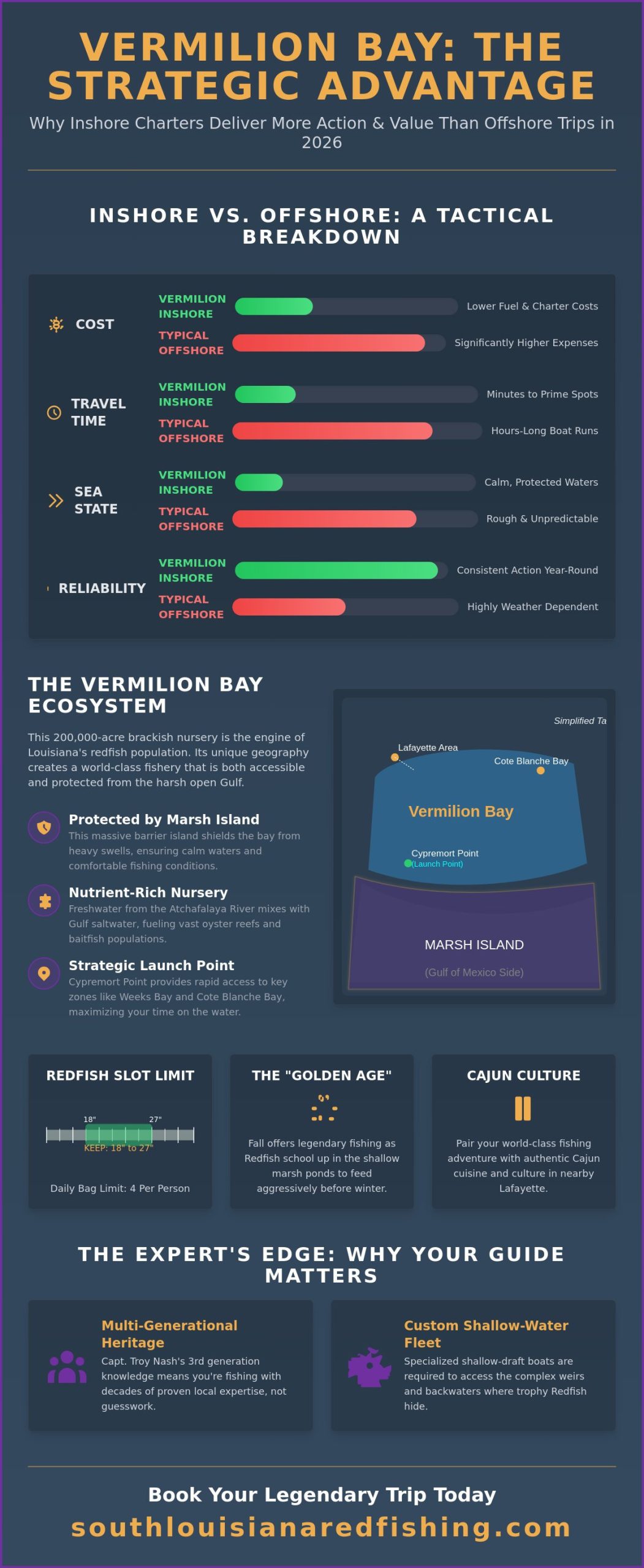
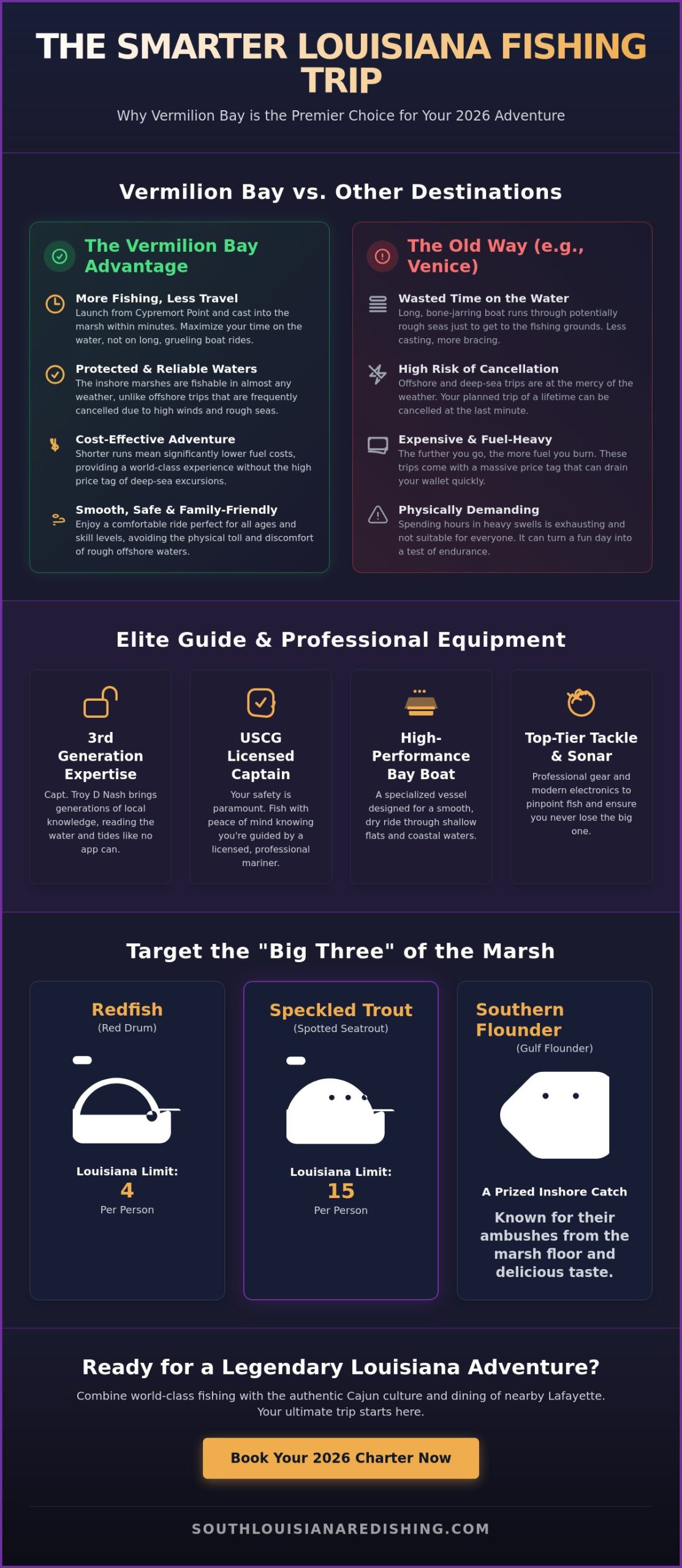
You’re planning a legendary trip to the Louisiana coast. You want the drag-screaming runs of a Bull Redfish and the thrill of a limit of Speckled Trout. But before you step onto a boat in Cypremort Point, you must understand that not everyone with a center console and a social media page is a legitimate professional. In 2026, a true professional Louisiana charter guide is a dedicated business owner who meets strict state and federal mandates designed to protect you. The Louisiana Department of Wildlife and Fisheries (LDWF) doesn’t just suggest these rules; they are legal requirements that separate elite experts from dangerous hobbyists. Unlike the high costs and unpredictable sea states of some offshore trips, our inshore adventures in the bay are focused on consistency and safety.

Booking a “cheap” trip through a random post might seem like a bargain, but it’s a massive risk to your wallet and your well-being. These unverified “rogue” guides often lack the necessary liability insurance and specialized safety equipment. If something goes wrong in the sprawling marshes or remote weirs of Marsh Island, you’re left without a safety net. Choosing licensed and insured fishing guides louisiana ensures you’re with a captain who treats your safety as their top priority, not just a weekend side-hustle. A professional operation has skin in the game, backed by years of heritage and a commitment to the craft.

The Legal Requirement: RS 56:302.9 Explained

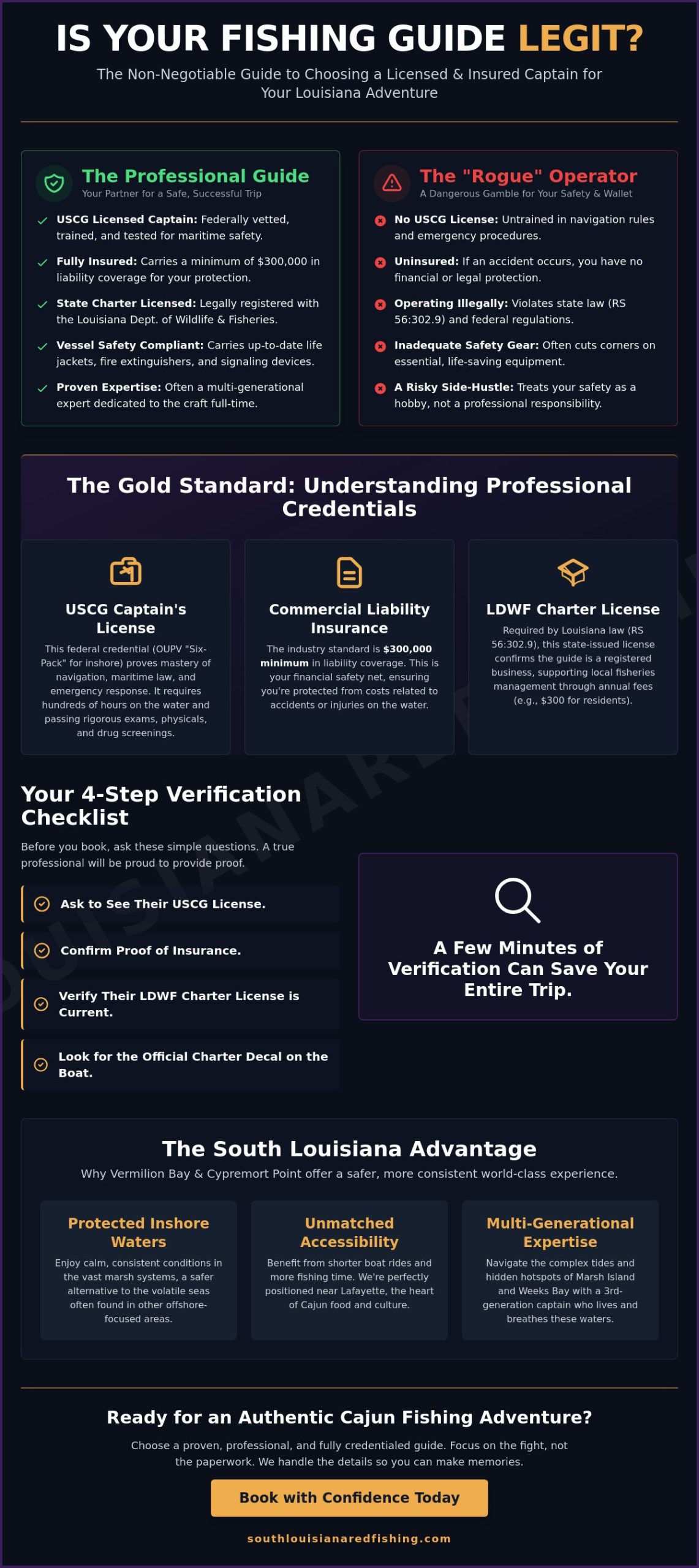
Louisiana law is crystal clear about who can take you fishing for hire. Under RS 56:302.9, any person acting as a fishing guide must possess a specific Charter Boat Fishing Guide License. Your standard recreational license is for personal use only. It doesn’t authorize anyone to accept payment for a trip. This law ensures that every guide operating in Vermilion Bay or Weeks Bay has registered with the state and paid the necessary fees to support our local fisheries. It’s the first line of defense against “part-timers” who don’t have the professional tenure that a veteran like Capt. Troy D Nash brings to the water. In fact, a resident saltwater guide must pay a $300 fee annually to maintain this status, proving they are invested in the industry.

Safety Beyond the Paperwork

Licensing is about much more than just a piece of paper. To maintain a valid USCG Captain’s License, a guide must pass rigorous background checks, physical exams, and regular drug screenings. This federal oversight ensures that the person behind the wheel is capable and reliable. Beyond the captain’s personal qualifications, licensed vessels must meet specific safety standards. This includes carrying up-to-date life jackets, fire extinguishers, and signaling devices that are often ignored by unlicensed operators. When you’re navigating the canals and shorelines of South Louisiana, knowing your guide carries at least $300,000 in liability insurance provides peace of mind. You can focus on the rod tip while we handle the details. It’s a much more relaxing experience than the crowded, rough conditions found in other areas like Venice.

Understanding the Credentials: USCG Captain’s License and Marine Insurance

When you step onto a boat at Cypremort Point, you’re placing your life in the hands of the person at the helm. That’s why the USCG Merchant Mariner Credential is the absolute gold standard for the industry. It isn’t just a piece of paper. It represents hundreds of hours on the water, rigorous testing, and a deep understanding of maritime law. For most inshore charters, the “Six-Pack” OUPV license is the minimum requirement. This allows a captain to carry up to six passengers for hire. It’s the foundation of what makes licensed and insured fishing guides louisiana professionals so reliable. Unlike amateur boaters who might struggle with the shifting sandbars of East Cote Blanche Bay, a USCG-licensed captain has the training to navigate safely in any condition.

What a USCG License Really Means

A license proves your captain has documented at least 360 days of sea time. They’ve mastered navigation, rules of the road, and emergency first aid. They’ve also passed medical exams to ensure they’re fit for the job. In the marsh, weather can change in a heartbeat. A licensed professional knows how to read the clouds over Marsh Island and when to head for the safety of the canals. This level of expertise is exactly what you get when you book with a veteran like Capt. Troy D Nash. You aren’t just paying for a fishing spot; you’re paying for a decade of refined judgment and safety protocols that keep your family protected.

The Role of Commercial Marine Insurance

Standard boat insurance is for weekend warriors. It specifically excludes any activity where money changes hands. If an unlicensed guide tells you they have insurance, they’re likely talking about a policy that won’t pay a dime if an accident occurs during a charter. Commercial marine insurance is different. It includes specialized liability coverage that protects you and your guests. This insurance covers everything from medical expenses if someone slips on a wet deck to legal protection in the event of a collision. While the state requires a minimum of $300,000 in coverage, the best licensed and insured fishing guides louisiana often carry more to ensure total peace of mind. Commercial marine insurance is the ultimate sign of a legitimate business that values its clients’ safety above all else.

Don’t be afraid to ask for proof. A professional guide will be proud to show you their credentials. They know that transparency builds trust. Whether you’re targeting Redfish near the oyster beds or Speckled Trout along the shorelines of Weeks Bay, knowing you’re fully covered lets you focus on the action. It’s a level of security you won’t find with “part-time” operators in other areas like Venice. Your success on the water depends on a captain who treats their business with the respect it deserves.

Licensed and Insured Fishing Guides in Louisiana: Why Your Safety and Success Depend on It

Safe Inshore Adventures: Exploring Vermilion Bay and Cypremort Point

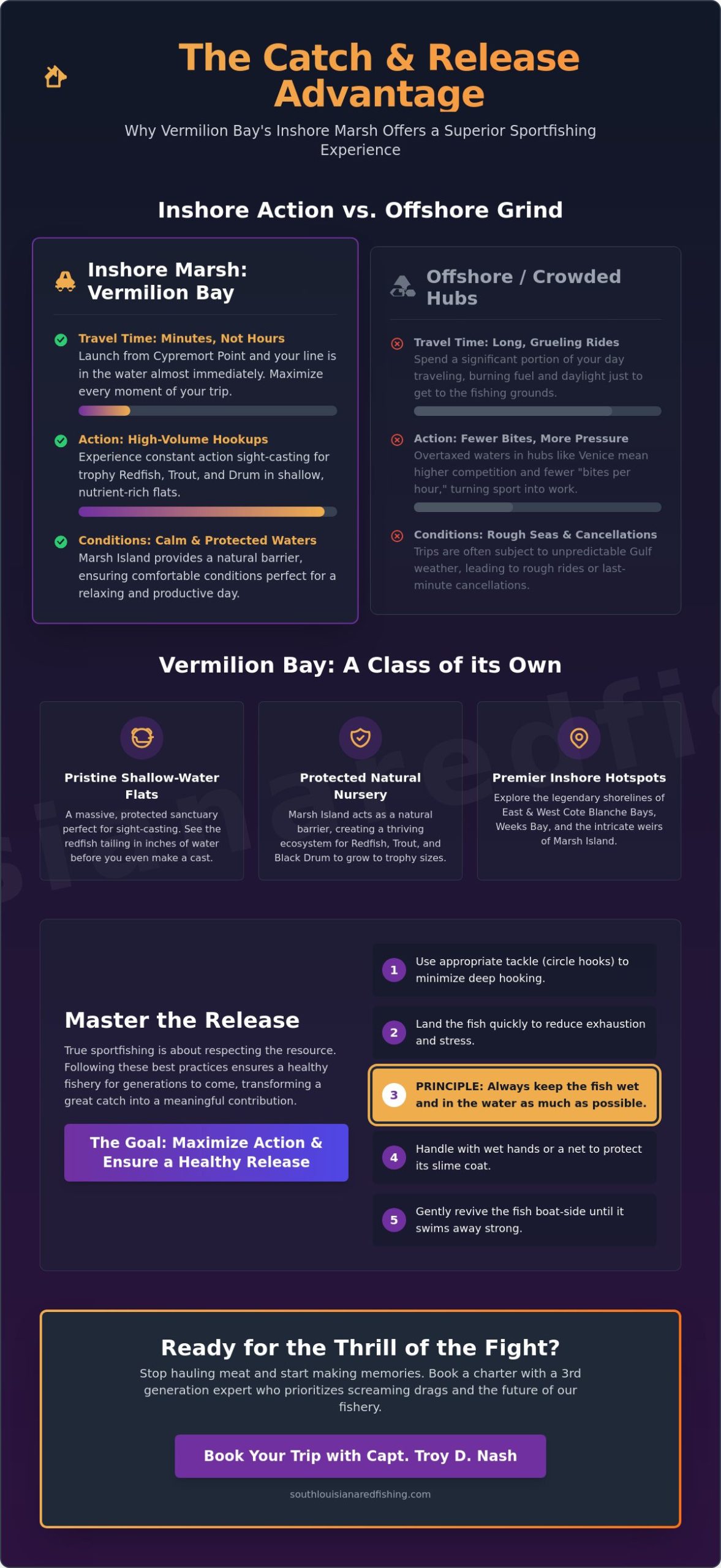
Vermilion Bay isn’t just a body of water; it’s a world-class ecosystem that rewards those who know its secrets. While other areas like Venice are famous for their rough offshore runs, the Cote Blanche Bays provide a much more stable environment. You’ll experience shorter run times and significantly calmer sea states. This means more time with your line in the water and less time pounding through heavy waves. Professional licensed and insured fishing guides louisiana rely on to navigate these intricate weirs and lakes understand the subtle shifts in current that dictate success. From the deep canals of Weeks Bay to the productive shorelines of Marsh Island, every turn offers a new chance at a trophy catch.

The nutrient-rich waters surrounding Cypremort Point are a haven for Redfish, Speckled Trout, and Flounder. Navigating the sprawling lakes and hidden weirs of the marsh requires a captain who knows the terrain like the back of their hand. An amateur guide might easily get lost or grounded on a shifting oyster bed, but a professional ensures the trip remains safe and productive. This region offers the best of Cajun country, combining high-intensity fishing with the natural beauty of the Louisiana coast.

Why Inshore is Better for Families and First-Timers

Offshore trips often involve a physical toll that can ruin the day for younger or less experienced anglers. Why endure the “beating” of massive waves when you can enjoy the serenity of the marsh? Cypremort Point State Park serves as the perfect base camp for a day of adventure. We target aggressive Redfish and Speckled Trout around nearshore oil rigs and sprawling oyster beds. You get the thrill of “big fish” action without the “big sea” risks or the high fuel costs associated with deep-sea outings. It’s a safer, more predictable way to experience the best of Louisiana.

The Local Advantage: Capt. Troy Nash and 3rd Generation Expertise

Safety in these waters is built on heritage. Capt. Troy D Nash brings 3rd generation expertise to every trip, using decades of local knowledge to read the Vermilion Bay tides. This isn’t just about finding fish; it’s about knowing exactly how the water moves through the weirs of Marsh Island to keep the vessel in the safest position. When conditions get tough, that deep-seated local tenure is what ensures a successful haul. For a complete breakdown of what to expect on your trip, check out our Louisiana Fishing Trips: Your Ultimate Guide. After the trip, you’re just a short drive from the world-famous Cajun food of Lafayette, making this the premier outdoor destination in the state.

How to Verify Your Louisiana Charter Captain’s Credentials

You’ve done the research; now it’s time to confirm you’re booking with the best. Verification isn’t just a formality. It’s the final step to ensuring your family’s safety and your trip’s success. When you arrive at the dock at Cypremort Point, the first thing you should look for is the official Louisiana Department of Wildlife and Fisheries (LDWF) ‘Charter Boat’ decal. This sticker is a clear visual signal that the vessel is registered for commercial use. Beyond the boat itself, don’t be shy about asking for the captain’s USCG Merchant Mariner Credential number. A legitimate professional will have this ready and will be proud to show it. It’s the mark of a true expert who has invested the time to become one of the premier licensed and insured fishing guides louisiana offers.

Checking the LDWF’s list of licensed operators is another quick way to vet your guide. If a business name isn’t on that list, they aren’t authorized to take you into the marsh for hire. You should also look for professional affiliations, such as membership in the Louisiana Charter Boat Association. These organizations often have higher standards for their members, adding an extra layer of trust. Finally, take a look at recent ‘Catch Reports.’ A guide who is consistently pulling Redfish and Speckled Trout from the weirs of Marsh Island or the reefs of Vermilion Bay is a guide who stays active and knows exactly where the bite is happening right now.

Red Flags to Watch For

Stay alert for warning signs that suggest an amateur operation. If a guide only accepts cash or refuses to provide a written booking confirmation, that’s a major red flag. Professional businesses provide paperwork. You should also take a hard look at the boat. Does it have visible safety gear, like life jackets and a fire extinguisher? Is the registration sticker current? If you get vague answers regarding insurance or USCG status, it’s time to look elsewhere. Your safety in the sprawling Cote Blanche Bays is worth more than a small discount from an unverified “part-timer.”

Questions to Ask Before You Book

Before you put down a deposit, get direct answers to a few key questions. Ask point-blank: “Are you a USCG licensed and commercially insured guide?” Follow that up by inquiring about their specific experience in the Vermilion Bay and Weeks Bay area. You want a captain who understands the local tides and seasonal patterns, not someone who usually fishes in other areas like Venice and is just visiting. For a deeper dive into what makes our local fishery so special, read our Louisiana Redfish: The Ultimate Guide. Ready to experience a world-class Cajun adventure with a verified pro? Book your guided fishing trip today and let’s get on the water!

Experience the Best of Acadiana: Book Your Cajun Adventure

Your search for the ultimate outdoor experience ends where the marsh meets the horizon. Choosing the premier licensed and insured fishing guides louisiana has to offer means you get more than just a boat ride. You’re stepping into a world-class adventure that blends high-octane sport with the soul of Acadiana. South Louisiana Redfishing is the top choice for anglers in the Lafayette region because we don’t just find fish; we provide a gateway to the Cajun way of life. While other areas like Venice are known for their industrial feel, the waters around Cypremort Point and Vermilion Bay offer a pristine, authentic landscape that feels like stepping back in time. It’s a legendary journey through nutrient-rich bays and ancient weirs where every cast is a new opportunity for success.

Capt. Troy D Nash ensures every trip is safe, legal, and truly legendary. With a lifetime of heritage on these waters, he navigates the complex shorelines of Marsh Island and the Cote Blanche Bays with the confidence only a local expert can possess. You’ll witness incredible wildlife, from soaring ospreys to alligators basking along the canal banks. This is the “More Than Just Fishing” experience that separates a professional charter from a casual outing. We handle the technical mastery of the equipment and the navigation so you can focus on the aggressive strike of a Redfish and the stunning scenery of the Louisiana coast.

Beyond the Boat: Tourism in Lafayette and Cypremort Point

A trip to the coast is the perfect excuse to explore the heart of Cajun country. Plan your day around the best eateries in the area, where the catch of the day is always on the menu. Cypremort Point State Park is the ideal gateway to the Gulf of Mexico’s best inshore flats, offering a beautiful beach and picnic areas for the whole family. After a successful morning on the water, head back toward Lafayette to indulge in authentic boudin and cracklins. For more ideas on how to round out your visit, check out our guide on 21 Unforgettable Things to Do in Lafayette. It’s the perfect way to turn a fishing trip into a complete vacation.

Secure Your Date for the 2026 Season

The 2026 season is already shaping up to be one for the record books. Because the best licensed and insured fishing guides louisiana provides are in high demand, dates during the peak Redfish and Trout runs book up months in advance. Don’t leave your adventure to chance by waiting until the last minute. Booking with a trusted local professional is easy and ensures you have a spot on the boat when the bite is hottest. We take pride in our results-driven approach and our commitment to your safety. Join Capt. Troy for a day on the water you’ll never forget. Let’s make your world-class Cajun fishing adventure a reality.

Start Your World-Class Cajun Adventure Today

Your next legendary outdoor experience is waiting in the nutrient-rich marshes of Acadiana. Choosing from the most reliable licensed and insured fishing guides louisiana provides is the only way to ensure your trip is both safe and successful. You’ve learned that a USCG license and commercial insurance aren’t just legal hurdles; they are your guarantee of professional service and peace of mind. While other areas like Venice offer their own challenges, the calm weirs and sprawling oyster beds of Cypremort Point provide a consistent, high-energy environment for the whole family.

Don’t settle for a part-time hobbyist when you can ride with a 3rd-generation local expert who knows every secret of the Vermilion Bay tides. Capt. Troy D Nash is ready to lead you to the haul of a lifetime while keeping your safety as the top priority. Book Your Licensed & Insured Adventure with Capt. Troy Nash right now to secure your preferred date for the 2026 season. The Redfish are biting, the Cajun food is hot, and the journey of a lifetime is just a click away. Grab your gear and let’s head for the marsh!

Frequently Asked Questions

Is it illegal to hire an unlicensed fishing guide in Louisiana?

Hiring an unlicensed guide is illegal for the operator and can put you in a precarious legal position if authorities board the vessel. Louisiana law RS 56:302.9 strictly requires any person acting as a fishing guide to possess a valid Charter Boat Fishing Guide License. Engaging with unverified operators undermines state conservation efforts and leaves you without the protections provided by licensed and insured fishing guides louisiana mandates for safe, professional outings.

What is the difference between a licensed guide and a ‘charter’ captain?

A licensed guide has met state requirements through the LDWF, but a true “charter captain” must also hold a federal USCG Merchant Mariner Credential. This federal license is the gold standard, proving the captain has passed rigorous testing and background checks. While some hobbyists may claim to be guides, only those with both state and federal credentials are authorized to lead professional licensed and insured fishing guides louisiana charters through the weirs of Marsh Island.

Does my Louisiana fishing license cover me on a charter boat?

You still need your own valid Louisiana Basic and Saltwater Recreational Fishing Licenses to fish legally on a charter boat. While the captain provides the vessel and expertise, the state requires every angler to carry their own personal permits. It’s a common misconception that the captain’s license covers the passengers’ individual legal requirements. Always ensure your personal paperwork is up to date before launching from Cypremort Point for a day on the flats.

Why is commercial marine insurance so important for passengers?

Commercial marine insurance is your only source of liability protection if an accident occurs during a paid trip. Standard personal boat insurance policies specifically exclude coverage for commercial for-hire activities. If a guide lacks this coverage, you could be personally responsible for medical costs or damages. Verified professionals carry at least $300,000 in liability insurance to ensure your family is protected while exploring the nutrient-rich waters of Vermilion Bay.

How can I tell if my captain is USCG certified?

You can verify certification by asking to see the captain’s USCG Merchant Mariner Credential card, which they are required to have on their person. This document features their name, a unique reference number, and the license’s expiration date. Professional captains are proud of this achievement and will show it without hesitation. It’s the most reliable way to confirm you aren’t on the water with an amateur who lacks formal maritime training.

Are all fishing guides in the Vermilion Bay area licensed and insured?

Not every person offering a boat ride in Vermilion Bay is a legitimate professional. While the region is home to elite experts like Capt. Troy D Nash, unverified “rogue” operators occasionally post on social media to lure unsuspecting anglers. These hobbyists often lack the $300,000 liability insurance and USCG credentials required by law. Always do your due diligence to ensure you are booking with the most reputable licensed and insured fishing guides louisiana offers.

What should I do if a guide cannot provide proof of insurance?

If a guide cannot or will not provide proof of insurance, you should immediately cancel your booking and find a different operator. Operating without commercial insurance is a massive red flag that indicates the business is not state-sanctioned. Your safety and financial security are too important to risk on a “cheap” trip. A legitimate professional will always have their paperwork ready to provide you with total peace of mind before you leave the dock.

Does a licensed guide guarantee I will catch fish?

No guide can legally or honestly guarantee a catch because fish are wild animals, but a professional dramatically increases your chances of success. Licensed experts have the tenure and local knowledge to find Redfish and Speckled Trout even when the weather turns. They understand the tides of East Cote Blanche Bay and the seasonal patterns of Marsh Island. You’re paying for their expertise, high-quality equipment, and commitment to a legendary Cajun adventure.

Top Rated Fishing Charters in Louisiana: Why Vermilion Bay Leads the Pack in 2026

Top Rated Fishing Charters in Louisiana: Why Vermilion Bay Leads the Pack in 2026

The most famous fishing destinations in Louisiana might actually be the biggest drain on your time and wallet. While many anglers think they need to head to other areas like Venice for a trophy catch, the smart money is on the shallow marshes and fertile reefs of the Acadiana coast. You deserve a trip where you spend more time casting and less time pounding through rough seas on a long boat ride. Finding the best fishing charters vermilion bay provides means securing a smooth, safe journey to the most productive inshore waters in the state.

I know you’re looking for a reliable way to hit your limit of four Redfish and 15 Speckled Trout without the anxiety of an unproductive day. This guide promises to show you why the inshore masteries of Vermilion Bay and Cypremort Point lead the pack in 2026. We’ll preview the tactical benefits of fishing the weirs and canals near Marsh Island, compare the value of marsh trips to high-cost offshore runs, and explain how to pair your adventure with the world-class Cajun culture of Lafayette. It’s time to discover how Capt. Troy D Nash turns a simple outing into a legendary Louisiana experience.

Key Takeaways

  • Identify the hallmarks of a premier guide, from multi-generational local expertise to the professional reliability of a USCG-licensed captain.
  • Learn why the best fishing charters vermilion bay offers provide a massive advantage by cutting down boat run times and maximizing your actual fishing minutes.
  • Master the seasonal patterns and marsh behaviors of the “Big Three”, Redfish, Speckled Trout, and Southern Flounder, to ensure a productive day on the water.
  • Simplify your logistics by launching from Cypremort Point, allowing you to combine world-class fishing with the authentic Cajun culture and dining of nearby Lafayette.
  • Understand why the shift toward sustainable inshore fishing makes Vermilion Bay the premier, cost-effective choice for a legendary 2026 Louisiana adventure.

What Makes a ‘Top Rated’ Fishing Charter in Louisiana?

Don’t settle for a generic rating system that only measures how many people clicked a button on an app. A truly elite experience is built on decades of salt spray and a deep connection to the Louisiana coast. When you search for the best fishing charters vermilion bay can provide, you are looking for more than a boat; you are looking for a legacy. A top-rated guide isn’t just someone with a license. They are a master navigator of a complex, shifting ecosystem that demands respect and local insight. True quality is defined by a combination of professional heritage, high-performance equipment, and a results-driven attitude that puts the client’s success first.

The Value of Local Heritage

Apps and digital maps are great tools, but they can’t replace the instinct developed over generations of living on the water. Capt. Troy D Nash represents a third generation of local expertise. He understands the subtle shifts in wind and tide that dictate exactly where the Redfish are hiding in the marsh. This deep-rooted knowledge is what separates a tactical marsh hunt from a simple tourist boat ride. In the vast expanse of Vermilion Bay, knowing which specific weir or canal will hold fish on a falling tide is the ultimate advantage. While guides in other areas might rely on luck or follow the crowd to overfished spots, a heritage-driven charter finds the bite even when the conditions turn tough. It’s about the ability to read the water like a book written by your ancestors.

Equipment and Safety Standards

Safety and success go hand in hand on the water. A USCG-licensed captain provides the necessary baseline of professional security, but the equipment takes the experience to the next level. You need a high-performance bay boat specifically designed to skim through the shallow flats and navigate the treacherous oyster beds of South Louisiana. These specialized vessels offer a smooth, safe ride that keeps you dry and comfortable. This is a massive improvement over the bone-jarring, long-distance runs often required in Venice or other deep-water locations. Top-tier tackle and modern sonar aren’t just for show. They are essential tools for pinpointing Speckled Trout on submerged reefs and ensuring your gear doesn’t fail when a trophy fish hits. Choosing the best fishing charters vermilion bay has to offer means investing in a professional setup that prioritizes your results and your safety.

Vermilion Bay vs. Venice: Choosing Your Louisiana Destination

Choosing your base for a Louisiana adventure shouldn’t involve a four-hour drive down a single, lonely highway. While many anglers default to Venice, they often overlook the logistical hurdles and the heavy fuel costs associated with that region. When you opt for the best fishing charters vermilion bay provides, you’re choosing a smarter way to fish. Launching from Cypremort Point means you’re casting into the marsh within minutes of leaving the dock. This efficiency is a game changer for anyone who wants to maximize their time on the water rather than bracing against the chop of a long boat run. You get the same world-class action without the exhaustion of a marathon travel day.

The Inshore Advantage

Inshore fishing is the most reliable way to ensure your trip actually happens. Unlike “offshore” or “deep sea” excursions that are frequently sidelined by high winds and rough waves, the protected marshes of the Acadiana coast stay fishable in almost any weather. You don’t have to worry about the physical toll of a ten-hour day in heavy swells or the massive price tag of a fuel-heavy run. Instead, you enjoy a smooth, safe ride that’s perfect for everyone from seasoned pros to young children. Staying inshore also means you can take full advantage of current Louisiana fishing regulations, which provide excellent bag limits for Redfish and Speckled Trout. It is a high-value experience that prioritizes your catch and your comfort.

Geography of the Cajun Coast

The labyrinth of canals, lakes, and weirs surrounding Vermilion Bay creates a unique nursery for trophy fish. This region is a literal Redfish factory, where the shallow flats of Weeks Bay and the rugged shorelines of Marsh Island offer endless opportunities. Navigating the quiet waters of East and West Cote Blanche Bay provides a sense of adventure that you won’t find in other areas that are often overcrowded. This is the heart of the Cajun Coast, where the ecosystem is as rich as the culture. After you’ve hit your limit in the marsh, you’re just a short hop away from the world-class dining of Lafayette. If you’re ready to see why this region leads the pack, it’s time to book your trip into the marsh and experience it for yourself.

Top Rated Fishing Charters in Louisiana: Why Vermilion Bay Leads the Pack in 2026

Targeting the ‘Big Three’: Redfish, Trout, and Flounder

Landing a trophy requires more than just luck. It takes a guide who knows the specific terrain and hidden honey holes of the Acadiana coast. While other areas might offer generic trips, the best fishing charters vermilion bay provides focus on the specific structures that hold fish throughout the year. You’ll spend your day targeting the “Big Three” by working the intricate oyster beds and the closest nearshore oil rigs. These structures are magnets for life, providing the perfect ambush points for hungry predators and non-stop action for our guests.

Redfish: The King of the Marsh

There’s nothing quite like the adrenaline rush of sight-fishing for louisiana redfish in the shallow flats. We hunt these bronze-backed bruisers as they cruise the shorelines of Marsh Island and crawl through the grass looking for crabs. This isn’t just fishing; it’s a tactical pursuit. Red fish fishing in Louisiana’s marsh is a world-class experience because the fish are aggressive and the water is shallow enough to see the wake of a charging bull. During the peak months, we target trophy Bull Reds near the openings to the Gulf, where they gather in massive schools. It’s an intense battle that tests your gear and your grit every single time.

Speckled Trout and Seasonal Variety

If you want a cooler full of fillets, we shift our focus to the Speckled Trout. These fish follow a strict seasonal migration through the bay system. We find them stacked over submerged oyster reefs in the spring and moving toward the nearshore oil rigs as the water warms. These rigs act as vertical reefs, attracting a massive variety of louisiana fish. While we’re hunting trout, we often find Tripletail hanging around floating debris or buoy lines. They are the hidden gems of the summer, offering a unique sight-fishing opportunity and incredible table fare for those who know where to look.

Don’t forget about the elusive Southern Flounder and hard-fighting Black Drum that round out our marsh adventures. Every trip is a new puzzle to solve, and the diversity of species keeps the excitement high from the first cast to the last. After you’ve secured your limit, you’re just a short drive away from the world-class Lafayette fun and food that makes this region so special. You can spend your morning fighting Redfish and your evening enjoying the best boudin and live music in the country. It’s the ultimate combination of outdoor thrills and authentic Cajun hospitality that you won’t find anywhere else.

Planning Your Trip: Logistics, Food, and Lafayette Fun

Planning a world-class adventure shouldn’t feel like a chore. One of the biggest reasons families and serious anglers choose the best fishing charters vermilion bay offers is the sheer ease of the logistics. While other areas might leave you stranded in a remote marsh camp with limited options, our trips launch from Cypremort Point State Park. This prime location is just a forty-five-minute drive from the heart of Lafayette and even closer to New Iberia. You get to spend your day in the wild, untouched marsh and your evening in a comfortable hotel with a hot plate of crawfish etouffee in front of you. It is the perfect balance of rugged adventure and Southern comfort.

The Lafayette Connection

Lafayette is the beating heart of Cajun Country. It provides a cultural backdrop that turns a simple boat ride into a significant life event. There are countless lafayette things to do louisiana families will love, from exploring historical villages to catching a live Zydeco band. After we finish cleaning your catch at the dock, head back to town to find the best boudin or a bowl of authentic dark-roux gumbo. We believe the food and music are just as important as the fishing when it involves a true Louisiana vacation. You aren’t just booking a trip; you’re immersing yourself in a world-class cultural hub.

Charter Logistics 101

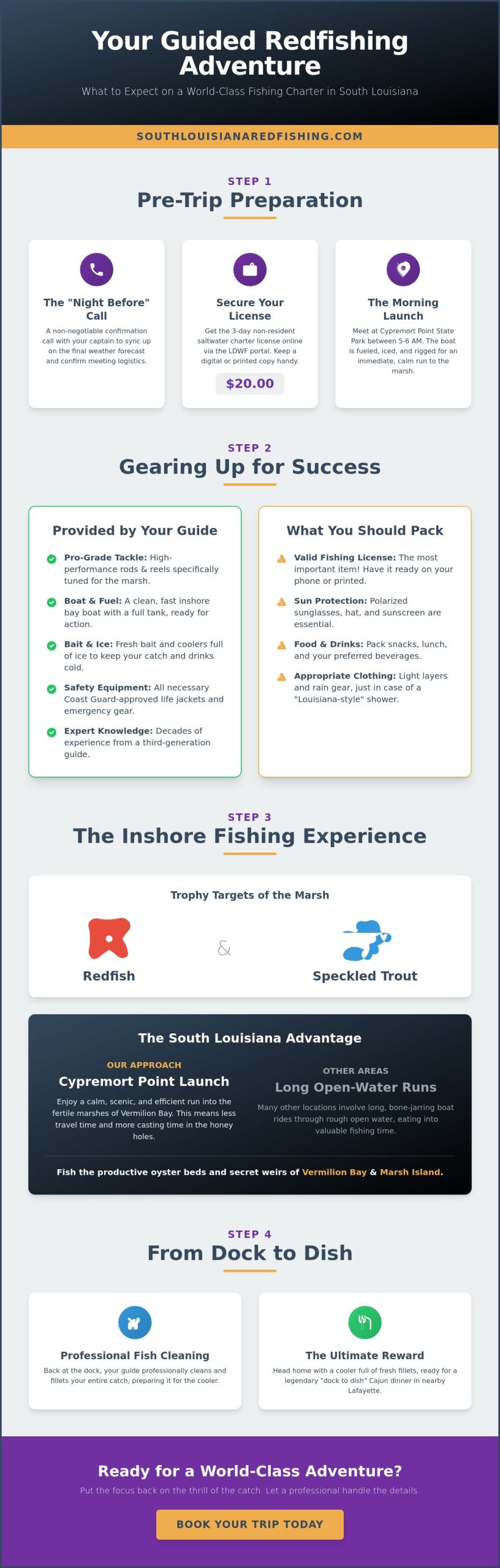
Packing for the Louisiana sun requires a bit of strategy. Make sure you bring high-quality sunscreen, polarized glasses to help spot those “crawling” Redfish in the shallows, and a large ice chest to transport your fresh fillets home. Capt. Troy D Nash handles the heavy lifting, providing a full-service experience that includes all bait and top-tier tackle. You don’t need to be a pro to have a pro-level day. Just show up ready for action and we will handle the rest. You can easily book your louisiana fishing trips in advance to secure the best seasonal dates before they fill up.

Don’t forget your paperwork before you hit the water. As of May 2026, a resident saltwater license costs $15 in addition to the $17 basic fishing fee. If you’re visiting from out of state, the most convenient and cost-effective option is the $20 3-day non-resident charter passenger saltwater license. All anglers 18 and older must have a valid license, while youth under 18 are exempt and can fish for free. It’s a small investment for access to the most productive inshore waters in the country. If you’re ready to experience the best fishing charters vermilion bay has to offer, secure your charter date and let’s get on the fish.

Why South Louisiana Redfishing is the Top Choice for 2026

The 2026 season is proving to be a landmark year for the Louisiana marsh. Recent shifts in conservation efforts, including the strictly enforced four-fish bag limit for Redfish, have resulted in a visible surge in fish populations. These regulations ensure that the bronze-backed bruisers we hunt today will be even more abundant tomorrow. When you look for the best fishing charters vermilion bay can offer, you’re choosing a destination that prioritizes the health of the ecosystem as much as the thrill of the catch. The result is a world-class fishery where landing a limit of healthy Redfish and Speckled Trout is a reality for every guest on the boat.

Capt. Troy D Nash stands at the center of this thriving region, offering a level of expertise that only comes from a lifetime spent on these waters. While other areas might offer a generic experience, our trips are built on local heritage and a deep respect for the Cajun coast. We focus our energy on the fertile shorelines of Marsh Island and the complex weirs of East Cote Blanche Bay. This is where the action happens. You spend less time navigating and more time fighting fish. It is a high-energy, high-reward adventure that delivers exactly what you expect from a premier Louisiana guide.

A Personalized Adventure

Every group that steps onto our boat has different goals. Whether you’re a seasoned pro looking to sight-fish the flats or a family wanting a safe, exciting day in the marsh, we tailor the trip to you. Our no-hassle promise means we handle everything. We provide the top-tier gear, the freshest bait, and the tactical knowledge needed to find the bite when others can’t. Anglers who used to spend thousands on “offshore” runs are now choosing the bay for its consistency, lower costs, and better sea states. They’ve discovered that the marsh offers just as much excitement without the physical toll of the open Gulf.

Booking Your 2026 Charter

The secret is out about the incredible recovery of the Vermilion Bay system. Our calendar for the 2026 season is filling up faster than ever before. If you want to secure a prime date during the peak spring or fall runs, you need to act now. We offer a streamlined booking process and are happy to accommodate custom trip requests or larger groups. Experience the best fishing charters vermilion bay has to offer and see why Cypremort Point remains the undisputed gateway to the marsh. Book your adventure today and get ready to experience the legendary fishing and culture of South Louisiana firsthand.

Your Legendary Catch Awaits in the Acadiana Marsh

Vermilion Bay stands alone as the premier destination for anglers who value their time and their results. By choosing the best fishing charters vermilion bay provides, you’re trading long, expensive boat rides for immediate access to trophy Redfish and Speckled Trout. You’ve seen how the strategic advantages of Cypremort Point and the rich heritage of a 3rd generation local guide make all the difference on the water. We take the stress out of planning by providing all top-tier gear and bait, allowing you to focus entirely on the thrill of the hunt.

Whether you are navigating the weirs of Marsh Island or sight-fishing the shallow flats, you are in expert hands. Don’t let another season pass by without experiencing the world-class fishing and authentic Cajun culture that defines our coast. The 2026 season is already looking like a record-breaker, and those prime dates won’t last forever. Our team specialized in Vermilion Bay and Marsh Island is ready to deliver a results-driven experience you’ll never forget.

Book Your Top Rated Louisiana Fishing Adventure Now!

Grab your sunscreen and get ready for a journey that goes beyond the dock. We can’t wait to see you on the water and help you land the catch of a lifetime.

Frequently Asked Questions

What is the best time of year for a fishing charter in Louisiana?

Spring and fall offer the most consistent action for trophy Redfish and Speckled Trout. During these transitions, the water temperatures are perfect for aggressive feeding in the shallow flats of Weeks Bay and Marsh Island. While summer provides great nearshore rig action for Tripletail, the cooler months remain the gold standard for those seeking the best fishing charters vermilion bay provides for big inshore species.

How much should I tip my fishing guide in Louisiana?

A tip of 15% to 20% of the trip cost is the standard way to show appreciation for your captain’s hard work. This gratuity recognizes the extensive preparation, local expertise, and equipment maintenance that goes into every successful marsh adventure. Your guide spends hours before and after the trip catching bait and cleaning fish to ensure your journey is effortless and memorable.

Do I need to bring my own fishing gear on the charter?

You don’t need to bring any specialized equipment because we provide all high-quality rods, reels, and tackle. Capt. Troy D Nash ensures the boat is fully stocked with the best gear suited for the specific conditions of the Louisiana marsh. Just show up with your polarized sunglasses and a positive attitude; we handle all the technical details from the first cast to the final catch.

Is inshore fishing better for kids than offshore fishing?

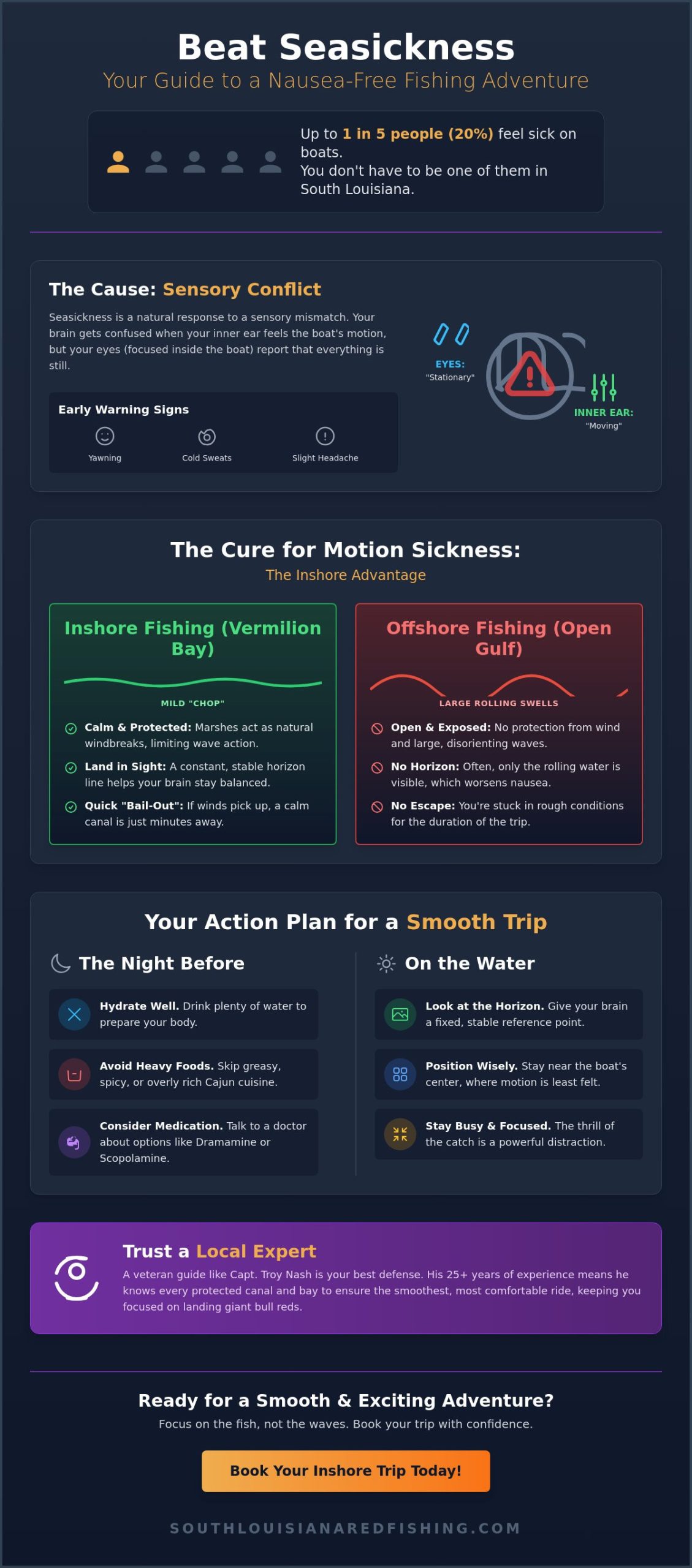
Inshore fishing is the superior choice for families because it offers shorter boat rides and much calmer water. You won’t have to worry about rough seas or the long, grueling runs common in other areas like Venice. The sheltered canals and lakes of West Cote Blanche Bay provide a safe, stable environment where children can stay engaged and catch plenty of fish without getting seasick.

What happens if the weather is bad on the day of my trip?

Safety is always our absolute priority when navigating the bay and nearshore reefs. If high winds or lightning make conditions unsafe, we’ll work with you to reschedule your adventure for a better day. Because we fish the protected marsh, we can often find calm water even when the open Gulf is too rough for larger vessels to operate safely.

Can we keep the fish we catch on the charter?

You can certainly keep your catch as long as it falls within the current Louisiana Department of Wildlife and Fisheries regulations. For 2026, the daily bag limit is four Redfish per person and 15 Speckled Trout. We provide professional fish cleaning and bagging at the end of every trip, so your fresh fillets are ready for a world-class Cajun dinner back in Lafayette.

How far is Cypremort Point from Lafayette, Louisiana?

The drive from Lafayette to our launch point at Cypremort Point State Park takes approximately 45 minutes. This quick commute makes it incredibly easy to pair your morning on the water with the legendary food and music scenes found in town. It’s the most accessible gateway to the best fishing charters vermilion bay offers, allowing you more time for adventure and less time on the road.

What species of fish are most common in Vermilion Bay?

Redfish, Speckled Trout, and Southern Flounder are the primary targets that make this region famous. You’ll also frequently encounter hard-fighting Black Drum in the deeper holes and Tripletail around the nearshore structures during the warmer months. The brackish water of the bay creates a diverse nursery that supports an incredible abundance of life throughout the entire year.

Best Way to Cook Speckled Trout: A South Louisiana Captain’s Guide for 2026

Best Way to Cook Speckled Trout: A South Louisiana Captain’s Guide for 2026

Most anglers treat a speckled trout like a common panfish, but that’s the fastest way to ruin a world-class delicacy from the waters of Vermilion Bay. You’ve spent your morning hitting the oyster beds near Marsh Island or the weirs along the shoreline to land your limit of 15 fish, so you’re likely searching for the best way to cook speckled trout to avoid a plate of mushy, over-seasoned meat. It’s a common frustration to see such a premium catch turn soft in the pan when you were expecting a restaurant-quality finish. You want that perfect, flaky texture that highlights the natural sweetness of the fish without drowning it in heavy batter.

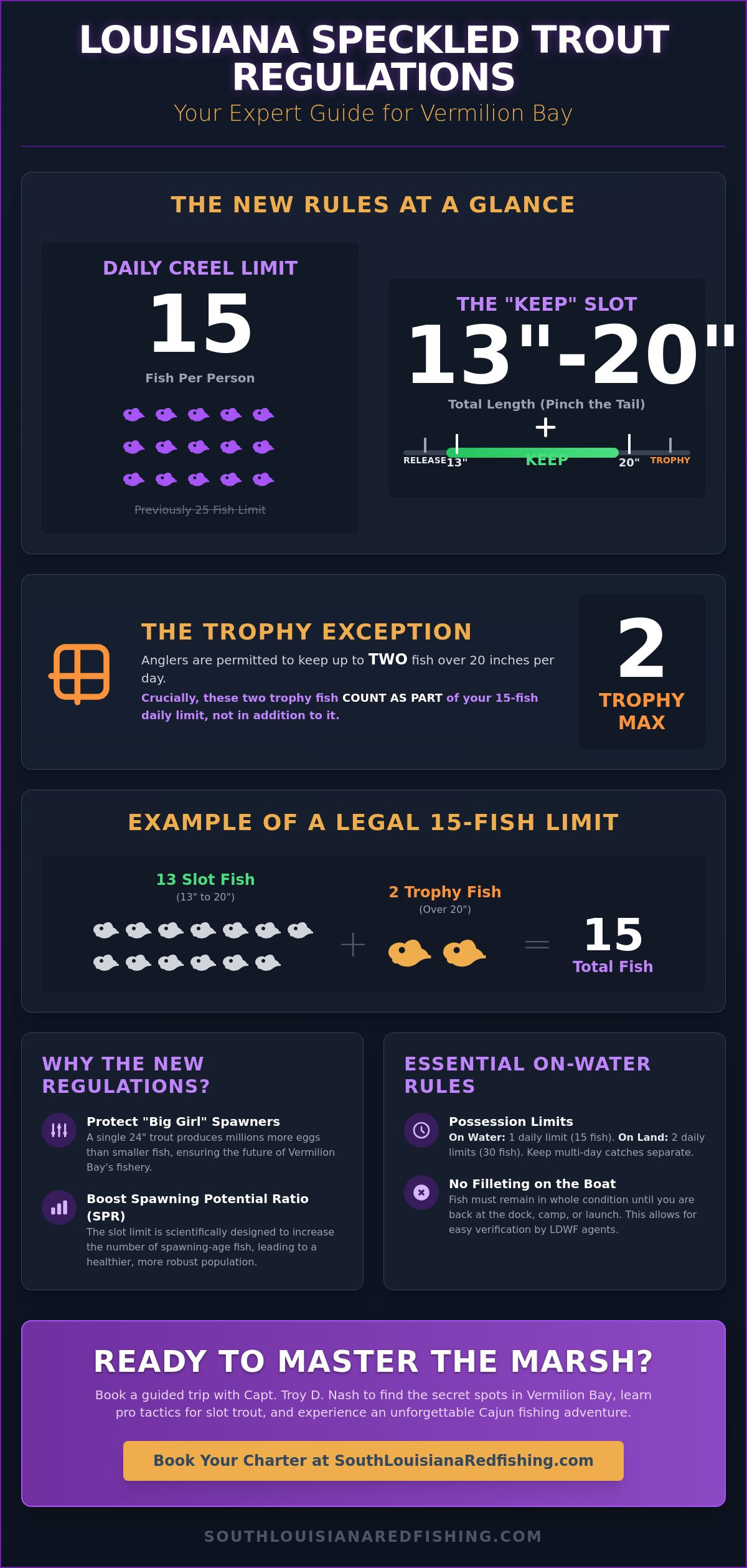
I’m here to show you that the secret involves a precise three-step process: immediate icing, a quick brine, and high-heat cooking. Whether you’re launching from Cypremort Point or heading back to Lafayette, you deserve a meal that validates your hard work on the water. This guide walks you through the professional techniques and authentic Cajun recipes used by seasoned captains to transform your catch into a masterpiece. We’ll dive into proper cleaning, the legal 13-inch minimum size requirements for 2026, and the specific searing tricks that ensure your dinner is the highlight of your adventure.

Key Takeaways

  • Master the “Ice Slurry” secret and proper filleting techniques to eliminate the mud vein and preserve the buttery, delicate texture of your catch.
  • Learn why high-heat searing is the best way to cook speckled trout to ensure a flaky, restaurant-quality crust without overcooking the meat.
  • Elevate your meal by pairing fresh fillets with the Cajun “Holy Trinity” and authentic sides like dirty rice for a true South Louisiana culinary experience.
  • Discover how the short travel time from the reefs of Marsh Island to your kitchen gives inshore trout a massive flavor advantage over market-bought fish.
  • Understand how a professional guided trip ensures your trout are handled with expert care from the moment they leave the water until they reach your plate.

Why South Louisiana Speckled Trout is a Culinary Prize

Speckled trout is the undisputed heavyweight champion of the Louisiana dinner table. While many folks chase redfish for the brute strength on the line, the real prize is the Spotted Seatrout (Cynoscion nebulosus) when it’s time to fire up the stove. The meat is mild, slightly sweet, and carries a buttery finish that melts away. It’s a culinary experience that defines life on the Cajun Coast. Finding the best way to cook speckled trout starts with respecting the quality of the raw product. You won’t find this level of flavor at a supermarket. Market fish often sits for days, losing that signature sweetness that comes from our nutrient-rich marsh. When you pull a limit from the weirs or oyster beds near Marsh Island, you’re holding a premium ingredient that deserves a world-class preparation.

Don’t believe the myth that trout is “second-tier” to redfish or snapper. While redfish are great for the grill, the delicate profile of a speckled trout is far more sophisticated. It absorbs flavors beautifully and offers a light, airy texture that heavier species can’t match. The ecosystem surrounding Cypremort Point creates a perfect storm for meat quality. The mix of fresh water from the Atchafalaya and the salt from the Gulf produces a fish that is clean, vibrant, and free of the oily taste found in many other saltwater species. Get ready to elevate your kitchen game, because a fresh trout fillet is a blank canvas for true Cajun artistry.

The Texture Challenge: Delicate vs. Mushy

The biggest hurdle with trout is its high water content. Unlike the firm, muscular meat of a snapper, trout fillets are incredibly delicate. When you’re searching for the best way to cook speckled trout, you have to account for this fragile structure. If you don’t handle them right, they turn mushy before they even hit the pan. Natural enzymes in the meat begin breaking down the texture the moment the fish stops breathing. This is why speed and temperature control are your best friends. You have to treat these fillets like fine china. If you master the prep, you’ll see why many locals prefer this over any other species in the Gulf.

Vermilion Bay vs. Other Areas

Our local waters offer something you won’t find in other areas like Venice. The low-salinity environment of Vermilion Bay and West Cote Blanche Bay creates a unique flavor profile. The fish here aren’t as “salty” or “briny” as those caught in higher salinity zones. Instead, the nutrient density near Cypremort Point produces a cleaner, sweeter meat. It’s a consistent quality that makes our inshore trout a preferred choice for chefs in Lafayette and beyond. You get a better sea state and a shorter run to the dock, meaning your fish is in the pan just hours after the catch. That’s a level of freshness no commercial market can provide.

The 3 Best Ways to Cook Speckled Trout for Maximum Flavor

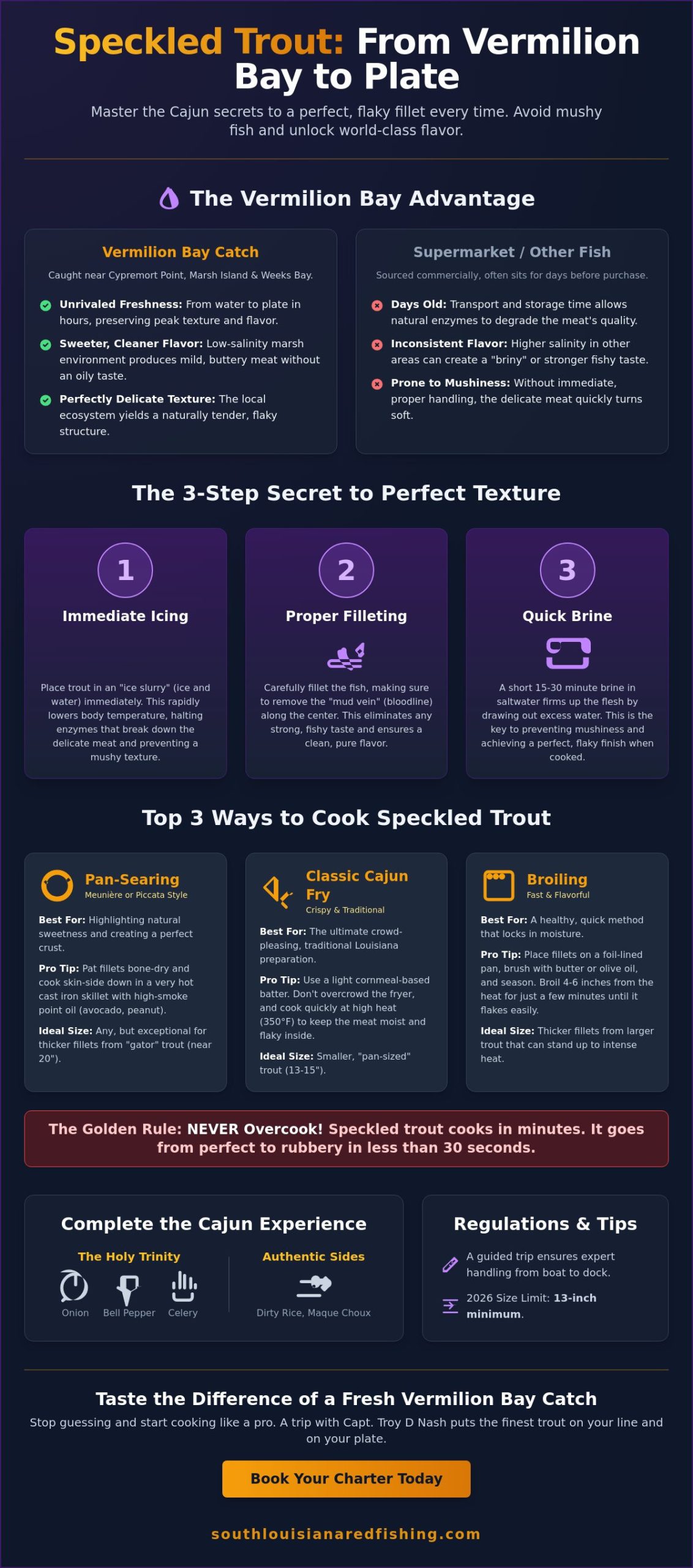
Every fish you pull from the reefs near Cypremort Point has a destiny. The size of your catch usually dictates the preparation. Smaller trout in that 13 to 15 inch range are the gold standard for a traditional fry. If you’ve landed a larger “gator” trout closer to the 20 inch limit, those thick fillets are perfect for searing or broiling. The best way to cook speckled trout always starts with the “Golden Rule”: never overcook. This is a lean, delicate white meat that can go from succulent to rubbery in thirty seconds. Beyond the taste, the nutritional value of speckled trout makes it a top-tier choice for a healthy, protein-packed meal.

You need the right tools for the job. A heavy cast iron skillet is the best for heat retention, while stainless steel works wonders when you’re making a pan sauce. Always use high-smoke point oils like avocado or peanut oil. These allow you to get that restaurant-style crust without burning the fat or tainting the fish’s natural flavor. If you want to see how the pros handle these fish before they hit the kitchen, consider spending a day on the water with Capt. Troy D Nash to learn the ropes.

Method 1: Pan-Seared Trout Meunière or Piccata

Pan-searing is arguably the best way to cook speckled trout if you want to highlight its natural sweetness. Start by patting the fillets bone-dry. Use a hot skillet with a thin layer of oil to get a golden, crispy exterior. The classic Louisiana Meunière sauce is a local favorite. It’s a simple but decadent mix of browned butter, fresh lemon juice, and chopped parsley. This method respects the delicate nature of the meat while adding a rich, savory finish that complements the mild flavor perfectly.

Method 2: The Ultimate Cajun Cornmeal Fry

You can’t talk about Louisiana cooking without a proper fry. The secret is a light, seasoned cornmeal coating. Don’t use heavy batters that mask the fish. Keep your oil temperature between 350 and 375°F. If the oil is too cool, the fish gets greasy; too hot, and it burns before it’s cooked through. Season the fillets directly with Cajun spices before dredging them in the cornmeal for the best flavor profile. This creates a crunch that contrasts beautifully with the buttery interior.

Method 3: Broiled Trout with Lump Crabmeat Topping

Broiling is the safest way to handle large fillets without them falling apart on a grill. Set your oven to high heat and cook the fish for about 5 to 6 minutes. To turn this into a world-class meal, top the fillets with fresh Louisiana lump blue crabmeat and a drizzle of melted butter during the last two minutes. It creates a rich, layered dish that rivals anything you’ll find in a New Orleans bistro. This method is fast, efficient, and keeps the moisture locked inside the fillet.

Best Way to Cook Speckled Trout: A South Louisiana Captain’s Guide for 2026

Pro-Tips for Handling and Prepping Your Fresh-Caught Trout

The journey from the reefs of Marsh Island to your kitchen table starts the second that fish hits the deck. If you let your catch sit in a dry bucket or a warm livewell, you’ve already lost the battle. The meat will turn soft and lose its integrity before you even reach the dock at Cypremort Point. The absolute secret to the best way to cook speckled trout is an immediate ice slurry. Mix two parts ice with one part salt water in your cooler. This creates a sub-freezing bath that shocks the fish, locking in the firm texture and preventing the enzymatic breakdown that ruins the meat. It’s a professional move that separates the seasoned experts from the casual weekenders.

Handling your catch with respect ensures the quality of the meal matches the excitement of the hunt. Once you’re back home, focus on precision. Every cut matters when you’re dealing with such a delicate species. Unlike tougher fish found in other areas, speckled trout requires a gentle touch and a razor-sharp blade. If you master the prep, you’re halfway to a world-class dinner that validates every cast you made along the weirs and shorelines.

Cleaning and Filleting Like a Pro

Removing the skin requires a steady hand. Start at the tail and keep your knife flat against the skin to avoid losing any of that sweet meat. Always look for the mud vein, which is the dark lateral line along the fillet. Trimming this away ensures a clean, mild flavor profile. Don’t forget to check for pin bones by running your finger along the center line; a pair of pliers makes quick work of removing them without tearing the flesh. If you aren’t eating your catch today, vacuum sealing is the only way to go. Traditional freezer bags allow air to touch the meat, which leads to freezer burn in just a few weeks.

The Quick Brine Method

Even with perfect icing, trout meat is naturally soft. A 20 minute salt brine is the professional secret to firming up the fillets. Mix one quart of ice-cold water with two tablespoons of sea salt and one tablespoon of sugar. Submerge your fillets for exactly twenty minutes. This process changes the cellular structure of the fish, drawing out excess moisture and tightening the protein fibers. Once the time is up, rinse the fillets under cold water and pat them bone-dry with paper towels. Moisture is the enemy of a good sear. If the fish is wet, it’ll steam in the pan rather than forming that golden crust. This preparation is the best way to cook speckled trout if you want that restaurant-quality flake every single time.

Pairing Your Trout with Authentic Cajun Sides and Flavors

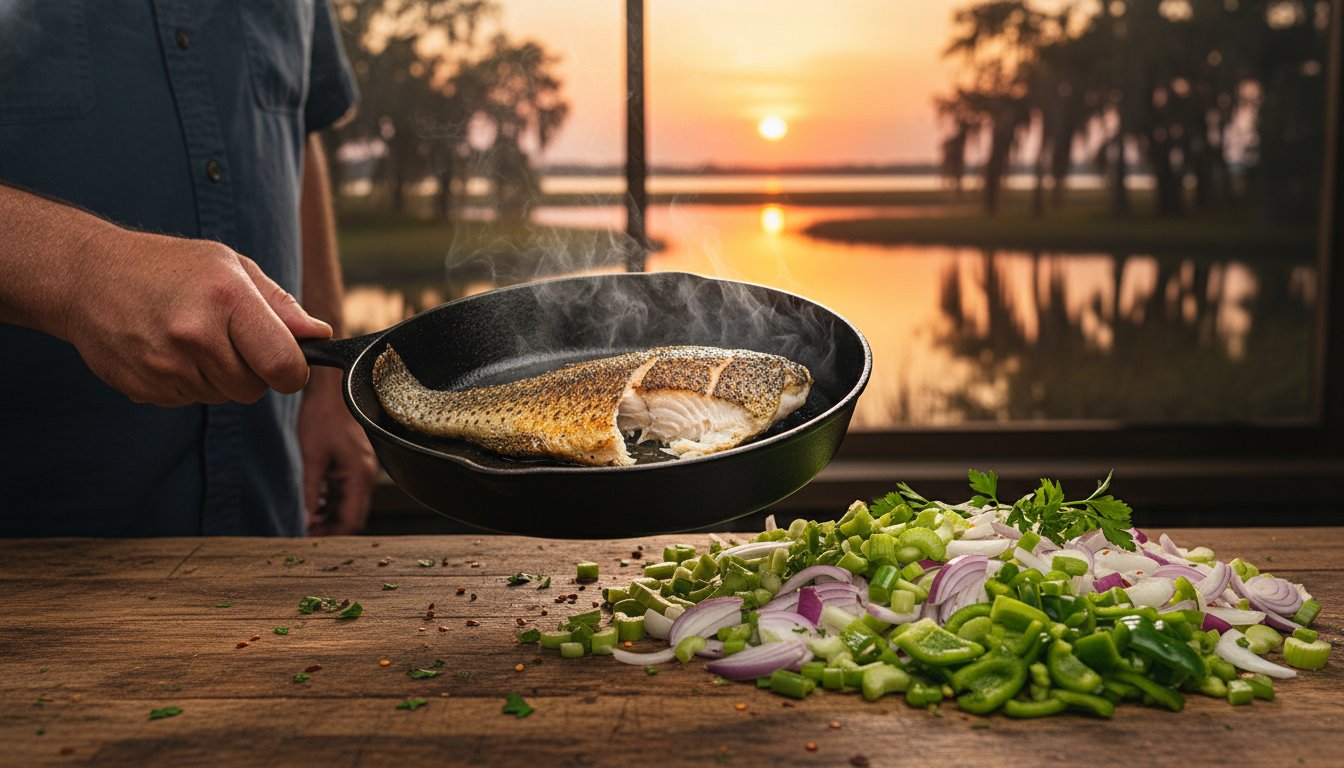
You’ve done the hard work in the marsh. Now it’s time to build the plate. Understanding the best way to cook speckled trout means looking beyond the fish itself and focusing on the plate as a whole. Every great Cajun meal starts with the “Holy Trinity”: onions, bell peppers, and celery. Sautéing these until they’re soft and caramelized creates the aromatic base that elevates your trout from a simple catch to a culinary event. If you’re serving a seared fillet, a bed of dirty rice or spicy jambalaya is the traditional choice. The savory, earthy notes of the rice provide a sturdy foundation for the light, buttery fish pulled from the reefs of Vermilion Bay.

Don’t let a bland side dish ruin a world-class fillet. The delicate sweetness of speckled trout requires accompaniments that offer contrast without overstaying their welcome. Whether you’re cooking for family in Lafayette or hosting friends after a day at Cypremort Point, these pairings bring the authentic spirit of South Louisiana to your table. Pairing your catch with these bold, local flavors is the best way to cook speckled trout and celebrate our unique coastal heritage.

Classic Cajun Side Dishes

Maque choux is a local legend. This creamy corn medley, often featuring tomatoes and peppers, adds a sweet crunch that complements the trout’s texture. Always prioritize acidity. A splash of lemon or a side of smothered green beans with a hint of vinegar helps cut through the richness of the browned butter. Using fresh, local produce from the Lafayette area ensures your sides are as vibrant as the fish you just caught.

Homemade Remoulade and Tartar Sauces

Don’t settle for store-bought sauce. A Louisiana-style red remoulade is the gold standard, using Creole mustard, horseradish, and a heavy pinch of paprika for a kick that wakes up the palate. If you prefer a white tartar sauce, keep it chunky with plenty of capers and dill pickles. Mix your sauces 24 hours before dinner. This allows the flavors to meld and deepen, giving you that professional restaurant finish at home.

To wash it all down, grab a crisp Chenin Blanc or a cold local beer. The bright citrus notes in the wine or the clean finish of a craft lager will keep the meal feeling light and refreshing. Ready to stock your fridge with the freshest ingredients? Book a guided fishing trip today and let’s get those fillets on the table.

From Vermilion Bay to Your Plate: The Secret to the Freshest Trout

The absolute best way to cook speckled trout is to start with a fish that was swimming in the marsh just hours ago. You can follow every recipe in the book, but you can’t cook freshness into a fillet that has been sitting in a commercial supply chain for a week. When you book a trip with a professional guide, you’re bypassing the market entirely. You are securing a premium food source that is handled with expert precision from the moment it hits the net. Cypremort Point serves as the premier gateway to these nutrient-rich waters, offering immediate access to the reefs and weirs where the highest quality trout congregate. This proximity isn’t just about convenience; it’s about flavor preservation.

Captain Troy D Nash brings decades of local heritage to every trip, ensuring your catch is treated like the world-class delicacy it is. By the time you head back toward Lafayette, your limit of 15 fish is already properly chilled and ready for the pan. This hands-on approach eliminates the variables that lead to mushy meat. You get to witness the transition from the wild environment of Marsh Island to a restaurant-quality meal on your own table. It’s a full-circle experience that makes every bite taste better because you were there for the hunt.

The Inshore Advantage

Inshore fishing offers a massive culinary advantage over the logistics required for “other areas” or deep-sea trips. Because we’re fishing the canals, lakes, and flats of Vermilion Bay, our boat rides are short and efficient. Your trout doesn’t spend eight hours bouncing around in a box under the hot sun. Instead, it goes from the water to a sub-freezing ice slurry in seconds. This speed preserves the delicate cellular structure of the Louisiana fish we target, ensuring the meat stays firm and sweet. You won’t deal with the high costs or rough sea states of offshore excursions, yet you’ll walk away with a superior product for your kitchen.

Book Your ‘Catch and Cook’ Adventure

There is no reward quite like the “catch and cook” lifestyle. Experiencing the thrill of the strike near the oyster beds of West Cote Blanche Bay is only half the journey. The real magic happens when you apply the techniques you’ve learned here to a fresh 13-inch minimum trout you landed yourself. A 3rd generation guide knows exactly where the “sweet” trout are biting based on the tide and the season, giving you the best chance to stock your freezer. Visit Cypremort Point State Park and see for yourself why this region is a world-class destination for both sport and flavor. Don’t settle for a second-tier meal. Book your guided fishing trip today and discover the best way to cook speckled trout by catching the freshest fillets in South Louisiana.

Master Your Catch from the Marsh to the Table

You now have the professional blueprint for transforming a day on the water into a world-class culinary event. Success begins with an immediate ice slurry at the reefs and ends with a precise, high-heat sear in your own kitchen. By mastering the 20 minute brine and avoiding the trap of overcooking, you’ll ensure every fillet stays firm, flaky, and full of that signature sweetness. The best way to cook speckled trout is to prioritize freshness that only comes from a short run back to the dock at Cypremort Point. This ensures your catch maintains its delicate integrity from the moment it leaves the weirs until it hits the pan.

Don’t settle for market-bought fish when you can pull your own limit from the nutrient-rich waters of Vermilion Bay. As a 3rd generation local guide with decades of expertise, Capt. Troy knows exactly where the gator trout are hiding. Plus, expert fish cleaning and prep are always included to make your “catch and cook” experience seamless. You’ll head home with perfect fillets and the confidence to prepare them like a pro. Book Your South Louisiana Trout Adventure with Capt. Troy Today! Get ready to create memories on the boat and a masterpiece on the plate.

Frequently Asked Questions

How do I keep speckled trout from getting mushy when cooking?

High heat and short cook times are the keys to maintaining a firm texture. You must avoid crowding the pan, as too many fillets will cause the temperature to drop and lead to the meat steaming in its own juices. This results in the soft, unappealing texture that many anglers struggle with at home.

Always cook in small batches to keep your skillet screaming hot. This technique ensures a quick sear that locks in moisture while keeping the internal flakes intact. If you’re looking for the best way to cook speckled trout without the mush, focus on speed and high temperature.

Is it better to cook speckled trout with the skin on or off?

Skin-off is generally the preferred method for most South Louisiana recipes. Unlike redfish, trout skin is paper-thin and doesn’t provide a satisfying crunch when fried or seared. Removing the skin also allows you to trim away the mud vein and any remaining pin bones more effectively.

If you’re planning to grill your catch, leaving the skin on can act as a protective barrier to keep the delicate meat from falling through the grates. For almost every other preparation, a clean, skinless fillet will give you the most consistent restaurant-quality results.

What is the difference between speckled trout and redfish in terms of flavor?

Speckled trout is much milder and more delicate than the robust flavor of a redfish. While redfish has a heartier, coarser grain that stands up to heavy blackening spices, trout is prized for its buttery sweetness and light, airy flake. It’s often considered the “filet mignon” of the Vermilion Bay marsh.

Trout requires a more sophisticated touch in the kitchen to avoid overpowering its natural taste. Redfish is great for the grill, but the subtle profile of a trout is better suited for pan-searing or light frying where its clean finish can truly shine.

Can you freeze speckled trout, or does it ruin the texture?

You can freeze trout successfully if you remove every bit of air from the packaging. Because of the high water content in these fillets, air exposure leads to massive ice crystals that destroy the delicate meat fibers. A vacuum sealer is the only tool that truly preserves the quality for more than a few weeks.

If you don’t have a sealer, you can freeze the fillets submerged in a bag of water to create a solid block of ice. This method protects the fish from freezer burn and keeps the texture acceptable for up to three months.

What are the most common seasonings used for Louisiana trout?

Simple salt, cracked black pepper, and a light dusting of lemon pepper are the most common choices for local anglers. The best way to cook speckled trout involves using a light hand with spices so you don’t mask the buttery flavor of a fresh-caught fish from Cypremort Point.

Many cooks in the Lafayette area also use a mild Creole seasoning or a dash of cayenne for a subtle kick. The goal is always to enhance the natural sweetness of the meat rather than burying it under a mountain of salt or heavy breading.

How long does it take to cook a standard speckled trout fillet?

A standard trout fillet usually takes about 5 to 6 minutes total. Since most fish in our area fall within the 13 to 15 inch range, the fillets are relatively thin and cook through very quickly. You only need about 2 to 3 minutes per side in a hot skillet to achieve a perfect finish.

Watch for the meat to turn completely opaque and begin to flake easily when touched with a fork. Overcooking happens in a matter of seconds, so stay close to the stove and pull the fish the moment it looks done.

Is speckled trout safe to eat raw or as ceviche?

Speckled trout is safe and delicious for ceviche if it was handled with expert care on the water. The mild, clean flavor of a trout caught near Marsh Island makes it a fantastic candidate for citrus-based “cooking.” The acidity of the lime juice firms up the meat while highlighting its sweetness.

You must ensure the fish was placed in an ice slurry immediately after being caught to prevent any bacterial growth. When the quality is this high, raw preparations offer a refreshing way to enjoy your catch during the hot Louisiana summers.

What is the best oil to use for frying speckled trout?

Peanut oil is the gold standard for achieving a light, non-greasy fry. It has a high smoke point that allows you to reach the necessary 350 to 375 degree range without the oil breaking down or adding a burnt flavor to the fish. This ensures your cornmeal crust stays crispy and clean.

If you have a nut allergy, avocado oil or canola oil are reliable alternatives that also handle high heat well. Avoid using butter or olive oil for deep frying, as they will burn long before the fish is properly cooked.

How to Clean a Redfish: The Ultimate Guide to Cajun-Style Prep

How to Clean a Redfish: The Ultimate Guide to Cajun-Style Prep

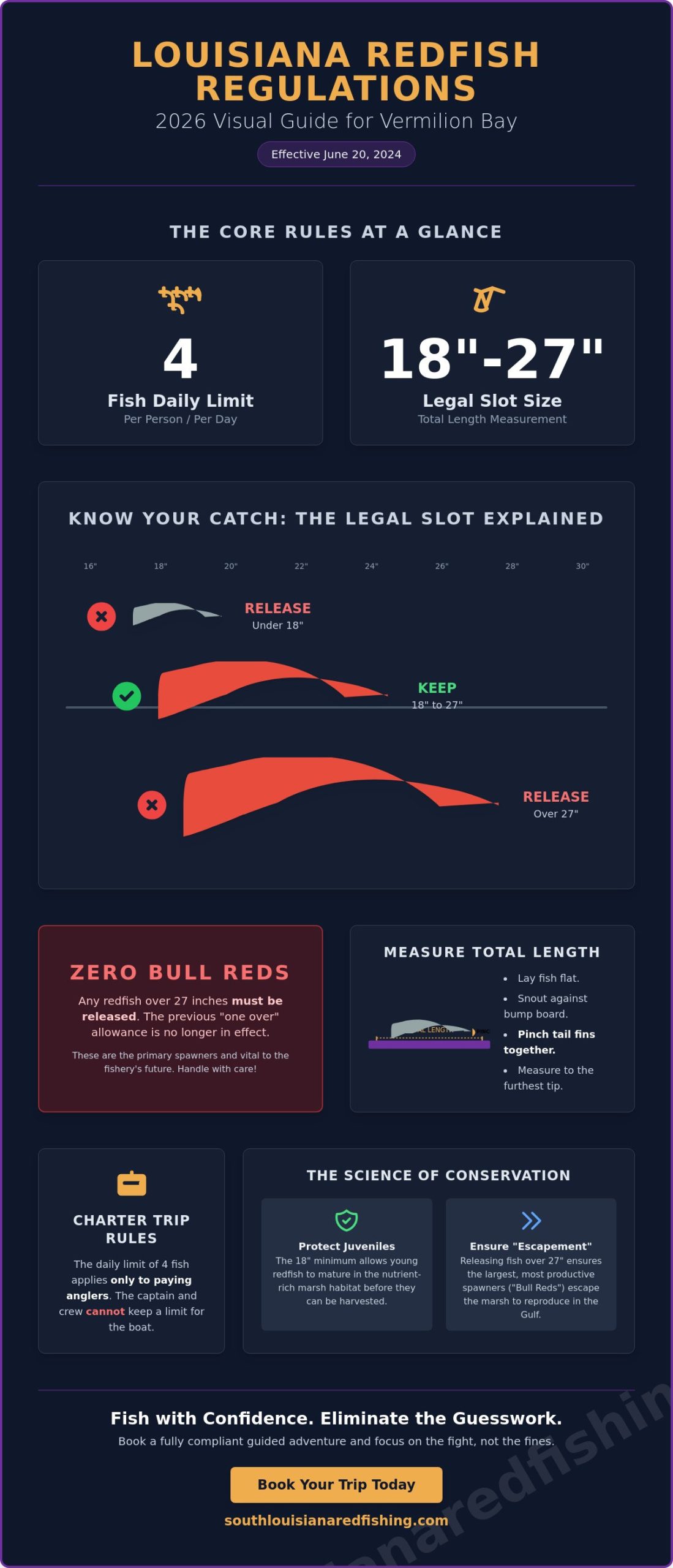
Most anglers treat a redfish like a standard speckled trout, but those thick, bronze scales will ruin a dull knife before you even reach the rib cage. Mastering how to clean a redfish is less about brute force and more about following the legendary Cajun techniques used by seasoned pros across Vermilion Bay. You’ve spent the day hauling in a limit of four fish between 18 and 27 inches, so the last thing you want is to waste that prime meat or struggle with a messy bloodline. Whether you’re coming off a high-energy trip with Capt. Troy D Nash or launching from Cypremort Point, you deserve a world-class meal to show for your effort.

This guide promises to turn you into a filleting expert, teaching you the iconic “on the half shell” method that makes South Louisiana’s seafood world-famous. You will learn the exact steps to produce clean, boneless fillets while avoiding the common mistakes that ruin a fresh catch. We will walk you through navigating the tough rib cage, removing the bitter red muscle, and keeping your haul ice-cold for the short ride back to Lafayette for a backyard fish fry.

Key Takeaways

  • Select the right high-carbon or electric blades to easily penetrate the thick, armor-like scales found on redfish throughout the Vermilion Bay marsh.
  • Learn the professional “behind the pectoral fin” cut to maximize your meat recovery and navigate the rib cage without wasting a single bite.
  • Master the iconic Cajun “on the half shell” method to create a natural heat shield that keeps your fillets moist and flavorful on the grill.
  • Discover the essential steps for how to clean a redfish while managing the messy bloodline and using an immediate ice bath to lock in freshness.
  • Understand why the crab-rich diet of reds near Marsh Island produces a sweeter flavor and how to properly transport your haul back to Lafayette.

Essential Tools for Cleaning Redfish in the Louisiana Marsh

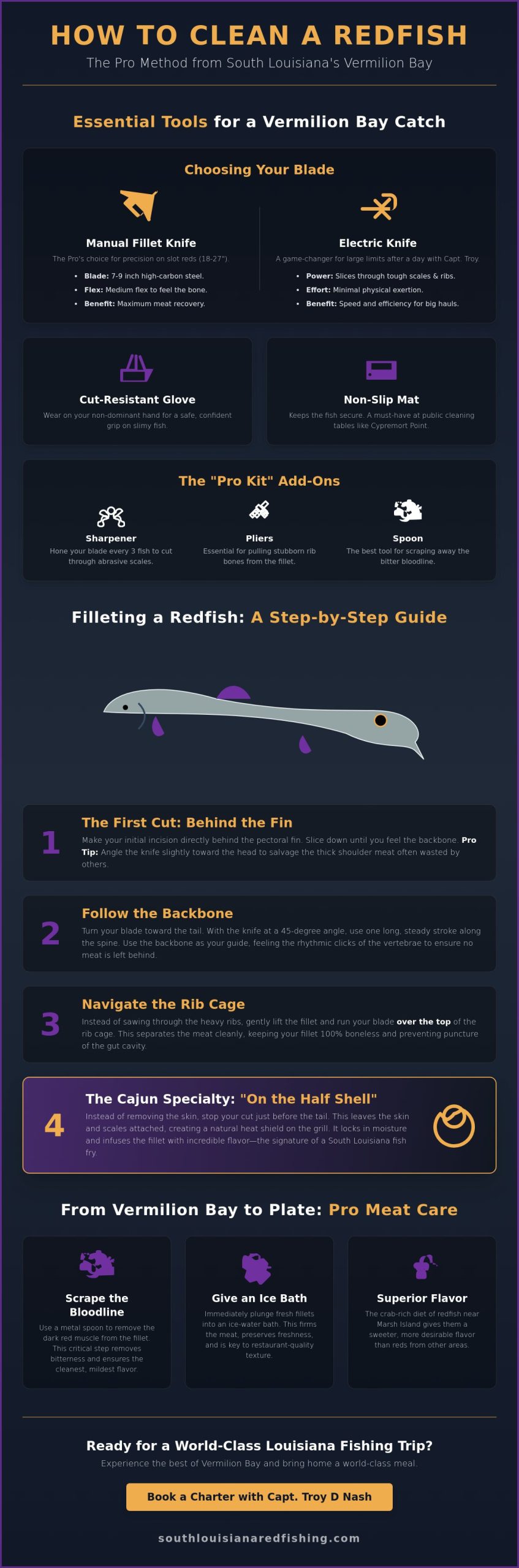
If you try to tackle a Marsh Island red with a standard kitchen knife, you’re bringing a toothpick to a gunfight. These fish are built like tanks. The bronze armor of the Red drum (Sciaenops ocellatus) is designed to protect them from predators in the shallow oyster reefs of Vermilion Bay, and those thick, overlapping scales will turn a dull blade into a safety hazard in seconds. A kitchen knife lacks the flexibility to contour around the spine and the backbone strength to pop through the heavy rib cage. To master how to clean a redfish without mangling the meat, you need a dedicated kit that respects the anatomy of the fish.

Safety starts with your grip. Redfish are notoriously slimy, and one slip can lead to a trip to the emergency room instead of the grill. Always wear a stainless steel mesh or high-performance polyethylene cut-resistant glove on your non-dominant hand. This gives you the confidence to apply the necessary pressure when making that initial cut behind the pectoral fin. Pair this with a sturdy, non-slip cleaning station. If you’re using the public tables at Cypremort Point State Park, bring a rubberized mat to keep the fish from sliding while you work through your limit.

Choosing Your Blade: Manual vs. Electric

The debate between manual and electric knives is a staple at every Louisiana boat launch. For the precision required to clean slot reds between 18 and 27 inches, a high-carbon steel manual fillet knife is often the superior choice. Look for a blade length between 7 and 9 inches with a medium flex. This allows you to feel the bone as you glide toward the tail, ensuring maximum meat recovery. However, if you’ve just finished a legendary day with Capt. Troy D Nash and have a full limit for a large group, an electric knife is a total game-changer. It powers through the heavy scales and rib bones with minimal physical effort, though it requires a steady hand to avoid overshooting the spine.

The “Pro Kit” Add-ons

Expertise is found in the details. Because redfish scales are so abrasive, you must hone your blade every three fish to maintain a lethal edge. Keep a ceramic sharpening stone or a handheld pull-through sharpener on your table. You’ll also want a pair of heavy-duty needle-nose pliers. These are essential for pulling stubborn rib bones or gripping the skin if you aren’t prepping your catch “on the half shell.” Finally, keep a large metal spoon in your kit. It’s the best tool for “scraping” the dark bloodline away from the white meat, a critical step in how to clean a redfish for the best possible flavor.

Step-by-Step Guide: How to Fillet a Redfish Like a Pro

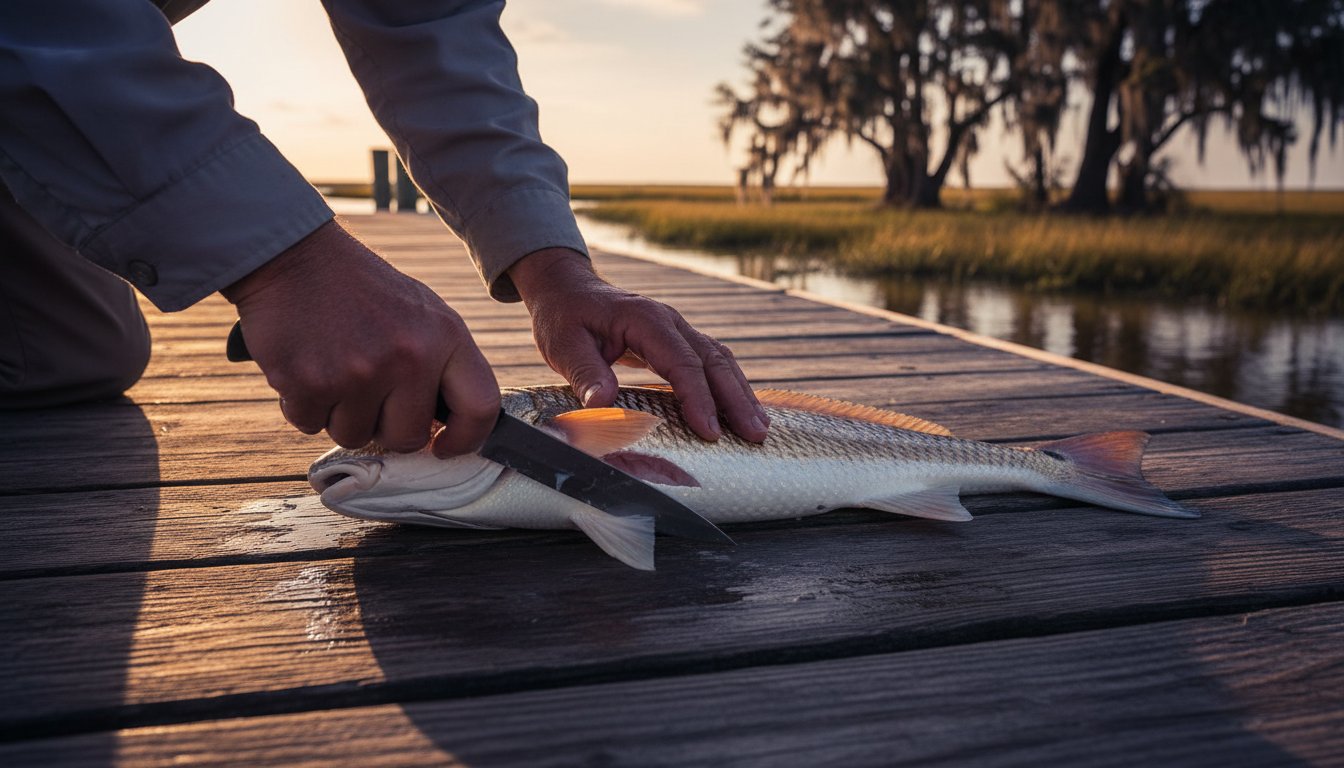
You’ve conquered the flats of Weeks Bay and returned with a limit of four slot reds. Now, the real test begins at the cleaning table. Knowing how to clean a redfish properly is the difference between a world-class Cajun dinner and a wasted day on the water. Start by securing the fish firmly on your non-slip station. Make your initial cut directly behind the pectoral fin, slicing down until you feel the resistance of the backbone. Aim your blade slightly toward the head during this first cut to salvage the thick shoulder meat that most casual anglers toss away when fishing in other areas.

The Initial Entry and Spine Cut

Capture the abundance of the marsh by following the spine with total confidence. Once your knife is seated against the backbone, turn the blade toward the tail and begin a long, steady stroke. Position your blade at a steep 45-degree angle against the dorsal fin to stay flush with the spine and capture every ounce of meat. This technique ensures you don’t leave half the fish on the bone, which is a common mistake for those used to the softer scales of fish in other regions. Use the backbone as your guide, feeling the rhythmic click of the vertebrae as you move toward the tail.

Removing the Ribs and Skin

Navigating the rib cage requires a delicate touch to avoid puncturing the guts and spoiling the meat. Instead of sawing through the heavy bones, lift the fillet slightly and run your knife over the top of the ribs. This keeps your fillets 100% boneless, which is the gold standard for those famous fried redfish nuggets served in Lafayette. Once the fillet is detached, place it skin-side down. Grip the tail tightly and slide your knife between the skin and the meat. Use a slight sawing motion while keeping the blade angled downward to ensure a smooth, waste-free finish.

The final pro move is the “Zipper” technique to remove the dark lateral line. Many guides in other areas skip this, but leaving that bloodline results in a fishy taste that ruins the sweet flavor of Marsh Island reds. Make two parallel slices along the dark red muscle and lift the strip out entirely. This leaves you with pristine, white fillets ready for the skillet. If you want to skip the learning curve and see these techniques firsthand, book one of our guided fishing trips and let an expert show you the ropes. Finish by trimming any remaining silver skin or fat to ensure your catch is restaurant-quality before it ever hits the ice.

How to Clean a Redfish: The Ultimate Guide to Cajun-Style Prep

The Cajun Specialty: Cleaning Redfish “On the Half Shell”

If you ask a local at Cypremort Point how they want their catch prepared, nine times out of ten the answer is “on the half shell.” This isn’t just a fancy menu term; it’s a specific technique for how to clean a redfish that leaves the skin and heavy scales completely attached to the fillet. In the Cajun heartland, we view those thick scales as a gift from the marsh rather than a nuisance to be removed. By keeping the “armor” on, you create a natural vessel that protects the delicate white meat from the intense heat of a grill or campfire. It’s the ultimate way to honor a fish caught in the pristine waters of Vermilion Bay.

Why Scales Matter for Grilling

The heavy scales of a redfish are practically fireproof. While anglers in other areas might waste time scaling their fish, South Louisiana pros know that the scales act as a natural heat shield. This allows the meat to simmer in butter and its own natural juices without drying out or charring. During the cook, the thin layer of fat between the skin and meat renders down, infusing the fillet with a rich, savory depth that you simply can’t get with a naked fillet. This method aligns perfectly with the high Louisiana Redfish prep standards that prioritize flavor and moisture above all else.

Execution of the Half Shell Cut

To master this cut, follow the same initial steps of making the entry behind the pectoral fin and gliding along the spine as established in the previous sections. The critical difference in how to clean a redfish on the half shell is that you never separate the meat from the skin. Once the fillet is free from the carcass, your work with the knife is done. You should have a sturdy, scale-backed piece of meat that holds its shape perfectly. This “boat” shape is ideal for holding puddles of melted butter and seasoning without anything dripping into the coals.

Before you head back to Lafayette, take a moment to focus on the scale side. Use a pressurized hose or a stiff brush to remove any marsh slime, mud, or grit from the scales. You want the armor to be clean, but you must be careful not to lift or remove the scales themselves. Pat the meat side bone-dry with a paper towel before bagging it. This prevents the “fishy” flavor that occurs when marsh water or slime sits on the fillet during transport. This prep ensures that when you fire up the grill, the only thing you smell is the sweet aroma of fresh, crab-fed redfish.

Meat Care: From the Vermilion Bay to Your Freezer

The secret to world-class Cajun seafood doesn’t start at the stove; it starts the moment your redfish hits the deck. In the humid heat of the Louisiana marsh, meat quality degrades rapidly. Professional guides at Cypremort Point always use a “slush” ice bath, mixing crushed ice with a little saltwater to drop the core temperature of the fish instantly. This prevents the flesh from becoming mushy and ensures that when you begin the process of how to clean a redfish, the meat remains firm and easy to handle. If you let your catch sit in a dry cooler for hours, you’re already fighting a losing battle against the sun.

The Importance of the Bloodline

Even the most perfect fillet can be ruined by leaving the lateral line intact. This dark, reddish-brown muscle contains a high concentration of fat and blood, which spoils much faster than the surrounding white meat. If you’ve ever had redfish that tasted “fishy” or “muddy,” the bloodline is almost certainly the culprit. While some anglers in other areas might ignore this step, we prioritize a clean finish for every catch. Firmly press the edge of a heavy-duty metal spoon against the backbone and drag it from ahead toward the tail to scrape away the dark blood along the spine. This simple step ensures that your fillets from Marsh Island remain sweet and mild, regardless of how you cook them.

Long-term Storage Solutions

If you aren’t cooking your catch the same day, proper storage is vital to maintaining that fresh-from-the-bay texture. Vacuum sealing is the gold standard for Louisiana Fish because it removes all oxygen, preventing the freezer burn that ruins so many great meals. While some old-school locals still freeze fish in Ziploc bags filled with water, this can actually waterlog the meat and damage the delicate fibers. A vacuum-sealed fillet can stay fresh for up to six months, while a refrigerated fillet should be eaten within two days for the best quality.

  • Label Everything: Use a permanent marker to record the date and the specific location, like “Vermilion Bay Reds.”
  • Thaw Slowly: Never use a microwave or hot water. Place the sealed bag in the fridge 24 hours before you plan to cook.
  • Dry Before Cooking: Pat the thawed meat with a paper towel to ensure a perfect sear or a crispy fry.

Mastering how to clean a redfish and caring for the meat ensures your hard work in the marsh pays off at the dinner table. If you want to spend more time catching and less time worrying about the details, come see how the pros do it. Book your guided fishing trip today and experience the best of the Cajun coast with an expert who handles the prep for you.

The Reward: Why Redfish from Cypremort Point Tastes Best

The ultimate prize for a day spent navigating the winding canals and weirs of the Louisiana marsh is a pile of sweet, white fillets. While mastering how to clean a redfish is a vital skill, the flavor of your meal is determined long before you pick up a knife. Redfish caught around Marsh Island and the shallow flats of Vermilion Bay have a distinct culinary advantage over fish found in other regions. These bronze beauties gorge themselves on a rich diet of blue crabs and grass shrimp. This crab-heavy diet infuses the meat with a natural sweetness that you won’t find in fish from deeper, saltier environments. It is a flavor profile that has made South Louisiana a global destination for seafood lovers.

From the Marsh to the Table

The secret lies in the unique salinity of our local waters. The mix of freshwater influence and the nutrient-rich marshes of West Cote Blanche Bay creates a perfect nursery. This environment produces a milder, cleaner taste compared to fish caught in high-salinity areas like Venice. Inshore fishing offers a level of freshness that simply cannot be matched by longer trips. Because you are often fishing just minutes from the dock at Cypremort Point, your catch goes from the water to a slush ice bath almost instantly. This rapid cooling preserves the delicate texture of the meat, ensuring it stays firm and delicious.

After you’ve finished the process of how to clean a redfish, the adventure continues in the kitchen. Many anglers take their fresh haul back to Lafayette, the heart of Cajun country. The city’s legendary culinary scene is filled with chefs who specialize in “Hook and Cook” experiences. They can take your pristine, half shell fillets and transform them with authentic spices and local techniques. Whether it is blackened, grilled, or fried, the quality of a Marsh Island red stands in a category of its own. It is a true “marsh to table” experience that celebrates the abundance of our coastline.

Book Your Next Adventure

Learning the intricacies of Cajun-style prep is a badge of honor, but sometimes you want to focus entirely on the thrill of the strike. When you book a guided trip with Capt. Troy D Nash, you are getting decades of local expertise and a commitment to excellence. We don’t just put you on the fish; we ensure your entire experience is world-class from the first cast to the final bag of fillets. Let us handle the heavy lifting while you enjoy the scenery and the fight. Experience the best Red Fish Fishing Louisiana has to offer. Ready to fill the cooler? Book your trip with Capt. Troy today!

Fire Up the Grill for a World-Class Cajun Feast

Mastering how to clean a redfish is the final step in becoming a true Louisiana angler. By using the right high-carbon blades and perfecting the “on the half shell” technique, you ensure every bite of your Marsh Island catch remains moist and flavorful. Remember that immediate temperature control and removing the dark bloodline are the secrets to preserving that sweet, crab-fed taste that makes our local reds famous. You’ve learned the steps to handle your own haul, but you don’t have to tackle the cleaning table alone on your next big adventure.

Experience the thrill of the strike without the stress of the mess. As a 3rd generation guide specializing in the pristine waters of Vermilion Bay and Cypremort Point, Capt. Troy D Nash provides a comprehensive outdoor experience. We include full-service fish cleaning on every trip so you can head straight to the kitchen. Focus on the fight and the legendary Cajun food waiting for you back in Lafayette while we handle the prep. Book Your Vermilion Bay Redfish Charter Now and discover why our inshore marsh is a premier destination. Your next trophy is waiting just past the reeds.

Frequently Asked Questions

Do I need to scale a redfish before filleting it?

No, you should never waste time scaling a redfish. Their scales are incredibly tough and act as a natural armor that protects the meat during the cleaning process. If you are preparing the fish “on the half shell,” the scales stay on to serve as a heat shield; if you want skinless fillets, you simply glide your knife between the skin and the meat to remove it all in one motion.

Is the “throat” of a redfish worth keeping and cleaning?

Absolutely, the throat is considered a hidden delicacy in the Cajun heartland. This cut is rich in fat and flavor, much like the collar of a yellowtail or the cheeks of a grouper. To clean it, cut a “V” shape behind the gills to remove the entire collar, then grill it alongside your fillets for a succulent treat that most anglers in other areas unfortunately throw away.

How do I get the “fishy” taste out of large redfish?

The key to a clean flavor is the immediate removal of the dark lateral line. While Louisiana regulations require you to release all “Bull Reds” over 27 inches, even a large 26 inch slot fish can have a strong taste if the bloodline isn’t managed. Scrape the blood along the spine with a spoon and “zipper” out the red muscle to ensure your fillets from the Cypremort Point marsh remain sweet and mild.

Can I clean a redfish with a regular kitchen knife?

You can try, but a standard kitchen knife will likely dull before you finish your first fish. Redfish scales are notoriously abrasive and require a high-carbon steel blade to maintain an edge. To truly master how to clean a redfish, you need a dedicated 7 to 9 inch fillet knife that offers the flexibility to navigate the spine and the strength to pop through the rib cage.

What is the “on the half shell” cleaning method?

This method involves removing the fillet from the carcass while leaving the skin and scales fully attached. It is the gold standard for grilling in South Louisiana because the scales create a natural boat that holds butter and seasonings. This technique prevents the meat from drying out over an open flame and is a favorite for those fishing the shallow flats of Vermilion Bay.

How long can redfish fillets stay in the freezer?

Vacuum-sealed redfish fillets will maintain their peak quality for up to six months. If you use a standard freezer bag with the water-immersion method, you should plan to eat your catch within three months to avoid texture changes. Always label your bags with the date and the specific catch location, such as “Marsh Island Reds,” to keep your freezer organized and your meals fresh.

Is it safe to eat the skin of a redfish?

It is perfectly safe, but most people find the skin far too leathery and tough to enjoy. Unlike the thin, edible skin of a speckled trout, redfish skin is thick and covered in heavy scales. Most Cajun recipes use the skin only as a protective barrier during the cooking process, allowing you to flake the tender meat away from the skin once it hits the plate.

What should I do with the redfish carcass after filleting?

Don’t let that flavor go to waste; use the head and bones to create a world-class seafood stock or court-bouillon. The carcass contains incredible depth that is perfect for Lafayette-style stews and gravies. Just be sure to remove the eyes and gills before boiling. If you aren’t a fan of stock, the remains make excellent bait for crab traps in the canals around Weeks Bay. Knowing how to clean a redfish means using every part of the bounty the marsh provides.

Catch and Release Fishing Charters LA: The Ultimate 2026 Louisiana Marsh Guide

Catch and Release Fishing Charters LA: The Ultimate 2026 Louisiana Marsh Guide

The most memorable days on the water aren’t measured by the weight of a bloody cooler, but by the number of screaming drags and heart-pounding releases. If you’re tired of the long, grueling boat rides and overtaxed waters of crowded hubs like Venice, it’s time to shift your focus to the pristine flats of the Cajun Coast. Booking catch and release fishing charters la in the Vermilion Bay marsh offers a pure sportfishing experience where the goal is maximum action and trophy-sized encounters. You deserve a guide who prioritizes the thrill of the fight and the health of the fishery over just filling a limit.

We know you’re looking for more than just a boat ride. You want an educational journey through the bayou with an expert who knows every hidden weir and oyster bed. In this ultimate 2026 guide, you’ll discover why the secluded shorelines of Marsh Island and the nutrient-rich waters of Cypremort Point are the premier destinations for high-volume hookups. We’ll break down the advantages of inshore marsh fishing with Capt. Troy D Nash, from the shorter travel times compared to offshore trips to the world-class redfish action found right in our backyard. Get ready to master the art of trophy handling and experience the very best of Louisiana’s legendary marshland.

Key Takeaways

  • Learn why the shallow-water flats of Vermilion Bay and Marsh Island provide the perfect arena for high-intensity sight-casting and trophy redfish encounters.
  • Discover how booking catch and release fishing charters la maximizes your actual fishing time by focusing on high-volume hookups rather than meat-hauling.
  • Understand the tactical advantages of inshore marsh trips, including significantly shorter boat rides and more “bites per hour” compared to costly deep sea excursions.
  • Master essential handling techniques like the “Keep Them Wet” principle to ensure the health and longevity of Louisiana’s legendary redfish population.
  • Find out what to expect when launching from Cypremort Point State Park with a third-generation expert who knows every hidden weir and oyster bed in the bayou.

What is Catch and Release Fishing and Why Choose it in Louisiana?

Feel the raw power of a bronze-backed Bull Red as it slams your topwater lure in the early morning mist. That moment of impact is the heartbeat of the marsh. For many modern anglers, the greatest satisfaction comes not from the harvest, but from the moment that massive fish kicks away from the boat, strong and healthy. Understanding What is Catch and Release Fishing starts with a conservation-first philosophy. It’s about respecting the resource while enjoying the most intense action the Gulf Coast has to offer. You’re here for the fight, the photo, and the future of the fishery.

Choosing catch and release fishing charters la in 2026 is a bold statement of intent. This year stands as a pivotal moment for our coastal ecosystems as we face shifting environmental patterns and increased pressure on popular species. By prioritizing the release, we ensure the world-class status of Louisiana redfish remains untouched for the next generation. There is a unique emotional reward in watching a trophy fish swim back into the grass of Vermilion Bay. It transforms a simple outing into a significant life event that honors the deep-rooted heritage of the bayou.

The Ethics of Modern Angling in the Bayou

True sportfishing is about the challenge of the hunt and the technical skill of the hookup. We’re seeing a massive shift across South Louisiana from traditional “meat-hauling” to a “memory-making” mindset. This approach significantly reduces our footprint on sensitive areas like localized oyster beds and the complex weirs of Marsh Island. When you release a trophy, you aren’t just letting a fish go. You’re protecting the intricate balance of the marsh and ensuring the flats stay productive. It puts the “sport” back in the center of the experience and keeps the action high for everyone on board.

Economic Benefits of Sustainable Fishing

Sustainability is the engine that drives our local economy. Every redfish released today is a direct investment in the thriving charter industry of 2027 and beyond. While other areas like Venice face significantly higher fishing pressure and overtaxed resources, our corner of the coast remains a premier destination due to proactive conservation. The long-term ROI of a healthy redfish population is measured in decades of world-class strikes and consistent action for every visitor who travels to the Cajun Coast. Booking a guided trip with Capt. Troy D Nash means you’re supporting a legacy of expertise that values the bayou’s future as much as the catch itself.

Why Vermilion Bay is the Premier Destination for Catch and Release

Vermilion Bay isn’t just another body of water; it’s a massive, shallow sanctuary for sportfish. Its unique geography, protected by the natural barrier of Marsh Island, creates a sprawling nursery for the Gulf’s most sought-after species. When you book catch and release fishing charters la in this region, you’re entering a labyrinth of shallow-water flats and winding canals designed for sight-casting. Seeing a copper-colored Redfish tailing in six inches of water is a rush you won’t find in the deep, murky waters of other areas. Because the bay is so shallow, fish are easily accessible and much easier to handle safely before they’re returned to the grass.

Abundance is the name of the game here. Whether you’re targeting aggressive Bull Redfish, feisty Spotted Sea Trout, or hard-pulling Black Drum, the sheer volume of life in these marshes is staggering. Unlike the long, grueling runs required in places like Venice, launching from Cypremort Point State Park means your lines are in the water within minutes. This accessibility is a game-changer for anyone looking to maximize their actual fishing time. If you’re ready to see this action for yourself, consider booking a guided session with a professional who knows these tides by heart.

Exploring the Cote Blanche Bays and Weeks Bay

The East and West Cote Blanche Bays serve as critical environments where juvenile fish develop into the trophies of tomorrow. The shorelines of Weeks Bay provide consistent, high-energy action for catch and release enthusiasts throughout the year. You’ll find fish stacked up near the weirs and interior lakes of Marsh Island, where the moving tide flushes bait through narrow openings. Following the Best Practices for Handling Louisiana Fish is essential here to ensure these populations continue to thrive in our unique brackish environment.

Nearshore Opportunities: Rigs and Reefs

The adventure doesn’t stop at the shoreline. Nearshore reefs and the structures near Burns Point offer a different kind of thrill for the adventurous angler. These structures are magnets for species like Tripletail, which often hover near floating debris and buoy lines. Because these spots are so close to the coast, you enjoy much better sea states than you would on a “deep sea” excursion. Shorter distances mean less time traveling and more time engaged in the heart-pounding reality of the catch.

Catch and Release Fishing Charters LA: The Ultimate 2026 Louisiana Marsh Guide

Inshore Marsh vs. Offshore: The Catch and Release Advantage

Stop spending your morning staring at a GPS while burning hundreds of dollars in fuel. Booking the best catch and release fishing charters la means you’re trading a long boat ride for immediate, high-octane action. While “deep sea” excursions often involve hours of travel before the first hookup, the marsh puts you in the strike zone within minutes of leaving the dock at Cypremort Point. This efficiency translates to a significantly higher number of “bites per hour” and lower overall costs. You’re paying for the experience of the catch, not the price of the fuel.

The thrill of “skinny water” fishing is unmatched in the angling world. There’s nothing like seeing a massive Redfish tailing in the grass or watching a Speckled Trout smash a topwater lure in two feet of water. You get to witness the strike, the headshake, and the run in crystal clear detail. This visual aspect makes every hookup feel personal and intense. You aren’t just winching a fish up from the dark depths; you’re engaging in a tactical duel on the flats where every movement counts.

You’ll also enjoy an incredible variety of Louisiana fish species during a single trip. It’s common to target Redfish, Flounder, and Speckled Trout all in the same morning without ever losing sight of the shoreline. This diversity keeps the energy high and ensures that every cast holds the potential for something different. Catch and release fishing charters la in these waters provide a technical challenge that tests your accuracy and finesse rather than just your physical endurance.

Comparing Sea States and Comfort

The protected waters of Vermilion Bay and West Cote Blanche Bay offer a level of comfort that offshore trips simply can’t match. You won’t have to worry about the punishing, rough seas often associated with offshore tuna trips. These calm, interior waters are perfect for families or anyone who prefers a stable deck under their feet. Staying close to the shoreline also means we can adapt quickly to changing weather, ensuring a safe and enjoyable journey for everyone on board.

The “Venice Comparison”: Why Vermilion Bay Wins

While other hubs like Venice are famous for their industrial scale, they often feel like a crowded factory. Vermilion Bay offers a much more intimate and personalized experience. We focus on the quality of the shots you get at trophy fish rather than the total pounds kept in a cooler. It’s a quieter, more authentic way to experience the bayou, where you can actually hear the sounds of the marsh instead of the constant drone of a hundred other boat engines. You get the space you need to perfect your cast and enjoy the solitude of the Louisiana coast.

Master the Release: Best Practices for Handling Louisiana Fish

The adrenaline is pumping after a heavy-hitting strike in the flats, but your focus must now shift from the thrill of the hunt to the science of survival. When you’re out with catch and release fishing charters la, every second the fish spends out of the water is a race against the clock. This is especially true during the intense Louisiana summers. High water temperatures in the marsh mean lower oxygen levels, making quick and efficient handling vital for the fish’s recovery. The “Keep Them Wet” principle isn’t just a catchy phrase; it’s a survival mandate for the trophy fish of Vermilion Bay.

Mastering the release starts with your gear choice before you even make the first cast. We use circle hooks almost exclusively because they are designed to slide to the corner of the jaw, which prevents dangerous gut-hooking. If you’re looking for an even faster exit, pinching the barbs on your hooks allows for a near-instant release once the fish is boat-side. When it comes to landing your prize, stay away from old-school nylon nets that can strip away the vital protective slime coating. A high-quality rubberized mesh net protects the fish’s skin and reduces tangles, making the transition back to the marsh seamless and stress-free.

Tools of the Trade for Successful C&R

Professional handling requires the right equipment ready on the deck. Long-nose pliers are essential for reaching hooks in tough spots, while specialized de-hooking tools can often free a fish without you ever having to touch it. For those massive Bull Reds that patrol the oyster beds of Marsh Island, a Boga-Grip provides a secure, non-piercing way to control the fish’s head while you support its body weight. The ideal hook-set for Louisiana redfish involves a steady, firm sweep of the rod rather than a violent jerk, allowing the circle hook to find its mark perfectly in the corner of the mouth.

Photography Tips for the “Catch and Release” Angler

We want you to have that trophy shot to show off back in Lafayette, but we won’t sacrifice the fish’s health for a photo. The “horizontal hold” is the gold standard. Always support the belly with one hand and the tail with the other to keep the internal organs in place. Never hold a large fish vertically by the jaw or gills, as this can cause permanent damage that isn’t immediately visible. Use a quick-snap strategy: keep the fish submerged in the rubber net until the photographer is ready, then lift, click, and return it to the water immediately. To see these techniques in action on the bayou, book your expert-led guided fishing trip and learn from a pro who lives for the release.

Before the final goodbye, give the fish ample time to recover its strength. Hold it gently by the tail, facing it into the current or the direction of the boat’s drift to force oxygen over the gills. Don’t move the fish back and forth in a “sawing” motion, which can actually hinder its ability to breathe. Just let the natural flow of the bayou water do the work until you feel that powerful, characteristic kick of energy. Once the fish is ready to go, it will let you know with a splash that signals a successful mission and a healthy future for the Louisiana marsh.

Booking Your Professional Charter with Capt. Troy D. Nash

Capt. Troy D. Nash isn’t just another name in the directory; he’s a third-generation guide who grew up with the salt of Vermilion Bay in his veins. This multi-generational heritage provides a level of expertise you won’t find with standard charters in other areas. When you’re searching for the best catch and release fishing charters la, you’re looking for someone who knows the hidden weirs of Marsh Island and the shifting oyster beds of Weeks Bay like the back of his hand. We don’t just take you to the fish; we provide a deep-rooted connection to the history and the heartbeat of the Louisiana marsh.

Our adventures launch directly from Cypremort Point State Park, the absolute best gateway to the Gulf of Mexico. This strategic departure point means we avoid the congested boat traffic found in industrial hubs. You’ll spend your time fishing, not traveling. We pride ourselves on versatility, offering everything from hardcore sight-fishing sessions on the flats to relaxed, educational family outings. Whether you’re aiming for a personal best Bull Red or teaching your kids the importance of conservation, we tailor the day to your specific goals and skill level.

The Complete South Louisiana Experience

A day on the water is only one part of the journey. To truly embrace the Cajun lifestyle, you have to experience the culture that makes this region world-famous. Lafayette serves as the perfect home base for your trip, offering a vibrant atmosphere that complements the solitude of the marsh. After a successful day of catch and release, you can head back to town to indulge in authentic Cajun delicacies. Don’t miss out on spicy boiled crawfish, smoky boudin, or a bowl of world-class gumbo. There are countless things to do in Lafayette that will turn your fishing trip into a significant life event.

Ready to Hit the Marsh?

We’re currently filling the calendar for the 2026 season. It’s smart to check availability early to ensure you get the best tides for targeting trophy Redfish and Speckled Trout. To maximize your success on the water, come prepared with the right gear. High-quality polarized glasses are essential for spotting tailing fish in the shallow flats of West Cote Blanche Bay. Bring plenty of sun protection and a camera to document those massive releases. We’ll handle the technical side, from the latest equipment to the local knowledge required for a high-volume day. The bayou is waiting for you. Book your South Louisiana Redfishing adventure today! and let’s make some memories on the water.

Step Into the Legend of the Louisiana Marsh

Your journey into the heart of the Cajun Coast is about more than just the catch; it’s about the connection to a world-class ecosystem. You’ve seen why the shallow flats of Vermilion Bay and the winding canals of Marsh Island offer a superior experience to the overtaxed waters of other areas. By choosing catch and release fishing charters la, you’re actively participating in the conservation of a legendary fishery while enjoying more bites per hour than a standard harvest trip. It’s the ultimate way to experience the raw power of the bayou without leaving a permanent footprint.

Trust your adventure to a 3rd Generation Louisiana Guide who knows these weirs and oyster beds better than anyone else. Capt. Troy D. Nash provides expert Vermilion Bay marsh navigation, ensuring you spend your time in the strike zone rather than searching for it. As a top-rated inshore charter in South Louisiana, we promise a professional, high-energy experience that respects the resource and celebrates the thrill of the fight. Every cast is a chance to make a memory that lasts a lifetime.

Book Your Catch and Release Adventure with Capt. Troy Nash and discover why our corner of the coast is the premier sportfishing destination for 2026. The tides are moving and the Bull Reds are waiting for you!

Frequently Asked Questions

Is catch and release mandatory on your Louisiana fishing charters?

Catch and release is not mandatory on our trips, but we highly encourage it for trophy-sized Bull Reds to ensure the future health of our marsh. You are always welcome to keep your legal limit of smaller “eater” fish for a fresh Cajun meal. Our focus is on providing a world-class sporting experience that balances the thrill of the catch with responsible resource management.

What is the best time of year for catch and release Redfish in Vermilion Bay?

While you can find action year-round, the fall months from September through November provide truly legendary opportunities for big numbers. During this season, massive schools of Bull Reds congregate in the shallow flats and around the weirs of Marsh Island. The cooler water temperatures also help fish recover faster, making catch and release fishing charters la incredibly effective during the autumn run.

Can I still take photos of the fish if I am releasing them?

Absolutely, we want you to capture that trophy shot to show off back in Lafayette. We follow specific handling techniques to ensure the fish stays healthy, such as keeping it in a rubberized net until the camera is ready. By using a horizontal hold and minimizing air exposure, we can get a great photo and ensure a powerful, successful release back into the bayou.

Do I need a special Louisiana fishing license for catch and release?

You need a standard Louisiana saltwater fishing license even if you don’t plan on keeping any fish. These are required for all anglers over the age of 16 and can be purchased easily online through the state’s wildlife department. These fees directly support the maintenance of our local oyster beds and reefs, keeping the ecosystem productive for every visitor.

How do you ensure the fish survives after being released?

We use professional-grade tools like circle hooks and rubberized nets to minimize physical stress on the fish. Once boat-side, we practice the “Keep Them Wet” principle and revive every fish in the current until it’s strong enough to kick away on its own. This expert care ensures that the trophy fish of Vermilion Bay live to fight another day and continue the spawning cycle.

What species are most common for catch and release in the South Louisiana marsh?

Redfish are the main event, but you’ll also encounter high-action Spotted Sea Trout, Black Drum, and Flounder. Near the oil rigs and reefs located nearshore just outside the bay, we frequently find hard-pulling Tripletail hovering near structure. Booking catch and release fishing charters la allows you to target all these species in one trip without the extreme fuel costs and long travel times required for deep sea excursions.

Can we do a mix of catch and release and keeping some for dinner?

Yes, many of our guests choose to release the large trophy spawners while keeping a few smaller, legal-sized fish for a family fish fry. We will even clean and bag your keepers at the end of the day. This hybrid approach lets you enjoy the technical challenge of sportfishing while still taking home a delicious part of the South Louisiana experience.

How far is Cypremort Point from Lafayette, LA?

Cypremort Point State Park is a convenient one-hour drive from Lafayette, making it the most accessible gateway to the Gulf. This short commute allows you to spend more time on the water and less time on the road compared to other areas. You can enjoy a world-class day of fishing in West Cote Blanche Bay and still be back in town in time for a celebratory dinner.

Speckled Trout Size Limit Louisiana: 2026 Angler’s Guide to Limits and Tactics

Speckled Trout Size Limit Louisiana: 2026 Angler’s Guide to Limits and Tactics

The 13 to 20 inch slot limit isn’t a barrier to your success; it’s actually the secret roadmap to a world-class trout fishery right here in Vermilion Bay. While many anglers feel frustrated by the 2023 changes, mastering the current speckled trout size limit louisiana enforces is your first step toward landing a trophy haul. These regulations were designed to protect the spawning females that keep our marshes thriving. It ensures that every cast you make contributes to a sustainable future for the sport we love.

We know the confusion is real when you’re out on the water trying to decide if a fish belongs in the ice chest or back in the bay. It’s stressful to worry about LDWF fines when you should be focused on the thrill of the strike. This guide promises to clear up the mystery behind the 15-fish daily limit and give you the pro tactics needed to find keepers in pressured areas like Marsh Island and Cypremort Point. We’ll walk you through the exact measurement rules, the best spots near local oyster beds, and why booking an expert like Capt. Troy D. Nash is the fastest way to master these waters while enjoying the best Cajun culture Lafayette has to offer.

Key Takeaways

  • Learn the exact rules for the 13-20 inch slot and the 15-fish daily creel to stay compliant with the current speckled trout size limit louisiana mandates.
  • Understand the science behind the new regulations and how protecting large, spawning females ensures a thriving future for our local marshes.
  • Identify high-traffic hotspots from the productive weirs of Marsh Island to the hidden oyster beds of East and West Cote Blanche Bay.
  • Refine your technique by downsizing plastics and mastering the popping cork to trigger strikes from keeper trout in the shallow flats.
  • Book a guided fishing trip with a seasoned expert to navigate the bay’s secret spots and experience the ultimate Cajun adventure.

Current Speckled Trout Size and Bag Limits in Louisiana (2026)

The rules of the game changed significantly on November 20, 2023, and staying compliant is the only way to keep the adventure going without a visit from the LDWF. For every angler targeting spotted seatrout (Cynoscion nebulosus) in our coastal marshes, the 15-fish daily creel limit is the current standard. This is a shift from the old 25-fish limit many grew up with, but it’s a necessary move to ensure our local populations remain robust. When you’re out on the reefs of West Cote Blanche Bay, you aren’t just looking for any fish. You’re looking for those that fit the specific speckled trout size limit louisiana mandates for 2026.

The current regulation requires a 13-inch minimum and a 20-inch maximum total length. This creates what we call a slot. Most of your 15-fish limit must fall within this window. However, the state knows that every angler dreams of a wall-hanger. You’re allowed to keep two fish over 20 inches per day as part of your total 15-fish count. If you’re on a guided fishing trip, remember that the captain and crew are prohibited from keeping their own limit. Those 15 fish are strictly for the paying customers to enjoy. It’s about maximizing your experience while protecting the resource.

Understanding the 13-20 Inch Slot Limit

Accuracy matters when the game warden pulls alongside your boat near Marsh Island. To stay legal, you must measure the total length of the fish. This means pinching the tail fins together to reach the maximum tip. This differs from fork length used for some nearshore species. The 13-inch minimum is the golden rule for South Louisiana. It ensures that young trout have a chance to spawn at least once before hitting the ice chest. While other areas like Venice might offer different environments, our local bays thrive when we respect these specific boundaries.

Possession and Bag Limits on the Water

Don’t let a multi-day trip end in a headache. While you can take 15 fish home after a day at Cypremort Point, your possession limit on land is 30 fish. This represents two days’ worth of legal harvest. On the water, however, you can never have more than a single day’s limit per person. If you’re staying at a camp near Weeks Bay, keep your catches separated by day. As for cleaning your haul, Louisiana law requires trout to remain in whole condition until you hit the docks. This means no filleting on the boat. It allows officers to verify the size and species easily. Once you’re back at the landing, you can prep those fillets for a classic Cajun dinner in Lafayette.

Why the Limits Changed: Protecting the Future of the Marsh

The shift in the speckled trout size limit louisiana anglers now follow wasn’t about taking away your fun. It was a calculated move to save the resource. For decades, we operated under a 25-fish limit with a 12-inch minimum, but the data showed our trout stocks were hitting a breaking point. According to Louisiana’s speckled trout regulations, the state needed a 20% reduction in harvest to allow the population to recover. Capt. Troy has seen these cycles firsthand for decades. He knows that a healthy bay means a better experience for everyone on the boat. We’re seeing more fish in the 13 to 15 inch range than ever before, which is a great sign that the recovery is working.

The goal isn’t just more fish; it’s better quality fish. By implementing the slot, the state is prioritizing the Spawning Potential Ratio (SPR). This is a fancy way of measuring how many eggs are being produced compared to an unfished population. When we protect the right size classes, we ensure the marsh stays loud with the sound of trout hitting the surface at sunrise. It’s about balance. We want a bay teeming with life, from the shallow flats of Vermilion Bay to the deepest canals of Marsh Island.

The Science of the Spawn

SPR is the heartbeat of the trout population. If that heartbeat slows down, the entire fishery suffers. The “Big Girls,” those trout over 20 inches, are the heavy lifters of the ecosystem. A single 24-inch trout can produce millions more eggs over a season than a 12-inch fish. While those 13 to 15 inch trout provide the best table fare and the sweetest meat, the giants are the engines of the marsh. By limiting the harvest of these trophy females to just two per day, we’re investing in the future of every oyster reef and weir in the system.

Vermilion Bay vs. The Rest of the Coast

Our local marsh is a massive nursery for the next generation of trout. Unlike the deep, high-salinity waters you might find in Venice, Vermilion Bay is a complex mix of freshwater from the Atchafalaya and salty tides from the Gulf. This unique blend creates a sanctuary. The grass beds and shorelines around Cypremort Point State Park offer the perfect cover for young fish to grow. Local management makes this area a premier destination because we focus on the health of the entire basin. Seeing the recovery firsthand on guided fishing trips is the best way to appreciate why these changes matter. We aren’t just catching fish; we’re witnessing the comeback of a world-class fishery. After a day on the water, you can head back to Lafayette for some legendary Cajun food, knowing you played a part in keeping our marshes alive.

Speckled Trout Size Limit Louisiana: 2026 Angler’s Guide to Limits and Tactics

Top Spots for Keeper Trout: Vermilion Bay to Marsh Island

Landing a limit is about more than just luck; it’s about understanding the unique geography of our South Louisiana coastline. While the 13 to 20 inch speckled trout size limit louisiana enforces can seem tight, our local waters are perfectly suited for these regulations. From the vast grass flats of Vermilion Bay to the rugged shorelines of Marsh Island, the fish are there if you know the terrain. We don’t have the deep, clear water seen in Venice, but our nutrient-rich bays provide the exact habitat these trout need to reach that legal slot. Knowing the current and the bottom structure is what separates a successful trip from an empty ice chest.

The Marsh Island Advantage

Marsh Island is a fortress for seatrout and one of the most reliable spots in the state. The complex system of weirs and canals acts like a magnet for bait, especially during the spring transition. When the tide pulls water out of the interior lakes, trout sit right at the mouth of the weirs waiting for a meal. This is where you’ll find the highest density of fish ready to strike. Check out our guide on Louisiana Fish: Top Inshore Species to see how trout stack up against other local favorites. Focus on the south-facing canals that connect directly to the Gulf of Mexico for the best chance at a keeper that fits the slot.

Cote Blanche and Burns Point Tactics

Moving east, the oyster reefs of East and West Cote Blanche Bay offer a different challenge. These waters are often murkier due to the Atchafalaya River’s influence, but that salinity mix is exactly what makes the trout thrive. According to Louisiana’s official speckled trout regulations, these areas are vital nurseries that support the entire basin. The “inside” marsh areas are usually packed with numbers, which is perfect for filling your 15-fish limit with aggressive 14-inchers. If you want the “outside” size, target the deeper reefs near Burns Point where the water stays a bit saltier.

When the summer heat kicks in, the shorelines of Weeks Bay become a sanctuary. The trout move along the points where the current is strongest. If you’re hunting for those two allowed fish over 20 inches, look toward the nearshore oil rigs just outside the bay. These structures hold the trophy females that have moved out of the shallow flats to find cooler, deeper water. It’s a short run from Cypremort Point State Park, offering a world-class experience without the long haul required in other areas. After a morning of pulling slot trout off the reefs, there’s nothing better than heading back to the landing for a cold drink and some authentic Cajun flavors in the heart of Acadiana.

Pro Tactics for Catching Slot Trout in 2026

Cracking the code on the 13 to 20 inch slot requires a shift in your tactical mindset. You aren’t just looking for any bite; you’re hunting for the specific class of fish that fits the speckled trout size limit louisiana mandates. In the shallow flats of Vermilion Bay, the trout are often keyed in on tiny glass minnows and juvenile shrimp. This means downsizing your presentation is the most effective way to trigger a strike. While you might use larger topwaters in other areas across the state, our local marsh demands a more refined approach. Smaller is better. It’s that simple. When you mimic the local forage, your hookup ratio on slot fish sky-rockets.

Mastering the popping cork is your best bet for consistent success. In the tea-colored waters around Cypremort Point, the sound of a clicking cork mimics a feeding trout or a snapping shrimp. It draws fish in from a distance. For bait selection, live shrimp is the undisputed king when the bite is tough, but a Matrix Shad in a “shrimp-creole” or “lemon-head” color is a close second. Artificial lures allow you to cover more water and find those aggressive schools sitting near the oyster reefs of West Cote Blanche Bay. If you find yourself catching too many undersized fish, try moving to the deeper edges of the canals where the larger slot fish often wait for the tide to turn.

Lure Selection for 13-20 Inch Trout

Color choice is critical in our coastal basin. Stick to high-contrast colors like purple and chartreuse for murky days and translucent “shrimp” patterns when the sun is out. Use a 1/8 oz jig head for the shallow flats to keep your lure from snagging the bottom, but step up to a 1/4 oz head when fishing the stronger currents of the Marsh Island weirs. If you want to see how these tactics compare to other species, check out our Louisiana Redfish: Ultimate Guide for more pro tips. Proper gear selection ensures you spend more time reeling and less time untangling.

Catch and Release: The ‘Best Handling’ Protocol

Ensuring the survival of released fish is the only way to reach the state’s recovery goals. Always use wet hands and a rubber-coated net to protect the trout’s delicate slime coat. This prevents infections after the fish is returned to the water. Use a pair of long-nose pliers to de-hook fish quickly without removing them from the water if possible. For nearshore trout caught at the oil rigs in deeper water, a descending tool is a weighted device that helps fish return to the bottom to counteract the effects of barotrauma and ensure they survive to spawn again. Ready to put these tactics to the test? Book your guided fishing trip today and let’s go fill that ice chest with legal keepers.

Book Your Vermilion Bay Adventure with Capt. Troy D Nash

Stop guessing where the fish are and let a seasoned pro lead the way. Capt. Troy D Nash is a third-generation guide who has spent his entire life learning the rhythms of Vermilion Bay. When the speckled trout size limit louisiana mandates changed, he didn’t miss a beat. He knows exactly where the slot fish are hiding during every tide change and seasonal shift. Booking a guided fishing trip with an expert ensures you spend your day catching rather than searching. We handle the heavy lifting so you can focus on the thrill of the strike. It’s a world-class experience built on decades of local heritage and professional tenure.

Every trip we lead is a comprehensive service designed for your success. We provide all the top-tier tackle you need, handle the fuel, and offer expert fish cleaning at the end of the day. You don’t need to worry about the gear; we provide everything required to land a limit. Whether you’re targeting trout in the flats or redfish in the marsh, we have you covered with the best equipment in the industry. It’s a complete, professional journey from the moment you step onto the boat at Cypremort Point State Park.

The Cypremort Point Experience

Cypremort Point is the premier gateway to the best inshore fishing in the state. One of the biggest advantages of choosing this location is the travel time. Unlike the grueling hauls required in Venice or other areas along the coast, Cypremort Point is just a short trip from the heart of Acadiana. You’ll spend more time with your line in the water and less time burning daylight on a boat. Our shorter runs to Marsh Island and Cote Blanche Bay mean more casts and more fish in the box.

After the sun goes down, the adventure continues. Our proximity to Lafayette means you can pair your fishing trip with world-class tourism and legendary culture. From swamp tours to historic sites, there are plenty of Things to Do in Lafayette, Louisiana. Don’t forget the food. There is nothing like a local Cajun dinner featuring fresh seafood after a successful day on the bay. It’s the perfect way to cap off a significant life event on the water.

Ready to Hit the Water?

We specialize in creating memorable trips for small groups and families of all skill levels. Whether you’re a seasoned angler or taking the kids out for their first big strike, we ensure everyone feels confident and capable. While speckled trout are a primary target, the seasonal availability for redfish offers year-round excitement in the marsh. We tailor every trip to the current conditions to give you the best shot at a full cooler and a memorable journey.

Don’t let another season pass you by while you’re stuck on the shore. The marsh is calling, and the trout are waiting for you. Book Your South Louisiana Fishing Charter Today and experience the absolute best of Vermilion Bay with a guide who lives and breathes these waters.

Master the Marsh and Fill Your Cooler

Mastering the speckled trout size limit louisiana requires more than just a ruler; it demands a deep respect for the marsh and the right tactical approach. By targeting the nutrient-rich waters of Vermilion Bay and downsizing your plastics to match local glass minnows, you can turn a confusing regulation into a day of massive success. We’ve seen how the 13-20 inch slot protects the “Big Girls” while providing plenty of action for those who know where the oyster beds hide near Cypremort Point. This recovery plan isn’t a hurdle, it’s the foundation for a world-class fishery that will last for generations.

Don’t leave your next adventure to chance. Capt. Troy D Nash brings over 20 years of Vermilion Bay expertise and a 3rd-generation heritage to every trip. We handle everything from the fuel to the expert fish cleaning, ensuring your journey is as seamless as it is thrilling. It’s time to stop worrying about the rules and start enjoying the best inshore fishing Louisiana has to offer. Whether you’re a seasoned pro or a first-timer, we’ll put you on the fish and show you the true heart of the Cajun marsh.

Book Your South Louisiana Speckled Trout Charter with Capt. Troy

The fish are waiting, and the bay is louder than ever. Let’s get out there and make some memories.

Frequently Asked Questions

What is the minimum size for speckled trout in Louisiana in 2026?

The minimum size for speckled trout is 13 inches total length. Every fish you keep must reach this mark to be legal. It’s best to use a specialized measuring board to ensure accuracy since a small mistake can lead to a fine. This minimum size was established to give younger fish a chance to spawn before they’re harvested from the bay.

Can I keep speckled trout over 20 inches in Louisiana?

You’re allowed to keep two fish over 20 inches as part of your 15-fish daily bag limit. These larger fish are the primary spawners for the population, so the state limits their harvest. If you land a third fish over 20 inches, it must be released immediately. This rule allows you to keep a trophy while protecting the future of the marsh.

How many speckled trout can I keep per day in Louisiana?

The current daily bag limit is 15 fish per person. This limit is a significant part of the speckled trout size limit louisiana framework designed to rebuild our local stocks. It provides enough for a great Cajun fish fry while ensuring the population remains sustainable. Remember that your possession limit on land is 30 fish, which covers two days of fishing.

Do these trout regulations apply to charter boat captains and crew?

The captain and crew of a charter vessel are not allowed to keep a daily limit for themselves. Only the paying customers on the boat can harvest fish. This regulation ensures the focus remains on the client’s experience and helps reduce the total pressure on the trout population. Your guide is there to help you find the fish, not fill their own freezer.

What is the best month to catch speckled trout in Vermilion Bay?

The months of April, May, and June are fantastic as trout move onto the shallow flats to feed. You’ll also find a massive surge in action during October and November as the fish transition into the deeper canals for the winter. These windows offer the best weather and the highest concentration of keeper-sized fish in our local system near Cypremort Point.

Do I need a special permit for speckled trout in addition to my saltwater license?

You don’t need an additional trout-specific permit, but you must have a valid Basic Fishing License and a Saltwater License. These are required for all anglers targeting seatrout in our coastal waters. Make sure your digital or paper copies are ready for inspection before we leave the dock. Staying legal is the first step to an adventurous day on the water.

Is there a different size limit for speckled trout in other areas of Louisiana?

The speckled trout size limit louisiana mandates is standardized across the entire state. Whether you’re fishing the deep passes near Venice or other areas along the coast, the 13 to 20 inch slot remains the same. This consistency helps protect the species statewide while making it easier for anglers to stay within the law regardless of which basin they choose to explore.

Can I fillet my trout on the boat before heading back to the dock?

You must keep your trout in whole condition until you reach the landing. Filleting fish on the boat is prohibited because it makes it impossible for officers to verify the size and species. Once we arrive back at the dock at Cypremort Point, we’ll provide expert fish cleaning. We’ll have those fillets ready for you to take home and enjoy with some authentic Cajun sides.

Louisiana Fishing Regulations for Redfish: The 2026 Angler’s Guide

Louisiana Fishing Regulations for Redfish: The 2026 Angler’s Guide

What if your “fish of a lifetime” in the Vermilion Bay marsh actually cost you thousands in fines instead of just a great story? It is a real risk since the rules changed. We know that keeping up with the latest louisiana fishing regulations for redfish can feel like trying to net a shadow in muddy water. You are out there for the thrill of the strike and the beauty of the Cajun coast, not to worry about an accidental run-in with the LDWF. It is frustrating to see the rules shift, but these conservation efforts are what keep our local waters world-class for generations to come.

I am here to make sure you are fully prepared for your next adventure. You will master the 4-fish daily limit and learn exactly how to identify a legal 18 to 27 inch slot fish every single time. We will also clear up the confusion surrounding the “no bull red” rule and explain why your charter captain can no longer keep a limit for the boat. From the oyster beds of Marsh Island to the hidden weirs of West Cote Blanche Bay, this guide provides the clarity you need to fish with total confidence and ensure your haul is legal.

Key Takeaways

  • Master the 2026 daily bag limit and slot size requirements to stay compliant with the latest louisiana fishing regulations for redfish.
  • Learn why the 18 to 27 inch slot is critical for protecting juvenile fish and ensuring the future of our world-class marsh habitat.
  • Understand the new guide retention bans so you know exactly how many fish your party can legally bring back to the dock.
  • Discover how to navigate the specific boundaries of Vermilion Bay and Marsh Island where state laws meet the Gulf’s edge.
  • Pair your high-action redfish hunt with the legendary Cajun culture and food that makes the Lafayette area a premier destination.

Current Louisiana Redfish Regulations: Limits and Sizes for 2026

The 2026 season is here, and the energy across the Vermilion Bay marsh is electric. To keep our waters the premier redfish destination in the country, the LDWF implemented major updates to the louisiana fishing regulations for redfish. These rules aren’t just suggestions; they are the law of the land designed to protect the future of our legendary fishery. As of today, the daily creel limit is set at 4 fish per person. Every fish you keep must fall within the strict “slot” of 18 to 27 inches total length. Any fish smaller or larger than that range must go back into the water immediately.

These changes went into effect on June 20, 2024, to address overfishing and help rebuild the spawning population. By targeting fish in this specific size range, we allow more juveniles to reach maturity and head out toward the nearshore oil rigs to spawn. The Red Drum (Redfish) is a resilient species, but it relies on us to play by the rules so the population can recover. When you’re out on the flats or scanning the shorelines of Marsh Island, following these limits ensures that the next generation of anglers gets the same heart-pounding strikes we enjoy today.

Measuring Your Catch: Total Length vs. Fork Length

The LDWF uses “Total Length” to determine if your catch is legal. This means you have to lay the fish on its side and pinch the tail fins together to reach the maximum possible measurement. Grab a standard bump board and slide the fish’s snout firmly against the headrest. If that tail doesn’t cross the 18-inch mark with a pinch, it’s a “must-release” every single time. A 17.5-inch fish might look like a keeper, but keeping it puts you at risk for a heavy fine at the Cypremort Point State Park boat launch. Booking a trip with a seasoned pro like Capt. Troy D Nash ensures you never have to guess about these measurements; we handle the technical details so you can focus on the fight.

The ‘No Bull Red’ Rule Explained

The biggest shift for 2026 is the total ban on “Bull Reds.” In other areas like Venice, anglers used to be able to keep one fish over the slot limit. That is no longer the case. Any redfish over 27 inches must be released. These massive bronze backs are the primary spawners for the entire marsh system. When you hook into a giant near the reefs of West Cote Blanche Bay, enjoy the battle, take a quick photo, and get it back in the water. Use wet hands to handle the fish and support its belly to avoid internal damage. If it’s a hot Louisiana afternoon, spend an extra minute reviving the fish by moving it forward through the water until it swims away under its own power.

The Science of the Slot: Why the 18-27 Inch Limit Matters

The logic behind the current louisiana fishing regulations for redfish is rooted in a concept called “escapement.” This is the percentage of juvenile fish that must survive their time in the marsh to reach the Gulf and spawn. Biologists have determined that the 18 to 27 inch slot is the sweet spot for growth. By keeping the minimum size at 18 inches, we ensure every fish has at least one full year of rapid development in our nutrient-rich estuaries. This allows them to bulk up on the abundant blue crabs and shrimp found throughout the canals and weirs of Marsh Island before they ever face a hook.

Once a redfish hits that 27-inch mark, its life mission changes. It transitions from a marsh dweller to a “bull” that heads toward the nearshore oil rigs and reefs to join the spawning biomass. Protecting these larger fish is vital because they are the engines of the entire population. You can find the full technical breakdown of these biological goals in the official Louisiana 2026 Redfish Regulations. When you see a massive red cruising the flats of West Cote Blanche Bay, remember that letting it go is an investment in the thousands of future fish it will produce. If you want to see this science in action, booking a day on the water with an expert guide is the best way to learn the marsh’s secrets.

Marsh Habitat and Juvenile Growth

Vermilion Bay and the surrounding shorelines offer a perfect nursery for louisiana redfish. The combination of shallow grass flats and expansive oyster beds provides both protection from predators and a constant buffet of forage. Unlike other areas that may lack this diverse structure, our local marsh accelerates fish growth through superior water quality and habitat complexity. This environment turns a fingerling into a hard-fighting slot red in record time, making Cypremort Point a legendary starting point for any serious angler.

Conservation Success Stories

We’ve been here before. In 1988, Louisiana faced a similar crisis and implemented bold changes that led to a “Golden Age” of redfish abundance. The 2026 regulations are a return to that proactive mindset. By strictly enforcing the 27-inch cap, we directly increase the number of eggs produced in the Gulf each season to ensure the population remains stable. It’s a proven strategy that prioritizes the long-term health of the Cajun coast over a single day’s heavy cooler. Following these rules means our children will experience the same adrenaline-pumping strikes that we do today.

Louisiana Fishing Regulations for Redfish: The 2026 Angler’s Guide

Charter Trip Compliance: Rules for Your Guided Adventure

Booking a guided trip in the Vermilion Bay marsh is the ultimate way to experience the Cajun coast, but the 2026 rules have changed how we handle the cooler. One of the most significant updates to the louisiana fishing regulations for redfish is the elimination of the “guide limit.” In years past, captains and deckhands could keep their own limit of fish to supplement the client’s haul. Today, charter professionals are prohibited from retaining any redfish for themselves. This rule is a core part of the Redfish Conservation Science aimed at reducing the total annual harvest to sustainable levels.

While the captain can’t put fish in their own cooler, this change actually works in your favor. It ensures that every legal slot fish we find is dedicated entirely to your party’s limit. You don’t have to worry about the “meat” being split; the focus is 100% on maximizing your experience. Our job is to put you on the best louisiana fish in the marsh, and we can still provide “demonstration fishing.” This means your guide can hook a fish to show you the proper technique before handing the rod over for you to land the prize. It is a seamless way to learn the nuances of the flats while staying fully compliant with LDWF standards.

Louisiana Fishing License Requirements

Before we leave the dock at Cypremort Point, every angler needs the right paperwork. For the 2026 season, Louisiana residents need a Basic Fishing License ($17.00) plus a Saltwater License ($15.00). If you’re visiting from out of state, the most cost-effective option is the 3-day Charter Passenger Saltwater License, which is available for just $20.00. You can grab these online in minutes. Having your digital or printed license ready ensures we can head straight to the weirs and canals of Marsh Island without delay. Your captain acts as the ultimate authority on the water, so if you’re ever unsure about a specific permit, just ask before we cast off.

The Pro Advantage: Staying Legal with Capt. Troy Nash

Fishing with a 3rd generation expert like Capt. Troy Nash removes all the guesswork from your day. We use professional-grade, certified measuring boards that are far more accurate than a simple sticker on a cooler lid. This precision is vital when a fish is right on the 18-inch or 27-inch line. When we’re targeting a variety of species, such as Speckled Trout alongside redfish, we manage the logistics of every limit for you. Unlike other areas like Venice where regulations can feel overwhelming, our focus on the Vermilion Bay system allows us to provide a relaxed, high-action environment where you know every fish in the box is 100% legal.

Success in the Vermilion Bay marsh starts with knowing exactly where you stand. Unlike the sprawling, confusing deltas found in other areas like Venice, our corner of the Cajun coast offers clear visual boundaries. Staying within the three-mile state limit is easy when you are targeting bronze backs in the shadow of Marsh Island. This proximity to shore is a massive advantage for anyone navigating the louisiana fishing regulations for redfish. You get all the action of the Gulf without the high costs or rough sea states associated with going deep sea.

Our local hotspots, like the reefs of West Cote Blanche Bay, provide world-class fishing while keeping you safely within state jurisdiction. This means you can focus on the fight rather than worrying about crossing into federal waters where different rules might apply. Our trips feature a short 20-minute run from the dock to the best redfish flats. It is a streamlined, high-energy experience that gets you to the fish faster and keeps you on the right side of the law. You get more time with a line in the water and less time burning fuel.

Shoreline and Weir Regulations

The marsh is filled with water control structures known as weirs. These are magnets for redfish because they concentrate bait, but you must know the rules for approaching them. Some canals in the area are privately owned, and trespassing is a quick way to ruin a great day. Having a seasoned guide who knows the public access points around Cypremort Point State Park is a game changer. We ensure you are always fishing in legal, public waters while chasing the most aggressive slot reds in the system.

Nearshore Opportunities: Oil Rigs and Oyster Beds

If you want to venture just a bit further, the closest nearshore oil rigs are teeming with life. These structures sit well within the state’s three-mile boundary, allowing you to stay compliant with louisiana fishing regulations for redfish while enjoying a different style of fishing. The massive oyster beds of South Louisiana are another local treasure. These beds create a unique ecosystem that produces some of the hardest-fighting and best-tasting redfish in the world. Ready to see it for yourself? Secure your spot on our next trip and experience the best of the Vermilion Bay marsh.

Plan Your Compliant Adventure with South Louisiana Redfishing

Your journey through the Vermilion Bay marsh shouldn’t end when you hit the dock. Choosing a professional like Capt. Troy D Nash ensures your day is built on a foundation of multi-generational expertise and total legal compliance. We take the stress out of the latest louisiana fishing regulations for redfish so you can focus on the drag-screaming runs and the golden flash of a slot red in the shallows. Our team knows every weir and oyster bed from Cypremort Point to Marsh Island. This local knowledge gives you a front-row seat to the best inshore action in the state. Early reservations for the 2026 season are essential. The peak months fill up fast as anglers flock to our waters for a more relaxed and authentic experience than you’ll find in crowded “other areas” like Venice.

Once you’ve secured your legal limit, it’s time for the “Cajun Finish.” Several local restaurants around the Lafayette area offer a “Catch and Cook” service where they’ll prepare your fresh redfish fillets using traditional Cajun techniques. There’s nothing quite like tasting the reward of a hard day’s work in the marsh. It turns a simple fishing trip into a legendary life event that stays with you long after the cooler is empty. We handle the cleaning and bagging; you just provide the appetite.

The Full South Louisiana Experience

Cypremort Point is your gateway to a world where world-class fishing meets deep-rooted culture. After a day on the flats, you’re just a short drive from the heart of Acadiana. You can explore a variety of lafayette things to do louisiana, from live zydeco music to the most authentic boudin on the planet. When packing for your trip, bring plenty of sun protection, polarized glasses to spot those reds, and an appetite for adventure. We provide the professional-grade gear and local expertise. You just bring the enthusiasm.

Ready to Hit the Water?

Stop dreaming about the marsh and start living the adventure. Capt. Troy D Nash is ready to guide you through the winding canals and expansive lakes of our premier redfish habitat. Our commitment to the resource means we respect the louisiana fishing regulations for redfish while maximizing your time on the water. We are results-driven and customer-focused, ensuring every person on the boat feels like a seasoned pro. Book Your South Louisiana Redfish Charter Today! and see why our heritage makes us the top choice for a compliant, high-action journey on the Cajun coast.

Start Your Legendary 2026 Redfish Hunt

The 2026 season offers the chance of a lifetime to explore the gold-standard waters of the South Louisiana marsh. You now have the knowledge to navigate the louisiana fishing regulations for redfish with total ease. Remember that the 4-fish limit and the strict 18 to 27 inch slot are your keys to staying legal while protecting the future of our world-class fishery. From the oyster beds of Marsh Island to the hidden weirs of West Cote Blanche Bay, the adventure is waiting for you. Success in these waters is about more than just a catch; it’s about connecting with a heritage that runs deep in the Cajun coast.

Don’t settle for a generic outing when you can fish with a 3rd Generation Louisiana Guide who sets the Red Dot standard for inshore expertise. Operating from the heart of Vermilion Bay, we provide the seasoned perspective only decades of professional tenure can offer. We handle every technical detail of compliance so you can focus on the adrenaline-pumping strikes and the beauty of the marsh. The redfish are calling. Book Your Vermilion Bay Redfish Trip with Capt. Troy Nash and turn your next outing into a legendary life event. We look forward to seeing you at the dock!

Frequently Asked Questions

What is the daily bag limit for redfish in Louisiana for 2026?

The daily creel limit is 4 fish per person for the 2026 season. This regulation is a significant reduction from previous years and is a core part of the louisiana fishing regulations for redfish aimed at population recovery. Every angler on the boat is entitled to their own limit, meaning a group of three can legally bring home 12 slot-sized fish after a successful day in the Vermilion Bay marsh.

Can I keep a redfish over 27 inches in Louisiana?

No, you cannot keep any redfish that exceeds 27 inches in total length. These larger “bull reds” are the primary spawners for our local estuaries and must be released immediately to ensure the future of the fishery. While other areas like Venice previously allowed one “over” fish, the current 2026 rules strictly prohibit the possession of any redfish outside the 18 to 27 inch slot.

Do I need a special license to fish for redfish in the marsh?

You need a combination of a Basic Fishing License and a Saltwater License to legally target redfish. For 2026, Louisiana residents pay $17.00 for the basic permit and $15.00 for the saltwater addition. Non-residents visiting Cypremort Point can purchase a convenient 3-day charter passenger saltwater license for $20.00, which covers everything needed for a guided trip with a professional captain.

Are the redfish regulations different for charter boats?

Charter boats must follow a specific “no retention” rule for captains and crew members. While your guide is an expert at finding the fish, they are not permitted to keep a daily limit for themselves or their clients. This ensures the harvest stays within sustainable levels while focusing the entire experience on the paying guests. It’s a proactive measure to keep our inshore waters teeming with life for years.

Can I keep redfish caught in federal waters?

You cannot keep any redfish caught in federal waters, as the harvest is strictly prohibited in the Exclusive Economic Zone. This zone begins three miles off the coast, so it’s vital to stay within state boundaries. The beauty of fishing the reefs and oil rigs near Marsh Island is that you stay well within the legal three-mile limit while still enjoying some of the best action in the Gulf.

What happens if I accidentally catch an undersized redfish?

You must release any redfish under 18 inches immediately and with great care. Use wet hands and minimize the time the fish spends out of the water to increase its chances of survival. These juveniles are the backbone of the louisiana fishing regulations for redfish recovery plan. Returning them to the nutrient-rich canals of West Cote Blanche Bay allows them to grow into the heartier slot fish we all love to catch.

Is there a season for redfish, or can I fish for them year-round?

Redfish can be targeted year-round in Louisiana because there is no closed season for this species. The fish are always active in the marsh, though their patterns shift as the water temperature changes. Winter brings lower tides and clear water for sight-fishing, while the summer months offer explosive action near the weirs and oyster beds. Every season provides a unique and adventurous way to experience the Cajun coast.

What is the best way to measure a redfish to ensure it’s legal?

The most accurate method is using a flat measuring board to determine the “total length” of the fish. Lay the redfish down with its snout pressed firmly against the headrest and pinch the tail fins together to reach the maximum point. If the pinched tail falls between 18 and 27 inches, it’s a legal keeper. We use professional-grade equipment on every charter to ensure your haul is 100% compliant with LDWF standards.

What to Expect on a Guided Fishing Trip in South Louisiana: The 2026 Pro Guide

What to Expect on a Guided Fishing Trip in South Louisiana: The 2026 Pro Guide

What if your next vacation wasn’t just a getaway but a high-octane adventure through the most productive marshland in North America? You likely already realize that the Louisiana coast is the premier destination for redfish and trout, yet you might be unsure about what to expect on a guided fishing trip when it comes to weather, gear, and licensing. It’s completely normal to worry about being unprepared for a day on the water, but that shouldn’t keep you from the trip of a lifetime.

We are here to clear the deck and show you exactly how a professional charter works in the legendary waters of Vermilion Bay and Cypremort Point. This pro guide breaks down the entire experience from the early morning launch at the dock to the moment you head home with a cooler full of fresh fillets. You’ll learn the secrets of handling professional gear, the details of the $20 non-resident saltwater license, and the current 2026 limits for Redfish and Speckled Trout. Get ready to experience a stress-free, world-class adventure that puts the focus back on the thrill of the catch.

Key Takeaways

  • Master the logistics of a professional launch, from the essential pre-trip confirmation call to arriving at the dock ready for a high-energy marsh run.
  • Understand exactly what to expect on a guided fishing trip regarding high-end tackle, live bait, and the expert knowledge provided by a third-generation guide.
  • Explore the unique tactics used to target trophy Redfish and Trout across the productive oyster beds and secret weirs of Vermilion Bay and Marsh Island.
  • Learn how to work as a team with Capt. Troy D Nash to navigate the local waters safely while maximizing every minute of your time casting in the flats.
  • Discover the post-trip ritual of professional fish cleaning and how to perfectly prep your catch for a legendary “dock to dish” Cajun dinner in nearby Lafayette.

Planning Your Launch: Pre-Trip Preparation and Morning Logistics

Stepping onto a professional charter boat is more than just a day on the water; it is a major life event designed for maximum excitement. A guided trip in South Louisiana is a full-service experience where every detail is handled by an expert. You aren’t just paying for a boat ride. You are investing in decades of local heritage, a high-performance vessel, and pro-grade gear specifically tuned for the marsh. When you understand what to expect on a guided fishing trip, you realize the captain is your greatest asset, providing the tactical knowledge required to navigate complex weirs and oyster beds that would baffle an amateur.

Preparation begins with the “Night Before” confirmation call. This is a non-negotiable part of the process. You’ll speak directly with your captain to sync up on the final weather forecast and meeting logistics. Most launches occur between 5:00 AM and 6:00 AM to capitalize on the prime morning bite. While other areas like Venice often involve bone-jarring, long-distance runs through open water, the launch from Cypremort Point is a much smoother affair. You’ll enjoy a calm, scenic run into the fertile marshes of Vermilion Bay, reaching the first honey hole before the sun has fully cleared the horizon. This efficiency means more time casting and less time commuting.

Securing Your Louisiana Fishing License

Getting your paperwork in order is the first step toward a stress-free morning. Most out-of-state anglers find the 3-day non-resident saltwater charter passenger license to be the most convenient option. It costs $20.00 and is specifically designed for guests fishing with a licensed guide. You can find out how to get your Louisiana fishing license online through the LDWF portal in just a few minutes. This ensures you are legally prepared to participate in recreational fishing the moment you step on deck. Keep a digital copy on your phone or a printed version in a waterproof bag to ensure a smooth start to your adventure.

Meeting at Cypremort Point State Park

Cypremort Point State Park serves as the premier gateway to the most productive inshore waters in the state. Parking is straightforward and secure, allowing you to focus entirely on the anticipation of the catch. You’ll meet Capt. Troy D Nash at the dock, where the boat will be fueled, iced down, and rigged for battle. If the weather looks “Louisiana-style” with unpredictable clouds, don’t worry. A seasoned pro knows how to read the tides and the sky to keep you in the action. Their results-driven approach means they have a “Plan B” and “Plan C” already mapped out in the nearby canals and lakes to ensure your time on the water is both safe and successful.

Pro Gear and Master Guides: What is Provided and What to Pack

One of the most common questions regarding what to expect on a guided fishing trip is how much gear you need to haul to the dock. The answer is simple: almost none. A professional charter is a turnkey experience designed for your success. We provide the high-performance rods, precision reels, fresh bait, and fuel required for a full day of action. You won’t find any worn-out equipment here. Instead, you’ll be using specialized marsh tackle selected by a third-generation guide who understands the unique demands of the South Louisiana coast. This level of preparation ensures that when a trophy Redfish hits your line in the middle of a Vermilion Bay flat, your gear won’t let you down.

There is a massive difference between the finesse gear used in our marshes and the bulky, exhausting setups found on deep sea boats. Inshore fishing is about agility and accuracy. Our lightweight setups allow you to cast into tight pockets near weirs and shorelines without the physical strain of offshore fishing. Safety is also a top priority. We provide all necessary Coast Guard-approved life jackets and emergency equipment, so there is no need to pack your own bulky safety gear. If you are looking for the most efficient way to get on the water, booking a professional charter is the gold standard for any serious angler.

The Boat and Tackle Setup

Expect to step onto a clean, fast inshore bay boat specifically engineered to navigate the shallow marshes of Marsh Island and Weeks Bay. These vessels offer a stable casting platform and the speed to reach the best oyster beds quickly. Capt. Troy D Nash utilizes a mastery of technical equipment categories to ensure every lure and live bait setup is optimized for the current season. We don’t use generic “one size fits all” tactics. We match the hatch to trigger aggressive strikes from Speckled Trout and Redfish. Before you head out, it is always wise to stay current on Louisiana fishing licenses and regulations to ensure your paperwork is as ready as our tackle.

Your Personal Adventure Packing List

While we handle the heavy lifting, your personal comfort is your responsibility. The Louisiana sun is legendary, making “marsh-proof” sunscreen and high-quality polarized sunglasses non-negotiable. Polarized lenses are essential for cutting through the glare on the flats to spot fish before they see you. For footwear, please wear shoes with non-marking soles; this keeps the deck clean and ensures you have a firm grip during the excitement of a hookup. We provide a large on-board cooler with plenty of ice. You are welcome to bring your favorite snacks and drinks to stay fueled throughout the morning. Just keep it simple so we can maximize the space for your limit of fish.

What to Expect on a Guided Fishing Trip in South Louisiana: The 2026 Pro Guide

Rods in the Air: The Inshore Fishing Experience in Vermilion Bay

The engine roars to life and the adventure truly begins. As you leave the dock at Cypremort Point, you’ll immediately see why this region is world-class. The run takes you through a labyrinth of winding canals, expansive lakes, and ancient weirs that define our unique landscape. Unlike the grueling runs found in some other areas where you might battle heavy swells, our inshore adventure stays in the protected, glass-calm waters of the marsh. This stable sea state is a massive advantage, ensuring everyone from seasoned pros to young children stays comfortable while hunting for the next strike. Understanding how to prepare for a guided trip helps you focus on the scenery rather than worrying about the logistics.

Once on the grounds, the strategy shifts based on the tides and the wind. You might find yourself sight-fishing in the shallow flats, watching for the telltale “tailing” of a hungry fish, or casting over submerged oyster beds where predators congregate. This is the heart of what to expect on a guided fishing trip: a dynamic, high-energy hunt where the environment dictates the tactics. Louisiana redfish are undoubtedly the stars of this show, known for their relentless power and bronze-scaled beauty. When one of these bulls hits your line, be ready for a fight that you’ll remember for a lifetime.

Targeting the “Big Three”: Redfish, Trout, and Flounder

A “hook up” with a South Louisiana Redfish is an adrenaline spike like no other. They don’t just bite; they explode. While Redfish are the year-round mainstays, you’ll also target Speckled Trout and Black Drum depending on the season. The sheer variety found within the Vermilion Bay system often surpasses other regions in the state, providing a more diverse day on the water. Whether you’re feeling the sharp “thump” of a trout or the heavy, steady drag of a drum, the action is constant. We pride ourselves on putting you where the fish are, regardless of the species.

Marsh vs. Nearshore Rig Fishing

The landscape here is breathtaking, stretching from the dense grasses of Marsh Island out toward the edge of the Gulf of Mexico. For those craving a different challenge, we often target the closest nearshore oil rigs for Tripletail. These structures act as magnets for life, offering a unique change of pace from the marsh shorelines. The protected shorelines remain the perfect training ground for beginners and kids, offering plenty of action without the complexity of deep-water tactics. It’s a world-class playground that delivers results every single time. Visualizing the transition from the marsh to the Gulf edge helps you appreciate the scale of this prestigious fishery.

Guide Etiquette and Safety: Maximizing Your Time on the Water

A successful day in the marsh is a partnership between you and your captain. One major component of what to expect on a guided fishing trip is the high level of communication required to stay on the bite. Capt. Troy D Nash is there to be your tactical advantage, but he needs to know your comfort level with the gear. Be honest about your experience. Whether you are a seasoned pro or a first-timer, a clear dialogue ensures the boat stays productive and safe from the first cast to the last.

The golden rule for any charter is simple: listen to your guide. Their expertise is what puts more Louisiana fish in the boat. We follow all Louisiana Department of Wildlife and Fisheries (LDWF) regulations with zero exceptions. This includes the current 2026 limits of four Redfish per person within the 18 to 27-inch slot and 15 Speckled Trout between 13 and 20 inches. These rules protect our world-class fishery for future generations. Regarding tipping, the industry standard is 15% to 20% of the trip cost. This gratuity reflects the hours of preparation, cleaning, and expertise your captain provides to make your adventure a success.

Communication and Coaching

Don’t ever feel intimidated if you aren’t an expert caster. Saying “I don’t know how to cast” is perfectly okay and actually helps your guide coach you faster. Capt. Troy handles the heavy lifting, including clearing snags, untangling lines, and re-baiting hooks. It’s his job to keep your line in the water while you focus on the excitement. This proactive, customer-focused attitude is the hallmark of South Louisiana Redfishing, ensuring every guest feels like a priority. We want you to feel confident and capable throughout the entire journey.

Weather and Safety Protocols

Safety is the foundation of every trip. Summer squalls can pop up quickly on the bay, but a seasoned captain knows exactly how to navigate these brief shifts. Because we fish the protected inshore waters of Vermilion Bay and Marsh Island, seasickness is rarely an issue. This is a massive benefit compared to the rolling swells of the open Gulf. We keep a close eye on hydration and heat management, especially in the legendary Louisiana humidity. Drink plenty of water and let your guide know if you need a break in the shade. Ready for a world-class day on the water? Book your South Louisiana charter today and experience the marsh like a pro.

Back at the Dock: Fish Cleaning and the Lafayette Connection

The engine cools as the boat glides back into the slip at Cypremort Point, but the adventure is far from over. One of the most rewarding parts of what to expect on a guided fishing trip is the transition from the hunt to the harvest. While some other areas might leave you to handle your own catch, a professional South Louisiana charter includes full-service processing. Watching a master guide at the cleaning table is a spectacle in itself. They work with a speed and precision that only comes from decades of experience. They turn your day’s success into perfect fillets ready for the pan before you even have your gear loaded.

Professional Catch Processing

Professional processing is about more than just convenience. It’s about respecting the resource. Capt. Troy D Nash ensures every Redfish and Speckled Trout is handled with care to preserve the quality of the meat. If you want the ultimate Cajun culinary experience, ask for your Redfish to be cut “on the half-shell” with the scales left on one side. It’s the premier way to grill them over an open flame with butter and lemon. To ensure your harvest makes it home in peak condition, always bring a dedicated travel cooler to keep in your vehicle. We provide the ice at the dock to pack your bags. This ensures that world-class flavor stays locked in until you reach your kitchen.

Cajun Hospitality and Lafayette Tourism

Choosing Cypremort Point as your launch site puts you in the heart of Acadiana. This makes Lafayette the perfect base camp for your vacation. After a high-energy morning on the water, you’re just a short drive away from the best boudin, gumbo, and crawfish in the world. The trip truly ends at the dinner table. There, you can share the stories of the marsh over a fresh meal. There are countless things to do in Lafayette that make this region superior to more isolated fishing hubs. From live Zydeco music to historic tours, the culture here is as rich as the fishing.

Cypremort Point State Park offers a family-friendly atmosphere that you won’t find in more industrial ports. With its man-made beach and picnic pavilions, it’s the premier choice for those who want a complete outdoor experience. You aren’t just booking a boat ride. You’re immersing yourself in a multi-generational heritage of sport and hospitality. Pack your bags, grab your license, and get ready. Discover why South Louisiana remains the undisputed capital of the inshore world.

Cast Your Line Into the Legendary Vermilion Bay

Your journey into the heart of Acadiana is just a few clicks away. You now have a complete roadmap for your adventure, from securing your $20 charter license to mastering the “on the half-shell” grilling technique. You understand that a day in the marsh isn’t just about the catch; it’s about the scenic run through Marsh Island, the thrill of a Redfish strike, and the confidence that comes from fishing with a 3rd generation expert. By knowing exactly what to expect on a guided fishing trip, you can leave the stress at the dock and focus entirely on the world-class action.

We provide the pro-grade tackle, the local knowledge, and full-service fish cleaning to ensure your trip is seamless. Don’t settle for a generic outing when you can experience the premier inshore destination in the state. Combine your day on the water with the vibrant Cajun culture of Lafayette for the ultimate Louisiana escape. It’s time to turn those dreams of bronze-scaled bulls into reality. Your world-class marsh adventure is waiting for you.

Book Your Unforgettable South Louisiana Redfishing Adventure Now!

The marsh is calling and the bite is on. We can’t wait to see you at the Cypremort Point dock for a day you’ll never forget!

Frequently Asked Questions

Do I need to know how to fish before booking a guided trip?

No, you don’t need any prior experience to enjoy a world-class adventure. Our charters are designed for all skill levels, from first-timers to seasoned pros. Capt. Troy D Nash provides hands-on coaching to ensure you’re casting with confidence in the Vermilion Bay marshes. We handle the technical details so you can focus on the thrill of the catch. It’s the perfect way to learn the ropes while targeting trophy Redfish.

What is the standard tip for a fishing guide in Louisiana?

The standard gratuity for a hard-working fishing guide is 15% to 20% of the trip’s total cost. This tip reflects the extensive preparation, professional expertise, and post-trip fish cleaning provided by your captain. Tipping is a common industry practice that rewards the results-driven service required to navigate the complex weirs and oyster beds of the South Louisiana coast. It’s a great way to show appreciation for a memorable journey.

Are children allowed on inshore fishing charters?

Absolutely, children are more than welcome on our inshore adventures. The calm waters of the Louisiana marsh are much friendlier for young anglers than the rougher conditions of the open Gulf. We love sharing the heritage of the sport with the next generation. Our trips provide a safe, high-energy environment where kids can land their first Redfish or Speckled Trout under the watchful eye of a seasoned expert.

What happens if the weather is too bad to fish?

Safety is our absolute priority, and we monitor the weather constantly. If conditions on Vermilion Bay are deemed unsafe by the captain, we will work with you to reschedule your trip for the next available opening. Unlike other areas where long runs are required, our proximity to the marsh allows for some flexibility, but we never compromise on your well-being. We want your world-class experience to be both exciting and safe.

Do I need to bring my own life jacket or fishing rod?

No, we provide all the high-performance gear you need for a successful day. This includes Coast Guard-approved life jackets, precision rods, and reels specifically tuned for the marsh. You don’t need to worry about what to expect on a guided fishing trip regarding equipment; we have it covered. Just bring your personal items like sun protection and snacks, and we’ll handle the professional tackle and safety gear for you.

Will the guide clean the fish we catch?

Yes, full-service fish cleaning is included as part of your charter experience. Once we return to the Cypremort Point dock, your guide will professionally fillet and bag your catch with incredible speed and precision. This ensures your Redfish and Trout are ready for the dinner table the moment you get home. It’s a signature part of our comprehensive service, allowing you to enjoy the harvest without the mess or extra effort.

Can I bring alcohol on the boat during the trip?

You are welcome to bring beer or wine in moderation to enjoy during your trip. However, we ask that you avoid glass bottles for safety reasons on the deck. Our primary focus is always on the high-octane fishing action in the flats and nearshore reefs. We want everyone to have a thrilling time while remaining safe and alert as we navigate the canals and lakes of the South Louisiana coast.

How long does a typical guided fishing trip last?

A typical morning launch lasts approximately six to eight hours, though the exact timing can vary based on the bite. We aim to maximize your time on the water, starting at daybreak to hit the prime feeding windows in the marsh. Understanding what to expect on a guided fishing trip means preparing for a full day of adventure. We work hard to ensure every minute is packed with excitement and world-class opportunities for every angler.

Avoiding Seasickness on Inshore Charters: The Ultimate Guide to Comfortable Fishing

Avoiding Seasickness on Inshore Charters: The Ultimate Guide to Comfortable Fishing

The dream of landing a giant bull red shouldn’t be overshadowed by the fear of spending your day leaning over the gunwale. Many anglers assume that a day on the water naturally comes with a side of nausea, but the truth is that avoiding seasickness on inshore charter trips is much easier than you think. With up to 20% of people experiencing motion sickness on boats according to the American Medical Association, it’s a common worry. Nobody wants to be the person who ruins an epic adventure for the rest of the group because they’re stuck feeling green. We understand that anxiety, especially when compared to the rougher conditions found in other areas like Venice.

You don’t have to sacrifice the thrill of the catch for a settled stomach. Inshore fishing in the protected marshes of Vermilion Bay and around Cypremort Point offers the perfect solution for those who want the action without the rolling swells of the deep sea. This guide will show you exactly why these shallow flats are your best bet for a comfortable experience. You’ll discover a practical checklist of pre-trip actions and clear advice on which medications actually work. We’ll give you the confidence to book your next trip with Captain Troy Nash and focus on the giant fish, not the waves.

Key Takeaways

  • Understand the sensory conflict that causes motion sickness and how to stop your inner ear from rebelling against the boat’s movement.
  • Discover why avoiding seasickness on inshore charter trips is much easier in the calm, shallow waters of Vermilion Bay than in the rolling swells of other areas.
  • Learn the essential “Night Before” prep rules regarding hydration and Cajun cuisine to ensure your body is ready for an epic adventure.
  • Master simple on-the-water tactics, such as horizon-tracking and boat positioning, to stay steady while you reel in speckled trout and bull reds.
  • See how the local expertise of a veteran guide like Capt. Troy Nash keeps you in the most protected canals and bays for a smooth, successful ride.

Understanding Seasickness: Why Your Inner Ear Rebels

Your epic adventure in the Louisiana marsh shouldn’t be cut short by a queasy stomach. While the thrill of chasing giant bull reds is enough to get anyone’s heart racing, the physical reality of being on a boat can sometimes trigger a rebellion in your body. When you’re Understanding Seasickness, it’s vital to realize it isn’t just “all in your head” or a sign of weakness. It’s a physiological response to a disconnect between what you see and what you feel.

Sensory conflict is the primary cause of motion sickness, occurring when your brain receives contradictory data from your eyes and your inner ear. Imagine you’re standing on the deck of a boat in Vermilion Bay. Your inner ear feels the gentle sway of the water, but if you’re looking down at your tackle box or inside a cabin, your eyes tell your brain that everything is stationary. This confusion is what leads to that dreaded feeling. Avoiding seasickness on inshore charter trips starts with recognizing the very first signs. You might notice yourself yawning more than usual, developing a slight headache, or feeling a sudden cold sweat. These are the “yellow lights” your body flashes before the real trouble starts.

The Science of the Vestibular System

The real culprit lives deep inside your skull. Your vestibular system consists of tiny, fluid-filled canals in your inner ear that act like a biological level. As the boat moves, this fluid shifts, sending signals to your brain’s balance center about your orientation in space. Some people have more sensitive systems than others, which explains why your buddy might be fine while you’re feeling the “washing machine” effect. However, the shallow, protected waters of Cypremort Point and Cote Blanche Bay are much easier on the inner ear than the heavy swells found in other areas like Venice.

Psychological Factors: The Power of Suggestion

There’s a significant mental component to staying stable. If you spend the whole morning worrying about getting sick, you’re actually priming your brain to trigger that response. This is where the confidence of a veteran guide comes in. Captain Troy Nash has seen it all in over 25 years on the water, and his expert handling of the vessel ensures a smooth ride. He’s got you covered! The best way to beat the mental game is to stay busy. When you’re focused on the “thump” of a speckled trout hitting your line or looking out for the next oyster bed, your brain prioritizes the excitement of the catch over the minor movements of the boat. Experience the thrill, stay active, and let the Cajun sun and the promise of a limit of fish keep your mind on the adventure.

Inshore vs. Offshore: Why Vermilion Bay is the Cure for Motion Sickness

The open ocean can feel like a washing machine on a bad day. For many anglers, the thought of deep sea fishing brings up images of massive swells and hours spent staring at a bucket. If you’re worried about your stomach, avoiding seasickness on inshore charter trips is the ultimate game changer. Vermilion Bay and the surrounding Louisiana marsh offer a completely different experience. Instead of the deep-sea “heave” that causes your inner ear to rebel, these shallow waters remain remarkably stable. You get all the action of an epic adventure without the physical toll of the open Gulf.

Unlike other areas like Venice where you might spend hours running into open water, our trips keep land in sight. This visual connection to the shoreline provides a fixed point for your eyes, which is a key part of your Pre-Trip Prep and on-water strategy. If the wind does pick up, we have a “bail-out” factor that offshore boats simply can’t offer. We can reach calm, protected canals or leeward shorelines in just a few minutes. You’re never stuck in the rough stuff when you’re fishing the flats and bayous.

The Geography of Protection: Marshes and Bays

The endless banks and bayous of South Louisiana serve as a natural windbreak. Locations like Weeks Bay and East Cote Blanche Bay are shielded by land on multiple sides. This protection transforms potential swells into a minor “chop.” While a swell is a long, rolling wave that moves the entire boat up and down, a chop is just a surface ripple. Your stomach can handle a little chop, but it’s the rolling swells that usually cause trouble. Cypremort Point is the ideal launch for sensitive travelers because it puts you right in the heart of these protected zones immediately.

Nearshore vs. Deep Sea: A Stability Comparison

Nearshore fishing offers a perfect middle ground for those wanting a bit more variety. We can hit the closest oil rigs, oyster beds, and reefs without heading into the “blue water.” These areas are significantly more stable than the open ocean. Shorter travel times mean you spend less time in transit and more time catching some of the best Redfish fishing in the United States. While Venice is famous for its fishery, it often requires much longer runs through exposed water. Choosing an inshore or nearshore trip with Capt. Troy Nash ensures you stay in the calmest spots while still targeting giant bull reds and limits of trout. He’s got you covered!

Avoiding Seasickness on Inshore Charters: The Ultimate Guide to Comfortable Fishing

Pre-Trip Prep: How to Prime Your Body for an Epic Adventure

Avoiding seasickness on inshore charter trips starts long before you pull into the parking lot at Cypremort Point. While we’ve discussed why the protected marshes are physically easier on your body, your internal chemistry plays a huge role too. Think of your body as a high-performance vessel; it needs the right fuel and maintenance to handle a day on the water. The “Night Before” Rule is simple but non-negotiable: prioritize hydration and sleep. If you’re dehydrated or exhausted, your brain struggles to resolve the minor sensory conflicts we mentioned earlier, making you much more vulnerable to feeling “off.”

South Louisiana is famous for its world-class cuisine, but you should navigate the menu carefully before your trip. Save the spicy crawfish boils, heavy seafood gumbo, and rich boudin for your post-fishing celebration in Lafayette. These heavy, acidic foods can sit in your stomach and cause reflux, which acts as a major trigger for nausea. According to the NOAA National Ocean Service’s guide to Understanding Seasickness, a settled stomach is one of your best defenses. Unlike the long, rough runs required in other areas like Venice, our trips are much smoother, but a belly full of spicy gumbo can make even a calm bay feel like a challenge.

The Angler’s Breakfast: What to Eat and Avoid

Don’t make the mistake of heading out on an empty stomach. A “neutral” stomach is your goal. Reach for dry toast, plain bagels, or saltine crackers to soak up excess stomach acid. Be wary of your morning caffeine routine. While a cup of coffee is fine for most, too much can act as a stimulant that increases your sensitivity to motion. Instead, embrace the power of ginger. Whether it’s ginger ale, snaps, or raw root, this plant is a scientifically backed remedy that settles the stomach naturally. It’s a trick South Louisiana Redfishing guides have relied on for years to keep guests in the game.

Medication and Patches: A Pro’s Perspective

If you know you’re prone to motion sickness, medication is a reliable tool when used correctly. The biggest error people make is taking a pill at the dock. You must respect the “2-hour window.” Most over-the-counter options need time to enter your bloodstream to be effective. For active anglers who want to stay sharp for the thump of a bull red, consider these three non-drowsy alternatives:

  • Bonine (Meclizine): Often preferred over original Dramamine because it causes significantly less grogginess.
  • Scopolamine Patches: A prescription-strength option that provides steady relief for up to 72 hours.
  • Ginger Capsules: A completely natural, non-chemical way to suppress nausea without any side effects.

Always test your chosen medication at home before your charter date to ensure you don’t have an adverse reaction. Captain Troy Nash wants you focused on the thrill of the catch, not your stomach. A little pre-trip discipline ensures he’s got you covered!

On the Water Tactics: Staying Steady in the Louisiana Marsh

Once the engine cranks and your epic adventure begins, your focus should shift from preparation to active stability. Avoiding seasickness on inshore charter trips is often about making small, smart adjustments to how you move and where you look. Even in the relatively calm waters of Vermilion Bay, the boat’s motion is constant. Your first and most effective defense is to keep your eyes on a fixed point. Look at the distant shoreline of Marsh Island or the horizon line where the sky meets the marsh. This gives your brain the visual confirmation it needs to match the movement your inner ear is feeling.

Positioning yourself correctly on the vessel is equally important. Many people mistakenly think the back of the boat is the best spot, but the center of the boat is actually the pivot point where motion is minimized. Stay near the center console if you feel a bit shaky. Additionally, keep your head up. Avoid looking at your phone, reading, or trying to rig tackle while the boat is in motion. Looking down at a moving object while the boat is also moving is a fast track to sensory conflict. If you need a knot tied or a hook replaced, ask for help. He’s got you covered!

Communication is your best tool. Don’t wait until you’re already sick to say something. The moment you feel a cold sweat or a slight headache, tell your guide. We can adjust the boat’s speed, change our heading, or move to a more protected canal near Cypremort Point to give you a break. A quick adjustment can save your entire day on the water.

The Role of Your Captain in Comfort

Experience matters when it comes to a smooth ride. Captain Troy Nash is a 3rd generation guide with over 25 years of experience reading the “lay of the water.” He knows the smooth routes through the bayous and how to position the boat at a weir or oyster bed to minimize roll. Unlike guides in other areas like Venice who might just “tough it out” in open water, Capt. Troy prioritizes your comfort. He understands that a successful trip isn’t just about the fish; it’s about the quality of the experience. Book your smooth ride today with a veteran who knows how to keep you steady.

Immediate Remedies if Sickness Strikes

If you start to feel “off,” there are instant tricks to reset your system. Splash cold water on your face and the back of your neck. This provides a sensory shock that can often break the cycle of nausea. Stand up and face into the wind; the fresh air and the physical act of balancing your body can help significantly. Perhaps the most effective cure is the adrenaline rush of a “thump” on the line. Focusing on landing a giant bull red can actually distract your brain enough to cure mild nausea. There’s nothing like the thrill of the catch to make you forget about your stomach!

Booking a Smooth Ride: Why Capt. Troy Nash is the Best Choice

Your epic adventure begins the moment you step onto a pro-grade vessel specifically chosen for the shallow waters of the marsh. While we have covered the science and the physical prep, the final step in ensuring a comfortable day is choosing a guide who understands the water. At South Louisiana Redfishing, we don’t just head for the fish; we navigate based on the wind and tide to find the most stable routes. Avoiding seasickness on inshore charter trips is a primary focus for us, and our localized knowledge of Weeks Bay and Cote Blanche Bay allows us to find the calmest spots even when the breeze picks up.

Choosing Cypremort Point as your launch site puts you in the heart of a premier, family-friendly fishing destination. Unlike the high-stress environment of other areas like Venice, our trips are designed for relaxation and success. We provide all the high-end gear and expertise needed to land giant bull reds, so you can focus on the thrill of the strike rather than the logistics of the boat. Whether you are a seasoned pro or taking the kids out for their first trip, he’s got you covered!

Cajun Hospitality and Expert Guidance

There is a unique reassurance that comes with booking a 3rd generation, veteran guide. Captain Troy Nash brings over 25 years of full-time experience to every launch, prioritizing guest comfort above all else. This isn’t just about hitting a limit of speckled trout or redfish; it’s about the legendary Louisiana marsh experience. Our welcoming tone and expert boat handling make even the most nervous travelers feel at home. We believe a successful trip is measured by the smiles on deck and the memories made in the bayous.

Plan Your Trip Today

The fun doesn’t have to end when we return to the dock at Cypremort Point State Park. The surrounding area is rich with culture and incredible tourism activities. For a complete vacation plan, check out our guide on Lafayette things to do to find the best local spots. If you want to learn more about the variety of species and seasons we offer, browse our Louisiana fishing trips pillar for more info. Don’t let anxiety keep you on land when the bull reds are biting. Book your epic inshore adventure with Capt. Troy Nash today!

Step Aboard for Your Best Day on the Water

Don’t let the fear of a rolling stomach keep you away from the world class redfish action in Vermilion Bay. By choosing the protected flats of the Louisiana marsh over the heavy swells of other areas, you’ve already won half the battle. Mastering the art of avoiding seasickness on inshore charter trips is simply a matter of proper prep and trusting a seasoned guide to find the calmest routes through the bayous. You now have the tools to prepare your body, settle your mind, and focus on the thump of a giant bull red hitting your line.

Captain Troy Nash brings the confidence of a 3rd generation veteran guide with over 25 years of local experience to every trip. With over 100 5-star reviews from families and professional anglers alike, he knows exactly how to keep you comfortable while putting you on the fish. Everything you need for a successful day is ready and waiting at the dock. He’s got you covered! Your epic adventure is just a click away.

Experience the thrill of a comfortable inshore charter—Book Now!

The marsh is calling, and we can’t wait to help you land your next limit with a steady hand and a settled stomach.

Frequently Asked Questions

Is inshore fishing better for people who get seasick?

Yes, inshore fishing is significantly better for sensitive travelers because these waters are shallower and protected by land. This geography prevents the large, rolling swells found in deeper water that usually cause motion sickness. Avoiding seasickness on inshore charter trips is much easier in the calm flats and bayous of South Marsh Island. It’s a great way for you to experience the thrill of the catch without the physical toll of the open ocean.

Can I take Dramamine right before getting on the boat?

You shouldn’t wait until you’re at the dock, as most medications take at least one to two hours to fully enter your bloodstream. Timing is the most critical factor for a successful day. For the best results, take your chosen remedy before leaving your hotel in Lafayette. This ensures the medicine is active by the time we hit the water at Cypremort Point, keeping you steady for the whole trip.

What is the best thing to eat before a fishing charter?

A light, neutral meal like toast, a bagel, or plain crackers is the best choice for a settled stomach. These foods provide a buffer for stomach acid without being heavy or difficult to digest. Avoid greasy Cajun breakfasts or highly acidic juices, which can trigger nausea once the boat starts moving. Keeping your stomach neutral allows you to focus on the epic adventure of landing giant bull reds.

Will the captain turn back if I get sick?

Captain Troy Nash prioritizes guest comfort and will always work with you to find the best solution for your group. Because we fish inshore, we can usually reach calm, protected water in just a few minutes without ending the trip. We can tuck into a quiet canal or bayou to let your stomach settle. If you’re truly miserable, he’ll get you back to the dock safely. He’s got you covered!

Do wristbands for seasickness actually work?

Many anglers find relief using acupressure wristbands, though their effectiveness varies from person to person. These bands work by applying pressure to specific points on the wrist which is believed to suppress nausea. While they aren’t a guaranteed cure for everyone, they are a safe, drug free option to try. Combining them with the calm waters of Vermilion Bay often provides enough stability for a great day on the water.

Is Vermilion Bay calmer than the open Gulf of Mexico?

Yes, Vermilion Bay is much calmer because it is shielded by the surrounding marshland and Marsh Island. This natural protection prevents the massive “heave” of the open Gulf from reaching our fishing grounds. While you might encounter a minor surface chop on windy days, you won’t face the six foot swells common in other areas like Venice. This makes our local waters the premier spot for a smooth, comfortable ride.

How long do inshore fishing trips usually last?

A standard inshore fishing charter with Captain Troy Nash lasts approximately 8 hours for a full day of action. This timeframe gives us plenty of room to explore the endless banks and bayous for redfish and speckled trout. Because we launch from Cypremort Point, we reach the best spots quickly. You spend less time traveling and more time experiencing the thrill of the hunt in the legendary Louisiana marsh.

Can kids take motion sickness medication for a charter?

Many over the counter medications are safe for children, but you must consult with your pediatrician before the trip. Dosages for kids are different than for adults, and some formulas are specifically designed for younger travelers. Ensuring your little ones feel steady is key to a successful family trip. Once they’re comfortable, they can focus on catching their first bull red and enjoying the epic adventure on the water.

Cost of Owning a Boat vs Chartering: Which is Better for Louisiana Anglers in 2026?

Cost of Owning a Boat vs Chartering: Which is Better for Louisiana Anglers in 2026?

What if the real price of a successful day on the water isn’t the boat itself, but the hundreds of scouting hours required to master the shifting marsh of Vermilion Bay? When you weigh the cost of owning a boat vs chartering in 2026, you’re looking at more than just a monthly note. With boat loan interest rates starting around 6.75% for excellent credit and the average boat price in Louisiana sitting at $35,455, the financial commitment to chase bull reds on your own has never been higher.

You deserve an epic adventure where the focus is on the thrill of the strike, not the stress of outboard maintenance or finding fish in the endless bayous. We know the pressure of trying to “limit out” when you only have a few days a month to spend at Cypremort Point. This article delivers a transparent breakdown of the true costs of ownership versus the high-value experience of a professional charter. We’ll compare the hidden expenses of the marsh to the streamlined success of a guided trip so you can decide which path leads to more fish in the cooler.

Key Takeaways

  • Uncover the true 2026 price of the “B.O.A.T.” acronym, including registration fees and the hidden expenses of navigating the South Louisiana marsh.
  • Understand the 10:1 scouting ratio and how leveraging a veteran guide’s local knowledge ensures you spend your time fishing instead of searching.
  • Review a direct financial breakdown of the cost of owning a boat vs chartering to see why professional trips offer more value for your dollar.
  • Assess your “Time Wealth” to determine if you want to manage maintenance or enjoy an epic adventure chasing bull reds at Marsh Island.
  • Learn why the gear, expertise, and success of a 3rd generation guide provide a world-class experience without the long-term commitment of a boat loan.

The Real Cost of Owning a Boat in South Louisiana

Every Louisiana angler knows the old joke that B.O.A.T. stands for “Bust Out Another Thousand.” In 2026, that punchline feels more like a financial forecast. When you calculate the cost of owning a boat vs chartering, you’ll find the initial purchase price is merely a down payment on a lifestyle of recurring bills. The average boat price in Louisiana currently sits at $35,455, but the total cost of ownership over a five-year period can easily double that figure. With boat loan interest rates starting at 6.75% for excellent credit, your monthly note is just the beginning of the investment.

Louisiana is a legendary destination for recreational fishing, yet the psychological cost of ownership often outweighs the joy of the catch. Owning a vessel means managing weather anxiety during hurricane season and constant stress over outboard motor reliability. While an inshore bay boat designed for the flats of Vermilion Bay has a lower entry price than a deep sea vessel, the corrosive salt of the Gulf doesn’t discriminate. It eats through wiring and hardware regardless of your boat’s size, requiring a level of vigilance that turns a hobby into a second job.

Fixed Costs: The Expenses That Never Stop

Your bank account takes a hit even when the boat is sitting on the trailer. Louisiana marine insurance premiums have seen steady climbs in 2026, especially for policies covering storm damage and salvage. If you don’t have space at home, dry stack storage near Cypremort Point adds a significant monthly line item to your budget. Don’t forget the “paperwork tax” either. For a standard 16 to 26-foot bay boat, you’ll pay $57 every three years just for registration, plus the annual resident basic and saltwater licenses which total $32 per year.

Variable Costs: Every Trip Has a Price Tag

Fuel efficiency is a myth when you’re scouting for redfish in the winding canals of South Marsh Island. Idling through shallow weirs and burning gas to find active schools can quickly drain a 50-gallon tank. Then there’s the “live bait tax.” A day of fishing with live shrimp or cocahoes can easily run $50 to $100 before you even make your first cast. To keep your rig running, industry experts recommend the “10% Rule,” which suggests budgeting 10% of the boat’s value annually for maintenance. For a $35,000 rig, that’s $3,500 every year just to keep the salt from winning the battle against your machinery.

Ownership vs. Chartering: The 2026 Financial Breakdown

Numbers don’t lie, but they can be surprising when you analyze the cost of owning a boat vs chartering. If you book 10 full-day guided trips a year at approximately $1,100 each, your annual investment is $11,000. In contrast, owning a $60,000 bay boat involves a monthly loan payment, insurance, and storage that can easily exceed $1,200 before you ever buy a gallon of gas. When you add the industry-standard 10% rule for annual operating costs, you are looking at $6,000 in maintenance alone. Experience the thrill of a heavy cooler without the heavy debt by looking at the “cost per fish.” For many DIY anglers, those redfish fillets end up costing more per pound than prime rib.

Depreciation is the silent killer of boat-related wealth. A new vessel loses roughly 10% to 15% of its value the moment it leaves the lot. Inshore fishing in Vermilion Bay or West Cote Blanche Bay offers a hidden advantage: fuel efficiency. You aren’t burning hundreds of gallons to reach the bite like you might in other areas such as Venice. However, even with shorter runs to the Marsh Island shorelines, the cost of owning a boat vs chartering remains tilted in favor of the guide for anyone fishing less than twice a month.

The Break-Even Point for Louisiana Anglers

To justify a $60,000 investment, you need to consider the high-end electronics that modern success requires. Side Scan sonar and GPS-enabled trolling anchors are no longer luxuries; they are requirements for staying on the fish in the moving tides of the bay. These systems add thousands to your initial price and require constant updates. According to 2026 market trends, an angler must spend at least 35 days on the water annually to make the fixed costs and depreciation of a private vessel cheaper than hiring a professional.

Hidden Fishing Costs: Tackle and Tech

The expense of a boat is only the stage; you still need the actors. Maintaining a full spread of high-quality rods and reels for different species, from speckled trout to giant bull reds, requires a massive inventory. Saltwater gear fails. Eyelets rust, and drags scream for service after a season in the marsh. Choosing professional Louisiana fishing trips eliminates this gear-related overhead entirely. You step onto a boat where every reel is greased, every line is fresh, and the tech is top-of-the-line. If you want to maximize your time on the water, booking a trip with a veteran guide ensures you spend your day catching, not fixing broken equipment.

Cost of Owning a Boat vs Chartering: Which is Better for Louisiana Anglers in 2026?

The ‘Expertise Gap’: What You’re Really Paying For

What most boat owners forget is that you aren’t just paying for the hull and the motor. You’re paying for the scouting hours. In the winding canals and weirs of South Marsh Island, the fish move with the tide and the season. A DIY angler might spend their entire Saturday burning fuel just to find clear water. On a professional charter, that work is already done. When you weigh the cost of owning a boat vs chartering, you have to factor in the ‘Expertise Gap.’ A 3rd generation veteran guide like Captain Troy Nash has over 25 years of experience reading the subtle ripples in Vermilion Bay. That’s knowledge you can’t download to a GPS unit.

The reality of fishing in South Louisiana is that success often follows a 10:1 ratio. Many private boaters spend ten hours scouting for every one hour of actual hook-sets. Guides are on the water over 200 days a year, tracking the movement of bait and salinity levels in real time. Species like giant bull reds and elusive tripletail require precise seasonal timing. You can’t just buy a boat and expect these fish to appear. They react to environmental shifts that a weekend warrior simply won’t see. By the time you launch your boat at Cypremort Point, a professional guide already knows exactly which oyster beds are holding life.

Safety is the other half of the expertise equation. A sudden Louisiana squall can turn a calm day in the bay into a high-stress situation in minutes. An expert guide has seen thousands of these fronts roll in over the Gulf. They know when to pull the anchor and how to navigate the choppy sea states of West Cote Blanche Bay to keep you safe. When you consider the pros and cons of each approach, the peace of mind that comes with a veteran captain is a massive hidden value.

Mastering the Vermilion Bay Ecosystem

Navigating the complex weirs and canals of South Marsh Island is a high-stakes game. One wrong turn at low tide can leave a private boat stranded on a mudflat for hours. Understanding the tides at Cypremort Point takes decades of daily observation. Expert guides know exactly which oyster beds will hold fish when the wind shifts to the south. They understand the subtle nuances of the bay, ensuring you ‘limit out’ while others are still looking for clear water. This level of local mastery is why the cost of owning a boat vs chartering often tilts toward the professional trip for results-oriented anglers.

The Stress-Free Experience

The ‘Walk-on, Walk-off’ benefit is the ultimate luxury for a busy angler. Imagine finishing an epic adventure and simply handing the rods to the captain. You don’t have to spend two hours scrubbing the deck, flushing the salt out of the outboard, or waiting in line at the fuel dock. You can head straight to Lafayette for some world-class Cajun food or relax at Cypremort Point State Park. It’s the most efficient way to target Louisiana redfish without the physical and mental toll of vessel maintenance. You focus on the thrill of the strike while the captain handles the mechanics.

Making the Choice: Is a Charter Right for You?

Deciding between the cost of owning a boat vs chartering often comes down to a single question: how much is your free time worth? Owning a vessel is a part-time job that demands hours of towing, cleaning, and engine maintenance for every hour spent casting. If you only have two weekends a month to spare, spending half of that time at the repair shop near Lafayette isn’t an epic adventure. A professional charter allows you to maximize your “time wealth” by showing up to a ready rig, catching a limit of bull reds, and heading home while the captain handles the dirty work.

Consider the “Guest Factor” as well. When you host friends on your own boat, you’re the captain, the deckhand, and the safety officer. You spend the day untangling lines and monitoring the depth finder instead of fishing. On a professional trip, you’re the host. You get to focus on the thrill of the strike and the laughter of your buddies while an expert handles the bait and gear. It’s the difference between working a trip and enjoying one. Plus, inshore fishing in the flats of Vermilion Bay offers much better sea state conditions and shorter distances than the high-cost, high-risk nature of deep sea or offshore trips found in other areas.

The Lafayette Connection: Fishing as Part of a Trip

Booking a charter near Cypremort Point isn’t just about the fish; it’s about the total experience. You can combine a morning of chasing giant redfish with an afternoon exploring the best Lafayette things to do. The surrounding area is famous for world-class Cajun food and a vibrant culture that you simply won’t find at a remote boat launch. Cypremort Point State Park serves as the premier gateway for Acadiana-based anglers who want a world-class experience without the logistical headache of sole ownership.

A Hybrid Approach: The Best of Both Worlds

Many successful anglers use a hybrid strategy. They might own a small skiff for casual cruising in the bayous but book a veteran guide to master specific techniques like fly fishing or to target trophy species during the peak bull red run. Using a charter is the fastest way to learn the complex weirs and oyster beds of South Marsh Island before you ever risk your own lower unit in the shallows. Even seasoned boat owners hire guides to stay sharp on the latest tech and seasonal patterns. If you’re ready to skip the maintenance and start catching, book your epic adventure today and experience the best of South Louisiana.

Experience Epic Adventure with South Louisiana Redfishing

Choosing to book a trip with Captain Troy D. Nash is the ultimate move for any value-conscious angler in 2026. When you weigh the cost of owning a boat vs chartering, the professional route wins on both price and performance. You aren’t just paying for a seat on a boat; you’re investing in a 25-year advantage. Every secret spot, every oyster bed, and every productive weir in Vermilion Bay is part of the package. He’s got you covered with top-tier equipment and a results-driven approach that ensures your day on the water is spent catching, not just casting.

The cost of owning a boat vs chartering becomes even clearer when you look at the gear. A professional charter supplies everything for a successful trip, including high-end rods, reels, and fresh bait. You don’t have to worry about the $50 “bait tax” or the constant maintenance of expensive saltwater tackle. Whether you prefer Fly, Spin, or Baitcast styles, the equipment is ready and rigged for the giant bull reds that call these marshes home. It’s a simple, transparent way to experience world-class fishing without the long-term debt of a boat loan or rising insurance premiums.

Your Epic Adventure Starts at Cypremort Point

Each trip is designed to be a comprehensive, thrill-filled experience. We target a wide variety of species, including Redfish, Speckled Trout, Flounder, Black Drum, and Sheepshead. Your adventure takes place across the endless banks and bayous of South Marsh Island and West Cote Blanche Bay. Captain Troy is a 3rd generation, full-time veteran fishing guide with over 25 years of experience navigating the legendary waters of South Louisiana. Everything from the fuel to the deep local knowledge is included, so you can focus entirely on the abundance of the marsh.

Ready to Climb Aboard?

Booking your 2026 adventure is easy and direct. Check our availability today to secure your spot during the peak seasons for trophy reds and trout. To prepare for your day on the water, you only need to bring your Louisiana fishing licenses, polarized sunglasses, and whatever food or drinks you prefer for the day. We provide the ice, the expertise, and a total commitment to a successful trip. Don’t settle for the stress of boat maintenance when you can experience the thrill of a professional guided trip. Your epic adventure begins at Cypremort Point!

Claim Your Time and Master the Marsh in 2026

The numbers don’t lie, and the results on the water speak for themselves. When you weigh the cost of owning a boat vs chartering, the professional route offers a clear path to more fish and less frustration. You avoid the financial trap of 6.75% interest rates and endless maintenance while gaining the strategic advantage of a captain who lives on the water. Instead of spending your valuable Saturdays flushing out salt at Cypremort Point, you’ll be targeting trophy species in the most productive corners of Vermilion Bay.

Choosing a charter is an investment in your own “time wealth.” You get to host your friends and family on a top-tier vessel without the stress of being the deckhand. With a 3rd Generation Veteran Guide who brings over 25 years of experience to every trip, your success is the priority. All tackle and bait are provided, ensuring you’re rigged for a successful day from the first cast. Stop worrying about the outboard and start focusing on the strike.

Experience the thrill of South Louisiana Redfishing, Book Your Epic Adventure Today!

The bull reds are waiting in the marsh. Climb aboard and let’s make some memories!

Frequently Asked Questions

Is it cheaper to own a boat or charter one in Louisiana?

Chartering is generally cheaper for the average angler who hits the water less than 35 days per year. With the average boat price in Louisiana sitting at $35,455 and annual maintenance typically reaching 10% of the vessel’s value, the fixed costs alone often exceed the price of several high-end guided trips. Chartering eliminates the long-term burden of loan interest, expensive storage fees, and the constant cycle of mechanical repairs.

How many times a year should I use my boat to make owning it worth it?

You typically need to spend at least 35 to 45 days on the water annually to justify the total cost of ownership. This calculation includes depreciation, which can hit 15% in the first year, and the rising cost of marine insurance in the 2026 market. If you only hit the marsh once or twice a month, the cost of owning a boat vs chartering favors the professional guide every time.

What are the hidden costs of owning a bay boat for redfishing?

Hidden costs include registration fees, which are $57 for vessels 16 to 26 feet, and the “live bait tax” that can easily reach $100 per trip. You also face the expense of high-end electronics like Side Scan sonar and GPS anchors that require expensive software updates. The corrosive salt of the Gulf necessitates frequent part replacements that many first-time buyers fail to include in their initial budget.

Does a fishing guide really help you catch more fish than going solo?

Yes, a veteran guide significantly increases your catch rate by eliminating the 10:1 scouting-to-fishing ratio that DIY anglers face. Captain Troy Nash leverages over 25 years of experience and 3rd generation knowledge to put you on fish immediately. While solo anglers are still searching for clear water in the bayous, a professional already knows which oyster beds are holding giant bull reds based on that morning’s tide.

How much does boat insurance cost for Louisiana anglers in 2026?

Insurance premiums vary based on vessel value, but many owners of 30-foot boats report all-in monthly costs between $2,500 and $4,000 when including marina fees and loan payments. The 2026 market has seen a rise in premiums due to increased storm frequency in the Gulf. This fixed expense stays the same even if your boat sits on the trailer for months at a time, making it a major financial consideration.

What happens if the weather is bad for my scheduled charter?

Your safety is the top priority, so trips are rescheduled or canceled if sea states in Vermilion Bay become dangerous. Expert guides monitor local squalls and wind shifts in real time to ensure an enjoyable and safe experience. Unlike owning a boat, where a bad weather day means you still pay for storage and insurance, a charter protects your investment by only running when conditions are right for an epic adventure.

Can I learn to navigate Vermilion Bay by hiring a guide first?

Hiring a guide is the most effective way to learn the complex weirs and canals of South Marsh Island without risking your own equipment. You get a front-row seat to how a pro reads the tides at Cypremort Point and navigates shallow oyster reefs. This “on-the-water classroom” is an invaluable part of the cost of owning a boat vs chartering debate, as it prevents costly navigation errors for future boat owners.

Is inshore chartering more affordable than offshore or deep sea fishing?

Inshore trips are significantly more affordable because they require less fuel and shorter travel times than deep sea excursions. While a full-day inshore charter for four people is approximately $1,100, offshore trips in other areas like Venice often cost double due to massive fuel consumption. Inshore fishing also offers more stable sea states and more consistent species limits, providing better overall value for your fishing dollar.