How to Clean a Redfish: The Ultimate Guide to Cajun-Style Prep

How to Clean a Redfish: The Ultimate Guide to Cajun-Style Prep

Most anglers treat a redfish like a standard speckled trout, but those thick, bronze scales will ruin a dull knife before you even reach the rib cage. Mastering how to clean a redfish is less about brute force and more about following the legendary Cajun techniques used by seasoned pros across Vermilion Bay. You’ve spent the day hauling in a limit of four fish between 18 and 27 inches, so the last thing you want is to waste that prime meat or struggle with a messy bloodline. Whether you’re coming off a high-energy trip with Capt. Troy D Nash or launching from Cypremort Point, you deserve a world-class meal to show for your effort.

This guide promises to turn you into a filleting expert, teaching you the iconic “on the half shell” method that makes South Louisiana’s seafood world-famous. You will learn the exact steps to produce clean, boneless fillets while avoiding the common mistakes that ruin a fresh catch. We will walk you through navigating the tough rib cage, removing the bitter red muscle, and keeping your haul ice-cold for the short ride back to Lafayette for a backyard fish fry.

Key Takeaways

  • Select the right high-carbon or electric blades to easily penetrate the thick, armor-like scales found on redfish throughout the Vermilion Bay marsh.
  • Learn the professional “behind the pectoral fin” cut to maximize your meat recovery and navigate the rib cage without wasting a single bite.
  • Master the iconic Cajun “on the half shell” method to create a natural heat shield that keeps your fillets moist and flavorful on the grill.
  • Discover the essential steps for how to clean a redfish while managing the messy bloodline and using an immediate ice bath to lock in freshness.
  • Understand why the crab-rich diet of reds near Marsh Island produces a sweeter flavor and how to properly transport your haul back to Lafayette.

Essential Tools for Cleaning Redfish in the Louisiana Marsh

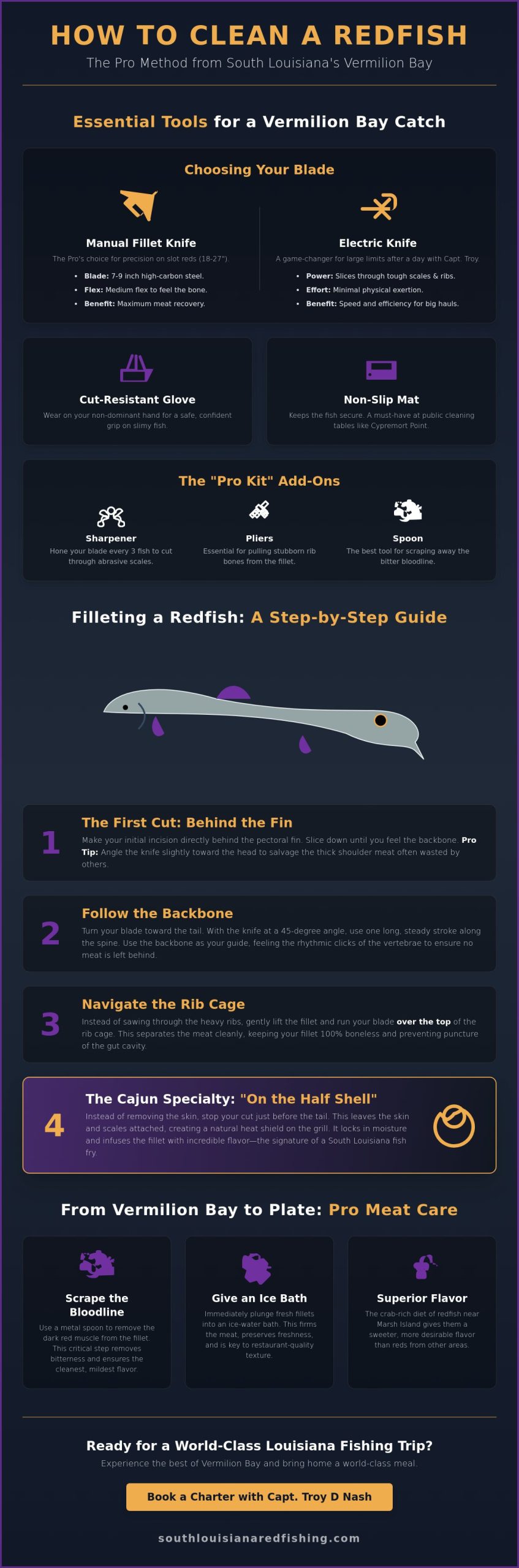
If you try to tackle a Marsh Island red with a standard kitchen knife, you’re bringing a toothpick to a gunfight. These fish are built like tanks. The bronze armor of the Red drum (Sciaenops ocellatus) is designed to protect them from predators in the shallow oyster reefs of Vermilion Bay, and those thick, overlapping scales will turn a dull blade into a safety hazard in seconds. A kitchen knife lacks the flexibility to contour around the spine and the backbone strength to pop through the heavy rib cage. To master how to clean a redfish without mangling the meat, you need a dedicated kit that respects the anatomy of the fish.

Safety starts with your grip. Redfish are notoriously slimy, and one slip can lead to a trip to the emergency room instead of the grill. Always wear a stainless steel mesh or high-performance polyethylene cut-resistant glove on your non-dominant hand. This gives you the confidence to apply the necessary pressure when making that initial cut behind the pectoral fin. Pair this with a sturdy, non-slip cleaning station. If you’re using the public tables at Cypremort Point State Park, bring a rubberized mat to keep the fish from sliding while you work through your limit.

Choosing Your Blade: Manual vs. Electric

The debate between manual and electric knives is a staple at every Louisiana boat launch. For the precision required to clean slot reds between 18 and 27 inches, a high-carbon steel manual fillet knife is often the superior choice. Look for a blade length between 7 and 9 inches with a medium flex. This allows you to feel the bone as you glide toward the tail, ensuring maximum meat recovery. However, if you’ve just finished a legendary day with Capt. Troy D Nash and have a full limit for a large group, an electric knife is a total game-changer. It powers through the heavy scales and rib bones with minimal physical effort, though it requires a steady hand to avoid overshooting the spine.

The “Pro Kit” Add-ons

Expertise is found in the details. Because redfish scales are so abrasive, you must hone your blade every three fish to maintain a lethal edge. Keep a ceramic sharpening stone or a handheld pull-through sharpener on your table. You’ll also want a pair of heavy-duty needle-nose pliers. These are essential for pulling stubborn rib bones or gripping the skin if you aren’t prepping your catch “on the half shell.” Finally, keep a large metal spoon in your kit. It’s the best tool for “scraping” the dark bloodline away from the white meat, a critical step in how to clean a redfish for the best possible flavor.

Step-by-Step Guide: How to Fillet a Redfish Like a Pro

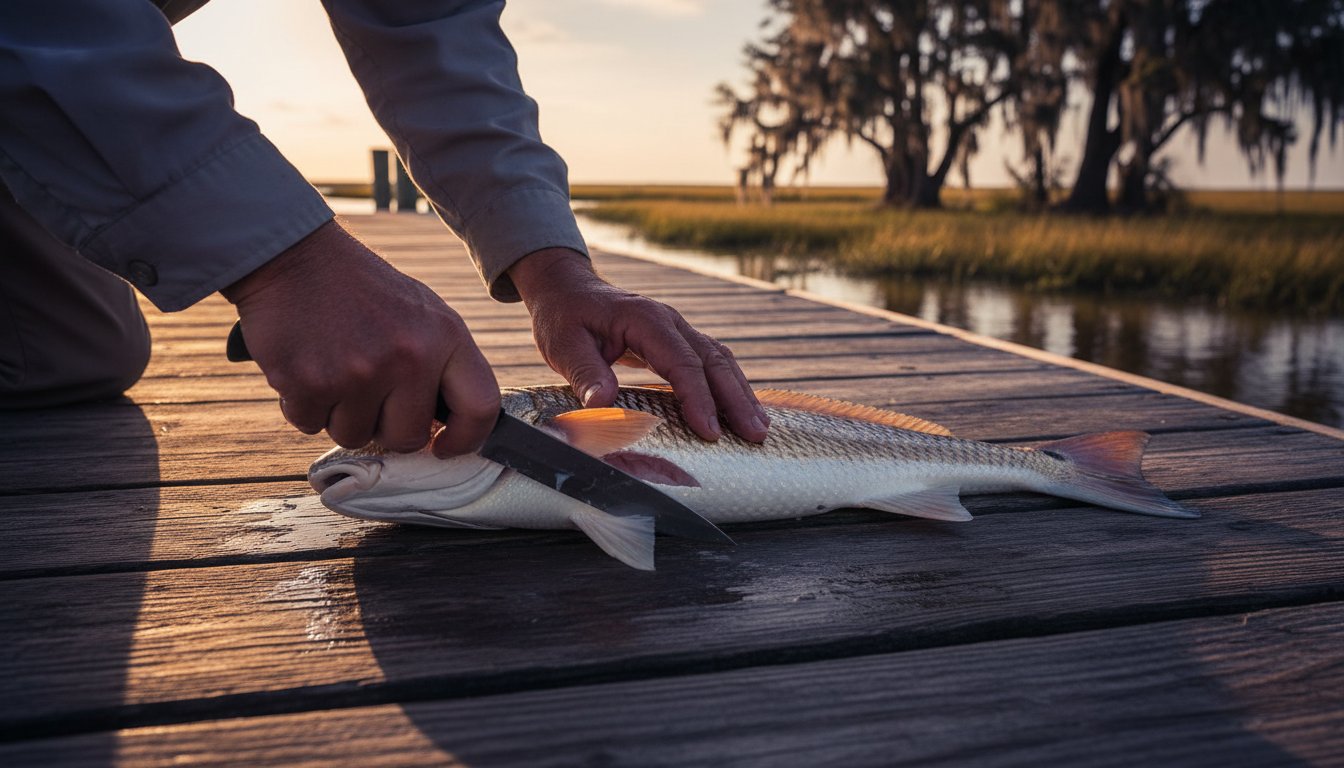
You’ve conquered the flats of Weeks Bay and returned with a limit of four slot reds. Now, the real test begins at the cleaning table. Knowing how to clean a redfish properly is the difference between a world-class Cajun dinner and a wasted day on the water. Start by securing the fish firmly on your non-slip station. Make your initial cut directly behind the pectoral fin, slicing down until you feel the resistance of the backbone. Aim your blade slightly toward the head during this first cut to salvage the thick shoulder meat that most casual anglers toss away when fishing in other areas.

The Initial Entry and Spine Cut

Capture the abundance of the marsh by following the spine with total confidence. Once your knife is seated against the backbone, turn the blade toward the tail and begin a long, steady stroke. Position your blade at a steep 45-degree angle against the dorsal fin to stay flush with the spine and capture every ounce of meat. This technique ensures you don’t leave half the fish on the bone, which is a common mistake for those used to the softer scales of fish in other regions. Use the backbone as your guide, feeling the rhythmic click of the vertebrae as you move toward the tail.

Removing the Ribs and Skin

Navigating the rib cage requires a delicate touch to avoid puncturing the guts and spoiling the meat. Instead of sawing through the heavy bones, lift the fillet slightly and run your knife over the top of the ribs. This keeps your fillets 100% boneless, which is the gold standard for those famous fried redfish nuggets served in Lafayette. Once the fillet is detached, place it skin-side down. Grip the tail tightly and slide your knife between the skin and the meat. Use a slight sawing motion while keeping the blade angled downward to ensure a smooth, waste-free finish.

The final pro move is the “Zipper” technique to remove the dark lateral line. Many guides in other areas skip this, but leaving that bloodline results in a fishy taste that ruins the sweet flavor of Marsh Island reds. Make two parallel slices along the dark red muscle and lift the strip out entirely. This leaves you with pristine, white fillets ready for the skillet. If you want to skip the learning curve and see these techniques firsthand, book one of our guided fishing trips and let an expert show you the ropes. Finish by trimming any remaining silver skin or fat to ensure your catch is restaurant-quality before it ever hits the ice.
How to Clean a Redfish: The Ultimate Guide to Cajun-Style Prep

The Cajun Specialty: Cleaning Redfish “On the Half Shell”

If you ask a local at Cypremort Point how they want their catch prepared, nine times out of ten the answer is “on the half shell.” This isn’t just a fancy menu term; it’s a specific technique for how to clean a redfish that leaves the skin and heavy scales completely attached to the fillet. In the Cajun heartland, we view those thick scales as a gift from the marsh rather than a nuisance to be removed. By keeping the “armor” on, you create a natural vessel that protects the delicate white meat from the intense heat of a grill or campfire. It’s the ultimate way to honor a fish caught in the pristine waters of Vermilion Bay.

Why Scales Matter for Grilling

The heavy scales of a redfish are practically fireproof. While anglers in other areas might waste time scaling their fish, South Louisiana pros know that the scales act as a natural heat shield. This allows the meat to simmer in butter and its own natural juices without drying out or charring. During the cook, the thin layer of fat between the skin and meat renders down, infusing the fillet with a rich, savory depth that you simply can’t get with a naked fillet. This method aligns perfectly with the high Louisiana Redfish prep standards that prioritize flavor and moisture above all else.

Execution of the Half Shell Cut

To master this cut, follow the same initial steps of making the entry behind the pectoral fin and gliding along the spine as established in the previous sections. The critical difference in how to clean a redfish on the half shell is that you never separate the meat from the skin. Once the fillet is free from the carcass, your work with the knife is done. You should have a sturdy, scale-backed piece of meat that holds its shape perfectly. This “boat” shape is ideal for holding puddles of melted butter and seasoning without anything dripping into the coals.

Before you head back to Lafayette, take a moment to focus on the scale side. Use a pressurized hose or a stiff brush to remove any marsh slime, mud, or grit from the scales. You want the armor to be clean, but you must be careful not to lift or remove the scales themselves. Pat the meat side bone-dry with a paper towel before bagging it. This prevents the “fishy” flavor that occurs when marsh water or slime sits on the fillet during transport. This prep ensures that when you fire up the grill, the only thing you smell is the sweet aroma of fresh, crab-fed redfish.

Meat Care: From the Vermilion Bay to Your Freezer

The secret to world-class Cajun seafood doesn’t start at the stove; it starts the moment your redfish hits the deck. In the humid heat of the Louisiana marsh, meat quality degrades rapidly. Professional guides at Cypremort Point always use a “slush” ice bath, mixing crushed ice with a little saltwater to drop the core temperature of the fish instantly. This prevents the flesh from becoming mushy and ensures that when you begin the process of how to clean a redfish, the meat remains firm and easy to handle. If you let your catch sit in a dry cooler for hours, you’re already fighting a losing battle against the sun.

The Importance of the Bloodline

Even the most perfect fillet can be ruined by leaving the lateral line intact. This dark, reddish-brown muscle contains a high concentration of fat and blood, which spoils much faster than the surrounding white meat. If you’ve ever had redfish that tasted “fishy” or “muddy,” the bloodline is almost certainly the culprit. While some anglers in other areas might ignore this step, we prioritize a clean finish for every catch. Firmly press the edge of a heavy-duty metal spoon against the backbone and drag it from ahead toward the tail to scrape away the dark blood along the spine. This simple step ensures that your fillets from Marsh Island remain sweet and mild, regardless of how you cook them.

Long-term Storage Solutions

If you aren’t cooking your catch the same day, proper storage is vital to maintaining that fresh-from-the-bay texture. Vacuum sealing is the gold standard for Louisiana Fish because it removes all oxygen, preventing the freezer burn that ruins so many great meals. While some old-school locals still freeze fish in Ziploc bags filled with water, this can actually waterlog the meat and damage the delicate fibers. A vacuum-sealed fillet can stay fresh for up to six months, while a refrigerated fillet should be eaten within two days for the best quality.

  • Label Everything: Use a permanent marker to record the date and the specific location, like “Vermilion Bay Reds.”
  • Thaw Slowly: Never use a microwave or hot water. Place the sealed bag in the fridge 24 hours before you plan to cook.
  • Dry Before Cooking: Pat the thawed meat with a paper towel to ensure a perfect sear or a crispy fry.

Mastering how to clean a redfish and caring for the meat ensures your hard work in the marsh pays off at the dinner table. If you want to spend more time catching and less time worrying about the details, come see how the pros do it. Book your guided fishing trip today and experience the best of the Cajun coast with an expert who handles the prep for you.

The Reward: Why Redfish from Cypremort Point Tastes Best

The ultimate prize for a day spent navigating the winding canals and weirs of the Louisiana marsh is a pile of sweet, white fillets. While mastering how to clean a redfish is a vital skill, the flavor of your meal is determined long before you pick up a knife. Redfish caught around Marsh Island and the shallow flats of Vermilion Bay have a distinct culinary advantage over fish found in other regions. These bronze beauties gorge themselves on a rich diet of blue crabs and grass shrimp. This crab-heavy diet infuses the meat with a natural sweetness that you won’t find in fish from deeper, saltier environments. It is a flavor profile that has made South Louisiana a global destination for seafood lovers.

From the Marsh to the Table

The secret lies in the unique salinity of our local waters. The mix of freshwater influence and the nutrient-rich marshes of West Cote Blanche Bay creates a perfect nursery. This environment produces a milder, cleaner taste compared to fish caught in high-salinity areas like Venice. Inshore fishing offers a level of freshness that simply cannot be matched by longer trips. Because you are often fishing just minutes from the dock at Cypremort Point, your catch goes from the water to a slush ice bath almost instantly. This rapid cooling preserves the delicate texture of the meat, ensuring it stays firm and delicious.

After you’ve finished the process of how to clean a redfish, the adventure continues in the kitchen. Many anglers take their fresh haul back to Lafayette, the heart of Cajun country. The city’s legendary culinary scene is filled with chefs who specialize in “Hook and Cook” experiences. They can take your pristine, half shell fillets and transform them with authentic spices and local techniques. Whether it is blackened, grilled, or fried, the quality of a Marsh Island red stands in a category of its own. It is a true “marsh to table” experience that celebrates the abundance of our coastline.

Book Your Next Adventure

Learning the intricacies of Cajun-style prep is a badge of honor, but sometimes you want to focus entirely on the thrill of the strike. When you book a guided trip with Capt. Troy D Nash, you are getting decades of local expertise and a commitment to excellence. We don’t just put you on the fish; we ensure your entire experience is world-class from the first cast to the final bag of fillets. Let us handle the heavy lifting while you enjoy the scenery and the fight. Experience the best Red Fish Fishing Louisiana has to offer. Ready to fill the cooler? Book your trip with Capt. Troy today!

Fire Up the Grill for a World-Class Cajun Feast

Mastering how to clean a redfish is the final step in becoming a true Louisiana angler. By using the right high-carbon blades and perfecting the “on the half shell” technique, you ensure every bite of your Marsh Island catch remains moist and flavorful. Remember that immediate temperature control and removing the dark bloodline are the secrets to preserving that sweet, crab-fed taste that makes our local reds famous. You’ve learned the steps to handle your own haul, but you don’t have to tackle the cleaning table alone on your next big adventure.

Experience the thrill of the strike without the stress of the mess. As a 3rd generation guide specializing in the pristine waters of Vermilion Bay and Cypremort Point, Capt. Troy D Nash provides a comprehensive outdoor experience. We include full-service fish cleaning on every trip so you can head straight to the kitchen. Focus on the fight and the legendary Cajun food waiting for you back in Lafayette while we handle the prep. Book Your Vermilion Bay Redfish Charter Now and discover why our inshore marsh is a premier destination. Your next trophy is waiting just past the reeds.

Frequently Asked Questions

Do I need to scale a redfish before filleting it?

No, you should never waste time scaling a redfish. Their scales are incredibly tough and act as a natural armor that protects the meat during the cleaning process. If you are preparing the fish “on the half shell,” the scales stay on to serve as a heat shield; if you want skinless fillets, you simply glide your knife between the skin and the meat to remove it all in one motion.

Is the “throat” of a redfish worth keeping and cleaning?

Absolutely, the throat is considered a hidden delicacy in the Cajun heartland. This cut is rich in fat and flavor, much like the collar of a yellowtail or the cheeks of a grouper. To clean it, cut a “V” shape behind the gills to remove the entire collar, then grill it alongside your fillets for a succulent treat that most anglers in other areas unfortunately throw away.

How do I get the “fishy” taste out of large redfish?

The key to a clean flavor is the immediate removal of the dark lateral line. While Louisiana regulations require you to release all “Bull Reds” over 27 inches, even a large 26 inch slot fish can have a strong taste if the bloodline isn’t managed. Scrape the blood along the spine with a spoon and “zipper” out the red muscle to ensure your fillets from the Cypremort Point marsh remain sweet and mild.

Can I clean a redfish with a regular kitchen knife?

You can try, but a standard kitchen knife will likely dull before you finish your first fish. Redfish scales are notoriously abrasive and require a high-carbon steel blade to maintain an edge. To truly master how to clean a redfish, you need a dedicated 7 to 9 inch fillet knife that offers the flexibility to navigate the spine and the strength to pop through the rib cage.

What is the “on the half shell” cleaning method?

This method involves removing the fillet from the carcass while leaving the skin and scales fully attached. It is the gold standard for grilling in South Louisiana because the scales create a natural boat that holds butter and seasonings. This technique prevents the meat from drying out over an open flame and is a favorite for those fishing the shallow flats of Vermilion Bay.

How long can redfish fillets stay in the freezer?

Vacuum-sealed redfish fillets will maintain their peak quality for up to six months. If you use a standard freezer bag with the water-immersion method, you should plan to eat your catch within three months to avoid texture changes. Always label your bags with the date and the specific catch location, such as “Marsh Island Reds,” to keep your freezer organized and your meals fresh.

Is it safe to eat the skin of a redfish?

It is perfectly safe, but most people find the skin far too leathery and tough to enjoy. Unlike the thin, edible skin of a speckled trout, redfish skin is thick and covered in heavy scales. Most Cajun recipes use the skin only as a protective barrier during the cooking process, allowing you to flake the tender meat away from the skin once it hits the plate.

What should I do with the redfish carcass after filleting?

Don’t let that flavor go to waste; use the head and bones to create a world-class seafood stock or court-bouillon. The carcass contains incredible depth that is perfect for Lafayette-style stews and gravies. Just be sure to remove the eyes and gills before boiling. If you aren’t a fan of stock, the remains make excellent bait for crab traps in the canals around Weeks Bay. Knowing how to clean a redfish means using every part of the bounty the marsh provides.
Epic Pictures of Redfish: A Louisiana Captain’s Photo Gallery & Guide

Tired of scrolling through endless, lifeless stock photos? You’re searching for authentic pictures of redfish fish-the kind that capture the raw thrill of the fight, the flash of bronze scales in the Louisiana sun, and the sheer power of a giant bull red. You want to see the real deal, pulled straight from the endless banks and bayous where fishing legends are born. Forget the fakes. This is your front-row seat to an epic adventure on the water.

Get ready to experience the thrill. As a 3rd generation, veteran Louisiana fishing guide, I’m sharing my personal gallery of hard-won catches. But this is more than just a collection of photos. I’ll show you exactly what to look for-from the signature spot on the tail to the different colorations that tell a story. You’ll learn how to identify them, understand their behavior, and get the insider knowledge you need to land your own trophy. Consider this your inspiration. Your epic adventure begins now!

Key Takeaways

  • Learn to identify a true Louisiana redfish by its distinct features, from its iconic tail spot to its powerful build.
  • Master the angler’s language and visually learn the difference between a “puppy drum” and a giant “bull red.”
  • Follow a veteran captain’s simple tips to capture incredible pictures of redfish fish that do your trophy catch justice.
  • See what a true Louisiana trophy looks like in our gallery of giant redfish caught right in Vermilion Bay.

Nothing tells the story of an epic fishing adventure better than a great photo. Here in Vermilion Bay, we don’t just put you on the fish; we capture the memory. Forget stock photos-this gallery is packed with 100% real catches from our charters. These are the giant bull reds and perfect slot-sized fish our clients battle every day. Get ready to see some of the best pictures of redfish fish you’ll find anywhere, straight from the heart of Louisiana.

Captain Troy Nash, a 3rd generation guide, believes the photo is part of the trophy. His passion for fishing is matched only by his dedication to capturing that perfect shot, ensuring you have a stunning memory to share long after your trip is over.

The Classic Trophy Pose

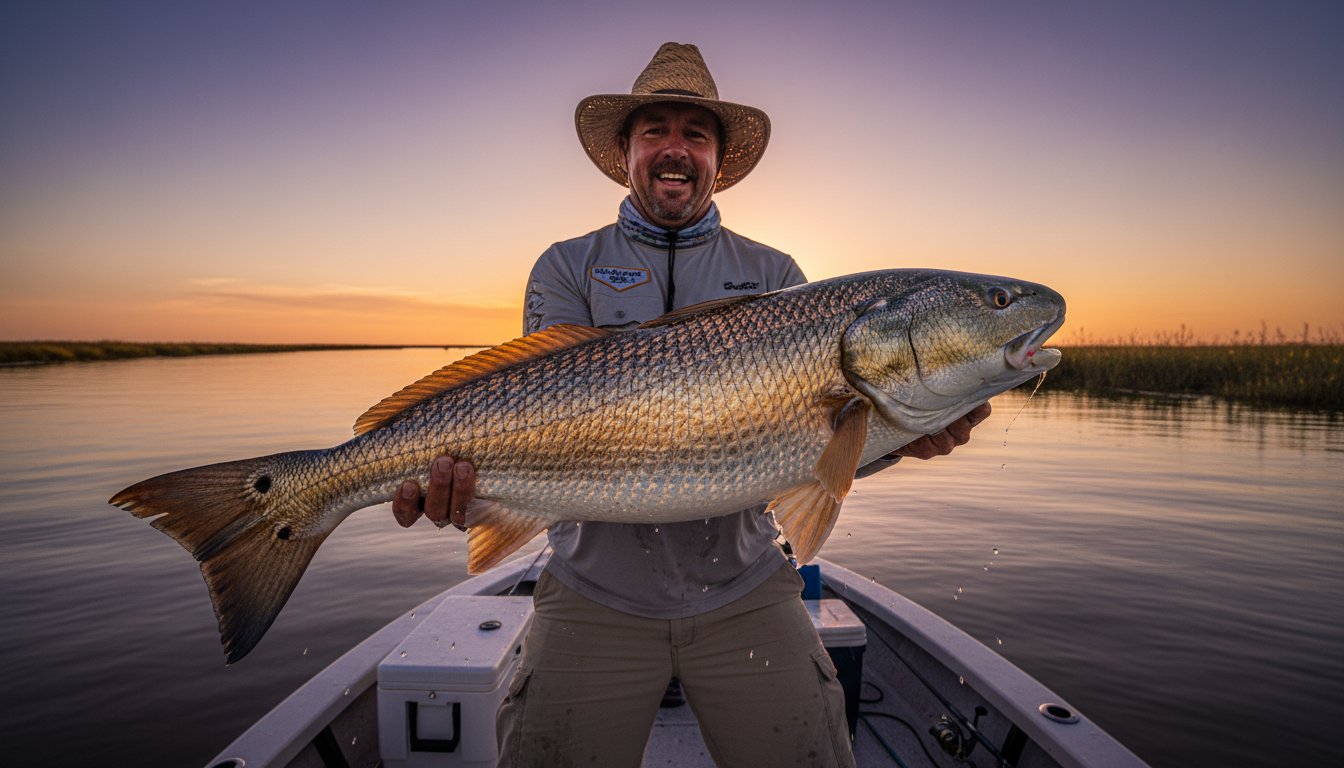
There’s nothing like that classic grip-and-grin with a monster red! Notice the deep, vibrant bronze and copper colors that make these fish so beautiful. The stunning scales of the Red drum (Sciaenops ocellatus) truly shine in the Louisiana sun. For a great photo that also respects the fish, support its weight by placing one hand under the belly near the tail and the other firmly gripping its mouth. This ensures the fish can be safely released to fight another day.

Redfish in Their Natural Habitat

Before the fight, there’s the hunt. These images showcase redfish in their element: gliding through the shallow, golden-hued waters of the marsh. If you’re lucky, you’ll witness the magic of a ‘tailing’ red-its iconic spotted tail waving above the surface as it feeds on the bottom. It’s a sight fisherman’s dream, set against the breathtaking backdrop of the Louisiana coastline, and makes for incredible pictures of redfish fish in the wild.

Action Shots: The Thrill of the Fight

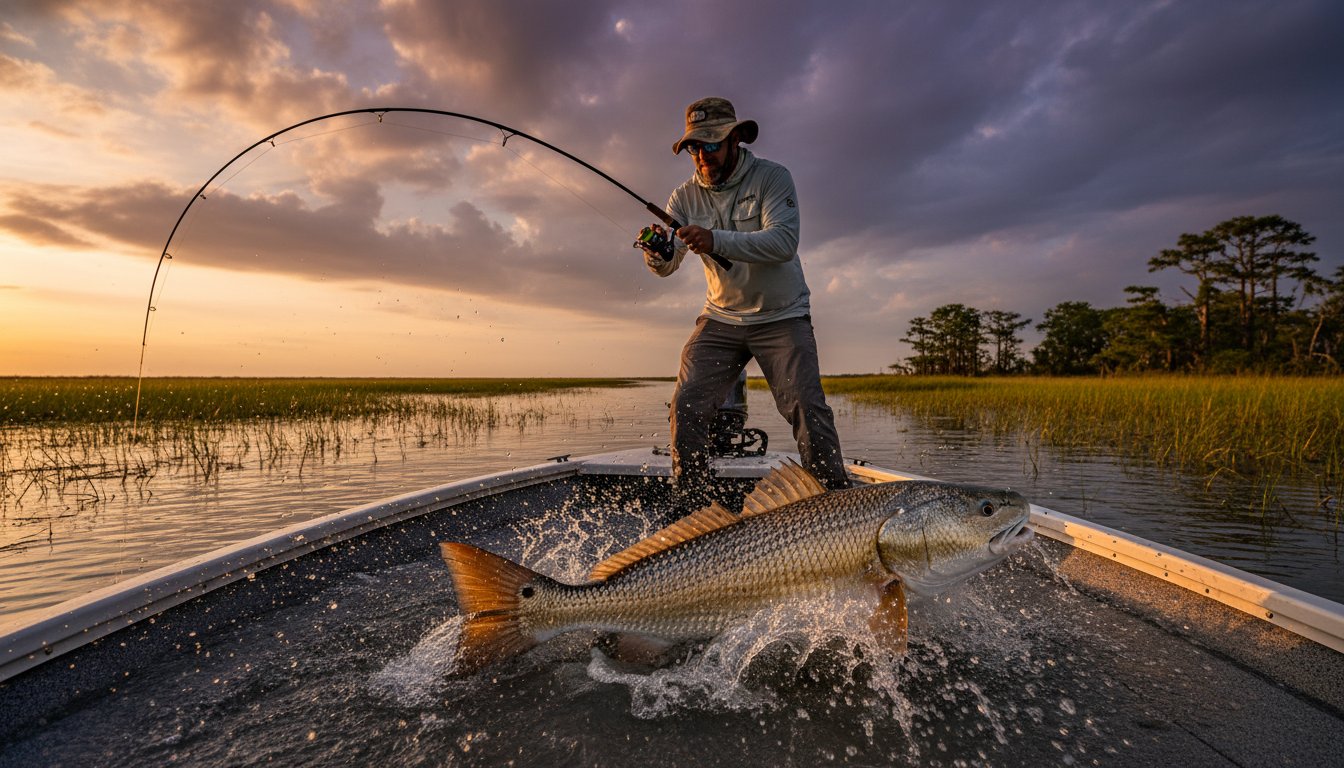
A redfish doesn’t come to the boat quietly. These powerful fish are famous for their bulldog-like fights, stripping drag and putting a deep bend in the rod. Our action shots capture the peak of this thrilling battle-the splash, the strain, and the pure excitement. The intensity of the fight provides an epic photo opportunity, freezing a moment of pure adrenaline in time. It’s the thrill you came for, captured forever.

Anatomy of a Redfish: What You’re Seeing in the Pictures

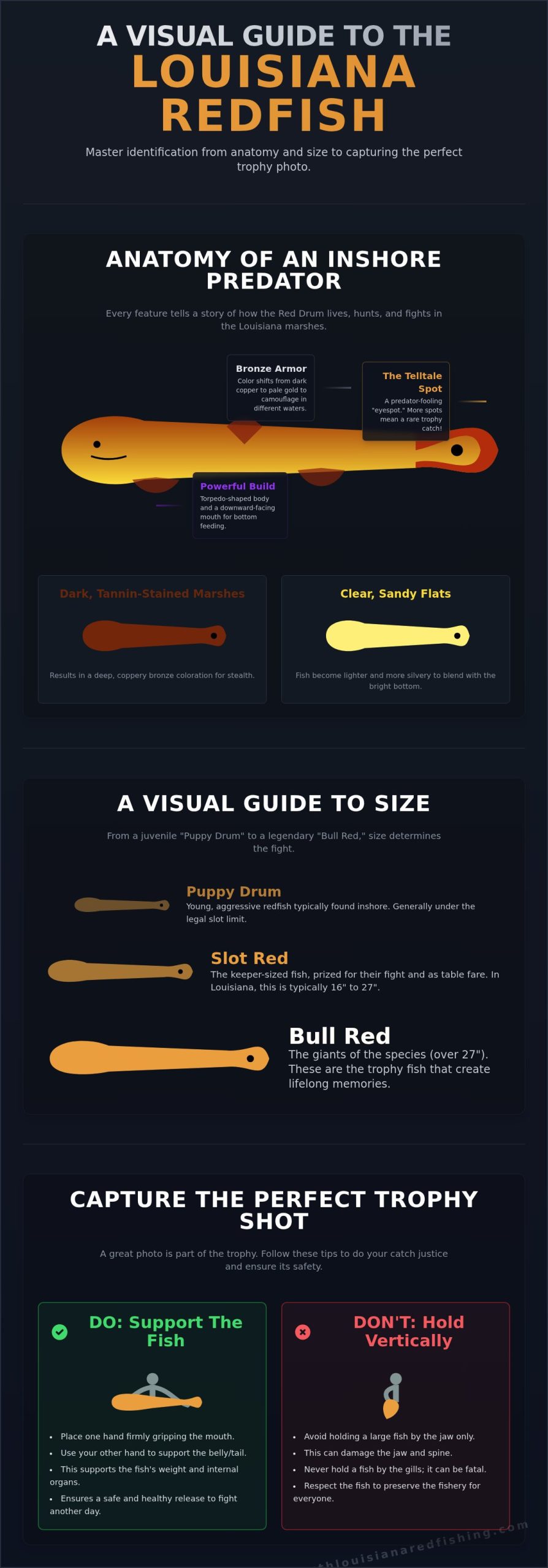
Once you’ve seen a few pictures of redfish fish, you start to notice they’re more than just a pretty catch-they’re perfectly engineered inshore predators. Every feature, from their color to their shape, tells a story about where they live and how they hunt. This guide will break down what you’re seeing, turning a simple photo into a deeper appreciation for this incredible game fish. For a more scientific look, the Florida Museum offers a fantastic deep dive into the Anatomy of the red drum, but we’ll cover the key features every angler should know to truly appreciate their next catch.

The Telltale Spot: A Redfish’s Signature

That single black spot near the tail is the redfish’s calling card. The most common theory is that this “eyespot” acts as a brilliant decoy, tricking predators like dolphins into striking the less-vital tail instead of the head, giving the redfish a critical chance to escape. While one spot is standard, finding a redfish with multiple spots is a special treat-some have been caught with dozens, making for an unforgettable photo and a true trophy catch!


Bronze Armor: Understanding Their Coloration

A redfish’s stunning color isn’t just for show; it’s master-class camouflage. Their backs range from a deep, coppery bronze to a pale, sandy gold, and this variation depends entirely on their environment. A redfish living in the dark, tannin-stained waters of the backwater marshes will have a much deeper, darker hue to blend in. In contrast, a redfish cruising the clear, sandy flats near the Gulf will be lighter and more silvery to match the bright bottom.

Powerful Build: Designed for the Inshore Battle

There’s a reason redfish fight so hard-they’re built for it. You’ll notice in any good photo their broad shoulders and thick, muscular body that tapers to a wide, powerful tail. This torpedo-like shape gives them explosive speed and incredible strength for chasing down prey and putting up an epic fight on the line. Look closely at their head, and you’ll see a downward-facing mouth, perfectly designed for rooting around the bottom to crush their favorite meals: crabs, shrimp, and baitfish.

A Visual Guide to Size: From Puppy Drum to Giant Bulls

Redfish aren’t a one-size-fits-all species. From feisty juveniles to monster-sized breeders, each stage of their life offers a completely different kind of thrill on the water. Anglers have nicknames for each size, and understanding them is key to appreciating the epic adventure of redfishing in South Louisiana. These pictures of redfish fish will show you exactly what to look for at every stage, from the first bite to the trophy catch of a lifetime.

Puppy Drum: The Future Fighters

These are the young guns of the redfish world! Typically measuring under 16 inches, “Puppy Drum” are juvenile redfish that are full of fight. You’ll often find them hunting in aggressive schools in the shallow backwaters and marshes, making for fast-paced, action-packed fishing. Catching these future fighters on light tackle is an absolute blast and a perfect way to introduce anyone to the sport. Understanding the different Redfish growth stages is part of becoming a seasoned angler, and it all starts here with these energetic fish.

[Image of a small, vibrant redfish being held by an angler using light spinning tackle.]

Slot Reds: The Perfect Keeper

When you hear anglers talking about a “keeper,” they’re talking about a “Slot Red.” In Louisiana, the protective slot limit is between 16 and 27 inches. This regulation is a cornerstone of conservation, ensuring that juvenile fish can grow and the giant breeders are released to spawn. These are the fish we target most on our inshore charters-they’re strong, plentiful, and the perfect size for a fantastic meal. Hooking into a hard-pulling slot red in the marsh is the classic Louisiana fishing experience.

[Photo of a smiling angler holding a healthy, 24-inch slot redfish with a marshy shoreline in the background.]

Bull Reds: Chasing a Louisiana Legend

This is what legends are made of. A “Bull Red” is a giant, mature redfish measuring over 27 inches, with some reaching an incredible 40-50 inches. These are the breeding stock of the Gulf, found patrolling coastal waters and deep channels. The fight is an entirely different game-a brutal, drag-screaming battle of will. I remember one client battling a 45-inch monster for nearly 20 minutes, the rod bent double and pure adrenaline on his face. That’s the moment that gets you hooked for life. These impressive pictures of redfish fish only hint at the raw power you’ll feel on the line.

[Impressive photo of a massive, bronze-colored Bull Red being carefully held by a proud angler before release.]

Landing one of these giants is the ultimate prize for any inshore angler. They are a true test of skill and tackle, and releasing one back into the water is an unforgettable moment.

Ready to chase your own Bull Red? Let’s go!

How to Take Great Pictures of Your Redfish Catch

After an epic battle with a Louisiana bull red, you’ll want a photo to prove it. As a 3rd generation guide, Captain Troy has helped countless anglers capture the perfect shot to memorialize their trip. Follow these pro tips to get a picture that does your catch justice and freezes that thrilling moment forever. A trip with us isn’t just about the catch; it’s about creating memories that last a lifetime.

Tip 1: Safety and Handling First

Before you even think about the camera, think about the fish. A healthy release ensures these incredible fighters are here for generations to come. Always handle your redfish with wet hands to protect its natural slime coat, which acts as its immune system. Support the fish’s full body horizontally-one hand under its belly and the other firmly gripping the base of its tail. This minimizes stress and prevents injury to its jaw and organs.

[Image: Angler demonstrating the proper two-hand hold to support a redfish’s weight horizontally.]

Tip 2: Mind the Sun and Background

The Louisiana marsh is one of the most beautiful backdrops in the world-use it! For the best lighting, position the photographer with the sun at their back. This fully illuminates you and the vibrant, bronze colors of the redfish, making every scale and that famous spot pop. Avoid shooting into the sun, which creates dark, shadowy pictures of redfish fish where all the amazing details are lost.

[Good Example Image: A well-lit photo with the sun behind the photographer, showcasing the fish’s colors and the marsh background.]

[Bad Example Image: A backlit, shadowed photo where the angler and fish are hard to see.]

Tip 3: Get Low and Capture the Action

Want to make that redfish look like the giant it truly is? Get low! Have your photographer crouch down and shoot from a slightly upward angle. This classic “hero shot” perspective makes the fish look more impressive and highlights you as the victorious angler. Some of the best photos capture the raw emotion right after the land-the smile, the water dripping, and the pure thrill of the moment.

[Image: A dynamic, low-angle shot of an angler holding a large redfish, making it look powerful against the sky.]

Of course, the first step to getting an incredible photo is having a trophy fish on the line. On a trip with South Louisiana Redfishing, we’ll put you on the fish that create those epic moments. You focus on the fight; we’ll help you get the shot. Your adventure awaits!

Your Turn: Get in the Picture with a Louisiana Redfish

You’ve seen the bronze scales, the iconic tail spot, and the powerful build. You’ve studied the features that make these fish legendary. But looking at pictures of redfish fish is one thing-battling one on the end of your line is an entirely different thrill. Now, it’s time to stop scrolling and start casting. It’s your turn to get in the picture and create a memory that will last a lifetime.

The smiles in these photos tell the real story. It’s the story of a drag-screaming fight, a triumphant moment, and an epic adventure in the heart of Cajun country. That feeling is waiting for you right here in Vermilion Bay.

An Epic Adventure for Everyone

This isn’t an experience reserved for the pros. We welcome anglers of all ages and skill levels to climb aboard. From family trips where kids can catch their first-ever fish to groups of friends chasing giant bull reds, we create the perfect day on the water. Don’t have gear? Don’t worry. Captain Troy provides everything you need-top-of-the-line rods, reels, tackle, and over 25 years of expertise to put you on the fish. He’s got you covered!

A family beams with excitement, holding up a massive redfish together. This is more than a fishing trip; it’s a core memory in the making.

More Than Just Redfish

While the mighty redfish is the star of the show, the fertile waters of Vermilion Bay are teeming with other prized species. On your trip, you’ll have the chance to battle hard-fighting speckled trout, ambush tasty flounder, and tangle with powerful black drum. This world-class fishery offers incredible variety, ensuring a dynamic and exciting day on the water. Every cast holds the promise of a new challenge and another great photo for your collection.

An angler proudly displays a beautiful speckled trout, showcasing the incredible diversity of the Louisiana marsh.

Book the Trip, Create the Memory

You’ve seen the proof. You’ve felt the spark of adventure. The endless bayous and saltwater marshes of South Louisiana are calling your name. Stop looking at pictures of other people’s triumphs and start planning your own. The thrill of the catch and the pride of that perfect photo are just one click away.

Your epic fishing photo is waiting. Book Your Charter Today!

We’ve taken you on a visual journey through the legendary waters of Vermilion Bay, showcasing the raw power and stunning beauty of Louisiana redfish. You’ve seen the anatomy of these bronze bruisers, learned how to distinguish a puppy drum from a giant bull, and picked up pro tips for capturing that perfect trophy shot. But staring at incredible pictures of redfish fish can only satisfy the craving for so long.

Every photo in this gallery is a real moment from a real trip with Captain Troy Nash. As a 3rd generation, veteran guide with over 25 years of experience, he doesn’t just know these waters; they’re part of his legacy. He’s got you covered. It’s time to stop scrolling through someone else’s memories and start making your own.

The thrill of the fight is waiting. The endless bayous are calling. Stop dreaming and start fishing! Book your epic redfish adventure today!

Frequently Asked Questions About Redfish

What is the spot on a redfish’s tail for?

That iconic spot is a brilliant piece of natural defense. It acts as a “false eye” to confuse predators like dolphins or sharks. A predator aiming for the spot on the tail will miss the fish’s actual head, giving the redfish a critical split-second to escape the attack. It’s a clever survival trick that helps these powerful fish dominate the inshore waters and live to fight another day on the end of your line!

Do all redfish have spots?

While the tail spot is their most famous feature, the number can vary wildly. The vast majority of redfish have at least one spot, but it’s not a 100% guarantee. We’ve seen fish with dozens of spots and, on very rare occasions, some with none at all! This variety is part of what makes them so cool, creating some truly unique pictures of redfish fish where no two look exactly alike.

How can you tell the difference between a redfish and a black drum?

It’s an easy mistake for new anglers! The quickest way to tell is to check the chin-black drum have whisker-like barbels on their lower jaw for bottom feeding, while redfish have a clean, smooth chin. Redfish also have that signature spot (or spots) at the base of their tail, which black drum lack. A black drum’s stripes are vertical and fade with age, but that tail spot is a dead giveaway for a red.

What is the biggest redfish ever caught on a charter with you?

We’ve had some epic battles on our boat, but the one that stands out is a monster 48-inch bull red we landed near South Marsh Island. That giant tipped the scales at over 45 pounds! It was an absolute thrill and the fight of a lifetime for the client. That’s the kind of world-class fishing Louisiana is famous for, and we get to chase giants like that every season. He’s still out there waiting!

What’s the best time of year to get pictures of giant bull reds?

If you want epic pictures of redfish fish showing off a true giant, the fall and winter months are your ticket. From October through January, the massive bull reds push into the shallow marshes to feed, giving us our best shot at hooking a true monster. The cooler weather fires up the bite, and the fish are at their heaviest. It’s the absolute best time for that photo-worthy catch you’ll be talking about for years to come.

Do redfish change color?

Absolutely! A redfish’s color is a direct reflection of its environment. Fish living in clear, grassy waters will have a stunning, deep coppery-bronze color to blend in with the vegetation. In contrast, redfish from murkier, muddy-bottomed bays and bayous will often be much paler, sometimes almost silver. This camouflage helps them ambush prey and avoid becoming a meal themselves. It’s amazing how they adapt to their surroundings.

Louisiana Redfish Charters: The Ultimate Guide to an Epic Trip

Dreaming of that bronze-backed bull redfish crashing your line in the Louisiana marsh? The thrill is undeniable, but planning the trip can feel overwhelming. With countless guides, shifting seasons, and endless questions, how do you ensure your investment leads to an epic adventure and not a frustrating day on the water? That’s where this guide comes in. We’re cutting through the noise to give you the ultimate roadmap for booking the perfect louisiana redfish charters and guaranteeing a successful, memory-making experience.

Consider this your insider playbook. We’ll show you exactly how to choose a veteran guide you can trust, pinpoint the absolute best times of year to target giant reds, and understand what a world-class trip includes so you can book with total confidence. Forget the stress and the guesswork. Your mission is to feel the adrenaline of the fight and the satisfaction of a fish-filled day in America’s Sportsman’s Paradise. Let’s get you hooked up for the trip of a lifetime.

Key Takeaways

  • Discover why Louisiana’s unique coastal geography creates the ultimate habitat for monster redfish year-round.
  • Pinpoint the best Louisiana fishing region for your specific goals, whether you’re targeting numbers or trophy-sized bull reds.
  • Get a complete rundown of a typical charter day, so you can show up prepared and focus on the thrill of the fight.
  • Learn the essential questions to ask when vetting Louisiana redfish charters to guarantee you book an experienced captain for your epic adventure.

Why Louisiana is the Undisputed Redfish Capital of the World

There’s a reason Louisiana is known as the “Sportsman’s Paradise,” and for anglers, that reason is spelled R-E-D-F-I-S-H. While other destinations have their seasons, Louisiana offers an epic, world-class fishery that simply doesn’t quit. This isn’t just another fishing spot; it’s the global epicenter for redfish action. The unique combination of geography, an endless food supply, and a thriving fish population makes booking louisiana redfish charters a bucket-list trip for serious anglers and newcomers alike.

The Perfect Habitat: Marshes, Estuaries, and Bays

The secret to Louisiana’s incredible fishery lies in its sprawling coastal landscape. The mighty Mississippi River Delta deposits nutrient-rich sediment, creating a massive, fertile estuary. This labyrinth of endless marshes, shallow bays, and winding bayous is the perfect nursery for juvenile Red drum (Sciaenops ocellatus), offering protection from predators and a veritable buffet of crabs, shrimp, and baitfish. It’s this perfect environment that allows our redfish population to grow not just in numbers, but in size.

Year-Round Action: A Fishery for All Seasons

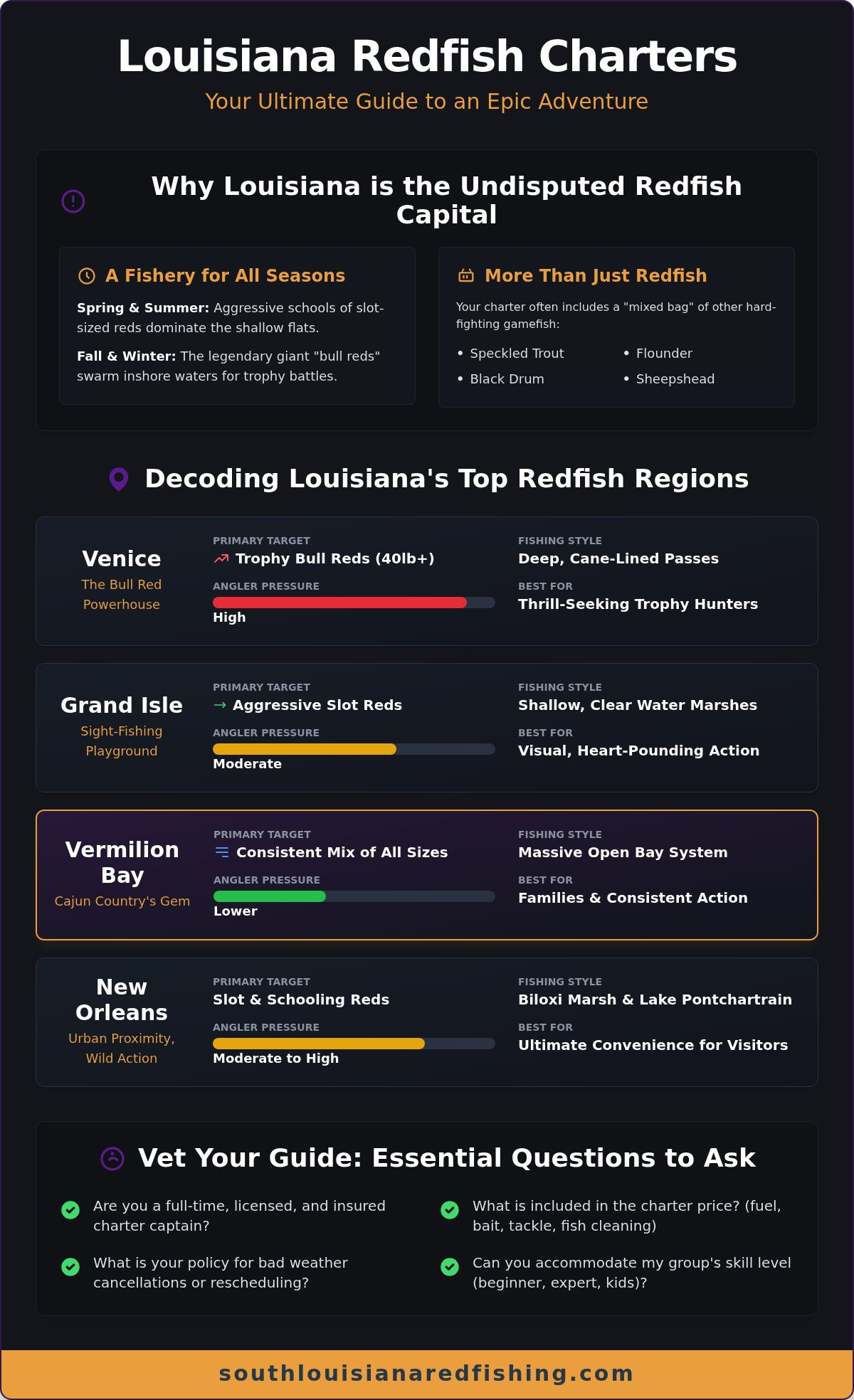
Unlike many other fisheries that have distinct peak seasons and long off-seasons, Louisiana is always on. The action simply shifts, offering thrilling opportunities 365 days a year. Spring and summer bring aggressive schools of slot-sized reds to the shallow flats, while fall and winter usher in the legendary “bull reds.” These giant, mature fish swarm the inshore waters, giving you the chance to battle a true monster. No matter when you come, you’re in for an adventure.

More Than Just Redfish: A Diverse Inshore Ecosystem

While redfish are the undisputed kings of the marsh, they don’t swim alone. Our vibrant ecosystem is teeming with other hard-fighting gamefish, making every cast an exciting surprise. A day on the water often results in a “mixed bag” of incredible catches, turning a great fishing trip into an unforgettable one. It’s the ultimate bonus to any redfish-focused charter.

  • Speckled Trout: A prized and aggressive target for light-tackle anglers.
  • Flounder: Masters of camouflage that offer a delicious reward.
  • Black Drum: The powerful cousin of the redfish, often reaching massive sizes.
  • Sheepshead: Notorious bait-stealers that put up a stubborn fight.

Decoding Louisiana’s Top Redfish Regions: Where to Go

Louisiana’s coastline is a sprawling, diverse paradise for anglers, but not all fishing spots are created equal. Saying you’re going fishing in “Louisiana” is like saying you’re going to a “restaurant” in New York City-the experience depends entirely on where you go. The key to an epic adventure is matching your fishing goals with the right region. The best louisiana redfish charters understand this, tailoring trips to the unique environments that make this state a world-class fishery.

Venice: The Mississippi River Delta Powerhouse

Known as “The End of the World,” Venice is where the mighty Mississippi River meets the Gulf of Mexico. This is the undisputed destination for anglers chasing giant, line-peeling bull reds. The vast delta, with its deep, cane-lined passes and rich, nutrient-filled waters, creates a perfect habitat for trophy fish. While it’s a world-famous and often crowded hotspot, the thrill of battling a 40-pound redfish here is an experience you’ll never forget.

Grand Isle & Cocodrie: Coastal Marshes and Barrier Islands

If your idea of an epic day involves sight-fishing in crystal-clear, shallow water, this region is your playground. The extensive marsh systems around Grand Isle and Cocodrie are a maze of endless ponds and bayous, protected by a chain of barrier islands. This environment is perfect for targeting aggressive slot-sized redfish that must adhere to strict Louisiana fishing regulations for a legal harvest. It’s a visual, heart-pounding style of fishing that puts you right in the action.

Vermilion Bay & Cypremort Point: The Heart of Cajun Country

For consistent action without the intense pressure of other famous hubs, Vermilion Bay is a true gem. This massive, open bay system, fed by surrounding marshes, offers some of the best redfish fishing in the United States. Here, you get the perfect blend of hard-fighting reds, stunning scenery, and authentic Cajun culture. It’s an ideal spot for both seasoned pros and families looking for a successful day on the water. Experience the thrill of Vermilion Bay with a veteran guide.

New Orleans & Lake Pontchartrain: Urban Proximity, Wild Action

Don’t let the city lights fool you. Just a short drive from the French Quarter lies an incredible and wild fishery. The areas surrounding New Orleans, including the famed Biloxi Marsh and the massive Lake Pontchartrain estuary, offer unbelievable convenience for visitors. You can enjoy the world-class food and music of New Orleans at night and find yourself in a remote marsh chasing redfish the very next morning. It’s the perfect combination of city and wilderness.

What to Expect on Your Louisiana Redfish Charter: A Complete Rundown

Booking a trip is the first step toward an epic adventure in the marsh, but what does the day actually look like? For first-timers, knowing what to expect on louisiana redfish charters makes the experience even better. Whether you’re a seasoned pro or new to the sport, we’ve got you covered. Here’s a complete rundown, from meeting your guide to the triumphant photos at the dock.

A Typical Day on the Water

Your day starts early, meeting your captain at the dock as the sun begins to paint the Louisiana sky. After a quick safety briefing, you’ll climb aboard and power out through the endless banks and bayous of Vermilion Bay. Your guide, a veteran of these waters, knows exactly where the giant bull reds are hiding. You’ll spend the day sight-casting in the shallows and experiencing the thrill of a lifetime as these bronze brutes explode on your line. At the end of a successful day, you’ll head back to the dock for photos with your impressive catch-memories you won’t soon forget.

What’s Usually Included in the Price?

We believe in making your trip as seamless and successful as possible. When you book with a professional guide, you can leave the heavy lifting to the pros. Your charter fee typically includes everything you need for a legendary day of fishing:

  • Your fully-equipped, professional bay boat and fuel for the day.
  • The expert guidance of a seasoned, full-time fishing captain.
  • All high-quality rods, reels, tackle, and bait (live or artificial).
  • Ice-cold water to keep you hydrated and an iced-down cooler for your catch.
  • Professional fish cleaning and bagging at the end of the day.

What You Need to Bring

While we handle the fishing gear, there are a few essential items you’ll need to arrange yourself to ensure a comfortable and legal trip. The most important is your fishing license, a key part of supporting Louisiana’s world-class fishery and ongoing redfish conservation efforts. Here’s a simple checklist for your Louisiana redfish charter:

  • Louisiana Fishing License: Required for all anglers. Purchase it online before your trip.
  • Sun Protection: Polarized sunglasses are a must for spotting fish, plus a wide-brimmed hat and sunscreen.
  • Food & Drinks: Pack your favorite snacks, lunch, and any drinks you prefer besides water.
  • Appropriate Apparel: Dress in layers. We recommend light-colored clothing, non-slip shoes, and a quality rain jacket, just in case.

How to Choose the Right Guide for Your Epic Adventure

You can have the best gear and pick the perfect tide, but the single most critical factor in your fishing success is the captain at the helm. The right guide transforms a good day into an unforgettable adventure. They are your key to unlocking the endless bayous and marshes, putting you on giant bull reds when others come back empty-handed. Choosing from the many louisiana redfish charters can be daunting, but focusing on the guide’s quality is the secret to success.

Experience and Local Knowledge Are Everything

A flashy, brand-new boat is nice, but it can’t find fish. A veteran guide with decades of experience on these specific waters is the ultimate advantage. Look for a full-time professional who lives and breathes this ecosystem, not a part-time operator. A true pro knows how a 10-degree temperature drop will move the fish, where they hide during a north wind, and which baits they’re hitting today. This is often multi-generational knowledge, passed down and refined over a lifetime.

Key Questions to Ask Before You Book

Don’t be shy about interviewing your potential captain. A great guide will be happy to answer your questions and ensure it’s a good fit. Here are a few essentials to ask:

  • What is your experience with my preferred fishing style (fly, spin, or baitcasting)?
  • What is your cancellation policy for bad weather?
  • Are you fully licensed by the Coast Guard and properly insured?
  • Do you enjoy guiding beginners, or do you cater more to experienced anglers? What about families with kids?

Understanding Charter Rates and What You’re Paying For

A full-day inshore trip in Louisiana typically ranges from $700 to $950, with half-days being slightly less. While price shouldn’t be the only factor, it often reflects the guide’s experience, the quality of their boat and gear, and their level of commitment. Be wary of deals that seem too good to be true. A cheap trip might mean an under-maintained boat, old gear, or an inexperienced guide. You’re not just paying for a boat ride; you’re investing in expertise, safety, and the highest possible chance of an epic day on the water. See our transparent charter rates and book your trip today!

Your Epic Louisiana Redfish Adventure Awaits

Louisiana’s reputation as the undisputed redfish capital is no accident-its legendary marshes create a world-class fishery that has to be seen to be believed. Choosing the right guide is the final, crucial step in transforming a good fishing day into an epic adventure. The most successful louisiana redfish charters combine this incredible natural resource with generations of on-the-water expertise.

Why leave your trip of a lifetime to chance? Come experience the thrill for yourself in the legendary waters of Vermilion Bay and South Marsh Island. Climb aboard with a 3rd generation, full-time veteran captain who knows every cut and bayou. Whether you’re a seasoned pro or a first-timer, we’ve got you covered-Fly, Spin, or Baitcast. This isn’t just another fishing trip; it’s the story you’ll be telling for years.

Ready for Your Epic Adventure? Book Your Vermilion Bay Charter!

The bull reds are waiting.

Frequently Asked Questions About Louisiana Redfish Charters

When is the absolute best time of year to fish for redfish in Louisiana?

Louisiana offers world-class redfish action all year, but the absolute peak season is the fall. From September through November, giant “bull reds” swarm the coastal marshes to spawn, giving you the best shot at a true trophy-sized fish. This is when the legendary action happens! However, don’t overlook the spring and winter months, which offer incredible sight-fishing opportunities for huge numbers of slot-sized redfish in the clear, shallow waters of the endless bayous.

Do I need to have fishing experience to go on a charter?

Absolutely not! We welcome anglers of all skill levels, from seasoned pros to first-timers who have never held a rod. Captain Troy is a patient, 3rd generation guide who loves teaching newcomers the thrill of the fight. He provides all the top-tier equipment and expert instruction you need for a successful day on the water. Whether it’s your first cast or your thousandth, he’s got you covered for an unforgettable adventure.

Can I keep the fish I catch, and how do I get it home?

You bet! You can keep any redfish, speckled trout, or other species you catch, as long as they fall within the legal size and bag limits set by the state. At the end of your epic trip, Captain Troy will expertly clean and fillet your catch, packing it in Ziploc bags for you. Just bring a cooler with some ice in your vehicle, and you’ll be ready to take home some of the freshest, best-tasting fish in the world.

How many people can go on a typical inshore fishing charter?

Our louisiana redfish charters are designed for small, private groups to ensure a personalized and action-packed experience. The boat comfortably accommodates up to three anglers, plus the captain. This small group size guarantees everyone has plenty of room to cast and fight fish without getting tangled. It also allows the captain to provide one-on-one instruction, maximizing your chances of limiting out and enjoying the day to the fullest. We can arrange for multiple boats for larger groups.

Is it customary to tip the fishing guide, and if so, how much?

Yes, tipping your guide is customary and greatly appreciated. A tip reflects your satisfaction with the captain’s hard work, expertise, and dedication to making your trip a success. The industry standard is typically 15-20% of the charter price, similar to what you would tip in a restaurant. Your guide works tirelessly before, during, and after your trip-from prepping bait and gear to cleaning your fish-to ensure you have an epic adventure.

What kind of boat will we be fishing from?

You’ll be fishing aboard a state-of-the-art 24-foot bay boat, the perfect vessel for navigating the diverse Louisiana marsh. It’s designed with a shallow draft to quietly sneak into the skinniest backwaters where giant redfish hide, but it’s also stable and spacious enough to handle the open bays with ease. Equipped with the latest electronics and a powerful trolling motor, it’s the ultimate platform for a successful fishing trip, ensuring a safe and comfortable day.