Best Way to Cook Speckled Trout: A South Louisiana Captain’s Guide for 2026

Best Way to Cook Speckled Trout: A South Louisiana Captain’s Guide for 2026

Most anglers treat a speckled trout like a common panfish, but that’s the fastest way to ruin a world-class delicacy from the waters of Vermilion Bay. You’ve spent your morning hitting the oyster beds near Marsh Island or the weirs along the shoreline to land your limit of 15 fish, so you’re likely searching for the best way to cook speckled trout to avoid a plate of mushy, over-seasoned meat. It’s a common frustration to see such a premium catch turn soft in the pan when you were expecting a restaurant-quality finish. You want that perfect, flaky texture that highlights the natural sweetness of the fish without drowning it in heavy batter.

I’m here to show you that the secret involves a precise three-step process: immediate icing, a quick brine, and high-heat cooking. Whether you’re launching from Cypremort Point or heading back to Lafayette, you deserve a meal that validates your hard work on the water. This guide walks you through the professional techniques and authentic Cajun recipes used by seasoned captains to transform your catch into a masterpiece. We’ll dive into proper cleaning, the legal 13-inch minimum size requirements for 2026, and the specific searing tricks that ensure your dinner is the highlight of your adventure.

Key Takeaways

  • Master the “Ice Slurry” secret and proper filleting techniques to eliminate the mud vein and preserve the buttery, delicate texture of your catch.
  • Learn why high-heat searing is the best way to cook speckled trout to ensure a flaky, restaurant-quality crust without overcooking the meat.
  • Elevate your meal by pairing fresh fillets with the Cajun “Holy Trinity” and authentic sides like dirty rice for a true South Louisiana culinary experience.
  • Discover how the short travel time from the reefs of Marsh Island to your kitchen gives inshore trout a massive flavor advantage over market-bought fish.
  • Understand how a professional guided trip ensures your trout are handled with expert care from the moment they leave the water until they reach your plate.

Why South Louisiana Speckled Trout is a Culinary Prize

Speckled trout is the undisputed heavyweight champion of the Louisiana dinner table. While many folks chase redfish for the brute strength on the line, the real prize is the Spotted Seatrout (Cynoscion nebulosus) when it’s time to fire up the stove. The meat is mild, slightly sweet, and carries a buttery finish that melts away. It’s a culinary experience that defines life on the Cajun Coast. Finding the best way to cook speckled trout starts with respecting the quality of the raw product. You won’t find this level of flavor at a supermarket. Market fish often sits for days, losing that signature sweetness that comes from our nutrient-rich marsh. When you pull a limit from the weirs or oyster beds near Marsh Island, you’re holding a premium ingredient that deserves a world-class preparation.

Don’t believe the myth that trout is “second-tier” to redfish or snapper. While redfish are great for the grill, the delicate profile of a speckled trout is far more sophisticated. It absorbs flavors beautifully and offers a light, airy texture that heavier species can’t match. The ecosystem surrounding Cypremort Point creates a perfect storm for meat quality. The mix of fresh water from the Atchafalaya and the salt from the Gulf produces a fish that is clean, vibrant, and free of the oily taste found in many other saltwater species. Get ready to elevate your kitchen game, because a fresh trout fillet is a blank canvas for true Cajun artistry.

The Texture Challenge: Delicate vs. Mushy

The biggest hurdle with trout is its high water content. Unlike the firm, muscular meat of a snapper, trout fillets are incredibly delicate. When you’re searching for the best way to cook speckled trout, you have to account for this fragile structure. If you don’t handle them right, they turn mushy before they even hit the pan. Natural enzymes in the meat begin breaking down the texture the moment the fish stops breathing. This is why speed and temperature control are your best friends. You have to treat these fillets like fine china. If you master the prep, you’ll see why many locals prefer this over any other species in the Gulf.

Vermilion Bay vs. Other Areas

Our local waters offer something you won’t find in other areas like Venice. The low-salinity environment of Vermilion Bay and West Cote Blanche Bay creates a unique flavor profile. The fish here aren’t as “salty” or “briny” as those caught in higher salinity zones. Instead, the nutrient density near Cypremort Point produces a cleaner, sweeter meat. It’s a consistent quality that makes our inshore trout a preferred choice for chefs in Lafayette and beyond. You get a better sea state and a shorter run to the dock, meaning your fish is in the pan just hours after the catch. That’s a level of freshness no commercial market can provide.

The 3 Best Ways to Cook Speckled Trout for Maximum Flavor

Every fish you pull from the reefs near Cypremort Point has a destiny. The size of your catch usually dictates the preparation. Smaller trout in that 13 to 15 inch range are the gold standard for a traditional fry. If you’ve landed a larger “gator” trout closer to the 20 inch limit, those thick fillets are perfect for searing or broiling. The best way to cook speckled trout always starts with the “Golden Rule”: never overcook. This is a lean, delicate white meat that can go from succulent to rubbery in thirty seconds. Beyond the taste, the nutritional value of speckled trout makes it a top-tier choice for a healthy, protein-packed meal.

You need the right tools for the job. A heavy cast iron skillet is the best for heat retention, while stainless steel works wonders when you’re making a pan sauce. Always use high-smoke point oils like avocado or peanut oil. These allow you to get that restaurant-style crust without burning the fat or tainting the fish’s natural flavor. If you want to see how the pros handle these fish before they hit the kitchen, consider spending a day on the water with Capt. Troy D Nash to learn the ropes.

Method 1: Pan-Seared Trout Meunière or Piccata

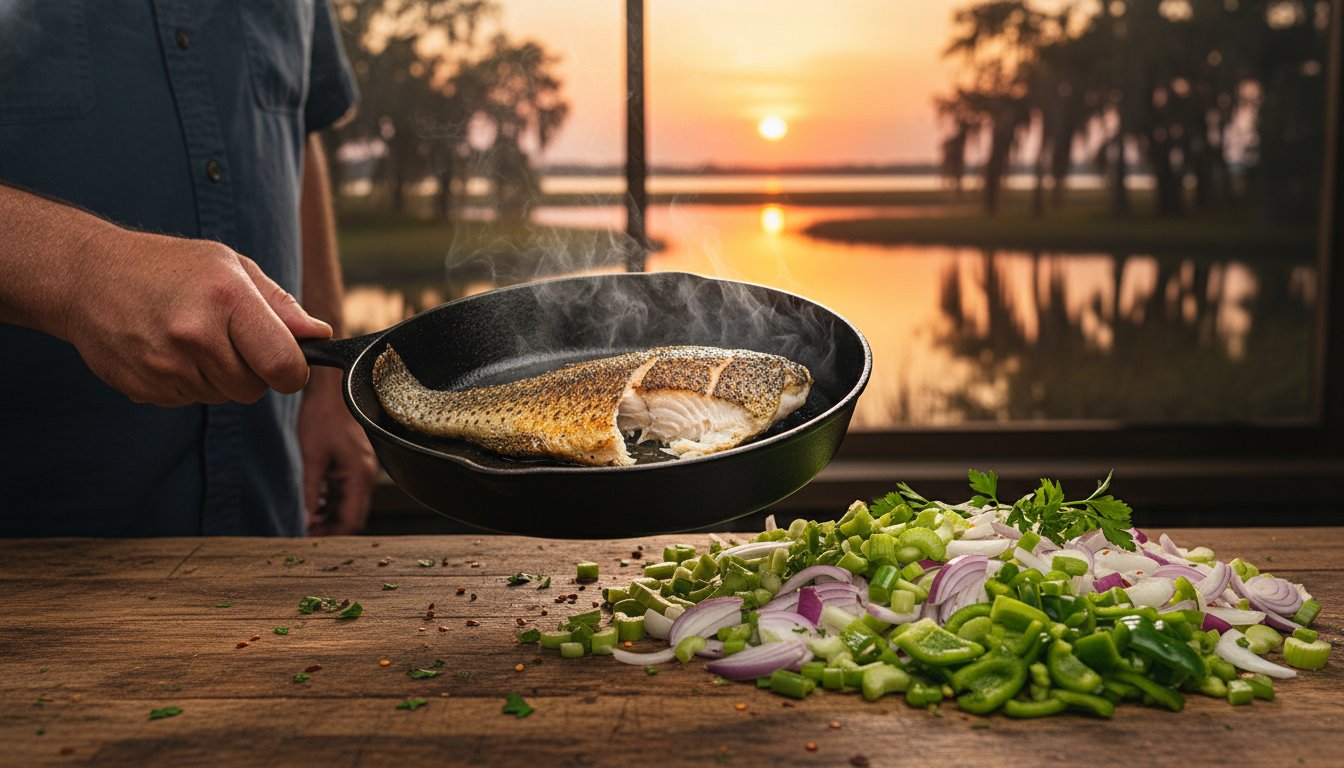
Pan-searing is arguably the best way to cook speckled trout if you want to highlight its natural sweetness. Start by patting the fillets bone-dry. Use a hot skillet with a thin layer of oil to get a golden, crispy exterior. The classic Louisiana Meunière sauce is a local favorite. It’s a simple but decadent mix of browned butter, fresh lemon juice, and chopped parsley. This method respects the delicate nature of the meat while adding a rich, savory finish that complements the mild flavor perfectly.

Method 2: The Ultimate Cajun Cornmeal Fry

You can’t talk about Louisiana cooking without a proper fry. The secret is a light, seasoned cornmeal coating. Don’t use heavy batters that mask the fish. Keep your oil temperature between 350 and 375°F. If the oil is too cool, the fish gets greasy; too hot, and it burns before it’s cooked through. Season the fillets directly with Cajun spices before dredging them in the cornmeal for the best flavor profile. This creates a crunch that contrasts beautifully with the buttery interior.

Method 3: Broiled Trout with Lump Crabmeat Topping

Broiling is the safest way to handle large fillets without them falling apart on a grill. Set your oven to high heat and cook the fish for about 5 to 6 minutes. To turn this into a world-class meal, top the fillets with fresh Louisiana lump blue crabmeat and a drizzle of melted butter during the last two minutes. It creates a rich, layered dish that rivals anything you’ll find in a New Orleans bistro. This method is fast, efficient, and keeps the moisture locked inside the fillet.
Best Way to Cook Speckled Trout: A South Louisiana Captain’s Guide for 2026

Pro-Tips for Handling and Prepping Your Fresh-Caught Trout

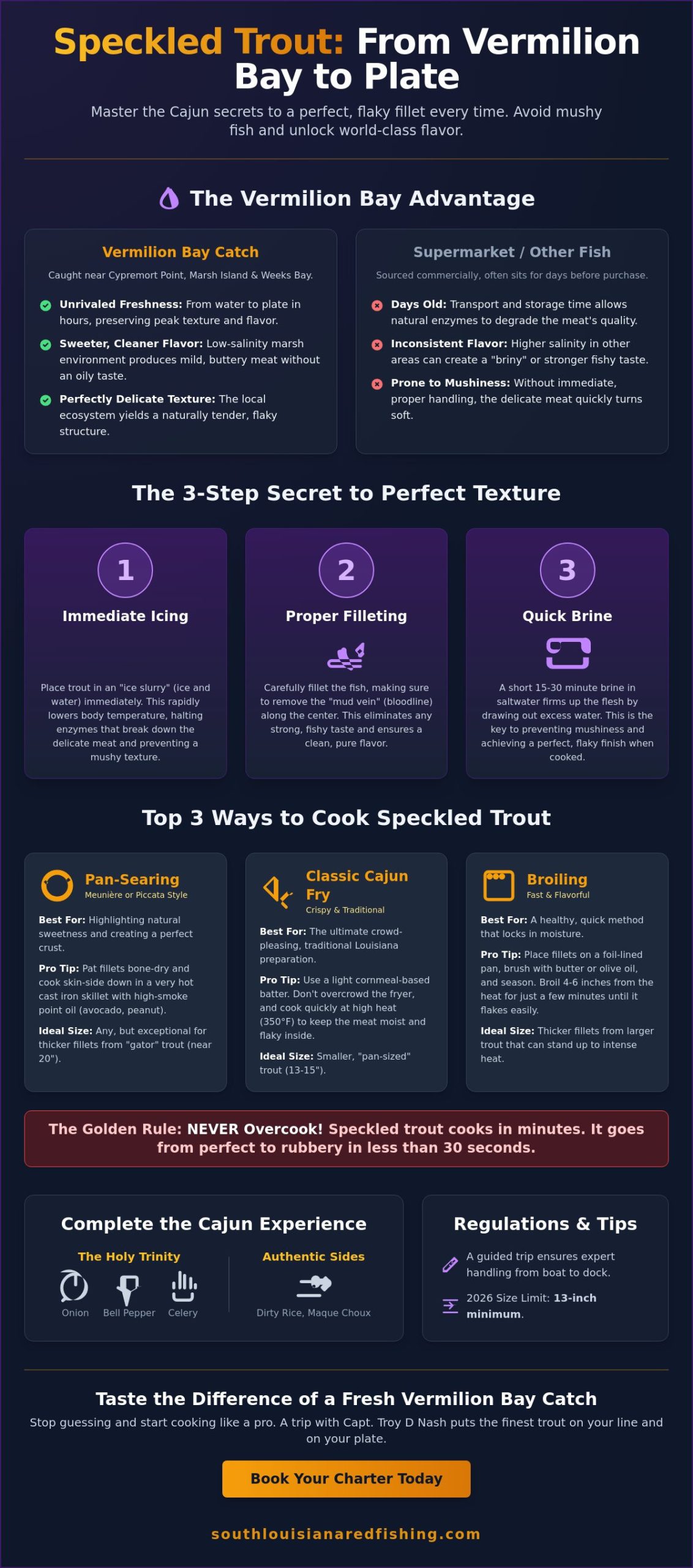
The journey from the reefs of Marsh Island to your kitchen table starts the second that fish hits the deck. If you let your catch sit in a dry bucket or a warm livewell, you’ve already lost the battle. The meat will turn soft and lose its integrity before you even reach the dock at Cypremort Point. The absolute secret to the best way to cook speckled trout is an immediate ice slurry. Mix two parts ice with one part salt water in your cooler. This creates a sub-freezing bath that shocks the fish, locking in the firm texture and preventing the enzymatic breakdown that ruins the meat. It’s a professional move that separates the seasoned experts from the casual weekenders.

Handling your catch with respect ensures the quality of the meal matches the excitement of the hunt. Once you’re back home, focus on precision. Every cut matters when you’re dealing with such a delicate species. Unlike tougher fish found in other areas, speckled trout requires a gentle touch and a razor-sharp blade. If you master the prep, you’re halfway to a world-class dinner that validates every cast you made along the weirs and shorelines.

Cleaning and Filleting Like a Pro

Removing the skin requires a steady hand. Start at the tail and keep your knife flat against the skin to avoid losing any of that sweet meat. Always look for the mud vein, which is the dark lateral line along the fillet. Trimming this away ensures a clean, mild flavor profile. Don’t forget to check for pin bones by running your finger along the center line; a pair of pliers makes quick work of removing them without tearing the flesh. If you aren’t eating your catch today, vacuum sealing is the only way to go. Traditional freezer bags allow air to touch the meat, which leads to freezer burn in just a few weeks.

The Quick Brine Method

Even with perfect icing, trout meat is naturally soft. A 20 minute salt brine is the professional secret to firming up the fillets. Mix one quart of ice-cold water with two tablespoons of sea salt and one tablespoon of sugar. Submerge your fillets for exactly twenty minutes. This process changes the cellular structure of the fish, drawing out excess moisture and tightening the protein fibers. Once the time is up, rinse the fillets under cold water and pat them bone-dry with paper towels. Moisture is the enemy of a good sear. If the fish is wet, it’ll steam in the pan rather than forming that golden crust. This preparation is the best way to cook speckled trout if you want that restaurant-quality flake every single time.

Pairing Your Trout with Authentic Cajun Sides and Flavors

You’ve done the hard work in the marsh. Now it’s time to build the plate. Understanding the best way to cook speckled trout means looking beyond the fish itself and focusing on the plate as a whole. Every great Cajun meal starts with the “Holy Trinity”: onions, bell peppers, and celery. Sautéing these until they’re soft and caramelized creates the aromatic base that elevates your trout from a simple catch to a culinary event. If you’re serving a seared fillet, a bed of dirty rice or spicy jambalaya is the traditional choice. The savory, earthy notes of the rice provide a sturdy foundation for the light, buttery fish pulled from the reefs of Vermilion Bay.

Don’t let a bland side dish ruin a world-class fillet. The delicate sweetness of speckled trout requires accompaniments that offer contrast without overstaying their welcome. Whether you’re cooking for family in Lafayette or hosting friends after a day at Cypremort Point, these pairings bring the authentic spirit of South Louisiana to your table. Pairing your catch with these bold, local flavors is the best way to cook speckled trout and celebrate our unique coastal heritage.

Classic Cajun Side Dishes

Maque choux is a local legend. This creamy corn medley, often featuring tomatoes and peppers, adds a sweet crunch that complements the trout’s texture. Always prioritize acidity. A splash of lemon or a side of smothered green beans with a hint of vinegar helps cut through the richness of the browned butter. Using fresh, local produce from the Lafayette area ensures your sides are as vibrant as the fish you just caught.

Homemade Remoulade and Tartar Sauces

Don’t settle for store-bought sauce. A Louisiana-style red remoulade is the gold standard, using Creole mustard, horseradish, and a heavy pinch of paprika for a kick that wakes up the palate. If you prefer a white tartar sauce, keep it chunky with plenty of capers and dill pickles. Mix your sauces 24 hours before dinner. This allows the flavors to meld and deepen, giving you that professional restaurant finish at home.

To wash it all down, grab a crisp Chenin Blanc or a cold local beer. The bright citrus notes in the wine or the clean finish of a craft lager will keep the meal feeling light and refreshing. Ready to stock your fridge with the freshest ingredients? Book a guided fishing trip today and let’s get those fillets on the table.

From Vermilion Bay to Your Plate: The Secret to the Freshest Trout

The absolute best way to cook speckled trout is to start with a fish that was swimming in the marsh just hours ago. You can follow every recipe in the book, but you can’t cook freshness into a fillet that has been sitting in a commercial supply chain for a week. When you book a trip with a professional guide, you’re bypassing the market entirely. You are securing a premium food source that is handled with expert precision from the moment it hits the net. Cypremort Point serves as the premier gateway to these nutrient-rich waters, offering immediate access to the reefs and weirs where the highest quality trout congregate. This proximity isn’t just about convenience; it’s about flavor preservation.

Captain Troy D Nash brings decades of local heritage to every trip, ensuring your catch is treated like the world-class delicacy it is. By the time you head back toward Lafayette, your limit of 15 fish is already properly chilled and ready for the pan. This hands-on approach eliminates the variables that lead to mushy meat. You get to witness the transition from the wild environment of Marsh Island to a restaurant-quality meal on your own table. It’s a full-circle experience that makes every bite taste better because you were there for the hunt.

The Inshore Advantage

Inshore fishing offers a massive culinary advantage over the logistics required for “other areas” or deep-sea trips. Because we’re fishing the canals, lakes, and flats of Vermilion Bay, our boat rides are short and efficient. Your trout doesn’t spend eight hours bouncing around in a box under the hot sun. Instead, it goes from the water to a sub-freezing ice slurry in seconds. This speed preserves the delicate cellular structure of the Louisiana fish we target, ensuring the meat stays firm and sweet. You won’t deal with the high costs or rough sea states of offshore excursions, yet you’ll walk away with a superior product for your kitchen.

Book Your ‘Catch and Cook’ Adventure

There is no reward quite like the “catch and cook” lifestyle. Experiencing the thrill of the strike near the oyster beds of West Cote Blanche Bay is only half the journey. The real magic happens when you apply the techniques you’ve learned here to a fresh 13-inch minimum trout you landed yourself. A 3rd generation guide knows exactly where the “sweet” trout are biting based on the tide and the season, giving you the best chance to stock your freezer. Visit Cypremort Point State Park and see for yourself why this region is a world-class destination for both sport and flavor. Don’t settle for a second-tier meal. Book your guided fishing trip today and discover the best way to cook speckled trout by catching the freshest fillets in South Louisiana.

Master Your Catch from the Marsh to the Table

You now have the professional blueprint for transforming a day on the water into a world-class culinary event. Success begins with an immediate ice slurry at the reefs and ends with a precise, high-heat sear in your own kitchen. By mastering the 20 minute brine and avoiding the trap of overcooking, you’ll ensure every fillet stays firm, flaky, and full of that signature sweetness. The best way to cook speckled trout is to prioritize freshness that only comes from a short run back to the dock at Cypremort Point. This ensures your catch maintains its delicate integrity from the moment it leaves the weirs until it hits the pan.

Don’t settle for market-bought fish when you can pull your own limit from the nutrient-rich waters of Vermilion Bay. As a 3rd generation local guide with decades of expertise, Capt. Troy knows exactly where the gator trout are hiding. Plus, expert fish cleaning and prep are always included to make your “catch and cook” experience seamless. You’ll head home with perfect fillets and the confidence to prepare them like a pro. Book Your South Louisiana Trout Adventure with Capt. Troy Today! Get ready to create memories on the boat and a masterpiece on the plate.

Frequently Asked Questions

How do I keep speckled trout from getting mushy when cooking?

High heat and short cook times are the keys to maintaining a firm texture. You must avoid crowding the pan, as too many fillets will cause the temperature to drop and lead to the meat steaming in its own juices. This results in the soft, unappealing texture that many anglers struggle with at home.

Always cook in small batches to keep your skillet screaming hot. This technique ensures a quick sear that locks in moisture while keeping the internal flakes intact. If you’re looking for the best way to cook speckled trout without the mush, focus on speed and high temperature.

Is it better to cook speckled trout with the skin on or off?

Skin-off is generally the preferred method for most South Louisiana recipes. Unlike redfish, trout skin is paper-thin and doesn’t provide a satisfying crunch when fried or seared. Removing the skin also allows you to trim away the mud vein and any remaining pin bones more effectively.

If you’re planning to grill your catch, leaving the skin on can act as a protective barrier to keep the delicate meat from falling through the grates. For almost every other preparation, a clean, skinless fillet will give you the most consistent restaurant-quality results.

What is the difference between speckled trout and redfish in terms of flavor?

Speckled trout is much milder and more delicate than the robust flavor of a redfish. While redfish has a heartier, coarser grain that stands up to heavy blackening spices, trout is prized for its buttery sweetness and light, airy flake. It’s often considered the “filet mignon” of the Vermilion Bay marsh.

Trout requires a more sophisticated touch in the kitchen to avoid overpowering its natural taste. Redfish is great for the grill, but the subtle profile of a trout is better suited for pan-searing or light frying where its clean finish can truly shine.

Can you freeze speckled trout, or does it ruin the texture?

You can freeze trout successfully if you remove every bit of air from the packaging. Because of the high water content in these fillets, air exposure leads to massive ice crystals that destroy the delicate meat fibers. A vacuum sealer is the only tool that truly preserves the quality for more than a few weeks.

If you don’t have a sealer, you can freeze the fillets submerged in a bag of water to create a solid block of ice. This method protects the fish from freezer burn and keeps the texture acceptable for up to three months.

What are the most common seasonings used for Louisiana trout?

Simple salt, cracked black pepper, and a light dusting of lemon pepper are the most common choices for local anglers. The best way to cook speckled trout involves using a light hand with spices so you don’t mask the buttery flavor of a fresh-caught fish from Cypremort Point.

Many cooks in the Lafayette area also use a mild Creole seasoning or a dash of cayenne for a subtle kick. The goal is always to enhance the natural sweetness of the meat rather than burying it under a mountain of salt or heavy breading.

How long does it take to cook a standard speckled trout fillet?

A standard trout fillet usually takes about 5 to 6 minutes total. Since most fish in our area fall within the 13 to 15 inch range, the fillets are relatively thin and cook through very quickly. You only need about 2 to 3 minutes per side in a hot skillet to achieve a perfect finish.

Watch for the meat to turn completely opaque and begin to flake easily when touched with a fork. Overcooking happens in a matter of seconds, so stay close to the stove and pull the fish the moment it looks done.

Is speckled trout safe to eat raw or as ceviche?

Speckled trout is safe and delicious for ceviche if it was handled with expert care on the water. The mild, clean flavor of a trout caught near Marsh Island makes it a fantastic candidate for citrus-based “cooking.” The acidity of the lime juice firms up the meat while highlighting its sweetness.

You must ensure the fish was placed in an ice slurry immediately after being caught to prevent any bacterial growth. When the quality is this high, raw preparations offer a refreshing way to enjoy your catch during the hot Louisiana summers.

What is the best oil to use for frying speckled trout?

Peanut oil is the gold standard for achieving a light, non-greasy fry. It has a high smoke point that allows you to reach the necessary 350 to 375 degree range without the oil breaking down or adding a burnt flavor to the fish. This ensures your cornmeal crust stays crispy and clean.

If you have a nut allergy, avocado oil or canola oil are reliable alternatives that also handle high heat well. Avoid using butter or olive oil for deep frying, as they will burn long before the fish is properly cooked.
How to Clean a Redfish: The Ultimate Guide to Cajun-Style Prep

How to Clean a Redfish: The Ultimate Guide to Cajun-Style Prep

Most anglers treat a redfish like a standard speckled trout, but those thick, bronze scales will ruin a dull knife before you even reach the rib cage. Mastering how to clean a redfish is less about brute force and more about following the legendary Cajun techniques used by seasoned pros across Vermilion Bay. You’ve spent the day hauling in a limit of four fish between 18 and 27 inches, so the last thing you want is to waste that prime meat or struggle with a messy bloodline. Whether you’re coming off a high-energy trip with Capt. Troy D Nash or launching from Cypremort Point, you deserve a world-class meal to show for your effort.

This guide promises to turn you into a filleting expert, teaching you the iconic “on the half shell” method that makes South Louisiana’s seafood world-famous. You will learn the exact steps to produce clean, boneless fillets while avoiding the common mistakes that ruin a fresh catch. We will walk you through navigating the tough rib cage, removing the bitter red muscle, and keeping your haul ice-cold for the short ride back to Lafayette for a backyard fish fry.

Key Takeaways

  • Select the right high-carbon or electric blades to easily penetrate the thick, armor-like scales found on redfish throughout the Vermilion Bay marsh.
  • Learn the professional “behind the pectoral fin” cut to maximize your meat recovery and navigate the rib cage without wasting a single bite.
  • Master the iconic Cajun “on the half shell” method to create a natural heat shield that keeps your fillets moist and flavorful on the grill.
  • Discover the essential steps for how to clean a redfish while managing the messy bloodline and using an immediate ice bath to lock in freshness.
  • Understand why the crab-rich diet of reds near Marsh Island produces a sweeter flavor and how to properly transport your haul back to Lafayette.

Essential Tools for Cleaning Redfish in the Louisiana Marsh

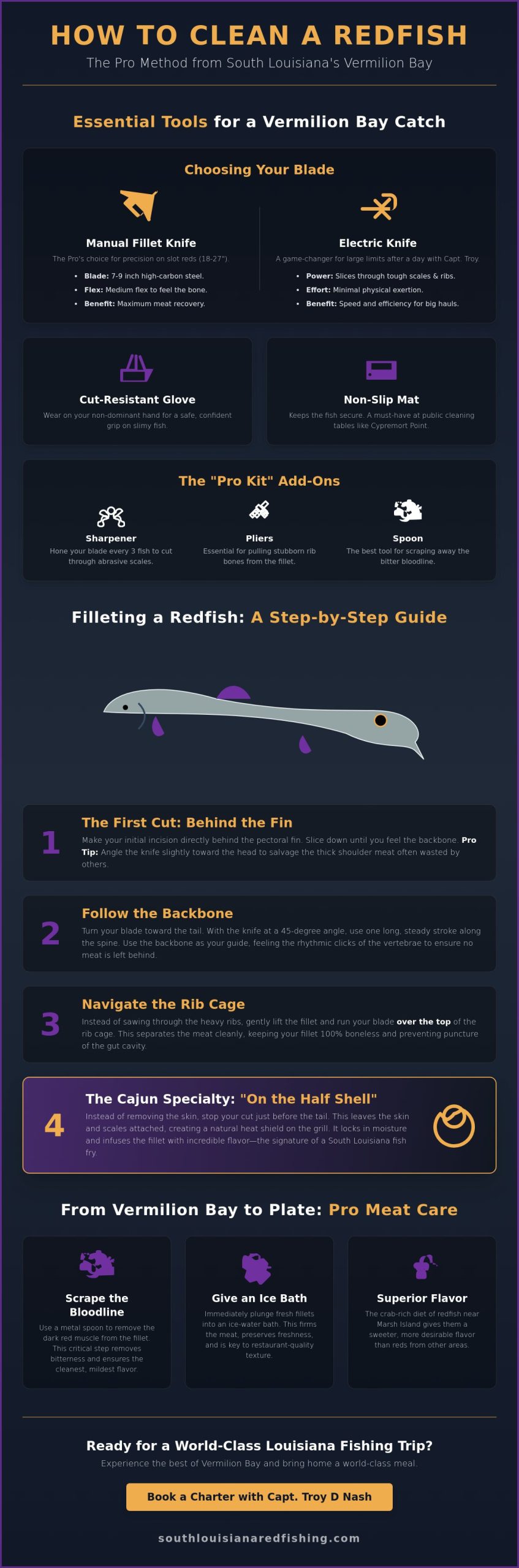
If you try to tackle a Marsh Island red with a standard kitchen knife, you’re bringing a toothpick to a gunfight. These fish are built like tanks. The bronze armor of the Red drum (Sciaenops ocellatus) is designed to protect them from predators in the shallow oyster reefs of Vermilion Bay, and those thick, overlapping scales will turn a dull blade into a safety hazard in seconds. A kitchen knife lacks the flexibility to contour around the spine and the backbone strength to pop through the heavy rib cage. To master how to clean a redfish without mangling the meat, you need a dedicated kit that respects the anatomy of the fish.

Safety starts with your grip. Redfish are notoriously slimy, and one slip can lead to a trip to the emergency room instead of the grill. Always wear a stainless steel mesh or high-performance polyethylene cut-resistant glove on your non-dominant hand. This gives you the confidence to apply the necessary pressure when making that initial cut behind the pectoral fin. Pair this with a sturdy, non-slip cleaning station. If you’re using the public tables at Cypremort Point State Park, bring a rubberized mat to keep the fish from sliding while you work through your limit.

Choosing Your Blade: Manual vs. Electric

The debate between manual and electric knives is a staple at every Louisiana boat launch. For the precision required to clean slot reds between 18 and 27 inches, a high-carbon steel manual fillet knife is often the superior choice. Look for a blade length between 7 and 9 inches with a medium flex. This allows you to feel the bone as you glide toward the tail, ensuring maximum meat recovery. However, if you’ve just finished a legendary day with Capt. Troy D Nash and have a full limit for a large group, an electric knife is a total game-changer. It powers through the heavy scales and rib bones with minimal physical effort, though it requires a steady hand to avoid overshooting the spine.

The “Pro Kit” Add-ons

Expertise is found in the details. Because redfish scales are so abrasive, you must hone your blade every three fish to maintain a lethal edge. Keep a ceramic sharpening stone or a handheld pull-through sharpener on your table. You’ll also want a pair of heavy-duty needle-nose pliers. These are essential for pulling stubborn rib bones or gripping the skin if you aren’t prepping your catch “on the half shell.” Finally, keep a large metal spoon in your kit. It’s the best tool for “scraping” the dark bloodline away from the white meat, a critical step in how to clean a redfish for the best possible flavor.

Step-by-Step Guide: How to Fillet a Redfish Like a Pro

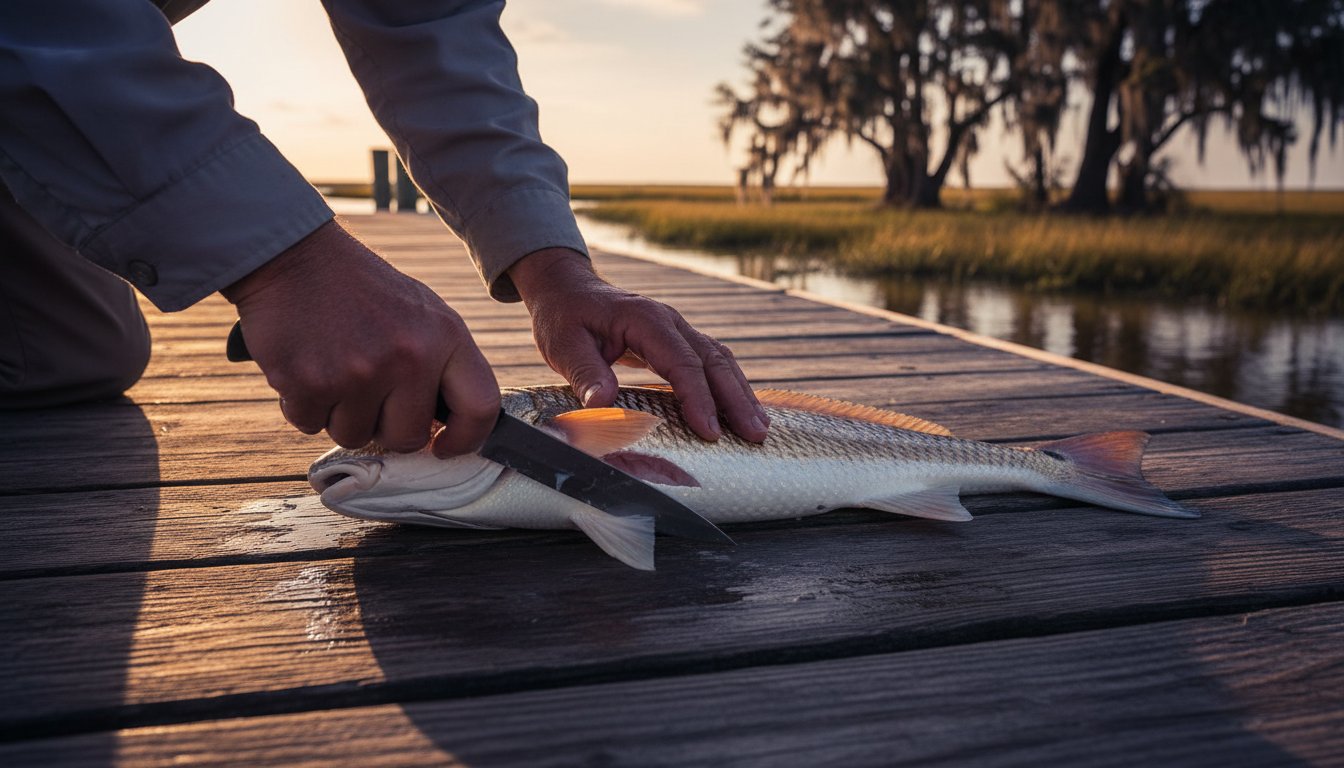
You’ve conquered the flats of Weeks Bay and returned with a limit of four slot reds. Now, the real test begins at the cleaning table. Knowing how to clean a redfish properly is the difference between a world-class Cajun dinner and a wasted day on the water. Start by securing the fish firmly on your non-slip station. Make your initial cut directly behind the pectoral fin, slicing down until you feel the resistance of the backbone. Aim your blade slightly toward the head during this first cut to salvage the thick shoulder meat that most casual anglers toss away when fishing in other areas.

The Initial Entry and Spine Cut

Capture the abundance of the marsh by following the spine with total confidence. Once your knife is seated against the backbone, turn the blade toward the tail and begin a long, steady stroke. Position your blade at a steep 45-degree angle against the dorsal fin to stay flush with the spine and capture every ounce of meat. This technique ensures you don’t leave half the fish on the bone, which is a common mistake for those used to the softer scales of fish in other regions. Use the backbone as your guide, feeling the rhythmic click of the vertebrae as you move toward the tail.

Removing the Ribs and Skin

Navigating the rib cage requires a delicate touch to avoid puncturing the guts and spoiling the meat. Instead of sawing through the heavy bones, lift the fillet slightly and run your knife over the top of the ribs. This keeps your fillets 100% boneless, which is the gold standard for those famous fried redfish nuggets served in Lafayette. Once the fillet is detached, place it skin-side down. Grip the tail tightly and slide your knife between the skin and the meat. Use a slight sawing motion while keeping the blade angled downward to ensure a smooth, waste-free finish.

The final pro move is the “Zipper” technique to remove the dark lateral line. Many guides in other areas skip this, but leaving that bloodline results in a fishy taste that ruins the sweet flavor of Marsh Island reds. Make two parallel slices along the dark red muscle and lift the strip out entirely. This leaves you with pristine, white fillets ready for the skillet. If you want to skip the learning curve and see these techniques firsthand, book one of our guided fishing trips and let an expert show you the ropes. Finish by trimming any remaining silver skin or fat to ensure your catch is restaurant-quality before it ever hits the ice.

How to Clean a Redfish: The Ultimate Guide to Cajun-Style Prep

The Cajun Specialty: Cleaning Redfish “On the Half Shell”

If you ask a local at Cypremort Point how they want their catch prepared, nine times out of ten the answer is “on the half shell.” This isn’t just a fancy menu term; it’s a specific technique for how to clean a redfish that leaves the skin and heavy scales completely attached to the fillet. In the Cajun heartland, we view those thick scales as a gift from the marsh rather than a nuisance to be removed. By keeping the “armor” on, you create a natural vessel that protects the delicate white meat from the intense heat of a grill or campfire. It’s the ultimate way to honor a fish caught in the pristine waters of Vermilion Bay.

Why Scales Matter for Grilling

The heavy scales of a redfish are practically fireproof. While anglers in other areas might waste time scaling their fish, South Louisiana pros know that the scales act as a natural heat shield. This allows the meat to simmer in butter and its own natural juices without drying out or charring. During the cook, the thin layer of fat between the skin and meat renders down, infusing the fillet with a rich, savory depth that you simply can’t get with a naked fillet. This method aligns perfectly with the high Louisiana Redfish prep standards that prioritize flavor and moisture above all else.

Execution of the Half Shell Cut

To master this cut, follow the same initial steps of making the entry behind the pectoral fin and gliding along the spine as established in the previous sections. The critical difference in how to clean a redfish on the half shell is that you never separate the meat from the skin. Once the fillet is free from the carcass, your work with the knife is done. You should have a sturdy, scale-backed piece of meat that holds its shape perfectly. This “boat” shape is ideal for holding puddles of melted butter and seasoning without anything dripping into the coals.

Before you head back to Lafayette, take a moment to focus on the scale side. Use a pressurized hose or a stiff brush to remove any marsh slime, mud, or grit from the scales. You want the armor to be clean, but you must be careful not to lift or remove the scales themselves. Pat the meat side bone-dry with a paper towel before bagging it. This prevents the “fishy” flavor that occurs when marsh water or slime sits on the fillet during transport. This prep ensures that when you fire up the grill, the only thing you smell is the sweet aroma of fresh, crab-fed redfish.

Meat Care: From the Vermilion Bay to Your Freezer

The secret to world-class Cajun seafood doesn’t start at the stove; it starts the moment your redfish hits the deck. In the humid heat of the Louisiana marsh, meat quality degrades rapidly. Professional guides at Cypremort Point always use a “slush” ice bath, mixing crushed ice with a little saltwater to drop the core temperature of the fish instantly. This prevents the flesh from becoming mushy and ensures that when you begin the process of how to clean a redfish, the meat remains firm and easy to handle. If you let your catch sit in a dry cooler for hours, you’re already fighting a losing battle against the sun.

The Importance of the Bloodline

Even the most perfect fillet can be ruined by leaving the lateral line intact. This dark, reddish-brown muscle contains a high concentration of fat and blood, which spoils much faster than the surrounding white meat. If you’ve ever had redfish that tasted “fishy” or “muddy,” the bloodline is almost certainly the culprit. While some anglers in other areas might ignore this step, we prioritize a clean finish for every catch. Firmly press the edge of a heavy-duty metal spoon against the backbone and drag it from ahead toward the tail to scrape away the dark blood along the spine. This simple step ensures that your fillets from Marsh Island remain sweet and mild, regardless of how you cook them.

Long-term Storage Solutions

If you aren’t cooking your catch the same day, proper storage is vital to maintaining that fresh-from-the-bay texture. Vacuum sealing is the gold standard for Louisiana Fish because it removes all oxygen, preventing the freezer burn that ruins so many great meals. While some old-school locals still freeze fish in Ziploc bags filled with water, this can actually waterlog the meat and damage the delicate fibers. A vacuum-sealed fillet can stay fresh for up to six months, while a refrigerated fillet should be eaten within two days for the best quality.

  • Label Everything: Use a permanent marker to record the date and the specific location, like “Vermilion Bay Reds.”
  • Thaw Slowly: Never use a microwave or hot water. Place the sealed bag in the fridge 24 hours before you plan to cook.
  • Dry Before Cooking: Pat the thawed meat with a paper towel to ensure a perfect sear or a crispy fry.

Mastering how to clean a redfish and caring for the meat ensures your hard work in the marsh pays off at the dinner table. If you want to spend more time catching and less time worrying about the details, come see how the pros do it. Book your guided fishing trip today and experience the best of the Cajun coast with an expert who handles the prep for you.

The Reward: Why Redfish from Cypremort Point Tastes Best

The ultimate prize for a day spent navigating the winding canals and weirs of the Louisiana marsh is a pile of sweet, white fillets. While mastering how to clean a redfish is a vital skill, the flavor of your meal is determined long before you pick up a knife. Redfish caught around Marsh Island and the shallow flats of Vermilion Bay have a distinct culinary advantage over fish found in other regions. These bronze beauties gorge themselves on a rich diet of blue crabs and grass shrimp. This crab-heavy diet infuses the meat with a natural sweetness that you won’t find in fish from deeper, saltier environments. It is a flavor profile that has made South Louisiana a global destination for seafood lovers.

From the Marsh to the Table

The secret lies in the unique salinity of our local waters. The mix of freshwater influence and the nutrient-rich marshes of West Cote Blanche Bay creates a perfect nursery. This environment produces a milder, cleaner taste compared to fish caught in high-salinity areas like Venice. Inshore fishing offers a level of freshness that simply cannot be matched by longer trips. Because you are often fishing just minutes from the dock at Cypremort Point, your catch goes from the water to a slush ice bath almost instantly. This rapid cooling preserves the delicate texture of the meat, ensuring it stays firm and delicious.

After you’ve finished the process of how to clean a redfish, the adventure continues in the kitchen. Many anglers take their fresh haul back to Lafayette, the heart of Cajun country. The city’s legendary culinary scene is filled with chefs who specialize in “Hook and Cook” experiences. They can take your pristine, half shell fillets and transform them with authentic spices and local techniques. Whether it is blackened, grilled, or fried, the quality of a Marsh Island red stands in a category of its own. It is a true “marsh to table” experience that celebrates the abundance of our coastline.

Book Your Next Adventure

Learning the intricacies of Cajun-style prep is a badge of honor, but sometimes you want to focus entirely on the thrill of the strike. When you book a guided trip with Capt. Troy D Nash, you are getting decades of local expertise and a commitment to excellence. We don’t just put you on the fish; we ensure your entire experience is world-class from the first cast to the final bag of fillets. Let us handle the heavy lifting while you enjoy the scenery and the fight. Experience the best Red Fish Fishing Louisiana has to offer. Ready to fill the cooler? Book your trip with Capt. Troy today!

Fire Up the Grill for a World-Class Cajun Feast

Mastering how to clean a redfish is the final step in becoming a true Louisiana angler. By using the right high-carbon blades and perfecting the “on the half shell” technique, you ensure every bite of your Marsh Island catch remains moist and flavorful. Remember that immediate temperature control and removing the dark bloodline are the secrets to preserving that sweet, crab-fed taste that makes our local reds famous. You’ve learned the steps to handle your own haul, but you don’t have to tackle the cleaning table alone on your next big adventure.

Experience the thrill of the strike without the stress of the mess. As a 3rd generation guide specializing in the pristine waters of Vermilion Bay and Cypremort Point, Capt. Troy D Nash provides a comprehensive outdoor experience. We include full-service fish cleaning on every trip so you can head straight to the kitchen. Focus on the fight and the legendary Cajun food waiting for you back in Lafayette while we handle the prep. Book Your Vermilion Bay Redfish Charter Now and discover why our inshore marsh is a premier destination. Your next trophy is waiting just past the reeds.

Frequently Asked Questions

Do I need to scale a redfish before filleting it?

No, you should never waste time scaling a redfish. Their scales are incredibly tough and act as a natural armor that protects the meat during the cleaning process. If you are preparing the fish “on the half shell,” the scales stay on to serve as a heat shield; if you want skinless fillets, you simply glide your knife between the skin and the meat to remove it all in one motion.

Is the “throat” of a redfish worth keeping and cleaning?

Absolutely, the throat is considered a hidden delicacy in the Cajun heartland. This cut is rich in fat and flavor, much like the collar of a yellowtail or the cheeks of a grouper. To clean it, cut a “V” shape behind the gills to remove the entire collar, then grill it alongside your fillets for a succulent treat that most anglers in other areas unfortunately throw away.

How do I get the “fishy” taste out of large redfish?

The key to a clean flavor is the immediate removal of the dark lateral line. While Louisiana regulations require you to release all “Bull Reds” over 27 inches, even a large 26 inch slot fish can have a strong taste if the bloodline isn’t managed. Scrape the blood along the spine with a spoon and “zipper” out the red muscle to ensure your fillets from the Cypremort Point marsh remain sweet and mild.

Can I clean a redfish with a regular kitchen knife?

You can try, but a standard kitchen knife will likely dull before you finish your first fish. Redfish scales are notoriously abrasive and require a high-carbon steel blade to maintain an edge. To truly master how to clean a redfish, you need a dedicated 7 to 9 inch fillet knife that offers the flexibility to navigate the spine and the strength to pop through the rib cage.

What is the “on the half shell” cleaning method?

This method involves removing the fillet from the carcass while leaving the skin and scales fully attached. It is the gold standard for grilling in South Louisiana because the scales create a natural boat that holds butter and seasonings. This technique prevents the meat from drying out over an open flame and is a favorite for those fishing the shallow flats of Vermilion Bay.

How long can redfish fillets stay in the freezer?

Vacuum-sealed redfish fillets will maintain their peak quality for up to six months. If you use a standard freezer bag with the water-immersion method, you should plan to eat your catch within three months to avoid texture changes. Always label your bags with the date and the specific catch location, such as “Marsh Island Reds,” to keep your freezer organized and your meals fresh.

Is it safe to eat the skin of a redfish?

It is perfectly safe, but most people find the skin far too leathery and tough to enjoy. Unlike the thin, edible skin of a speckled trout, redfish skin is thick and covered in heavy scales. Most Cajun recipes use the skin only as a protective barrier during the cooking process, allowing you to flake the tender meat away from the skin once it hits the plate.

What should I do with the redfish carcass after filleting?

Don’t let that flavor go to waste; use the head and bones to create a world-class seafood stock or court-bouillon. The carcass contains incredible depth that is perfect for Lafayette-style stews and gravies. Just be sure to remove the eyes and gills before boiling. If you aren’t a fan of stock, the remains make excellent bait for crab traps in the canals around Weeks Bay. Knowing how to clean a redfish means using every part of the bounty the marsh provides.

Catch and Cook Fishing Charter Louisiana: The Ultimate Cajun Culinary Adventure

Catch and Cook Fishing Charter Louisiana: The Ultimate Cajun Culinary Adventure

What if your toughest decision after a day on the water wasn’t how to clean your fish, but whether to have your Speckled Trout blackened or fried? Last October, a group from Lafayette discovered that the real magic of the Cajun Heartland happens the moment the boat hits the dock. Booking a catch and cook fishing charter louisiana experience means you spend less time worrying about transport logistics and more time enjoying the legendary flavors of the Gulf. You likely know that the only thing better than the fight of a bull red is the smell of it hitting a hot skillet just hours later.

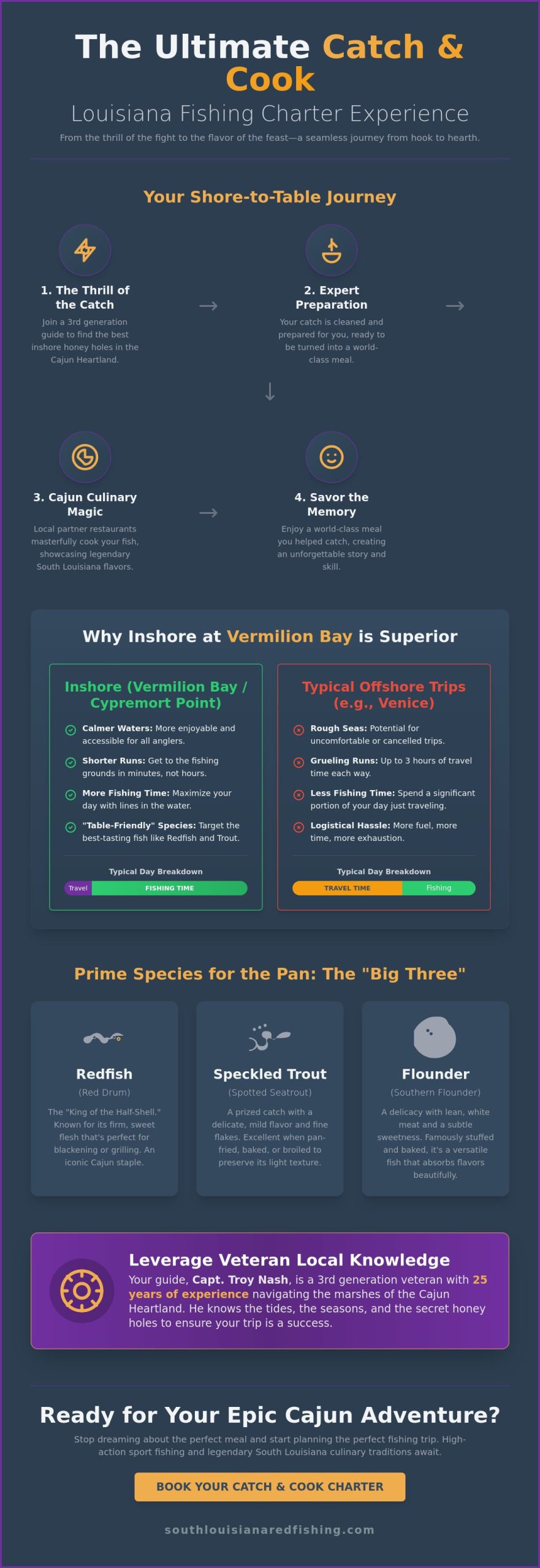
We’ll show you how to turn a limit of Redfish or Flounder into a world class meal without ever lifting a fillet knife. Capt. Troy Nash, a 3rd generation guide with 25 years of experience, has you covered from the banks of Marsh Island to the reefs of Vermilion Bay. Unlike the grueling boat rides often found in areas like Venice, our inshore trips at Cypremort Point offer a shorter commute and a faster path to the dinner table. We’ll explore the best species for a Cajun feast and the local restaurants that bring your fresh catch to life.

Key Takeaways

  • Experience the thrill of a catch and cook fishing charter louisiana and learn the seamless transition from sport fishing to a world-class Cajun meal.
  • Identify the “Big Three” inshore species—Redfish, Speckled Trout, and Flounder—and why targeting “eater-sized” fish ensures the highest quality for your pan.
  • Discover why the protected marshes and reefs of Vermilion Bay and Cypremort Point provide a more rewarding inshore adventure than crowded commercial hubs.
  • Leverage the 25 years of veteran local knowledge from a third-generation guide to find the most productive honey holes in the Cajun Heartland.
  • Master the essential steps to planning your epic shore-to-table journey, combining high-action sport fishing with legendary South Louisiana culinary traditions.

What is a Catch and Cook Fishing Charter in Louisiana?

A catch and cook fishing charter louisiana is more than just a day on the water; it’s a seamless transition from the adrenaline of sport fishing to the peak of culinary excellence. While a typical charter might end with a heavy bag of fillets and a long drive home, this experience focuses on the full cycle of the harvest. It’s an epic adventure where your guide leads you to the best honey holes in the marsh, then helps you prepare that fresh bounty for a world-class meal. This style of trip bridges the gap between the strike and the skillet, ensuring the story of your catch continues all the way to the dinner plate.

Louisiana’s “Sportsman’s Paradise” serves as the world’s premier location for this journey because of its unmatched biodiversity. The state’s coastal wetlands produce a massive volume of seafood, making it the heartbeat of Cajun cuisine. This “shore-to-table” tradition is a foundational element of local culture. It’s a practice passed down through generations, emphasizing respect for the resource and the joy of sharing a meal with family and friends. Unlike a “meat-haul” trip where the goal is simply to hit a limit, or a “catch and release” outing where the fish goes back, catch and cook is about the connection to the land and the flavor of the Gulf.

The Appeal of the Cajun Heartland

The true magic happens in the Cajun heartland, specifically around Vermilion Bay and Cypremort Point. These areas are the epicenter of authentic Cajun fishing, offering access to South Marsh Island and endless bayous. Captain Troy Nash, a 3rd generation veteran guide with over 25 years of experience, acts as the essential link between the marsh and your plate. As we move into 2026, this style of culinary travel is exploding in popularity. Travelers now want more than a souvenir; they want a skill and a memory. Booking a trip here means you’re learning the secrets of the swamp from an expert who lives and breathes this lifestyle every day.

Inshore vs. Offshore Catch and Cook

When planning a culinary-focused trip, inshore fishing offers distinct advantages over going offshore. Inshore waters provide the most “table-friendly” species that define Louisiana cooking, such as Redfish, Speckled Trout, and Flounder. These species are easier to prepare and offer a delicate, versatile flavor profile perfect for blackening or frying.

  • Calmer Waters: Inshore trips in Vermilion Bay avoid the rough seas often found in the open Gulf, making the experience more enjoyable for everyone.
  • Shorter Runs: Unlike Venice, where you might spend three hours just reaching the fishing grounds, our trips get you to the action in minutes.
  • Accessibility: Shorter boat rides mean more time spent actually fishing and more energy left for the cooking process.
  • Consistency: Inshore species have more reliable seasons, ensuring you don’t go home empty-handed.

By choosing the sheltered bays and flats near Cypremort Point, you’re opting for a trip that prioritizes quality time and premium flavor over the grueling logistics of deep-sea travel. He’s got you covered with everything needed for a successful day, from the right tackle to the local knowledge required to find the giants.

Prime Species for the Pan: What You’ll Catch (and Eat)

Experience the thrill of pulling a dinner-worthy trophy from the fertile waters of Vermilion Bay. On a catch and cook fishing charter louisiana, the focus stays on the “Big Three” inshore species: Redfish, Speckled Trout, and Flounder. These fish don’t just provide an incredible fight; they offer some of the best table fare in the Gulf South. Capt. Troy Nash uses his 25 years of experience to put you exactly where the bite is strongest, whether that’s the rock walls of Cypremort Point or the secluded weirs of Marsh Island.

South Louisiana is a year-round fishery. While the seasons shift, the abundance remains. In the spring and summer, Speckled Trout move toward the beaches and reefs. As the water cools in the fall, Redfish and Flounder stack up in the marsh canals and bayous. To ensure a sustainable harvest, Capt. Troy strictly follows all Louisiana fishing regulations regarding size and bag limits. This commitment to ethics means our local waters stay productive for generations to come.

Redfish: The King of the Half-Shell

The Redfish, or Red Drum, is the crown jewel of any catch and cook fishing charter louisiana. These bronze beauties are famous for their power and their flavor. Capt. Troy targets “eater” sized reds, typically within the 16 to 27 inch slot limit. These fish have firm, white meat that holds up perfectly on a hot grill. The iconic “on the half-shell” preparation involves grilling the fish with the scales and skin still attached. This technique protects the meat and infuses it with a smoky, buttery finish. While we often see massive “Bull Reds” exceeding 30 pounds near South Marsh Island, the smaller reds are the true stars of the kitchen.

Speckled Trout and Flounder: Delicate Delicacies

Speckled Trout are a local favorite for their light, flaky texture. They’re best enjoyed fried golden brown or sautéed with a little lemon and garlic. If you’re looking for a prize, the Southern Flounder is the one. These elusive flatfish hide along the bottom of marsh canals and oyster beds. Their meat is incredibly sweet and tender, making them a high-demand catch for foodies.

Your trip might also yield some underrated “bonus” catches that surprise even the most seasoned diners:

  • Black Drum: Often found near oyster reefs, smaller “puppy drum” have a flavor profile very similar to Redfish.
  • Sheepshead: Known as the “Cajun Lobster,” these fish feed on shellfish, giving their meat a unique, sweet taste.

Compared to the crowded waters of Venice, the bays and marshes surrounding Cypremort Point offer a more relaxed and productive environment for your culinary journey. If you’re ready to experience the marsh like a local, book your trip today and let Capt. Troy show you the best of the bay. He’s got you covered!

Catch and Cook Fishing Charter Louisiana: The Ultimate Cajun Culinary Adventure

Beyond Venice: Why Vermilion Bay is the Catch and Cook Capital

Many anglers automatically head toward Venice when they think of Louisiana fishing. While that area has its fame, it often lacks the intimacy and ease required for a perfect catch and cook fishing charter louisiana. Cypremort Point is the hidden gem of the coast. It beats those crowded commercial hubs by offering shorter runs to the fish and a more authentic Cajun atmosphere. You don’t need to ride two hours into the Gulf to find a trophy. The best action happens right here in the bayous and flats of West Cote Blanche Bay.

The “Venice bias” suggests that bigger is always better. That isn’t true for inshore trips. High-traffic areas often mean more competition for the same schools of fish. In contrast, Vermilion Bay offers vast, uncrowded waters where you can find peace and plenty. Captain Troy Nash uses his 25 years of experience to navigate these winding systems. He knows exactly which oyster beds are holding the most flavorful fish for your dinner table. By choosing this region, you avoid the heavy boat traffic of other areas and focus on the quality of the experience.

Calmer Waters and Better Conditions

The unique geography of Vermilion Bay protects you from the unpredictable moods of the open Gulf. While offshore boats are often docked due to high winds, our inshore marsh remains fishable and calm. This protection makes the area a top choice for families and casual anglers. You won’t have to deal with the heavy rollers or seasickness common in deeper waters. Instead, you’ll enjoy a smooth ride to the reefs and weirs where the Redfish and Speckled Trout thrive.

Proximity is the secret weapon of this region. The oyster beds and shell reefs are just a short boat ride from the launch at Cypremort Point. These structures act as natural buffets for local species, leading to meat that is firm, sweet, and perfect for the grill. You’ll spend your day casting into shallow flats rather than staring at a sonar screen in the middle of nowhere. It’s a hands-on, high-action style of fishing that yields immediate results for your evening meal.

The Lafayette Connection

Positioning Lafayette as your “foodie basecamp” changes the entire dynamic of your trip. The city is a short 45-minute drive from the docks. This proximity means you can be cleaning your catch by noon and sitting down for a gourmet meal by sunset. You’ll find that many local establishments are part of Louisiana’s official Catch and Cook program, which bridges the gap between the boat and the plate. Professional chefs will take your fresh-caught Redfish and transform it into a culinary masterpiece using authentic Cajun techniques.

The synergy here is incredible. You get the thrill of the hunt in the morning and the culture of the city in the evening. If you’re looking for more ways to enjoy the local flavor, check out these 21 unforgettable things to do in Lafayette, Louisiana. Choosing a catch and cook fishing charter louisiana in this specific region ensures your adventure is about more than just the fish. It’s about the lifestyle, the food, and the memories made in the heart of Acadiana.

From the Hook to the Hearth: How to Plan Your Trip

Planning a catch and cook fishing charter louisiana requires a strategy that bridges the gap between the boat and the dinner plate. Your epic adventure begins the moment you book a guide who understands the culinary value of your harvest. While other areas like Venice often focus on heavy offshore hauls, the inshore waters of Vermilion Bay and West Cote Blanche Bay offer a more intimate and flavorful experience. You aren’t just looking for any fish; you’re looking for the prime “eaters.” Smaller Redfish and Speckled Trout provide much better texture and flavor than the giant bull reds found in the deep Gulf.

  • Step 1: Book a veteran guide like Capt. Troy Nash who prioritizes meat quality and proper handling.
  • Step 2: Focus your efforts on 16 to 27 inch Redfish and 13 to 20 inch Speckled Trout for the best culinary results.
  • Step 3: Utilize professional cleaning services to ensure your fillets are bone-free and ready for the heat.
  • Step 4: Decide between a local “You Catch It, We Cook It” restaurant or your own camp kitchen in Cypremort Point.
  • Step 5: Pair your fresh fillets with classic Cajun sides like smothered corn, maque choux, or spicy jambalaya.

The Guide’s Role in the Kitchen

A successful trip relies on how your fish are handled the second they leave the water. Capt. Troy Nash brings over 25 years of experience to the table, ensuring every fish is iced down immediately to preserve its delicate flavor. He’s got you covered with all the necessary ice and bags, so you don’t have to worry about the logistics. When you’re on the boat, don’t be afraid to ask for specific cuts. Requesting Redfish “on the half shell” with the skin and scales left on is a local secret for the best grilling results. This level of service is what sets a professional catch and cook fishing charter louisiana apart from a standard day on the water.

Where to Cook Your Catch

Once you’ve limited out in the marsh or around the reefs of South Marsh Island, it’s time to eat. The Lafayette and Cypremort Point areas are home to legendary eateries that will transform your bags of fillets into a multi-course feast. If you prefer a DIY approach, local rental camps near Cypremort Point State Park provide the perfect backdrop for a traditional fish fry. Ensure your pantry is stocked with essential Cajun seasonings like Tony Chachere’s or Slap Ya Mama. For those staying in Lafayette, several local favorites offer to fry, grill, or blacken your catch for a small fee, allowing you to relax after a long day of reeling in giants. Experience the thrill of the hunt and the reward of the harvest on your next outing.

Book Your Epic Cajun Adventure with South Louisiana Redfishing

Ready to experience some of the best Redfish fishing in the United States? Booking a catch and cook fishing charter louisiana with Captain Troy Nash is about more than just a boat ride. It’s an invitation to join a legacy. With over 25 years of local knowledge, Troy is a full-time, veteran guide who understands the intricate rhythms of Vermilion Bay and the surrounding marsh. He doesn’t just find fish; he understands the tides and patterns that make this region a world-class destination.

Your epic adventure is designed to be stress-free. Captain Troy provides everything you need for a successful day on the water, including:

  • Professional-grade rods and reels
  • Fresh bait and tackle
  • Fuel and safety equipment
  • Expert fish cleaning and bagging

While other areas like Venice require long, expensive runs to reach the fish, our trips from Cypremort Point focus on the productive inshore reefs and banks. This means less time traveling and more time catching. You’ll avoid the rougher sea states often found in deep sea or offshore excursions, keeping your trip comfortable and cost-effective. You just bring your appetite for fresh Cajun seafood and a desire for a thrill.

A Legacy of Success on the Water

Captain Troy Nash represents the 3rd generation of his family to work these waters. This deep-seated expertise is the foundation of Louisiana Redfish: The Ultimate Guide to an epic fishing adventure. He’s got you covered regardless of your skill level. Whether you’re a seasoned pro looking for giant bull reds or a family wanting to limit out on Speckled Trout, Troy adapts to your style. Previous clients often highlight how the “catch and cook” aspect transforms a standard trip into a lifelong memory. They don’t just leave with a bag of fillets; they leave with a deeper connection to Cajun culture and the legendary waters of South Marsh Island.

Start Your Adventure Today

Don’t just go fishing; live the culture. The prime 2026 seasons are already seeing high demand, especially for the peak months when Redfish, Flounder, and Black Drum are most active. Securing your dates early ensures you get the best spots on the calendar for your catch and cook fishing charter louisiana. After a successful day on the water, you can explore the incredible Cajun culinary scene in nearby Lafayette or relax at Cypremort Point State Park. Contact the team now to plan your personalized itinerary and experience the thrill for yourself. Your epic adventure begins at the dock.

Claim Your Spot at the Cajun Table

Your journey through the marshy banks of Vermilion Bay and the oyster reefs of Marsh Island is about more than just the tug on the line; it’s about bringing the legendary flavors of the Gulf directly to your plate. When you choose a catch and cook fishing charter louisiana, you’re trading the long, exhausting boat rides common in Venice for the productive, accessible flats of Cypremort Point. You’ll target bull reds and speckled trout across thousands of acres of prime coastal habitat. Capt. Troy Nash, a 3rd Generation Veteran Guide, uses his over 25 years of experience to ensure your cooler stays full and your rods stay bent.

Don’t worry about the messy work once the boat is docked. Every fish you pull from the water is professionally cleaned and bagged, making it ready for the skillet the moment you head home. Whether you’re navigating the weirs of South Marsh Island or the grassy shorelines of Weeks Bay, the thrill of the hunt ends with an authentic Cajun meal. It’s time to experience the premier inshore fishing of the Gulf Coast. Your epic adventure starts now.

Book Your Epic Catch and Cook Adventure with Capt. Troy Today!

The redfish are waiting, and the grease is getting hot!

Frequently Asked Questions

Do all fishing charters offer catch and cook services?

No, not every guide provides this specialized culinary service. While many outfits in other areas only focus on the fishing, a true catch and cook fishing charter louisiana experience involves local partnerships with restaurants near Cypremort Point. Captain Troy Nash ensures your redfish or speckled trout are cleaned and ready for a local chef to transform them into a world class Cajun meal. This seamless transition from the marsh to the table makes this epic adventure unique.

What is the best time of year for a catch and cook trip in Louisiana?

You can book an epic catch and cook adventure 365 days a year in Vermilion Bay. The peak seasons for a variety of species are spring and fall, specifically from March through May and September through November. During these 6 months, the water temperatures attract massive schools of redfish and speckled trout to the oyster beds. You’ll find the most consistent action and the best weather for enjoying a post-trip Cajun feast during these windows.

Do I need to bring my own cooking equipment on the boat?

You don’t need to bring any pots, pans, or burners on the boat. Your veteran guide supplies all the high quality fishing gear, and the cooking happens at a partner restaurant or your lodging after the trip. We focus on the thrill of the hunt in the canals and weirs around Marsh Island. Leave the heavy lifting to us; Captain Troy’s 25 years of experience means he’s got you covered with everything needed for a successful harvest.

Which Louisiana fish is the best for eating?

Redfish and Speckled Trout are the undisputed kings of the Cajun kitchen. Redfish are famous for “blackening” on the grill, while the delicate, flaky meat of Speckled Trout is perfect for frying. You might also land Sheepshead or Flounder near the oil rigs, which are local favorites for their sweet flavor. These species are abundant in the 13,000 acres of marshland surrounding Cypremort Point, providing a fresh, delicious bounty for your culinary adventure.

Can kids participate in a catch and cook fishing charter?

Absolutely, children of all ages are welcome to join this adventurous experience. Teaching a child to catch their own dinner in the flats of West Cote Blanche Bay is a memory that lasts a lifetime. Our 3rd generation guide is an expert at helping young anglers land their first giant bull red. It’s a safe, educational, and fun way to introduce the next generation to the rich Cajun culture and the abundance of our local waters.

How much does a catch and cook fishing trip cost?

Costs for a catch and cook fishing charter louisiana vary based on the number of anglers in your party and the length of the trip. Most regional charters for 1 to 4 people are priced as a flat rate for the boat rather than per person. You should contact Captain Troy Nash directly for a specific quote tailored to your group. This ensures you get the best value for your epic adventure in the Vermilion Bay area.

Do I need a fishing license for a catch and cook charter?

Yes, every angler 18 or older must possess a valid Louisiana fishing license. For out of state visitors, the Louisiana Department of Wildlife and Fisheries offers a 3-day Charter Passenger License for a small fee. This permit is required by law even when fishing with a veteran guide. You can easily purchase this online before you arrive at Cypremort Point State Park, ensuring your day on the water starts without any delays.

Can I take my cleaned fish back home on a plane?

You can definitely fly home with your catch if you follow TSA and airline guidelines. Your fish must be frozen solid and packed in a leak proof, insulated cooler or bag. Most airlines allow up to 5 pounds of dry ice if it’s properly vented, though regular ice is usually prohibited. Taking a taste of Vermilion Bay back home is a great way to extend the thrill of your epic adventure long after you leave Louisiana.