Most anglers treat a speckled trout like a common panfish, but that’s the fastest way to ruin a world-class delicacy from the waters of Vermilion Bay. You’ve spent your morning hitting the oyster beds near Marsh Island or the weirs along the shoreline to land your limit of 15 fish, so you’re likely searching for the best way to cook speckled trout to avoid a plate of mushy, over-seasoned meat. It’s a common frustration to see such a premium catch turn soft in the pan when you were expecting a restaurant-quality finish. You want that perfect, flaky texture that highlights the natural sweetness of the fish without drowning it in heavy batter.
I’m here to show you that the secret involves a precise three-step process: immediate icing, a quick brine, and high-heat cooking. Whether you’re launching from Cypremort Point or heading back to Lafayette, you deserve a meal that validates your hard work on the water. This guide walks you through the professional techniques and authentic Cajun recipes used by seasoned captains to transform your catch into a masterpiece. We’ll dive into proper cleaning, the legal 13-inch minimum size requirements for 2026, and the specific searing tricks that ensure your dinner is the highlight of your adventure.
Key Takeaways
- Master the “Ice Slurry” secret and proper filleting techniques to eliminate the mud vein and preserve the buttery, delicate texture of your catch.
- Learn why high-heat searing is the best way to cook speckled trout to ensure a flaky, restaurant-quality crust without overcooking the meat.
- Elevate your meal by pairing fresh fillets with the Cajun “Holy Trinity” and authentic sides like dirty rice for a true South Louisiana culinary experience.
- Discover how the short travel time from the reefs of Marsh Island to your kitchen gives inshore trout a massive flavor advantage over market-bought fish.
- Understand how a professional guided trip ensures your trout are handled with expert care from the moment they leave the water until they reach your plate.
Table of Contents
Why South Louisiana Speckled Trout is a Culinary Prize
Speckled trout is the undisputed heavyweight champion of the Louisiana dinner table. While many folks chase redfish for the brute strength on the line, the real prize is the Spotted Seatrout (Cynoscion nebulosus) when it’s time to fire up the stove. The meat is mild, slightly sweet, and carries a buttery finish that melts away. It’s a culinary experience that defines life on the Cajun Coast. Finding the best way to cook speckled trout starts with respecting the quality of the raw product. You won’t find this level of flavor at a supermarket. Market fish often sits for days, losing that signature sweetness that comes from our nutrient-rich marsh. When you pull a limit from the weirs or oyster beds near Marsh Island, you’re holding a premium ingredient that deserves a world-class preparation.
Don’t believe the myth that trout is “second-tier” to redfish or snapper. While redfish are great for the grill, the delicate profile of a speckled trout is far more sophisticated. It absorbs flavors beautifully and offers a light, airy texture that heavier species can’t match. The ecosystem surrounding Cypremort Point creates a perfect storm for meat quality. The mix of fresh water from the Atchafalaya and the salt from the Gulf produces a fish that is clean, vibrant, and free of the oily taste found in many other saltwater species. Get ready to elevate your kitchen game, because a fresh trout fillet is a blank canvas for true Cajun artistry.
The Texture Challenge: Delicate vs. Mushy
The biggest hurdle with trout is its high water content. Unlike the firm, muscular meat of a snapper, trout fillets are incredibly delicate. When you’re searching for the best way to cook speckled trout, you have to account for this fragile structure. If you don’t handle them right, they turn mushy before they even hit the pan. Natural enzymes in the meat begin breaking down the texture the moment the fish stops breathing. This is why speed and temperature control are your best friends. You have to treat these fillets like fine china. If you master the prep, you’ll see why many locals prefer this over any other species in the Gulf.
Vermilion Bay vs. Other Areas
Our local waters offer something you won’t find in other areas like Venice. The low-salinity environment of Vermilion Bay and West Cote Blanche Bay creates a unique flavor profile. The fish here aren’t as “salty” or “briny” as those caught in higher salinity zones. Instead, the nutrient density near Cypremort Point produces a cleaner, sweeter meat. It’s a consistent quality that makes our inshore trout a preferred choice for chefs in Lafayette and beyond. You get a better sea state and a shorter run to the dock, meaning your fish is in the pan just hours after the catch. That’s a level of freshness no commercial market can provide.
The 3 Best Ways to Cook Speckled Trout for Maximum Flavor
Every fish you pull from the reefs near Cypremort Point has a destiny. The size of your catch usually dictates the preparation. Smaller trout in that 13 to 15 inch range are the gold standard for a traditional fry. If you’ve landed a larger “gator” trout closer to the 20 inch limit, those thick fillets are perfect for searing or broiling. The best way to cook speckled trout always starts with the “Golden Rule”: never overcook. This is a lean, delicate white meat that can go from succulent to rubbery in thirty seconds. Beyond the taste, the nutritional value of speckled trout makes it a top-tier choice for a healthy, protein-packed meal.
You need the right tools for the job. A heavy cast iron skillet is the best for heat retention, while stainless steel works wonders when you’re making a pan sauce. Always use high-smoke point oils like avocado or peanut oil. These allow you to get that restaurant-style crust without burning the fat or tainting the fish’s natural flavor. If you want to see how the pros handle these fish before they hit the kitchen, consider spending a day on the water with Capt. Troy D Nash to learn the ropes.
Method 1: Pan-Seared Trout Meunière or Piccata
Pan-searing is arguably the best way to cook speckled trout if you want to highlight its natural sweetness. Start by patting the fillets bone-dry. Use a hot skillet with a thin layer of oil to get a golden, crispy exterior. The classic Louisiana Meunière sauce is a local favorite. It’s a simple but decadent mix of browned butter, fresh lemon juice, and chopped parsley. This method respects the delicate nature of the meat while adding a rich, savory finish that complements the mild flavor perfectly.
Method 2: The Ultimate Cajun Cornmeal Fry
You can’t talk about Louisiana cooking without a proper fry. The secret is a light, seasoned cornmeal coating. Don’t use heavy batters that mask the fish. Keep your oil temperature between 350 and 375°F. If the oil is too cool, the fish gets greasy; too hot, and it burns before it’s cooked through. Season the fillets directly with Cajun spices before dredging them in the cornmeal for the best flavor profile. This creates a crunch that contrasts beautifully with the buttery interior.
Method 3: Broiled Trout with Lump Crabmeat Topping
Broiling is the safest way to handle large fillets without them falling apart on a grill. Set your oven to high heat and cook the fish for about 5 to 6 minutes. To turn this into a world-class meal, top the fillets with fresh Louisiana lump blue crabmeat and a drizzle of melted butter during the last two minutes. It creates a rich, layered dish that rivals anything you’ll find in a New Orleans bistro. This method is fast, efficient, and keeps the moisture locked inside the fillet.
Pro-Tips for Handling and Prepping Your Fresh-Caught Trout
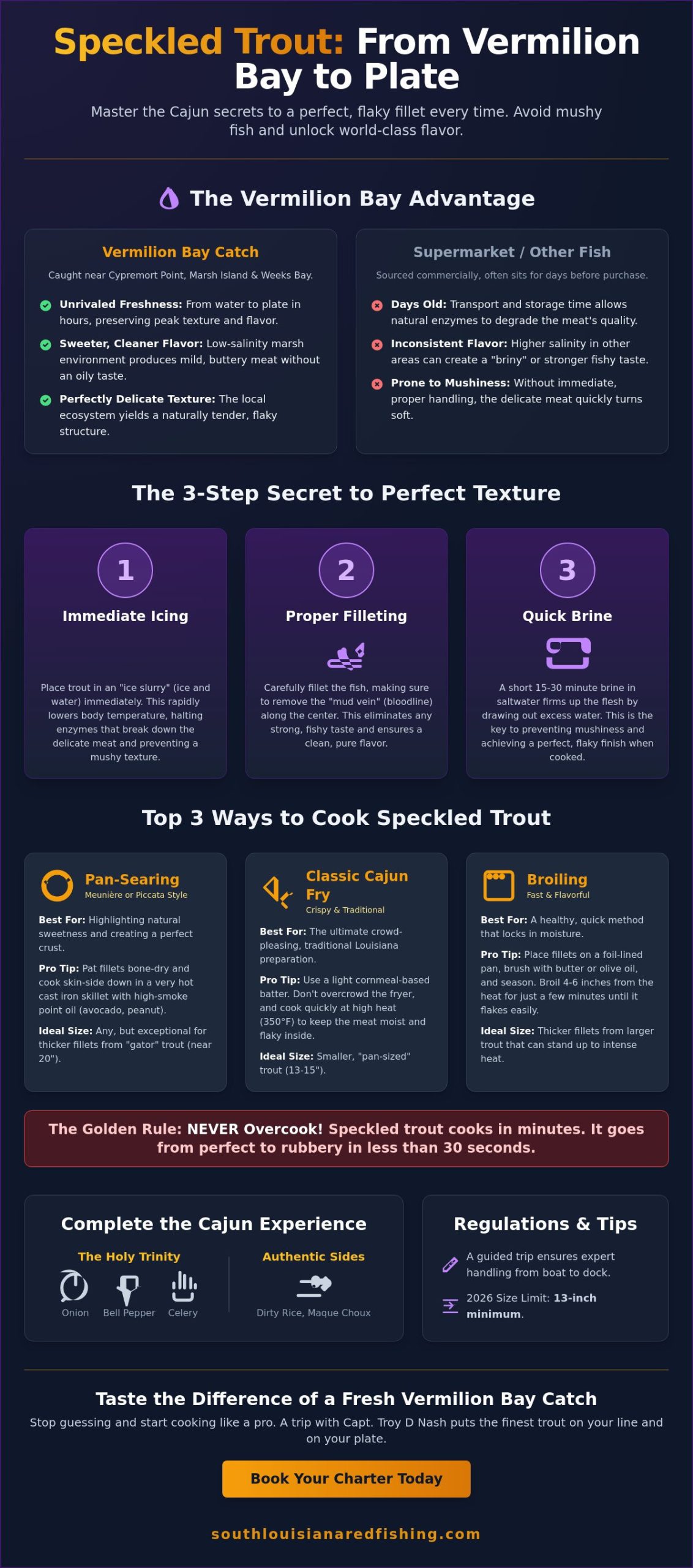
The journey from the reefs of Marsh Island to your kitchen table starts the second that fish hits the deck. If you let your catch sit in a dry bucket or a warm livewell, you’ve already lost the battle. The meat will turn soft and lose its integrity before you even reach the dock at Cypremort Point. The absolute secret to the best way to cook speckled trout is an immediate ice slurry. Mix two parts ice with one part salt water in your cooler. This creates a sub-freezing bath that shocks the fish, locking in the firm texture and preventing the enzymatic breakdown that ruins the meat. It’s a professional move that separates the seasoned experts from the casual weekenders.
Handling your catch with respect ensures the quality of the meal matches the excitement of the hunt. Once you’re back home, focus on precision. Every cut matters when you’re dealing with such a delicate species. Unlike tougher fish found in other areas, speckled trout requires a gentle touch and a razor-sharp blade. If you master the prep, you’re halfway to a world-class dinner that validates every cast you made along the weirs and shorelines.
Cleaning and Filleting Like a Pro
Removing the skin requires a steady hand. Start at the tail and keep your knife flat against the skin to avoid losing any of that sweet meat. Always look for the mud vein, which is the dark lateral line along the fillet. Trimming this away ensures a clean, mild flavor profile. Don’t forget to check for pin bones by running your finger along the center line; a pair of pliers makes quick work of removing them without tearing the flesh. If you aren’t eating your catch today, vacuum sealing is the only way to go. Traditional freezer bags allow air to touch the meat, which leads to freezer burn in just a few weeks.
The Quick Brine Method
Even with perfect icing, trout meat is naturally soft. A 20 minute salt brine is the professional secret to firming up the fillets. Mix one quart of ice-cold water with two tablespoons of sea salt and one tablespoon of sugar. Submerge your fillets for exactly twenty minutes. This process changes the cellular structure of the fish, drawing out excess moisture and tightening the protein fibers. Once the time is up, rinse the fillets under cold water and pat them bone-dry with paper towels. Moisture is the enemy of a good sear. If the fish is wet, it’ll steam in the pan rather than forming that golden crust. This preparation is the best way to cook speckled trout if you want that restaurant-quality flake every single time.
Pairing Your Trout with Authentic Cajun Sides and Flavors
You’ve done the hard work in the marsh. Now it’s time to build the plate. Understanding the best way to cook speckled trout means looking beyond the fish itself and focusing on the plate as a whole. Every great Cajun meal starts with the “Holy Trinity”: onions, bell peppers, and celery. Sautéing these until they’re soft and caramelized creates the aromatic base that elevates your trout from a simple catch to a culinary event. If you’re serving a seared fillet, a bed of dirty rice or spicy jambalaya is the traditional choice. The savory, earthy notes of the rice provide a sturdy foundation for the light, buttery fish pulled from the reefs of Vermilion Bay.
Don’t let a bland side dish ruin a world-class fillet. The delicate sweetness of speckled trout requires accompaniments that offer contrast without overstaying their welcome. Whether you’re cooking for family in Lafayette or hosting friends after a day at Cypremort Point, these pairings bring the authentic spirit of South Louisiana to your table. Pairing your catch with these bold, local flavors is the best way to cook speckled trout and celebrate our unique coastal heritage.
Classic Cajun Side Dishes
Maque choux is a local legend. This creamy corn medley, often featuring tomatoes and peppers, adds a sweet crunch that complements the trout’s texture. Always prioritize acidity. A splash of lemon or a side of smothered green beans with a hint of vinegar helps cut through the richness of the browned butter. Using fresh, local produce from the Lafayette area ensures your sides are as vibrant as the fish you just caught.
Homemade Remoulade and Tartar Sauces
Don’t settle for store-bought sauce. A Louisiana-style red remoulade is the gold standard, using Creole mustard, horseradish, and a heavy pinch of paprika for a kick that wakes up the palate. If you prefer a white tartar sauce, keep it chunky with plenty of capers and dill pickles. Mix your sauces 24 hours before dinner. This allows the flavors to meld and deepen, giving you that professional restaurant finish at home.
To wash it all down, grab a crisp Chenin Blanc or a cold local beer. The bright citrus notes in the wine or the clean finish of a craft lager will keep the meal feeling light and refreshing. Ready to stock your fridge with the freshest ingredients? Book a guided fishing trip today and let’s get those fillets on the table.
From Vermilion Bay to Your Plate: The Secret to the Freshest Trout
The absolute best way to cook speckled trout is to start with a fish that was swimming in the marsh just hours ago. You can follow every recipe in the book, but you can’t cook freshness into a fillet that has been sitting in a commercial supply chain for a week. When you book a trip with a professional guide, you’re bypassing the market entirely. You are securing a premium food source that is handled with expert precision from the moment it hits the net. Cypremort Point serves as the premier gateway to these nutrient-rich waters, offering immediate access to the reefs and weirs where the highest quality trout congregate. This proximity isn’t just about convenience; it’s about flavor preservation.
Captain Troy D Nash brings decades of local heritage to every trip, ensuring your catch is treated like the world-class delicacy it is. By the time you head back toward Lafayette, your limit of 15 fish is already properly chilled and ready for the pan. This hands-on approach eliminates the variables that lead to mushy meat. You get to witness the transition from the wild environment of Marsh Island to a restaurant-quality meal on your own table. It’s a full-circle experience that makes every bite taste better because you were there for the hunt.
The Inshore Advantage
Inshore fishing offers a massive culinary advantage over the logistics required for “other areas” or deep-sea trips. Because we’re fishing the canals, lakes, and flats of Vermilion Bay, our boat rides are short and efficient. Your trout doesn’t spend eight hours bouncing around in a box under the hot sun. Instead, it goes from the water to a sub-freezing ice slurry in seconds. This speed preserves the delicate cellular structure of the Louisiana fish we target, ensuring the meat stays firm and sweet. You won’t deal with the high costs or rough sea states of offshore excursions, yet you’ll walk away with a superior product for your kitchen.
Book Your ‘Catch and Cook’ Adventure
There is no reward quite like the “catch and cook” lifestyle. Experiencing the thrill of the strike near the oyster beds of West Cote Blanche Bay is only half the journey. The real magic happens when you apply the techniques you’ve learned here to a fresh 13-inch minimum trout you landed yourself. A 3rd generation guide knows exactly where the “sweet” trout are biting based on the tide and the season, giving you the best chance to stock your freezer. Visit Cypremort Point State Park and see for yourself why this region is a world-class destination for both sport and flavor. Don’t settle for a second-tier meal. Book your guided fishing trip today and discover the best way to cook speckled trout by catching the freshest fillets in South Louisiana.
Master Your Catch from the Marsh to the Table
You now have the professional blueprint for transforming a day on the water into a world-class culinary event. Success begins with an immediate ice slurry at the reefs and ends with a precise, high-heat sear in your own kitchen. By mastering the 20 minute brine and avoiding the trap of overcooking, you’ll ensure every fillet stays firm, flaky, and full of that signature sweetness. The best way to cook speckled trout is to prioritize freshness that only comes from a short run back to the dock at Cypremort Point. This ensures your catch maintains its delicate integrity from the moment it leaves the weirs until it hits the pan.
Don’t settle for market-bought fish when you can pull your own limit from the nutrient-rich waters of Vermilion Bay. As a 3rd generation local guide with decades of expertise, Capt. Troy knows exactly where the gator trout are hiding. Plus, expert fish cleaning and prep are always included to make your “catch and cook” experience seamless. You’ll head home with perfect fillets and the confidence to prepare them like a pro. Book Your South Louisiana Trout Adventure with Capt. Troy Today! Get ready to create memories on the boat and a masterpiece on the plate.
Frequently Asked Questions
How do I keep speckled trout from getting mushy when cooking?
High heat and short cook times are the keys to maintaining a firm texture. You must avoid crowding the pan, as too many fillets will cause the temperature to drop and lead to the meat steaming in its own juices. This results in the soft, unappealing texture that many anglers struggle with at home.
Always cook in small batches to keep your skillet screaming hot. This technique ensures a quick sear that locks in moisture while keeping the internal flakes intact. If you’re looking for the best way to cook speckled trout without the mush, focus on speed and high temperature.
Is it better to cook speckled trout with the skin on or off?
Skin-off is generally the preferred method for most South Louisiana recipes. Unlike redfish, trout skin is paper-thin and doesn’t provide a satisfying crunch when fried or seared. Removing the skin also allows you to trim away the mud vein and any remaining pin bones more effectively.
If you’re planning to grill your catch, leaving the skin on can act as a protective barrier to keep the delicate meat from falling through the grates. For almost every other preparation, a clean, skinless fillet will give you the most consistent restaurant-quality results.
What is the difference between speckled trout and redfish in terms of flavor?
Speckled trout is much milder and more delicate than the robust flavor of a redfish. While redfish has a heartier, coarser grain that stands up to heavy blackening spices, trout is prized for its buttery sweetness and light, airy flake. It’s often considered the “filet mignon” of the Vermilion Bay marsh.
Trout requires a more sophisticated touch in the kitchen to avoid overpowering its natural taste. Redfish is great for the grill, but the subtle profile of a trout is better suited for pan-searing or light frying where its clean finish can truly shine.
Can you freeze speckled trout, or does it ruin the texture?
You can freeze trout successfully if you remove every bit of air from the packaging. Because of the high water content in these fillets, air exposure leads to massive ice crystals that destroy the delicate meat fibers. A vacuum sealer is the only tool that truly preserves the quality for more than a few weeks.
If you don’t have a sealer, you can freeze the fillets submerged in a bag of water to create a solid block of ice. This method protects the fish from freezer burn and keeps the texture acceptable for up to three months.
What are the most common seasonings used for Louisiana trout?
Simple salt, cracked black pepper, and a light dusting of lemon pepper are the most common choices for local anglers. The best way to cook speckled trout involves using a light hand with spices so you don’t mask the buttery flavor of a fresh-caught fish from Cypremort Point.
Many cooks in the Lafayette area also use a mild Creole seasoning or a dash of cayenne for a subtle kick. The goal is always to enhance the natural sweetness of the meat rather than burying it under a mountain of salt or heavy breading.
How long does it take to cook a standard speckled trout fillet?
A standard trout fillet usually takes about 5 to 6 minutes total. Since most fish in our area fall within the 13 to 15 inch range, the fillets are relatively thin and cook through very quickly. You only need about 2 to 3 minutes per side in a hot skillet to achieve a perfect finish.
Watch for the meat to turn completely opaque and begin to flake easily when touched with a fork. Overcooking happens in a matter of seconds, so stay close to the stove and pull the fish the moment it looks done.
Is speckled trout safe to eat raw or as ceviche?
Speckled trout is safe and delicious for ceviche if it was handled with expert care on the water. The mild, clean flavor of a trout caught near Marsh Island makes it a fantastic candidate for citrus-based “cooking.” The acidity of the lime juice firms up the meat while highlighting its sweetness.
You must ensure the fish was placed in an ice slurry immediately after being caught to prevent any bacterial growth. When the quality is this high, raw preparations offer a refreshing way to enjoy your catch during the hot Louisiana summers.
What is the best oil to use for frying speckled trout?
Peanut oil is the gold standard for achieving a light, non-greasy fry. It has a high smoke point that allows you to reach the necessary 350 to 375 degree range without the oil breaking down or adding a burnt flavor to the fish. This ensures your cornmeal crust stays crispy and clean.
If you have a nut allergy, avocado oil or canola oil are reliable alternatives that also handle high heat well. Avoid using butter or olive oil for deep frying, as they will burn long before the fish is properly cooked.