Best Footwear for a Fishing Boat: The Ultimate 2026 Guide for Inshore Anglers

Best Footwear for a Fishing Boat: The Ultimate 2026 Guide for Inshore Anglers

Imagine you are braced on the bow near Marsh Island, a trophy Redfish has just slammed your bait, and at the moment of truth, your foot slips on the wet fiberglass. It is a heart-stopping moment that proves why choosing the best footwear for a fishing boat is the most important gear decision you will make this season. We have all been there. Between the heavy humidity of the South Louisiana marsh and the constant salt spray, wet feet usually lead to nasty blisters and brutal fatigue before the noon sun even hits the water.

You deserve to focus on the fight, not your aching feet. Whether you are navigating the shallow flats of Cypremort Point or hitting the reefs near East Cote Blanche Bay, the right shoes keep you stable and dry. This guide promises to show you exactly how to achieve all-day comfort and professional-grade traction on any bay boat. We are breaking down the latest 2026 gear, from high-tech deck boots to breathable sneakers, so you can dominate the Vermilion Bay area with the confidence of a seasoned pro.

Key Takeaways

  • Master the science of razor siping to ensure you never lose your footing on a slick deck when a trophy Redfish is on the line.
  • Identify the essential drainage features that keep your feet dry and eliminate the fatigue caused by heavy, water-logged shoes.
  • Evaluate whether performance deck boots or athletic hybrids are the best footwear for a fishing boat during your next adventure in the South Louisiana marsh.
  • Prepare for the specific challenges of the Vermilion Bay environment, including intense summer deck heat and the muddy shorelines of Cypremort Point.
  • Learn how to coordinate your footwear with professional rain gear for a seamless, comfortable experience on your guided charter.

Why Proper Footwear is Critical for Your South Louisiana Fishing Charter

Selecting the best footwear for a fishing boat is about more than just looking the part. It is a fundamental safety decision. Specialized boat footwear is engineered for one primary purpose: keeping you upright on a wet, vibrating fiberglass deck while protecting that vessel from damage. In the winding bayous and expansive lakes of the South Louisiana marsh, your feet are your foundation. Sight-fishing for Redfish requires hours of standing on elevated casting platforms, often while the captain maneuvers the bay boat through tight cuts near Marsh Island or along the shorelines of East Cote Blanche Bay. Without the right gear, a sudden surge of the trolling motor or a slick spot from fish slime can send you overboard.

The Role of Stability in Fighting Inshore Giants

When you finally hook into one of those legendary Louisiana redfish, the real work begins. A 30 pound Bull Red does not just swim; it pulls with a raw power that tests every joint in your body. You need a solid base to leverage that fish away from oyster beds or weir structures. Many novice anglers make the mistake of wearing cheap flip flops, only to experience a “blowout” when the strap snaps during a high stakes hookset. Beyond the immediate danger of a fall, proper footwear with dedicated arch support prevents the dreaded “boat leg” fatigue. After eight hours of absorbing the chop in Vermilion Bay, your back and knees will thank you for choosing shoes designed specifically for the job.

Protecting the Deck: The Non-Marking Sole Rule

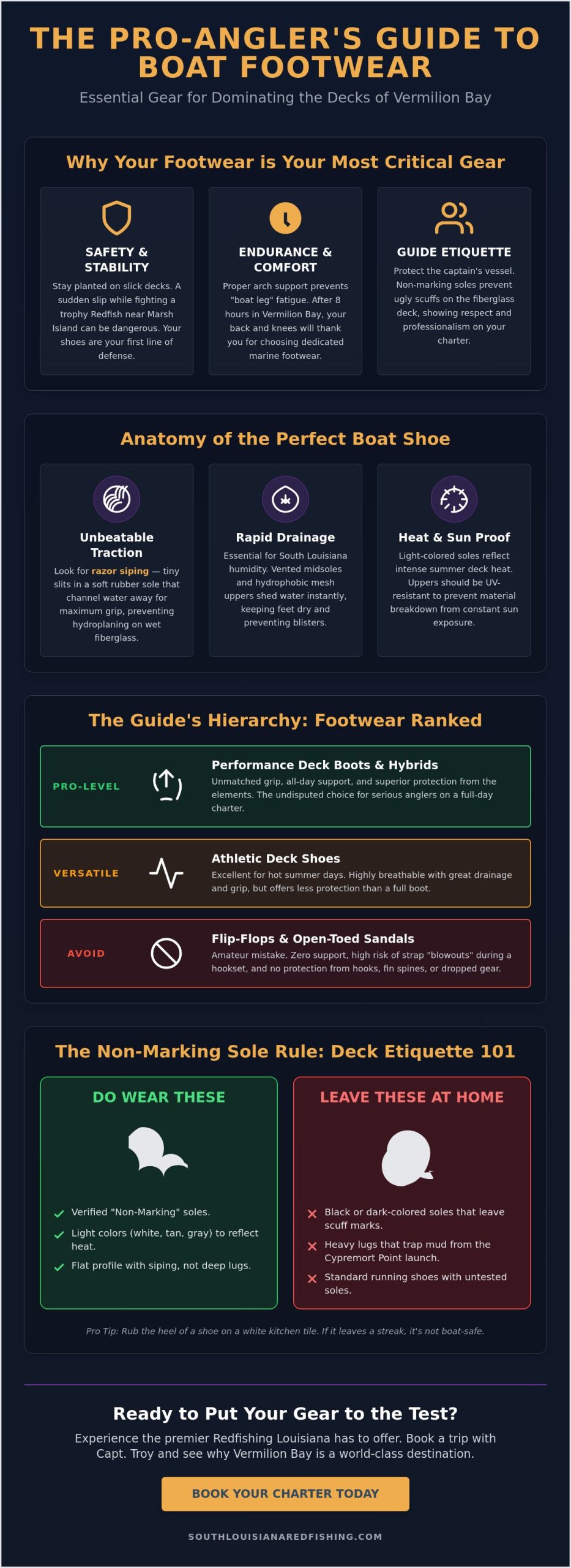
Experienced guides like Capt. Troy D Nash take immense pride in their equipment. Maintaining a clean, white fiberglass deck is not just about aesthetics; it is about professional standards. This is where “guide etiquette” plays a massive role. Traditional Boat shoes were originally designed with specific rubber compounds to prevent scuffing. A non-marking sole is a specialized rubber compound that leaves no scuffs or dark streaks on the boat surface. Black soled running shoes are the top enemy of charter captains across Lafayette and the surrounding coastal parishes. These soles leave permanent marks that require hours of scrubbing with harsh chemicals. You can test your shoes at home by dragging the heel across a kitchen tile. If it leaves a streak, leave them in the truck. Stick to these rules to ensure your trip is focused on the adventure:

  • Verify the Label: Always check the “non-marking” tag on the shoe box before you buy.
  • Avoid Mud Traps: Stay away from heavy lugs that trap mud from the Cypremort Point boat launch.
  • Heat Management: Prioritize light colored soles to minimize heat absorption during those blistering July days.

While other areas might be less strict about gear, a high end South Louisiana charter demands respect for the vessel. Pack the right shoes, grab some local Cajun food after the trip, and enjoy the premier fishing experience our coast offers.

Critical Features: What Makes a Shoe Boat-Safe in 2026?

The evolution of angler gear has reached a peak in 2026. Finding the best footwear for a fishing boat is no longer just about picking a pair of old sneakers. Modern deck shoes are highly engineered tools designed to handle the unique physics of a wet bay boat. In the humid environment of Vermilion Bay, where the temperature on the deck can soar, your shoes must perform multiple duties simultaneously. They need to grip like glue, drain like a sieve, and protect your skin from the brutal Gulf sun. These technical requirements are non-negotiable when you are balancing on a casting platform in the middle of the marsh.

Traction Technology: Beyond the Tread

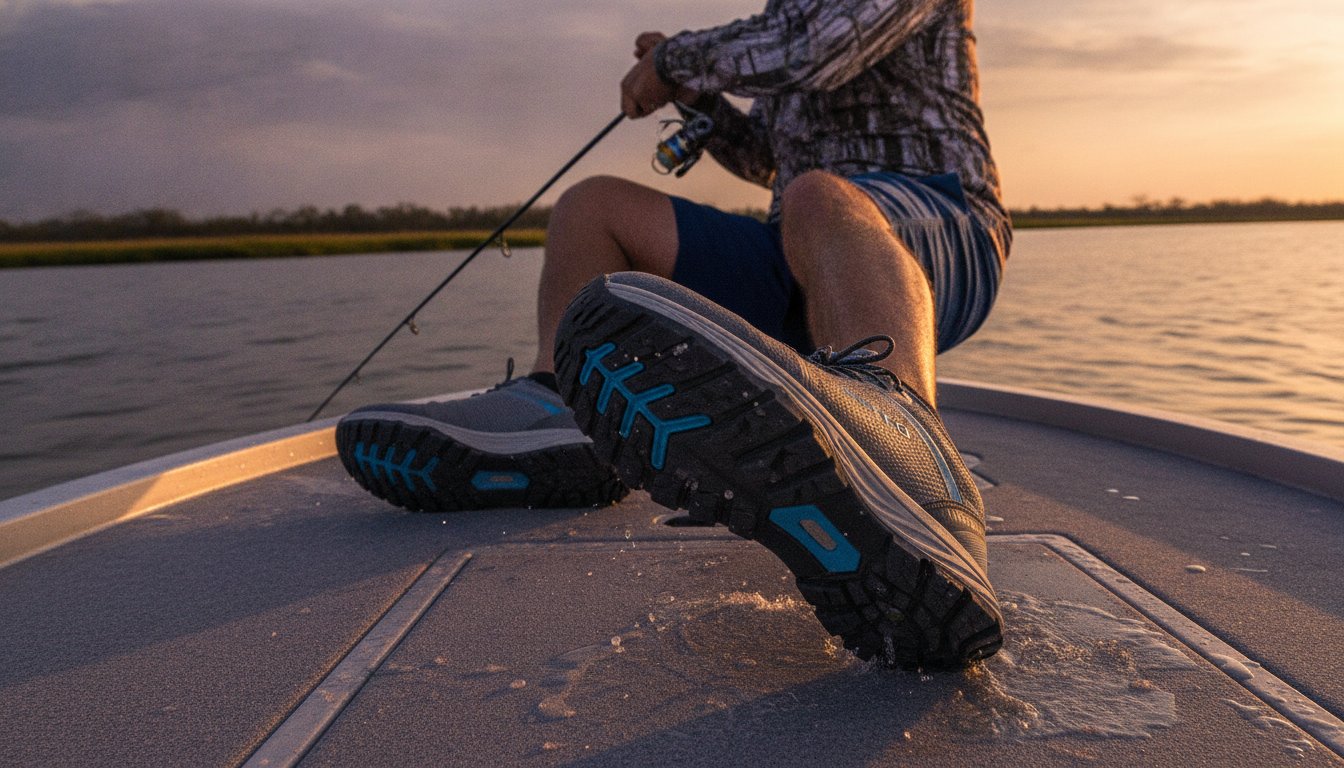
Most people assume deep lugs provide better grip. On a muddy trail at Cypremort Point State Park, that is true. On a fiberglass deck, it is a recipe for disaster. Effective boat shoes utilize razor siping. These are thin, wavy slits cut into the rubber sole that expand when you step down. This action creates a vacuum effect, pushing water out from under the shoe and allowing the rubber to make direct contact with the surface. This is the same technology used in high-performance tires to prevent hydroplaning.

Unlike hiking boots that trap mud and slime, the flat soles of the Best Boat Shoes of 2026 maximize surface area. Soft rubber compounds are preferred because they conform to the micro-texture of the deck, though they wear down faster than hard-soled utility boots. When you are leaning over the gunwale to net a Redfish near Marsh Island, that micro-grip is the difference between a successful catch and a dangerous fall. Harder compounds might last longer, but they often turn into “skates” once a little fish slime hits the floor.

Materials and Breathability in High Humidity

South Louisiana is famous for its “marsh funk.” This is the result of extreme humidity and organic matter trapped in damp gear. Selecting the best footwear for a fishing boat means looking for anti-microbial treatments and advanced drainage systems. While neoprene is excellent for keeping feet warm in the winter, it is a dual-edged sword in the summer. It traps heat and moisture, which can lead to fungal issues after a full day on the water. Instead, look for mesh uppers or high-grade EVA foam with integrated ports.

  • Drainage Ports: These allow water to exit immediately, preventing that heavy, “soggy sock” feeling.
  • UV Protection: The top of your foot is a prime target for sunburn while you are on the poling platform. Look for materials with a high UPF rating.
  • Quick-Dry Tech: Synthetic mesh can dry in minutes rather than hours, keeping your feet comfortable as you move between the marsh and the dock.

If you are ready to put these features to the test, consider booking a guided trip to see how the pros gear up for the Louisiana heat. Protecting your feet from UV rays and moisture ensures you stay in the game from the first cast to the last. While other areas might offer different conditions, the intensity of our local marsh demands gear that can breathe as hard as you work.
Best Footwear for a Fishing Boat: The Ultimate 2026 Guide for Inshore Anglers

The Guides Hierarchy: Comparing Boots, Deck Shoes, and Sandals

Choosing the best footwear for a fishing boat often comes down to a high-stakes battle between protection and temperature control. Professional guides have a hierarchy of gear that shifts with the seasons and the specific Louisiana fish species they are targeting. If you are hunting monsters near the weirs of Marsh Island, your needs will differ wildly from a relaxed afternoon chasing Flounder along the shorelines of Cypremort Point. While other areas might allow for basic flip-flops, the dynamic environment of the South Louisiana marsh requires a more specialized approach to stay safe and productive.

The Classic Deck Boot: Pros and Cons

Brands like Xtratuf have become the unofficial uniform of the Gulf Coast for a reason. These boots offer total protection from the wash-down hose, stinging jellyfish, and the sharp dorsal spines of a thrashing Black Drum. They are the gold standard for messy marsh days when the deck is covered in bait and scales. However, the “hot foot” factor is real. During a sweltering July trip on Vermilion Bay, a rubber boot can feel like a portable sauna. Only pull these out when the forecast calls for rain or particularly messy conditions where foot protection is the top priority.

Athletic Hybrid Shoes: The Modern Standard

For most New Orleans day-trippers visiting Cypremort Point, the athletic hybrid is the best footwear for a fishing boat. These shoes combine the cushion of a high-end runner with the drainage ports and siped soles we discussed earlier. They are incredibly versatile. You can wear them to grab world-class Cajun food in Lafayette, hop on the boat for an eight-hour session, and never feel a moment of discomfort. Top brands in 2026 are focusing on lighter materials that don’t sacrifice that crucial lateral support needed for a high-stakes hookset when a Bull Red decides to run.

Sandals and Clogs: Proceed with Caution

We see plenty of technical sandals on the water, and while they offer maximum breathability, they come with significant trade-offs. The “Croc” debate is alive and well among captains. While they are easy to clean, they often lack the ankle support required for moving around a bay boat in a heavy chop. Exposed toes are also a liability when handling a toothy Flounder or a powerful Redfish. If you must wear sandals, stick to high-end technical models with enclosed toes and non-marking soles to keep your captain happy and your feet safe from accidental hook sets or fish spines.

Louisiana Marsh Conditions: Why Vermilion Bay Demands Specialized Grip

The South Louisiana marsh is a beautiful, productive, and occasionally punishing environment. When you are chasing Redfish through the winding canals of Marsh Island or the shallow flats of West Cote Blanche Bay, the environmental stressors are unique. You aren’t just dealing with water. You are managing high humidity, intense solar radiation, and the slick organic matter we call “marsh slime.” Finding the best footwear for a fishing boat in these specific conditions requires understanding how our local geography impacts your gear. A shoe that works on a dry pier in another state will fail you the moment a Speckled Trout thrashes on a wet deck in Vermilion Bay.

Inshore Comfort vs. Offshore Challenges

One of the greatest advantages of our local fishery is the accessibility and comfort of the water. Unlike the rough, unpredictable sea states found when heading out of other areas like Venice, our inshore and nearshore trips offer a much steadier platform. Bay boats are designed for stability in the shallow lakes and bayous surrounding Lafayette. Because you aren’t fighting 6 foot swells on a rolling deep-sea vessel, you don’t need heavy, restrictive offshore boots. Instead, you can prioritize lighter, more breathable options. This allows for better feel of the deck and less physical strain during those shorter runs to the closest oil rigs or oyster beds. The best footwear for a fishing boat in the marsh is one that lets you move quickly and safely without the bulk of heavy ocean gear.

The Mud-to-Boat Transition

The transition from the dock to the deck is where many trips hit a literal snag. The public launches at Cypremort Point State Park can be muddy, especially after a heavy Louisiana rain. Bringing that mud onto a clean boat is a major “no-no” in guide etiquette. Mud acts like sandpaper on fiberglass, and organic debris can clog up the drainage scuppers. Before you step onto the boat, take a moment to rinse your soles in the water or use a dockside hose. Always check your treads for gravel or shells that scratch gelcoat and cause permanent damage to the vessel. Capt. Troy D Nash keeps a pristine boat for his clients, and starting with clean soles ensures the deck stays safe and non-slip for everyone throughout the day.

  • Heat Management: Dark decks and dark shoes are a bad combo in July. Choose light-colored footwear to reflect the intense sun of the Louisiana coast.
  • Slime Control: Redfish and Sea Trout produce a thick protective slime. If you aren’t wearing siped soles, this slime turns a fiberglass deck into an ice rink.
  • Salt Protection: Even in the brackish waters of Weeks Bay, salt will degrade cheap adhesives. Stick to trusted marine brands.

If you are ready to experience the world-class fishing of the South Louisiana marsh, book your guided fishing trip today and put your new gear to the test. After a successful day on the water, you’ll be just a short drive away from the best Cajun food in Lafayette, making it a complete Louisiana adventure.

Final Preparation: Booking Your Trip and Exploring Beyond the Boat

Once you have invested in the best footwear for a fishing boat, you are nearly ready to hit the water with Capt. Troy D Nash. Gear preparation does not stop at the ankles, though. For a truly professional experience, your shoes need to work in synergy with your rain gear. High quality bibs should overlap your deck boots or hybrid shoes to ensure water runs off onto the deck rather than down into your socks. This small detail is what separates the comfortable veterans from the soggy rookies when a summer squall rolls across Vermilion Bay. Capt. Troy often recommends bringing a lightweight, waterproof shell even on clear days, as the spray from a fast run to the Marsh Island weirs can catch you off guard.

What to Pack for Cypremort Point

A successful day at Cypremort Point starts in your gear bag. While we have focused on the shoes themselves, don’t overlook your socks. Synthetic or wool blend socks are mandatory to wick away the intense Louisiana humidity. Cotton is your enemy here. Also, keeping a spare pair of “dry land” shoes and fresh socks in your truck at the boat launch is a massive game changer. There is no better feeling than peeling off your salt crusted boat shoes and stepping into clean sneakers for the ride back to Lafayette. This simple step protects your vehicle’s interior and keeps that “marsh funk” from following you home after a day of chasing diverse species like Redfish and Sea Trout.

Experience the Best of South Louisiana

Your guided trip is just the beginning of what this region has to offer. After a day of fighting powerful Redfish and Black Drum, you will have worked up a serious appetite. The Lafayette area is the heart of Acadiana, offering a cultural experience that other areas simply cannot match. From the boat deck to the best boudin in the state, the transition is seamless. There are countless things to do in Lafayette, Louisiana, from exploring local music venues to touring historic sites.

Ending your day with world class Cajun food and our legendary local hospitality is the ultimate reward for a hard day’s work on the water. This is not just a fishing trip; it is a significant life event that stays with you long after the cooler is empty. Book your South Louisiana adventure today and experience the premier inshore fishing destination in the Gulf. We have the gear, the knowledge, and the passion to make your 2026 season truly unforgettable.

Dominate the Marsh with the Right Foundation

Your journey through the winding bayous of Marsh Island and the productive flats of West Cote Blanche Bay starts from the ground up. By prioritizing razor siping for grip and advanced drainage systems for comfort, you ensure every hookset is stable and every hour on the water is enjoyable. Choosing the best footwear for a fishing boat isn’t just about personal safety; it’s about respecting the vessel and maintaining the professional standards that define our world class fishery.

When you step onto the deck with Capt. Troy D Nash, you are benefiting from 3rd Generation Guide Expertise and decades of professional tenure in Vermilion Bay. His specialized inshore knowledge of Redfish, Trout, and Flounder ensures you are always in the right spot at the right time. Don’t let a slip or sore feet cut your day short when the giants are running. The marsh is calling, and your gear is finally ready for the challenge.

Ready for a world-class Redfish adventure? Book your trip with Capt. Troy today! After we limit out, the vibrant culture and incredible Cajun food of Lafayette will be waiting for you. We’ll see you at the dock!

Frequently Asked Questions

Can I wear flip-flops on a fishing charter?

You should avoid flip-flops because they offer zero lateral support and poor traction on wet fiberglass. When you are fighting a powerful Redfish near Marsh Island, a strap “blowout” or a simple slip can lead to a serious injury. Stick to footwear with a secure heel strap and siped soles to stay upright and safe during the action.

What are non-marking shoes and why do I need them?

Non-marking shoes utilize a specialized rubber compound designed to leave no dark scuffs or permanent streaks on a boat’s white gelcoat. Charter captains require these to keep their vessels in top condition. Choosing non-marking options is a key part of finding the best footwear for a fishing boat while respecting the guide’s equipment.

Are Crocs good for boat fishing?

Crocs are popular for their breathability and ease of cleaning, but they often lack the technical grip needed for slick decks. They can be quite slippery when fish slime or sea spray covers the floor. If you choose them for the marsh, ensure they have a secure heel strap and be extra cautious when moving quickly.

Should I wear socks with my boat shoes?

Yes, you should wear moisture-wicking synthetic or wool-blend socks to prevent blisters and manage sweat in the Louisiana heat. Avoid cotton socks because they trap moisture and lead to discomfort. In the high humidity of Vermilion Bay, the right performance socks keep your feet dry and help prevent the dreaded marsh funk.

How do I clean my shoes after a day in the Louisiana marsh?

Rinse your footwear with fresh water immediately after returning to the dock at Cypremort Point to remove salt and mud. Use a soft brush and mild dish soap to scrub away stubborn fish slime or organic debris. Always air dry your gear in a shaded, well-ventilated area to prevent materials from becoming brittle or cracking.

What is the best footwear for hot summer fishing in Louisiana?

Breathable athletic hybrid shoes are the premier choice for sweltering July days in the marsh. They provide the necessary arch support for standing on a casting platform while allowing maximum airflow to cool your feet. This is the best footwear for a fishing boat when the summer sun makes the deck temperature climb.

Do I need waterproof boots for an inshore fishing trip?

Waterproof deck boots are excellent for rainy days or particularly messy conditions, but they are not mandatory for every inshore trip. Most anglers chasing Redfish prefer the mobility and lightness of a hybrid shoe or technical sneaker. Save the heavy rubber boots for winter trips or when the forecast calls for constant rain.

Will my sneakers get ruined on a fishing boat?

Standard gym sneakers often get ruined by salt water, mud, and fish blood because their adhesives and fabrics aren’t designed for marine environments. They trap odors and can fall apart after just a few trips. Investing in shoes built specifically for the water ensures your gear survives the unique challenges of the South Louisiana coast.
What to Wear Fishing in Louisiana Winter: The Ultimate 2026 Gear Guide

What to Wear Fishing in Louisiana Winter: The Ultimate 2026 Gear Guide

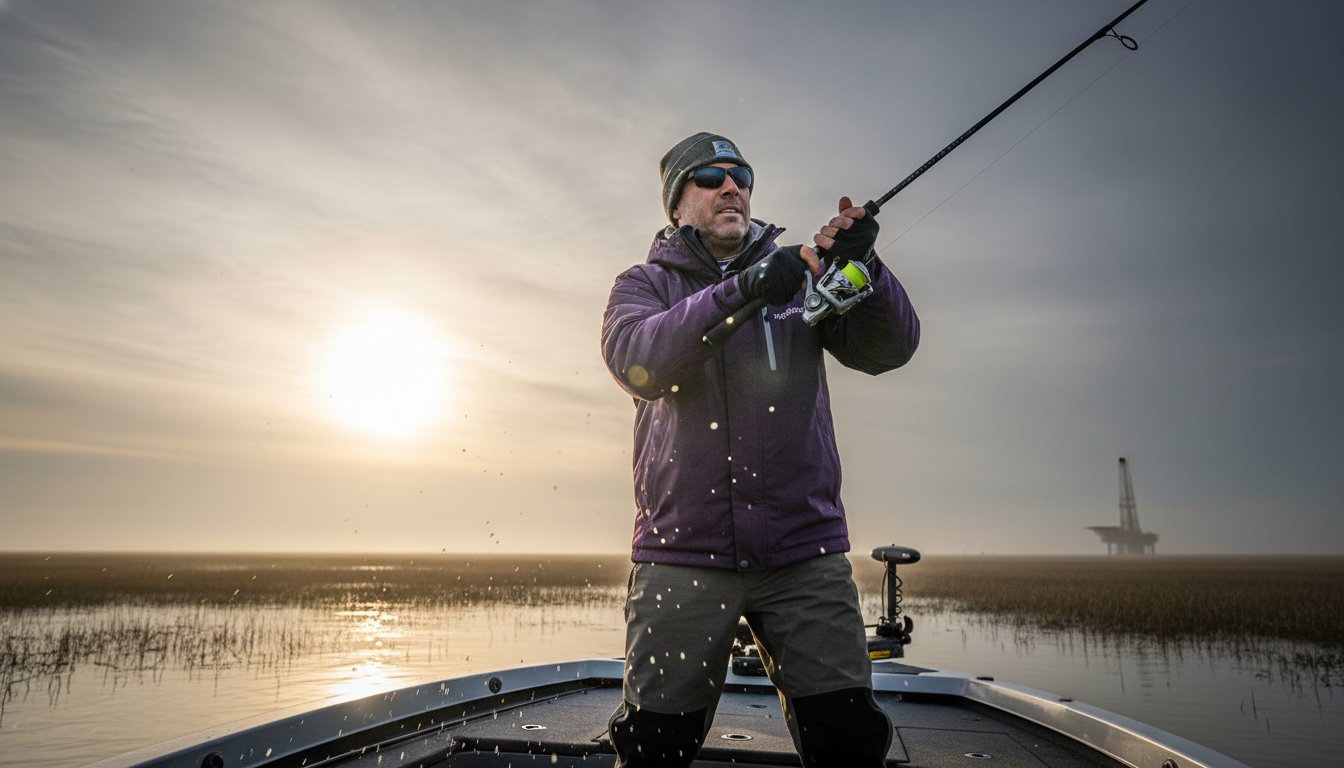
A 40-degree morning on Vermilion Bay feels colder than a blizzard in the Midwest because that 100% humidity cuts right through a standard heavy coat. Most anglers make the mistake of packing on bulky layers that make them look like the Michelin Man, only to realize they can’t even swing a rod when a Redfish appears. Mastering what to wear fishing in louisiana winter is the absolute difference between a miserable day of shivering and a legendary trip landing your limit of four Reds in the marsh.

We’ve all been there, shivering during the 30mph run out of Cypremort Point while your feet go numb on a wet deck. It’s frustrating when the gear that’s supposed to protect you actually hinders your performance and restricts your casting. This 2026 gear guide promises to turn you into an all-weather expert, ensuring you stay bone-dry and warm while exploring Marsh Island or the Cote Blanche bays. We’ll break down the essential three-layer setup, the best waterproof footwear for slick boat floors, and the technical fabrics that thrive in the damp, biting wind of the Cajun coast.

Key Takeaways

  • Master the “wet cold” phenomenon where high humidity and 30mph boat runs make the Louisiana marsh feel much colder than the thermometer suggests.
  • Discover the professional 3-layer system for what to wear fishing in louisiana winter to stay bone-dry without sacrificing the mobility needed to haul in Redfish.
  • Identify essential accessories like moisture-wicking base layers and neck gaiters that prevent wind from cutting through your outer shell during the morning run.
  • Learn how to adapt your gear for different settings, whether you are stalking Reds in the shallow flats of Marsh Island or heading nearshore to the closest oil platforms.
  • Get expert advice from Capt. Troy D. Nash on the best local gear that works for both a day on the water and a night out enjoying Cajun food in Lafayette.

The Reality of Louisiana Winter: Why the Marsh Feels Colder

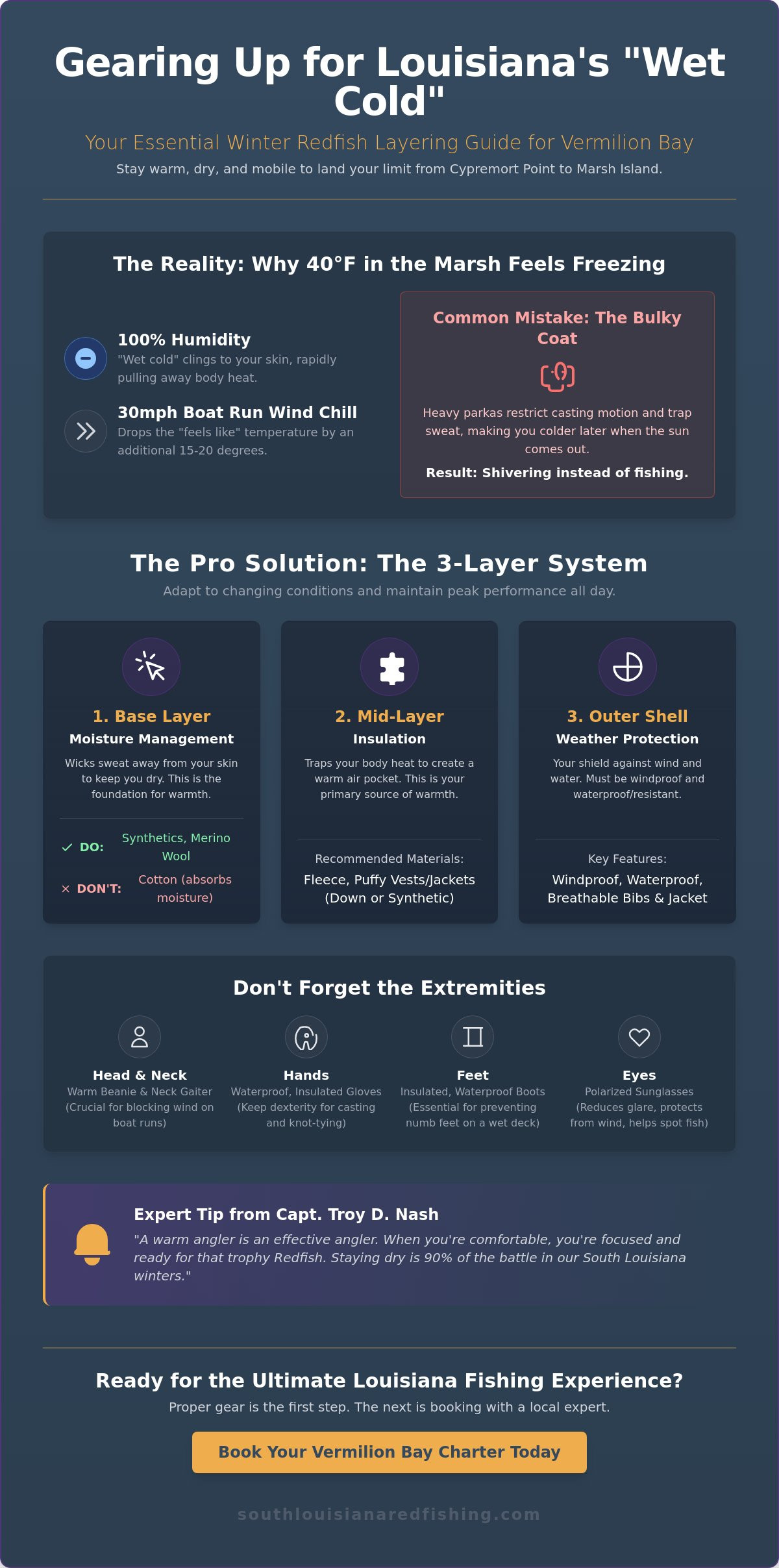
Welcome to the Louisiana marsh in January. It isn’t the dry, crisp cold of the mountains. It’s a “wet cold.” When the humidity hits 90%, the moisture in the air clings to your skin and pulls heat away from your body at an alarming rate. This is why 45 degrees in Acadiana can feel like a freezing morning in the Rockies. Understanding this environment is the first step in deciding The 3-Layer System and what to wear fishing in louisiana winter. You aren’t just fighting the temperature; you’re fighting the water in the air.

Then comes the boat run. Imagine leaving the dock at Cypremort Point at sunrise. You’re cruising at 30mph toward the reefs or the weirs of Marsh Island. That speed creates an immediate wind chill effect, dropping the perceived temperature by another 15 to 20 degrees instantly. If you aren’t shielded by the right technical gear, that damp air will find every gap in your clothing. It’s a sharp, biting sensation that can numb your fingers before you even make your first cast of the day.

Many visitors make the mistake of bringing a massive, bulky hunting parka. Don’t do it. While those coats are warm, they’re heavy and severely restrict your range of motion. You need to be able to pivot and cast with precision when a Bull Redfish crashes a bait in the shallows. Bulky gear also traps sweat once the sun comes out, which eventually makes you colder as the day progresses. The goal is to be sleek, mobile, and protected from the elements without looking like the Michelin Man.

Vermilion Bay vs. Other Areas

Our geography is unique compared to the rest of the Gulf Coast. While anglers in Venice might deal with the massive currents of the Mississippi River, fishing the Vermilion Bay complex means navigating a mix of sheltered canals and wide-open bay water. The trek from Cypremort Point State Park across to Marsh Island or East Cote Blanche Bay exposes you to Gulf winds that require serious wind protection. Nearshore rigs offer even less cover than the marsh flats, so your outer shell has to be top-tier to handle the salt spray and relentless breeze that comes off the open Gulf.

The ‘All-Day’ Factor

A typical winter day in South Louisiana is a game of extremes. You might start the morning in the low 40s under a grey, misty front, but by 2:00 PM, the clouds break and it’s a 70-degree bluebird afternoon. If you aren’t layered correctly, you’ll go from shivering to sweltering in a matter of hours. Staying dry is 90% of the battle. Once your base layer gets damp from either salt spray or sweat, the day is over. Preparing for the worst-case scenario isn’t just about comfort; it’s about staying focused on the fish. Capt. Troy D. Nash knows that a warm angler is an effective angler. When you’re comfortable, you’re ready for that trophy Redfish.

The 3-Layer System: Mastering the Louisiana Marsh Chill

When you’re blasting across Vermilion Bay at dawn, the wind chill doesn’t just bite; it searches for any weakness in your gear. To win this battle, you need a technical approach to what to wear fishing in louisiana winter. Forget the heavy, one-piece coats. Success in the marsh requires a versatile 3-layer system that allows you to vent heat when the sun finds the water but locks in core warmth during the run. This strategy isn’t just about comfort. It’s about maintaining the focus needed to spot a tailing Redfish in the grass at Marsh Island.

The foundation of this system is moisture management. Experts agree that dressing in layers begins with a high-performance base. Next comes your insulating mid-layer to trap heat, followed by a windproof and waterproof outer shell. This shell is your primary shield against the 30mph boat run and salt spray. Before you leave the dock at Cypremort Point, perform a mobility check. Reach your arms out and simulate a heavy cast. If you feel restricted, you’ve over-packed your layers. Finally, keep a small dry bag on board. As the Louisiana sun warms the marsh, you’ll need a spot to store shed layers so they stay salt-free and ready for the ride home.

Base Layers: Keep the Sweat Away

Cotton is the absolute enemy of the winter angler. It absorbs moisture, stays wet, and kills your body heat. In the humid environment of South Louisiana, you want mid-weight synthetics or Merino wool. These materials wick sweat away from your skin, which is vital when you’re working hard to land a stubborn Black Drum. Look for base layers with a high neck or a built-in hood. This extra coverage protects your neck from the biting wind that often sneaks down the collar of your jacket during the morning run.

Mid-Layers: Trapping the Heat

Your mid-layer is where you lock in the warmth. While down is incredibly light, synthetic “puffy” jackets or high-loft fleece are often better choices for the marsh. If synthetic insulation gets damp from a stray wave or mist, it still retains its ability to keep you warm. Vests are a secret weapon for the active angler. They keep your core toasty while leaving your arms completely free for unrestricted casting. Using a quarter-zip mid-layer allows you to quickly regulate your temperature during the heat of a fight without having to stop and strip off everything. If you’re tired of guessing the weather, booking a professional guide takes the guesswork out of the trip, as we’ll always advise you on the day’s specific needs before we hit the water.

What to Wear Fishing in Louisiana Winter: The Ultimate 2026 Gear Guide

Essential Accessories: Protecting the Extremities

Your core might be toasty thanks to the 3-layer system we discussed, but if your fingers are numb and your ears are stinging, you won’t be making many precision casts. Protecting your extremities is the final piece of the puzzle for what to wear fishing in louisiana winter. In the Vermilion Bay marsh, the wind is relentless. A high-quality beanie is mandatory for that first hour of daylight. Once the sun climbs over the Cote Blanche bays and the temperature swings, swap it for a dark-underbrim cap to cut the glare while sight-fishing for Redfish in the shallows.

Seal the gaps. A neck gaiter or “buff” is your best friend when you’re running 30mph across open water. It prevents the biting marsh air from entering your shell and chilling your chest. For your hands, it’s a balancing act. You need warmth, but you also need to feel the subtle thump of a winter Trout on a soft plastic. Many pros opt for fingerless wool gloves or thin, waterproof liners. Finally, never leave the dock without polarized sunglasses. Even on those grey, overcast days in the marsh, you need them to cut through the surface reflection to spot fish holding near oyster beds or submerged weirs.

Footwear for a Wet Boat Deck

Leave the sandals at the camp. Wet boat decks in the winter are a slip hazard and a recipe for frozen toes. The modern marsh standard is the rubber deck boot. These provide the grip you need on a slick fiberglass floor while keeping your feet 100% dry. Pair them with heavy-duty Merino wool socks. Wool is the only material that stays warm even if it gets damp. Unlike other areas where you might be fishing from a dry pier, being on a boat in the South Louisiana winter requires footwear that can handle constant spray and fish slime without losing traction or insulation.

Hand Warmers and Small Comforts

Small details make a big difference during an eight-hour day. Stick a chemical hand warmer inside your wristbands. This warms the blood flowing to your fingers and keeps them nimble for tying knots or unhooking a feisty Black Drum. Always keep a dry towel in your bag. After you haul in a fish, dry your hands immediately; evaporation is a fast way to lose heat in the wind. It’s also wise to pack an extra change of clothes in a dry bag just in case someone takes an unexpected splash. Don’t forget the lip balm and sunblock. The combination of salt air, wind, and winter sun can cause a nasty burn before you even realize it’s happening.

Marsh Flats vs. Nearshore Rigs: Tailoring for the Day’s Target

The choice between stalking the shallow flats and heading out to the closest oil platforms dictates the final tweaks to your gear list. When you are sight-fishing Redfish in the marsh, mobility is king. You need to be able to move silently and cast with zero restriction. However, heading nearshore changes the game entirely. The open water near the rigs brings increased salt spray and relentless wind that doesn’t have the marsh grass to break it up. This is where your decisions on what to wear fishing in louisiana winter truly pay off or leave you soaked.

For those nearshore trips to the reefs, waterproof bibs are a total game-changer. They provide an extra layer of protection against the “splash factor” when the boat catches a cross-wind on the way to the platforms. While some anglers look toward expensive “deep sea” or offshore alternatives, our nearshore reefs offer world-class action. You get the same thrill without the high fuel costs, long travel times, or punishing sea states found further out in the Gulf. It is the perfect balance of high-stakes adventure and inshore comfort.

Preparing for Vermilion Bay Specifics

Navigating the intricate canals and weirs of Marsh Island or the quiet corners of Weeks Bay requires a technical mindset. These moves are often slower and more methodical. You won’t have the high-speed adrenaline of the boat run to keep your blood pumping. When fishing the wind-swept shorelines of East and West Cote Blanche Bay, your outer shell needs to be locked down tight. One major advantage of launching from Cypremort Point State Park is our significantly shorter run times. Compared to other areas in the state, you spend less time shivering in the wind and more time with a tight line in your hand.

Species-Specific Gear Needs

Different fish require different approaches to your winter wardrobe. If you are targeting winter Sheepshead or heavy Black Drum around oyster beds, expect a little slime and mess. Wear an outer shell that wipes down easily. You don’t want to carry the marsh scent into your truck at the end of the day. For winter Speckled Trout holding in the deeper holes near Burns Point, you need to stay agile for quick, light hook sets. A lightweight, technical rain jacket is your best friend when that signature Louisiana winter mist rolls in. It keeps the dampness out without adding unnecessary weight or bulk. Ready to see these tactics in action? Book your winter adventure with Capt. Troy D. Nash and experience the best of the Acadiana coast today.

The South Louisiana Experience: Beyond the Boat

Winter fishing in Acadiana is more than just a sport; it’s a deep dive into a world-class culture. Capt. Troy D. Nash often refers to high-performance technical gear as the “Cajun Tuxedo.” In the communities surrounding Vermilion Bay, your mud-flecked bibs and salt-crusted shell are badges of honor. Whether you’re grabbing a pre-dawn biscuit at a local gas station or stopping for a post-trip celebration, you’ll find that technical layers are the standard uniform for anyone who knows the marsh. This lifestyle is built on the water, and being prepared for the elements is part of the local DNA.

While the focus is usually on the catch, the hospitality of Cypremort Point is legendary. Many anglers choose to stay local, enjoying a campfire and a cold drink after a day of hauling in Bull Reds. However, if you’re looking for a change of pace, the short drive to the city offers a different kind of adventure. Understanding what to wear fishing in louisiana winter means knowing how to transition from the boat to the bistro. A clean fleece and a fresh pair of jeans are all you need to enjoy the legendary nightlife and world-class dining in Lafayette.

Cajun Food and Culture Attire

Transitioning from the marsh to the best boudin stops in Acadiana is a rite of passage. While your fishing gear is acceptable in casual spots, the “smell of success” from handling Redfish and Black Drum all day can be overwhelming. Always pack a spare bag with a clean shirt and comfortable shoes. Casual is king in South Louisiana. You don’t need a suit to get the best meal of your life; you just need to be ready to talk about the ones that didn’t get away. This blend of rugged outdoor life and refined culinary tradition is what makes our region the premier destination for anglers from across the country.

Final Checklist: Mandatory Winter Items

Before you leave the house and head toward Cypremort Point State Park, run through this quick recap to ensure you haven’t missed any essentials for what to wear fishing in louisiana winter:

  • Moisture-Wicking Base: Synthetic or Merino wool only; no cotton.
  • Insulating Mid-Layer: A technical fleece or a synthetic “puffy” jacket.
  • Windproof Shell: A high-quality rain jacket to kill the wind chill.
  • Neck Protection: A buff or gaiter to seal out the morning air.
  • Polarized Lenses: Mandatory for spotting fish in the winter marsh.
  • Deck Boots: Waterproof footwear with a non-slip grip.

Booking Your Winter Adventure

Winter is the best-kept secret for Bull Reds in Vermilion Bay. While other areas like Venice might require long, grueling boat rides in the open wind, our shorter runs from Cypremort Point put you on the fish faster. You get more time with a tight line and less time battling the elements. Choosing a 3rd generation guide means you’re benefiting from decades of local expertise regarding winter weather patterns and fish movement. Don’t let the “wet cold” keep you on the couch. Book your winter Redfish charter with Capt. Troy D. Nash today and experience the thrill of the Louisiana marsh at its absolute peak!

Gear Up for a Legendary Winter on the Water

You now have the professional blueprint for staying bone-dry and mobile in the Acadiana marsh. By mastering the technical three-layer system and ditching the cotton, you’ve solved the puzzle of what to wear fishing in louisiana winter. You’re ready to conquer the 30mph boat run and the biting humidity of the Cote Blanche bays without losing your focus or your casting range. It’s time to put that gear to the test against the hardest-fighting fish in the Gulf.

Don’t let the threat of a “wet cold” keep you on the couch while the Bull Redfish and Speckled Trout are thick in the weirs. Operating out of our premier Cypremort Point location, Capt. Troy D. Nash brings 3rd generation local expertise to every guided trip. We ensure you’re positioned for success in the most productive corners of Marsh Island and Vermilion Bay. Ready to tackle the marsh? Book your winter trip with South Louisiana Redfishing now! We’ll see you at the dock for an unforgettable adventure.

Frequently Asked Questions

Is it too cold to fish in Louisiana during January and February?

Absolutely not; January and February offer some of the most consistent action for Bull Redfish and Sheepshead in the marsh. While the “wet cold” is a reality, the fish are often stacked in deeper holes or near weirs. If you follow our expert advice on what to wear fishing in louisiana winter, you’ll be perfectly comfortable while the drag is screaming. The lack of crowds this time of year makes it a true local secret.

Do I need waders for a Louisiana inshore fishing charter?

No, waders are not necessary for our guided trips because we fish exclusively from a stable boat deck. There is no need to get in the water to reach the best spots in Vermilion Bay. Waders can actually be a safety hazard on a boat and severely restrict your movement when you’re trying to land a feisty Redfish. Stick to deck boots and the technical layers we’ve recommended to stay agile and dry.

What is the best color of polarized lenses for the winter marsh?

Amber or copper lenses are the gold standard for the Louisiana marsh environment. These tints provide the high contrast needed to see through the tea-colored water and spot fish holding near oyster beds. Unlike the dark lenses used for deep sea fishing where glare is the only concern, our inshore flats require lenses that highlight underwater structure and fish movement in the variable light conditions often found during an Acadiana winter.

Should I bring my own rain gear or does the guide provide it?

You should definitely bring your own high-quality rain gear to ensure the best fit and maximum mobility. While we carry basic emergency supplies on board, having your own technical shell allows for the unrestricted movement needed for precision casting. A jacket that fits you perfectly will also do a much better job of sealing out the wind during our high-speed runs from Cypremort Point to Marsh Island.

Can I wear jeans for winter fishing in Louisiana?

Avoid wearing jeans on the boat at all costs. Denim is a cotton fabric that acts like a sponge; once it gets wet from salt spray or rain, it stays wet and pulls heat away from your body. This can quickly lead to a miserable and cold experience. Instead, wear technical, quick-dry pants or synthetic leggings that fit easily under your waterproof bibs for maximum warmth and comfort throughout the day.

What happens if it rains during my scheduled charter?

We fish through light rain and misty conditions, which often triggers a fantastic bite for Redfish and Trout. However, your safety is the absolute priority for Capt. Troy D. Nash. If the weather turns dangerous with high winds or lightning, we will call the trip and look for the next available opening. Winter fish are hardy, but we never compromise on the safety of our guests in the marsh.

How much extra clothing should I bring on the boat?

Pack one small dry bag with a spare base layer and a clean pair of Merino wool socks. Having a fresh change of clothes ready can save the trip if you get an unexpected splash while handling a big Black Drum. It is a small precaution that ensures you stay in the game and focused on the fishing. This is a key part of what to wear fishing in louisiana winter to stay warm until the final cast.

Are there heaters on the fishing boats?

Open-cockpit inshore boats don’t have built-in heaters, but your technical layering system acts as your personal climate control. This is one of the many advantages of inshore fishing; you stay active and engaged with the environment rather than being tucked away in a cabin. The 3-layer system is designed to trap your body heat effectively, even during a 30mph run across the bay to your favorite fishing hole.

What to Bring on a Louisiana Fishing Trip: The Ultimate 2026 Packing Guide

What to Bring on a Louisiana Fishing Trip: The Ultimate 2026 Packing Guide

A single forgotten item can transform an epic day on Vermilion Bay into a grueling battle against the elements. You’ve likely spent 14 days or more dreaming of those giant bull reds, yet the anxiety of being under-prepared for the intense Louisiana sun or a sudden shift in the marsh weather can dampen the excitement. Unlike a high-cost offshore run out of Venice, our inshore trips to the reefs of Cypremort Point require a specific, tactical approach to packing that prioritizes mobility and protection.

Proper documentation extends beyond just your fishing license, especially if you’re towing a boat. For other official paperwork like vehicle or trailer registrations, skipping the long lines at the DMV can save you valuable time. Many Louisiana residents use public tag agencies for this, and services like Covington Auto Title & Notary offer a fast, local alternative for these needs.

As a 3rd-generation veteran guide with over 25 years of experience on these waters, I’ve seen exactly how the right gear makes or breaks a trip. This guide will show you exactly what to bring on a louisiana fishing trip to ensure your adventure is comfortable and stress-free. We’ll break down the essential moisture-wicking apparel for the heat, the specific licensing you need for the weirs of Marsh Island, and the must-have items for a successful day chasing speckled trout in the canals of West Cote Blanche Bay. Get ready to climb aboard with confidence knowing you’re prepared for the thrill of the catch.

Key Takeaways

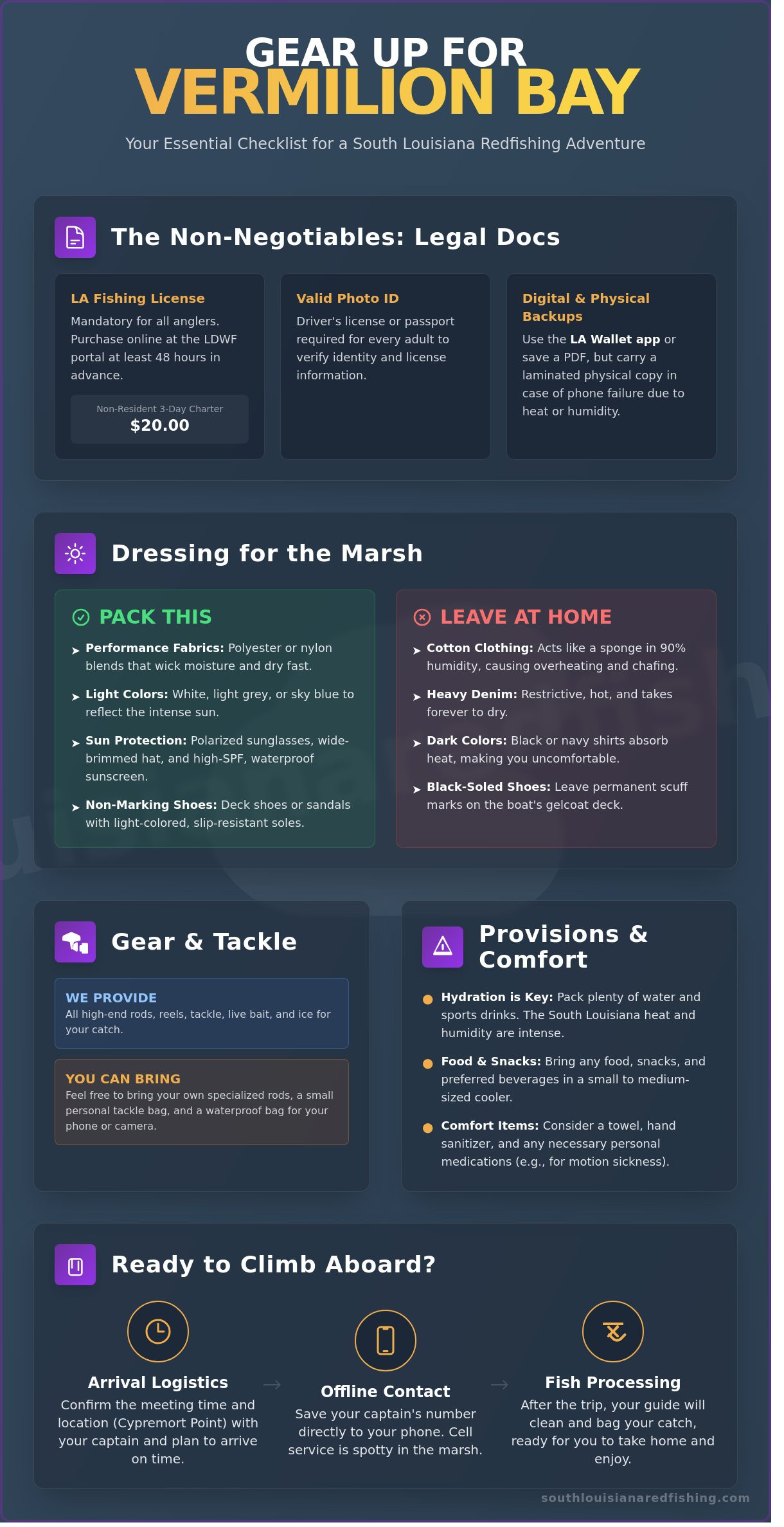
  • Learn how to secure the correct legal documentation and understand why a digital backup is essential for any LDWF check in the marsh.
  • Discover the “Marsh Camo” dressing philosophy to stay cool and protected against 90% humidity while avoiding the common pitfalls of cotton clothing.
  • Master your gear list by learning which high-end tackle is provided and exactly what to bring on a louisiana fishing trip if you want to use your own specialized rods.
  • Get expert advice on fueling your epic adventure, including the best hydration strategies for the South Louisiana heat and how to manage your cooler space.
  • Prepare for a seamless experience at Cypremort Point with professional tips on arrival logistics and what to expect during the final fish cleaning and bagging process.

Your epic adventure begins long before you cast a line into the fertile waters of Vermilion Bay. While you’re likely dreaming of battling giant bull reds or limiting out on speckled trout, the absolute first item on your list for what to bring on a louisiana fishing trip is your legal documentation. Louisiana Department of Wildlife and Fisheries (LDWF) agents frequently patrol the shorelines near Cypremort Point and the weirs of Marsh Island. They’re looking for compliance to ensure our fishery stays world-class for the next generation of anglers. He’s got you covered on the boat and gear, but the license is your responsibility.

Having your license ready is the difference between a legendary day and a costly citation that kills the mood. LDWF agents currently accept digital copies on your smartphone via the LA Wallet app or a clear PDF saved to your files. However, high humidity and 90-degree direct sun can drain phone batteries or cause devices to overheat while you’re navigating the canals near Weeks Bay. Carrying a laminated physical backup is a veteran move that ensures you’re always covered, even if your tech fails. It’s a small step that protects your investment in this experience.

A valid photo ID is mandatory for every person on the boat. Whether you’re targeting black drum in the marsh or hitting the oyster beds near East Cote Blanche Bay, you must prove your identity. This matches your license data and is required for the basics of angling legality in state waters. Unlike the massive fuel costs and long travel times associated with offshore trips in other areas like Venice, our inshore trips are fast and accessible, but the law remains just as strict. Don’t leave the dock without a driver’s license or passport for every adult in your group.

Securing Your Louisiana Fishing License

Visit the LDWF online portal to grab your credentials at least 48 hours before you arrive at the dock. For 2026, the updated system requires a verified email and a secondary form of identification to create your profile. You can choose a seasonal permit if you plan to return to our legendary marshes, but most visitors opt for the convenient 3-day charter passenger license. As of January 1, 2026, the specific cost for a non-resident 3-day charter passenger license is $20.00.

Identification and Waivers

Minors under age 18 don’t always need a license, but they should carry a birth certificate copy or state ID to verify their age if an agent requests it. For corporate groups or large family trips hitting the reefs near Burns Point, the trip organizer should keep a digital folder of all participant waivers and booking confirmations. Save your captain’s contact info as an offline contact before you leave the hotel. Cell service can become spotty once you’re deep in the West Cote Blanche Bay marsh, and you’ll want that number handy for last-minute coordination. Group leaders should verify that every guest has their digital documents downloaded for offline access to avoid delays at the boat ramp.

Climb aboard with confidence knowing your paperwork is squared away. When you’ve got your legal bases covered, you can focus entirely on the thrill of the hunt. The bull reds are waiting in the surf near Marsh Island, and your 3rd generation guide is ready to put you on the fish. This isn’t just a day on the water; it’s a professional operation where every detail matters for your success. Get your documents in order today so you can experience the thrill tomorrow.

Dressing for the Marsh: Protection Against Sun, Wind, and Water

The “Marsh Camo” philosophy isn’t about blending into the tall grass; it’s about surviving the brutal elements of the Gulf Coast. When you’re deciding what to bring on a louisiana fishing trip, leave the heavy denim and dark cotton shirts at home. In the 90% humidity of the Louisiana coast, cotton acts like a heavy sponge. It traps moisture against your skin, which leads to rapid overheating and painful chafing during a long day on the water. Instead, choose high-performance polyester or nylon blends. These technical fabrics pull sweat away from your body and dry in minutes. Stick to light colors like sky blue, seafoam, or light grey. These shades reflect the intense sun rather than absorbing it, keeping your core temperature stable while you hunt for Bull Reds.

Your feet need specialized gear to handle the environment of a professional bay boat. Non-marking soles are mandatory when stepping aboard a vessel designed for the shallow flats of Cypremort Point or the oyster beds of Weeks Bay. Black-soled sneakers or work boots leave permanent scuffs on a clean white gelcoat deck. Bring dedicated deck shoes or technical sandals with light-colored, slip-resistant bottoms. This keeps the boat in top shape and ensures you don’t lose your footing when a giant Redfish makes a powerful run under the hull.

Packing requirements change significantly with the calendar. A January morning on Vermilion Bay can start at a shivering 40 degrees, requiring windproof outer shells, while a July afternoon easily hits 95 degrees with a heat index well over 100. Before you head out to the weirs of Marsh Island, ensure you’ve checked the Louisiana fishing license requirements to stay legal. While other areas like Venice might offer different terrain, our local marshes demand a versatile wardrobe that can handle rapid shifts in wind and moisture.

Sun Protection Beyond Sunscreen

Sunscreen is only your first line of defense. Experienced anglers now rely on the “Buff” or neck gaiter for full-face protection. This simple tube of fabric provides 50+ UPF protection for your neck, ears, and face without the greasy mess of lotion that can ruin your grip on a rod. Pair this with high-quality polarized sunglasses. These aren’t just an accessory; they’re a critical tool for cutting through the surface glare to spot Redfish in the shallows. For headwear, a technical cap with a dark under-brim is better than a wide-brimmed straw hat. At boat speeds of 30 miles per hour, a floppy hat becomes a kite, but a structured cap stays put while you’re burning across East Cote Blanche Bay. When planning what to bring on a louisiana fishing trip, prioritizing eye and skin protection is the difference between an epic day and a week of recovery.

Layering for the Morning Run

Even in the peak of summer, that first 30-minute run to the honey hole feels surprisingly chilly. The wind chill at high speeds can drop your perceived temperature by 15 degrees instantly. A lightweight, breathable windbreaker is a non-negotiable item for the early hours. If the clouds roll in, a cheap plastic poncho won’t survive the marsh. It will shred in the wind or turn your clothes into a sauna. Invest in technical rain gear with sealed seams and breathable membranes. Moisture-wicking base layers are the foundation of all-day comfort in the marsh. They keep you dry, cool, and focused on the next big strike. If you’re ready to test your gear against some of the best Redfish in the country, book your epic adventure today.

What to Bring on a Louisiana Fishing Trip: The Ultimate 2026 Packing Guide

Gear and Tackle: What We Provide vs. What You Can Bring

When you climb aboard with Captain Troy Nash, the “He’s Got You Covered” promise isn’t just a slogan. It’s a professional guarantee backed by over 25 years of guiding experience. We provide high-end rods and reels specifically selected to handle the explosive power of a giant bull redfish in the shallow marshes. You don’t have to worry about the technical details of what to bring on a louisiana fishing trip because our gear is tournament-ready and meticulously maintained for every guest.

Our Professional Grade Equipment

Captain Troy keeps a versatile arsenal of spin and baitcast setups on the boat at all times. We utilize high-quality braided lines, typically in the 30 to 50-pound test range, which is essential for pulling stubborn fish out of the thick grass near South Marsh Island. These lines offer zero stretch. This gives you the sensitivity needed to feel a subtle strike in the murky waters of East Cote Blanche Bay. Our tackle selection is the result of three generations of local knowledge. We use custom-picked lures, including specific soft plastics and topwater plugs, that are proven to trigger strikes from Vermilion Bay Redfish. These lures are weighted precisely for the shallow depths of the interior marshes, where a fraction of an ounce can be the difference between a trophy catch and a snagged oyster bed.

Personal Gear Guidelines

If you have a lucky baitcaster or a preferred 8-weight fly rod, you’re welcome to bring it along. However, space on a specialized bay boat is at a premium. We ask that guests limit personal tackle to one small soft-sided bag or a single 3600-series tackle box. For those traveling from New Orleans or Lafayette, packing light is the best strategy. Our inshore approach differs significantly from “other areas” like Venice, where heavy offshore gear is the norm. We focus on light, fast-action tackle that makes every catch an epic adventure. Before you head to the marina, make sure you have purchased your Louisiana fishing license through the Department of Wildlife and Fisheries. This is a non-negotiable requirement for every angler on board.

We focus our efforts on the canals, lakes, and weirs surrounding Cypremort Point and Weeks Bay. Because we fish the flats and nearshore reefs, you won’t need the bulky, expensive equipment required for deep-sea excursions. Our gear is optimized for the specific salinity and depth of the Acadiana coastline. This specialized focus ensures you spend more time casting and less time fighting with tangled lines or inappropriate gear.

One final, absolute rule for your trip: leave the bananas at home. This isn’t just a joke. It’s a deep-seated maritime tradition that spans centuries. Bringing a banana on the boat is considered a surefire way to kill the bite or cause mechanical failure. If you want to experience the thrill of a successful day on the water, keep the yellow fruit in your truck. We want nothing standing between you and a limit of Redfish, Flounder, or Black Drum.

Provisions and Comfort: Fueling Your Epic Adventure

Experience the thrill of a day on Vermilion Bay without the headache of a mid-day energy crash. To keep your edge while sight-casting for Bull Reds, you need a solid plan for provisions. Knowing exactly what to bring on a louisiana fishing trip transforms a good day into an epic adventure. Captain Troy Nash has seen it all over 25 years on the water, and he knows that a hungry or dehydrated angler loses focus exactly when the big hit happens.

He’s got you covered with a professional-grade marine cooler on the boat. This keeps the deck clear and provides a safe space for your drinks and sandwiches. Do not bring your own bulky coolers onto the boat. They take up valuable casting space and can become trip hazards when you’re moving quickly to net a giant Speckled Trout. Instead, keep a 65-quart rotomolded cooler in your truck at Cypremort Point. This ensures your fillets stay at a safe 34 degrees for the ride home while the boat stays organized and ready for action.

Hydration is your primary defense against the Louisiana sun. By 10:30 AM in July, temperatures on the marsh often hit 92 degrees with high humidity. While a cold soda feels good, it won’t sustain you. Drink 16 ounces of water for every hour you spend on the bay. If you feel thirsty, you’re already behind on your intake. We recommend a mix of plain water and electrolyte-heavy drinks to replace what you lose while working the banks of Weeks Bay.

Your “Boat Bag” should be a compact, soft-sided bag. It needs to hold your essentials without cluttering the floor. Pack items that won’t melt in 95-degree heat. Chocolate is a disaster in the marsh; stick to beef jerky, protein bars, or apples. These provide steady energy without the sticky mess. Keep your keys and wallet in a dedicated internal pocket so they don’t end up at the bottom of the bay during a hectic hookup.

Food and Drink Essentials

The best marsh-ready lunches are simple and durable. Pre-made sub sandwiches or wraps work better than delicate white bread that gets squashed. Avoid glass containers at all costs. Broken glass on a boat is a major safety risk. If you choose to bring alcohol, keep it moderate and respectful. Safety is the priority when we are navigating the narrow canals of East Cote Blanche Bay. Remember, the “land cooler” in your truck is for your limits of Redfish and Black Drum, keeping the boat cooler dedicated solely to fresh food.

The Dry Bag Checklist

A waterproof phone case is mandatory for those Bull Red photos. Even in the calm waters of Burns Point, a splash or a dropped phone can end a trip early. Pack personal medications and motion sickness preventatives like Bonine or ginger tablets. Even though inshore fishing is much smoother than the rough swells you’d find in offshore areas like Venice, the heat can sometimes trigger nausea. Finally, bring bug spray with at least 20% DEET. The no-see-ums at Marsh Island are legendary for their persistence, and you don’t want them ruining your concentration during a trophy hunt.

Ready to experience the best inshore fishing in the United States? Book your trip today and let a veteran guide show you the legendary waters of the Louisiana marsh.

Ready to Climb Aboard? Final Logistics for Your Trip

Your epic adventure begins the moment you step onto the dock at Cypremort Point. This legendary gateway to Vermilion Bay is where most of our trips kick off. You should plan to arrive at the public boat launch at least 20 minutes before our scheduled departure, which is typically 6:00 AM. This early start ensures we beat the heat and catch the most active morning bite. Parking at the state park or public launch is straightforward and secure, though you should bring a few dollars for the nominal daily launch fee. Captain Troy will have the boat fueled, iced down, and ready to go so we can head straight for the marsh.

Safety is the absolute priority for every outing. Captain Troy monitors local radar and wind speeds constantly to ensure conditions are safe for our inshore and nearshore routes. He makes the final “go or stay” call by 6:00 PM the evening before your trip. While our fishing grounds in the marshes and bayous are much more protected than the rough, open waters found in other areas like Venice, high winds can still churn up the water and shut down the bite. If the weather looks dangerous or unproductive, we’ll notify you immediately to reschedule your trip for the next available window.

When it comes to the etiquette of the trip, tipping your guide is a standard part of the fishing culture. A tip of 15% to 20% of the total trip cost is the industry standard for a full-time, veteran guide. This gesture shows your appreciation for the 25 years of experience Captain Troy brings to the table, along with the hours of boat maintenance and scouting required to find the bull reds. It’s a direct way to reward a successful day of limit-out fishing and expert service on the water.

Arrival and Departure

While Cypremort Point is our primary hub, we sometimes launch from Weeks Bay or Burns Point to stay closer to the hottest bite. We’ll provide exact GPS coordinates for these secondary locations 24 hours before your trip. When deciding what to bring on a louisiana fishing trip, remember to include a large 50-quart cooler to leave in your vehicle. You’ll need this to transport your fresh fillets home. We recommend lining your trunk with a heavy-duty plastic tarp or old towels to catch any condensation or stray moisture from the ice chest during the drive. For a deeper dive into our daily routine, check our What to Expect on Your Inshore Fishing Charter guide.

The Conclusion of Your Adventure

The thrill doesn’t end when the boat hits the dock. We handle the entire fish cleaning process for you. Captain Troy expertly fillets, skins, and bags your catch in high-quality freezer bags, ensuring your Redfish or Speckled Trout is ready for the grill. This is also the best time to plan your next visit. While the spring brings incredible trout action to the oyster beds, the fall months offer some of the most consistent bull red fishing in the country. We’ll help you identify the best moon phases and seasons to maximize your success on your next return. Ready for the thrill? Book Your Epic Adventure with Captain Troy Today!

Claim Your Spot on the Vermilion Bay Marsh

Your gear list is ready and your bags are nearly packed. You now know exactly what to bring on a louisiana fishing trip to stay dry and comfortable while targeting giant bull reds in the shallows. Ensure you’ve secured your 2026 saltwater license before arriving at the Cypremort Point boat launch. While other areas like Venice often require grueling runs to reach deep water, our inshore adventure focuses on the productive oyster beds and marsh shorelines of West Cote Blanche Bay. You’ll need your polarized glasses and seasonal layers, but don’t stress the heavy lifting. Captain Troy Nash is a 3rd generation veteran guide with over 25 years of local experience. He’s got you covered by supplying every rod, reel, and lure required for a successful day. We manage the logistics so you can focus entirely on the thrill of the strike. The trophy fish are waiting in the grass flats and weirs. Let’s get out there.

Book Your Epic South Louisiana Adventure Today!

Frequently Asked Questions

Do I really need a fishing license if I am on a guided charter?

Yes, every angler aged 18 or older must possess a valid Louisiana fishing license. You can easily purchase a 3-day charter passenger license for $20 through the LDWF website before we depart. While other areas like Venice might have different local crowds, our trips in Vermilion Bay require this specific permit to keep your adventure legal. It’s a quick process that ensures your epic day starts without any delays.

Can I bring my own fishing rod and favorite lures?

You’re welcome to bring your personal gear, although Captain Troy provides top-tier rods and reels for every guest. If you have a favorite baitcast setup for giant bull reds near Marsh Island, feel free to bring it along. Most clients find our professional equipment is perfectly tuned for the local oyster beds and weirs. Deciding what to bring on a louisiana fishing trip often comes down to personal comfort versus the convenience of our expert-selected tackle.

What kind of shoes should I wear on the boat?

Wear non-marking, rubber-soled shoes like deck shoes or sneakers to maintain grip and keep the boat clean. Avoid black soles that leave marks or flip-flops that offer no stability when you’re battling a 30-pound drum. A pair of waterproof boots is a smart choice for morning trips in the marsh. Proper footwear is a vital part of what to bring on a louisiana fishing trip to ensure you stay safe while the action heats up.

Are snacks and drinks provided on the trip?

We provide a large cooler with ice and bottled water, but you should bring your own snacks and lunch. Pack items that are easy to eat quickly so you don’t miss a strike while we’re navigating the canals of West Cote Blanche Bay. We recommend bringing 2 liters of water per person for a full 8-hour day to stay hydrated. Having your favorite fuel on hand helps you maintain energy for the entire adventure.

What happens if it rains on the day of my scheduled charter?

We fish in light rain, but the Captain will reschedule the trip if lightning or high winds make the bay unsafe. Safety is our 100% priority, and we monitor local radar every 15 minutes during stormy weather. If we must cancel due to a tropical system or severe front, we’ll work with you to find the next available date. Our goal is to ensure your experience is both thrilling and secure.

Is there a bathroom on the boat for inshore trips?

Most inshore bay boats don’t have a private restroom, but we are rarely more than 15 minutes from a facility or a secluded shoreline. We can quickly zip over to a dock at Cypremort Point or a quiet bank if nature calls. If a full cabin with a head is a requirement, you might look at expensive offshore charters, but you’ll miss the fast-paced action of our shallow-water flats and marshes.

How much should I tip my fishing guide in Louisiana?

A standard tip for a professional fishing guide is 15% to 20% of the total trip cost. For a $700 charter, a tip of $105 to $140 shows your appreciation for the Captain’s 25 years of expertise and 3rd generation knowledge. Your guide spends 2 hours cleaning the boat and prepping gear for every hour you spend fishing. This gesture is a great way to reward the hard work that goes into your successful trip.

Can I bring a cooler on the boat for my fish?

Leave your fish cooler in your vehicle and use our onboard ice chests to save space while we’re on the water. We have 2 dedicated 65-quart coolers to keep your Speckled Trout and Redfish ice-cold until we return to the dock. Once we’re back at Cypremort Point, you can transfer your cleaned catch into your personal cooler for the drive home. This keeps the deck clear for more fishing action.