The most famous fishing spots in Louisiana are often the worst places to be when the north wind starts to howl. While crowds fight for space in the muddy eastern delta, savvy anglers are looking west toward the secluded marshes of Cypremort Point. If you’re tired of combat fishing in the usual tourist traps, you aren’t alone. Most fishermen want clear water and hungry fish without having to dodge a dozen other boats just to reach a weir. To find consistent winter redfishing action in Louisiana means escaping the hype and finding the right habitat.
In this guide, you’ll discover why the shallow flats and oyster reefs of Vermilion Bay offer the premier winter experience for 2026. We’ll show you how low winter tides turn Marsh Island into a sight-casting paradise where reds are easy to spot in the clear, shallow water. You’ll learn about the strategic advantages of launching from Cypremort Point with a 3rd-generation expert like Capt. Troy D. Nash. We are also covering the latest regulations, including the four-fish bag limit and the 18 to 27 inch slot, while showing you how to pair your adventure with the best authentic Cajun food in Lafayette.
Key Takeaways
- Learn how north winds and low tides create the perfect conditions for winter redfishing louisiana, offering unmatched water clarity for sight-casting to bull reds.
- Discover the strategic “choke points” around Marsh Island weirs where redfish congregate in massive numbers as the tide drains the marsh.
- Understand why the protected inshore marshes of Vermilion Bay are a more reliable and cost-effective alternative to “deep sea” trips that are frequently cancelled due to rough winter weather.
- Get up to speed on the 2026 redfish bag limits and licensing requirements to ensure your adventure at Cypremort Point is fully compliant.
- See why a 3rd-generation guide’s deep-rooted expertise is the secret to navigating the complex oyster reefs and hidden canals of West Cote Blanche Bay.
The Winter Redfishing Louisiana Advantage: Why the Cold Months are King
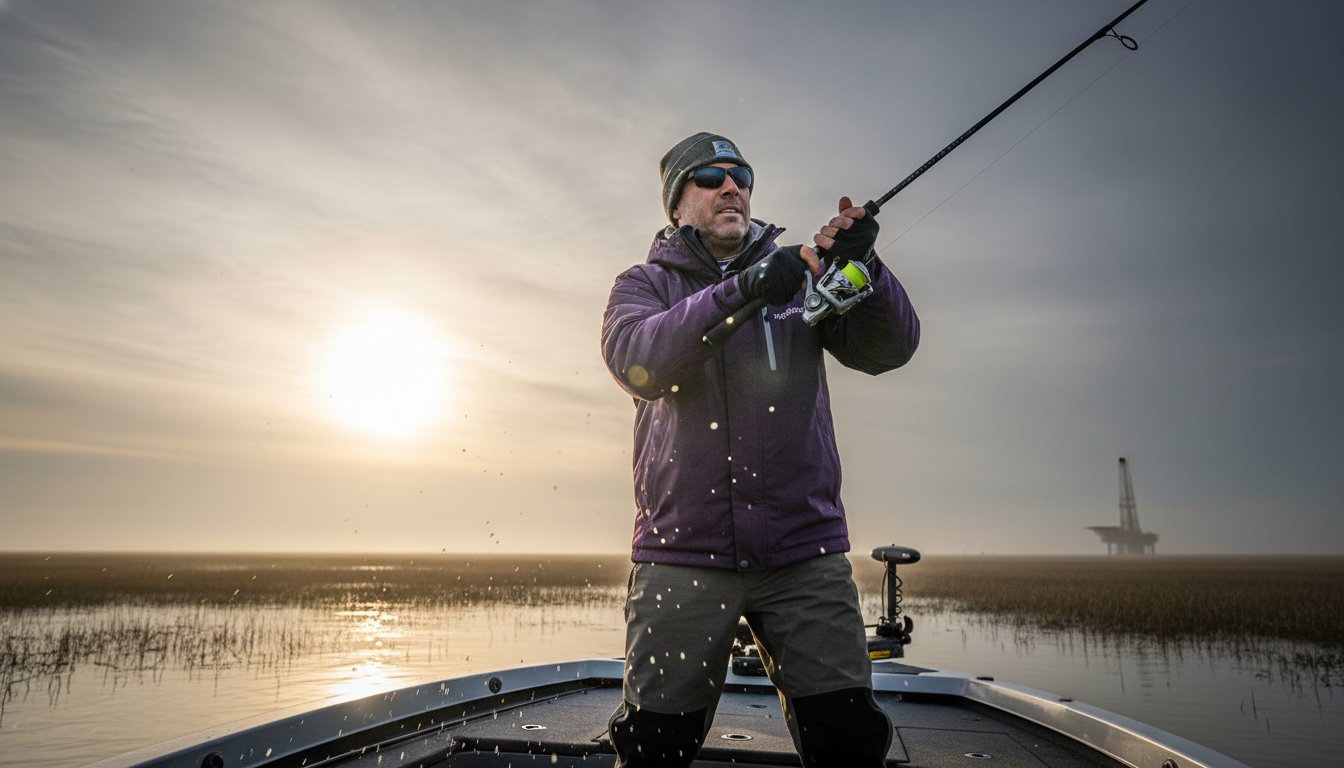
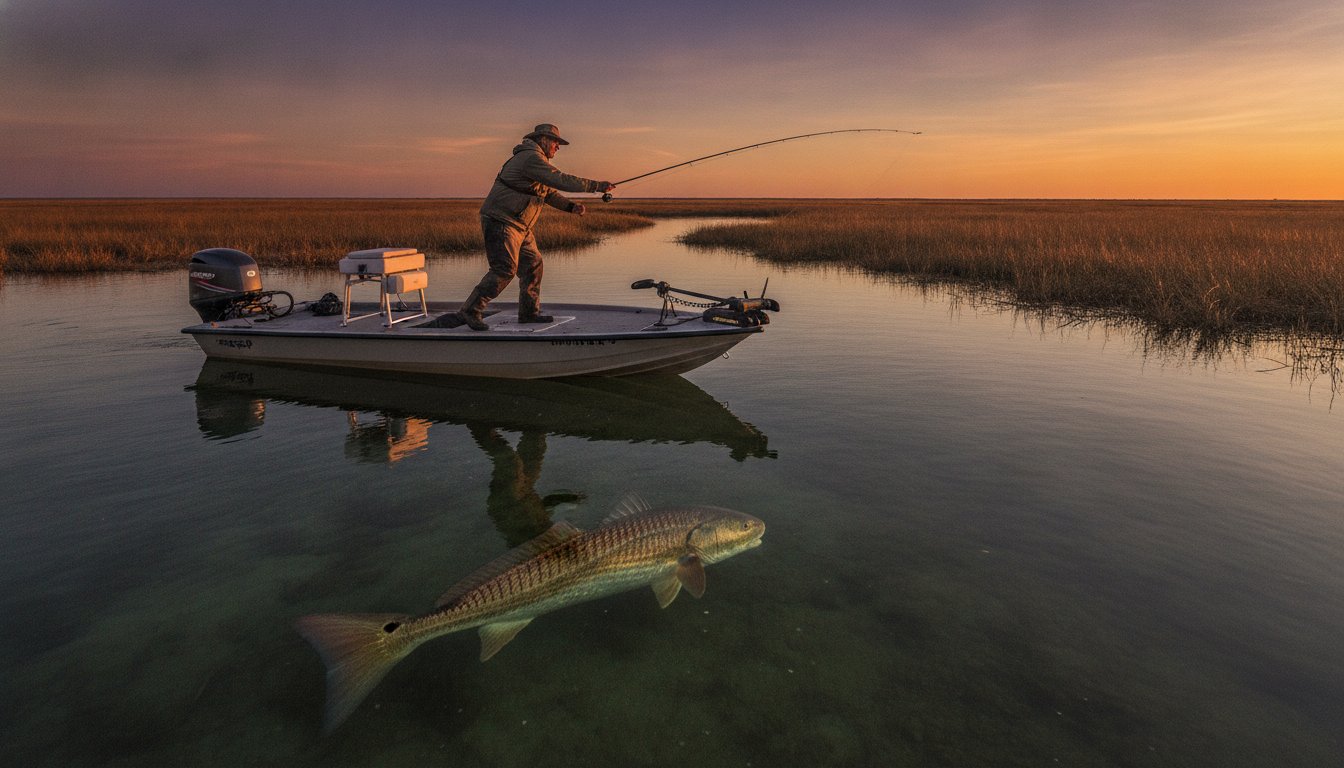
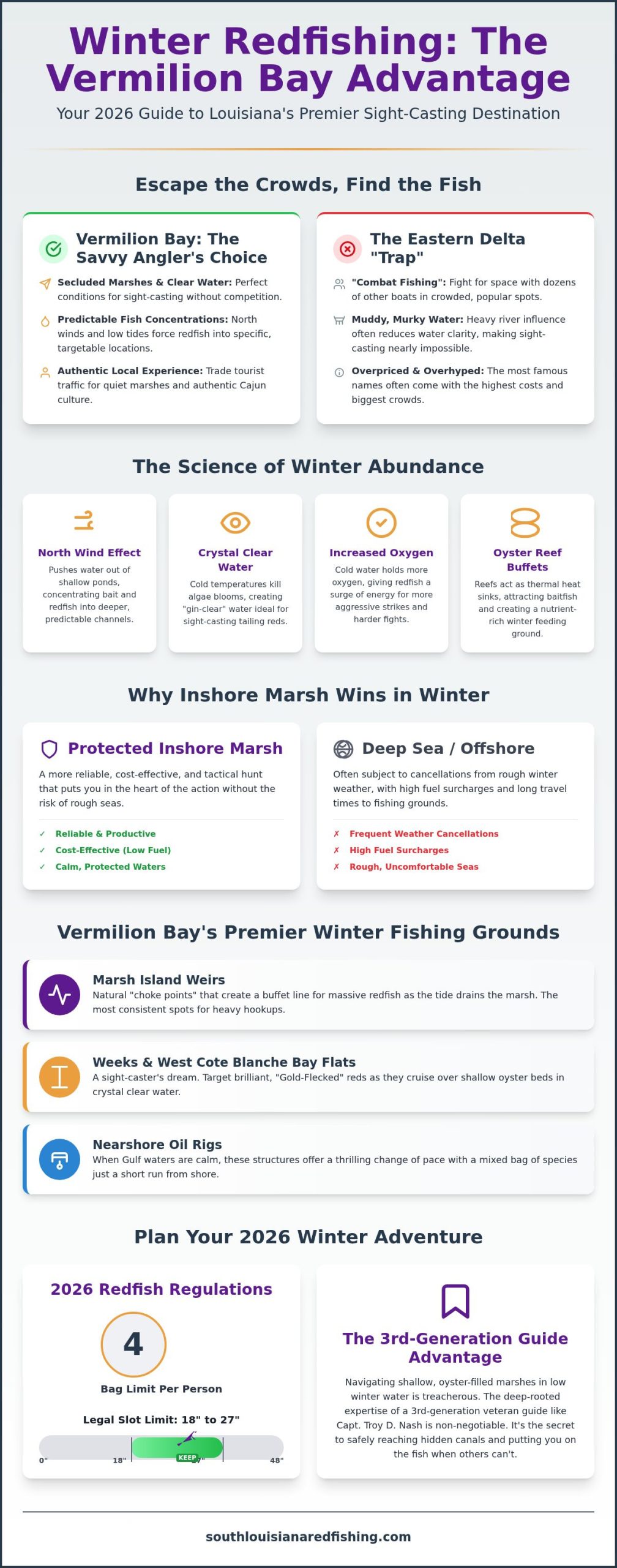
The north wind is the secret weapon of the western marsh. While other anglers stay home, we watch the barometer. A stiff breeze from the north literally pushes water out of the shallow ponds and into the deeper bayous. This draining of the marsh creates a massive concentration of fish. Redfish that were scattered across thousands of acres are suddenly forced into predictable deep holes and canal bends. Winter redfishing louisiana isn’t just about catching fish; it’s about seeing them. The cold temperatures kill off algae blooms, leaving the water gin-clear. You can spot a tailing red from thirty yards away. It’s an adrenaline rush that you just can’t find in the murky summer months. Winter Redfishing is the pinnacle of sight-casting in the Louisiana estuary.
Don’t get caught in the Venice Trap. The most famous name in fishing is often the most crowded and overpriced during the winter run. In the eastern delta, you’re often fighting for a spot in a line of boats. In Vermilion Bay, we trade the crowds for quiet marsh runs and aggressive strikes. Unlike deep sea trips that get blown out by rough swells and high fuel surcharges, our inshore marsh stays protected and productive. It is a more tactical, rewarding hunt that puts the angler in the heart of the action without the headache of tourist traffic.
The Biology of Winter Abundance
The Red drum (redfish), known scientifically as Sciaenops ocellatus, becomes incredibly active as the water cools. Cold water holds more oxygen. This boost in oxygen levels gives these fish a surge of energy, making them fight harder than they do in the stagnant heat of July. Oyster beds play a vital role here. These hard structures act as thermal heat sinks, soaking up the winter sun and radiating warmth into the surrounding water. This warmth attracts baitfish, creating a nutrient-rich winter buffet fueled by the Atchafalaya River’s influence. It’s a perfect storm of biology and environment that creates a world-class fishery right in our backyard.
Vermilion Bay: The Smart Angler’s Winter Sanctuary
Escaping the suffocating crowds of the eastern delta is the first step toward a successful trip. Vermilion Bay offers a secluded sanctuary where the weirs of Marsh Island stay fishable even during heavy north wind fronts. These structures act as natural barriers, keeping the water calm and the fish focused. Launching from Cypremort Point gives us a distinct geographic advantage. We reach the most productive water in minutes, ensuring you spend your day casting instead of commuting. Whether we are working the shallow flats of West Cote Blanche Bay or the deep holes near Burns Point, the expert guidance of a veteran captain ensures you’re always in the right spot at the right time.
The Vermilion Bay Advantage: Exploring Marsh Island and Cypremort Point
The weirs of Marsh Island are legendary among those who know these waters. When the tide starts to pull out, these structures act as perfect choke points. They concentrate baitfish and shrimp into narrow openings, creating a literal buffet for hungry predators. Giant reds stack up here, waiting for the current to deliver their next meal. It’s about more than just luck; it’s about understanding the Louisiana red drum fishing regulations and knowing exactly where the big reds will stack up to feed. During the winter, these weirs are the most consistent spots in the region for heavy hookups.
Moving north into Weeks Bay and West Cote Blanche Bay, the strategy shifts. Here, we target the “Gold-Flecked” reds in the shallow flats. These fish take on a brilliant, metallic hue in the clear winter water. It’s a sight-caster’s dream. You’ll see them cruising over the oyster beds, their tails occasionally breaking the surface. If the Gulf of Mexico is exceptionally calm, we might even venture to the closest nearshore oil rigs. These structures offer a mixed bag of species, providing a thrilling change of pace when the weather allows for a short run into the open water.
Key Fishing Grounds: From Weirs to Canals
Captain Troy Nash spends his winters scouting these weirs for the subtle signs of life that others miss. He looks for specific patterns in moving water and the nervous ripples of bait activity. Navigating these marshes in low-water conditions is a high-stakes game. Local knowledge is non-negotiable when the water drops a foot or more, exposing hidden shell-bottom reefs. These reefs are magnet for trophy winter trout and reds because they hold heat and provide structure. If you’re ready to see these “gold-flecked” reds for yourself, booking one of our guided fishing trips is the best way to ensure you’re hitting the right flats at the right time.
Cypremort Point: Your Gateway to the Marsh
Cypremort Point State Park serves as the ultimate launchpad for your adventure. Its proximity to Lafayette means you can enjoy “Hub City” amenities and world-class Cajun food while staying just minutes from the dock. The geographic advantage is clear. Shorter boat runs mean more time with your lines in the water and less time burning fuel. There is a rugged, natural beauty to the shoreline and coastal marshes in the crisp winter air that you won’t find in the industrial corridors of other areas. Winter redfishing louisiana is as much about the environment as it is about the catch, and Cypremort Point offers the most scenic access point in the state.
Inshore Marsh vs. Deep Sea: Why Winter Favors the Bayou
Winter weather in the Gulf of Mexico is notoriously unpredictable. One day the water is glass; the next, a cold front sends six foot swells crashing toward the coast. For anyone booking a “deep sea” trip, this usually means a last minute cancellation and a ruined vacation. This is known as the “blown out” factor. In the protected marshes of Vermilion Bay, we don’t have that problem. While offshore boats are docked due to rough seas, we are tucked away in the canals and weirs of Marsh Island. The marsh acts as a natural windbreak. It keeps the water fishable and your boots dry even when the north wind is kicking. Choosing winter redfishing louisiana over an offshore run ensures your trip actually happens.
The difference in travel time is staggering. Imagine a 15 minute run through the scenic marsh compared to a two hour offshore pounding in freezing spray just to reach the first rig. Beyond the physical toll, the cost efficiency of inshore fishing is hard to beat. You won’t find the massive fuel surcharges common with deep sea charters. Instead, you get a streamlined, high action experience where every dollar goes toward the hunt. We focus on quality time with lines in the water. We target a diverse mix of species including Redfish, Speckled Trout, and Black Drum, all within a short distance from Cypremort Point.
The Comfort of the Marsh
Inshore fishing is the superior choice for families and novice anglers during the winter months. You don’t need heavy offshore gear or a cast iron stomach to handle the bayou. The consistency of these waters is unmatched. Pelagic species leave the rigs when the temperature drops, but redfish are residents. They don’t “leave” the marsh. They simply move into the deeper holes we know how to find. The health of these populations is tied directly to the Louisiana coastal erosion and redfish habitat research being done in our backyard. Protecting this estuary ensures that we have world class fishing just minutes from the dock for generations to come.
Tactical Versatility in the Cold
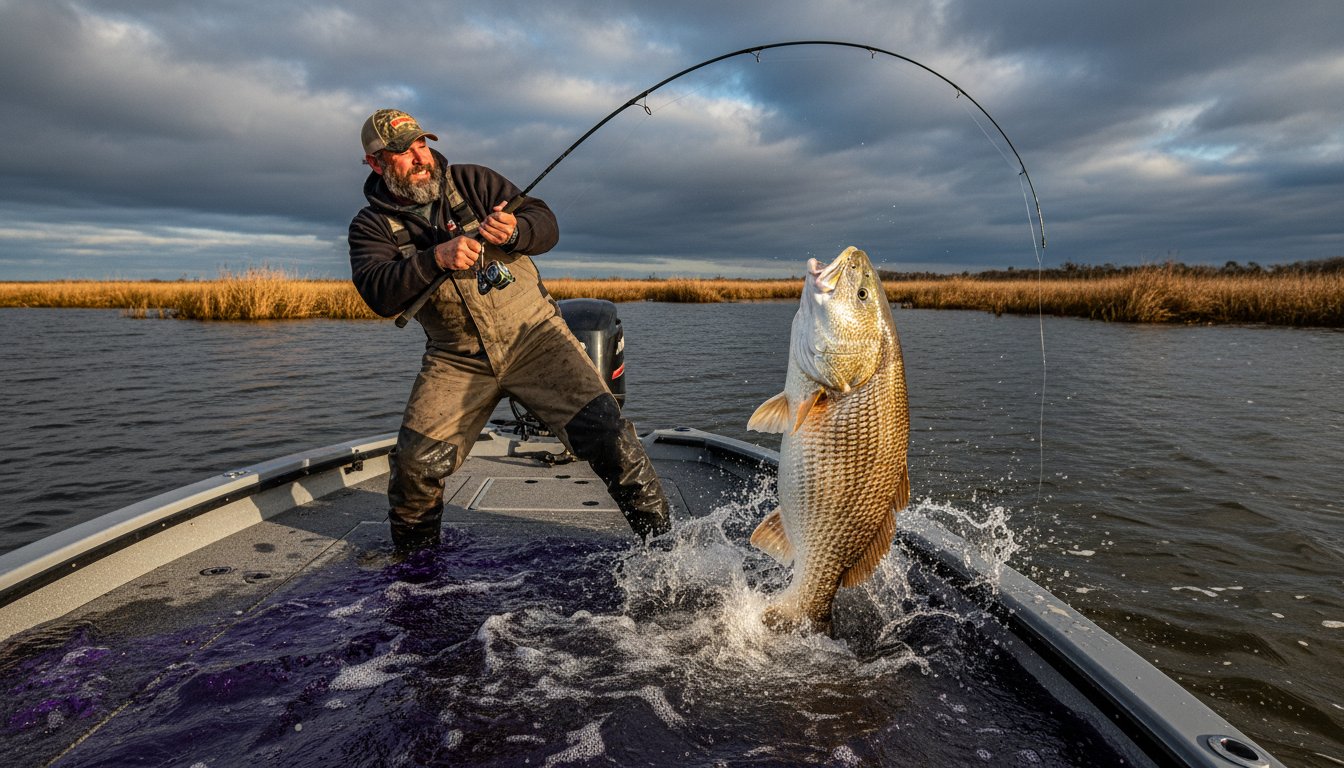
The winter bite offers a level of tactical variety that summer simply can’t match. For fly and light tackle enthusiasts, sight fishing the flats is the ultimate adrenaline rush. Watching a bull red charge your lure in twelve inches of water is a sight you’ll never forget. If you are looking for a “meat haul,” we work the oyster reefs for Speckled Trout and Flounder. These fish congregate in massive schools, providing fast paced action. For a deep dive into the specific tactics we use to land these bruisers, check out our Louisiana Redfish Guide. Whether you want a technical hunt or a heavy cooler, the marsh delivers exactly what you need without the risks of the open Gulf.
Planning Your 2026 Winter Adventure: Gear, Licenses, and Cajun Culture
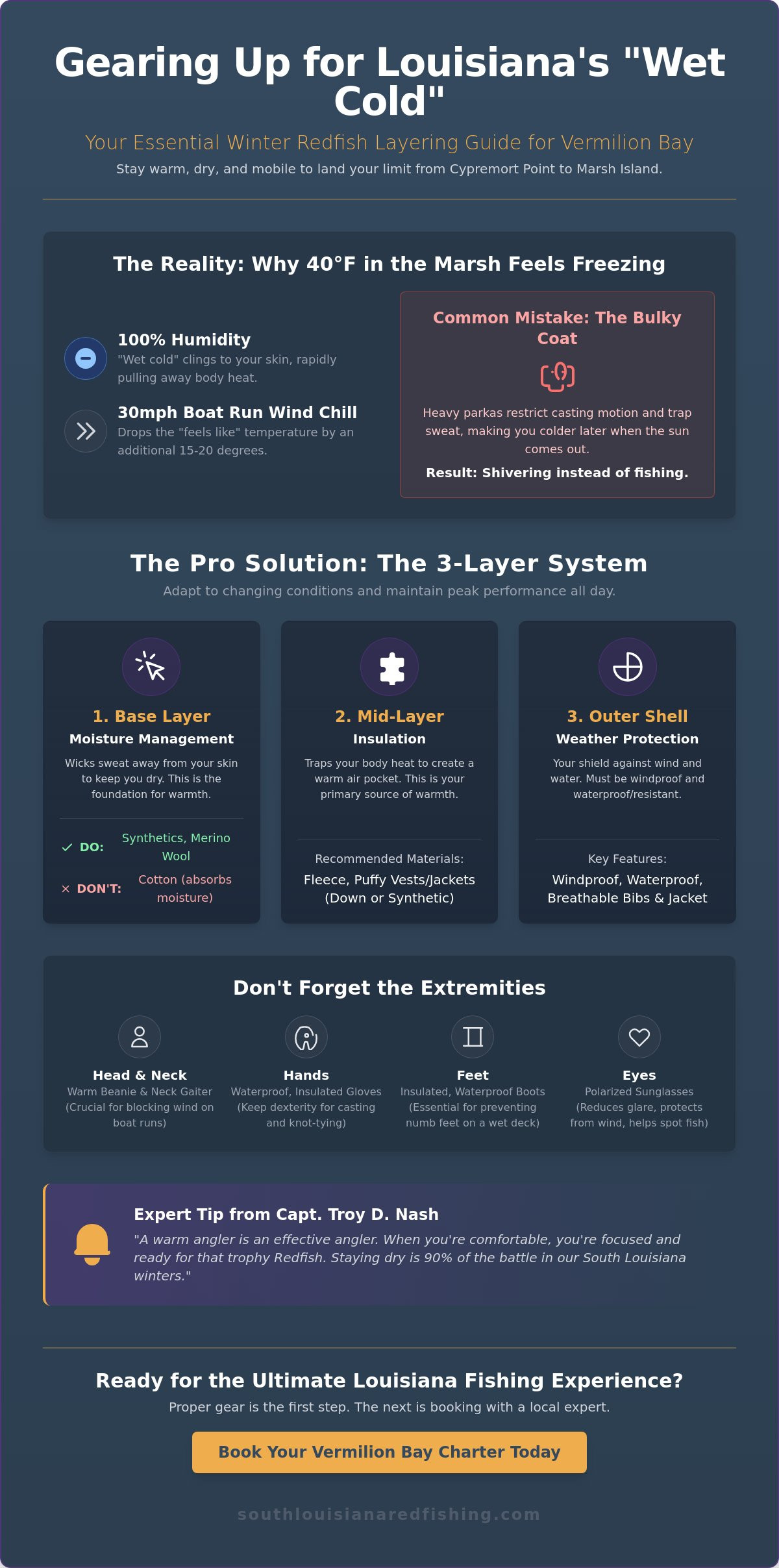
Securing your Louisiana fishing license online is the first step toward a successful 2026 trip. For non-residents, a three-day charter passenger saltwater license is confirmed at $20.00, which is the most efficient way to get on the water with a guide. Once the paperwork is settled, focus on your gear. Packing for the marsh requires a tactical approach to layers. Winter mornings at Cypremort Point are often freezing, but the sun warms the flats quickly by midday. Polarized glasses are absolutely mandatory. Without them, you’re fishing blind. High-quality lenses cut through the surface glare, allowing you to spot the copper flash of a redfish before it even knows you’re there.
In the clear water of Vermilion Bay, lure selection is about precision. Gold spoons are a staple for a reason. They provide the perfect amount of flash to trigger a strike in the shallows. When the fish are more lethargic in the cold, soft plastics on a light jig head allow for a slower presentation. We focus on natural colors that mimic local shrimp and baitfish. Winter redfishing louisiana is a game of finesse and observation. If you’re ready to put these tactics to the test, book your next guided fishing trip now to ensure you get the best winter dates on the calendar.
The Best Time for Winter Reds
December to February is the peak of the “low water” sight-fishing season. This is when the north winds do the heavy lifting, draining the ponds and concentrating reds in deep holes near canal bends. It’s a predictable pattern that rewards those who know the marsh. As we move into the spring transitions, Speckled Trout begin their return to the bays, but the winter remains the king of the redfish hunt. Knowing where the fish hide when the cold fronts hit is a secret earned through decades on the water.
The Cajun Lifestyle: Food and Tourism in Lafayette
Lafayette is the premier base camp for your South Louisiana adventure. Known as the Hub City, it offers the perfect blend of modern comfort and deep-rooted Cajun culture. After a long day on the water, you’ll need post-trip fuel. Finding the best boudin or a steaming tray of crawfish is easy in this part of the state. There are dozens of Things to Do in Lafayette between your fishing days. You can explore the historic streets or catch live music in the evenings. It’s an authentic experience that turns a fishing trip into a life event.
Experience the Hunt with a 3rd Generation Veteran Guide
Generic boat drivers might know how to steer a hull, but they don’t know how to read the subtle language of the marsh. There is a massive difference between a simple boat ride and a tactical hunt. In the challenging conditions of the western marsh, local heritage is your greatest asset. Captain Troy Nash is a 3rd-generation guide with over 25 years of professional tenure. He doesn’t just rely on GPS coordinates; he relies on decades of observation and a deep-rooted understanding of how water moves through the Vermilion Bay estuary. When you’re out for winter redfishing louisiana, you want an expert who sees the ripples and shadows that others miss. Our mission is to provide an elite experience that combines world-class fishing with the authentic spirit of Acadiana.
The South Louisiana Redfishing promise is built on comprehensive preparation. We take the guesswork out of your adventure so you can focus on the strike. From mastering the complex shallow-water navigation of Marsh Island to knowing exactly which weirs are holding bait, Captain Nash provides a level of service that generic charters simply cannot match. This is about more than just catching fish. It’s about learning the nuances of the environment and experiencing the marsh through the eyes of a professional who has fished these waters since childhood.
Meet Captain Troy D. Nash
Captain Nash’s expertise is grounded in a multi-generational legacy. Growing up on the shores of Cypremort Point, he developed a mastery of specialized equipment and the unique challenges of low-water winter navigation. Serious anglers return to our dock year after year because they value this level of expertise. Whether we are poling through a foot of water in West Cote Blanche Bay or anchoring in a deep hole during a cold front, you are in the hands of a seasoned pro. We use only the best technical equipment to ensure your gear never fails when a trophy red is on the line.
Claim Your Vermilion Bay Adventure
We handle all the heavy lifting to ensure your trip is seamless and successful. Every guided trip includes the following essentials:
- Premium ice and fuel for the duration of the hunt.
- Top-tier tackle and lures specifically chosen for winter conditions.
- Expert Cajun instruction for anglers of all skill levels.
- Professional fish cleaning and packaging at the end of the day.
Peak dates for the 2026 winter season are already filling up. Because the “low water” phenomenon is such a concentrated event, early planning is essential to secure the best tides. Don’t settle for a crowded eastern delta experience when you can have the secluded marshes of Cypremort Point all to yourself. It’s time to experience the premier inshore fishery in the state. Book your South Louisiana fishing charter today!
Secure Your Spot in the Western Marsh
Don’t let another season pass fighting the suffocating crowds in other areas. The clear, low water of Vermilion Bay is waiting for you. You now know how the north winds turn Marsh Island into a sight-casting playground and why these protected bayous beat the rough swells of the open Gulf every time. This is the absolute peak of winter redfishing louisiana, and the bite is only getting hotter as we move through 2026.
Trust your trip to a 3rd Generation Louisiana Guide with over 25 years of local expertise. As a dedicated Vermilion Bay and Marsh Island specialist, Capt. Troy Nash knows every hidden weir and oyster reef like the back of his hand. He provides the tactical edge you need to land trophy reds in the shallowest flats. The fish are stacking up in the deep holes right now, and the clarity is world-class. It’s time to trade the generic boat rides for a real marsh adventure.
Book Your Epic South Louisiana Redfish Adventure Now
Grab your polarized glasses and get ready for the hunt of a lifetime. We’ll see you at the dock!
Frequently Asked Questions
Where is the best winter redfishing in Louisiana located?
The premier destination for winter redfishing louisiana is found in the secluded marshes of Vermilion Bay and around Marsh Island. This region offers a distinct advantage over other areas because the north winds push water out of the shallow ponds, concentrating fish in predictable deep holes. Launching from Cypremort Point provides the fastest access to these clear water flats where redfish congregate during the colder months.
Do I need a special license for a winter redfish charter in Louisiana?
You need a valid state fishing license to participate in any coastal trip. For 2026, non-resident anglers can purchase a 3-Day Charter Passenger Saltwater License for $20.00. This is the most efficient and cost-effective option for visitors fishing with a licensed guide. Residents must ensure they have both a Basic Fishing and a Saltwater License before arriving at the dock at Cypremort Point.
What is the best time of year to catch bull redfish in the marsh?
December through February is the absolute peak for catching bull reds in the shallow marsh. During this window, low winter tides and north winds “drain the marsh,” forcing large reds into deep canal bends and weir openings. The water clarity is the best of the year during this period. It creates world-class sight-casting opportunities that you won’t find during the murky summer months.
How much does a guided redfish charter cost in Louisiana?
Rates for guided trips vary depending on the length of the excursion and the number of people in your group. Most professional inshore charters offer half-day and full-day packages that include fuel, ice, and expert instruction. You should contact your captain directly to discuss your specific needs and secure your 2026 winter dates. Early booking is recommended as peak winter tides fill up quickly.
Can I keep the redfish I catch on a winter charter?
You can keep your catch as long as it falls within the current state limits. As of 2026, the daily creel limit is 4 fish per person with a slot size of 18 to 27 inches. Keeping redfish over 27 inches is prohibited to protect the breeding population. Your guide will help you measure every fish and provide professional cleaning and packaging once we return to the dock.
Is Vermilion Bay better than Venice for winter redfishing?
Vermilion Bay is the smarter choice for anglers who want to escape the suffocating crowds of the eastern delta. While Venice is a famous name, it is often overcrowded and overpriced during the winter run. Our western marsh offers a more secluded and authentic experience. The natural protection of the Marsh Island weirs ensures we stay fishable even when the open Gulf is too rough for deep sea boats.
What should I bring on a South Louisiana winter fishing trip?
You should pack high-quality polarized sunglasses and dress in versatile layers to handle the changing temperatures. Winter mornings at Cypremort Point are often chilly, but the sun warms the flats quickly by midday. A windproof jacket and waterproof boots are essential for staying comfortable on the boat. We provide all the top-tier tackle and lures you’ll need for a successful day of winter redfishing louisiana.
Are children allowed on inshore marsh fishing charters?
Children are absolutely welcome and encouraged to join our guided fishing trips. The calm waters of the marsh and short boat runs make this the perfect environment for families and novice anglers. It’s a fantastic way to introduce kids to the excitement of the strike and the beauty of Cajun culture. We take pride in being a family-friendly operation and will ensure everyone has a safe, memorable adventure.