
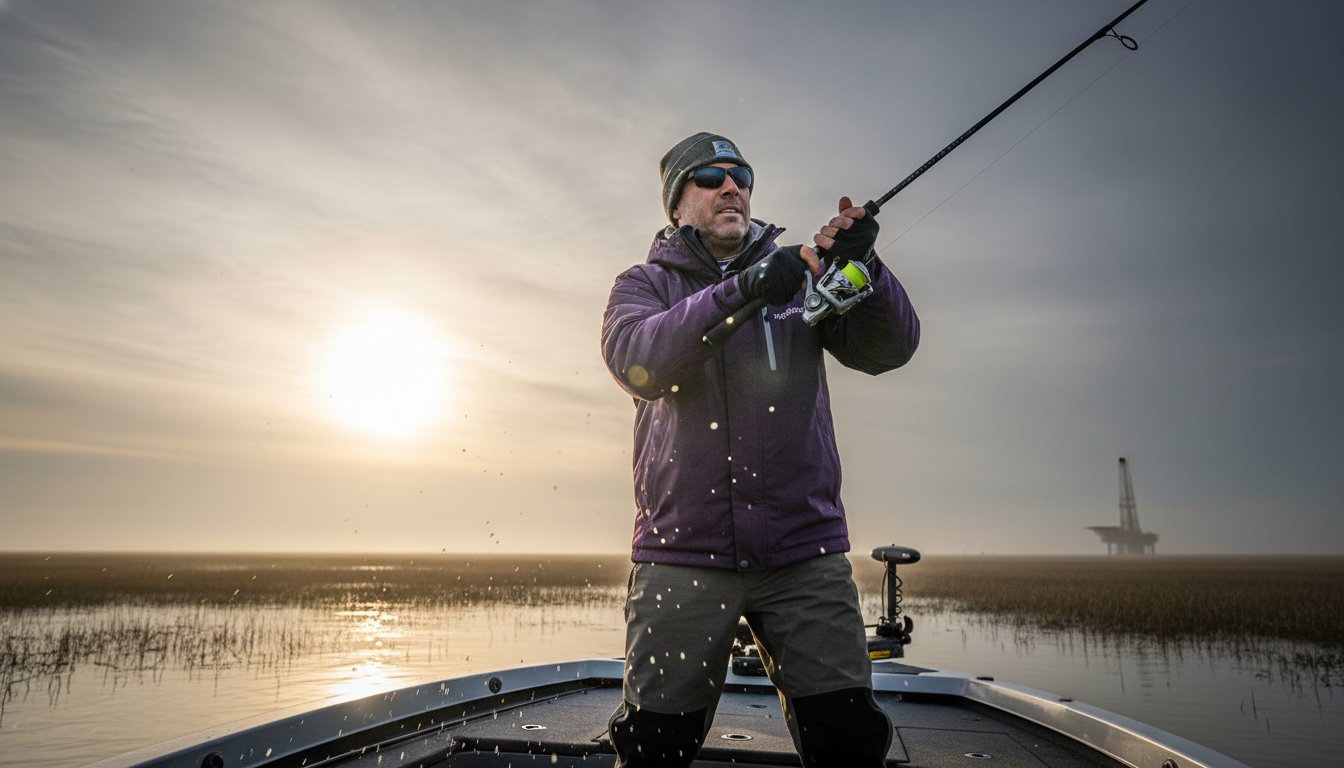
A 40-degree morning on Vermilion Bay feels colder than a blizzard in the Midwest because that 100% humidity cuts right through a standard heavy coat. Most anglers make the mistake of packing on bulky layers that make them look like the Michelin Man, only to realize they can’t even swing a rod when a Redfish appears. Mastering what to wear fishing in louisiana winter is the absolute difference between a miserable day of shivering and a legendary trip landing your limit of four Reds in the marsh.
We’ve all been there, shivering during the 30mph run out of Cypremort Point while your feet go numb on a wet deck. It’s frustrating when the gear that’s supposed to protect you actually hinders your performance and restricts your casting. This 2026 gear guide promises to turn you into an all-weather expert, ensuring you stay bone-dry and warm while exploring Marsh Island or the Cote Blanche bays. We’ll break down the essential three-layer setup, the best waterproof footwear for slick boat floors, and the technical fabrics that thrive in the damp, biting wind of the Cajun coast.
Key Takeaways
- Master the “wet cold” phenomenon where high humidity and 30mph boat runs make the Louisiana marsh feel much colder than the thermometer suggests.
- Discover the professional 3-layer system for what to wear fishing in louisiana winter to stay bone-dry without sacrificing the mobility needed to haul in Redfish.
- Identify essential accessories like moisture-wicking base layers and neck gaiters that prevent wind from cutting through your outer shell during the morning run.
- Learn how to adapt your gear for different settings, whether you are stalking Reds in the shallow flats of Marsh Island or heading nearshore to the closest oil platforms.
- Get expert advice from Capt. Troy D. Nash on the best local gear that works for both a day on the water and a night out enjoying Cajun food in Lafayette.
The Reality of Louisiana Winter: Why the Marsh Feels Colder
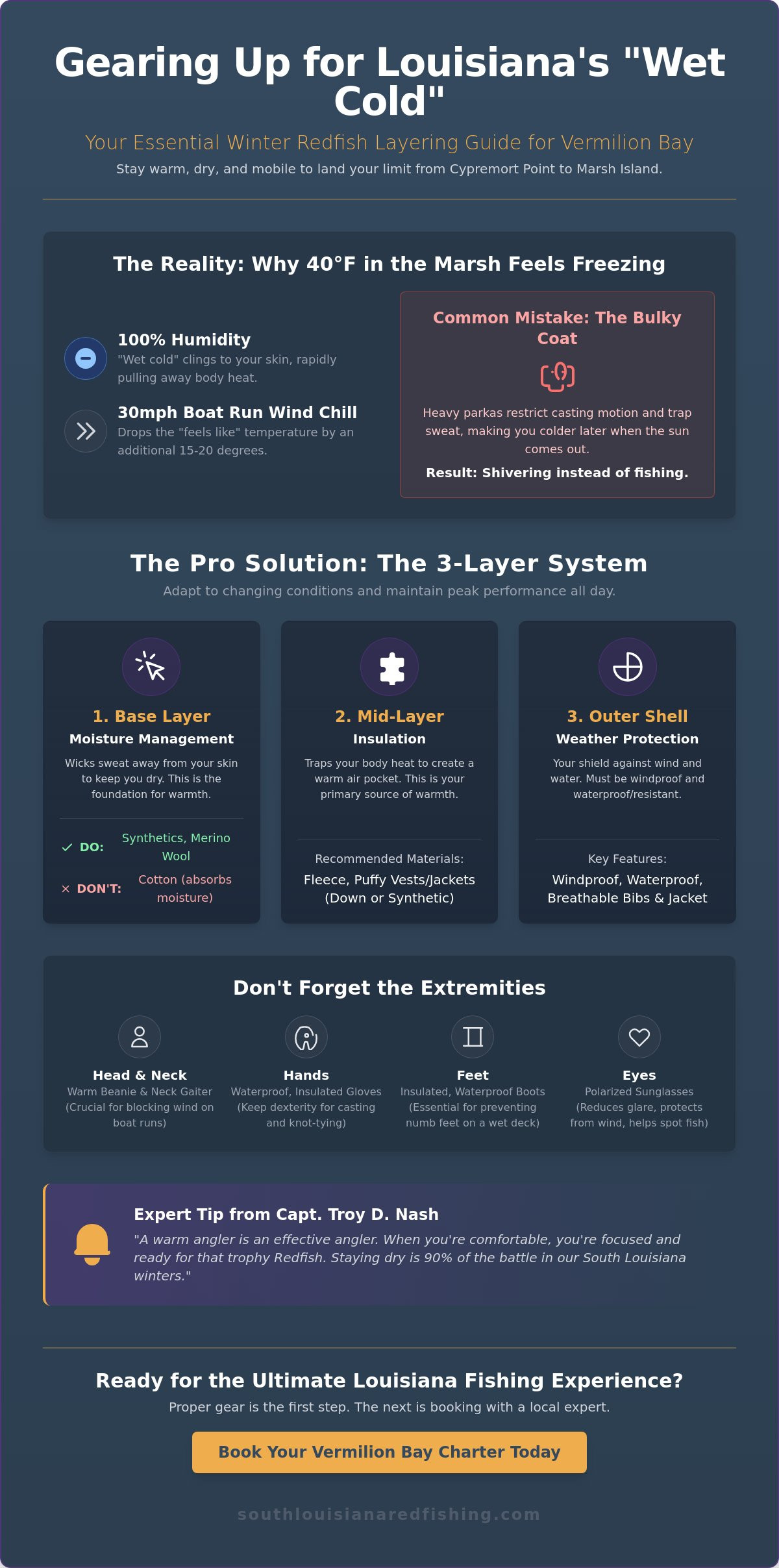
Welcome to the Louisiana marsh in January. It isn’t the dry, crisp cold of the mountains. It’s a “wet cold.” When the humidity hits 90%, the moisture in the air clings to your skin and pulls heat away from your body at an alarming rate. This is why 45 degrees in Acadiana can feel like a freezing morning in the Rockies. Understanding this environment is the first step in deciding The 3-Layer System and what to wear fishing in louisiana winter. You aren’t just fighting the temperature; you’re fighting the water in the air.
Then comes the boat run. Imagine leaving the dock at Cypremort Point at sunrise. You’re cruising at 30mph toward the reefs or the weirs of Marsh Island. That speed creates an immediate wind chill effect, dropping the perceived temperature by another 15 to 20 degrees instantly. If you aren’t shielded by the right technical gear, that damp air will find every gap in your clothing. It’s a sharp, biting sensation that can numb your fingers before you even make your first cast of the day.
Many visitors make the mistake of bringing a massive, bulky hunting parka. Don’t do it. While those coats are warm, they’re heavy and severely restrict your range of motion. You need to be able to pivot and cast with precision when a Bull Redfish crashes a bait in the shallows. Bulky gear also traps sweat once the sun comes out, which eventually makes you colder as the day progresses. The goal is to be sleek, mobile, and protected from the elements without looking like the Michelin Man.
Vermilion Bay vs. Other Areas
Our geography is unique compared to the rest of the Gulf Coast. While anglers in Venice might deal with the massive currents of the Mississippi River, fishing the Vermilion Bay complex means navigating a mix of sheltered canals and wide-open bay water. The trek from Cypremort Point State Park across to Marsh Island or East Cote Blanche Bay exposes you to Gulf winds that require serious wind protection. Nearshore rigs offer even less cover than the marsh flats, so your outer shell has to be top-tier to handle the salt spray and relentless breeze that comes off the open Gulf.
The ‘All-Day’ Factor
A typical winter day in South Louisiana is a game of extremes. You might start the morning in the low 40s under a grey, misty front, but by 2:00 PM, the clouds break and it’s a 70-degree bluebird afternoon. If you aren’t layered correctly, you’ll go from shivering to sweltering in a matter of hours. Staying dry is 90% of the battle. Once your base layer gets damp from either salt spray or sweat, the day is over. Preparing for the worst-case scenario isn’t just about comfort; it’s about staying focused on the fish. Capt. Troy D. Nash knows that a warm angler is an effective angler. When you’re comfortable, you’re ready for that trophy Redfish.
The 3-Layer System: Mastering the Louisiana Marsh Chill
When you’re blasting across Vermilion Bay at dawn, the wind chill doesn’t just bite; it searches for any weakness in your gear. To win this battle, you need a technical approach to what to wear fishing in louisiana winter. Forget the heavy, one-piece coats. Success in the marsh requires a versatile 3-layer system that allows you to vent heat when the sun finds the water but locks in core warmth during the run. This strategy isn’t just about comfort. It’s about maintaining the focus needed to spot a tailing Redfish in the grass at Marsh Island.
The foundation of this system is moisture management. Experts agree that dressing in layers begins with a high-performance base. Next comes your insulating mid-layer to trap heat, followed by a windproof and waterproof outer shell. This shell is your primary shield against the 30mph boat run and salt spray. Before you leave the dock at Cypremort Point, perform a mobility check. Reach your arms out and simulate a heavy cast. If you feel restricted, you’ve over-packed your layers. Finally, keep a small dry bag on board. As the Louisiana sun warms the marsh, you’ll need a spot to store shed layers so they stay salt-free and ready for the ride home.
Base Layers: Keep the Sweat Away
Cotton is the absolute enemy of the winter angler. It absorbs moisture, stays wet, and kills your body heat. In the humid environment of South Louisiana, you want mid-weight synthetics or Merino wool. These materials wick sweat away from your skin, which is vital when you’re working hard to land a stubborn Black Drum. Look for base layers with a high neck or a built-in hood. This extra coverage protects your neck from the biting wind that often sneaks down the collar of your jacket during the morning run.
Mid-Layers: Trapping the Heat
Your mid-layer is where you lock in the warmth. While down is incredibly light, synthetic “puffy” jackets or high-loft fleece are often better choices for the marsh. If synthetic insulation gets damp from a stray wave or mist, it still retains its ability to keep you warm. Vests are a secret weapon for the active angler. They keep your core toasty while leaving your arms completely free for unrestricted casting. Using a quarter-zip mid-layer allows you to quickly regulate your temperature during the heat of a fight without having to stop and strip off everything. If you’re tired of guessing the weather, booking a professional guide takes the guesswork out of the trip, as we’ll always advise you on the day’s specific needs before we hit the water.
Essential Accessories: Protecting the Extremities
Your core might be toasty thanks to the 3-layer system we discussed, but if your fingers are numb and your ears are stinging, you won’t be making many precision casts. Protecting your extremities is the final piece of the puzzle for what to wear fishing in louisiana winter. In the Vermilion Bay marsh, the wind is relentless. A high-quality beanie is mandatory for that first hour of daylight. Once the sun climbs over the Cote Blanche bays and the temperature swings, swap it for a dark-underbrim cap to cut the glare while sight-fishing for Redfish in the shallows.
Seal the gaps. A neck gaiter or “buff” is your best friend when you’re running 30mph across open water. It prevents the biting marsh air from entering your shell and chilling your chest. For your hands, it’s a balancing act. You need warmth, but you also need to feel the subtle thump of a winter Trout on a soft plastic. Many pros opt for fingerless wool gloves or thin, waterproof liners. Finally, never leave the dock without polarized sunglasses. Even on those grey, overcast days in the marsh, you need them to cut through the surface reflection to spot fish holding near oyster beds or submerged weirs.
Footwear for a Wet Boat Deck
Leave the sandals at the camp. Wet boat decks in the winter are a slip hazard and a recipe for frozen toes. The modern marsh standard is the rubber deck boot. These provide the grip you need on a slick fiberglass floor while keeping your feet 100% dry. Pair them with heavy-duty Merino wool socks. Wool is the only material that stays warm even if it gets damp. Unlike other areas where you might be fishing from a dry pier, being on a boat in the South Louisiana winter requires footwear that can handle constant spray and fish slime without losing traction or insulation.
Hand Warmers and Small Comforts
Small details make a big difference during an eight-hour day. Stick a chemical hand warmer inside your wristbands. This warms the blood flowing to your fingers and keeps them nimble for tying knots or unhooking a feisty Black Drum. Always keep a dry towel in your bag. After you haul in a fish, dry your hands immediately; evaporation is a fast way to lose heat in the wind. It’s also wise to pack an extra change of clothes in a dry bag just in case someone takes an unexpected splash. Don’t forget the lip balm and sunblock. The combination of salt air, wind, and winter sun can cause a nasty burn before you even realize it’s happening.
Marsh Flats vs. Nearshore Rigs: Tailoring for the Day’s Target
The choice between stalking the shallow flats and heading out to the closest oil platforms dictates the final tweaks to your gear list. When you are sight-fishing Redfish in the marsh, mobility is king. You need to be able to move silently and cast with zero restriction. However, heading nearshore changes the game entirely. The open water near the rigs brings increased salt spray and relentless wind that doesn’t have the marsh grass to break it up. This is where your decisions on what to wear fishing in louisiana winter truly pay off or leave you soaked.
For those nearshore trips to the reefs, waterproof bibs are a total game-changer. They provide an extra layer of protection against the “splash factor” when the boat catches a cross-wind on the way to the platforms. While some anglers look toward expensive “deep sea” or offshore alternatives, our nearshore reefs offer world-class action. You get the same thrill without the high fuel costs, long travel times, or punishing sea states found further out in the Gulf. It is the perfect balance of high-stakes adventure and inshore comfort.
Preparing for Vermilion Bay Specifics
Navigating the intricate canals and weirs of Marsh Island or the quiet corners of Weeks Bay requires a technical mindset. These moves are often slower and more methodical. You won’t have the high-speed adrenaline of the boat run to keep your blood pumping. When fishing the wind-swept shorelines of East and West Cote Blanche Bay, your outer shell needs to be locked down tight. One major advantage of launching from Cypremort Point State Park is our significantly shorter run times. Compared to other areas in the state, you spend less time shivering in the wind and more time with a tight line in your hand.
Species-Specific Gear Needs
Different fish require different approaches to your winter wardrobe. If you are targeting winter Sheepshead or heavy Black Drum around oyster beds, expect a little slime and mess. Wear an outer shell that wipes down easily. You don’t want to carry the marsh scent into your truck at the end of the day. For winter Speckled Trout holding in the deeper holes near Burns Point, you need to stay agile for quick, light hook sets. A lightweight, technical rain jacket is your best friend when that signature Louisiana winter mist rolls in. It keeps the dampness out without adding unnecessary weight or bulk. Ready to see these tactics in action? Book your winter adventure with Capt. Troy D. Nash and experience the best of the Acadiana coast today.
The South Louisiana Experience: Beyond the Boat
Winter fishing in Acadiana is more than just a sport; it’s a deep dive into a world-class culture. Capt. Troy D. Nash often refers to high-performance technical gear as the “Cajun Tuxedo.” In the communities surrounding Vermilion Bay, your mud-flecked bibs and salt-crusted shell are badges of honor. Whether you’re grabbing a pre-dawn biscuit at a local gas station or stopping for a post-trip celebration, you’ll find that technical layers are the standard uniform for anyone who knows the marsh. This lifestyle is built on the water, and being prepared for the elements is part of the local DNA.
While the focus is usually on the catch, the hospitality of Cypremort Point is legendary. Many anglers choose to stay local, enjoying a campfire and a cold drink after a day of hauling in Bull Reds. However, if you’re looking for a change of pace, the short drive to the city offers a different kind of adventure. Understanding what to wear fishing in louisiana winter means knowing how to transition from the boat to the bistro. A clean fleece and a fresh pair of jeans are all you need to enjoy the legendary nightlife and world-class dining in Lafayette.
Cajun Food and Culture Attire
Transitioning from the marsh to the best boudin stops in Acadiana is a rite of passage. While your fishing gear is acceptable in casual spots, the “smell of success” from handling Redfish and Black Drum all day can be overwhelming. Always pack a spare bag with a clean shirt and comfortable shoes. Casual is king in South Louisiana. You don’t need a suit to get the best meal of your life; you just need to be ready to talk about the ones that didn’t get away. This blend of rugged outdoor life and refined culinary tradition is what makes our region the premier destination for anglers from across the country.
Final Checklist: Mandatory Winter Items
Before you leave the house and head toward Cypremort Point State Park, run through this quick recap to ensure you haven’t missed any essentials for what to wear fishing in louisiana winter:
- Moisture-Wicking Base: Synthetic or Merino wool only; no cotton.
- Insulating Mid-Layer: A technical fleece or a synthetic “puffy” jacket.
- Windproof Shell: A high-quality rain jacket to kill the wind chill.
- Neck Protection: A buff or gaiter to seal out the morning air.
- Polarized Lenses: Mandatory for spotting fish in the winter marsh.
- Deck Boots: Waterproof footwear with a non-slip grip.
Booking Your Winter Adventure
Winter is the best-kept secret for Bull Reds in Vermilion Bay. While other areas like Venice might require long, grueling boat rides in the open wind, our shorter runs from Cypremort Point put you on the fish faster. You get more time with a tight line and less time battling the elements. Choosing a 3rd generation guide means you’re benefiting from decades of local expertise regarding winter weather patterns and fish movement. Don’t let the “wet cold” keep you on the couch. Book your winter Redfish charter with Capt. Troy D. Nash today and experience the thrill of the Louisiana marsh at its absolute peak!
Gear Up for a Legendary Winter on the Water
You now have the professional blueprint for staying bone-dry and mobile in the Acadiana marsh. By mastering the technical three-layer system and ditching the cotton, you’ve solved the puzzle of what to wear fishing in louisiana winter. You’re ready to conquer the 30mph boat run and the biting humidity of the Cote Blanche bays without losing your focus or your casting range. It’s time to put that gear to the test against the hardest-fighting fish in the Gulf.
Don’t let the threat of a “wet cold” keep you on the couch while the Bull Redfish and Speckled Trout are thick in the weirs. Operating out of our premier Cypremort Point location, Capt. Troy D. Nash brings 3rd generation local expertise to every guided trip. We ensure you’re positioned for success in the most productive corners of Marsh Island and Vermilion Bay. Ready to tackle the marsh? Book your winter trip with South Louisiana Redfishing now! We’ll see you at the dock for an unforgettable adventure.
Frequently Asked Questions
Is it too cold to fish in Louisiana during January and February?
Absolutely not; January and February offer some of the most consistent action for Bull Redfish and Sheepshead in the marsh. While the “wet cold” is a reality, the fish are often stacked in deeper holes or near weirs. If you follow our expert advice on what to wear fishing in louisiana winter, you’ll be perfectly comfortable while the drag is screaming. The lack of crowds this time of year makes it a true local secret.
Do I need waders for a Louisiana inshore fishing charter?
No, waders are not necessary for our guided trips because we fish exclusively from a stable boat deck. There is no need to get in the water to reach the best spots in Vermilion Bay. Waders can actually be a safety hazard on a boat and severely restrict your movement when you’re trying to land a feisty Redfish. Stick to deck boots and the technical layers we’ve recommended to stay agile and dry.
What is the best color of polarized lenses for the winter marsh?
Amber or copper lenses are the gold standard for the Louisiana marsh environment. These tints provide the high contrast needed to see through the tea-colored water and spot fish holding near oyster beds. Unlike the dark lenses used for deep sea fishing where glare is the only concern, our inshore flats require lenses that highlight underwater structure and fish movement in the variable light conditions often found during an Acadiana winter.
Should I bring my own rain gear or does the guide provide it?
You should definitely bring your own high-quality rain gear to ensure the best fit and maximum mobility. While we carry basic emergency supplies on board, having your own technical shell allows for the unrestricted movement needed for precision casting. A jacket that fits you perfectly will also do a much better job of sealing out the wind during our high-speed runs from Cypremort Point to Marsh Island.
Can I wear jeans for winter fishing in Louisiana?
Avoid wearing jeans on the boat at all costs. Denim is a cotton fabric that acts like a sponge; once it gets wet from salt spray or rain, it stays wet and pulls heat away from your body. This can quickly lead to a miserable and cold experience. Instead, wear technical, quick-dry pants or synthetic leggings that fit easily under your waterproof bibs for maximum warmth and comfort throughout the day.
What happens if it rains during my scheduled charter?
We fish through light rain and misty conditions, which often triggers a fantastic bite for Redfish and Trout. However, your safety is the absolute priority for Capt. Troy D. Nash. If the weather turns dangerous with high winds or lightning, we will call the trip and look for the next available opening. Winter fish are hardy, but we never compromise on the safety of our guests in the marsh.
How much extra clothing should I bring on the boat?
Pack one small dry bag with a spare base layer and a clean pair of Merino wool socks. Having a fresh change of clothes ready can save the trip if you get an unexpected splash while handling a big Black Drum. It is a small precaution that ensures you stay in the game and focused on the fishing. This is a key part of what to wear fishing in louisiana winter to stay warm until the final cast.
Are there heaters on the fishing boats?
Open-cockpit inshore boats don’t have built-in heaters, but your technical layering system acts as your personal climate control. This is one of the many advantages of inshore fishing; you stay active and engaged with the environment rather than being tucked away in a cabin. The 3-layer system is designed to trap your body heat effectively, even during a 30mph run across the bay to your favorite fishing hole.