
What to Wear on a Fishing Charter in Summer: The South Louisiana Guide

What to Wear on a Fishing Charter in Summer: The South Louisiana Guide

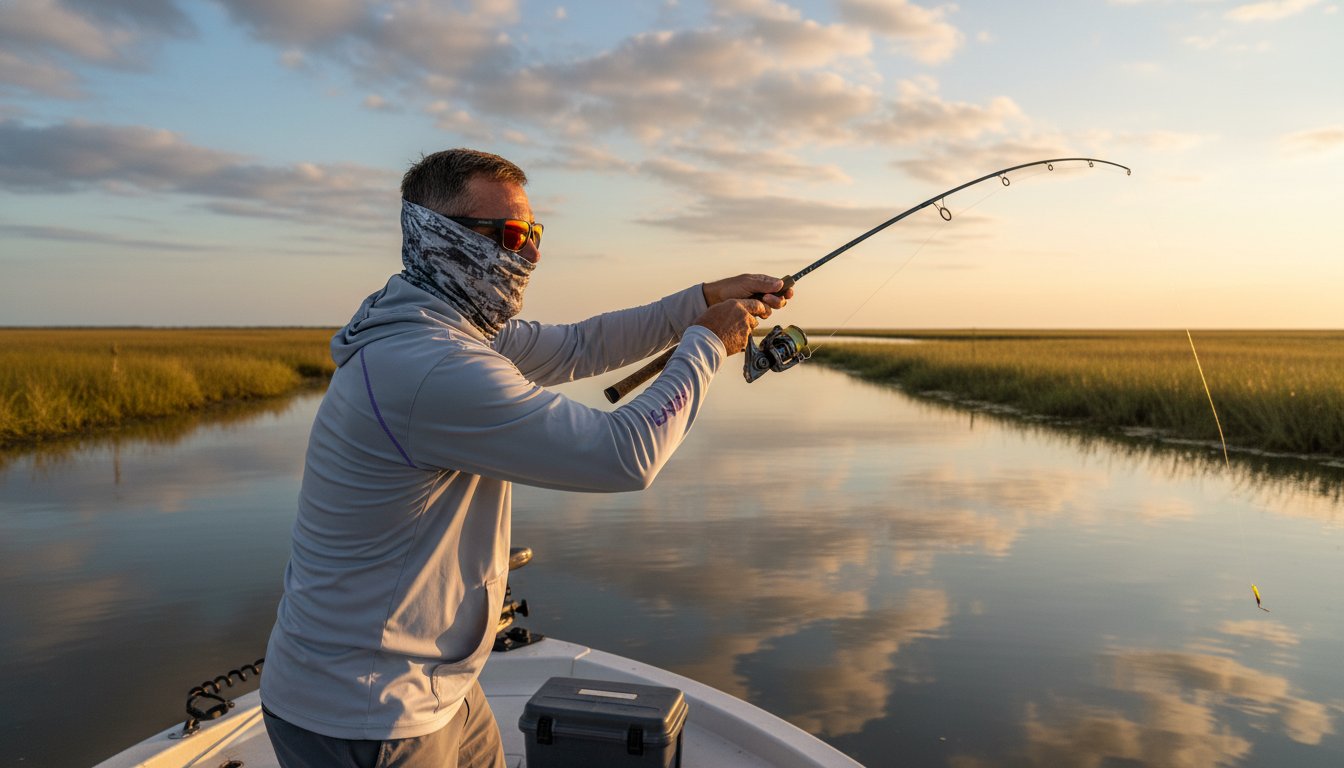
In the marshes of Vermilion Bay, your clothing is much more than a fashion choice. It’s a tactical cooling system that determines whether you land a limit of redfish or head back to the docks early with a painful sunburn. You probably already know that the South Louisiana sun is relentless, especially when it reflects off the flats near Marsh Island. Deciding exactly what to wear on a fishing charter in summer can be the difference between a legendary day on the water and a humid struggle against the elements. While other areas like Venice might get the headlines, our corner of the coast offers a world-class experience that requires the right preparation to truly enjoy.

We understand that nobody wants to spend their trip dealing with heat exhaustion or slippery shoes. This guide will help you master the humidity with an expert-approved gear list designed for the unique conditions of Cypremort Point and West Cote Blanche Bay. You’ll learn why UPF 50+ fabrics are non-negotiable for blocking 98 percent of UV radiation and which non-slip footwear keeps you steady on a wet deck. We’re going to cover everything from moisture-wicking hoodies to the right way to handle marsh bugs so you can look like a seasoned pro while staying perfectly comfortable.

Key Takeaways

  • Understand why cotton is your enemy in the Louisiana humidity and learn which technical fabrics actually promote airflow.
  • Discover the tactical advantage of UPF 50+ long sleeves over short sleeves to stay cooler while fishing the flats of Marsh Island.
  • Get the specific requirements for non-marking footwear to ensure safety and comfort on the boat deck.
  • Master your packing list with our expert advice on what to wear on a fishing charter in summer, including why polarized sunglasses are essential for spotting redfish.
  • Learn the best way to transition from a successful day on Vermilion Bay to a world-class Cajun dinner in Lafayette.

The Reality of South Louisiana Summer: Why Your Gear Matters

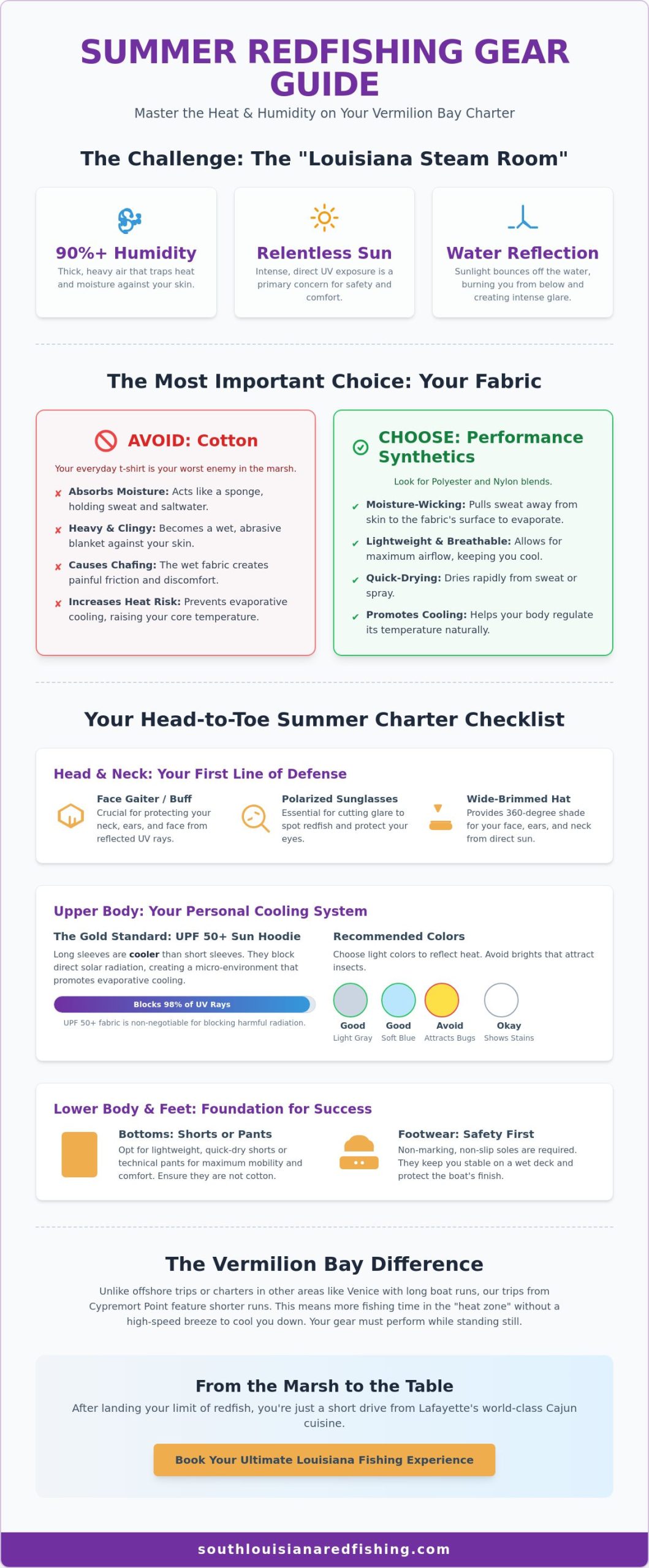
The South Louisiana marsh in July is often called the “Louisiana Steam Room” for a reason. When you’re out on Vermilion Bay, you aren’t just dealing with high temperatures; you’re battling humidity that regularly clears 90 percent. This creates a thick, heavy environment where standard summer clothes feel like a wet blanket. Understanding what to wear on a fishing charter in summer starts with realizing that your everyday cotton t-shirt is actually your worst enemy. Cotton is a thirsty fiber. It absorbs sweat and saltwater, holding it against your skin until it becomes a heavy, abrasive mess that leads to severe chafing and discomfort.

Successful anglers trade standard street wear for performance cooling systems. We prioritize UPF 50+ and moisture-wicking fabrics because they pull sweat away from the body, allowing it to evaporate even in our thick marsh air. This isn’t just about looking the part; it’s about safety. Mastering what to wear on a fishing charter in summer is your first line of defense against heat exhaustion, which is the number one trip-killer on the Gulf coast. When you stay dry and shielded from relentless UV rays, your core temperature stays regulated. This keeps you energized and sharp for when a trophy redfish finally hits your line near Marsh Island.

Vermilion Bay vs. Other Regions

Fishing the sheltered marsh of Weeks Bay or West Cote Blanche Bay is a different beast than heading into the open Gulf. While heavy gear is sometimes used for deep sea fishing, it is often too thick for our shallow inshore flats. In some regions like Venice, you might have hour-long boat runs to catch a breeze. Here, our runs from Cypremort Point are shorter and more efficient. This means you spend more time actively fishing in the “heat zone” without the cooling effect of a high-speed boat ride. You need gear that breathes while you’re standing still over a productive oyster bed.

The Role of Solar Reflection

The sun doesn’t just hit you from above; it attacks from every angle. Light bounces off the shallow mudflats and white-shell oyster reefs, creating intense glare. This reflection can burn the underside of your chin or the skin behind your ears even if you’re standing under a boat canopy. At Cypremort Point, the solar intensity is particularly high because the shallow, tea-colored water amplifies the rays. You need 360-degree protection to stay safe. Choosing the right technical layers ensures you’re shielded from the reflection coming off the water’s surface as much as the direct sun overhead.

The Tactical Layering System: UPF 50+ and Moisture Wicking

Many first-time anglers assume a tank top is the best choice for the marsh. That’s a mistake. Covering your skin with technical long sleeves is actually the most effective way to stay cool. These fabrics create a micro-environment that shields you from direct solar radiation while promoting evaporative cooling. Following official advice on preventing heat-related illness means choosing loose, lightweight clothing that allows your body to regulate its temperature. When deciding what to wear on a fishing charter in summer, think about your clothes as a piece of equipment, not just an outfit. Unlike the heavy gear sometimes used for deep-sea trips in Venice, our inshore gear needs to be exceptionally light and breathable.

Look for polyester and nylon blends. Polyester is king for moisture-wicking; it pulls sweat off your skin and moves it to the outer layer of the fabric. Nylon is often more durable and offers slightly better airflow. Both are superior to cotton. We also look for antimicrobial treatments. After a long day hauling redfish into the boat near Weeks Bay, you’ll appreciate gear that doesn’t hold onto the “marsh smell” during the drive back to Lafayette for a celebratory dinner.

Choosing Your Fishing Shirt

The sun hoodie has become the gold standard for inshore guides. These shirts offer a built-in hood that protects your ears and neck. These are areas that often get scorched by reflection off the water. If you prefer a traditional look, button-down “Guide Shirts” offer excellent venting across the back. Choose light grays or soft blues. While white seems cooler, it often shows every bit of mud and fish slime. Avoid bright yellows or oranges, which can actually attract certain marsh insects.

Bottoms: Shorts vs. Technical Pants

Lightweight, quick-dry shorts are great for mobility when you’re moving around the deck. However, many pros prefer technical pants. They provide total sun protection and act as a shield against the occasional marsh fly or “no-see-um” that might be buzzing around the weirs. Whatever you do, leave the denim and heavy canvas at home. These fabrics trap heat and stay wet for hours if they get splashed. Ready to test your gear? Book a guided trip and see how the right layers make the experience even better.

Footwear and Extremities: Protecting Your Foundation

Your connection to the boat starts at your feet. If you’re sliding around the deck while trying to net a redfish near the weirs of Marsh Island, you’re going to have a bad time. Captain Troy D. Nash requires non-marking soles on every trip for a simple reason: black rubber leaves permanent scuffs on a professional fishing deck. When you are deciding what to wear on a fishing charter in summer, look at the soles of your shoes first. If they aren’t labeled “non-marking,” leave them in the truck. You want a shoe that offers a firm grip on wet fiberglass, especially when the bay gets a little choppy near the East Cote Blanche reefs.

Safety and support go hand-in-hand. While flip-flops are the unofficial uniform of a Louisiana summer, they offer zero protection on a moving vessel. One wrong step during a hookset can lead to a stubbed toe or a nasty slip. Sandals with secure heel straps are a step up, but closed-toe deck shoes are the best choice. They protect your feet from heavy gear and provide the stability you need to fight a bull redfish. Believe it or not, lightweight technical socks are also a game changer. They prevent blisters from saltwater friction and protect the sensitive skin on the tops of your feet from the intense solar reflection we discussed earlier.

The Best Shoes for Vermilion Bay

The ideal footwear for our inshore trips is a breathable mesh deck shoe. These are designed to drain water instantly and dry quickly. Many anglers reach for “crocs” because they’re comfortable and easy to clean. They work well for casual days, but be careful; some models become incredibly slippery once the tread wears down or the deck gets slimy. If you’re moving around the boat to reach the best casting angles near the canals, you need a shoe with a dedicated siped sole for maximum traction.

Headgear and Face Protection

Protecting your face and neck is where you truly earn your “pro” status. A wide-brimmed straw hat provides the best shade, but it can be a liability during high-speed runs across West Cote Blanche Bay. Performance trucker caps are more secure, but they leave your ears and neck exposed. This is why a neck gaiter, or “Buff,” is essential. According to the Skin Cancer Foundation, Sun-protective clothing is the most effective way to prevent long-term skin damage. Pull that gaiter up over your nose and ears to eliminate the “goggle tan” and prevent painful burns from the light bouncing off the mudflats. It might feel strange at first, but once the midday heat hits, you’ll be the most comfortable person on the boat.
What to Wear on a Fishing Charter in Summer: The South Louisiana Guide

The Summer Charter Checklist: Essential Accessories

Beyond your technical layers, the small items in your bag determine how well you actually perform on the water. When people ask what to wear on a fishing charter in summer, they often forget that accessories are functional tools. In the shallow, brackish environments of Vermilion Bay, your vision is your greatest asset. High-quality polarized sunglasses are the difference between staring at a brown surface and successfully red fish fishing louisiana style. These lenses cut through the surface glare, allowing you to see tailing fish and underwater structure near the marsh edges.

Protecting your gear is just as important as protecting your skin. The humidity in South Louisiana is relentless. A simple dry bag is a lifesaver for keeping your phone, car keys, and wallet safe from salt spray and the heavy moisture in the air. Finally, never underestimate the power of hydration. While it’s tempting to pack sodas, water is the only thing that will keep you upright in the 90-degree heat. Drink early and often to stay ahead of the “Steam Room” effect we discussed earlier.

Lens Colors for the Marsh

Most beginners bring gray lenses because they’re great for open water. However, if you’re stalking redfish in the grass flats of Marsh Island, you need amber or copper lenses. These colors enhance contrast in brackish water, making it much easier to spot the bronze flash of a fish. Always use a lanyard or retainer. One quick move to net a fish could send your expensive optics straight into the bay, and they don’t float. Our inshore waters are productive, but they aren’t forgiving to dropped gear.

Sunscreen and Skin Care

Apply your first layer of sunscreen before you even arrive at Cypremort Point. This gives the cream time to bond with your skin before you start sweating. Captains generally hate spray sunscreens on the boat. The mist settles on the deck, making it dangerously slippery, and it can actually damage the boat’s upholstery and fishing line. Stick to creams for the boat and don’t forget SPF lip balm. Your lips will be the first thing to burn in the salt air. Ready to put this gear to the test? Book your summer adventure today and let’s get on the fish.

From the Marsh to the Table: Transitioning Your Look

Once the final redfish is in the cooler and we’re heading back to the docks at Cypremort Point, your adventure is really just beginning. One of the greatest advantages of fishing our inshore waters is how seamlessly you can move from the marsh to the dinner table. In South Louisiana, wearing your technical gear into a local restaurant isn’t just accepted; it’s practically the local uniform. You won’t feel out of place grabbing a post-trip meal in Lafayette while still wearing your performance sun hoodie and deck shoes. Determining what to wear on a fishing charter in summer isn’t just about the time on the boat; it’s about being ready for the full Acadiana experience without needing a complete wardrobe change.

Cajun Hospitality and Tourism

Transitioning from catching redfish to eating them is one of the most rewarding Lafayette things to do. The right gear makes your whole vacation more enjoyable because you aren’t spending your evening nursing a sunburn or dealing with salt-chafed skin. Capt. Troy D. Nash always recommends gear that balances technical performance with a casual look. This allows you to jump straight into the local tourism scene, whether you’re visiting a nearby distillery or heading to a live Zydeco set, looking like a seasoned local rather than a tired tourist.

Booking Your Summer Adventure

Summer is the peak season for targeting trophy louisiana redfish in the shallow flats and around the marsh weirs. The fish are active, the bait is plentiful, and the bite is often explosive. Don’t let the heat intimidate you. We provide the local expertise, the professional-grade equipment, and the deep-rooted heritage to put you on the fish; you just need to bring the right clothes and a sense of adventure. Ready to experience the best inshore fishing the Gulf Coast has to offer? Book your South Louisiana Redfishing charter today!

Step Into the Marsh with Confidence

Success on the water starts long before your first cast. By mastering the South Louisiana heat with UPF 50+ fabrics and non-marking deck shoes, you’ve already won half the battle. We’ve explored why technical layers are non-negotiable and how polarized lenses help you spot a bronze flash in the grass. Now that you know exactly what to wear on a fishing charter in summer, it’s time to put that tactical gear to the test. Whether you’re navigating the weirs of Marsh Island or the oyster beds of Vermilion Bay, the right preparation ensures you stay focused on the fight rather than the humidity.

You don’t need a lifetime of experience to land a limit of reds. As a 3rd Generation Local Guide with deep-seated expertise in Vermilion Bay and Marsh Island, I’ve spent decades perfecting the art of the inshore strike. We provide the top-tier equipment and the local heritage; you just bring the right clothes and a drive for success. The marsh is calling, and the bite is on. Let’s get you out there for an adventure you’ll never forget.

Ready to hit the marsh? Book your summer Redfish charter now!

Frequently Asked Questions

Do I really need long sleeves if it’s 95 degrees outside?

Yes, high-performance long sleeves are actually cooler than short sleeves in the marsh. When you are deciding what to wear on a fishing charter in summer, these technical fabrics provide a physical barrier against direct UV rays and help your body regulate its temperature through moisture-wicking technology. When the sun reflects off the flats near Marsh Island, that extra fabric keeps your skin from cooking while allowing every breeze to cool you down.

Can I wear black or dark colors while fishing in the summer?

You should avoid black and dark colors whenever possible. Dark fabrics absorb the sun’s energy and trap heat against your body, which can lead to exhaustion quickly in our humid climate. We recommend light grays, soft blues, or sage greens. These colors reflect solar radiation and do a great job of hiding the inevitable mud and salt spray you’ll encounter while exploring the weirs and canals of Weeks Bay.

What kind of sunglasses are best for spotting fish in the marsh?

Polarized lenses with an amber, brown, or copper tint are the absolute best for our inshore environment. These specific colors increase contrast and allow you to see through the tea-colored brackish water to spot redfish stalking prey. While gray lenses are fine for open-water runs, they lack the depth perception needed for sight-casting in the shallow marshes and mudflats of West Cote Blanche Bay.

Are there specific shoes that Captain Troy D. Nash recommends?

Captain Troy D. Nash strongly recommends closed-toe, non-marking deck shoes for every trip. Non-marking soles are vital for keeping the boat’s deck in top shape, while closed toes protect you from heavy equipment or a stray hook. A shoe with a siped rubber sole provides the best traction on wet fiberglass, ensuring you stay steady while landing a trophy catch near the reefs or oil rigs.

Should I bring my own rain gear just in case of a summer storm?

Bringing a lightweight, breathable rain shell is a smart move for any South Louisiana trip. Summer afternoons often bring sudden, intense thunderstorms that pass quickly but can leave you soaked. A packable jacket doesn’t take up much room in your dry bag and provides a windbreak during the boat ride. Just make sure it’s breathable so you don’t feel like you’re in a sauna once the sun returns to Cypremort Point.

Is it okay to wear jewelry or watches on the boat?

It’s generally better to leave expensive jewelry and loose watches at home. Saltwater is highly corrosive to many metals, and shiny rings can actually attract predatory fish if your hand is near the water. If you must wear a watch, choose a rugged, waterproof model with a secure silicone or nylon strap that won’t slip off during a high-speed run across Vermilion Bay or while handling a fish.

What is the best way to stay hydrated during an 8-hour charter?

The most effective strategy is to drink small amounts of water constantly throughout the day. Don’t wait until you feel thirsty to start hydrating. When you are planning what to wear on a fishing charter in summer, think of your water bottle as part of your gear. We recommend avoiding heavy sodas or energy drinks, as the sugar and caffeine can actually accelerate dehydration when the Louisiana sun is at its peak.
Summer Fishing Trips Louisiana: The Ultimate Buying Guide to Vermilion Bay

You don’t have to burn 100 gallons of gas or battle the sweltering crowds in Venice to find the best summer fishing trips Louisiana offers. We all know that the July heat can be brutal. Nothing ruins a trip faster than a skunked cooler and a massive fuel surcharge from an offshore boat. You want a successful limit out day without the headache of overcrowded hubs or rough seas.

This guide shows you why the shaded marsh grass and hidden oyster beds of Vermilion Bay are the secret to an epic adventure. You’ll discover how the shallow flats near Cypremort Point outclass the deep sea alternatives by keeping costs low and the action high. We are going to dive into the best honey holes from Marsh Island to the reefs of West Cote Blanche Bay. You will also learn how Captain Troy Nash uses his 25 years of experience as a 3rd generation guide to guarantee a Cajun experience filled with bull reds and world class food. He’s got you covered for the best redfish fishing in the United States. It’s time to experience the thrill of the marsh.

Key Takeaways

  • Beat the midday heat and afternoon storms by mastering the “early bird” strategy for peak action from June through August.
  • Save on fuel costs and travel time by choosing the Vermilion Bay marsh over expensive offshore trips for your next **summer fishing trips louisiana**.
  • Experience the thrill of landing giant bull reds and speckled trout by targeting the reefs and oyster beds near Cypremort Point.
  • Gain a distinct edge by booking with a 3rd generation expert like Capt. Troy Nash, who knows exactly where the fish hide during the summer dog days.
  • Transform your day on the water into an epic adventure by pairing your catch with authentic Cajun flavors and local sights in the Lafayette area.

Planning Your Summer Fishing Trips in Louisiana: What to Expect

Your epic adventure begins in the heart of the Cajun coast. Summer fishing trips louisiana hit their peak from June 1st through August 31st, when the marsh comes alive with predatory action. During these 92 days of prime season, the Vermilion Bay complex transforms into a world-class fishery. You’ll find schools of Speckled Trout and Redfish patrolling the coastlines from Cypremort Point to the shell keys near Marsh Island. Captain Troy Nash, a 3rd generation veteran guide, knows exactly where these giants hide when the water temperature climbs above 82 degrees.

Success during the summer months requires a strategic approach. We prioritize early morning departures to capitalize on the “golden hour” when fish are most active. This isn’t just about the bite; it’s about maximizing your comfort before the Louisiana sun reaches its peak. While other areas like Venice require long, punishing runs to find fish, our inshore honey holes are often just a 20 minute boat ride from the dock. This means more time with a tight line and less time burning fuel under the midday sun.

The Summer Marsh Environment

Tide movements dictate everything in the shallow waters of the bay. A falling tide of just 1.2 feet can flush thousands of shrimp and cocahoes out of the grass, creating a feeding frenzy at the mouth of the bayous. The lush underwater vegetation provides the perfect ambush cover for trophy Flounder and Black Drum. This expansive marsh serves as the primary nursery for Bull Reds.

Weather Patterns and Safety

Beating the heat is a top priority for a successful family outing. Daily temperatures often exceed 90 degrees by noon, so we typically leave the dock by 6:00 AM to stay ahead of the curve. Afternoon thunderstorms develop in approximately 65% of summer days; making those early morning windows crucial for both safety and catching your limit. Captain Troy’s custom boat features a large T-top for shade and a high-capacity cooler stocked with fresh ice and bottled water. He’s got you covered with all the essentials to keep you hydrated while you chase some of the best Redfish fishing in the United States.

Inshore vs. Offshore: Why Vermilion Bay is the Summer Sweet Spot

Planning summer fishing trips louisiana often leads to a tough choice: burning hundreds of gallons of fuel heading 50 miles out, or finding a honey hole right off the dock. Vermilion Bay offers a smarter alternative. While deep-sea charters often face $800 fuel surcharges and 3-hour boat rides before the first cast, a trip from Cypremort Point puts you on the fish in under 20 minutes. This gateway to the Gulf provides protected waters that stay fishable even when the open ocean is tossing 4-foot swells. You spend your day catching, not commuting.

The cost difference is staggering for families and groups. By staying inshore or nearshore, you eliminate the massive overhead of high-speed offshore engines. This allows for a more affordable, high-quality experience. The sea state in the bay remains significantly calmer than the open Gulf, which is a major win for anyone prone to seasickness. You get the thrill of the strike without the physical toll of a rough offshore transit.

The Nearshore Advantage

You don’t need to cross the horizon to find trophy fish. During the peak summer months of June and July, nearshore oil rigs and reefs just outside the bay teem with Tripletail and Cobia. These structures act as magnets for migratory species. Because these spots are technically nearshore, you enjoy more liberal bag limits compared to the highly regulated federal seasons found 60 miles out. Capt. Troy Nash uses his 25 years of experience to navigate these “inner” rigs where you can limit out on Speckled Trout before the midday heat kicks in. It’s the offshore quality without the offshore price tag.

  • Lower Costs: Save up to 50% on charter fees compared to fuel-heavy deep-sea runs.
  • Calmer Seas: The bay’s average depth of 10 feet keeps water stable for families and beginners.
  • Shorter Runs: Most prime spots are within 5 to 12 miles of the launch at Cypremort Point.

Avoiding the Crowds

The quiet waters of Weeks Bay offer a stark contrast to the heavy boat traffic found in Venice. When you choose summer fishing trips louisiana in this region, you’re fishing where the pressure is low. Less pressure means Redfish and Trout are more aggressive and less “spooky” when your lure hits the water. This area remains a hidden gem for those staying in nearby Lafayette or New Iberia. After a successful morning on the water, you’re only a short drive away from the best Cajun boudin and cracklin in Acadiana. If you want a productive day without fighting for a spot on the reef, you should check out available dates for a guided trip that focuses on these pristine marsh edges.

Top Summer Targets: Redfish, Speckled Trout, and Nearshore Gems

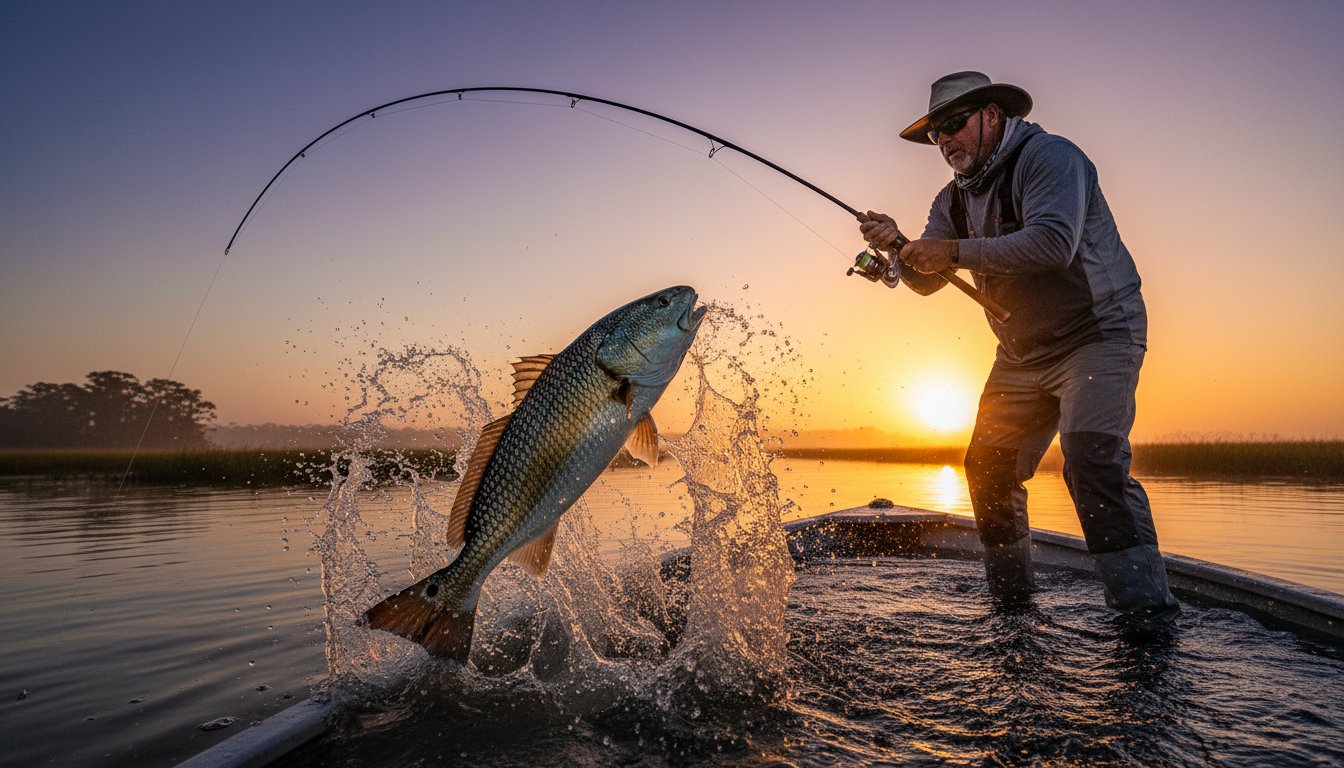
Summer heat triggers an incredible biological event in the Louisiana marsh. Massive Bull Reds, often weighing between 20 and 45 pounds, move from the Gulf into the shallow interior waters of Vermilion Bay to feast on blue crabs and mullet. This isn’t just fishing; it’s a heavyweight battle. Speckled Trout also reach their peak activity during these months. You’ll find them stacked on the submerged oyster reefs of East Cote Blanche Bay, where catching a limit of 15 to 20-inch fish is a daily possibility. For those seeking the ultimate trophy, we target the Cajun Slam. This means landing a Redfish, Speckled Trout, and Flounder all in one day. Your epic adventure doesn’t stop there. Summer fishing trips louisiana also offer bonus targets like hard-fighting Black Drum, tasty Sheepshead, and the elusive Tripletail that hover near the structures just off the coast of Cypremort Point.

Tactics for Summer Success

Capt. Troy Nash tailors every trip to your skill level and preference. He’s got you covered whether you want to throw a fly, use a spinning reel, or master a baitcaster. During the peak of summer, the choice between live bait and artificials is critical. While soft plastics are effective at dawn, live shrimp or croakers often become necessary as the midday sun heats the water to over 85 degrees. Summer Redfish often tail in the shallow flats. This creates a thrilling sight-fishing scenario where you can watch a 30-inch fish tip its tail out of the water while feeding in less than a foot of depth. Capt. Troy uses his 25 years of experience to position the boat perfectly for these high-stakes casts.

Geography of the Catch

Successful summer outings rely on knowing exactly where the water is moving. The weirs and canals of Marsh Island are legendary for this. These structures create tidal funnels that concentrate bait, making them prime spots for catching Speckled Trout and Redfish in quick succession. Both East and West Cote Blanche Bay hold fish all summer long because they are shallower and more protected than the open Gulf, providing a safer and more comfortable experience for families. The vast oyster beds in South Louisiana serve as the lifeblood of the bay. These reefs act as natural magnets, providing the structure and food sources that keep fish active even in the warmest weather. Choosing this region over areas like Venice means shorter boat rides and calmer waters. You spend more time with a line in the water and less time battling the rough conditions often found in deep sea environments.

Selecting the Right Louisiana Fishing Guide for a Summer Epic

Choosing a guide determines whether you spend your day fighting fish or just fighting the heat. When temperatures climb in July and August, the fish change their behavior. You need a captain who understands the shifting tides of Vermilion Bay. A 3rd generation guide like Capt. Troy Nash holds a distinct edge that part-time hobbyists simply can’t match. He has spent over 25 years as a full-time veteran on these waters, learning the precise oyster beds and deep-water passes where redfish congregate to stay cool.

A professional service should be truly all-inclusive. This means you aren’t just paying for a boat ride. You’re paying for high-quality tackle, fresh bait, and decades of local expertise. While other areas like Venice might require long, exhausting runs to reach the fish, our trips focus on the rich marshes and reefs right here in our backyard. This keeps you in the action longer and makes the trip much more comfortable for everyone on board.

Spotting a true pro is easy if you know what to look for. Always verify that your captain holds a current U.S. Coast Guard license and carries comprehensive commercial insurance. A long-standing local reputation in the Cypremort Point area is the best indicator of quality. Capt. Troy’s deep roots in the community mean he’s invested in your success. He’s got you covered with everything needed for a successful day on the water.

The Captain Troy Nash Difference

Experience matters when you’re hunting for bull reds in the Louisiana marsh. Capt. Troy Nash brings over 25 years of full-time guiding experience to every trip. He offers a personal touch that works for everyone. He enjoys teaching beginners the basics of a baitcast reel just as much as he likes challenging seasoned pros to a day of technical fly fishing. His local knowledge allows him to find secret spots near South Marsh Island that others miss during the peak of summer. These hidden gems are the key to making summer fishing trips louisiana truly legendary.

Booking Logistics

Planning ahead is essential for a summer adventure. Summer weekends are incredibly popular and often fill up 60 to 90 days in advance. If you want a specific date for a family vacation, book as early as possible. Capt. Troy offers family-friendly options that cater to various group sizes, ensuring everyone from kids to grandparents has a blast. After a day of catching fish, you can head back to Lafayette to enjoy some world-class Cajun food. It is the perfect way to cap off an epic day.

Beyond the Boat: Making the Most of Your Cypremort Point Adventure

Your summer fishing trips louisiana don’t end when the boat hits the dock. South Louisiana is a cultural powerhouse that offers far more than just time on the water. While other areas like Venice are strictly about the catch, the Cypremort Point and Lafayette corridor provides a full vacation experience. You can spend your morning pulling giant bull reds from the marshes near Marsh Island and your afternoon relaxing at Cypremort Point State Park. This 185-acre park features a man-made beach and a 100-foot fishing pier, making it a perfect spot for families to unwind after an epic adventure on the bay.

A Taste of the Bayou

Cajun culture lives in the kitchen, and the connection between the ecosystem and the plate is inseparable here. In the Lafayette area, you’ll find over 40 authentic seafood markets where the morning’s haul becomes the evening’s feast. Many local establishments offer “cook your catch” options. They’ll take the Redfish or Speckled Trout you caught with Captain Troy and prepare it using traditional Acadian techniques. This isn’t just dinner; it’s a deep dive into a heritage that has thrived for centuries. The abundance of the Vermilion Bay system is why South Louisiana remains the premier destination for summer tourism.

Final Checklist for Your Trip

Preparation is the key to a successful day on the flats. Captain Troy Nash is a 3rd generation, veteran guide with over 25 years of experience, and he’s got you covered when it comes to the gear. He supplies the boat, fuel, ice, and all the tackle you need for fly, spin, or baitcast fishing. You only need to handle your personal essentials to stay comfortable under the Louisiana sun. Use this quick list to ensure you’re ready for the heat.

  • Polarized sunglasses: These are essential for cutting through the glare on the water to spot fish.
  • High-SPF sunscreen: The summer sun reflects off the bay, so protection is non-negotiable.
  • Louisiana fishing license: Ensure this is active before you step on the boat.
  • Ice chest: Bring a medium-sized cooler to transport your cleaned fillets home safely.

Don’t settle for a generic charter. Experience the thrill of the marsh with a guide who knows every canal and weir in the region. Your legendary trip is just a click away. Book your summer fishing trip at South Louisiana Redfishing!

Claim Your Spot on the Water This Summer

Your epic adventure on the Louisiana coast is just a single cast away. Selecting the best summer fishing trips louisiana has to offer means trading the expensive, long-distance hauls of Venice for the productive marsh and nearshore oil rigs surrounding Cypremort Point. You’ll find that targeting giant bull reds and filling limits of speckled trout in these shallow bays offers significantly more action with much shorter travel times than deep sea alternatives. Capt. Troy Nash brings over 25 years of local experience to every outing. As a 3rd generation veteran guide, he’s got you covered with deep-rooted knowledge of the Vermilion Bay reefs and secret oyster beds. You won’t have to stress about the details since all tackle and bait are provided for your trip. After you hit the docks, you can round out the day with world-class Cajun food in nearby Lafayette. It’s time to climb aboard and experience the thrill for yourself.

Book Your Summer Epic Adventure Today!

We can’t wait to see you on the boat for a legendary day in the marsh!

Frequently Asked Questions

What is the best month for summer fishing in Louisiana?

June stands out as the premier month for summer fishing trips Louisiana has to offer because the winds calm down and salinity levels peak in Vermilion Bay. During these 30 days, you’ll find Speckled Trout schooling around the T-Butt and Nickel Reef. Capt. Troy targets these areas when the water temperature hits 82 degrees to ensure you land a limit of 15 fish per person.

Do I need my own gear for a guided fishing trip with Capt. Troy?

You don’t need to bring any rods or reels because Capt. Troy Nash provides all the professional-grade tackle you’ll need for an epic adventure. He’s got you covered with specialized gear for fly, spin, or baitcast fishing. With over 25 years of experience, he knows exactly which 12-pound test line and specific lures work best for the Bull Reds lurking around Marsh Island.

What happens if it rains on the day of my summer charter?

Safety is the top priority, so Capt. Troy monitors the weather radar 2 hours before every launch to ensure conditions are safe for your trip. If a typical 20-minute Louisiana summer shower passes through, the boat stays out to keep the bite going. However, if lightning or 25-knot winds occur, he’ll reschedule your trip or provide a full refund of your deposit.

Can children join summer fishing trips in the marsh?

Kids of all ages are welcome on summer fishing trips Louisiana adventures, especially in the calm waters of the marsh. These trips are perfect for introducing 7-year-olds to the thrill of catching their first Redfish or Black Drum. The stable 24-foot boat provides a safe platform for families to explore the weirs and shorelines of West Cote Blanche Bay together.

How much should I tip my fishing guide in Louisiana?

A tip of 15% to 20% of the total charter cost is the standard way to show appreciation for your guide’s hard work. For a typical $800 full-day trip, this amounts to $120 or $160. This gesture recognizes the 10 hours Capt. Troy spends prepping the boat, catching live bait, and cleaning your catch at the Cypremort Point docks.

Is a fishing license required for a guided trip in Louisiana?

Every angler aged 18 and older must possess a valid Louisiana fishing license before boarding the boat at Cypremort Point State Park. You can purchase a 3-day Charter Passenger Permit from the LDWF for $20, which covers all your needs for the trip. Unlike other areas like Venice, our local waters are easily accessible with this simple permit, making your booking process quick and easy.

What is the difference between inshore and nearshore fishing?

Inshore fishing focuses on the shallow flats and marsh canals of Vermilion Bay where depths stay under 6 feet, while nearshore fishing takes you 5 miles out to the oil rigs and oyster reefs. You’ll target Redfish and Flounder in the grass lines inshore. Nearshore trips focus on the 4-pile rigs where Sheepshead and larger Trout congregate in 15-foot depths.

How far is Cypremort Point from Lafayette, LA?

Cypremort Point is exactly 45 miles south of Lafayette, making it a convenient 55-minute drive for a day trip. You can leave the city at 5:00 AM and have your lines in the water at Weeks Bay by sunrise. After your epic adventure, you’ll be back in town in time to enjoy a bowl of gumbo and authentic Cajun hospitality at a local restaurant.