
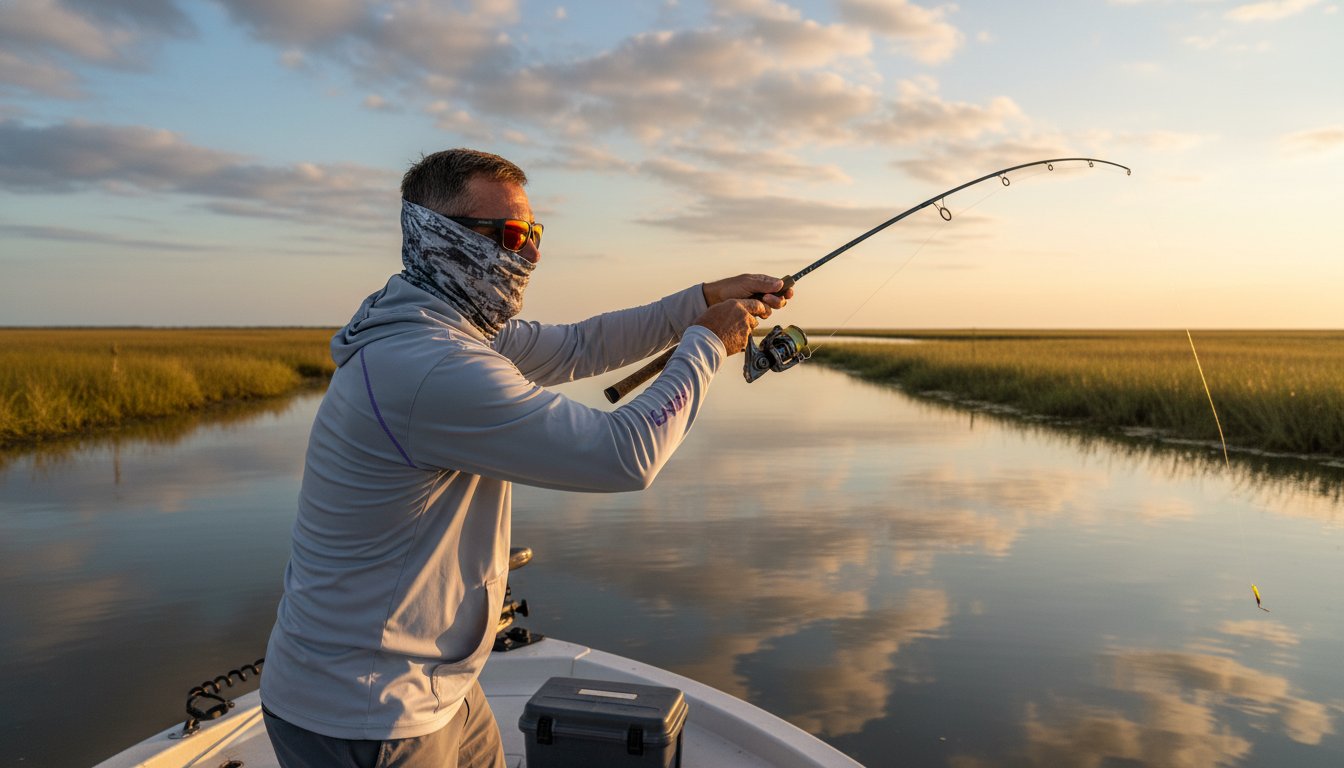
In the marshes of Vermilion Bay, your clothing is much more than a fashion choice. It’s a tactical cooling system that determines whether you land a limit of redfish or head back to the docks early with a painful sunburn. You probably already know that the South Louisiana sun is relentless, especially when it reflects off the flats near Marsh Island. Deciding exactly what to wear on a fishing charter in summer can be the difference between a legendary day on the water and a humid struggle against the elements. While other areas like Venice might get the headlines, our corner of the coast offers a world-class experience that requires the right preparation to truly enjoy.
We understand that nobody wants to spend their trip dealing with heat exhaustion or slippery shoes. This guide will help you master the humidity with an expert-approved gear list designed for the unique conditions of Cypremort Point and West Cote Blanche Bay. You’ll learn why UPF 50+ fabrics are non-negotiable for blocking 98 percent of UV radiation and which non-slip footwear keeps you steady on a wet deck. We’re going to cover everything from moisture-wicking hoodies to the right way to handle marsh bugs so you can look like a seasoned pro while staying perfectly comfortable.
Key Takeaways
- Understand why cotton is your enemy in the Louisiana humidity and learn which technical fabrics actually promote airflow.
- Discover the tactical advantage of UPF 50+ long sleeves over short sleeves to stay cooler while fishing the flats of Marsh Island.
- Get the specific requirements for non-marking footwear to ensure safety and comfort on the boat deck.
- Master your packing list with our expert advice on what to wear on a fishing charter in summer, including why polarized sunglasses are essential for spotting redfish.
- Learn the best way to transition from a successful day on Vermilion Bay to a world-class Cajun dinner in Lafayette.
The Reality of South Louisiana Summer: Why Your Gear Matters
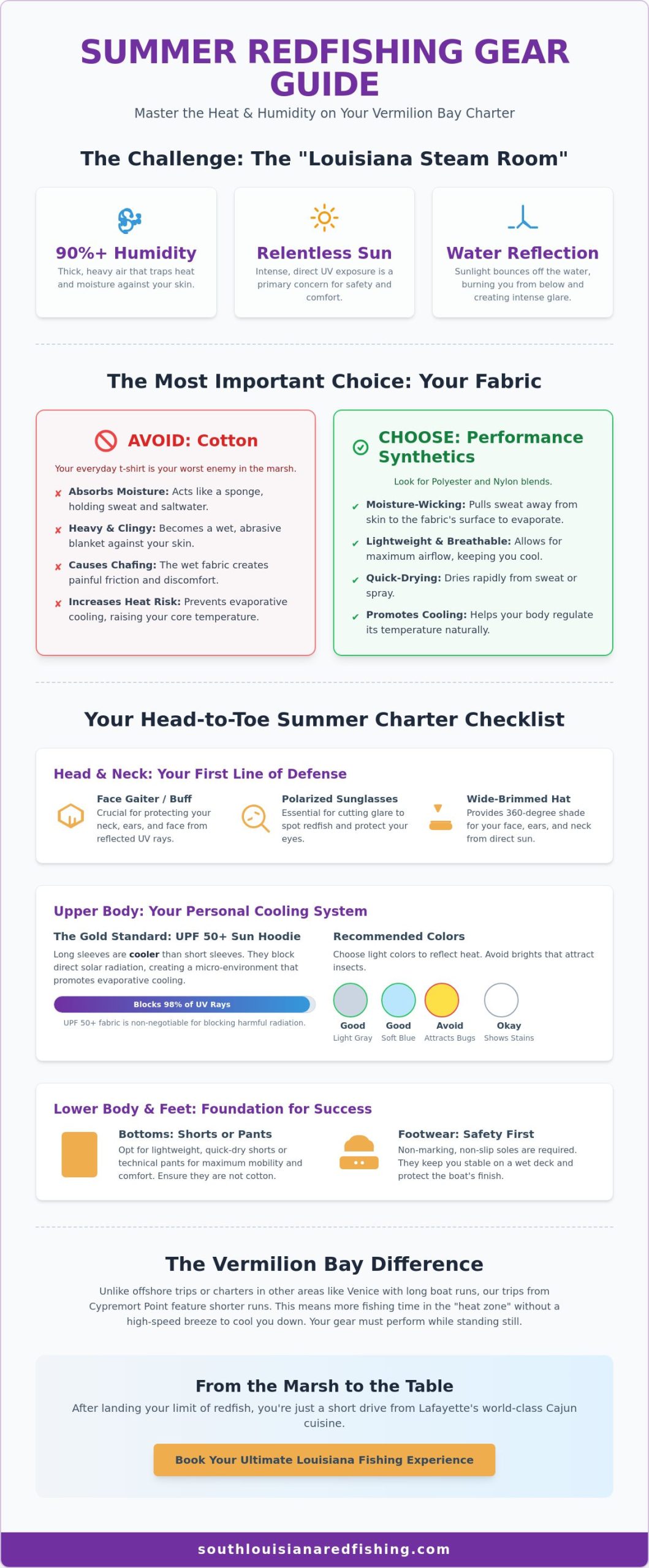
The South Louisiana marsh in July is often called the “Louisiana Steam Room” for a reason. When you’re out on Vermilion Bay, you aren’t just dealing with high temperatures; you’re battling humidity that regularly clears 90 percent. This creates a thick, heavy environment where standard summer clothes feel like a wet blanket. Understanding what to wear on a fishing charter in summer starts with realizing that your everyday cotton t-shirt is actually your worst enemy. Cotton is a thirsty fiber. It absorbs sweat and saltwater, holding it against your skin until it becomes a heavy, abrasive mess that leads to severe chafing and discomfort.
Successful anglers trade standard street wear for performance cooling systems. We prioritize UPF 50+ and moisture-wicking fabrics because they pull sweat away from the body, allowing it to evaporate even in our thick marsh air. This isn’t just about looking the part; it’s about safety. Mastering what to wear on a fishing charter in summer is your first line of defense against heat exhaustion, which is the number one trip-killer on the Gulf coast. When you stay dry and shielded from relentless UV rays, your core temperature stays regulated. This keeps you energized and sharp for when a trophy redfish finally hits your line near Marsh Island.
Vermilion Bay vs. Other Regions
Fishing the sheltered marsh of Weeks Bay or West Cote Blanche Bay is a different beast than heading into the open Gulf. While heavy gear is sometimes used for deep sea fishing, it is often too thick for our shallow inshore flats. In some regions like Venice, you might have hour-long boat runs to catch a breeze. Here, our runs from Cypremort Point are shorter and more efficient. This means you spend more time actively fishing in the “heat zone” without the cooling effect of a high-speed boat ride. You need gear that breathes while you’re standing still over a productive oyster bed.
The Role of Solar Reflection
The sun doesn’t just hit you from above; it attacks from every angle. Light bounces off the shallow mudflats and white-shell oyster reefs, creating intense glare. This reflection can burn the underside of your chin or the skin behind your ears even if you’re standing under a boat canopy. At Cypremort Point, the solar intensity is particularly high because the shallow, tea-colored water amplifies the rays. You need 360-degree protection to stay safe. Choosing the right technical layers ensures you’re shielded from the reflection coming off the water’s surface as much as the direct sun overhead.
The Tactical Layering System: UPF 50+ and Moisture Wicking
Many first-time anglers assume a tank top is the best choice for the marsh. That’s a mistake. Covering your skin with technical long sleeves is actually the most effective way to stay cool. These fabrics create a micro-environment that shields you from direct solar radiation while promoting evaporative cooling. Following official advice on preventing heat-related illness means choosing loose, lightweight clothing that allows your body to regulate its temperature. When deciding what to wear on a fishing charter in summer, think about your clothes as a piece of equipment, not just an outfit. Unlike the heavy gear sometimes used for deep-sea trips in Venice, our inshore gear needs to be exceptionally light and breathable.
Look for polyester and nylon blends. Polyester is king for moisture-wicking; it pulls sweat off your skin and moves it to the outer layer of the fabric. Nylon is often more durable and offers slightly better airflow. Both are superior to cotton. We also look for antimicrobial treatments. After a long day hauling redfish into the boat near Weeks Bay, you’ll appreciate gear that doesn’t hold onto the “marsh smell” during the drive back to Lafayette for a celebratory dinner.
Choosing Your Fishing Shirt
The sun hoodie has become the gold standard for inshore guides. These shirts offer a built-in hood that protects your ears and neck. These are areas that often get scorched by reflection off the water. If you prefer a traditional look, button-down “Guide Shirts” offer excellent venting across the back. Choose light grays or soft blues. While white seems cooler, it often shows every bit of mud and fish slime. Avoid bright yellows or oranges, which can actually attract certain marsh insects.
Bottoms: Shorts vs. Technical Pants
Lightweight, quick-dry shorts are great for mobility when you’re moving around the deck. However, many pros prefer technical pants. They provide total sun protection and act as a shield against the occasional marsh fly or “no-see-um” that might be buzzing around the weirs. Whatever you do, leave the denim and heavy canvas at home. These fabrics trap heat and stay wet for hours if they get splashed. Ready to test your gear? Book a guided trip and see how the right layers make the experience even better.
Footwear and Extremities: Protecting Your Foundation
Your connection to the boat starts at your feet. If you’re sliding around the deck while trying to net a redfish near the weirs of Marsh Island, you’re going to have a bad time. Captain Troy D. Nash requires non-marking soles on every trip for a simple reason: black rubber leaves permanent scuffs on a professional fishing deck. When you are deciding what to wear on a fishing charter in summer, look at the soles of your shoes first. If they aren’t labeled “non-marking,” leave them in the truck. You want a shoe that offers a firm grip on wet fiberglass, especially when the bay gets a little choppy near the East Cote Blanche reefs.
Safety and support go hand-in-hand. While flip-flops are the unofficial uniform of a Louisiana summer, they offer zero protection on a moving vessel. One wrong step during a hookset can lead to a stubbed toe or a nasty slip. Sandals with secure heel straps are a step up, but closed-toe deck shoes are the best choice. They protect your feet from heavy gear and provide the stability you need to fight a bull redfish. Believe it or not, lightweight technical socks are also a game changer. They prevent blisters from saltwater friction and protect the sensitive skin on the tops of your feet from the intense solar reflection we discussed earlier.
The Best Shoes for Vermilion Bay
The ideal footwear for our inshore trips is a breathable mesh deck shoe. These are designed to drain water instantly and dry quickly. Many anglers reach for “crocs” because they’re comfortable and easy to clean. They work well for casual days, but be careful; some models become incredibly slippery once the tread wears down or the deck gets slimy. If you’re moving around the boat to reach the best casting angles near the canals, you need a shoe with a dedicated siped sole for maximum traction.
Headgear and Face Protection
Protecting your face and neck is where you truly earn your “pro” status. A wide-brimmed straw hat provides the best shade, but it can be a liability during high-speed runs across West Cote Blanche Bay. Performance trucker caps are more secure, but they leave your ears and neck exposed. This is why a neck gaiter, or “Buff,” is essential. According to the Skin Cancer Foundation, Sun-protective clothing is the most effective way to prevent long-term skin damage. Pull that gaiter up over your nose and ears to eliminate the “goggle tan” and prevent painful burns from the light bouncing off the mudflats. It might feel strange at first, but once the midday heat hits, you’ll be the most comfortable person on the boat.
The Summer Charter Checklist: Essential Accessories
Beyond your technical layers, the small items in your bag determine how well you actually perform on the water. When people ask what to wear on a fishing charter in summer, they often forget that accessories are functional tools. In the shallow, brackish environments of Vermilion Bay, your vision is your greatest asset. High-quality polarized sunglasses are the difference between staring at a brown surface and successfully red fish fishing louisiana style. These lenses cut through the surface glare, allowing you to see tailing fish and underwater structure near the marsh edges.
Protecting your gear is just as important as protecting your skin. The humidity in South Louisiana is relentless. A simple dry bag is a lifesaver for keeping your phone, car keys, and wallet safe from salt spray and the heavy moisture in the air. Finally, never underestimate the power of hydration. While it’s tempting to pack sodas, water is the only thing that will keep you upright in the 90-degree heat. Drink early and often to stay ahead of the “Steam Room” effect we discussed earlier.
Lens Colors for the Marsh
Most beginners bring gray lenses because they’re great for open water. However, if you’re stalking redfish in the grass flats of Marsh Island, you need amber or copper lenses. These colors enhance contrast in brackish water, making it much easier to spot the bronze flash of a fish. Always use a lanyard or retainer. One quick move to net a fish could send your expensive optics straight into the bay, and they don’t float. Our inshore waters are productive, but they aren’t forgiving to dropped gear.
Sunscreen and Skin Care
Apply your first layer of sunscreen before you even arrive at Cypremort Point. This gives the cream time to bond with your skin before you start sweating. Captains generally hate spray sunscreens on the boat. The mist settles on the deck, making it dangerously slippery, and it can actually damage the boat’s upholstery and fishing line. Stick to creams for the boat and don’t forget SPF lip balm. Your lips will be the first thing to burn in the salt air. Ready to put this gear to the test? Book your summer adventure today and let’s get on the fish.
From the Marsh to the Table: Transitioning Your Look
Once the final redfish is in the cooler and we’re heading back to the docks at Cypremort Point, your adventure is really just beginning. One of the greatest advantages of fishing our inshore waters is how seamlessly you can move from the marsh to the dinner table. In South Louisiana, wearing your technical gear into a local restaurant isn’t just accepted; it’s practically the local uniform. You won’t feel out of place grabbing a post-trip meal in Lafayette while still wearing your performance sun hoodie and deck shoes. Determining what to wear on a fishing charter in summer isn’t just about the time on the boat; it’s about being ready for the full Acadiana experience without needing a complete wardrobe change.
Cajun Hospitality and Tourism
Transitioning from catching redfish to eating them is one of the most rewarding Lafayette things to do. The right gear makes your whole vacation more enjoyable because you aren’t spending your evening nursing a sunburn or dealing with salt-chafed skin. Capt. Troy D. Nash always recommends gear that balances technical performance with a casual look. This allows you to jump straight into the local tourism scene, whether you’re visiting a nearby distillery or heading to a live Zydeco set, looking like a seasoned local rather than a tired tourist.
Booking Your Summer Adventure
Summer is the peak season for targeting trophy louisiana redfish in the shallow flats and around the marsh weirs. The fish are active, the bait is plentiful, and the bite is often explosive. Don’t let the heat intimidate you. We provide the local expertise, the professional-grade equipment, and the deep-rooted heritage to put you on the fish; you just need to bring the right clothes and a sense of adventure. Ready to experience the best inshore fishing the Gulf Coast has to offer? Book your South Louisiana Redfishing charter today!
Step Into the Marsh with Confidence
Success on the water starts long before your first cast. By mastering the South Louisiana heat with UPF 50+ fabrics and non-marking deck shoes, you’ve already won half the battle. We’ve explored why technical layers are non-negotiable and how polarized lenses help you spot a bronze flash in the grass. Now that you know exactly what to wear on a fishing charter in summer, it’s time to put that tactical gear to the test. Whether you’re navigating the weirs of Marsh Island or the oyster beds of Vermilion Bay, the right preparation ensures you stay focused on the fight rather than the humidity.
You don’t need a lifetime of experience to land a limit of reds. As a 3rd Generation Local Guide with deep-seated expertise in Vermilion Bay and Marsh Island, I’ve spent decades perfecting the art of the inshore strike. We provide the top-tier equipment and the local heritage; you just bring the right clothes and a drive for success. The marsh is calling, and the bite is on. Let’s get you out there for an adventure you’ll never forget.
Ready to hit the marsh? Book your summer Redfish charter now!
Frequently Asked Questions
Do I really need long sleeves if it’s 95 degrees outside?
Yes, high-performance long sleeves are actually cooler than short sleeves in the marsh. When you are deciding what to wear on a fishing charter in summer, these technical fabrics provide a physical barrier against direct UV rays and help your body regulate its temperature through moisture-wicking technology. When the sun reflects off the flats near Marsh Island, that extra fabric keeps your skin from cooking while allowing every breeze to cool you down.
Can I wear black or dark colors while fishing in the summer?
You should avoid black and dark colors whenever possible. Dark fabrics absorb the sun’s energy and trap heat against your body, which can lead to exhaustion quickly in our humid climate. We recommend light grays, soft blues, or sage greens. These colors reflect solar radiation and do a great job of hiding the inevitable mud and salt spray you’ll encounter while exploring the weirs and canals of Weeks Bay.
What kind of sunglasses are best for spotting fish in the marsh?
Polarized lenses with an amber, brown, or copper tint are the absolute best for our inshore environment. These specific colors increase contrast and allow you to see through the tea-colored brackish water to spot redfish stalking prey. While gray lenses are fine for open-water runs, they lack the depth perception needed for sight-casting in the shallow marshes and mudflats of West Cote Blanche Bay.
Are there specific shoes that Captain Troy D. Nash recommends?
Captain Troy D. Nash strongly recommends closed-toe, non-marking deck shoes for every trip. Non-marking soles are vital for keeping the boat’s deck in top shape, while closed toes protect you from heavy equipment or a stray hook. A shoe with a siped rubber sole provides the best traction on wet fiberglass, ensuring you stay steady while landing a trophy catch near the reefs or oil rigs.
Should I bring my own rain gear just in case of a summer storm?
Bringing a lightweight, breathable rain shell is a smart move for any South Louisiana trip. Summer afternoons often bring sudden, intense thunderstorms that pass quickly but can leave you soaked. A packable jacket doesn’t take up much room in your dry bag and provides a windbreak during the boat ride. Just make sure it’s breathable so you don’t feel like you’re in a sauna once the sun returns to Cypremort Point.
Is it okay to wear jewelry or watches on the boat?
It’s generally better to leave expensive jewelry and loose watches at home. Saltwater is highly corrosive to many metals, and shiny rings can actually attract predatory fish if your hand is near the water. If you must wear a watch, choose a rugged, waterproof model with a secure silicone or nylon strap that won’t slip off during a high-speed run across Vermilion Bay or while handling a fish.
What is the best way to stay hydrated during an 8-hour charter?
The most effective strategy is to drink small amounts of water constantly throughout the day. Don’t wait until you feel thirsty to start hydrating. When you are planning what to wear on a fishing charter in summer, think of your water bottle as part of your gear. We recommend avoiding heavy sodas or energy drinks, as the sugar and caffeine can actually accelerate dehydration when the Louisiana sun is at its peak.