Epic Pictures of Redfish: A Louisiana Captain’s Photo Gallery & Guide

Tired of scrolling through endless, lifeless stock photos? You’re searching for authentic pictures of redfish fish-the kind that capture the raw thrill of the fight, the flash of bronze scales in the Louisiana sun, and the sheer power of a giant bull red. You want to see the real deal, pulled straight from the endless banks and bayous where fishing legends are born. Forget the fakes. This is your front-row seat to an epic adventure on the water.

Get ready to experience the thrill. As a 3rd generation, veteran Louisiana fishing guide, I’m sharing my personal gallery of hard-won catches. But this is more than just a collection of photos. I’ll show you exactly what to look for-from the signature spot on the tail to the different colorations that tell a story. You’ll learn how to identify them, understand their behavior, and get the insider knowledge you need to land your own trophy. Consider this your inspiration. Your epic adventure begins now!

Key Takeaways

  • Learn to identify a true Louisiana redfish by its distinct features, from its iconic tail spot to its powerful build.
  • Master the angler’s language and visually learn the difference between a “puppy drum” and a giant “bull red.”
  • Follow a veteran captain’s simple tips to capture incredible pictures of redfish fish that do your trophy catch justice.
  • See what a true Louisiana trophy looks like in our gallery of giant redfish caught right in Vermilion Bay.

Nothing tells the story of an epic fishing adventure better than a great photo. Here in Vermilion Bay, we don’t just put you on the fish; we capture the memory. Forget stock photos-this gallery is packed with 100% real catches from our charters. These are the giant bull reds and perfect slot-sized fish our clients battle every day. Get ready to see some of the best pictures of redfish fish you’ll find anywhere, straight from the heart of Louisiana.

Captain Troy Nash, a 3rd generation guide, believes the photo is part of the trophy. His passion for fishing is matched only by his dedication to capturing that perfect shot, ensuring you have a stunning memory to share long after your trip is over.

The Classic Trophy Pose

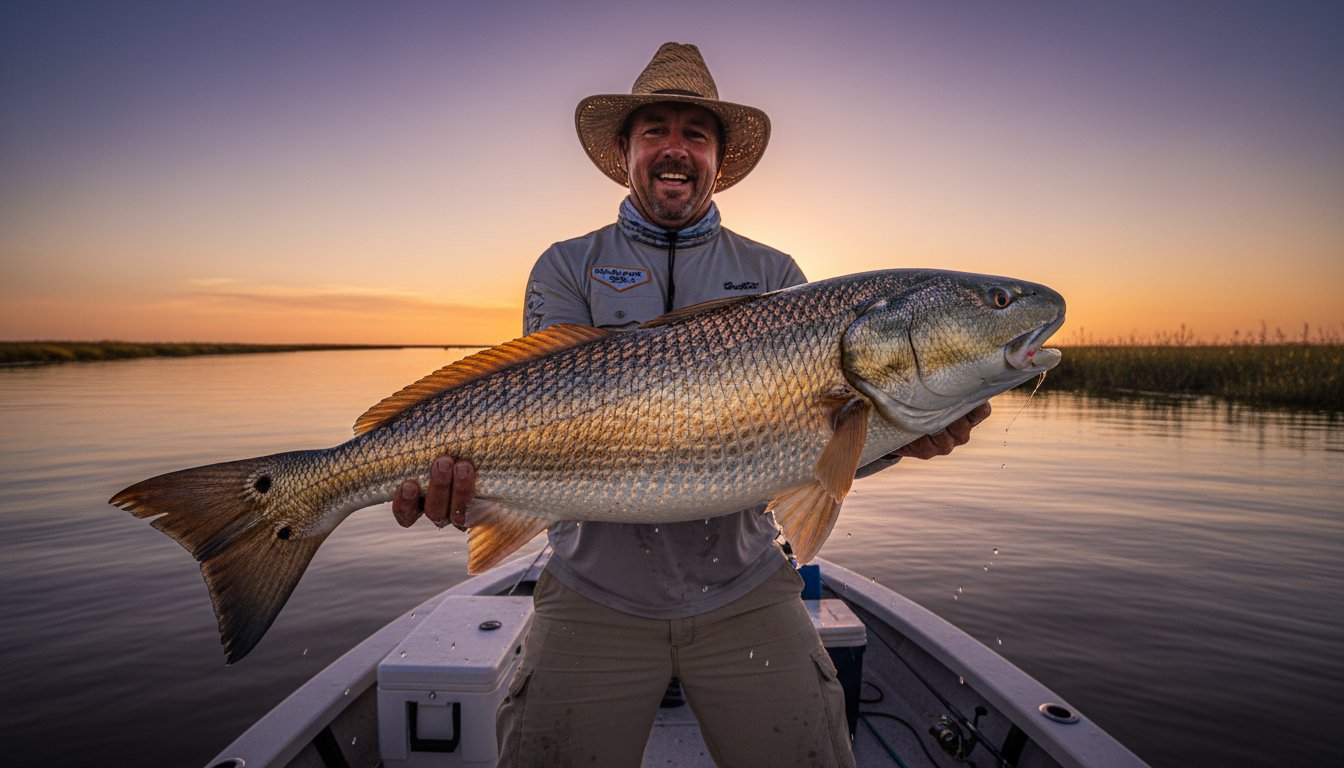
There’s nothing like that classic grip-and-grin with a monster red! Notice the deep, vibrant bronze and copper colors that make these fish so beautiful. The stunning scales of the Red drum (Sciaenops ocellatus) truly shine in the Louisiana sun. For a great photo that also respects the fish, support its weight by placing one hand under the belly near the tail and the other firmly gripping its mouth. This ensures the fish can be safely released to fight another day.

Redfish in Their Natural Habitat

Before the fight, there’s the hunt. These images showcase redfish in their element: gliding through the shallow, golden-hued waters of the marsh. If you’re lucky, you’ll witness the magic of a ‘tailing’ red-its iconic spotted tail waving above the surface as it feeds on the bottom. It’s a sight fisherman’s dream, set against the breathtaking backdrop of the Louisiana coastline, and makes for incredible pictures of redfish fish in the wild.

Action Shots: The Thrill of the Fight

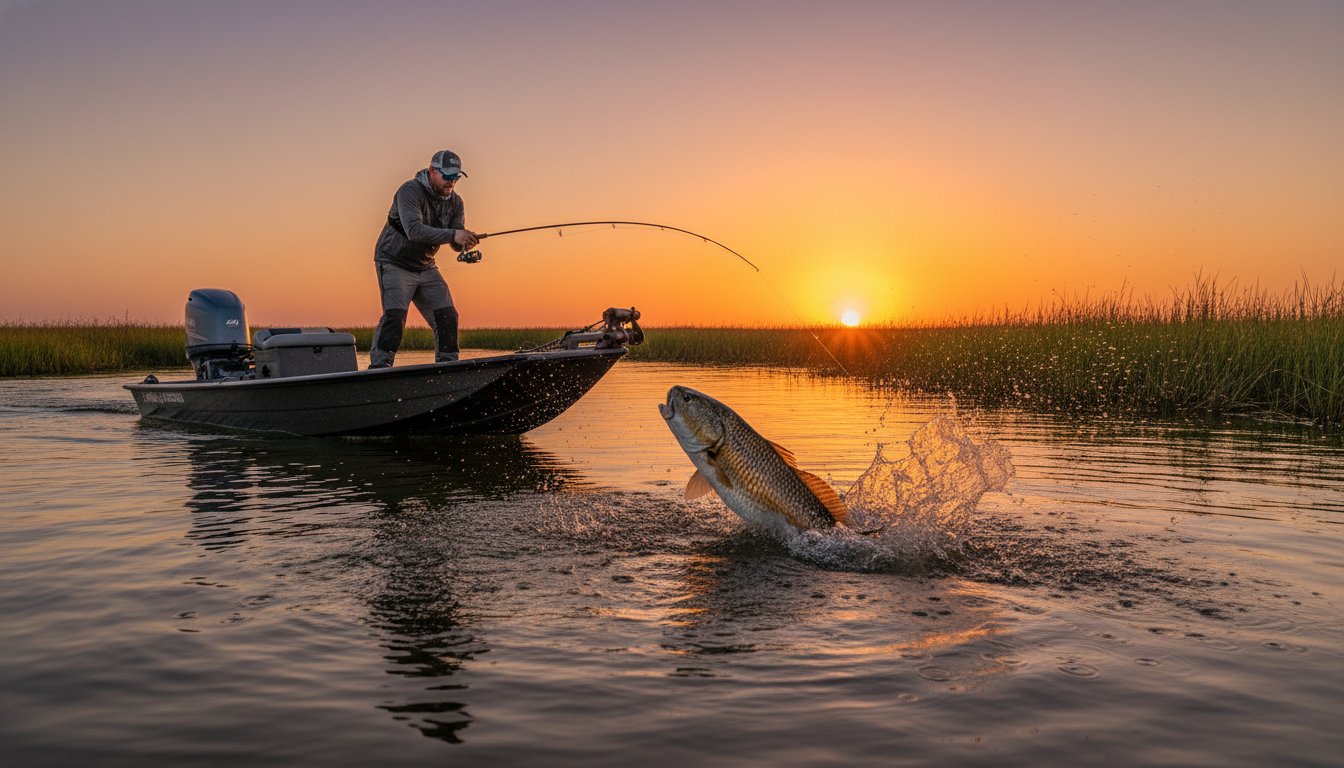
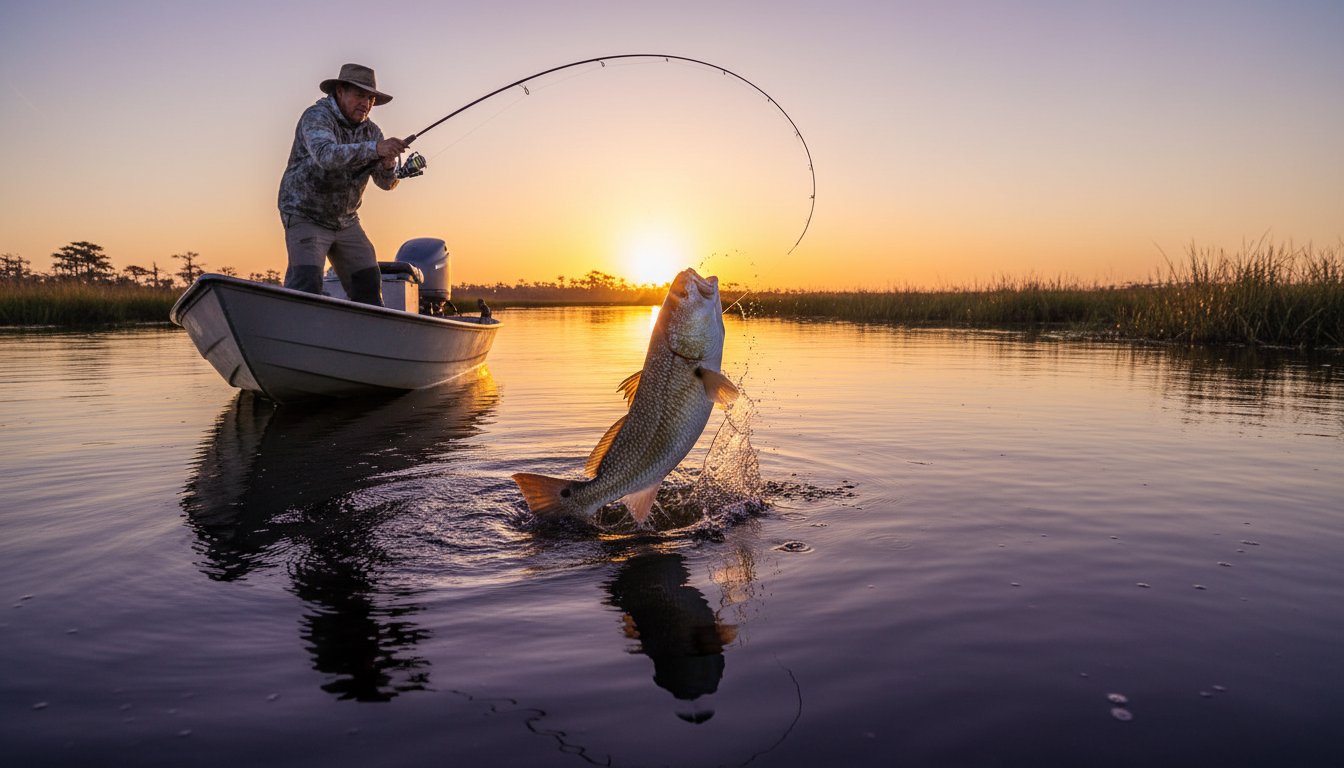
A redfish doesn’t come to the boat quietly. These powerful fish are famous for their bulldog-like fights, stripping drag and putting a deep bend in the rod. Our action shots capture the peak of this thrilling battle-the splash, the strain, and the pure excitement. The intensity of the fight provides an epic photo opportunity, freezing a moment of pure adrenaline in time. It’s the thrill you came for, captured forever.

Anatomy of a Redfish: What You’re Seeing in the Pictures

Once you’ve seen a few pictures of redfish fish, you start to notice they’re more than just a pretty catch-they’re perfectly engineered inshore predators. Every feature, from their color to their shape, tells a story about where they live and how they hunt. This guide will break down what you’re seeing, turning a simple photo into a deeper appreciation for this incredible game fish. For a more scientific look, the Florida Museum offers a fantastic deep dive into the Anatomy of the red drum, but we’ll cover the key features every angler should know to truly appreciate their next catch.

The Telltale Spot: A Redfish’s Signature

That single black spot near the tail is the redfish’s calling card. The most common theory is that this “eyespot” acts as a brilliant decoy, tricking predators like dolphins into striking the less-vital tail instead of the head, giving the redfish a critical chance to escape. While one spot is standard, finding a redfish with multiple spots is a special treat-some have been caught with dozens, making for an unforgettable photo and a true trophy catch!


Bronze Armor: Understanding Their Coloration

A redfish’s stunning color isn’t just for show; it’s master-class camouflage. Their backs range from a deep, coppery bronze to a pale, sandy gold, and this variation depends entirely on their environment. A redfish living in the dark, tannin-stained waters of the backwater marshes will have a much deeper, darker hue to blend in. In contrast, a redfish cruising the clear, sandy flats near the Gulf will be lighter and more silvery to match the bright bottom.

Powerful Build: Designed for the Inshore Battle

There’s a reason redfish fight so hard-they’re built for it. You’ll notice in any good photo their broad shoulders and thick, muscular body that tapers to a wide, powerful tail. This torpedo-like shape gives them explosive speed and incredible strength for chasing down prey and putting up an epic fight on the line. Look closely at their head, and you’ll see a downward-facing mouth, perfectly designed for rooting around the bottom to crush their favorite meals: crabs, shrimp, and baitfish.

A Visual Guide to Size: From Puppy Drum to Giant Bulls

Redfish aren’t a one-size-fits-all species. From feisty juveniles to monster-sized breeders, each stage of their life offers a completely different kind of thrill on the water. Anglers have nicknames for each size, and understanding them is key to appreciating the epic adventure of redfishing in South Louisiana. These pictures of redfish fish will show you exactly what to look for at every stage, from the first bite to the trophy catch of a lifetime.

Puppy Drum: The Future Fighters

These are the young guns of the redfish world! Typically measuring under 16 inches, “Puppy Drum” are juvenile redfish that are full of fight. You’ll often find them hunting in aggressive schools in the shallow backwaters and marshes, making for fast-paced, action-packed fishing. Catching these future fighters on light tackle is an absolute blast and a perfect way to introduce anyone to the sport. Understanding the different Redfish growth stages is part of becoming a seasoned angler, and it all starts here with these energetic fish.

[Image of a small, vibrant redfish being held by an angler using light spinning tackle.]

Slot Reds: The Perfect Keeper

When you hear anglers talking about a “keeper,” they’re talking about a “Slot Red.” In Louisiana, the protective slot limit is between 16 and 27 inches. This regulation is a cornerstone of conservation, ensuring that juvenile fish can grow and the giant breeders are released to spawn. These are the fish we target most on our inshore charters-they’re strong, plentiful, and the perfect size for a fantastic meal. Hooking into a hard-pulling slot red in the marsh is the classic Louisiana fishing experience.

[Photo of a smiling angler holding a healthy, 24-inch slot redfish with a marshy shoreline in the background.]

Bull Reds: Chasing a Louisiana Legend

This is what legends are made of. A “Bull Red” is a giant, mature redfish measuring over 27 inches, with some reaching an incredible 40-50 inches. These are the breeding stock of the Gulf, found patrolling coastal waters and deep channels. The fight is an entirely different game-a brutal, drag-screaming battle of will. I remember one client battling a 45-inch monster for nearly 20 minutes, the rod bent double and pure adrenaline on his face. That’s the moment that gets you hooked for life. These impressive pictures of redfish fish only hint at the raw power you’ll feel on the line.

[Impressive photo of a massive, bronze-colored Bull Red being carefully held by a proud angler before release.]

Landing one of these giants is the ultimate prize for any inshore angler. They are a true test of skill and tackle, and releasing one back into the water is an unforgettable moment.

Ready to chase your own Bull Red? Let’s go!

How to Take Great Pictures of Your Redfish Catch

After an epic battle with a Louisiana bull red, you’ll want a photo to prove it. As a 3rd generation guide, Captain Troy has helped countless anglers capture the perfect shot to memorialize their trip. Follow these pro tips to get a picture that does your catch justice and freezes that thrilling moment forever. A trip with us isn’t just about the catch; it’s about creating memories that last a lifetime.

Tip 1: Safety and Handling First

Before you even think about the camera, think about the fish. A healthy release ensures these incredible fighters are here for generations to come. Always handle your redfish with wet hands to protect its natural slime coat, which acts as its immune system. Support the fish’s full body horizontally-one hand under its belly and the other firmly gripping the base of its tail. This minimizes stress and prevents injury to its jaw and organs.

[Image: Angler demonstrating the proper two-hand hold to support a redfish’s weight horizontally.]

Tip 2: Mind the Sun and Background

The Louisiana marsh is one of the most beautiful backdrops in the world-use it! For the best lighting, position the photographer with the sun at their back. This fully illuminates you and the vibrant, bronze colors of the redfish, making every scale and that famous spot pop. Avoid shooting into the sun, which creates dark, shadowy pictures of redfish fish where all the amazing details are lost.

[Good Example Image: A well-lit photo with the sun behind the photographer, showcasing the fish’s colors and the marsh background.]

[Bad Example Image: A backlit, shadowed photo where the angler and fish are hard to see.]

Tip 3: Get Low and Capture the Action

Want to make that redfish look like the giant it truly is? Get low! Have your photographer crouch down and shoot from a slightly upward angle. This classic “hero shot” perspective makes the fish look more impressive and highlights you as the victorious angler. Some of the best photos capture the raw emotion right after the land-the smile, the water dripping, and the pure thrill of the moment.

[Image: A dynamic, low-angle shot of an angler holding a large redfish, making it look powerful against the sky.]

Of course, the first step to getting an incredible photo is having a trophy fish on the line. On a trip with South Louisiana Redfishing, we’ll put you on the fish that create those epic moments. You focus on the fight; we’ll help you get the shot. Your adventure awaits!

Your Turn: Get in the Picture with a Louisiana Redfish

You’ve seen the bronze scales, the iconic tail spot, and the powerful build. You’ve studied the features that make these fish legendary. But looking at pictures of redfish fish is one thing-battling one on the end of your line is an entirely different thrill. Now, it’s time to stop scrolling and start casting. It’s your turn to get in the picture and create a memory that will last a lifetime.

The smiles in these photos tell the real story. It’s the story of a drag-screaming fight, a triumphant moment, and an epic adventure in the heart of Cajun country. That feeling is waiting for you right here in Vermilion Bay.

An Epic Adventure for Everyone

This isn’t an experience reserved for the pros. We welcome anglers of all ages and skill levels to climb aboard. From family trips where kids can catch their first-ever fish to groups of friends chasing giant bull reds, we create the perfect day on the water. Don’t have gear? Don’t worry. Captain Troy provides everything you need-top-of-the-line rods, reels, tackle, and over 25 years of expertise to put you on the fish. He’s got you covered!

A family beams with excitement, holding up a massive redfish together. This is more than a fishing trip; it’s a core memory in the making.

More Than Just Redfish

While the mighty redfish is the star of the show, the fertile waters of Vermilion Bay are teeming with other prized species. On your trip, you’ll have the chance to battle hard-fighting speckled trout, ambush tasty flounder, and tangle with powerful black drum. This world-class fishery offers incredible variety, ensuring a dynamic and exciting day on the water. Every cast holds the promise of a new challenge and another great photo for your collection.

An angler proudly displays a beautiful speckled trout, showcasing the incredible diversity of the Louisiana marsh.

Book the Trip, Create the Memory

You’ve seen the proof. You’ve felt the spark of adventure. The endless bayous and saltwater marshes of South Louisiana are calling your name. Stop looking at pictures of other people’s triumphs and start planning your own. The thrill of the catch and the pride of that perfect photo are just one click away.

Your epic fishing photo is waiting. Book Your Charter Today!

We’ve taken you on a visual journey through the legendary waters of Vermilion Bay, showcasing the raw power and stunning beauty of Louisiana redfish. You’ve seen the anatomy of these bronze bruisers, learned how to distinguish a puppy drum from a giant bull, and picked up pro tips for capturing that perfect trophy shot. But staring at incredible pictures of redfish fish can only satisfy the craving for so long.

Every photo in this gallery is a real moment from a real trip with Captain Troy Nash. As a 3rd generation, veteran guide with over 25 years of experience, he doesn’t just know these waters; they’re part of his legacy. He’s got you covered. It’s time to stop scrolling through someone else’s memories and start making your own.

The thrill of the fight is waiting. The endless bayous are calling. Stop dreaming and start fishing! Book your epic redfish adventure today!

Frequently Asked Questions About Redfish

What is the spot on a redfish’s tail for?

That iconic spot is a brilliant piece of natural defense. It acts as a “false eye” to confuse predators like dolphins or sharks. A predator aiming for the spot on the tail will miss the fish’s actual head, giving the redfish a critical split-second to escape the attack. It’s a clever survival trick that helps these powerful fish dominate the inshore waters and live to fight another day on the end of your line!

Do all redfish have spots?

While the tail spot is their most famous feature, the number can vary wildly. The vast majority of redfish have at least one spot, but it’s not a 100% guarantee. We’ve seen fish with dozens of spots and, on very rare occasions, some with none at all! This variety is part of what makes them so cool, creating some truly unique pictures of redfish fish where no two look exactly alike.

How can you tell the difference between a redfish and a black drum?

It’s an easy mistake for new anglers! The quickest way to tell is to check the chin-black drum have whisker-like barbels on their lower jaw for bottom feeding, while redfish have a clean, smooth chin. Redfish also have that signature spot (or spots) at the base of their tail, which black drum lack. A black drum’s stripes are vertical and fade with age, but that tail spot is a dead giveaway for a red.

What is the biggest redfish ever caught on a charter with you?

We’ve had some epic battles on our boat, but the one that stands out is a monster 48-inch bull red we landed near South Marsh Island. That giant tipped the scales at over 45 pounds! It was an absolute thrill and the fight of a lifetime for the client. That’s the kind of world-class fishing Louisiana is famous for, and we get to chase giants like that every season. He’s still out there waiting!

What’s the best time of year to get pictures of giant bull reds?

If you want epic pictures of redfish fish showing off a true giant, the fall and winter months are your ticket. From October through January, the massive bull reds push into the shallow marshes to feed, giving us our best shot at hooking a true monster. The cooler weather fires up the bite, and the fish are at their heaviest. It’s the absolute best time for that photo-worthy catch you’ll be talking about for years to come.

Do redfish change color?

Absolutely! A redfish’s color is a direct reflection of its environment. Fish living in clear, grassy waters will have a stunning, deep coppery-bronze color to blend in with the vegetation. In contrast, redfish from murkier, muddy-bottomed bays and bayous will often be much paler, sometimes almost silver. This camouflage helps them ambush prey and avoid becoming a meal themselves. It’s amazing how they adapt to their surroundings.
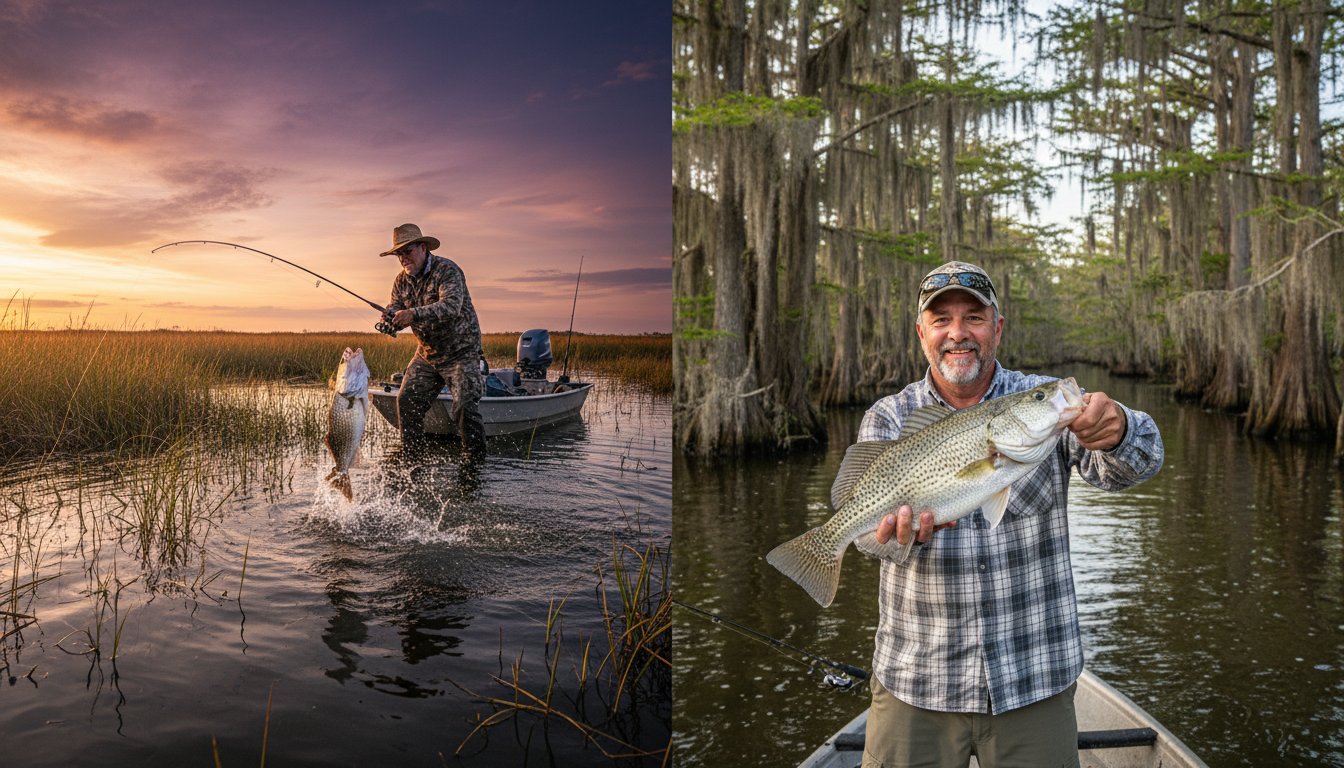
Louisiana Fishing License Requirements: A Simple Guide for 2026

The thrill of a giant bull red pulling drag, the endless Louisiana bayous waiting to be explored-your epic fishing adventure is calling. But nothing stops the excitement faster than trying to decipher complicated regulations. Are you a resident or non-resident? Do you need a special saltwater permit for your charter trip? The fear of getting the wrong permit and facing a hefty fine can turn trip planning into a headache. We’re here to cut through that confusion and give you total confidence in the 2026 louisiana fishing license requirements.

This simple guide is your shortcut to getting it right. Forget the government jargon. We’ll break down exactly who needs a license, which specific type to buy for your trip, and what it’s going to cost. Consider this your fast pass to legal fishing, so you can spend less time on paperwork and more time dreaming about the fight. Let’s get you licensed and ready for the water. We’ve got you covered!

Key Takeaways

  • Most anglers over 18, both residents and visitors, need a license to fish legally in Louisiana’s legendary waters.
  • Choosing the right license is crucial-discover the key difference between saltwater and freshwater permits to avoid costly mistakes.
  • Our guide breaks down the 2025 louisiana fishing license requirements, including specific costs and a clear list of who can fish for free.
  • Stay legal and fish with confidence by learning the simple rules for carrying your license and avoiding common penalties on the water.

Who Needs a Louisiana Fishing License? The Basics Explained

Ready to experience the thrill of battling giant redfish in the endless banks and bayous of Louisiana? Before your epic adventure begins, it’s crucial to understand the state’s fishing license rules. Let’s cut to the chase: if you’re an angler who is 18 years of age or older, you absolutely need a valid fishing license to cast a line in Louisiana’s legendary waters. This applies to everyone, whether you’re a lifelong resident or a visitor chasing the catch of a lifetime.

These permits are far more than just a piece of paper. The fees collected from license sales are a vital investment in the state’s conservation efforts, directly funding the management and protection of the incredible fisheries we all enjoy. If you’re new to the concept, this overview of What is a fishing license? provides excellent background. Understanding the basic louisiana fishing license requirements is the first step to a successful and legal fishing trip.

Requirements for Louisiana Residents

To qualify for a resident fishing license, the Louisiana Department of Wildlife and Fisheries (LDWF) defines a “resident” as any person who has resided in the state continuously for the six months immediately prior to applying. You’ll need to provide proof of your residency. The most common documents include:

  • A valid Louisiana driver’s license issued at least six months prior
  • A Louisiana-issued state ID card
  • Louisiana voter registration or vehicle registration

As a resident, you’ll benefit from lower license fees and a wider variety of license types, including special combination licenses for both hunting and fishing.

Requirements for Non-Residents and Visitors

Visiting the Sportsman’s Paradise for an unforgettable fishing trip? We’re glad to have you! The rule is simple: all out-of-state anglers aged 18 and older must purchase a non-resident fishing license. These licenses are specifically designed for tourists and short-term visitors, with options tailored to your trip’s length. For example, if you’re booking a guided charter trip, the 3-Day Charter Passenger License is a perfect, hassle-free choice. While the costs are higher for non-residents-a standard practice across most states-your purchase directly supports the world-class fishery you’ve traveled to experience.

Types of Recreational Fishing Licenses (And Which One You Need)

Navigating the Louisiana fishing license requirements can seem tricky, but it’s actually straightforward once you know where you’ll be casting your line. The most important question to answer is: saltwater or freshwater? From there, choosing the right license is easy, getting you one step closer to battling a giant bull red.

Let’s break down your options to find the perfect fit for your epic adventure.

Basic Freshwater & Saltwater Licenses

The foundation of any fishing trip starts with the Basic Fishing License. This license is mandatory for any angler and covers you for all freshwater fishing in Louisiana’s legendary bayous, lakes, and rivers. However, if you plan to chase the incredible species our coastal marshes are famous for, you’ll need more. For targeting Redfish, Speckled Trout, Flounder, and more in coastal areas, you must purchase the Saltwater License as an add-on to your Basic Fishing License. You absolutely need both to fish in saltwater.

Crucially, if your trip is in Vermilion Bay or the surrounding marshes, a saltwater license is mandatory. The Louisiana Department of Wildlife and Fisheries offers a complete, official list of all Louisiana recreational fishing licenses and their current costs, so you can confirm every detail before you go.

Charter Passenger License: The Easiest Option for Guided Trips

Want to skip the guesswork? For anglers joining a guided trip, there’s a much simpler solution. The 3-Day Charter Passenger License is designed specifically for guests fishing with a state-licensed charter captain. It’s the most convenient and popular choice for visitors because it covers you for three consecutive days in both freshwater and saltwater areas. No add-ons, no confusion-just one license and you’re ready for action. On our trips, this is the license we recommend for all our guests. Book Your Epic Adventure!

Other Special Permits to Know

While the basic and charter licenses cover most anglers, a few other permits exist for specific situations. If you plan on heading offshore to target species like red snapper, tuna, or swordfish, you will also need a Recreational Offshore Landing Permit (ROLP), which is free but mandatory. Additionally, separate licenses are required for activities like crabbing or using specific gear like crawfish traps, so be sure to check the regulations if those are part of your plan.

Key Exemptions: Who Doesn’t Need a Fishing License?

Ready to hit the water but not sure if you need to buy a license first? You’re in the right place! While the louisiana fishing license requirements apply to most anglers chasing giant bull reds and speckled trout, the state has established several key exemptions. Understanding these exceptions ensures you’re always compliant, letting you focus on the thrill of the catch.

However, remember this crucial rule: even if you are exempt from needing a license, you must still abide by all state fishing regulations, including size restrictions, daily creel limits, and seasonal closures. It’s also a smart move to carry identification or proof of your exemption status with you at all times.

Here’s a quick-glance list of who can fish in Louisiana without purchasing a basic fishing license:

  • Anglers (resident and non-resident) under the age of 18.
  • Louisiana residents who were born before June 1, 1940.

Age-Based Exemptions

Louisiana makes it easy for the youngest and oldest anglers to enjoy its legendary fisheries. If you are under 18 years of age, you can fish in both fresh and saltwater without a license. Likewise, Louisiana residents born before June 1, 1940, are also exempt. For both groups, you must carry proof of your age, such as a driver’s license, birth certificate, or other valid state-issued ID, while you are fishing.

Military and Disability Exemptions

Louisiana proudly honors its service members and provides accommodations for anglers with disabilities. While not a full exemption, any resident who is active-duty military and currently on leave is required to have a free active-duty military license. Disabled veterans with a VA disability rating of 50% or more are also exempt from purchasing a basic and saltwater fishing license. To navigate the specific louisiana fishing license requirements for military, disabled veterans, and residents with other permanent disabilities, the Louisiana Department of Wildlife and Fisheries provides all the necessary applications and details on required proof. Be sure to have your documentation in order before your trip to ensure your adventure goes off without a hitch.

Louisiana Fishing License Costs & Validity

Getting your license is the final step before your epic adventure begins! Louisiana makes it easy and affordable to get legal, so you can focus on the thrill of the catch. Understanding the costs is a key part of the louisiana fishing license requirements. One crucial detail for annual licenses is their validity period: they run from the date of purchase until June 30th of the following year, offering over 12 months of fishing if you buy early in the season!

Let’s break down the most common options to get you on the water fast.

Please note: The prices listed below are for the 2025 season and are subject to change. A small processing fee may also apply. Always verify current pricing on the official Louisiana Department of Wildlife & Fisheries (LDWF) website before purchasing.

Resident License Fees (2025)

For Louisiana locals, gearing up for a year of world-class fishing is incredibly affordable. The basic license is your starting point, and you’ll need the saltwater add-on to chase those legendary redfish and speckled trout along the coast.

  • Basic Fishing License: $17.00
  • Saltwater License (add-on): $15.00
  • Resident Senior Hunt/Fish (65+): $5.00

Non-Resident License Fees (2025)

Visiting the Sportsman’s Paradise for a guided trip? Louisiana has you covered with flexible short-term options. The absolute best value for anyone booking a charter is the 3-Day Charter Passenger License. It’s designed specifically for you!

  • 1-Day Basic Non-Resident: $20.00
  • 5-Day Basic Non-Resident: $40.00
  • 3-Day Charter Passenger License: $30.00

This 3-day pass is your golden ticket! It covers both basic and saltwater privileges for three consecutive days when fishing with a licensed guide, simplifying the louisiana fishing license requirements so you can climb aboard and get straight to the action. With your license secured, you’re ready to experience the unforgettable thrill of battling giant bull reds in the marshes of Vermilion Bay.

You’ve got the gear, the boat is gassed up, and you’re ready for an epic day chasing giant redfish. The final piece of the puzzle is ensuring your trip is stress-free and completely legal. Understanding the rules isn’t just about avoiding a ticket-it’s about respecting the incredible natural resources that make Louisiana a world-class fishing destination. Here’s how to stay on the right side of the law.

Why You Must Carry Your License

Think of your fishing license as your passport to the water. The Louisiana Department of Wildlife and Fisheries (LDWF) requires all anglers to have their license on them at all times while fishing. Whether it’s a physical card in your wallet, a printed copy, or a digital version saved on your phone, you must be able to present it immediately upon request. LDWF agents regularly patrol the bayous and coastal waters, and having your license ready proves you’re a responsible angler contributing to the conservation that keeps our fisheries thriving.

Penalties for Non-Compliance

Getting caught without a valid license is the fastest way to ruin a perfect fishing trip. The consequences aren’t worth the risk. Penalties for fishing without a license in Louisiana typically start with fines that can range from $50 to several hundred dollars, plus court costs. The fines can increase significantly for repeat offenses or for more serious violations, like keeping over-the-limit or out-of-season fish. Don’t let a preventable mistake turn your thrilling adventure into a costly headache.

Common Pitfalls to Avoid

Navigating the full scope of louisiana fishing license requirements can be tricky, and a few common mistakes catch even experienced anglers off guard. Keep these in mind to ensure you’re always covered:

  • The Saltwater vs. Freshwater Mix-Up: One of the most frequent errors is buying a basic freshwater license for a trip into the coastal marshes. If you plan to target redfish, speckled trout, or flounder, you absolutely need a saltwater license.
  • Forgetting to Renew: Louisiana fishing licenses expire annually on June 30th. It’s easy to forget, so make a habit of checking the expiration date on your license before your first trip of the summer.
  • Youth Permit Oversights: While anglers under 18 don’t need a basic license, don’t assume they are exempt from everything. If they plan to keep certain species like red drum, they are still required to have a free Recreational Offshore Landing Permit (ROLP).

The easiest way to avoid mistakes and focus purely on the thrill of the catch? Fish with a pro who knows the rules! A veteran guide handles all the details, ensuring your adventure is all about making memories, not worrying about regulations.

Get Your License, Get Ready for an Epic Adventure

Understanding the louisiana fishing license requirements is the first critical step to a stress-free fishing trip. By confirming who needs a license and choosing the right one for your saltwater or freshwater plans, you ensure you’re fully compliant and ready to hit the water. With the rules and regulations handled, your focus can shift from paperwork to the pure thrill of the catch.

Now, the real adventure begins. Why not make it unforgettable? Target giant Redfish in the legendary Vermilion Bay with a 3rd generation, full-time veteran guide who provides all the rods, reels, and tackle you’ll need. Your only job is to experience the fight. Got your license sorted? It’s time to book your epic South Louisiana fishing adventure!

The bull reds are waiting. We’ll see you on the water!

Frequently Asked Questions About Louisiana Fishing Licenses

Do I need a fishing license if I’m on a guided charter trip?

Yes, you do! Every angler 18 or older needs a license, even on a charter. Louisiana makes this simple with a special 3-Day Charter Passenger License, perfect for visitors. This license covers you for both saltwater and freshwater fishing from a charter vessel for three consecutive days. It’s designed to get you on the water quickly so your epic adventure can begin without any hassle. We’ve got you covered!

Does my child under 18 need a Louisiana fishing license?

Great news for young anglers! In Louisiana, anyone under the age of 18 is not required to have a basic or saltwater fishing license. This makes it incredibly easy to bring the whole family along for a thrilling day of fishing in the bayous and marshes. Once an angler turns 18, they will need to purchase the appropriate licenses before their trip. It’s the perfect way to get the next generation hooked on the sport!

What is the difference between the Charter Passenger license and a regular non-resident license?

The 3-Day Charter Passenger License is specifically for anglers fishing with a licensed guide. It’s a convenient, all-in-one, short-term option. A regular non-resident license, however, is for those fishing on their own and offers various durations, from a single day up to a full year. The charter license simplifies the process for visiting anglers, meeting all the basic louisiana fishing license requirements so you can focus on landing that trophy redfish!

How quickly can I use my license after purchasing it online?

Instantly! When you buy your license online from the Louisiana Department of Wildlife and Fisheries, you receive a temporary authorization number and a digital copy right away. You can save it to your phone and hit the water immediately-no waiting required. This means you can decide to go fishing today and have your license in hand in just a few minutes. Your adventure begins the moment you’re ready to cast a line!

Do I need a license if I am only doing ‘catch and release’ fishing?

Yes, absolutely. A Louisiana fishing license is required for the act of attempting to catch fish, regardless of whether you plan to keep your catch or release it. The funds from license sales go directly toward conservation, habitat management, and stocking programs that keep our world-class fisheries healthy. So even if you’re just in it for the thrill of the fight, you’re helping to protect this incredible resource for the future.

Can I buy a Louisiana fishing license in person?

You sure can! While buying online is fast, you can also purchase your license in person from a wide variety of vendors across the state. Most sporting goods stores, local tackle shops, and even some major retail chains are authorized license vendors. This is a great option if you have questions or prefer a physical, waterproof copy. Just be sure to bring a valid form of identification with you when you go.

What happens if I lose my fishing license?

Don’t let a lost license put a damper on your trip! Replacing it is simple. You can easily get a duplicate by logging into your account on the Louisiana Department of Wildlife and Fisheries website where you made the original purchase. You can reprint it right there. If you bought it in person, you can visit any license vendor to have them issue a duplicate for a small fee. We want you on the water, not worrying about paperwork!

Louisiana’s Two State Fish: A Complete Angler’s Guide

Ask any angler in the Sportsman’s Paradise what the official state fish is, and you might get two different answers. And here’s the secret: they’re both right. Louisiana is a state so rich in fishing heritage that it couldn’t settle for just one champion. It proudly honors two incredible species as the official louisiana state fish—one for its legendary freshwater bayous and another for its bountiful saltwater marshes. This dual designation often leaves anglers searching for the full story, but don’t worry. We’ve got you covered.

Get ready for an epic deep dive. This isn’t just a trivia answer; it’s your complete angler’s guide to the White Crappie and the hard-fighting Speckled Trout. We’re revealing the history behind their selection, the best spots to find them, and the pro techniques you need to experience the thrill of the catch. By the time you’re done, you’ll not only know the story behind these iconic fish but have the confidence to target them on your next adventure.

Key Takeaways

  • Louisiana is unique in honoring both a freshwater (White Crappie) and saltwater (Speckled Trout) champion, giving anglers twice the opportunity for an epic adventure.
  • Learn the key physical differences to confidently distinguish the White Crappie, or ‘Sac-à-lait,’ from its look-alike cousin, the Black Crappie.
  • Discover the pro tactics for targeting legendary Speckled Trout and experience the thrill of landing a true “gator” trout in the coastal marshes.
  • Get a complete angler’s playbook with proven strategies and current regulations for catching both official Louisiana state fish.

Louisiana’s Unique Honor: Two State Fish for an Angler’s Paradise

When it comes to legendary fishing, Louisiana doesn’t just meet expectations—it shatters them. Most states honor a single fish, but the Pelican State doubles down, celebrating two distinct species that define its epic angling culture. This unique distinction isn’t just for show; it’s a powerful symbol of Louisiana’s incredible ecological diversity, from the cypress-choked bayous of the heartland to the endless saltwater marshes of the Gulf Coast. For any serious angler, this means one thing: double the adventure.

These two champions represent the very soul of fishing in this sportsman’s paradise. One is a freshwater phantom prized for its delicate flavor, while the other is a coastal brawler famous for its explosive fight. Let’s meet the official symbols of Louisiana’s world-class fisheries.

The Freshwater Champion: White Crappie (Pomoxis annularis)

Deep in Louisiana’s tranquil inland waters lives the first of its celebrated fish. Designated in 1993, as confirmed on the official List of U.S. state fish, the White Crappie is a true freshwater icon. Known affectionately by locals as “White Perch” or the Cajun French “Sac-à-lait” (sack of milk), this fish is a beloved target for its delicious white meat. It perfectly embodies the spirit of the state’s countless lakes, rivers, and slow-moving bayous, offering a classic and rewarding fishing experience.

The Coastal King: Speckled Trout (Cynoscion nebulosus)

Representing the state’s saltwater supremacy, the Speckled Trout was officially named the state saltwater fish in 2001. This is no passive catch. Known for its aggressive strikes and hard-fighting nature, the “Speck” is the ultimate inshore prize for anglers stalking the coastal marshes and barrier islands. Landing a trophy Speckled Trout is a rite of passage, a thrilling battle that represents the wild, untamed energy of Louisiana’s world-renowned Gulf fishery.

Together, these two species tell the complete story of angling in the Bayou State. Understanding the official Louisiana state fish is your first step toward planning an unforgettable trip. Whether you’re chasing Sac-à-lait in a hidden bayou or battling trophy Specks in the marsh, your epic adventure starts here.

Meet the Freshwater Icon: The White Crappie (Sac-à-lait)

Get ready to chase a true Louisiana legend. Known locally as the Sac-à-lait, the White Crappie is more than just a popular panfish—it’s an icon of our inland waters and one half of the official louisiana state fish designation. Prized for its delicate white meat and its willingness to put up an epic fight on light tackle, this fish offers a thrilling experience for anglers of all skill levels. Mastering the art of catching Sac-à-lait means understanding exactly what you’re looking for and where to find it.

Identification and Appearance

Don’t get the White Crappie confused with its cousin, the Black Crappie. While they look similar, the key differences are your ticket to a positive ID. The White Crappie boasts a beautiful, silvery-white body marked with 5-10 faint, dark vertical bars. The most definitive tell? Count the sharp spines on the dorsal fin. A White Crappie will always have 5 or 6 spines, whereas a Black Crappie has 7 or 8. Most anglers in Louisiana can expect to reel in fish ranging from 10 to 12 inches, but don’t be surprised to find trophy-sized “slabs” pushing well over two pounds.

Habitat and Behavior

White Crappie are masters of ambush, preferring to hide near submerged structures where they can surprise their prey. Your prime targets should be areas with:

  • Submerged timber and fallen trees
  • Man-made brush piles
  • Bridge pilings and dock structures
  • Edges of dense vegetation

One of their greatest advantages in Louisiana is their tolerance for murky or turbid water. This resilience is a major reason why the White Crappie thrives in our diverse waterways and was designated as Louisiana’s freshwater state fish, a title it proudly represents. Their behavior is driven by the seasons; in the spring, they famously move into shallow waters to spawn, making them highly accessible. As ambush predators, they feed primarily on small minnows and insects, so matching your bait to their diet is a surefire path to success.

Get to Know the Saltwater Legend: The Speckled Trout

While the Largemouth Bass holds the freshwater title, the Speckled Trout, or ‘Speck,’ reigns supreme in our coastal waters. Officially designated as the saltwater louisiana state fish, this aggressive, hard-fighting predator is the prize many anglers dream of. There’s nothing quite like the explosive strike of a big trout, and the thrill of landing a monster ‘gator’—a fish topping five pounds—is an experience that defines Louisiana inshore fishing. But the Speck is more than just a trophy; it’s a vital indicator of the health of our entire coastal ecosystem.

Identification and Appearance

You’ll know a Speck when you see one. They have a sleek, elongated, silvery body, often with a golden or purple sheen along their back. Their most defining feature is the scattering of prominent black spots across their back, dorsal fin, and tail. Look inside their mouth, and you’ll find a pair of distinctive, sharp canine-like teeth in the upper jaw, built for ambushing prey. While a keeper-sized trout is a great catch, the true legends are the ‘gator’ trout that push the scales past five pounds and beyond.

Habitat and Behavior in Louisiana’s Marshes

Speckled Trout are masters of the inshore environment. You’ll find them ambushing prey along shallow bays, oyster reefs, and submerged grassy flats where they can find cover and food. As top-tier predators in the marsh, their diet consists mainly of shrimp, mullet, and other small baitfish, a fact explored in this detailed Spotted Seatrout profile from the Florida Museum. Their behavior is tied to the seasons; they move into deeper channels during the cold of winter and patrol the shallow flats in the warmth of spring and summer. This deep connection between the health of our marshes and the abundance of this incredible louisiana state fish cannot be overstated—thriving estuaries create trophy trout.

Why Vermilion Bay is a Speckled Trout Hotspot

Here on our home turf, Vermilion Bay offers the perfect recipe for a world-class Speckled Trout fishery. The bay’s unique ecosystem provides an ideal mix of salinity from the Gulf of Mexico and freshwater from the Atchafalaya Basin. This, combined with endless oyster reefs, sand flats, and marshy shorelines, creates a five-star hotel for baitfish—and the giant trout that hunt them. It’s the perfect storm for growing true gators. Ready for an epic adventure? Let’s go find some gator trout!

Angler’s Playbook: How to Target Louisiana’s State Fish

Knowing the facts is one thing, but the real thrill comes from the chase. It’s time to move from the books to the bayous and bays. This is your playbook for turning knowledge into action, breaking down the pro-level strategies you need to successfully target each official louisiana state fish. Whether you’re stalking freshwater structure or hunting giants in the salt marsh, your epic adventure starts now.

Techniques for Catching White Crappie

Locals call them “sac-a-lait,” and catching a limit is a Louisiana tradition. Success isn’t about luck; it’s about location and presentation. Modern electronics are a game-changer for finding the submerged brush piles and laydowns where these fish school up. Once you’ve marked the spot, the fun begins.

  • Best Baits: You can’t go wrong with the classics. A live shiner hooked under a slip cork is deadly, but don’t overlook small jigs (1/32 to 1/16 oz) in white, chartreuse, or pink.
  • Gear Setup: Light to ultra-light spinning tackle with 4-6 lb test line gives you the sensitivity to feel the slightest bite and makes for an incredible fight.

A Captain’s Guide to Catching Speckled Trout

Out on the coast, the Speckled Trout is the prize. These aggressive predators are a blast to catch, and finding them means reading the water like an expert. Look for signs of life: nervous baitfish on the surface, diving birds, or shimmering slicks that indicate feeding activity below. The best action is almost always during the low-light hours of early morning and late evening when the biggest trout are on the prowl.

  • Top Lures: For heart-stopping action, throw a topwater plug like a MirrOlure She Dog. Otherwise, versatile soft plastics on a jig head or a suspending bait like a Corky Fat Boy are proven winners.
  • Live Bait Tactics: Nothing gets a big trout’s attention faster than a live shrimp fished under a popping cork. The sound mimics other feeding fish, creating a dinner bell that draws trout in from a distance.

Mastering these techniques will put you on the path to limiting out on these saltwater trophies. If you’re ready to experience the thrill of a full-scale coastal assault, booking an epic adventure with a seasoned guide is your ticket to the action. Captain Troy has you covered!

Records, Regulations, and Fishing with Respect

Chasing a record is the ultimate thrill, but every epic adventure on Louisiana’s waters comes with a responsibility to the resource. Landing a giant is about more than just luck; it’s about preparation, skill, and a deep respect for the fishery. Here’s what you need to know to fish legally, responsibly, and maybe even land a fish for the ages.

Louisiana State Fishing Records

The stories of record-breaking catches are legendary in Louisiana. These are the giants that inspire us to make one more cast. The benchmark for the Speckled Trout is a monster that has stood the test of time: a 12.38-pound behemoth caught by Leon Mattes way back in 1950. For freshwater anglers, the top-tier White Crappie, or “sac-a-lait,” is a more recent 3.80-pound slab pulled from Poverty Point Reservoir in 2017 by Lettie Robertson. Think you have what it takes to put your name in the books?

Know Before You Go: Limits and Licensing

A successful trip starts before you even leave the dock. Knowing the current regulations is crucial for protecting our world-class fisheries for future generations. While these are the general statewide limits, remember that rules can change seasonally and vary by location.

  • Speckled Trout: The current statewide daily limit is 15 fish per person, with a minimum size of 12 inches total length.
  • White Crappie (Sac-a-lait): The statewide daily limit is a generous 50 fish per person, with no statewide minimum length on most bodies of water.

Always confirm the latest rules before you launch. Get your license and the most up-to-date regulations directly from the Louisiana Department of Wildlife and Fisheries. They’ve got you covered!

Fishing with respect ensures that the thrill of targeting either louisiana state fish remains for decades to come. By practicing catch and release with trophy fish and keeping only what you need, you become a steward of these incredible waters. Ready to create your own legendary story with an expert guide who respects the resource? Book your epic adventure today and experience the best of Louisiana fishing.

Your Louisiana State Fish Adventure Starts Now

Louisiana stands alone as an angler’s paradise, uniquely honoring both a freshwater and saltwater champion. From the elusive White Crappie in the cypress-studded bayous to the hard-fighting Speckled Trout patrolling the coastal marshes, each official louisiana state fish offers a distinct and thrilling challenge. Mastering the techniques for each and respecting the regulations ensures that these incredible fishing traditions continue for generations to come, providing unforgettable action for all who cast a line in these bountiful waters.

While the Sac-à-lait offers freshwater fun, the thrill of battling a trophy Speckled Trout is an epic adventure you’ll never forget. Stop dreaming and start fishing! Climb aboard with a 3rd generation, full-time veteran captain who targets trophy Speckled Trout in the legendary Vermilion Bay. Everything you need for a successful trip is provided—all you have to do is show up ready for a fight.

Experience the thrill of catching Louisiana’s state saltwater fish! Book your epic adventure today!

The water is calling, and a legendary catch has your name on it.

Frequently Asked Questions About Louisiana’s State Fish

Are Speckled Trout actually a type of trout?

Don’t let the name fool you! Speckled Trout are not related to freshwater trout at all. They are actually saltwater members of the drum family, which also includes other Louisiana legends like Redfish and Black Drum. This is why you’ll find them crushing baits in the same coastal marshes and bayous. Their name comes from their trout-like body shape and distinct black spots, but their fight is pure saltwater muscle.

What is the best time of year to fish for Speckled Trout in Louisiana?

For an epic adventure, plan your trip for the spring or fall. The action is incredible from April through June as big “gator” trout move into the shallow marshes to spawn. The bite fires up again from September through November when they feed aggressively before winter. While you can find them year-round, these peak seasons give you the best shot at limiting out on some true trophy fish.

What does ‘Sac-à-lait’ mean and why is it called that?

This name is pure Louisiana heritage! “Sac-à-lait” is French for “sack of milk,” a name given to the White Crappie by the state’s early French settlers. It’s a perfect description of the fish’s pearly white, sweet, and incredibly delicious flesh. It’s a testament to how prized this fish has been on the dinner table for generations. One bite of a fried filet, and you’ll know exactly why.

Can you catch Speckled Trout and Redfish on the same trip?

Absolutely! This is the thrill of Louisiana inshore fishing. Targeting both species on the same day is not only possible but a common goal for a successful trip. They often patrol the same marshy shorelines, oyster reefs, and grass beds, ambushing baitfish. Landing a limit of both powerful Redfish and trophy Speckled Trout is the ultimate “inshore slam” and an experience you will never forget.

Are both Louisiana state fish good to eat?

Without a doubt, both of the Louisiana state fish are prized for their exceptional flavor. The freshwater Sac-à-lait (White Crappie) offers a sweet, delicate white meat that is a local favorite for a classic fish fry. The saltwater Speckled Trout has a clean, mild flavor with a slightly firmer texture, making it perfect for grilling, blackening, or baking. You can’t go wrong with a cooler full of either one.

Do I need a different license for freshwater and saltwater fishing?

Yes, this is a critical detail for any angler. Louisiana requires separate licenses to fish in freshwater and saltwater. A basic fishing license will cover you for freshwater species like the Sac-à-lait. To legally target Speckled Trout, Redfish, and other coastal species, you must also purchase a saltwater fishing license. Always check the official Louisiana Department of Wildlife and Fisheries (LDWF) website for current regulations.

Louisiana Redfish: The Ultimate Guide to an Epic Fishing Adventure

Staring at a map of Louisiana’s endless marshes, dreaming of that epic tug-of-war with a giant bull red? You’re not alone. The sheer scale of the fishery can be intimidating, but it’s precisely what makes the louisiana redfish experience the undisputed best in the world. It’s a maze of endless banks and bayous, a legendary place where bronze-backed fighters patrol the shallows, ready for a challenge. But knowing where to start, when to plan your trip, or what lure to throw can turn that dream into a frustrating puzzle.

This guide is your roadmap to an epic adventure. Forget the confusion and uncertainty. We’re cutting through the noise to give you the seasoned, insider knowledge needed to plan a successful trip with total confidence. You’ll discover the absolute best times of year to target giant bull reds, the can’t-miss pro techniques for mastering the marsh, and the specific lures and gear that will have you limiting out. Get ready to experience the thrill of the fight and create memories that will last a lifetime. Your journey starts right here.

Key Takeaways

  • Discover why the Mississippi River Delta’s unique geography makes it the undisputed Redfish Capital of the World.
  • Learn the seasonal patterns of redfish to perfectly time your trip for targeting specific sizes, from schooling pups to giant bull reds.
  • Master the essential techniques for catching louisiana redfish, and learn how to adapt your strategy to any marsh condition for guaranteed action.
  • Get our expert gear checklist to ensure you arrive prepared for your guided charter and ready for an epic day on the water.

Why Louisiana is the Redfish Capital of the World

When serious anglers dream of screaming drags and bronze-backed bruisers, their minds inevitably drift to one place: Louisiana. This isn’t just another fishing spot; it’s the undisputed Redfish Capital of the World, a title earned through an unparalleled combination of geography and biology. The secret lies in the mighty Mississippi River, which for millennia has unleashed a torrent of nutrients into the Gulf, creating a sprawling, labyrinthine delta. This unique landscape is an endless maze of marshes, bayous, and estuaries-the perfect habitat for a thriving, year-round louisiana redfish fishery that promises an epic adventure every time you hit the water.

The Magic of the Marsh Ecosystem

This isn’t just any water; it’s a perfect engine for growing giant redfish. The brackish mix of fresh and saltwater creates a massive, fertile nursery where juvenile redfish can thrive in safety. Towering stands of spartina grass and sprawling oyster beds provide critical cover from predators while creating perfect ambush points for hunting. This rich environment fuels a massive population of shrimp, crabs, and baitfish-a veritable buffet for the voracious Red drum (Sciaenops ocellatus). Unlike other coastal areas that see seasonal fluctuations, Louisiana’s marsh offers remarkable stability, ensuring that from shallow-water pups to giant bull reds, the fish are here, they are healthy, and they are always hungry.

More Than Just a Fish: The Redfish Culture

In Louisiana, the redfish is more than just a target species; it’s woven into the very fabric of our culture. It’s the star of legendary Cajun and Creole dishes, from Paul Prudhomme’s blackened redfish to a classic courtbouillon, celebrated on tables across the state. For local anglers, chasing these powerful fish is a passion passed down through generations-a tradition built on deep respect for the marsh and the pure thrill of the fight. When you book a trip here, you’re not just going fishing. You’re stepping into a rich cultural experience, sharing the water with guides whose knowledge runs as deep and winding as the bayous they call home. It’s an authentic taste of Louisiana life.

Understanding the Louisiana Redfish: From Pups to Bulls

To truly master the hunt for louisiana redfish, you need to know more than just what they look like-you need to understand their story. Known scientifically as Sciaenops ocellatus, this iconic fish goes by many names: Red Drum, Spottail Bass, or simply, the Red. Its defining features are a stunning bronze-to-copper color and one or more distinct black spots on its tail, a brilliant piece of natural camouflage designed to confuse predators. But for anglers, these details are just the beginning of an epic pursuit.

The Redfish Life Cycle for Anglers

A redfish’s behavior, diet, and location change dramatically as it grows. Knowing these stages is your key to finding fish year-round.

  • Juvenile ‘Rat Reds’: These small but aggressive fish live in the shallow, protected backwaters and marsh ponds. They feast on small crabs, shrimp, and minnows, making them prime targets for light tackle in the skinny water.
  • Slot Reds (18-27 inches): This is the prized ‘keeper’ size and the most common target for an unforgettable day on the water. They patrol marsh shorelines, oyster reefs, and points, ambushing bait with impressive force.
  • Bull Reds (27+ inches): The giant, breeding-age fish of a lifetime. These brutes move to deeper channels, coastal passes, and nearshore waters to spawn. Hooking into a bull red is a true test of will and tackle.

Decoding Redfish Behavior

Translating redfish biology into angling intelligence is what separates a good day from a legendary one. Watch for the famous ‘tailing’ behavior, where a redfish tips down to feed on the bottom in shallow water, exposing its spotted tail. This is your signal to make a perfect cast! They are masters of the ambush, using tidal currents to their advantage by staging near points where moving water flushes baitfish and crabs right to them. In the quiet of the marsh, you might even hear the distinct ‘drumming’ sound that males make during spawning season-a dead giveaway that fish are nearby. Changing weather, especially an approaching cold front, can trigger an intense feeding frenzy you won’t want to miss.

Louisiana Redfish Regulations: Fish Responsibly

Keeping this world-class fishery healthy for future generations is a shared responsibility. The state manages this incredible resource with a protective slot limit, designed to let juvenile fish grow and ensure the giant breeders can reproduce. As of 2024, the daily bag limit is three fish per person within an 18-to-27-inch slot. To ensure you are always compliant, you must consult the official and most current Louisiana redfish regulations from the Department of Wildlife and Fisheries. Anglers are not allowed to keep any redfish over 27 inches. Before you ever make a cast, make sure you have a valid Louisiana fishing license. Fishing responsibly ensures this epic adventure continues.

The Angler’s Calendar: Best Seasons to Target Redfish

One of the greatest thrills of fishing in Louisiana is that there is no “off-season.” Redfish are here and ready to fight 365 days a year. But true masters of the marsh know that each season offers a unique challenge and an epic reward. Understanding their seasonal patterns is the key to unlocking consistent success. Whether you’re a seasoned pro or planning your first trip, we’ve got you covered with this insider’s guide to the calendar.

Spring (March-May): The Marsh Comes Alive

As winter’s chill gives way to warm sunshine, the shallow marshes explode with life, and the redfish go on a feeding frenzy. Warming waters make them incredibly aggressive as they hunt for their favorite meals: shrimp and crabs. This is a prime time for sight-casting in shallow, clear ponds where you can watch a hungry redfish charge and smash your lure. Expect fast action and high numbers of hard-fighting, slot-sized reds.

Summer (June-August): Early Bites and Deeper Water

The summer heat doesn’t stop the bite-it just changes the game. The most productive trips happen at first light or in the late evening when the temperatures are cooler. During the midday heat, redfish often retreat to the comfort of deeper channels, shady banks, and cooler drop-offs. Live bait like shrimp and croakers can be irresistible to summer reds looking for an easy meal. The action is still fantastic; you just have to adjust your tactics.

Fall (September-November): The Bull Redfish Run

Ask any local guide, and they’ll tell you: fall is what legends are made of. This is the season for giants. Massive bull reds, some exceeding 40 pounds, migrate from the Gulf into the coastal passes and bays for their annual spawn. To understand what drives these giants, you can learn more about the biology of red drum and their incredible life cycle. These trophy fish gorge on mullet and shrimp fleeing the cooling marshes, offering you the best shot at landing a true monster. This is the heavyweight championship of louisiana redfish fishing.

Winter (December-February): Clear Water Sight-Fishing

When the water temperature drops, the marsh transforms into a sight-fisherman’s paradise. The water becomes gin-clear, and the redfish stack up in large, tightly packed schools in deeper, sun-warmed ponds and bayous. This is the ultimate season for stalking fish with light tackle, soft plastics, or a fly rod. With fewer boats on the water, you’ll experience the serene beauty of the marsh and the heart-pounding thrill of watching a school of reds turn on your lure.

Essential Techniques for Conquering the Marsh

The key to consistently catching louisiana redfish is versatility. A successful angler knows that what worked yesterday might not work today. Tides, water clarity, and weather all dictate the best approach. Mastering a few core techniques ensures you’re always ready to battle these bronze bruisers, no matter what the marsh throws at you.

Casting with Artificial Lures

For the angler who loves the thrill of the hunt, nothing beats the aggressive strike on an artificial lure. These are the proven workhorses for covering water and triggering explosive bites in the endless Louisiana bayous.

  • Soft Plastic Paddle Tails: A soft plastic on a 1/4 oz jighead is the undisputed marsh staple. It perfectly mimics the baitfish redfish feed on and is effective in almost any condition.
  • Topwater Lures: Experience the heart-stopping thrill of a giant redfish demolishing a topwater plug at dawn. There is simply no substitute for that visual, explosive strike.
  • Spoons: The flash and wobble of a gold or copper spoon is a classic method for finding fish. It’s an ideal search bait for combing shorelines and attracting reds from a distance.

Fishing with Live and Natural Bait

When the bite gets tough or you’re targeting the biggest fish in the school, you can’t beat the real thing. Using natural bait is a surefire way to get hooked up when artificials just won’t cut it.

  • Live Shrimp & Popping Cork: This is arguably the deadliest combination in coastal fishing. The sound of the cork mimics feeding activity, calling reds in to investigate and find your irresistible shrimp.
  • Cracked Crab: If your mission is to land a giant bull red, your bait of choice should be a chunk of fresh cracked blue crab fished on a simple Carolina rig in deeper channels.
  • Live Mullet or Menhaden: Big baits catch big fish. Freespooling a live mullet or pogy along a current seam is a proven tactic for tempting a true trophy-class redfish.

The Thrill of Fly Fishing for Reds

The vast, shallow flats of the Louisiana marsh are a world-class destination for fly anglers. This is the ultimate sight-fishing game-stalking tailing reds in skinny water and making the perfect cast. It’s a challenge that demands a stealthy approach and pinpoint accuracy, but the reward is an epic battle on the fly.

  • Go-To Fly Patterns: Your fly box should be stocked with shrimp patterns, crab imitations, and a few baitfish patterns like the Seaducer or Clouser Minnow.
  • Proper Gear: A fast-action 8 or 9-weight fly rod is essential for punching flies through the coastal wind and having the backbone to fight these powerful fish.

Learning when and where to apply each technique is the mark of a seasoned angler. Not sure which style is for you? We’ve got you covered!

Gearing Up for Your Epic Adventure

The thrill of the fight is just around the corner! Preparing for your trip is simple, especially since a top-tier guide handles all the heavy lifting. For many anglers, knowing what to pack is the final step before hitting the water. This checklist is designed to answer your questions and get you ready for an unforgettable day chasing giant louisiana redfish. Focus on your personal comfort, and let us handle the rest.

What to Wear for a Day on the Water

Louisiana’s weather can change in a heartbeat, so dressing in layers is always the best strategy. A lightweight, moisture-wicking base layer, a fleece or hoodie, and a waterproof outer jacket will keep you comfortable from a cool morning launch to a warm afternoon. Most importantly, don’t forget these essentials:

  • Polarized Sunglasses: This is non-negotiable. They cut through the glare, protect your eyes, and are crucial for sight-fishing redfish in the shallows.
  • Sun-Protective Gear: A wide-brimmed hat, a face gaiter (like a Buff), and a long-sleeved performance fishing shirt will shield you from the intense sun.
  • Non-Skid Shoes: Deck shoes, boat-friendly sneakers, or rubber boots with good traction are essential for staying safe and stable on a wet boat deck.

Essential Gear to Bring Along

While your captain provides all the fishing gear, a few personal items will make your day even better. Pack a small bag with the following to ensure you’re comfortable, hydrated, and ready to capture the moment.

  • Sunscreen and any personal medications you may need.
  • A small waterproof bag or case for your phone, keys, and wallet.
  • Your favorite snacks and drinks to stay energized. Water is a must!
  • A camera or smartphone to capture high-quality photos of your trophy catch.

What Your Charter Captain Provides

This is the easy part-we’ve got you covered! A professional charter is an all-inclusive experience designed for success. You can step aboard with confidence, knowing that everything you need for a productive day of targeting louisiana redfish is already there. Your captain provides:

  • All high-quality rods, reels, and terminal tackle.
  • All the proven lures, live bait, and ice to keep your catch fresh.
  • The boat, fuel, and decades of expert local knowledge.
  • All U.S. Coast Guard-required safety equipment.

Ready for your adventure? Book a trip with a 3rd generation guide!

Your Epic Louisiana Redfish Adventure Awaits!

You now know why Louisiana is the undisputed Redfish Capital and what it takes to succeed here. From understanding the seasonal patterns to mastering the essential techniques for the marsh, you’re armed with the knowledge to turn a good fishing day into a legendary one. The only thing left is to feel that line-stripping pull for yourself.

Transform that knowledge into the thrill of the catch. Experience world-class louisiana redfish fishing with a guide whose expertise is generations deep. Guided by a 3rd generation, full-time veteran captain with over 25 years of experience on Vermilion Bay, your trip is in the best hands. We supply everything for a successful trip, so all you have to do is show up ready for the fight. Book Your Epic Redfish Adventure Today!

The trophy bull red of a lifetime is waiting.

Frequently Asked Questions About Louisiana Redfish

What do Louisiana redfish taste like?

A fresh Louisiana redfish is a culinary prize! It has a mild, sweet flavor with firm, white flesh that flakes beautifully when cooked. It’s not an overly “fishy” tasting fish, making it a favorite for many. Its flavor profile is often compared to red snapper. Younger “slot” reds are particularly tender, while the larger bull reds are still delicious. A classic preparation is grilling them “on the half shell,” which steams the meat to perfection.

What is the official state record for redfish in Louisiana?

The bar is set high for a record-breaking redfish in Louisiana! The official state record is a giant 61-pound bull red caught by David Weber way back in June 1992. While fish of that magnitude are rare, the coastal marshes are legendary for producing monster bull reds in the 30- to 40-pound class. Every cast during the fall run gives you a shot at landing your own personal best and experiencing that epic thrill.

Can you catch redfish from the shore in Louisiana?

Absolutely! Wade and shore fishing are fantastic ways to target redfish along the Louisiana coast. Areas like Grand Isle State Park, coastal rock jetties, and accessible marsh banks can be incredibly productive. You can catch plenty of slot-sized reds perfect for dinner. However, for a true epic adventure and the best chance at hooking into the giant bull reds that roam the outer bays and islands, booking a trip with an experienced guide is your ultimate ticket.

What’s the difference between a redfish and a black drum?

While they are cousins and often found in the same waters, there are clear differences. A redfish boasts a distinct copper-bronze color and one or more black spots on its tail. A black drum is typically silver or gray and has whisker-like barbels on its chin for bottom-feeding. Young black drum have vertical black stripes that fade with age. A redfish has a more horizontal mouth for chasing prey, while the drum’s mouth is downturned.

How much should I tip my fishing guide in Louisiana?

Tipping your guide is a standard practice and a great way to show appreciation for their hard work and expertise. A typical tip for a fishing guide in Louisiana is 15-20% of the total charter price. Your guide works tirelessly to put you on the fish, handle the boat, tie rigs, and often cleans and bags your catch at the end of the day. A generous tip reflects a memorable and successful trip on the water.

Do I need a special license to fish in saltwater in Louisiana?

Yes, you do. To fish in Louisiana’s coastal waters, anglers age 16 or older must have a Basic Fishing License as well as a Saltwater License. These can be easily purchased online from the Louisiana Department of Wildlife and Fisheries (LDWF) website or from various authorized vendors. Always confirm with your charter captain, as some guide services may have a license that covers their clients, but it’s always best to be sure before you go.

Striped Saltwater Fish: An Angler’s Identification Guide

You feel the tug, the line screams, and after an epic battle, you haul a beautiful fish over the side. It’s got bold stripes, but what is it? A keeper-sized Sheepshead or a juvenile Black Drum? That moment of uncertainty can be frustrating, but it doesn’t have to be. Knowing your striped saltwater fish is the mark of a true angler, turning a good day on the water into a great one and ensuring you know the regulations for your catch.

Get ready to experience the thrill of confidence. This guide, straight from a veteran captain’s playbook, is your key to instant identification. We’re cutting through the confusion to help you recognize the most common striped battlers, from cunning inshore brawlers to lightning-fast offshore speedsters. You’ll learn the key differences, where to find them, and how to target them like a pro. Your next epic adventure begins with knowledge. We’ve got you covered!

The Art of Spotting Stripes: A 5-Second ID Method for Anglers

You’ve reeled in a fighter, a flash of silver and black from the Louisiana depths. But what is it? When it comes to identifying a striped saltwater fish, the thrill of the catch is followed by the challenge of the ID. Not all stripes are created equal, but with a simple method, you can become an expert in seconds. Forget flipping through guidebooks on a rocking boat. We’ve got you covered with a 3-step process that’s fast, effective, and gets you back to fishing.

Your epic 5-second ID comes down to three key observations:

  • Shape: What is the fish’s overall body profile?
  • Stripes: How are the stripes oriented, and what do they look like?
  • Surroundings: Where did you catch it?

Master these three, and you’ll nail the ID almost every time. Secondary clues like fin shape and tail structure will seal the deal, turning a good guess into a confident identification.

Stripe Patterns: Vertical vs. Horizontal

The most immediate clue is the direction of the stripes. Vertical bars run from the fish’s back down to its belly, like the bold, unmistakable “convict” pattern on a Sheepshead. In contrast, horizontal stripes run from head to tail. The classic example is the prized Striped Bass, known for its clean, powerful lines. Some species have faint, diagonal, or irregular patterns, and remember: juvenile fish often have much sharper and more prominent stripes than adults.

Body Shape & Habitat Clues

A fish’s body shape is a dead giveaway to its lifestyle. Tall, compressed bodies, like that of a Sheepshead or Spadefish, are built for maneuvering around structures like reefs, jetties, and rig legs. Long, torpedo-shaped bodies signal a fast-moving predator of the open water, like a Spanish Mackerel. Look at the mouth, too-is it downturned for munching on crustaceans, or upturned for striking baitfish on the surface? Your location-the “Surroundings”-is the final piece. A catch from a mangrove shoreline is rarely the same species you’ll pull from a deepwater reef.

Inshore Striped Fighters: Marsh & Flats All-Stars

When you climb aboard for an inshore charter, you’re entering the heart of Louisiana’s legendary marsh-a sprawling maze of bays, estuaries, and backwaters teeming with life. This is the ultimate battleground for light-tackle and fly anglers, where the thrill comes from sight-casting to powerful fish in skinny water. These inshore all-stars are some of the most sought-after catches, and many of them sport distinctive patterns that make identification part of the fun. Let’s break down the key striped saltwater fish you’ll encounter on your epic adventure.

Sheepshead (The ‘Convict Fish’)

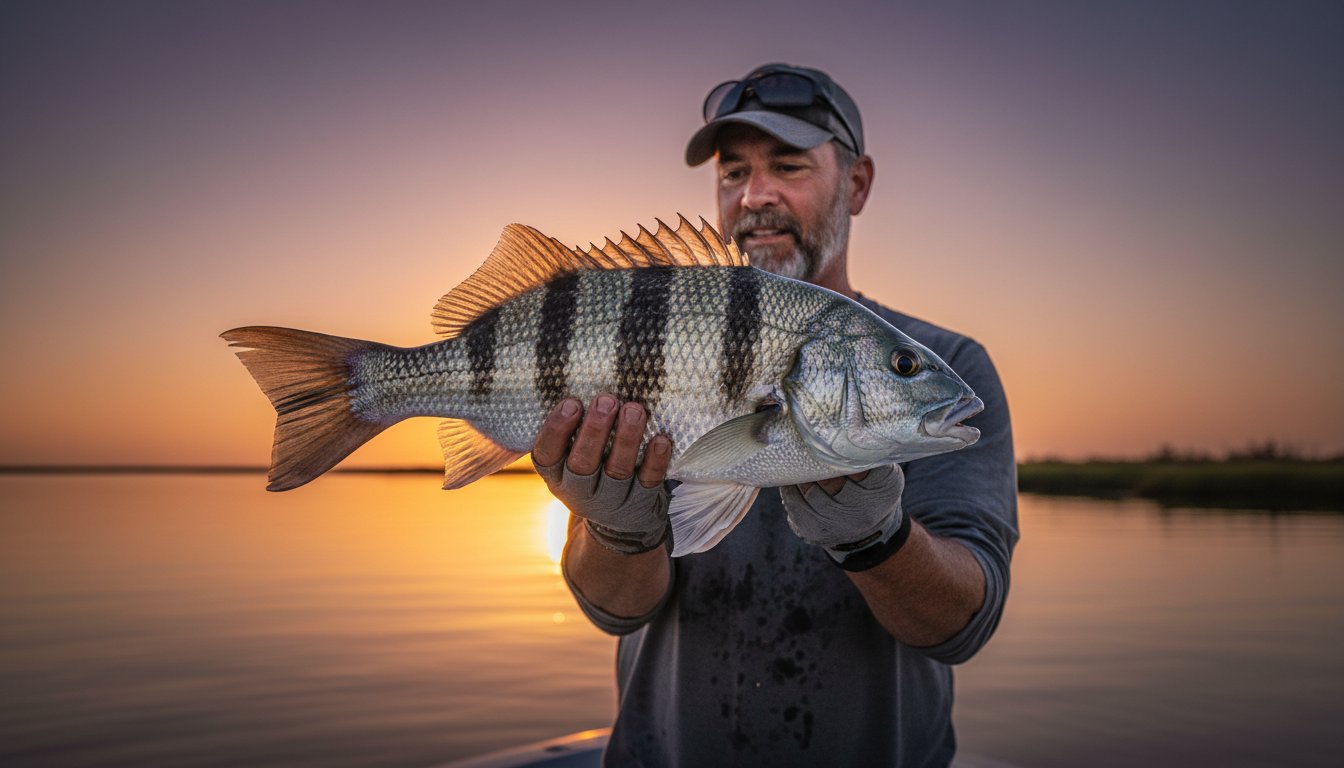
Instantly recognizable by its prison-garb stripes, the Sheepshead is a master bait-stealer and a formidable opponent on light gear. Look for a broad, silver-gray body with 5 to 6 bold, black vertical bars running down its sides. You’ll find these crafty fighters lurking around any hard structure they can find-jetties, bridge pilings, docks, and especially oyster beds. Captain’s Pro Tip: Their powerful jaws are equipped with a set of shockingly human-like teeth, perfectly designed for crushing the barnacles, crabs, and shrimp they love to eat.

Black Drum

While the giant ‘bull’ drum are famous offshore, their younger relatives are a staple of the inshore flats. Juvenile Black Drum feature prominent black and silver vertical stripes, making them easy to spot in clear water, though these stripes fade to a uniform gray or bronze as they mature. These fish patrol channels, oyster reefs, and deeper holes within the bays. For a definitive guide to identifying species at different life stages, the NOAA Species Directory offers an excellent and authoritative reference. Captain’s Pro Tip: If you’re fishing during the spawning season, listen closely-male drums create a unique, low-frequency ‘drumming’ sound to attract mates.

Redfish (Juvenile ‘Puppy Drum’)

The undisputed king of the Louisiana marsh! While not a classic example of a striped saltwater fish, juvenile Redfish, often called ‘Puppy Drum,’ frequently display faint, mottled vertical bars on their sides that disappear as they grow. They are the ultimate shallow-water predator, relentlessly prowling grass flats, oyster bars, and mangrove shorelines for an easy meal. Spotting a tailing red in inches of water is a sight that gets any angler’s heart pounding. Captain’s Pro Tip: Forget the faint bars-the single, iconic spot (or spots) at the base of the tail is the Redfish’s true calling card and the number one identifier.

Nearshore & Reef Dwellers: Striped Species on Structure

As you venture from the shallow flats and push into the deeper waters of the Gulf, your epic adventure enters a new arena. This is where the inshore and offshore worlds collide, centered around underwater structures like reefs, wrecks, and rock piles. The game changes here, and so do the fish. This zone is teeming with a huge variety of Louisiana saltwater fish species, and many of them use their patterns to thrive. For a striped saltwater fish in this environment, their markings are not just for show-they are critical camouflage for ambushing prey and hiding from predators among the complex shadows of the structure. Many of these species school up in massive numbers, turning a single hookup into an all-out blitz!

Spanish Mackerel

These are the silver bullets of the nearshore world. Built for pure speed, Spanish Mackerel are a thrill to catch and a common sight when bait pods are thick. While not traditionally striped, their markings can absolutely fool you at first glance.

  • Key ID Features: A sleek, silvery, and highly streamlined body marked with numerous golden-yellow to bronze oval spots or dashes along its sides.
  • Habitat & Location: They roam open coastal waters in large schools, often seen crashing bait on the surface near passes, jetties, and nearshore oil rigs.
  • Captain’s Pro Tip: When they are moving fast or you see them from a distance, their rows of golden spots can blur together, creating the illusion of broken horizontal stripes.

Tripletail

Finding a Tripletail is always a highlight of a trip. These unique and powerful fish are masters of disguise, often looking like a piece of floating debris until it’s too late. Their fight is stubborn and their meat is a top-tier prize.

  • Key ID Features: A deep, compressed body with a mottled, patchy pattern of dark brown, gray, and yellow. This pattern often forms broad, irregular vertical stripes that help it blend in.
  • Habitat & Location: Famously ambush-oriented, they hang almost motionless on their sides near any floating structure-buoys, crab trap floats, weed lines, and channel markers.
  • Captain’s Pro Tip: Forget the stripes for a second. Their rounded dorsal and anal fins extend so far back they look like a ‘third’ tail. It’s a dead giveaway and the source of their name.

Mangrove Snapper (Gray Snapper)

Don’t let their common size fool you; Mangrove Snapper are cunning, aggressive, and incredibly strong. They are the quintessential structure fish, using every piece of cover to their advantage to steal bait and break lines.

  • Key ID Features: Their color can range from gray to a coppery red, but they often display faint, dusky vertical bars, especially when they are young, agitated, or in hunting mode.
  • Habitat & Location: True to their name, they start life in mangrove roots but quickly move to any hard structure they can find, from bridge pilings and docks to nearshore reefs and rigs.
  • Captain’s Pro Tip: The most reliable identifier, even when the bars aren’t visible, is the dark line that often runs from their snout through the eye toward the gill plate.

Offshore Powerhouses: Striped Speedsters of the Deep Blue

When you push offshore into the deep blue waters of the Gulf, you enter a world of pure power and speed. This is the domain of the ocean’s apex predators, and some of the most sought-after are legendary striped saltwater fish. Their stripes aren’t just for show; they’re a brilliant form of camouflage, breaking up their silhouette in the dappled sunlight to ambush unsuspecting prey. Landing one of these speedsters is an epic adventure and a true bucket-list achievement for any bluewater angler. While our focus is on the inshore bounty, knowing these offshore titans is key to becoming a complete Louisiana fisherman.

Wahoo

Often called the fastest fish in the sea, the Wahoo is a torpedo of pure muscle. Hooking one is an experience you’ll never forget, with screaming drags and blistering runs. They patrol the open ocean, ready to strike with incredible velocity.

  • Key ID Features: A long, streamlined body with vivid, electric blue vertical bars that run from its back to its belly.
  • Habitat & Location: True bluewater hunters found far offshore, often patrolling weed lines, temperature breaks, and around floating structure.
  • Captain’s Pro Tip: Those stunning stripes ‘light up’ and become incredibly bright when a Wahoo is excited or on the hunt. It’s a breathtaking sight right before the chaos begins!

King Mackerel (Kingfish)

Known to anglers as “smokers” for their ability to smoke line off a reel, King Mackerel are a prized offshore gamefish. They roam the Gulf in massive schools, attacking bait with ferocious speed. From nearshore rigs to the deep blue, they are a constant presence for offshore anglers.

  • Key ID Features: A sleek, silvery body with faint, broken vertical bars or spots, which are more prominent on younger, smaller fish.
  • Habitat & Location: Found across a wide range, from nearshore reefs and platforms to the far offshore oil rigs that dot the Louisiana coast.
  • Captain’s Pro Tip: Forget the faint stripes. The surefire way to distinguish a King from a Spanish Mackerel is the dramatic, sharp dip in its lateral line about midway down its body.

Striped Bass (‘Striper’ or ‘Rockfish’)

The Striped Bass is an iconic American gamefish, famous for its powerful fights and distinct, clean lines. While it’s the undisputed king of the Atlantic coast, its presence in the deep Louisiana Gulf is a topic of much debate and a rare catch for those who find them.

  • Key ID Features: A silver-bodied fish with 7 to 8 bold, unbroken, and perfectly straight horizontal black stripes running from gills to tail.
  • Habitat & Location: An anadromous species, meaning it lives in saltwater but spawns in freshwater. Primarily found along Atlantic coast beaches, bays, and estuaries.
  • Captain’s Pro Tip: While not a target in our Gulf waters, knowing this classic striped saltwater fish is a mark of a well-rounded angler. Its horizontal stripes are a dead giveaway compared to the vertical bars of a Wahoo.

Ready to Find Some Stripes? Your Louisiana Adventure Awaits

You’ve learned to spot the tell-tale bars of a Sheepshead and the bold stripes of a juvenile Black Drum. Now, it’s time to trade identification for exhilaration. Reading about these fish is one thing, but feeling the raw power of one on the end of your line is an entirely different thrill. South Louisiana isn’t just a place to see these species; it’s a world-class battleground where you can test your skills against some of the toughest inshore fighters.

The Black Drum and Sheepshead are more than just pretty stripes-they are accessible, hard-fighting targets that promise an unforgettable day on the water. Forget just looking for them; it’s time to go catch them.

Why Vermilion Bay is a Hotspot

The Vermilion Bay marsh system is a thriving, dynamic ecosystem that trophy fish call home. Its endless banks, winding bayous, and shallow flats create a massive feeding ground teeming with crabs, shrimp, and baitfish. These calm, protected waters not only make for a comfortable trip but also provide the perfect habitat for sight-fishing giant Drum and Sheepshead lurking in the shallows. It’s an angler’s paradise, built for action.

Targeting Louisiana’s ‘Convicts’ and ‘Drum’

While Black Drum can be caught year-round, the cooler months fire up the Sheepshead (the “Convict Fish”) bite, making winter and spring prime time for targeting these powerful striped saltwater fish. There’s nothing like the adrenaline rush of sight-fishing-spotting that striped silhouette in the clear, shallow water and making the perfect cast. A veteran local guide doesn’t just take you fishing; they take you to the secret spots where these giants feed.

Book an Epic Trip with a Pro

Whether you’re a seasoned angler or a first-timer, an epic adventure is waiting for you. A guided trip with a 3rd generation pro removes all the guesswork. You don’t need to worry about the gear, the boat, or finding the fish-it’s all covered. Your only job is to cast, fight, and make memories. Maximize your time on the water and get on the fish fast.

Put your new ID skills to the test on an epic adventure!

From Identification to Action: Catch Your Stripes

Armed with the knowledge to identify any striped saltwater fish in seconds, you’re now ready to target these incredible species. From the hard-fighting Sheepshead in the marshy flats to the powerful Wahoo in the deep blue, understanding their patterns and habitats is the first step toward a successful day on the water. You’ve learned the secrets of spotting stripes; now it’s time to put that knowledge into thrilling practice.

There’s no better place to do that than in the legendary waters of Vermilion Bay. Experience the thrill of the chase firsthand by climbing aboard with Captain Troy Nash, a 3rd generation, veteran fishing captain who knows these bayous like the back of his hand. He’s got you covered-everything you need for a successful trip is provided. All you have to bring is your adventurous spirit and a desire to reel in a giant.

Your epic adventure is just a click away. Ready for an epic adventure? Book your Louisiana inshore fishing trip today! The fish are biting, and the stripes are out there waiting for you.

Frequently Asked Questions About Striped Saltwater Fish

What is the most common striped saltwater fish in the Gulf of Mexico?

Hands-down, the most common striped saltwater fish you’ll battle in Louisiana’s inshore waters is the Sheepshead. These tough fighters, famous for their black and silver vertical bars and human-like teeth, are everywhere-from oil rigs to jetties. You’ll also frequently tangle with juvenile Black Drum, which sport similar vertical stripes when they’re young. Both offer an epic fight and are a common sight on our guided trips in Vermilion Bay and beyond.

Are striped fish good to eat?

Absolutely! Sheepshead are considered a delicacy, often called the “poor man’s crab” for their sweet, flaky white meat that tastes similar to shellfish. They are fantastic on the grill or fried. Young Black Drum are also excellent table fare, with firm, mild flesh. Just be sure to target the smaller, “puppy” drum within the legal slot limit for the best flavor. After a thrilling day on the water, there’s nothing better than a fresh-caught meal.

What’s the difference between a Black Drum and a Sheepshead?

The easiest way to tell these two apart is to check the mouth and fins. Sheepshead have a full set of broad, human-like incisors designed for crushing shells and a dorsal fin with sharp, heavy spines. A Black Drum, on the other hand, has whisker-like barbels on its chin and lacks the prominent teeth. Its dorsal fin is also softer and less intimidating. Get a good look, and you’ll be identifying them like a pro in no time!

Do fish stripes fade after they are caught?

Yes, it’s very common for a fish’s colors and patterns to fade shortly after being pulled from the water. The vibrant, distinct stripes you see during the fight can become dull once the fish is in the cooler. This is a natural process as the fish reacts to stress. That’s why it’s best to snap that trophy picture quickly to capture the fish in its full, brilliant glory right after your epic catch!

What is the best bait or lure for catching striped fish like Sheepshead?

When you’re targeting Sheepshead, live bait is king. Nothing gets them fired up like a live shrimp, fiddler crab, or piece of fresh oyster on a small, sturdy hook. These fish are expert bait-stealers, so you need to be quick on the hookset! While some anglers have luck with small jigs tipped with shrimp, we find that the real deal is what it takes to consistently limit out and bring home these delicious fighters for dinner.

Can you catch striped fish from the shore?

You bet! Shore-based anglers have a fantastic shot at landing striped fighters. Target structures like rock jetties, bridge pilings, piers, and oyster reefs where they love to feed. In places like Cypremort Point, dropping a fiddler crab or shrimp straight down next to the structure is a proven tactic. You don’t always need a boat to experience the thrill of the fight-the adventure can start right from the bank!