
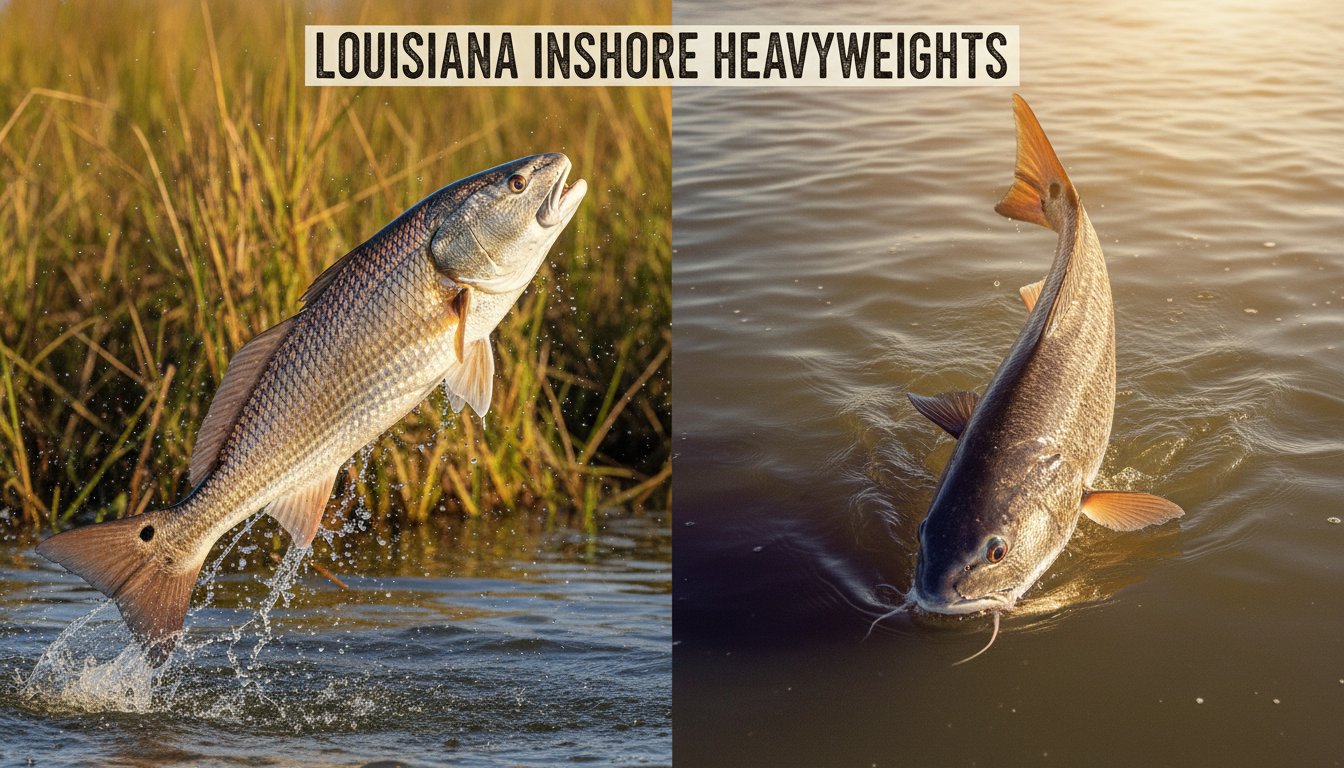
What if that massive shadow charging your lure isn’t the redfish you’ve been dreaming of, but a heavyweight black drum ready to test your tackle to the breaking point? It’s a common scenario in the productive marshes of South Louisiana, where the redfish vs black drum debate often starts the moment the drag begins to scream. Whether you’re stalking the grass lines of Marsh Island or working the oyster reefs near Cypremort Point, knowing exactly what’s on the end of your line changes everything from your netting strategy to your dinner plans.
We understand the frustration of confusing a “puppy drum” for a redfish or using the wrong gear for a tackle-busting bull. You’re going to master the visual cues, gear requirements, and specific fight styles that define these two inshore titans so you can land more trophies with confidence. While other areas like Venice have their fans, nothing beats the authentic Cajun experience and world-class variety found right here in Vermilion Bay. We’ll preview the 2026 slot limits, the best local honey holes, and why both species deserve a spot in your ice chest this season.
Key Takeaways
- Identify these marsh heavyweights instantly by checking for the redfish’s signature tail spot or the black drum’s unique chin barbels.
- Master the tactical differences in a redfish vs black drum hookup, comparing the explosive surface runs of a red to the brute downward force of a big drum.
- Pinpoint the best local honey holes across Vermilion Bay and Marsh Island where these species congregate around oyster reefs and weirs.
- Learn why smaller “puppy drum” are the hidden gems of Cajun cuisine, offering a flavor profile that rivals the legendary blackened redfish.
- Discover the advantages of launching from Cypremort Point for shorter boat rides and more productive fishing time than you’ll find in other areas.
The Drum Family: Why Redfish and Black Drum Rule the Marsh
Step onto the deck at Cypremort Point and you’ll feel the energy in the air. We aren’t just looking for fish; we’re listening for them. When you’re positioned over a productive oyster reef in West Cote Blanche Bay, that unmistakable “thump-thump-thump” coming through the hull tells you the school is beneath us. In the world of redfish vs black drum, these two species are the undisputed kings of the Louisiana marsh. They share a family tree, a vocal range, and a reputation for being some of the hardest-pulling fish in the Gulf. Whether you’re a seasoned pro or a first-timer, hearing that first drum beat through the floorboards is a major life event that signals the start of an unforgettable battle.
What is a Drum Fish?
The secret to their name lies in their anatomy. These fish belong to the Sciaenidae family, and they’ve evolved a clever way to make their presence known. By vibrating specialized sonic muscles against their swim bladder, they create a low-frequency drumming sound that can travel surprisingly far. They aren’t just making noise for fun; it’s a critical tool for territorial displays and finding a mate during the spawn. Beyond the noise, both the black drum and the Red Drum (Sciaenops ocellatus) share a rugged build. They have large, armor-like scales and broad, powerful heads designed for scouring the bottom for food. While they might look similar to the untrained eye at first glance, their personalities under the water are worlds apart.
Vermilion Bay: The Ultimate Drum Arena
Why is our corner of the state so special? It comes down to the habitat. While Venice or other areas might focus on long runs to deep water, Vermilion Bay and the surrounding Cote Blanche Bays provide a shallow-water paradise. Marsh Island serves as a protective barrier, creating a sanctuary of calm lakes and nutrient-rich canals. This ecosystem is a massive nursery where the mix of fresh and salt water creates a perfect environment for growth. Our local weirs and rock walls act as natural magnets, trapping baitfish and giving these drums a permanent place to feast. From the shallow mud flats to the hidden oyster reefs, this area is a high-density arena where you can experience the best inshore action Louisiana has to offer without the rough seas of a deep sea trek. It’s a world-class fishery right in our backyard, and we’re ready to show you why these heavyweights rule the marsh.
Visual ID Guide: Redfish vs. Black Drum Comparison
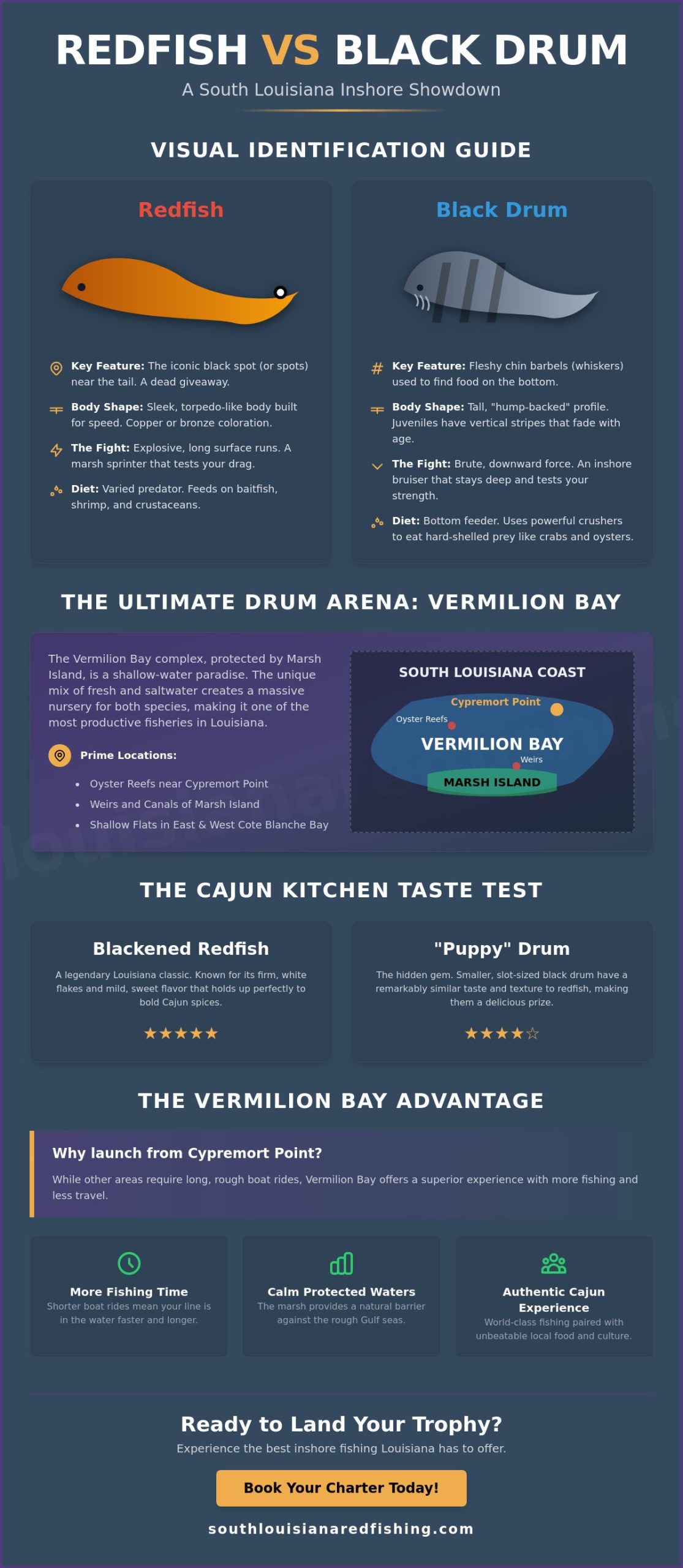
You’ve finally pulled the fish alongside the boat after a grueling fight in the marsh. Now comes the moment of truth. Identifying your catch quickly is essential, especially with the 2026 regulations requiring precise measurements. While they might seem similar when they’re splashing on the surface, the redfish vs black drum debate is easily settled once you know what to look for. Redfish are built for speed; think of them as the sleek, copper-colored torpedoes of the flats. In contrast, black drum are the heavy-duty bruisers of the bay, sporting a taller, “hump-backed” profile that makes them look much thicker than their red cousins.
The Tale of the Spot vs. The Stripes
The iconic black spot near the tail is the dead giveaway for a redfish. While most have one ocellated spot, it’s not uncommon to land “multi-spot” reds with dozens of dots along their bronze flanks. Young black drum tell a different story. Juvenile drum feature distinct vertical black bars, which often leads beginners to confuse them with sheepshead. As these drum mature and move toward the nearshore oil rigs or deeper reefs, those stripes fade into a solid, dark charcoal or dull grey. Staying informed on Red Drum management in Louisiana is vital for every angler visiting our waters, as it ensures we protect these beautiful fish for the next generation of Cajun sportsmen.
Mouths and Barbels: The Bottom Feeders’ Tools
Look closely under the chin. If you see a set of small, fleshy whiskers, you’re holding a black drum. These barbels act as sensory feelers, allowing the drum to “smell” and locate crabs or shrimp in the murky bottoms of Vermilion Bay or around Marsh Island. Redfish don’t have these whiskers. Instead, they use a powerful, down-turned mouth to vacuum up baitfish and crustaceans. While redfish have a more varied diet, black drum rely on heavy crushing plates in their throats to snap through hard shells. These physical traits are your best clues for choosing the right bait; if the barbels are out, it’s time to reach for the cracked crab. If you want to see these differences firsthand while filling the cooler, consider joining us for one of our guided fishing trips out of Cypremort Point.
Body color also provides a massive hint. Redfish usually glow with a vibrant copper or bronze hue, especially when they are fresh out of the saltier water near the Gulf. Black drum maintain a more industrial look, ranging from light silver to a deep, soot-colored black. Whether you’re working the weirs or the shallow mud flats, these visual cues will help you identify your trophy before the hook is even out of its mouth.
Fighting Styles: Marsh Sprinters vs. Inshore Bruisers
The moment your line screams off the reel, the redfish vs black drum debate shifts from visual identification to pure adrenaline. Redfish are the high-speed sprinters of the Louisiana marsh. They don’t just take a bait; they attack it with a violence that leaves your heart pounding. In the shallow flats of Weeks Bay, you’ll often see their copper backs or “tailing” fins before you even make a cast. This is sight-fishing at its finest. When a red hits, expect a blistering first run that tests your drag and your nerves. They prefer the skinny water where they can use their speed to weave through grass and around oyster beds. For more on their biology and how they differ from their cousins, the FWC Red Drum (Redfish) Profile offers an excellent breakdown of their unique characteristics.
Chasing Redfish in the Skinny Water
There’s nothing quite like stalking a redfish in the grass. We love using light tackle because it lets you feel every head shake and every burst of speed. Gold spoons are a local staple for a reason. They flash like a wounded baitfish and can be pulled right through the thickest marsh vegetation. Soft plastics on a light jig head also work wonders when these fish are prowling the shoreline. It’s a game of precision and patience. You have to lead the fish, place the lure perfectly, and wait for that explosive surface strike that defines the species. It’s a thrilling, visual way to fish that keeps even the most seasoned anglers coming back for more.
Wrestling with Giant Black Drum
If redfish are the sprinters, black drum are the heavyweight wrestlers. They don’t usually go for the long, flashy runs. Instead, they “dog” it deep. They use their massive body weight and brute downward force to pin themselves to the bottom. Once a drum tops 40 pounds, we affectionately call them “Big Uglies.” Landing one of these giants in a deep canal hole or around a bridge piling is an endurance battle. You’ll need heavy-duty reels and a strong back to bring them to the surface. These bruisers aren’t picky, but they can’t resist a fresh cracked crab or a jumbo shrimp weighted right on the bottom. Unlike the long, bumpy rides required for deep sea trips, these inshore bruisers are just a short boat ride away from the dock.
While you might find similar action in other areas, the deep holes and weirs around Marsh Island provide a unique tactical challenge you won’t find anywhere else. Whether you’re looking for the fast-paced thrill of a red or the grinding power of a big drum, we have the expertise to put you on the fish. Launching from Cypremort Point puts us minutes away from these legendary battlegrounds. It’s a world-class experience that makes every trip feel like a major life event. After a day of wrestling with these heavyweights, you’ll understand why our marshes are the premier destination for serious anglers.
The Cajun Kitchen: Blackened Redfish vs. Puppy Drum
After the battle in the marsh is won, the real reward begins in the kitchen. In the redfish vs black drum culinary showdown, there’s a surprising amount of overlap that many visitors miss. While redfish gets all the glory on restaurant menus from Lafayette to New Orleans, a small black drum is often the secret weapon of Cajun home cooks. Both species offer a white, mild meat that serves as the perfect canvas for our bold local spices. Whether you’re docking at Cypremort Point or heading back to a camp on Marsh Island, knowing how to handle these heavyweights in the kitchen is the hallmark of a true sportsman.
Why Redfish is a Louisiana Icon
Redfish became a global superstar in the 1980s during the blackened fish craze that swept through the South. Its firm, flaky texture is unique because it doesn’t fall apart under the intense heat of a cast-iron skillet or a roaring grill. If you’re looking for the ultimate local experience, you have to try “Redfish on the Half-Shell.” By leaving the scales and skin on one side of the fillet, you create a natural bowl that protects the meat from the fire. This method allows the fish to simmer in its own juices while soaking up lemon, butter, and garlic. For more expert tips on cooking Louisiana fish, you need to understand how the oil content of each species reacts to the flame.
The Secret of the ‘Puppy Drum’
Don’t overlook the “puppy drum” in your cooler. These are the smaller black drum, typically those under 10 pounds, and their flavor is nearly indistinguishable from redfish. Local Lafayette chefs often seek them out for frying because the meat is sweet, tender, and light. However, there’s a strategic reason why we release the “Big Uglies” we discussed earlier. Once a black drum reaches a massive size, the meat becomes coarse and “woodier” in texture. These older fish also frequently carry harmless but unappetizing “spaghetti worms” in their tail sections. We prefer to keep the smaller, cleaner fish for the table and let the giants return to the oyster reefs to continue spawning.
Proper care starts the second the fish hits the deck. The Louisiana sun is relentless, so keeping your catch buried in crushed ice is non-negotiable to preserve that delicate flavor profile. When cleaning your drum, make sure to trim away the red meat along the lateral line. This simple step ensures a clean, mild taste that lets the natural sweetness of the fish shine through. Ready to stock your freezer with the best the Gulf has to offer? Book one of our guided fishing trips and let’s get to work filling that ice chest with the finest ingredients in Acadiana. It’s not just a fishing trip; it’s a culinary journey that ends with a world-class Cajun meal.
Book Your South Louisiana Adventure from Cypremort Point
Ready to put your new knowledge to the test? Cypremort Point is the ultimate gateway to the most productive marshes in the state. While Venice or other areas might require hours of travel through rough water, we launch you right into the heart of the action. Capt. Troy D Nash brings a multi-generational heritage to every trip, offering decades of professional tenure in the complex waters of Vermilion and Cote Blanche Bays. Whether you’re settling the redfish vs black drum debate with a double hookup or stalking a trophy red in the grass, you’re in the most capable hands in Acadiana. We take pride in our results-driven approach, ensuring every guest experiences the thrill of a world-class catch.
Why Vermilion Bay Beats the ‘Big Hubs’
Many anglers get caught in the crowds of the major hubs, but the real magic happens in our secluded marshes. One of the biggest advantages of fishing with us is the shorter boat ride to premier spots. You’ll spend more time with a tight line and less time burning fuel. Because our local weirs and shorelines see lower pressure than other areas, the fish are often more aggressive and willing to strike. We offer the kind of versatile red fish fishing Louisiana is famous for, but without the headache of navigating heavy boat traffic. From the pristine edges of Marsh Island to the hidden oyster beds near Weeks Bay, every spot we hit is chosen for maximum success and excitement.
Plan Your Visit to Acadiana
A trip with South Louisiana Redfishing is more than just a day on the water; it’s a full-immersion Cajun experience. We recommend starting your journey with a visit to Cypremort Point State Park, a beautiful spot to soak in the coastal atmosphere before or after your charter. Once we’ve filled the ice chest, head back toward Lafayette to enjoy the best Cajun food on the planet. There are so many things to do in Lafayette for the whole family, from touring historic sites to dancing at a local zydeco hall. We provide comprehensive preparation for every client, ensuring you have the right gear and the best local knowledge to make your adventure a major life event. Contact us today to secure your spot on the boat and experience the legendary variety of the Vermilion Bay marsh.
Master the Marsh and Claim Your Trophy
Landing a limit of heavyweights requires more than just luck. You now have the skills to settle the redfish vs black drum debate the moment a fish nears the boat. By identifying visual cues like tail spots and chin barbels, and understanding the unique “dogging” fight of a big drum, you’re ready for any challenge the Louisiana marsh throws your way. You’ve seen why the smaller “puppy drum” are a culinary secret and why the flats of Weeks Bay are a world-class arena for sight-fishing.
Don’t leave your adventure to chance. Capt. Troy D Nash is a 3rd Generation Local Guide who has been operating from Cypremort Point for decades. We offer expert knowledge of Vermilion Bay and Marsh Island that ensures you spend your time catching, not searching. We’re passionate about sharing this thrilling journey with anglers of all skill levels. Book Your South Louisiana Redfish & Drum Charter Now! We’ll handle the gear and the navigation so you can focus on the fight. Let’s get out on the water and make your next trip a legendary life event.
Frequently Asked Questions
Can you eat black drum?
Yes, smaller black drum known as “puppy drum” are delicious and highly prized in Cajun cooking. Fish under 10 pounds have a mild, sweet flavor and a firm texture that rivals redfish on the plate. We often target them around the oyster reefs of Vermilion Bay specifically for the table. Larger specimens aren’t as tasty and are better left for a catch and release battle.
Do black drum have spots like redfish?
Black drum do not have the signature black tail spots found on redfish. Instead, juvenile drum feature four or five vertical black stripes that fade as they mature into adulthood. Once they reach a larger size and move toward the nearshore rigs, they take on a solid charcoal or dark grey appearance. This is one of the easiest ways to tell them apart when comparing redfish vs black drum in the marsh.
Which fish is harder to catch, redfish or black drum?
Redfish are generally more aggressive and strike with more speed, while black drum require a more patient approach. Redfish will often chase down a moving lure in the shallow flats of Weeks Bay or Marsh Island. Black drum rely heavily on scent and are more likely to pick up a stationary bait on the bottom. Both offer a world class fight, but their feeding habits require different tactics.
What is the best bait for redfish vs black drum?
Redfish are suckers for gold spoons and soft plastics that mimic baitfish in the grass. When targeting black drum, natural bait is the king of the marsh. Cracked crab or fresh shrimp weighted to the bottom is the most effective way to tempt a big drum. While redfish are opportunistic hunters, drum are methodical scavengers that prioritize scent over movement during the hunt.
Are black drum and redfish found in the same spots?
Yes, these two species frequently school together in the same nutrient rich waters around East Cote Blanche Bay and our local weirs. They both thrive in the mix of salt and fresh water found in our local bays. It’s very common to hook into a redfish on one cast and a drum on the next while working the same oyster reef or shoreline.
What is a ‘Big Ugly’ in Louisiana fishing?
A “Big Ugly” is a local term for a massive, mature black drum that has grown past its striped juvenile stage. These fish can easily top 40 or 50 pounds, providing an incredible test of strength and endurance for any angler. You’ll often find these bruisers in the deeper canal holes or around bridge pilings where they use their bulk to pull hard toward the bottom.
Is a fishing license required for a guided trip?
Yes, every angler on the boat must have a valid Louisiana fishing license before we leave the dock. For the 2026 season, a resident saltwater license costs $32.00, while non residents can opt for a 3-day charter passenger license for just $20.00. You can easily purchase these through the Louisiana Department of Wildlife and Fisheries website before we launch from Cypremort Point for your adventure.