Why burn hundreds of dollars on fuel and fight the offshore swells when the most aggressive strike in Louisiana is waiting just minutes from the dock? You don’t need to battle the heavy crowds in Venice to experience world-class action. If you’re chasing the legendary Cajun Slam, the untouched flats and winding bayous of Cypremort Point offer a premier experience without the chaos. Master the art of flounder fishing vermilion bay and you’ll quickly realize why this region is the gold standard for inshore adventure.
It’s frustrating to arrive at a “secret” spot only to find a dozen boats already there. You deserve an authentic journey through the same marshes that 3rd generation experts like Capt. Troy D Nash have navigated for decades. This guide reveals the seasonal secrets of Marsh Island, including how to plan around the October 15 to November 30 flounder closure. We’re covering everything from the calm waters of Weeks Bay to the productive oyster reefs of Cote Blanche Bay to ensure your next trip is a bucket-list success.
Key Takeaways
- Learn why Cypremort Point is the premier launchpad for reaching fertile marshes without the long, rough boat rides common in offshore trips.
- Master the essential “drag and pause” technique required for successful flounder fishing vermilion bay during the peak spring and summer runs.
- Stay ahead of the 2026 regulations by understanding the annual fall flounder closure and the latest creel limits for speckled trout.
- Discover how to sight-cast for “crawling” redfish in the shallow flats of Marsh Island using professional-grade gear and local expertise.
- Plan a complete Cajun experience that pairs a productive day on the water with the legendary food and hospitality of the surrounding Acadiana region.
What to Expect from Louisiana Marsh Fishing Guides in Vermilion Bay
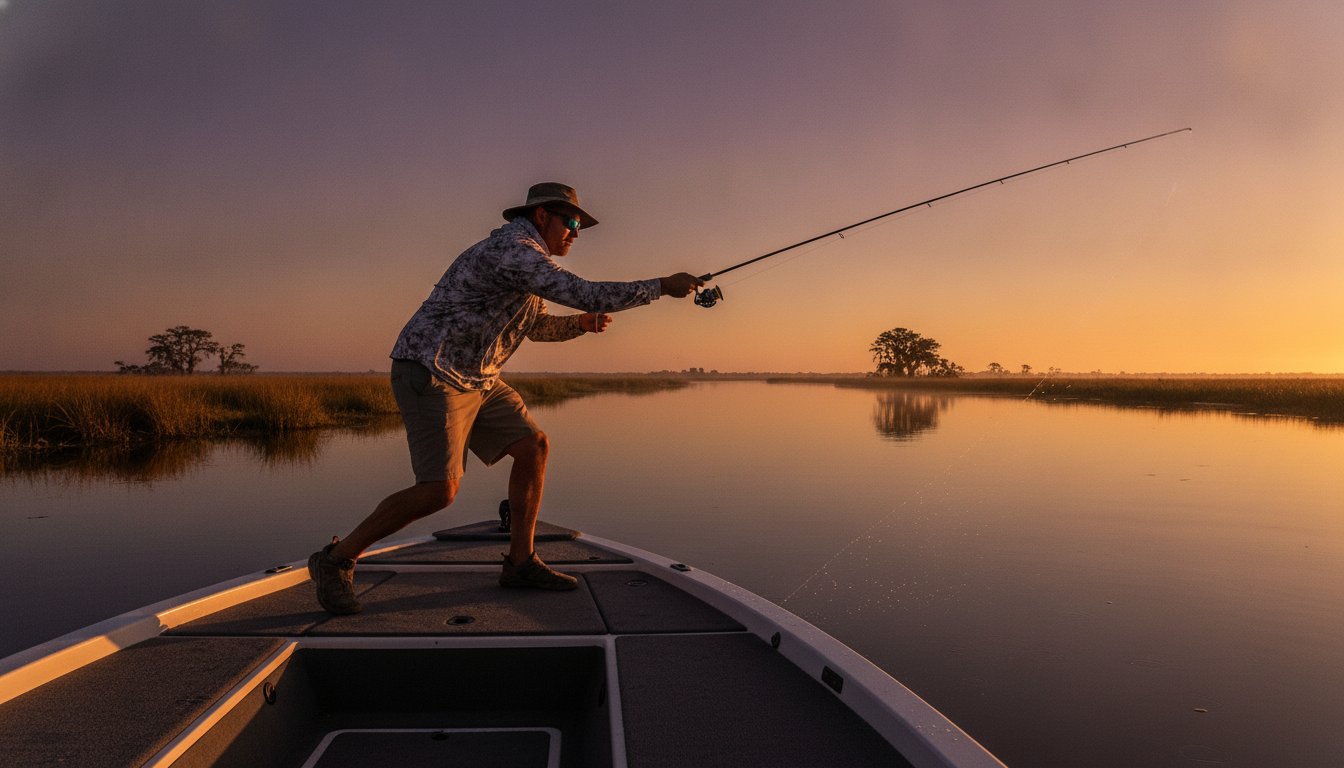
Louisiana marsh fishing is an adrenaline-fueled hunt. It isn’t your typical day on a lake; it’s a high-stakes game of sight-casting in shallow, fertile estuaries where the water is thin and the fish are big. For 2026, the Vermilion Bay system stands out as a premier biological powerhouse. While other areas like Venice get all the headlines, they also get all the boat traffic. Central Louisiana offers a raw, authentic experience that feels like stepping back in time. You won’t find crowds here. Instead, you’ll find pristine shorelines and aggressive fish waiting in the grass.
Navigating this maze is where a professional guide becomes essential. The marsh is a shifting landscape of hidden canals and complex weirs that can trap an amateur. A seasoned pro knows exactly which tide moves the bait through specific cuts. This expertise is vital for anyone serious about flounder fishing vermilion bay, as these fish hide in the smallest depressions along the mud banks. You aren’t just hiring a boat; you’re gaining access to decades of local knowledge that turns a quiet day into a legendary haul.
The Geography of the Central Louisiana Marsh
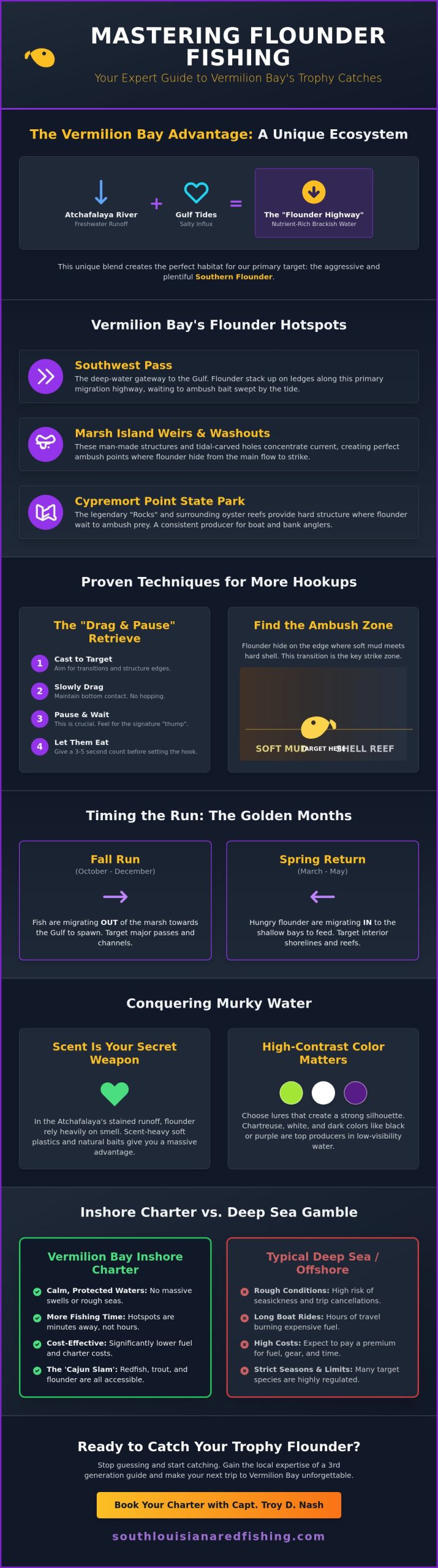
The journey starts at Cypremort Point and stretches to the legendary Marsh Island. This region is a unique brackish environment shaped by the Atchafalaya River’s nutrient-rich discharge. This constant flow of “river gold” fuels a massive food chain. Oyster beds and reefs litter the bottom of the bay, providing the perfect structure for predators to ambush their prey. It’s a rugged, beautiful habitat where every turn in a canal could reveal a school of tailing redfish.
Light Tackle vs. Fly Fishing in the Marsh
Light tackle is the undisputed king for families looking to fill a cooler. There’s nothing quite like the thrill of the “smash” in two feet of water when a redfish inhales your lure. Top-tier guides provide professional-grade spinning gear that’s easy to handle but tough enough to stop a charging bull red. While fly fishing has its fans, conventional light tackle allows you to cover more water and target multiple species effectively. Whether you’re a seasoned pro or taking the kids out for the first time, the gear and the setting are designed for maximum success. You’ll feel every headshake and every run, making it a memory that sticks for a lifetime.
Targeting the ‘Cajun Slam’: Expert Tactics for Flounder Fishing Vermilion Bay
The Cajun Slam is the undisputed heavyweight title of Louisiana inshore angling. Landing a redfish, a speckled trout, and a flounder in a single day requires more than just luck; it demands a deep understanding of how these species interact with the unique tides of Acadiana. While “other areas” might offer high numbers of a single species, the diversity within the Vermilion Bay complex is staggering. Success here means being ready for anything that swims. Whether you are sight-casting to a waking redfish or perfecting your technique for flounder fishing vermilion bay, every cast carries the potential for a trophy.
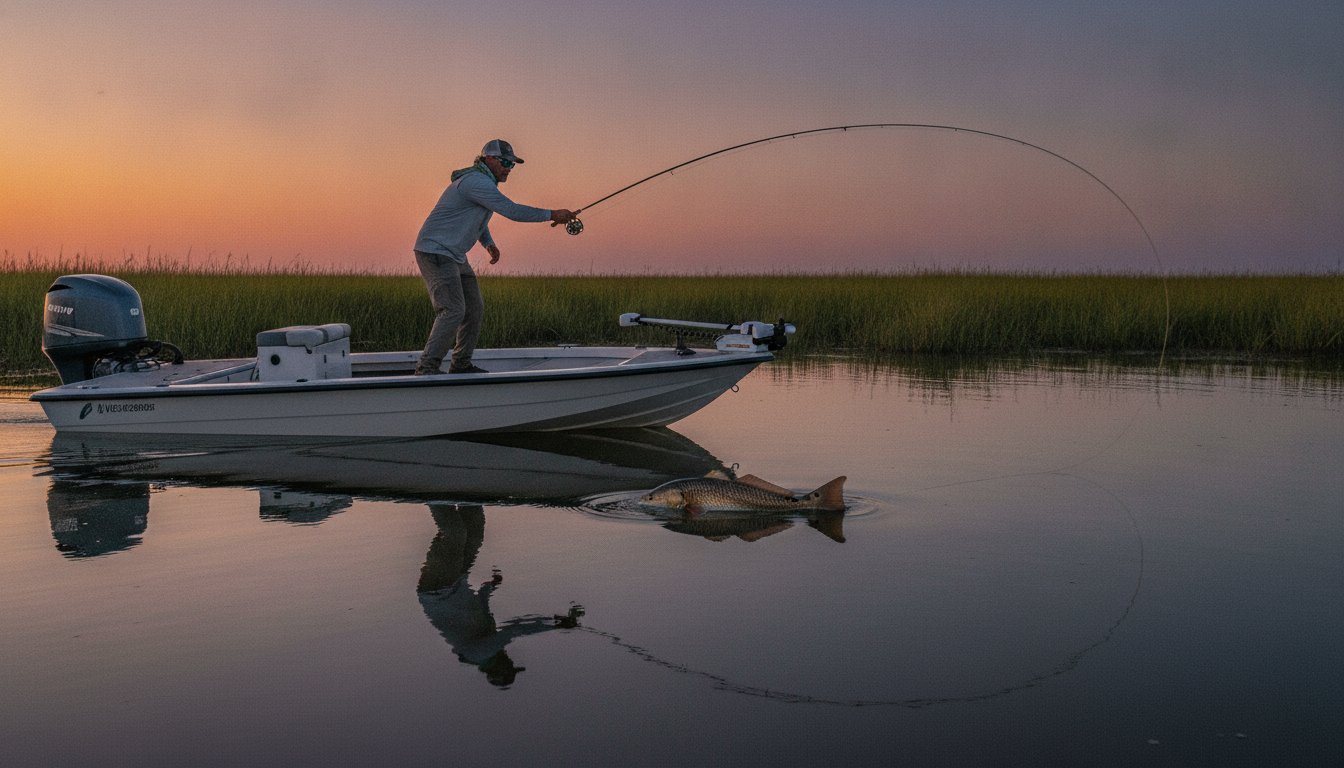
Redfish are the undisputed kings of the marsh. In the shallow flats near Marsh Island, you can often see their backs and tails breaking the surface as they “crawl” through the grass in search of crabs. Speckled trout, on the other hand, are the silver ghosts of the bay. They are highly sensitive to salinity and water clarity. Finding them usually involves scouting the numerous oyster bars and reefs where they congregate to ambush baitfish. For those looking for a little extra weight in the cooler, the mud-bottomed canals often hold massive black drum, while the nearshore rigs and buoys are prime territory for the prehistoric looking tripletail.
Flounder Tactics in the Mud-to-Shell Transitions
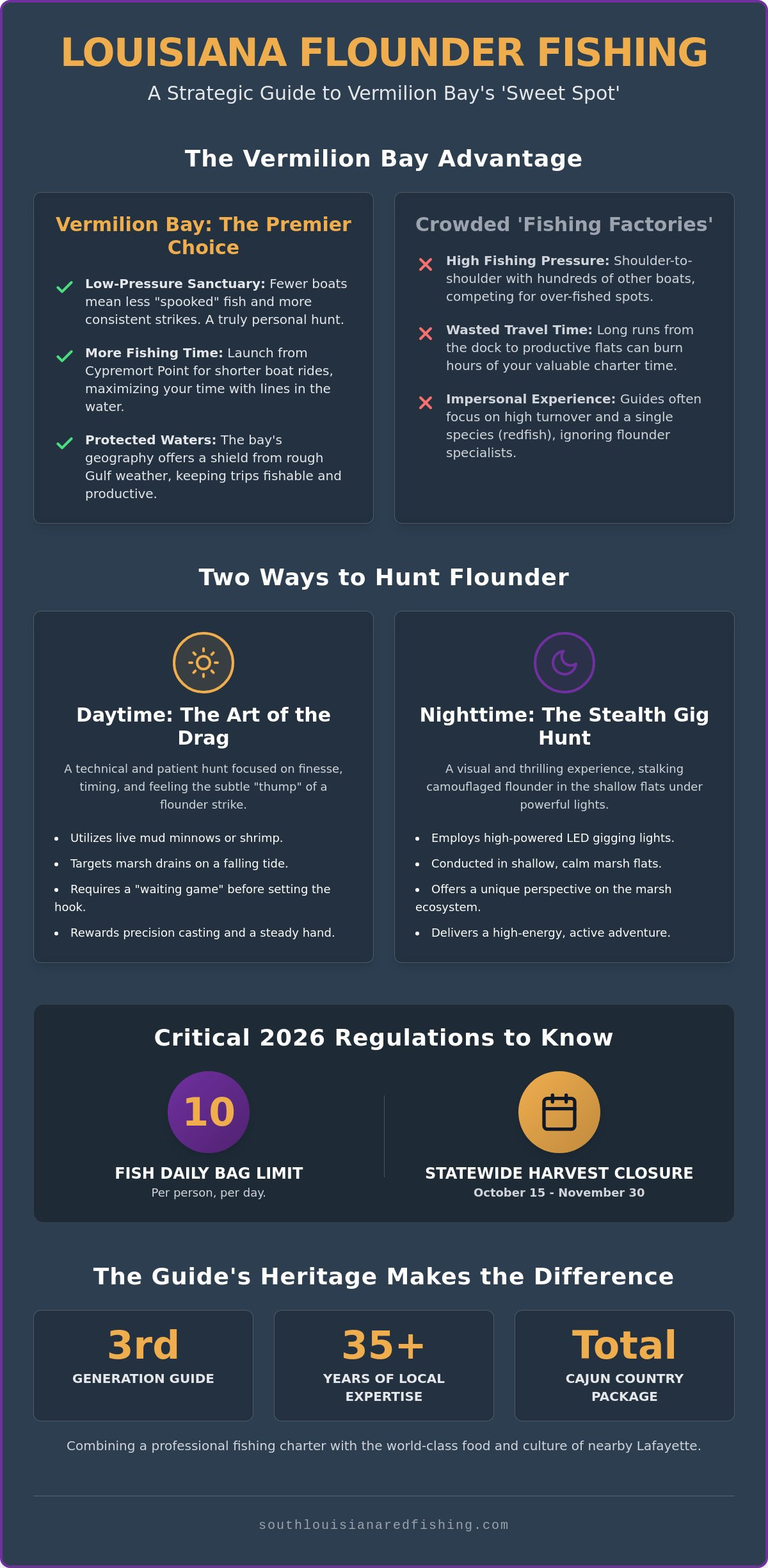
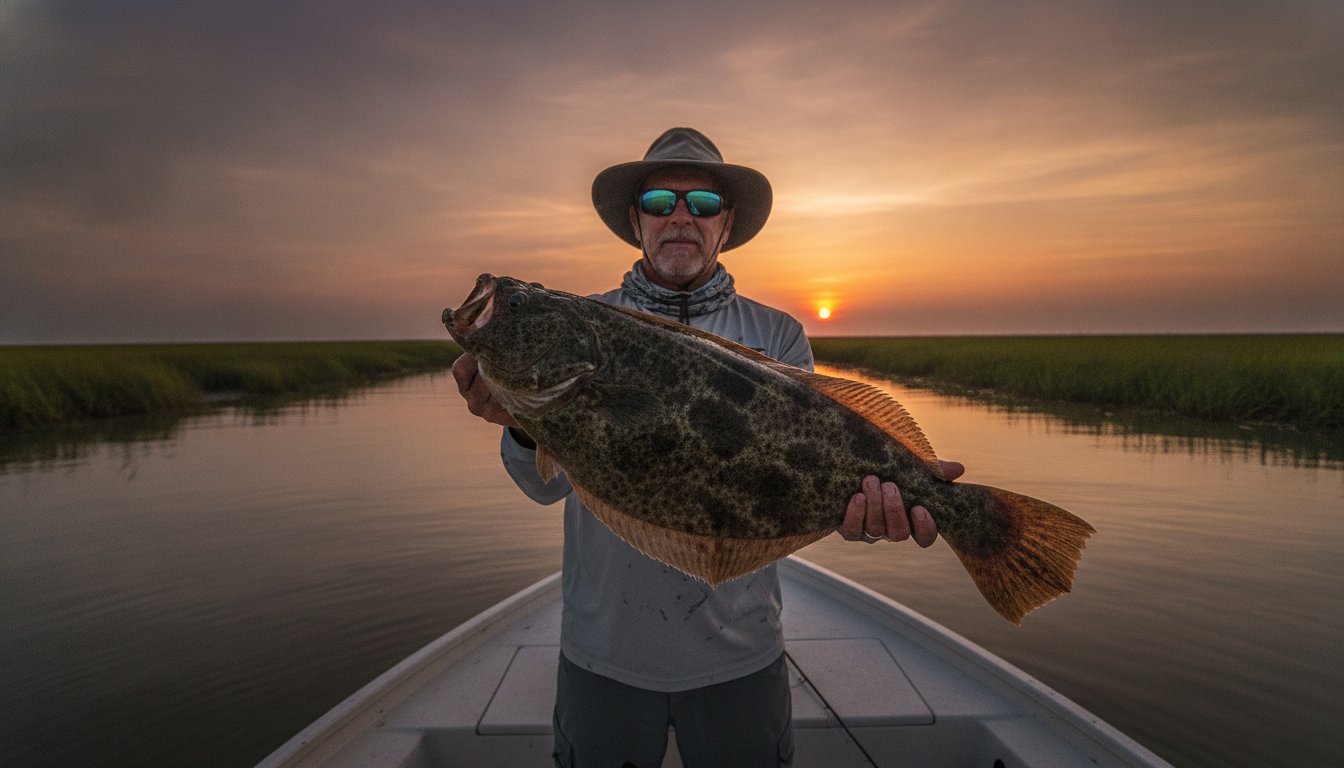
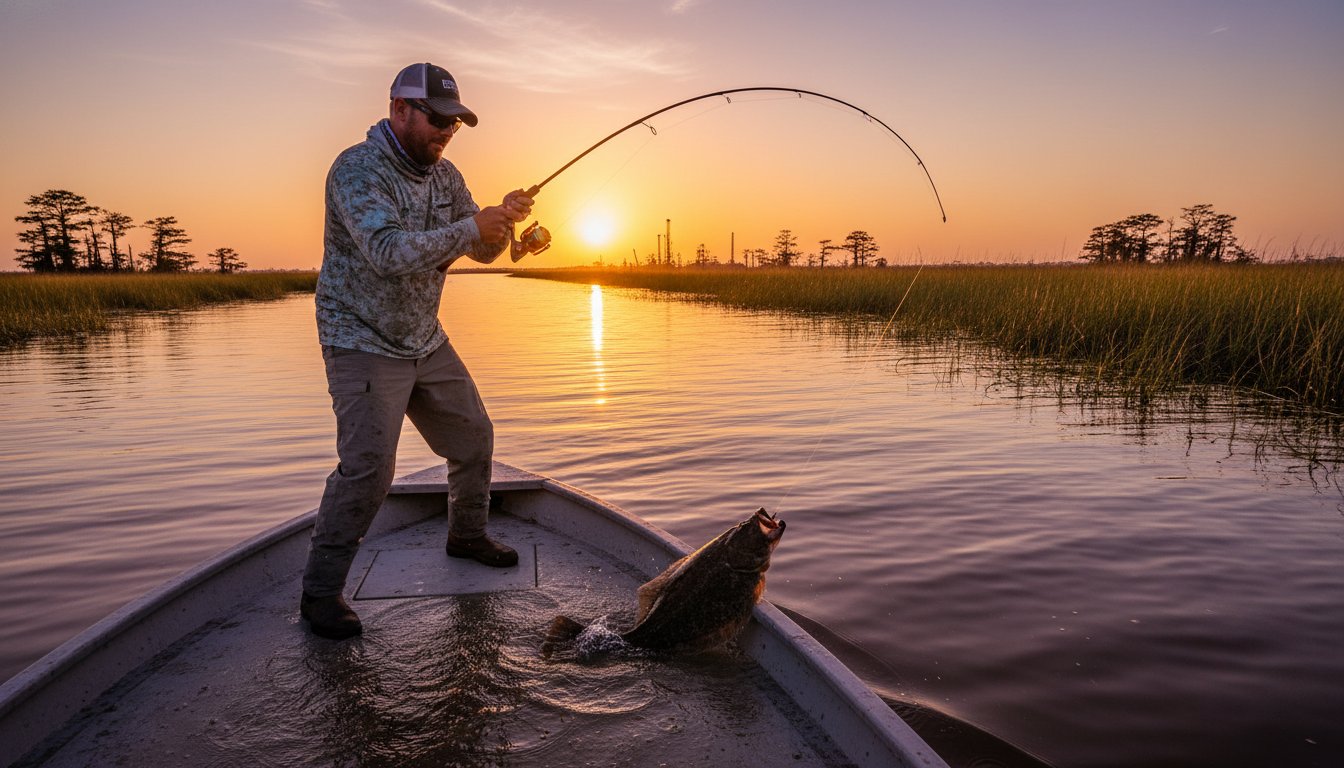
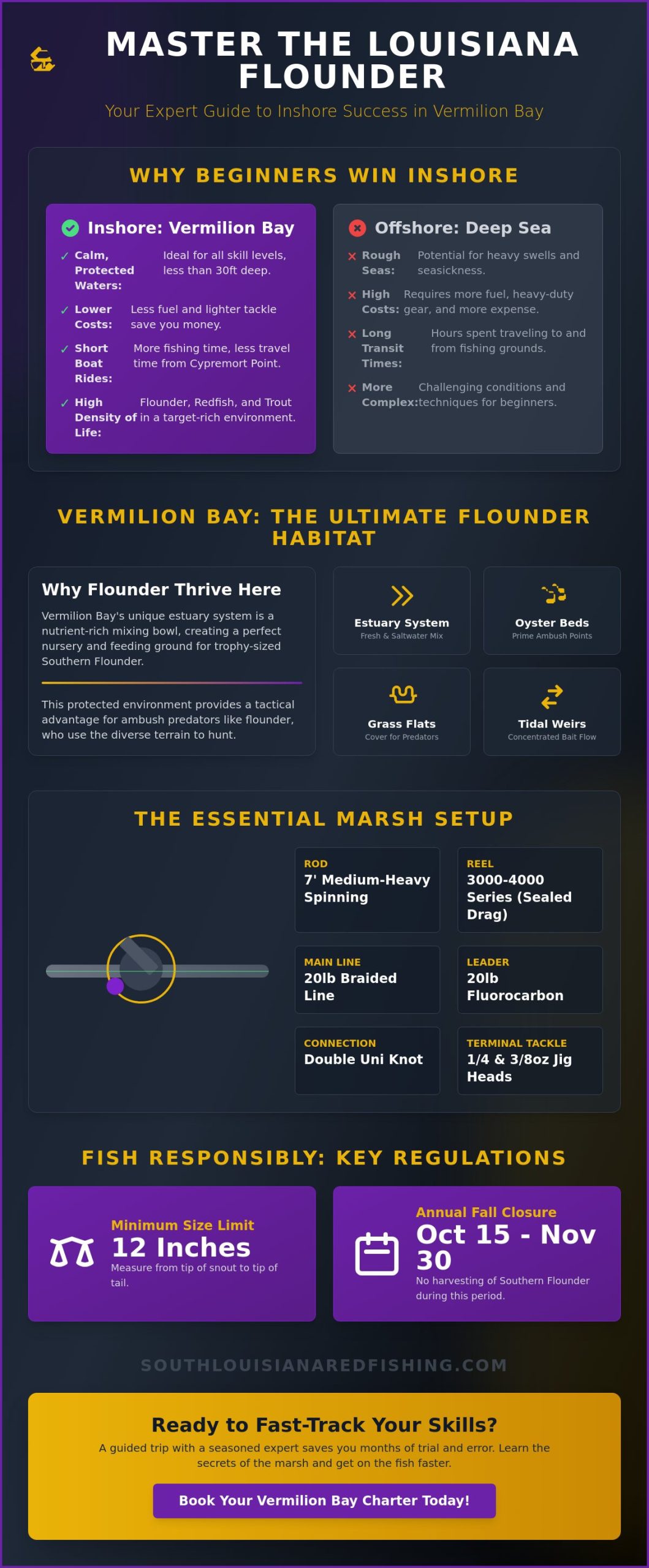
Flounder are the ultimate ambush predators. To find them, you have to look for mud-to-shell transitions, especially near Southwest Pass and the various weirs along Marsh Island. These fish don’t chase bait over long distances. They wait. Mastering the “drag and pause” technique is essential. You want to bounce your lure slowly along the bottom, feeling for the subtle “thump” that signals a strike. Because the water can be murky from river runoff, using scent-heavy presentations and high-contrast colors is a game changer. Be sure to check the latest Louisiana saltwater fishing regulations before your trip, as flounder seasons and limits are strictly managed to ensure the population thrives for years to come.
Redfish and Trout Seasonal Patterns
In the grass flats of Cote Blanche Bay, the game is all about stealth. Tides dictate everything. A rising tide pushes redfish deep into the marsh grass, while a falling tide forces them out into the open bayous where they are easier to target. Trout movement is even more dynamic. They follow the saltier water as it pushes into the bay during the summer months. If you aren’t sure what you’ve hooked, you can refer to this guide on Louisiana Fish to identify your catch and learn more about their specific habits. Ready to test these tactics for yourself? You can book a guided trip to see these expert strategies in action on the water.
Vermilion Bay vs. Venice: Why Inshore Marsh Fishing Wins Every Time
Don’t let the marketing hype fool you. While Venice is often called the “end of the world,” that title comes with a grueling drive and massive crowds that can turn a dream trip into a logistical nightmare. Choosing the central coast means you’re fishing while others are still sitting in traffic. It’s about maximizing your time on the water. When you’re focused on flounder fishing vermilion bay, you are in a protected, nutrient-rich environment that doesn’t shut down just because the wind kicks up a few knots. You get more casts, more hookups, and less stress. Why burn your vacation time on a highway when the best action in the state is right here?
Pressure is the silent killer of a good fishing spot. In other areas of the state, you might find yourself in a parade of boats all chasing the same school of fish. This constant engine noise and lure splashing makes fish wary and tight-lipped. Vermilion Bay remains a hidden gem where the marshes are vast and the anglers are few. This lack of pressure means the fish are less spooky and more willing to strike. It’s an authentic, raw experience that feels like a true adventure rather than a commercialized tour. You get the peace of the marsh and the thrill of the hunt without the constant hum of neighboring outboards.
Inshore vs. Offshore: The Real Differences
Offshore trips are a high-stakes gamble. You pay a massive premium for fuel and travel time, only to risk a total cancellation if the swells hit four feet. Inshore marsh fishing offers incredible weather resilience. We stay in the calm, winding bayous and lakes where the water remains fishable even when the Gulf is angry. Plus, inshore trips avoid the strict federal seasonal closures that often plague deep-sea species. It’s consistent, high-action fun that keeps the rods bending whether you are chasing redfish or flounder fishing vermilion bay, all without the high-seas headache or the heavy price tag of a deep-sea venture.
The Advantage of Cypremort Point
Departing from Cypremort Point State Park puts you at the doorstep of world-class action in minutes. You can reach productive nearshore oil rigs and sprawling oyster beds without the long, punishing runs required in the delta. It’s the perfect home base for a true Acadiana adventure. Being so close to Lafayette means you’re never far from the heart of Cajun Country. After a successful day on the water, you can be sitting down to a plate of world-famous crawfish or gumbo in no time. It’s an authentic local experience that over-commercialized tourist hubs simply can’t match. You get the best of both worlds: elite fishing and the finest food in Louisiana.
How to Plan Your Perfect Marsh Fishing Adventure
Planning a trip to the central coast is straightforward. It’s about timing your arrival to match the biological clock of the marsh. While the redfish bite is a year-round affair, those specifically targeting flounder fishing vermilion bay need to circle the spring and late summer months on their calendars. You must plan around the annual flounder closure from October 15 through November 30. This regulation is designed to protect spawning stocks; so the “run” is best enjoyed in the weeks leading up to mid-October. Booking your 2026 dates early is essential. Peak weekends fill up months in advance as seasoned anglers rush to secure the best tides with a professional guide.
Don’t overthink your gear. Pack light but pack smart. Polarized glasses are your most important tool for spotting “crawling” reds in the shallows. Copper or amber lenses work best in our brackish water to cut the glare and reveal fish hiding near the grass lines. High-SPF sun protection and breathable, non-marking footwear are non-negotiable for a full day on the boat. For licensing, most out-of-state visitors find the $20 3-day charter passenger saltwater license the easiest and most cost-effective option. You can secure this online through the LDWF portal in minutes, ensuring you’re legal before the first cast of the day.
Communication is the hallmark of a great trip. Call your guide a few days before your departure to discuss recent weather patterns and water clarity. A 3rd-generation expert will have the pulse of the bay and can suggest shifts in start times to catch the best tidal movement. This proactive approach is what separates a generic boat ride from a legendary haul. Ready to get on the water? You can reserve your guided trip now to ensure you get the prime dates for the 2026 season.
A Month-by-Month Guide to Vermilion Bay
The marsh changes its personality with the thermometer. Spring and fall represent the peak windows for a Louisiana Redfish grand slam, as moderate temperatures keep fish active in the ponds. Summer brings early morning topwater explosions and the chance to hunt tripletail near the coastal buoys. When winter arrives, low water levels drain the ponds, providing elite sight-fishing opportunities for those who don’t mind a little chill. Each season offers a unique way to experience the abundance of the bay.
Logistics: Getting to Cypremort Point
Reaching the heart of the marsh is a breeze. Cypremort Point State Park is the primary meeting spot, located an easy drive from Lafayette, New Iberia, or Baton Rouge. Most clients find that staying in Lafayette provides the best mix of world-famous Cajun dining and hospitality. Once you arrive at the park, there is ample parking and a clear meeting point at the boat launches. Use our guide to Louisiana Fishing Trips to help plan your full travel itinerary and discover the best local spots to visit after your day on the water.
Experience Acadiana with South Louisiana Redfishing
Choosing South Louisiana Redfishing means stepping into a 3rd-generation legacy of excellence. Capt. Troy D Nash doesn’t just read the tides; he lives them. While many guides in Venice or other areas treat a charter like a simple transaction, Troy treats it like a homecoming. Growing up in these marshes gives him a perspective you simply cannot buy. It’s about knowing exactly where the water stacks up on a falling tide and which hidden cuts hold the monsters. This deep-rooted heritage is why we are the premier choice for anyone serious about flounder fishing vermilion bay.
Our service is built on professional longevity and top-tier preparation. We don’t settle for “good enough” gear. You’ll step onto custom-built boats designed specifically to navigate the skinniest bayous of Marsh Island. We provide everything you need, from high-performance rods to the local secrets that turn a slow morning into a legendary haul. It’s more than a utility. It’s a thrilling, memorable journey designed for all skill levels. Whether you’re a seasoned pro or a family looking to create a lifelong memory, you’re in capable hands. A marsh charter is the ultimate family event where the high-fives are as frequent as the hookups.
The Cajun Experience in Lafayette
The adventure doesn’t end when we hit the dock at Cypremort Point. You’re at the gateway to the most authentic culture in the world. Acadiana is a sensory explosion. After your trip, head back toward Lafayette to indulge in the best boudin and crawfish on the planet. There’s something special about eating a meal you earned after a day on the water. If you’re looking for more ways to explore our region, check out our guide on Lafayette things to do. From live Zydeco music to historic tours, the heart of Cajun Country is waiting for you.
Book Your Vermilion Bay Adventure
The 2026 season is already shaping up to be legendary. Don’t wait until the last minute to secure your spot on the boat. Capt. Troy’s calendar fills quickly, especially during the peak windows for flounder fishing vermilion bay. We handle the logistics so you can focus on the fight. If you want to dive deeper into the specific tactics we use to target the state’s most iconic species, read our detailed breakdown of Red Fish Fishing Louisiana. We are ready to show you why this marsh is the world-class destination for inshore action.
Let’s get on the fish!
Claim Your Cajun Slam in the Vermilion Marsh
The winding bayous and fertile flats of Marsh Island are calling. You now know why this region beats the heavy crowds of the delta and how the right tactics turn a simple day into a legendary Cajun Slam. From mastering the “drag and pause” for flounder fishing vermilion bay to sight-casting for tailing reds in the grass, the action in 2026 is set to be world-class. You don’t need to settle for long boat rides or over-pressured waters when the heart of Acadiana offers such raw, authentic beauty.
Success on the water comes down to heritage and preparation. When you step onto the boat with a 3rd generation local guide, you gain access to secrets that take decades to learn. We provide all the top-tier gear and custom boats needed to navigate these complex weirs and hidden canals safely. It’s time to stop dreaming about the perfect trip and start living it. The fish are waiting, and the boudin is hot. Book Your Vermilion Bay Adventure with Capt. Troy D Nash Today!
We’re ready to welcome you to the marsh and share the thrill of the strike. Grab your polarized glasses and let’s make some memories on the water!
Frequently Asked Questions
What is the best time of year for flounder fishing Vermilion Bay?
The prime window for flounder fishing vermilion bay is during the spring and late summer months before the annual fall closure. From October 15th through November 30th, possession of southern flounder is prohibited to protect spawning stocks. Aim for the weeks leading up to mid-October for the most aggressive “run” action in the marsh. These fish are most active when the bait starts moving through the passes on a falling tide.
Do I need to bring my own fishing gear for a guided marsh trip?
You don’t need to bring a single rod or reel on our charters. We provide all top-tier equipment, including custom boats and professional spinning tackle specifically designed for the marsh environment. If you have a favorite lucky rod you’re dying to use, you’re welcome to bring it along. Otherwise, rest easy knowing you’ll be using the best gear in the industry to target your trophy.
How many people can fit on a standard marsh fishing boat?
Most guided marsh trips accommodate one to four passengers comfortably. Our custom boats are built for stability and performance in shallow water, ensuring everyone has enough room to cast without tangling lines. For larger corporate groups or big family reunions, we can easily arrange multiple boats. This keeps the whole crew on the fish while maintaining the personalized attention that a professional guide provides.
Is marsh fishing in Vermilion Bay suitable for children and beginners?
The protected waters of Vermilion Bay are perfect for families and novice anglers of all ages. Unlike the rough conditions often found in deep-sea fishing, our marsh environment stays calm and manageable throughout the day. Capt. Troy specializes in teaching the basics of casting and hook-setting. It’s a fantastic way for kids to experience the thrill of their first big catch in a safe, encouraging setting.
What happens if the weather is bad on the day of my charter?
Safety is our absolute priority on every trip. While the marsh offers great protection from wind, we won’t head out in dangerous lightning or extreme gale conditions. If the weather forces a cancellation, we’ll work with you to reschedule for the next available opening. We always keep a close eye on the radar to ensure your adventure is both safe and productive before we leave the dock.
What is the difference between inshore marsh fishing and offshore fishing?
Inshore marsh fishing focuses on shallow estuaries, bayous, and flats where the water is calm and the travel distance is short. This is much more cost-effective than offshore trips, which require massive fuel budgets and long runs to reach deep water. You’ll spend your day catching redfish and flounder fishing vermilion bay rather than battling four-foot swells, sea sickness, and the high costs associated with deep-sea ventures.
Can we keep the fish we catch during the trip?
You are more than welcome to keep your catch within the state’s legal creel and size limits. We’ll even clean and bag your fish at the end of the day so they’re ready for the frying pan. Whether you’re chasing flounder or loading up on redfish, you’ll head home with some of the best-tasting seafood Louisiana has to offer. It’s the perfect way to bring the Cajun experience back to your kitchen.
How much should I tip my fishing guide in Louisiana?
A tip of 15% to 20% of the trip cost is the standard industry practice for fishing guides in Louisiana. Your guide works hard long before you arrive, prepping the boat, catching bait, and scouting the best spots. A tip is a great way to show appreciation for the expertise, gear maintenance, and hard work that goes into making your marsh adventure a success. It’s always appreciated but never required.