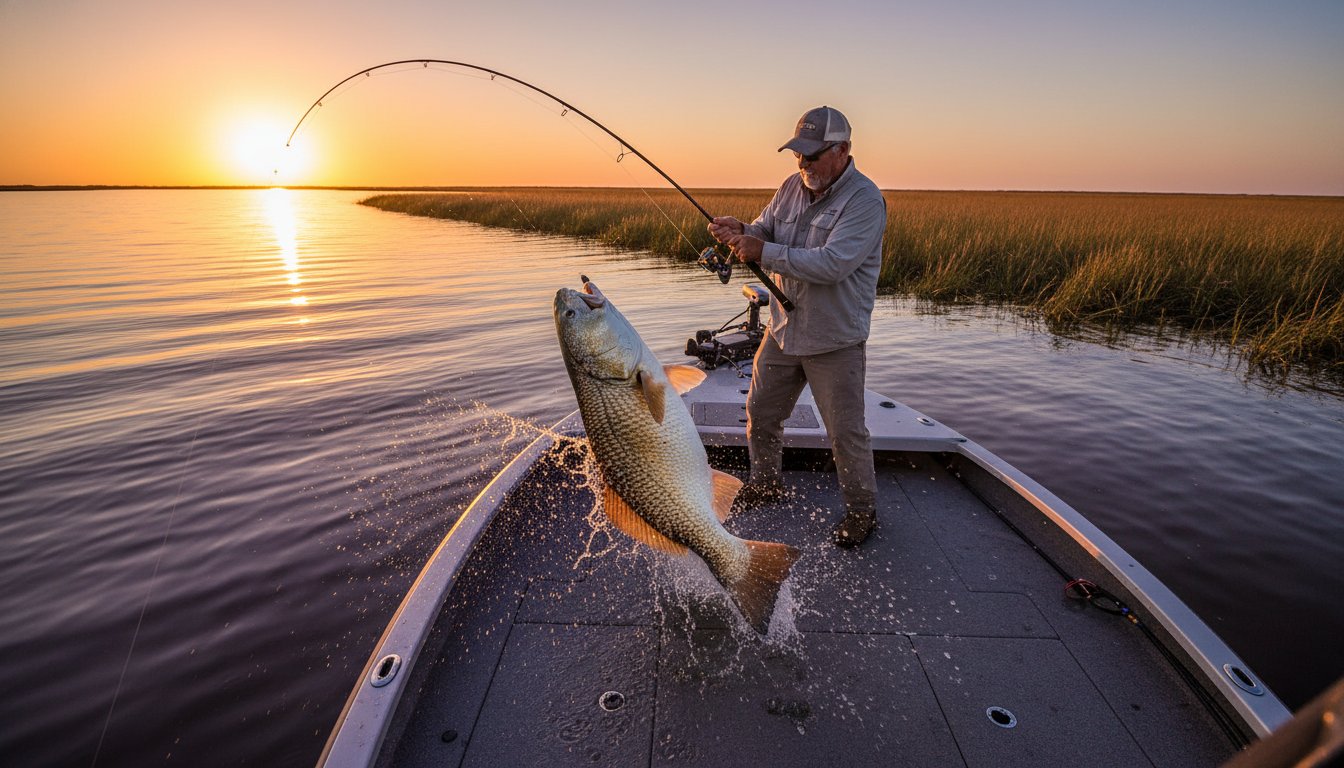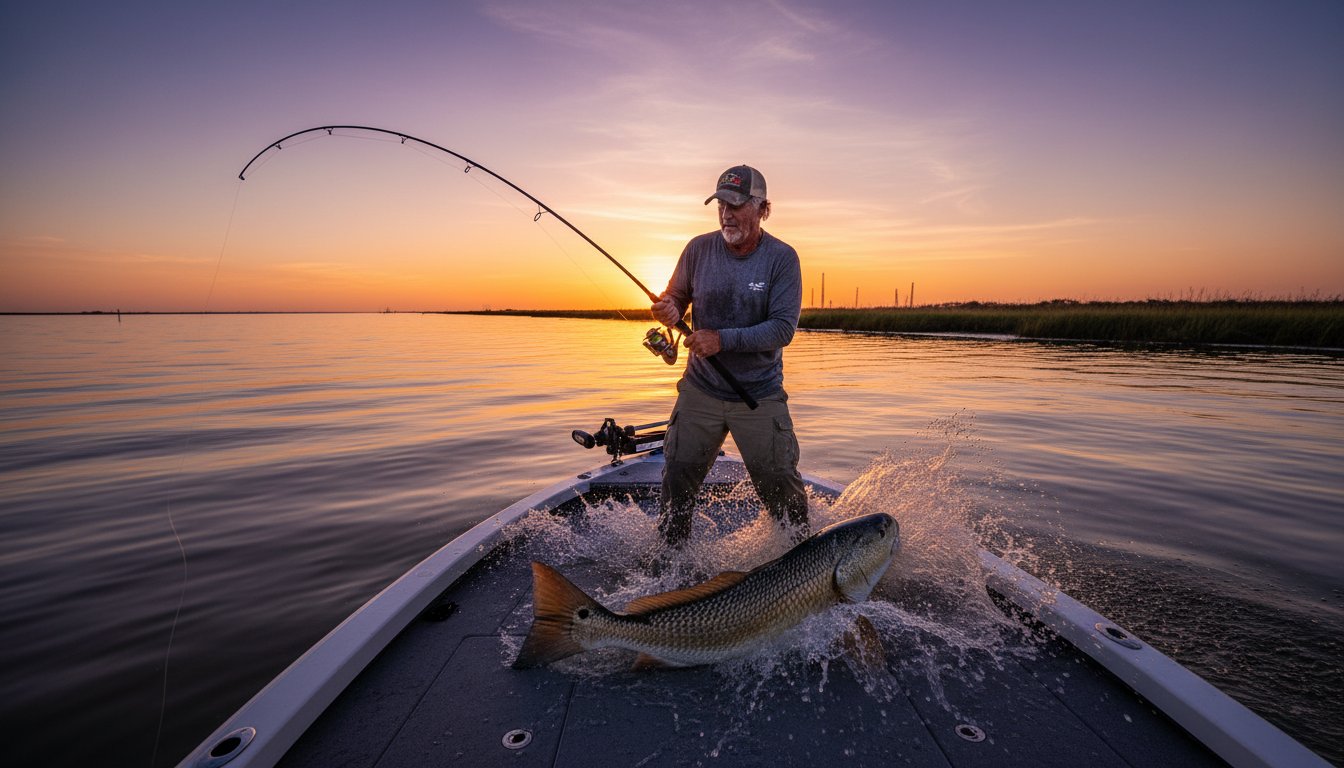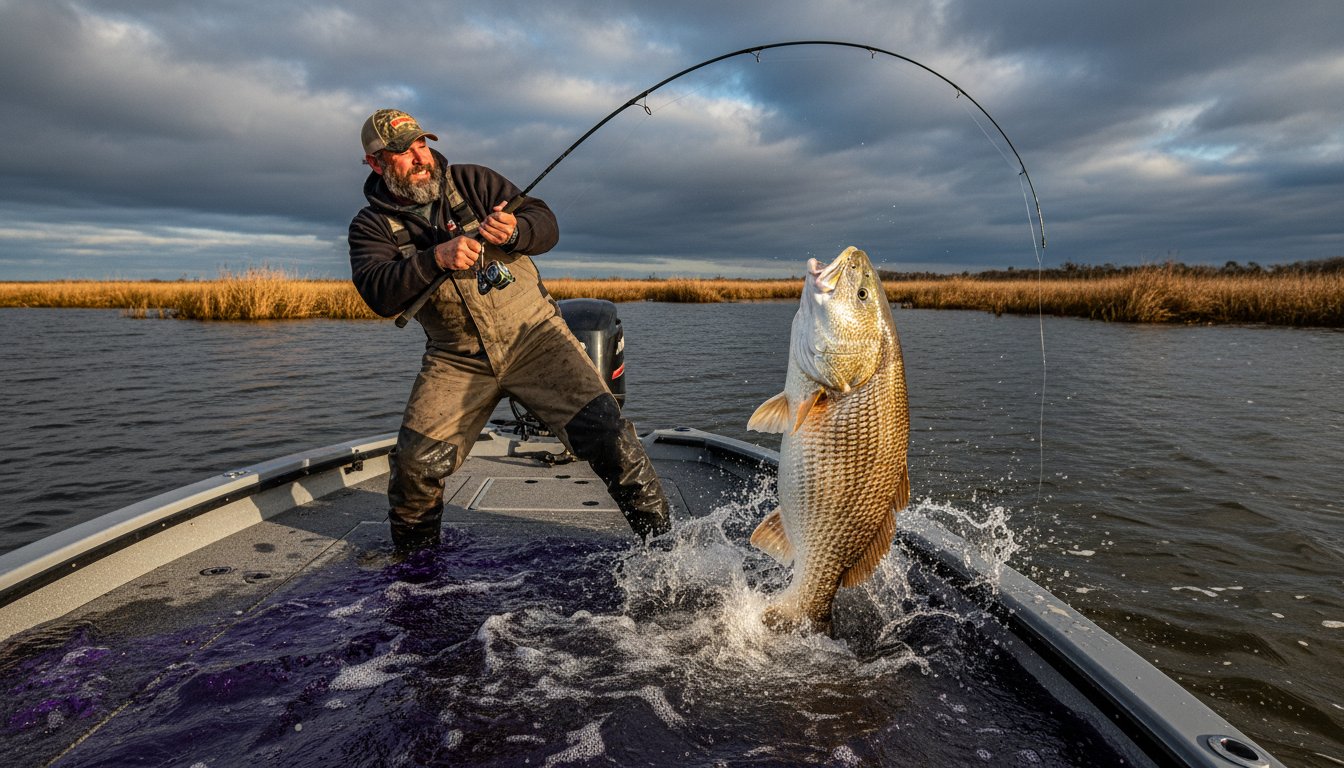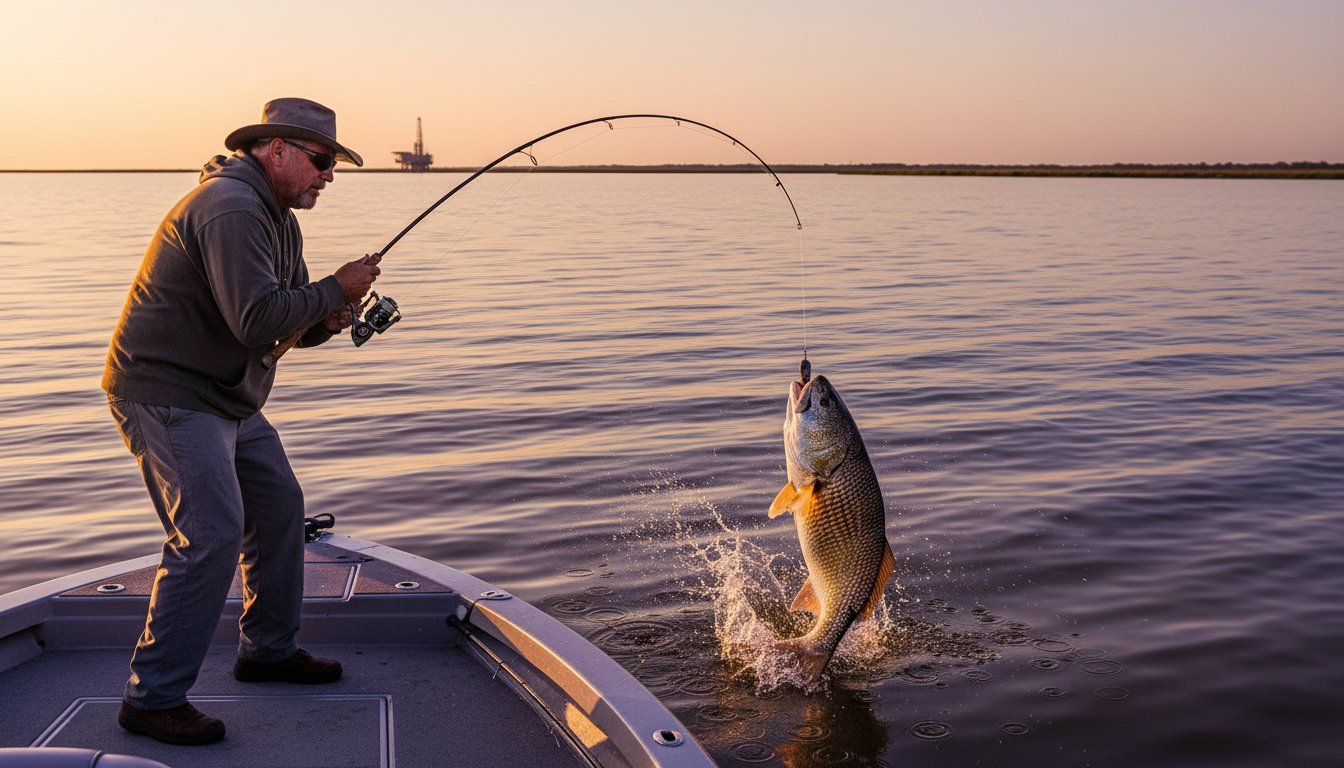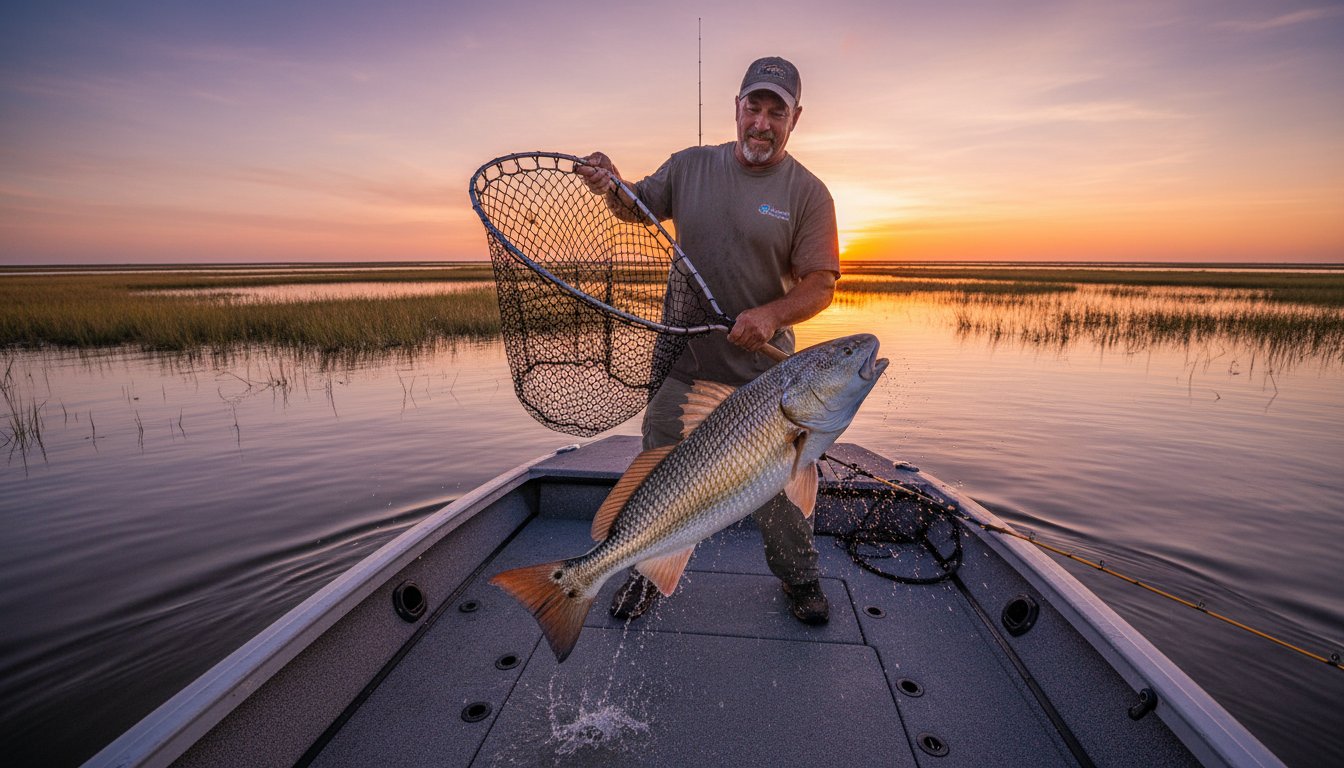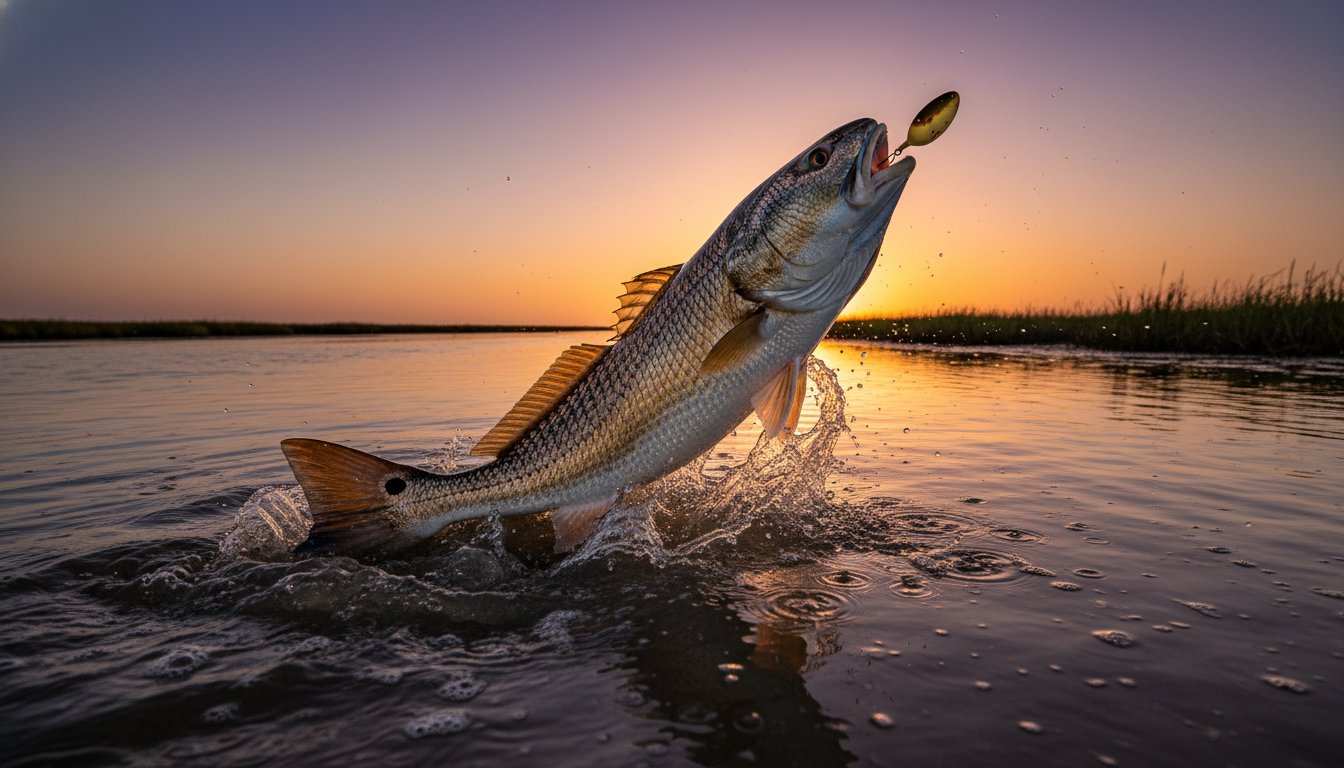
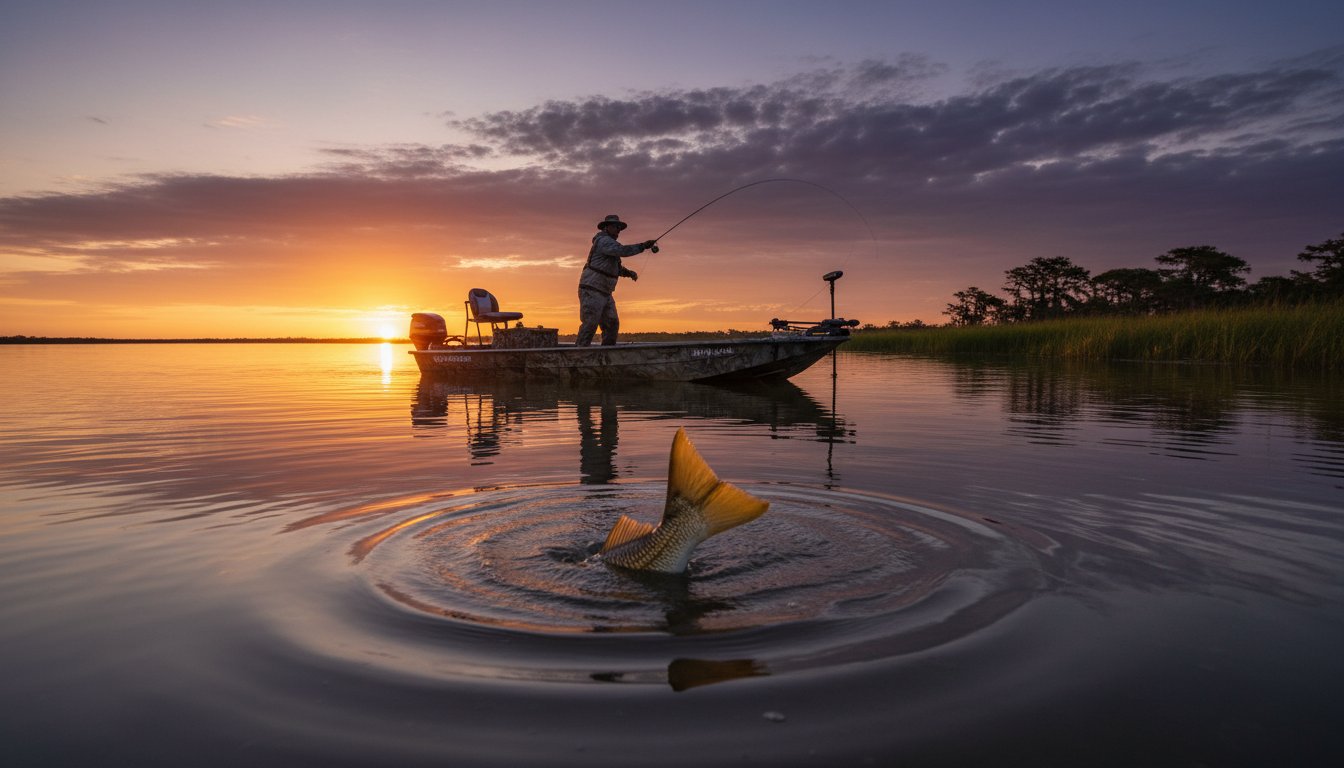
Why fight the chaotic crowds in Venice when 30lb bull reds are tailing in total silence just minutes from the docks at Cypremort Point? You’ve likely felt the sting of driving hours to a popular fishing hub only to find the “secret” spots packed with dozens of other boats. It’s time to escape the pressure and exhausting boat runs for something more authentic. Choosing the right louisiana redfish fly fishing guides means the difference between a crowded day on the water and an epic adventure in the pristine marshes of Vermilion Bay.
You’re about to discover why the untouched flats of South Marsh Island and the hidden weirs of West Cote Blanche Bay offer the most thrilling fly fishing in the United States. We’ll show you how Captain Troy Nash, a 3rd generation veteran with over 25 years of experience, targets giant reds in waters most anglers never see. You’ll learn how to combine world-class sight casting with the incredible Cajun culture and food of Lafayette for a trip that defines the true spirit of South Louisiana.
Key Takeaways
- Discover why the low-pressure marshes of Vermilion Bay and Cypremort Point produce larger, less-spooked fish compared to crowded hubs like Venice.
- Master the high-stakes “visual game” of sight-fishing for giant bull reds and learn the specific 8-weight to 10-weight gear required to land a trophy.
- Unlock the secrets of the legendary Fall and Winter “Bull Red” run and find out why this season offers the most heart-pounding action in the marsh.
- Learn why booking expert louisiana redfish fly fishing guides like Captain Troy Nash provides a 3rd-generation advantage for navigating complex bayous and reefs.
- Plan your epic adventure with travel logistics for flying into Lafayette and pairing your fishing trip with world-class Cajun flavors and culture.
Why South Louisiana is the Premier Destination for Redfish Fly Fishing Guides
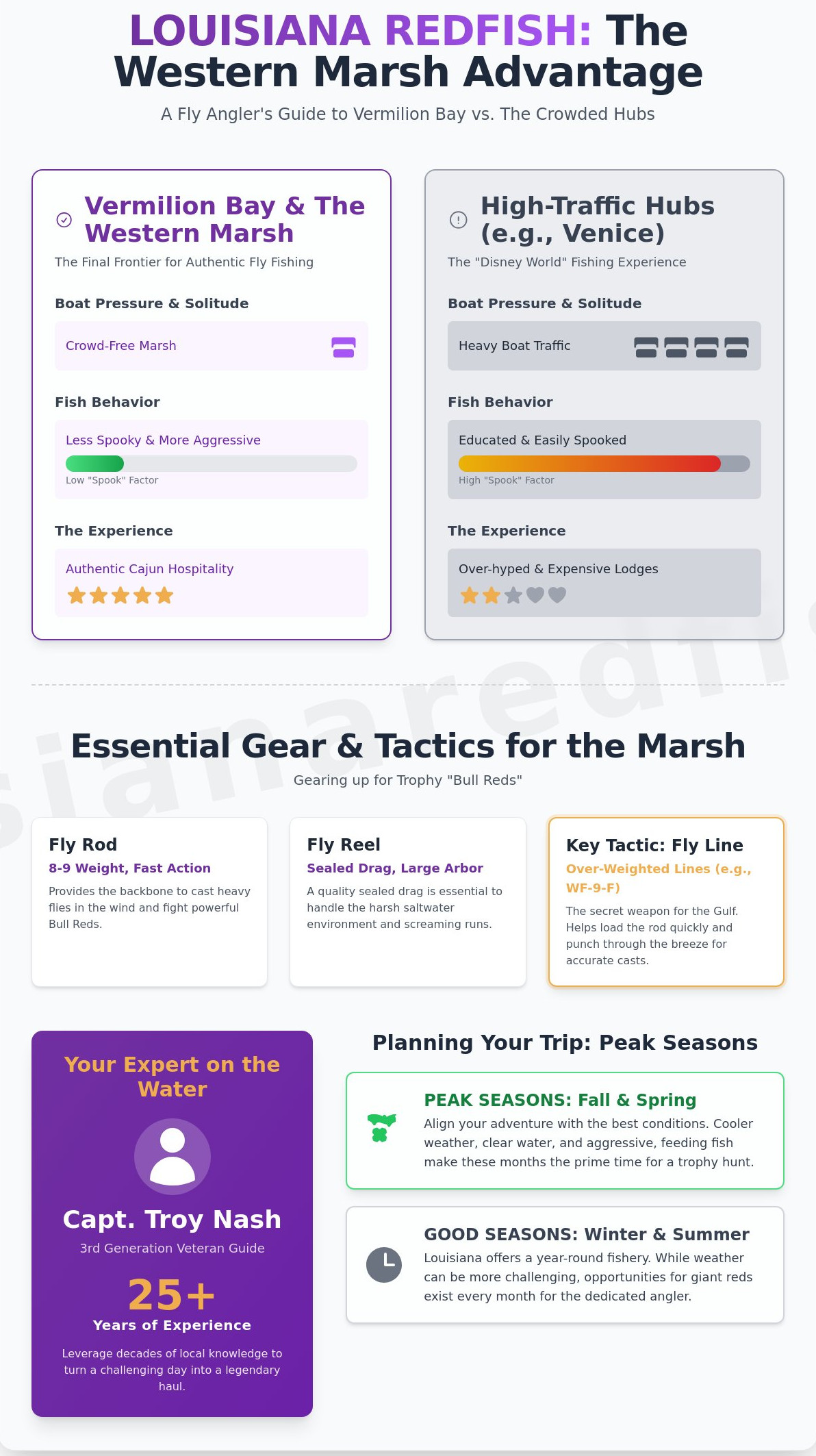
Experience the thrill of the hunt in the world’s most productive saltwater nursery. Expert louisiana redfish fly fishing guides offer more than just a trip; they provide an entry into a wild, golden landscape where the fish are massive and the pressure is low. While famous spots like Venice often see heavy boat traffic and crowded canals, the waters surrounding Vermilion Bay and Marsh Island remain a hidden gem for serious anglers in 2026. This region produces giant red drum (Sciaenops ocellatus) that haven’t seen a dozen flies by lunchtime. You’ll find bull reds over 30 pounds patrolling the shallow flats, often joined by oversized Black Drum and wary Sheepshead. It’s a target-rich environment where every cast could lead to your next epic adventure.
The abundance of life in these marshes is staggering. Because these areas receive significantly less pressure than other Louisiana hubs, the fish behave more naturally. They’re aggressive, curious, and willing to eat a well-placed fly. You aren’t just fishing here; you’re participating in a world-class sporting event where the odds are stacked in your favor. Whether you’re targeting a tailing red in the grass or a giant cruising the shell banks, the sheer volume of opportunities makes this the premier destination for fly enthusiasts.
The Magic of the Vermilion Bay Marsh
The landscape here is a maze of endless banks, bayous, and lakes. From the quiet shores of Cypremort Point to the remote weirs of Marsh Island, the variety of structure is staggering. Water clarity in East and West Cote Blanche Bay often exceeds 3 feet of visibility, which is essential for successful sight-fishing. You’ll explore specific honey holes near Burns Point and the oyster beds of Weeks Bay that stay protected from the wind. Unlike industrial hubs, this area retains its raw, natural beauty. After a day on the water, the short 45-minute drive to Lafayette lets you dive into authentic Cajun culture and world-class boudin.
Why Fly Fishing is the Ultimate Challenge
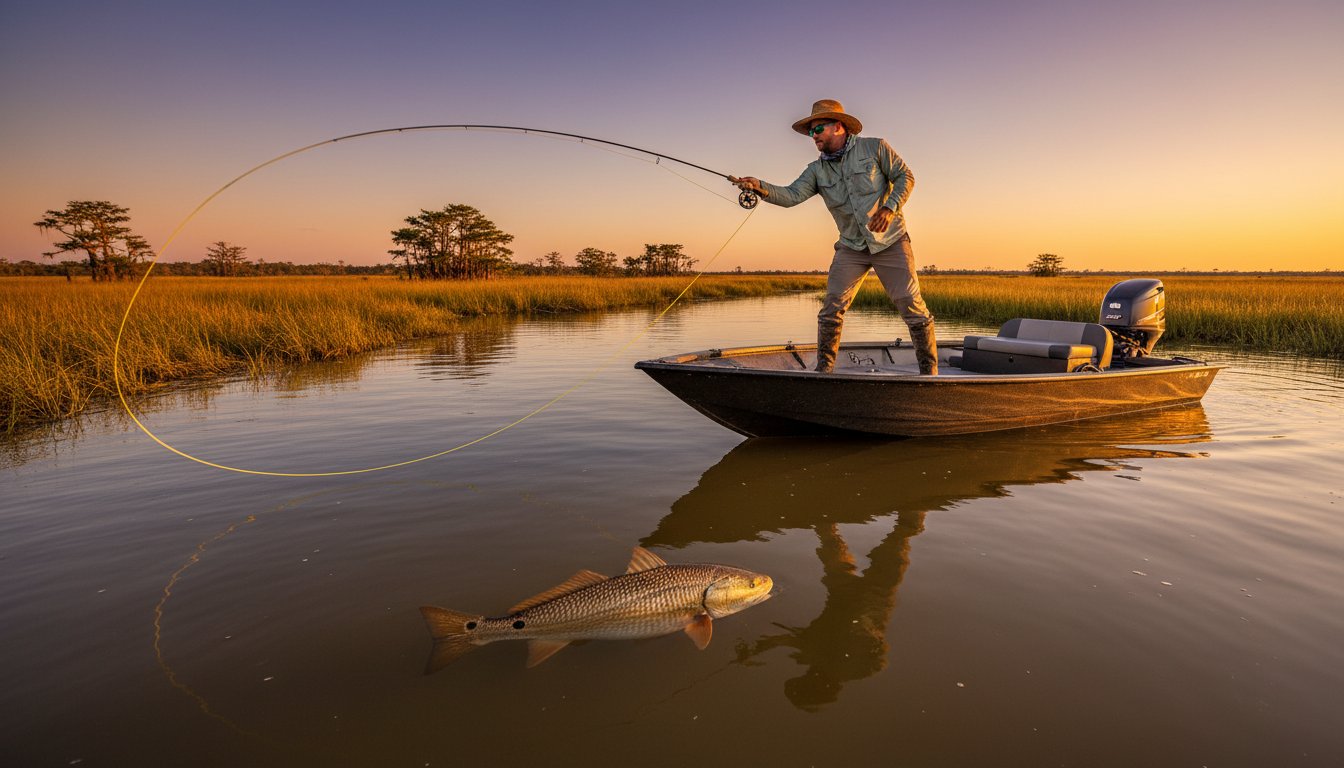
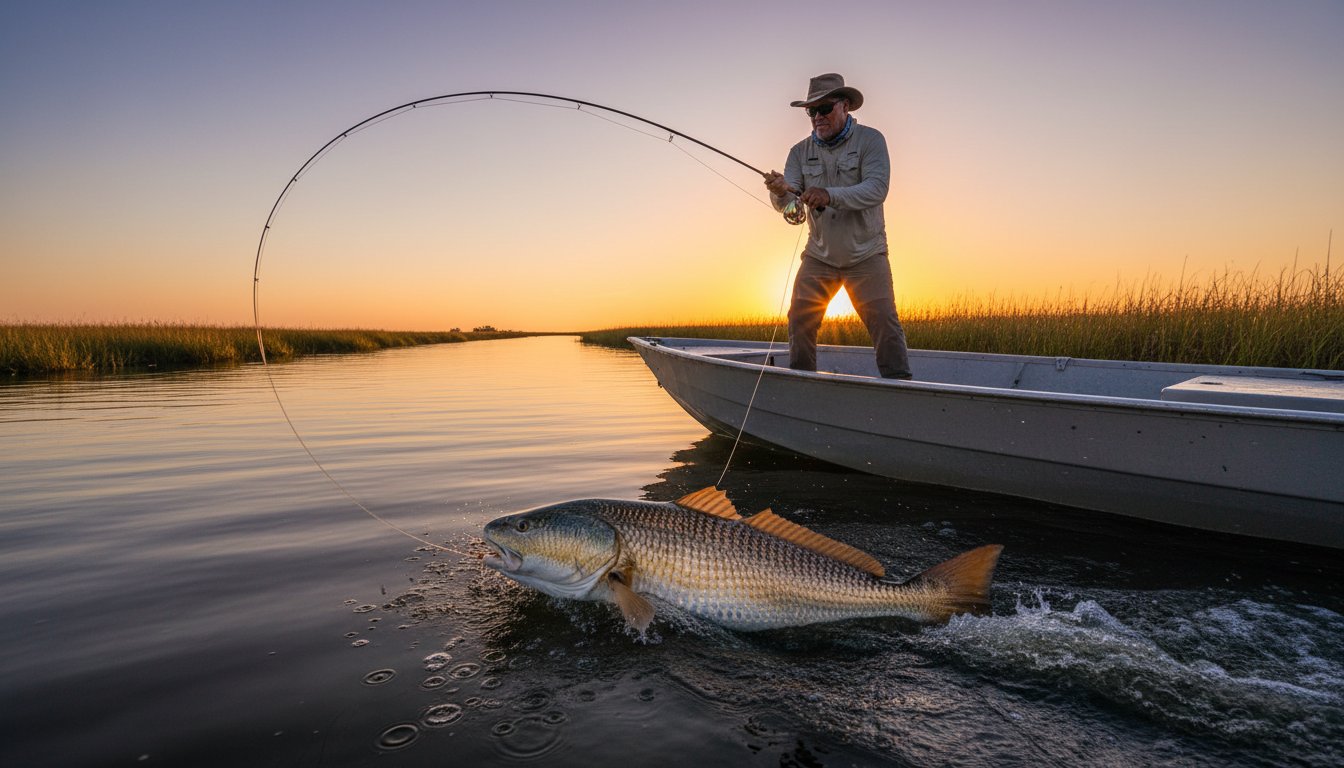
Nothing beats the adrenaline spike of seeing a 40-inch redfish crawling through the grass with its back completely out of the water. This is a visual game. You aren’t just blind casting; you’re hunting a specific target. A 3rd generation, veteran guide with over 25 years of experience is vital here to handle the boat. Captain Troy Nash understands how to pole a skiff silently, positioning you for the perfect 40-foot cast into the wind. He’s got you covered! Professional louisiana redfish fly fishing guides ensure the boat is always at the right angle for the sun, giving you the best possible shot at a trophy. Seeing a giant bull red inhale your fly in 12 inches of water is a memory that stays with you forever.
Mastering the Marsh: Sight-Fishing Techniques for Giant Bull Reds
Sight-fishing for bull reds is the ultimate test of an angler’s skill. You aren’t just blind casting; you’re hunting. Spotting a redfish in the shallow flats requires high-quality polarized glasses and a keen eye for “nervous water.” Expert louisiana redfish fly fishing guides teach you to look for the copper glow or the subtle swirl of a tail. Your gear must handle the power of a 30-pound fish. An 8-weight rod works for schoolies, but a 10-weight is the gold standard for giant bull reds. Pair it with a saltwater reel featuring a sealed drag to survive the salt and grit of the marsh.
Fly selection is straightforward because South Louisiana redfish have a simple menu: shrimp and crabs. Patterns like the Kwan or various spoon flies mimic these perfectly. The highlight of the experience is the “thump.” It’s that aggressive, tactile vibration you feel through the fly line when a bull red inhales your offering. It’s a sensation that stays with you long after the trip ends. Choosing the right louisiana redfish fly fishing guides ensures you’re using flies tied specifically for the tea-colored water of the local bayous.
Reading the Water in Vermilion Bay
Vermilion Bay offers a unique landscape of canals and weirs where tide movements dictate fish behavior. When the tide falls, redfish stack up near these outlets to ambush bait. Look for “tails” breaking the surface or “v-wakes” pushing through the shallows. Oyster beds act as dinner tables for these fish. While other areas like Venice see heavy boat pressure, our local marsh remains a productive sanctuary. Ensure you follow all Louisiana fishing regulations regarding size and bag limits during your 2026 adventure.
Casting Accuracy and Stealth
In the marsh, a 40-foot accurate cast beats a 90-foot hero cast every time. In the 2024 season, 90% of successful hookups occurred within 45 feet of the boat. You have a small window to present the fly before the fish moves. Your guide will pole the skiff silently, getting you into position without a sound. Louisiana wind can be tough; practice a low, punchy backcast to stay on target. After a morning of chasing bulls, head back to Cypremort Point or Lafayette for the best Cajun crawfish you’ve ever tasted. If you’re ready to test your skills, plan your marsh trip with a veteran who has over 25 years of local experience.
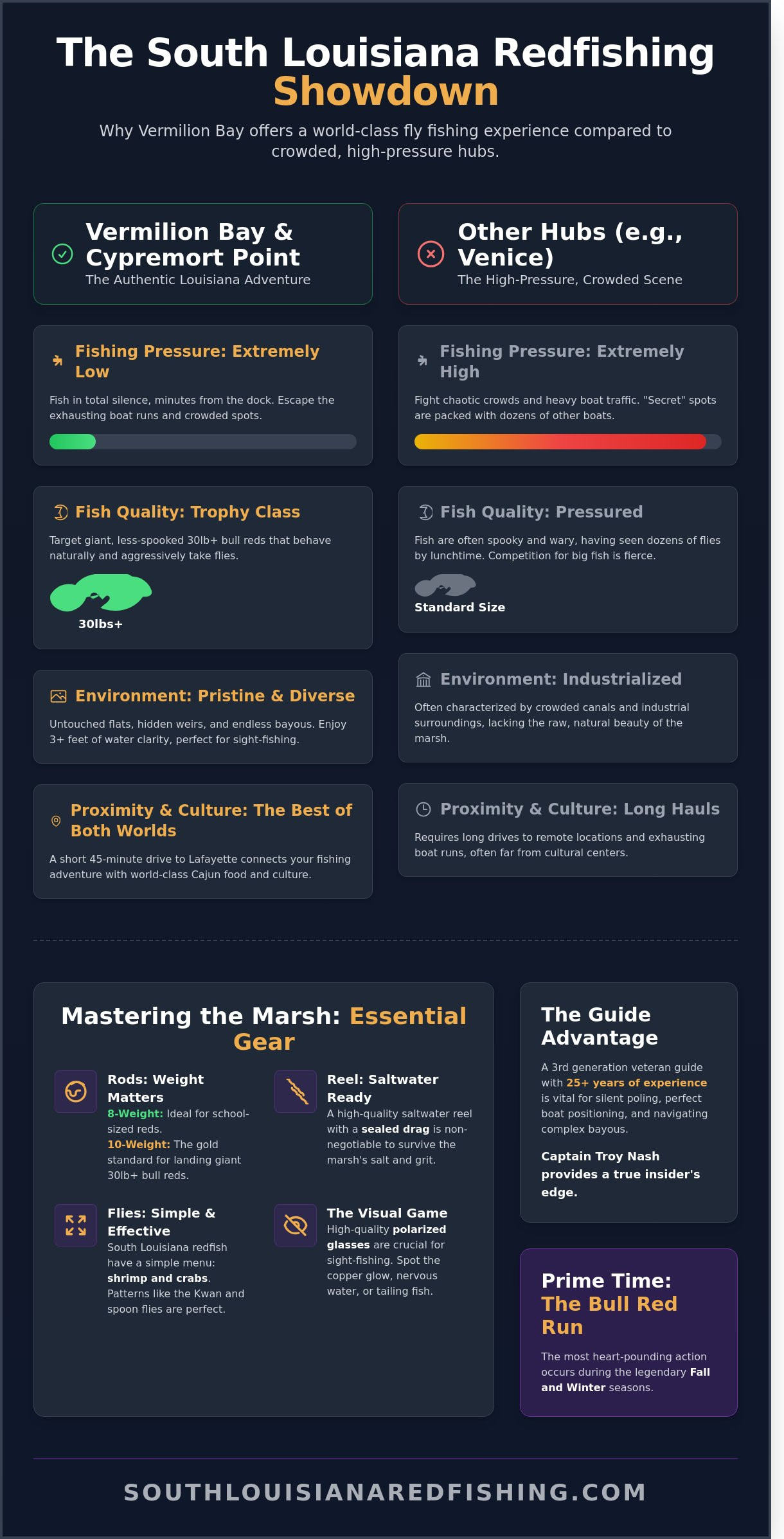
Vermilion Bay vs. The Rest: Comparing Louisiana’s Best Fly Fishing Waters
Venice often grabs the national headlines, but it lacks the quiet intimacy and tactical advantages of the South Louisiana bays. Choosing Cypremort Point over other areas means you’re spending your morning casting, not commuting. While a trip to the Mississippi River delta often requires a 60-mile drive from New Orleans followed by a grueling boat ride, our base at the state park puts you in the heart of the action immediately. Professional louisiana redfish fly fishing guides in this region prioritize quality time on the water over long-distance travel. You get the same world-class bull reds without the industrial backdrop of the heavy shipping lanes.
Shorter Runs, More Fishing Time
When you depart from Cypremort Point, your epic adventure begins in under 15 minutes. Compare that to the 60-minute pounding runs required to reach the outer edges of the delta. We target the endless grass banks of Marsh Island and the protected, nutrient-rich corners of Cote Blanche Bay. These shorter runs mean your fly stays in the water longer. It’s about maximizing every hour of your 8-hour charter. You’ll spend more time sight-casting to tails and less time burning fuel, which is why veteran louisiana redfish fly fishing guides prefer this geography for technical fly trips.
Inshore vs. Offshore: The Fly Angler’s Choice
Inshore fly fishing is a precise, rewarding game that beats dropping heavy lead in the deep sea every time. You’ll save $600 or more on a marsh trip compared to a fuel-heavy offshore excursion. There’s also the “sea state” factor to consider. We rarely cancel trips due to rough weather because the marsh offers endless protection. The calm waters of Weeks Bay and Burns Point remain fishable even when 15-knot winds turn the open Gulf into a washing machine. This stable environment supports vital redfish conservation efforts by allowing for better catch-and-release conditions in the shallows. Plus, the species limits for redfish and speckled trout are much more favorable for the inshore angler.
The ‘Secret’ Spots: Weirs and Hidden Lakes
The geography of South Louisiana is a labyrinth of managed marshes, canals, and weirs. These structures act like magnets for giant reds, concentrating baitfish in predictable patterns. Capt. Troy Nash uses 25 years of local logbooks to pick the right weir based on the 1.5-foot tidal swings common in this area. It’s not just luck; it’s a 3rd generation science. These hidden lakes are the exclusive domain of local experts who know which gate to fish on a falling tide. After a successful day, you’re only a short drive from Lafayette, where the best Cajun food in the world waits to cap off your trip. It’s a total cultural experience that “big city” fishing hubs just can’t match.
Logistics for Your Adventure: Seasons, Lafayette Lodging, and Cajun Flavors
Your epic adventure begins with a short flight into Lafayette Regional Airport (LFT). Unlike the long, exhausting drives required to reach other areas like Venice, our slice of paradise is incredibly accessible. From the airport, you’re just a 45-minute drive from the boat launch at Cypremort Point. This proximity means you spend less time in traffic and more time casting to giant reds in the marsh. For lodging, Cypremort Point State Park is the premier choice for families and groups. The park offers 6 premium cabins right on the water and over 80 campsites, providing a front-row seat to the sunrise over Vermilion Bay.
A Month-by-Month Guide to Redfish
Fishing in South Louisiana is a year-round pursuit, but each season offers a different thrill. During the spring and summer, the marsh is teeming with life. You’ll see high activity in the ponds and even find species like Tripletail hovering near nearshore structures from May through August. The water is warm, and the fish are aggressive. It’s a fantastic time for those who love variety in their catch.
Fall and winter are the legendary months for fly anglers. From October through February, the “Bull Red” run takes center stage in the shallows. As cold fronts move through, North winds push water out of the marsh. This creates shallow, clear conditions that are perfect for sight fishing. Professional louisiana redfish fly fishing guides look for these specific weather patterns to put clients on the fish of a lifetime. There’s nothing like seeing a 30-pound redfish tailing in six inches of water on a crisp November morning.
Exploring Lafayette and Beyond
The “Cajun Experience” is what truly sets this trip apart. In South Louisiana, the food is just as important as the fishing. After a successful day on the water, you can head back into town for an après-fishing meal that you’ll talk about for years. Lafayette is the heart of Acadiana, offering everything from spicy boiled crawfish to world-famous boudin. You haven’t lived until you’ve tried a hot link of boudin from a local meat market after a day in the salt air.
If you’re bringing the family or looking for a break between fishing days, the local area is packed with culture. You can tour the TABASCO® Factory on Avery Island or explore the vibrant downtown scene. For more ideas on how to fill your itinerary, check out these 21 Unforgettable Things to Do in Lafayette, Louisiana. We’ve got you covered with the perfect mix of wild marsh adventures and high-end Southern hospitality.
Ready to get on the water? Book your elite Louisiana fly fishing charter today and experience the best of the marsh with a veteran guide.
Book Your Epic Adventure with Captain Troy Nash: A 3rd Generation Legacy
You aren’t just booking a boat; you’re tapping into a bloodline of marsh knowledge that spans decades. Captain Troy Nash brings over 25 years of full time experience to every charter. As a 3rd generation guide, he possesses an instinct for the tides and fish movements in Vermilion Bay and Marsh Island that can’t be learned from a GPS or a map. This deep-rooted legacy is your secret weapon for finding giant bull reds when other boats come home empty. While some anglers flock to crowded, overfished spots like Venice, the secluded flats and winding canals of Cypremort Point offer a more intimate and productive experience. He knows exactly which weirs in West Cote Blanche Bay are holding fish and which shorelines in Weeks Bay will produce a limit on any given day.
Choosing the right louisiana redfish fly fishing guides makes the difference between a long day on the water and a legendary story. Captain Troy’s passion for the marsh is infectious. He’s spent his life navigating the oyster reefs and grass beds of East Cote Blanche Bay, learning the subtle patterns that others miss. This isn’t just a job for him; it’s a lifelong commitment to the sport. When you climb aboard his boat, you’re benefiting from 25 plus years of trial, error, and ultimate success in one of the most unique ecosystems on the planet.
Everything is Covered for Your Success
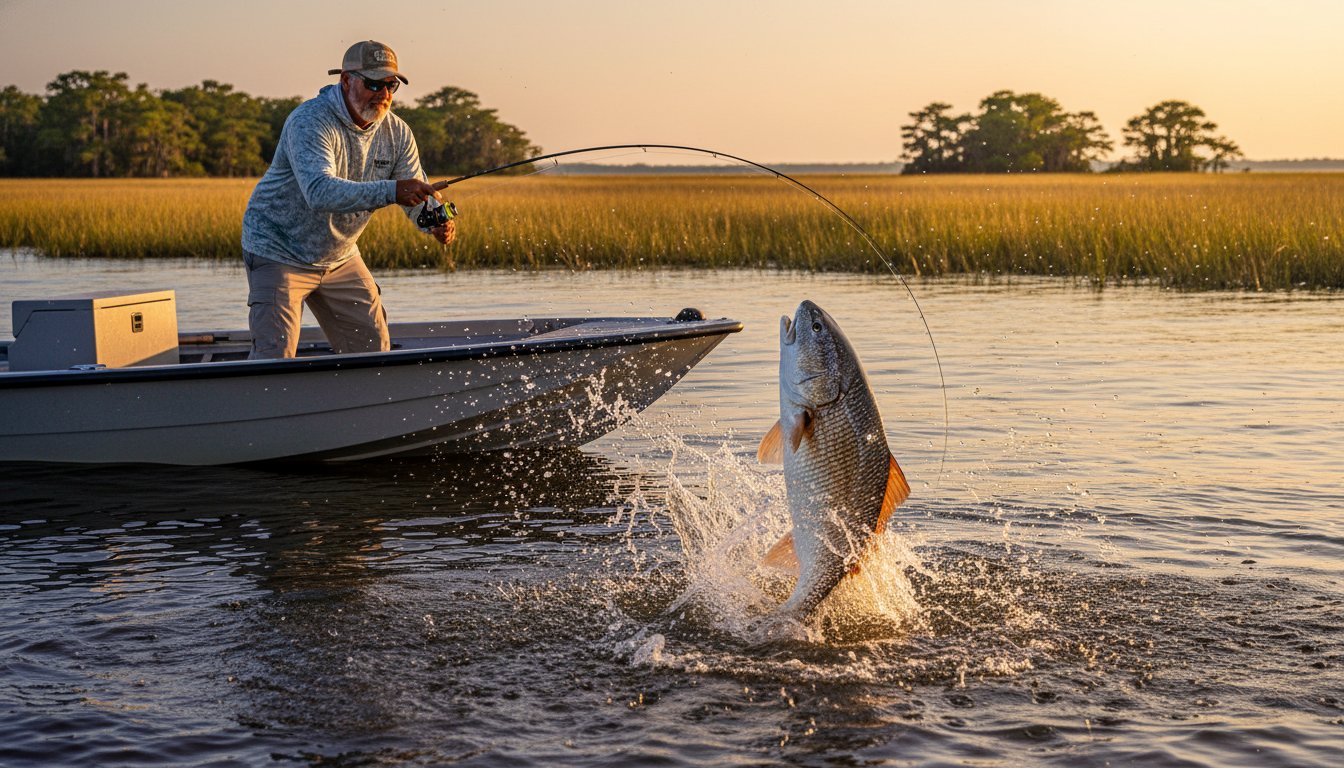
Captain Troy makes sure you’re equipped for victory from the moment you step onto the deck. He provides high-end gear tailored for every style. Whether you want to sight cast with a fly rod, use a spinning reel, or work a baitcaster, he’s got you covered! This versatility is a hallmark of the best louisiana redfish fly fishing guides. Don’t worry if you’re new to the long rod. He loves teaching beginners the ropes while still challenging seasoned pros with technical shots. Every trip includes top-tier rods, reels, and local expertise that targets the most active oyster beds and reefs adjacent to the Gulf of Mexico. You’ll spend less time running and more time fishing compared to expensive deep sea trips. The sea state in our protected marshes is much more comfortable for every member of your group, ensuring a smooth ride to the best honey holes near Burns Point.
Start Your Adventure Today
Secure your spot for the 2026 season now because prime dates fill up fast. The marsh is calling, and those bull reds aren’t going to catch themselves. After a day of fighting fish on the water, you can head back to Lafayette or stay near Cypremort Point State Park to enjoy world-class Cajun food and local tourism. It’s the complete South Louisiana experience that combines world-class angling with legendary hospitality. Ready to climb aboard? Check out our Louisiana Fishing Trips: Your Ultimate Guide for more details on what to bring and what to expect. Contact Captain Troy Nash today to lock in your dates and prepare for the thrill of a lifetime. Your epic adventure begins at Cypremort Point!
Claim Your Spot on the Vermilion Bay Flats
You now understand why the winding canals of Cypremort Point and the shallow lakes of Marsh Island represent the gold standard for sight-fishing. While other areas like Venice often struggle with heavy boat traffic; our marshes remain a pristine playground for those seeking giant bull reds. Choosing the right louisiana redfish fly fishing guides is the difference between a simple boat ride and a masterclass in coastal angling. Captain Troy Nash brings a 3rd generation legacy and over 25 years of full-time experience to every trip. He’s got you covered whether you prefer fly, spin, or baitcast gear.
Beyond the water; your trip is supported by the incredible culture of Lafayette and the legendary Cajun flavors that make this region famous. We’ve explored the oyster beds of Weeks Bay and the productive weirs of East Cote Blanche Bay; and now it’s your turn to climb aboard. Skip the high costs of the deep sea and enjoy the short runs to the best reefs in the Gulf. Your epic adventure is waiting; and the fish are biting.
Experience the Thrill: Book Your South Louisiana Redfish Adventure Today!
Frequently Asked Questions
When is the best time for redfish fly fishing in Louisiana?
Redfish are available in the marsh year-round, but the best time for giant bull reds is from October through March. During these 6 months, the water clears up and the fish move into the shallow flats of Marsh Island. You’ll find the most consistent action when the temperature stays between 50 and 75 degrees. This is the prime season for Louisiana redfish fly fishing guides to put you on trophy fish in the Vermilion Bay area.
Do I need my own fly fishing gear for the charter?
You don’t need to bring any of your own gear because Captain Troy Nash supplies everything for a successful trip. He provides high quality 8-weight and 9-weight fly rods paired with saltwater reels and specialized lines. If you have a favorite rod you’ve used for 10 years, feel free to bring it along. Otherwise, he’s got you covered with professional equipment maintained for the rugged conditions of the Louisiana marsh.
Is fly fishing for redfish suitable for beginners?
Fly fishing for redfish is absolutely suitable for beginners, especially with a veteran guide who has 25 years of experience. Captain Troy provides patient instruction on the skiff to help you master the double haul or a quick 30 foot cast. The shallow shorelines of Cypremort Point offer the perfect training ground. You’ll gain confidence quickly as you sight fish for cruising reds in the clear ponds and lakes.
What should I pack for a Louisiana marsh fishing trip?
Pack high quality polarized sunglasses with amber or copper lenses to spot fish against the marsh floor. Bring a lightweight, long sleeved sun shirt and a wide brimmed hat to handle the Louisiana sun. Don’t forget your camera to capture your epic adventure. While the boat has water and ice, you should bring your favorite snacks or a po-boy from a local Lafayette deli to enjoy during the day.
How do I get my Louisiana fishing license for the trip?
You must purchase a 3 day charter passenger license from the Louisiana Department of Wildlife and Fisheries website for 20 dollars. This is a quick process that takes less than 5 minutes on your smartphone. Make sure to buy it at least 24 hours before your trip starts at Cypremort Point State Park. Having your digital license ready ensures we hit the water at sunrise without any delays or paperwork issues.
What happens if the weather is bad on my scheduled day?
Safety is the top priority, so if winds exceed 25 knots or lightning is present, we will reschedule your trip. Captain Troy monitors the radar 24 hours a day to ensure conditions are safe for the skiff. If a weather cancellation occurs and we can’t find a makeup date, your deposit is fully refunded. Our inshore trips in Vermilion Bay offer more protection from waves than deep sea charters, keeping you fishing longer.
Why should I choose Vermilion Bay over Venice for fly fishing?
You should choose Vermilion Bay over Venice because it offers a more secluded experience with significantly less boat traffic. While Venice attracts hundreds of boats daily, our marsh areas like East Cote Blanche Bay provide quiet flats where fish aren’t spooked. You’ll spend more time casting and less time running, as many of our best spots are only 15 minutes from the dock. It’s a more authentic Cajun experience.
Can we target other species besides redfish on a fly?
You can certainly target other species like Speckled Trout, Black Drum, and Sheepshead on a fly. The oyster beds near South Marsh Island are teeming with life, and it’s common to see a 10 pound drum tailing in the grass. This variety makes every cast exciting. Experienced Louisiana redfish fly fishing guides know how to adapt your fly selection to match whatever is biting in the bayous or near the oil rigs that day.