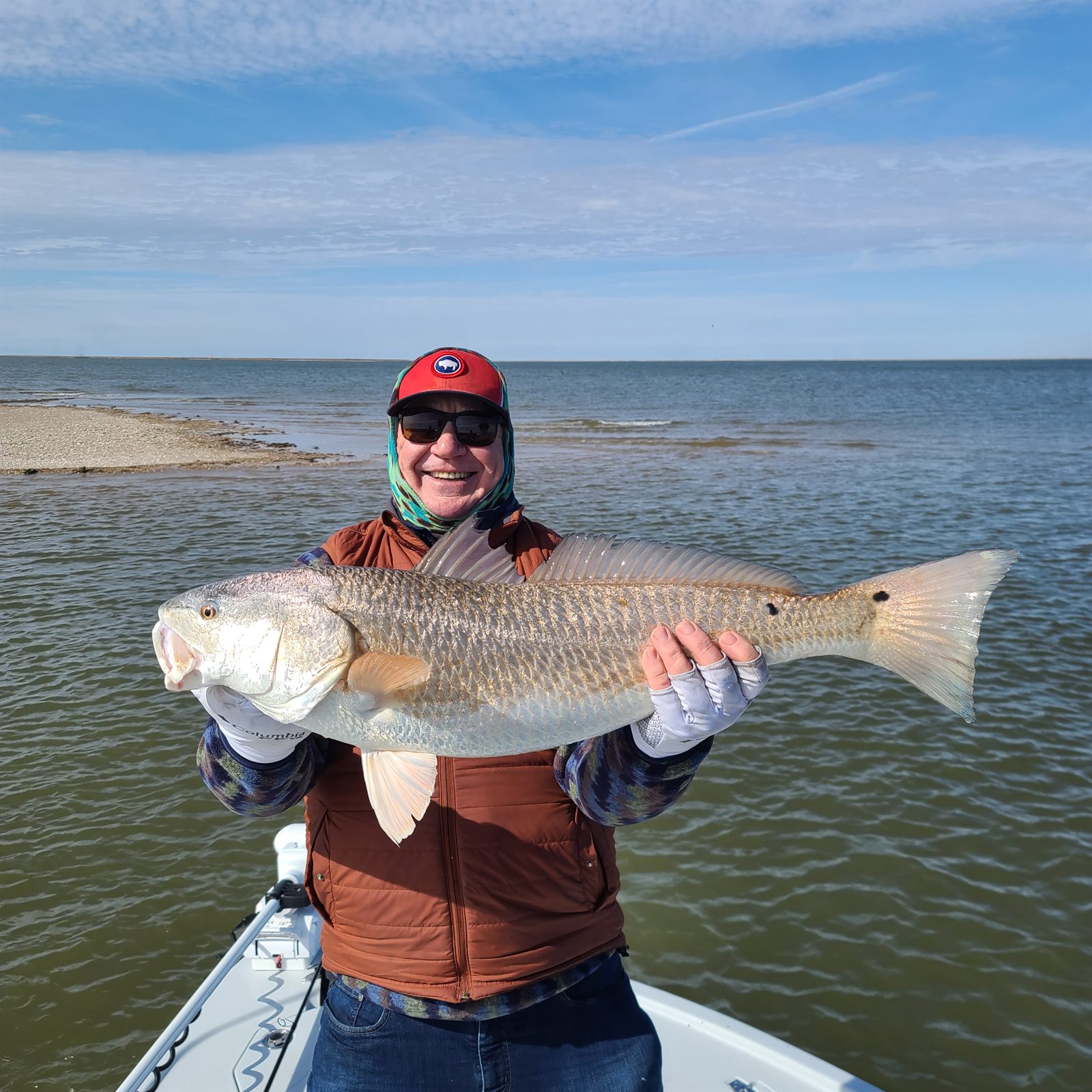
You’ve just hauled a bronze-backed beauty over the gunwale near Cypremort Point, but as you reach for the pliers, a cold spike of doubt hits: is this a slot-sized Redfish or a juvenile Black Drum? It’s a common frustration for even the most eager anglers. With the 2026 regulations strictly enforcing a four-fish limit and a “no bull red” rule for anything over 27 inches, the stakes for identifying louisiana inshore fish have never been higher. You want to enjoy the heart-pounding thrill of the strike without the anxiety of an accidental illegal keeper or a hefty fine.
Mastering the art of identifying South Louisiana’s most prized inshore species is your ticket to a successful day on the water. This guide will give you the confidence to distinguish between the “Big Three” while you discover the world-class fishing grounds of Vermilion Bay. We will break down the specific visual markers of our local trophies, explore the rich marsh habitats of Marsh Island and Cote Blanche Bay, and show you why these waters offer a premier experience that rivals any other area in the Gulf. Get ready to turn a simple catch into a masterclass in Cajun heritage and prepare for an unforgettable journey into the wild.
Key Takeaways
- Learn the definitive visual markers to instantly distinguish the “Big Three”—Redfish, Speckled Trout, and Flounder—within the Vermilion Bay marsh.
- Master the art of identifying louisiana inshore fish to ensure every catch meets 2026 regulations and your ice chest is filled with legal, prized species.
- Discover how to “read the water” around Cypremort Point and Marsh Island to predict species based on salinity, clarity, and local habitat.
- Uncover the secrets to identifying underrated heavy-hitters like Black Drum and Sheepshead that offer incredible fights and world-class table fare.
- Understand why the sheltered, abundant flats of South Louisiana provide a more reliable and cost-effective adventure than high-stakes deep-sea excursions.
Table of Contents
- Mastering Inshore Fish Identification in the Vermilion Bay Marsh
- The Big Three of South Louisiana: Redfish, Speckled Trout, and Flounder
- Beyond the Basics: Identifying Black Drum, Sheepshead, and Tripletail
- How to Identify Fish Habitat and Behavior in the Vermilion Bay System
- Experience the Adventure: Booking Your Charter with Capt. Troy Nash
Mastering Inshore Fish Identification in the Vermilion Bay Marsh
Inshore fishing isn’t just about dropping a line; it’s an adventure through the brackish veins of the Louisiana coast. In Vermilion Bay, we target species that thrive in the shallow, nutrient-rich waters of our marshes and flats. By 2026, this region has solidified its reputation as the premier nursery for the Gulf’s most iconic species. Whether you are stalking the shoreline of Marsh Island or working the weirs, identifying louisiana inshore fish is the first step toward becoming a true sportsman in these legendary waters.
Why Accurate ID is Critical for Louisiana Anglers
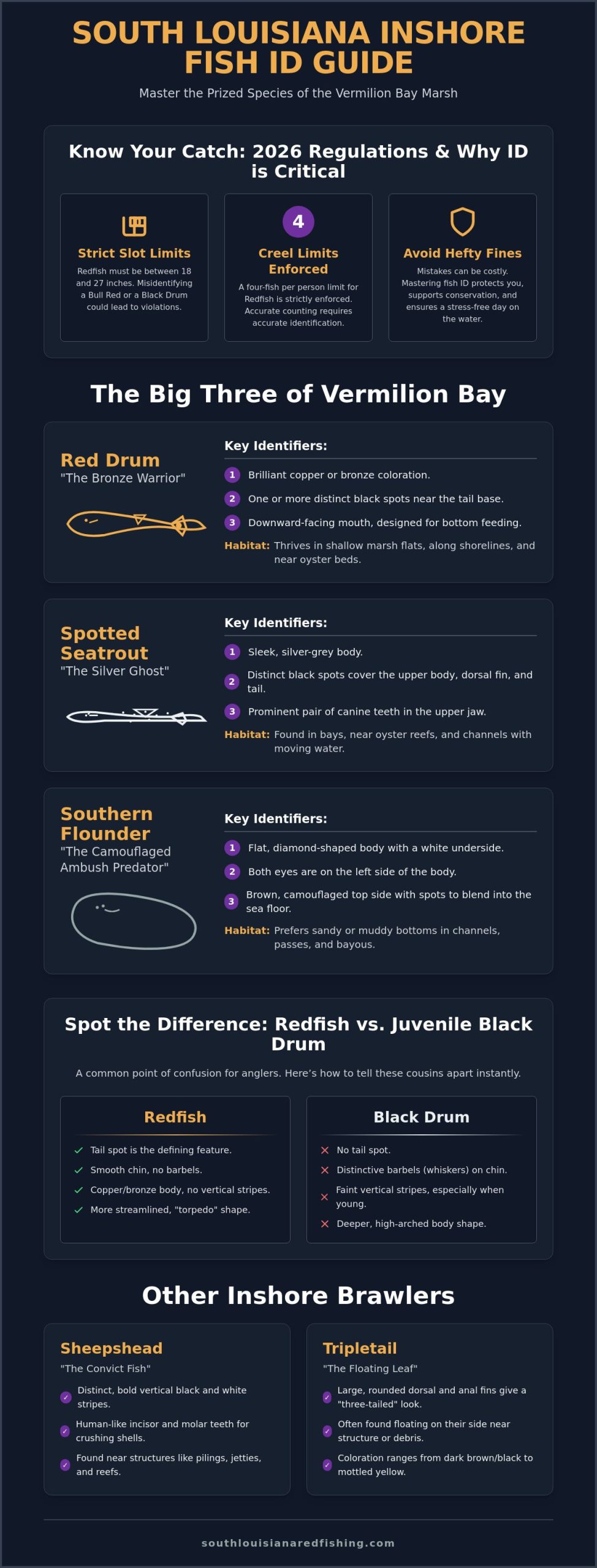
Misidentifying a fish isn’t just an embarrassing mistake; it can be a costly one. The Louisiana Department of Wildlife and Fisheries (LDWF) has implemented strict 2026 regulations to protect our local populations. For instance, the redfish creel limit is now four per person with a tight 18 to 27-inch slot limit. If you can’t tell a slot-sized red from a “bull” or a black drum, you risk legal trouble. Mastering the skill of identifying louisiana inshore fish is essential for every trip to ensure you stay on the right side of the law. Beyond the legalities, accurate identification supports catch and release ethics. Releasing spawning-age fish ensures our grandkids will enjoy the same rod-bending action we do today. Unlike deep-sea trips that require hours of travel and high fuel costs to reach blue water, inshore fishing offers world-class excitement right in our backyard. You get more line-in-water time without the adverse sea conditions or seasonal closures often associated with the open Gulf.
The Rich Biodiversity of Cypremort Point and Beyond
The waters surrounding Cypremort Point are a unique cocktail of fresh and saltwater. This blend in Weeks Bay and West Cote Blanche Bay creates a habitat you won’t find anywhere else. The geography of Marsh Island acts as a perfect identification laboratory, where the salinity changes dictate which species you’ll find around every bend. While other areas like Venice are famous for their distance from civilization, Vermilion Bay is remarkably accessible from Lafayette and offers a more intimate, tactical experience. When you’re out with a seasoned pro like Capt. Troy Nash, you aren’t just catching; you’re learning. Understanding Red Drum (Redfish) characteristics while the fish is still splashing in the net is how you master the craft on-the-fly. This hands-on expertise turns a standard charter into a lifelong skill set.
The Big Three of South Louisiana: Redfish, Speckled Trout, and Flounder
Every angler dreaming of the Cajun coast has three names etched into their bucket list: Redfish, Speckled Trout, and Southern Flounder. These species are the heavy hitters of Vermilion Bay, prized for their relentless fight and their incredible flavor on the dinner table. While they all share the same brackish neighborhood, each requires a different tactical approach. Mastering the art of identifying louisiana inshore fish starts with recognizing these three icons the moment they break the surface. Whether you are sight-casting on the flats or working a deep canal, knowing what’s on the other end of your line changes how you play the game.
Red Drum (Redfish): The Bronze Warrior of the Marsh
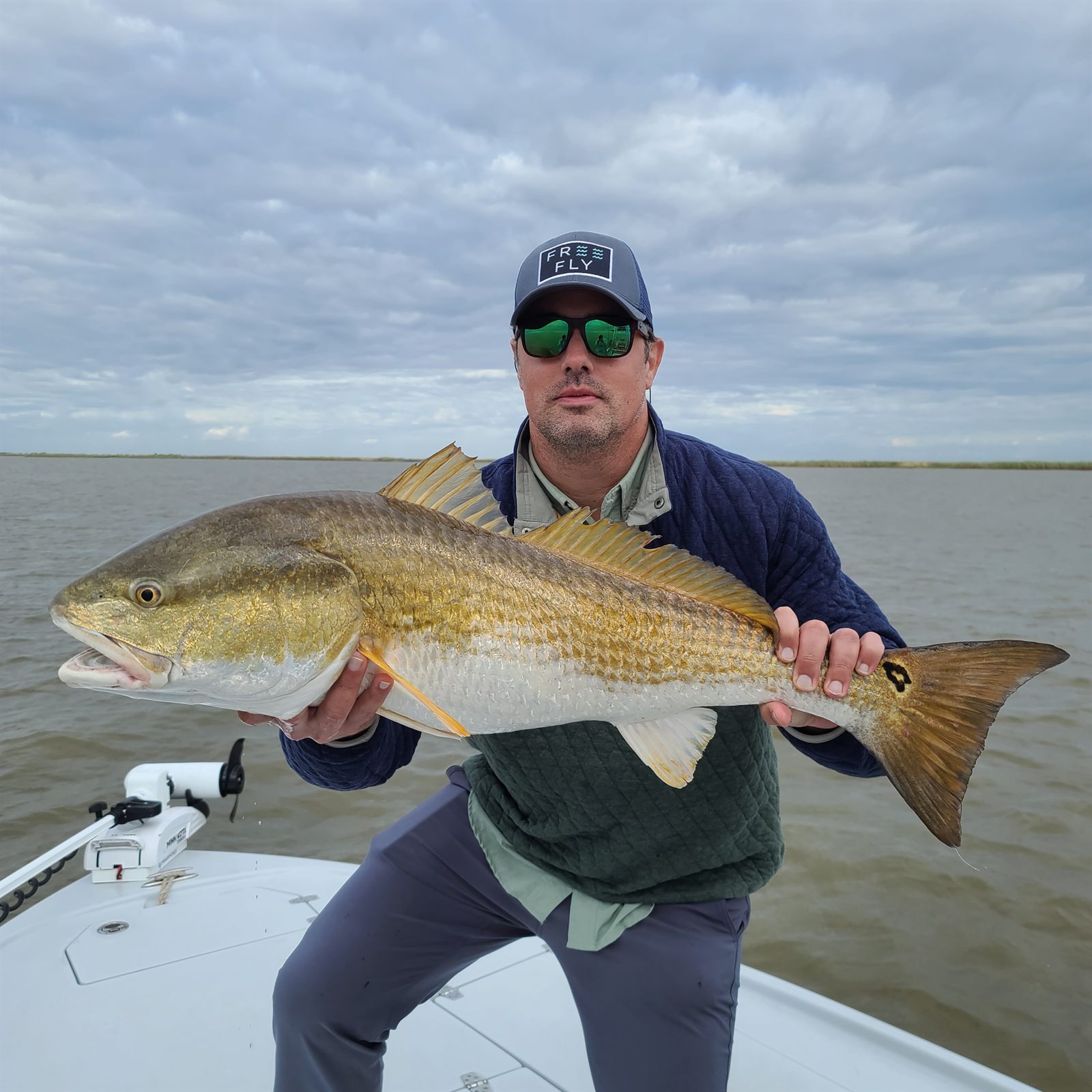
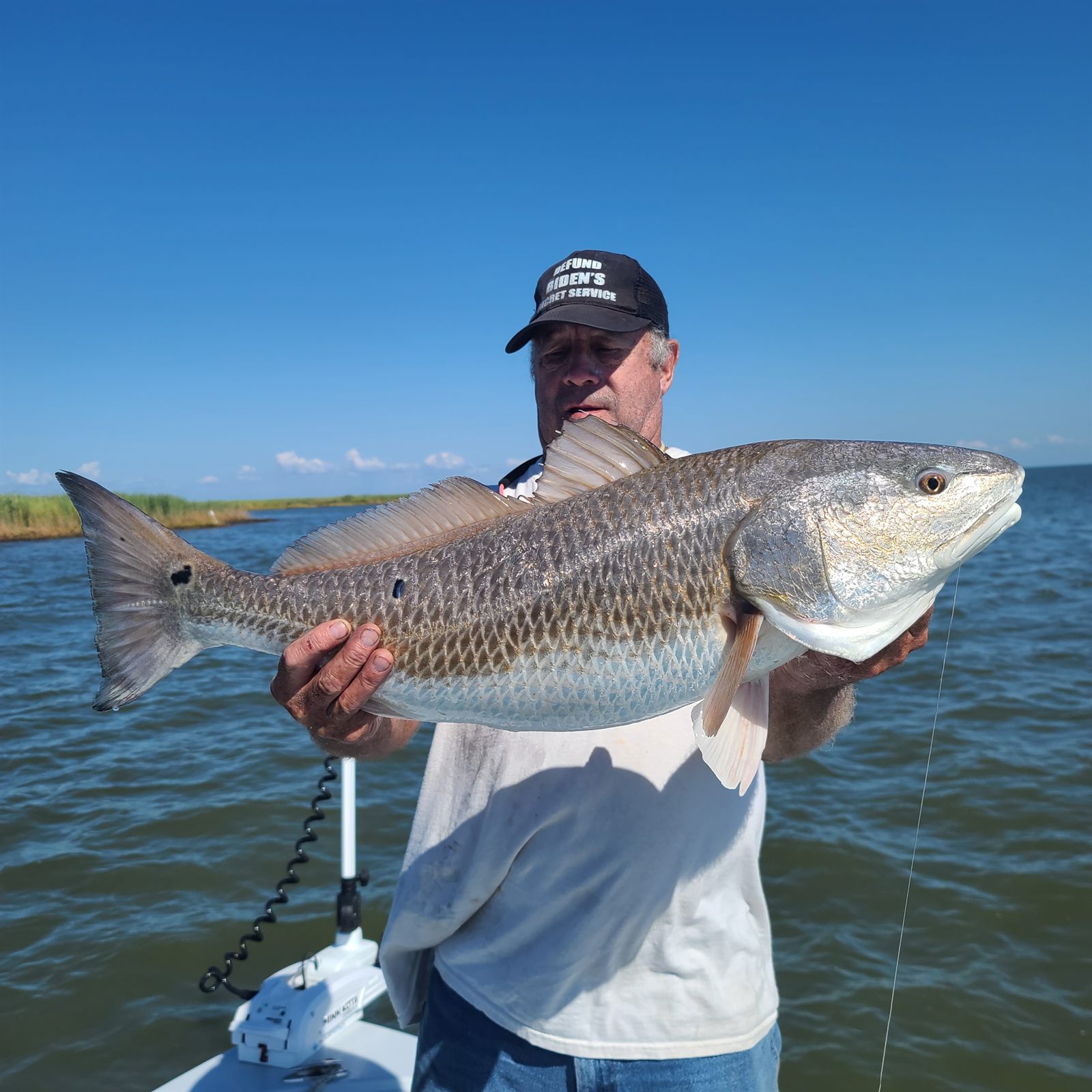
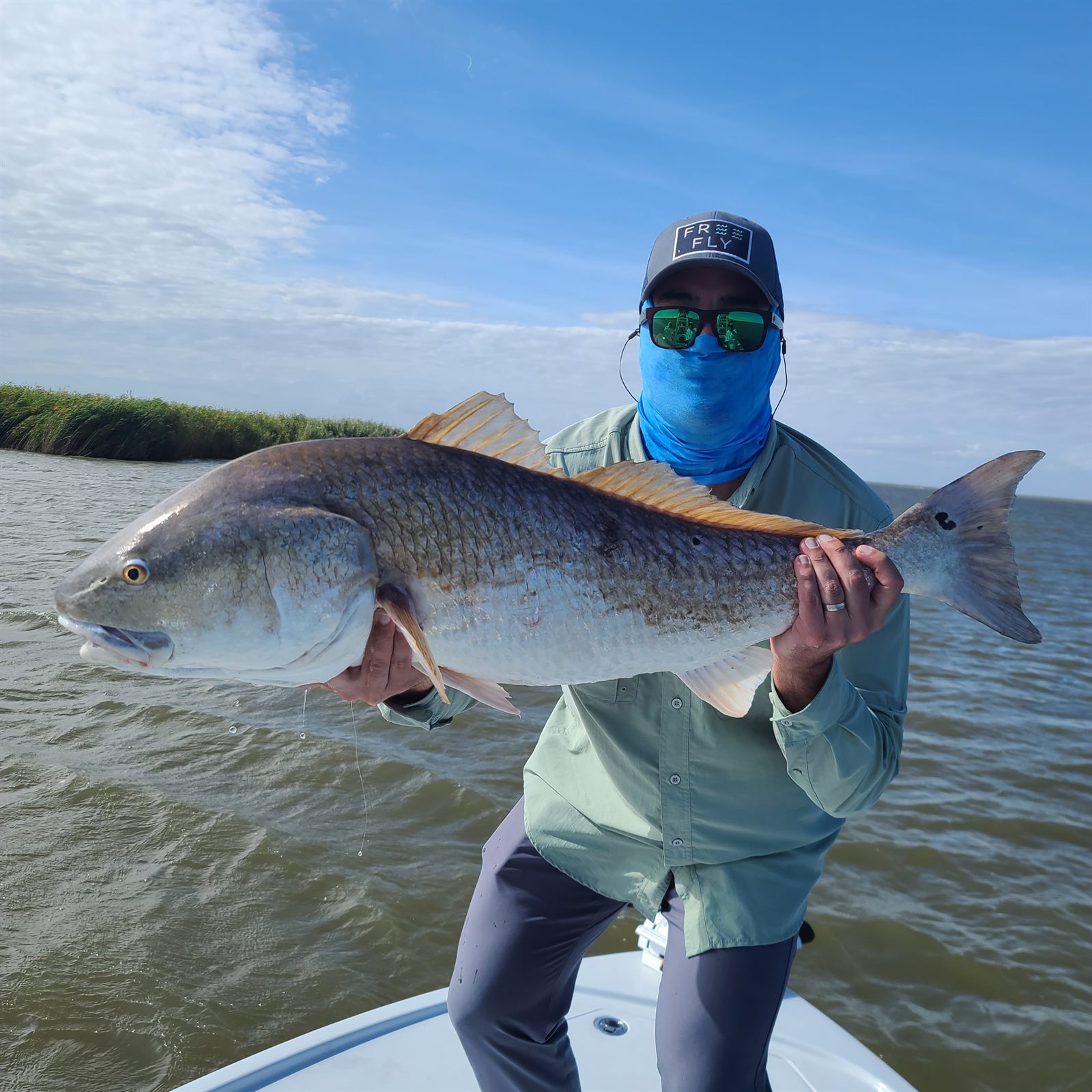
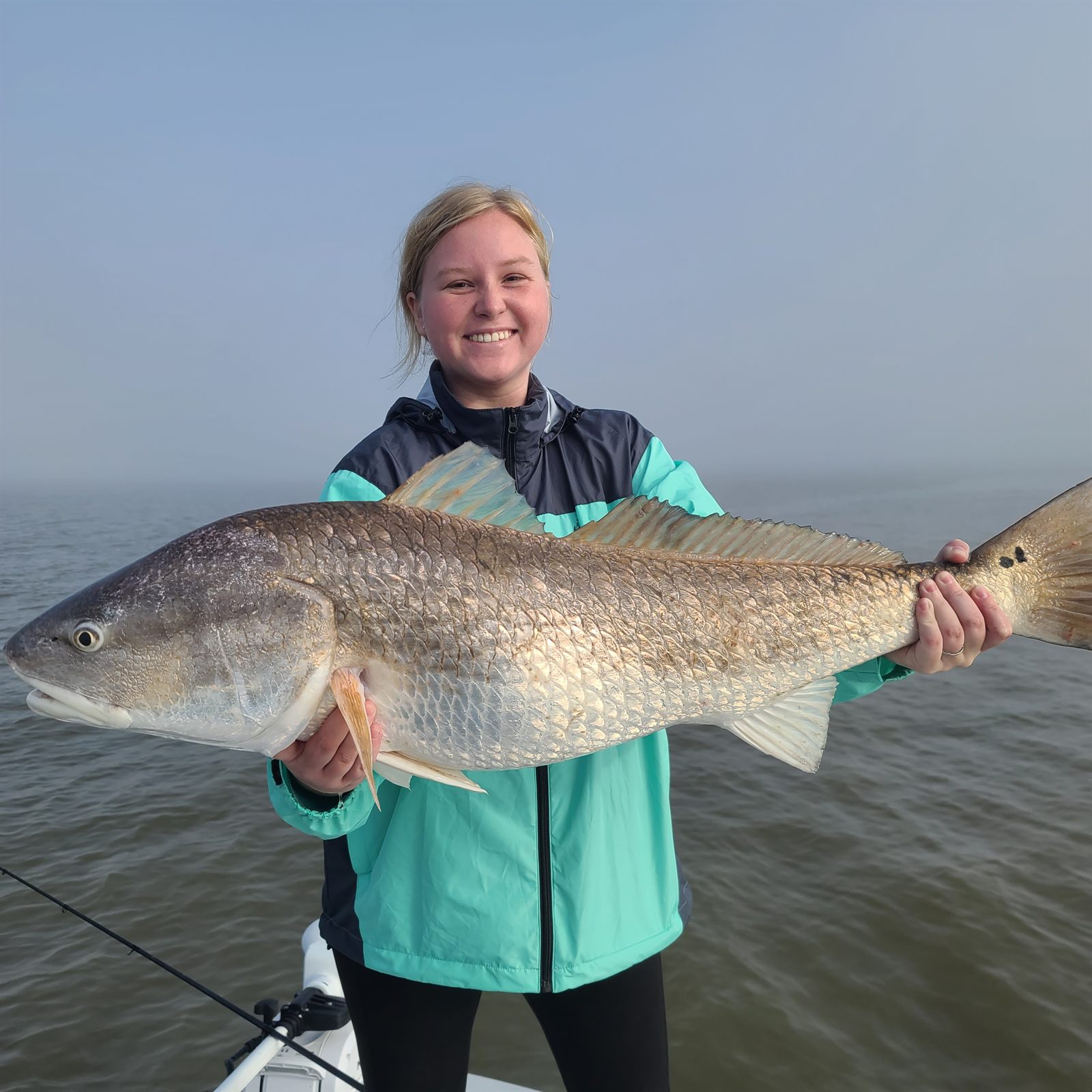
The Red Drum, or Redfish, is the undisputed king of the marsh. You will recognize them by their brilliant copper-bronze scales that shimmer in the shallow water. Their most famous calling card is the iconic black spot, or spots, located near the base of the tail. While massive “Bull Reds” often patrol the nearshore reefs and oil rigs just outside the bay, the juveniles and slot-sized fish stay tucked into the protection of the marsh. The Red Drum’s downward-facing mouth is a key feeding indicator, showing they are built to vacuum up crabs and shrimp along the muddy bottom. For a deep dive into tactics for this species, check out our comprehensive Louisiana redfish guide.
Spotted Seatrout: The Silver Ghost of the Bays
Spotted Seatrout are the “Silver Ghosts” of the bay, known for their sudden, aggressive strikes. They sport a sleek silver-grey body adorned with distinct black spots that extend all the way through the dorsal fin and tail. Look for the “yellow mouth” and two prominent fang-like teeth at the front of the upper jaw. These fish have delicate skin and thin mouth membranes, so they require a gentle touch during handling. They prefer the clearer, higher-salinity waters often found in East Cote Blanche Bay. Unlike the bottom-dwelling Redfish, Trout are mid-water predators that love to ambush baitfish near oyster beds.
Southern Flounder: The Camouflaged Master of the Bottom
Southern Flounder are the masters of disguise. They have a unique flat body with both eyes located on the left side, allowing them to lay perfectly still on the bayou floor. Their mottled brown skin blends seamlessly into the mud and sand, making them nearly invisible to unsuspecting prey. You will find them stacked up near weirs and canal mouths, especially when the tide is moving baitfish through the marsh. Keep in mind that 2026 regulations include an annual closed season for Flounder in the fall to protect the spawning run. If you want to experience the thrill of a grand slam, booking one of our guided fishing trips is the best way to get these three species in the boat.
Beyond the Basics: Identifying Black Drum, Sheepshead, and Tripletail
While Redfish and Trout usually grab the headlines, the brackish waters of West Cote Blanche Bay are home to several other heavyweights that deserve your attention. Mastering the skill of identifying louisiana inshore fish means looking past the “Big Three” to appreciate the species that often fool newcomers. These underrated fighters provide incredible rod-bending action and, when prepared properly, are some of the best eating on the Cajun coast. For a complete breakdown of every species you might encounter during your trip, explore our Louisiana fish guide.
Black Drum vs. Redfish: How to Tell the Difference
It happens on almost every boat: a rod bends double, a drag screams, and someone yells “Redfish!” only to haul up a massive Black Drum. To avoid the mix-up, look closely at the fish’s chin. Black Drum possess distinct sensory “barbels,” which look like small whiskers, used to find food along the bottom. Redfish lack these entirely. You can also tell them apart by their silhouette. A Drum has a high, humped back and a deep body, while a Redfish has a more streamlined, torpedo-like profile. While juvenile Drum might sport dark vertical bars, adults fade to a solid grey or black and never have the iconic black spot on the tail that defines their copper-colored cousins.
The Striped Duo: Sheepshead and Juvenile Black Drum
Around the oyster beds and pilings near Cypremort Point, you will find the masters of bait-stealing. Juvenile Black Drum and Sheepshead both feature dark vertical bars, which leads to frequent confusion for novice anglers. The secret is in the mouth. Sheepshead have bizarre, human-like teeth designed specifically for crushing barnacles and crabs. If you see those teeth, you’ve got a Sheepshead. Additionally, the vertical bars on a young Drum will fade into a uniform grey as they age, whereas a Sheepshead keeps its high-contrast “convict” stripes for its entire life. This distinction is vital because Sheepshead are world-class table fare, often called “poor man’s lobster” for their sweet, flakey meat.
Don’t overlook the Tripletail when you venture near the nearshore oil rigs or floating debris just outside the bay. These prehistoric-looking fish are masters of camouflage, often floating on their sides to mimic a piece of driftwood. Identifying them requires a sharp eye and a quick cast. While other areas like Venice might focus on the deep-sea giants, the intricate marsh and nearshore structures of Weeks Bay offer a higher density of these tactical targets. Learning these “tells” ensures you never miss out on a trophy just because it didn’t look like a typical Redfish.
How to Identify Fish Habitat and Behavior in the Vermilion Bay System
Before you even bait a hook, you should be reading the surface of the water. In our local system, the environment itself acts as a map. Understanding the interplay between salinity and clarity is the secret to identifying louisiana inshore fish before they ever hit the deck. While other areas like Venice offer a vast delta experience, our waters around Burns Point and Marsh Island provide a more concentrated, tactical laboratory. Capt. Troy Nash brings decades of local heritage to the helm, allowing him to spot the subtle ripples or color changes that signal a specific species. By recognizing these environmental cues, you aren’t just guessing; you’re hunting with precision.
Reading the Marsh Island Shorelines and Weirs
The interior marsh of Marsh Island is a masterpiece of moving water. When you approach a weir and see a strong current pushing baitfish through a gap, that is a definitive “Redfish ID” signal. Redfish love to sit in these bottlenecks, using the current to deliver a steady stream of shrimp and crabs. If you move toward the grassy shorelines where the water is a bit clearer, you are entering the ambush zone of the Speckled Trout. These predators prefer to hide in the vegetation, waiting for a silver flash to pass by. If your lure keeps getting bumped near the submerged oyster beds of Vermilion Bay, you’ve likely found a colony of Sheepshead. They stick to the hard structure like glue, crushing barnacles and small crustaceans with ease.
Identifying Nearshore Species Around Local Oil Rigs and Reefs
As you move away from the shoreline toward the nearshore oil rigs and reefs, the species profile shifts dramatically. This is where you encounter the heavy-hitters like Jack Crevalle, known for their relentless power and yellow-tinted fins. Around these same structures, you will find the Tripletail. Their structure-oriented behavior makes them easy to spot if you know to look for what appears to be floating debris near a piling. Choosing these nearshore spots is a strategic move for any angler. You get the thrill of big-game action without the massive fuel costs, long travel distances, and rough sea conditions of deep-sea charters. If you are ready to see these environmental cues in action, it’s time to book your next adventure with an expert who knows every inch of these flats.
Experience the Adventure: Booking Your Charter with Capt. Troy Nash
Booking a guided fishing trip in South Louisiana is about more than just filling an ice chest; it is about immersing yourself in a way of life that has thrived for centuries. While this guide provides the foundation for identifying louisiana inshore fish, nothing replaces the hands-on experience of feeling a Redfish thrum against the line while an expert explains the nuances of the catch. We invite you to step onto the deck and turn these lessons into lifelong memories. With our 2026 calendar now open, there has never been a better time to secure your spot in the heart of the Cajun marsh.
Why a 3rd Generation Guide is Your Best ID Tool
There is a level of intuition that only comes from decades of salt spray and sunrise starts. Capt. Troy Nash carries a 3rd generation heritage that transforms every trip into a masterclass of the marsh. Apps and books can show you a picture, but a seasoned guide teaches you to hear the drum “croak” and see the subtle shimmer of a trout slick before the first cast is even made. We provide a full-service experience where the gear, the bait, and the education are all handled with professional precision. Every trip is a personalized journey through the Cajun marsh, tailored to your skill level and your desire for adventure.
From the Marsh to the Table: Lafayette’s Cajun Food Scene
The adventure doesn’t end when we head back to the dock. In South Louisiana, the transition from the marsh to the table is a sacred tradition. The fish you spent the day identifying and catching are the same species that define our world-famous local cuisine. After a day launching from Cypremort Point State Park, the short drive back to Lafayette opens up a world of culinary possibilities. Whether you are looking for blackened Redfish or a classic trout meunière, the local eateries offer a level of hospitality and flavor you won’t find in generic coastal destinations.
We encourage you to make the most of your visit by exploring the many Lafayette things to do, from live Zydeco music to historic tours. Combining a world-class fishing charter with the vibrant culture of Acadiana creates a legendary vacation that stays with you forever. Don’t settle for a basic boat ride when you can master the art of identifying louisiana inshore fish with the best in the business. Grab your hat, bring your appetite for excitement, and get ready for the haul of a lifetime. Book your Vermilion Bay adventure today and let’s go fishing!
Claim Your Place in the Vermilion Bay Legacy
You’ve now got the blueprint for identifying louisiana inshore fish like a true Cajun pro. From spotting the bronze flash of a Redfish near a Marsh Island weir to distinguishing the human-like teeth of a Sheepshead, you are ready to hit the water with confidence. Mastering these visual cues and understanding the unique salinity of our local bay ensures your 2026 season is both legal and legendary. You don’t just want to catch fish; you want to master the environment that sustains them.
Don’t leave your next trophy to chance. Capt. Troy Nash brings three generations of local expertise to every trip, specializing in the complex marshes and flats of Cypremort Point. Our full-service guided fishing trips provide all the high-quality gear and bait you need, plus professional fish cleaning to get your haul table-ready for a Lafayette feast. We take care of the details so you can focus on the rod-bending action.
Book Your Vermilion Bay Fishing Adventure with Capt. Troy Nash Today!
The marsh is calling, and the “Big Three” are waiting. Grab your sunglasses and get ready to experience the premier fishing destination of the Gulf Coast. Let’s make some history on the water!
Frequently Asked Questions
What is the most common fish to catch in Vermilion Bay?
Redfish are the most common year-round catch in Vermilion Bay. These bronze fighters inhabit the shorelines of Marsh Island and the interior canals of the bay in massive numbers. You can also expect high numbers of Speckled Trout during the spring and fall runs. Our local waters provide a consistent bite that makes every trip an high-energy success for anglers of all levels.
How can I tell the difference between a Redfish and a Black Drum?
Look for chin barbels to identify a Black Drum. These small, whisker-like sensors are absent on Redfish. Additionally, Redfish usually sport a distinct black spot on the tail and a more streamlined body. Identifying louisiana inshore fish becomes easier once you recognize the Drum’s humped back and greyish scales compared to the copper-red hue of a Redfish.
Do I need a special license to catch inshore fish in Louisiana?
Yes, you need both a Basic Fishing and a Saltwater License. For 2026, a resident Basic Fishing License is $17.00 and the Saltwater License is $15.00. If you are visiting from out of state for a charter, you can purchase a convenient 3-day Charter Passenger Saltwater License for just $20.00. Anglers under 18 don’t need a license to join the fun.
What are the “Big Three” inshore fish in South Louisiana?
The “Big Three” are Redfish, Speckled Trout, and Southern Flounder. These species are the most sought-after for their aggressive fights and world-class flavor. While other areas like Venice target similar fish, the sheltered flats of West Cote Blanche Bay offer some of the most accessible and productive grounds for hitting a “grand slam” of all three in one day.
Can I catch Tripletail in the Vermilion Bay marshes?
You can catch Tripletail, but they are usually found near structure rather than open marsh. Look for them hovering near nearshore oil rigs, channel markers, or floating debris just outside the bay. They are masters of camouflage. Keep a sharp eye out for anything that looks like a floating leaf or piece of wood near a piling to find these prehistoric fighters.
What should I do if I catch a fish I can’t identify?
Release the fish immediately if you aren’t 100% certain of its identity. With strict 2026 regulations like the 18 to 27-inch slot limit for redfish, an honest mistake can lead to a violation. Identifying louisiana inshore fish is a skill we teach on every charter to ensure you feel confident and stay legal throughout your personalized adventure in the marsh.
Are there sharks in the inshore waters of Cypremort Point?
Yes, Bull Sharks are frequently found in the inshore waters around Cypremort Point. They are unique because they can thrive in the lower-salinity brackish water of our bays. While they aren’t our primary target, they occasionally provide an unexpected and intense fight for anglers working the deeper passes and nearshore reefs near the Gulf entrance.
Is it better to fish inshore or go deep-sea in Louisiana?
Inshore fishing is generally better for those who want more action and less travel time. Deep-sea trips often involve high costs, long boat rides, and the risk of cancellation due to rough seas. Our inshore and nearshore trips stay in calmer waters, providing more actual fishing time and a wider variety of species without the expensive “offshore” price tag.