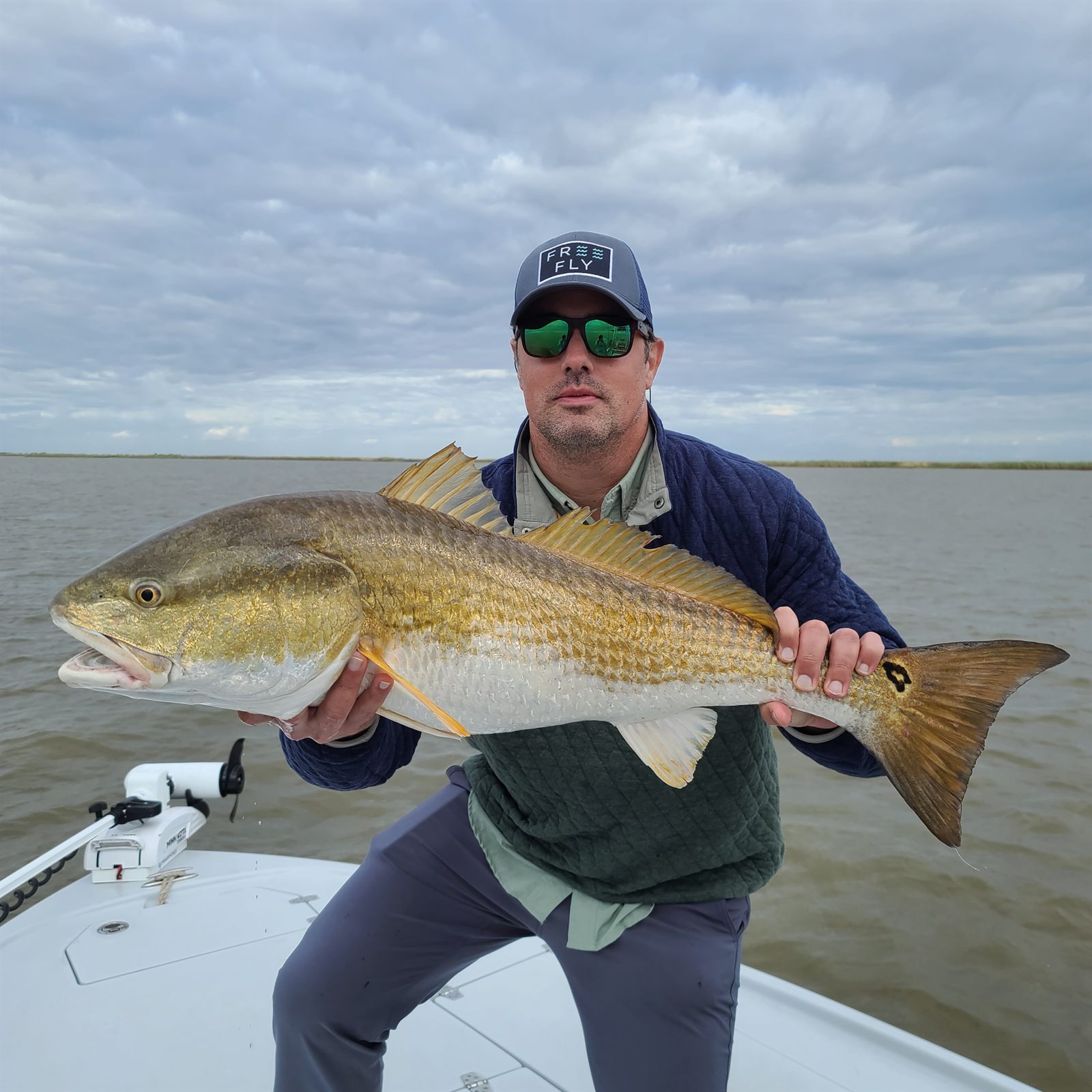
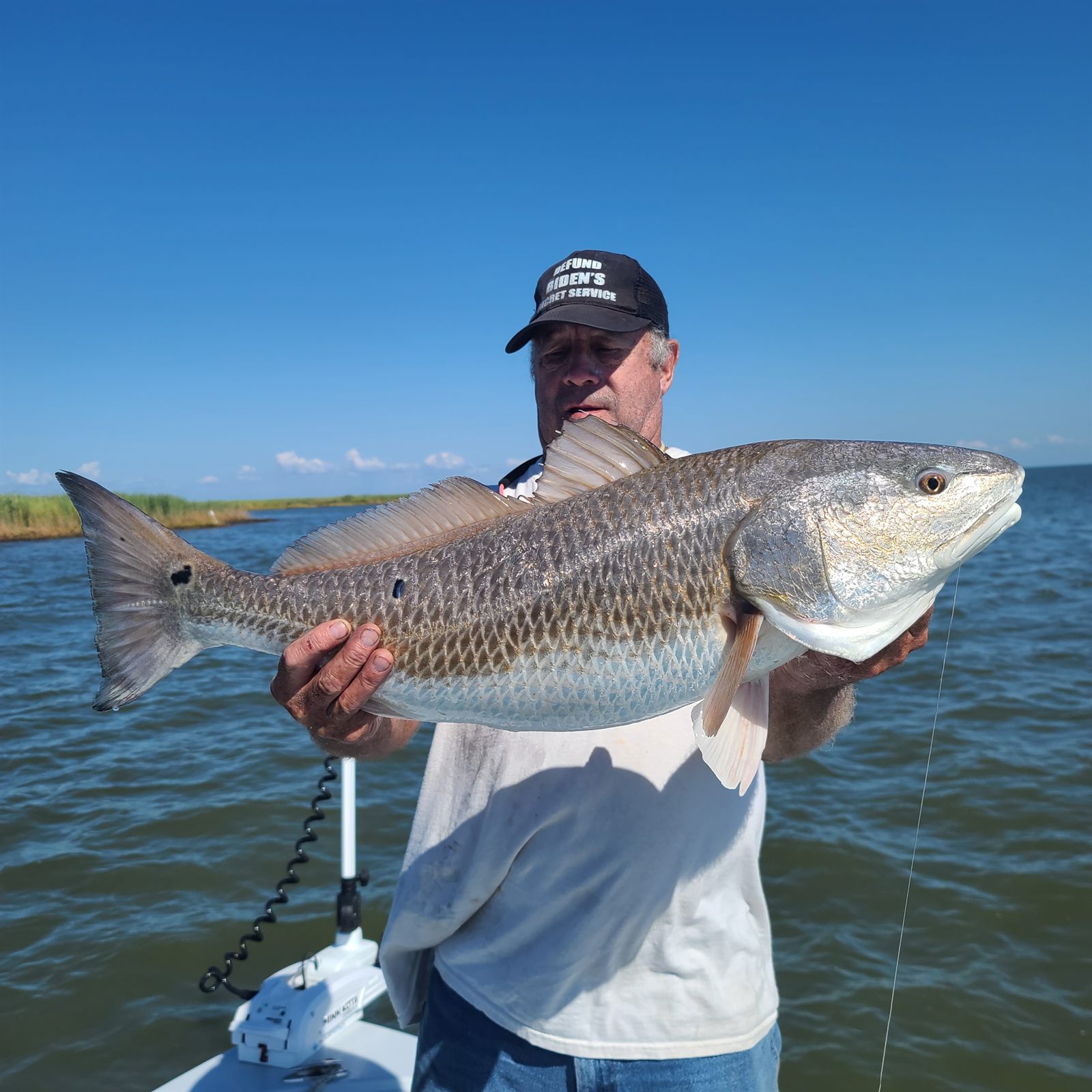
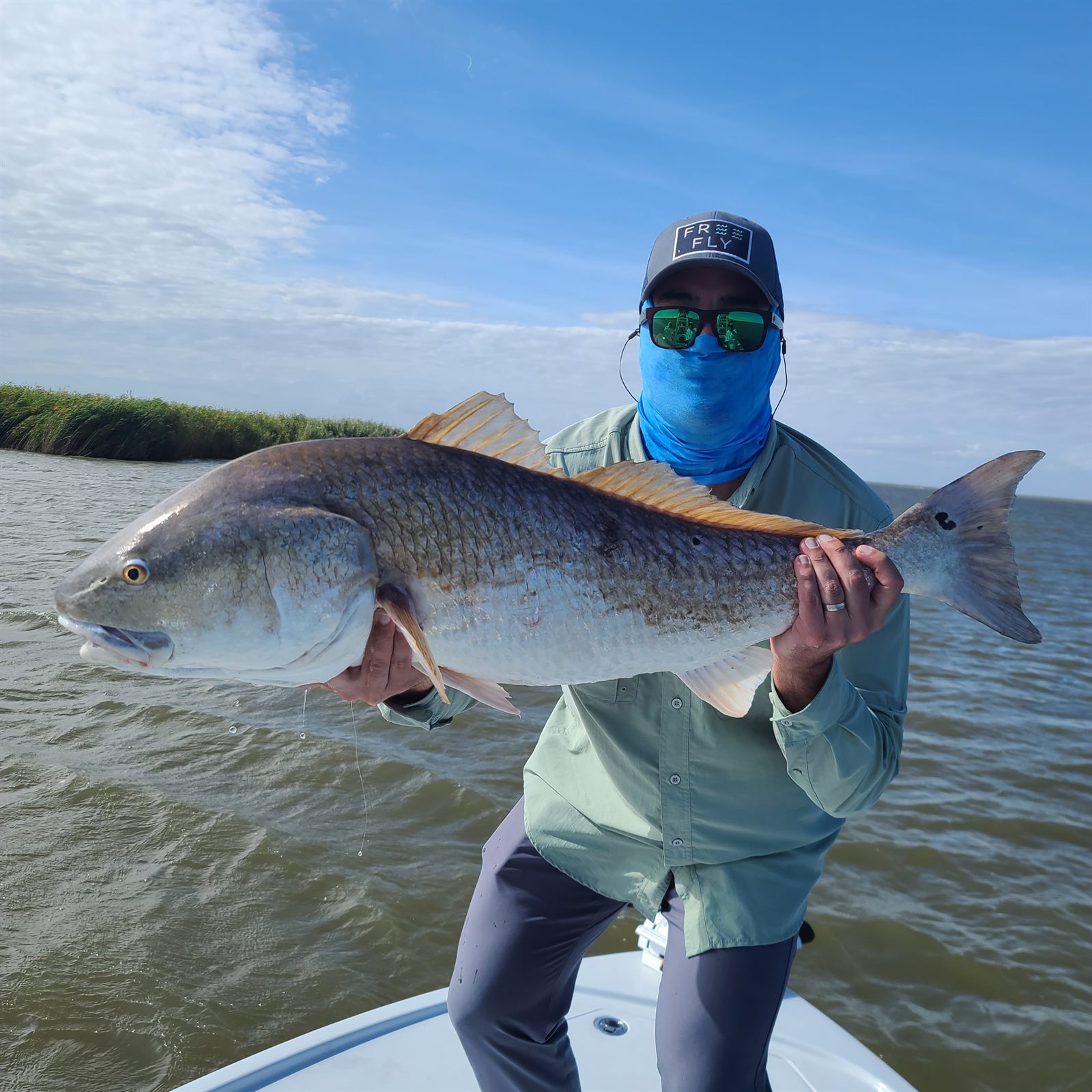
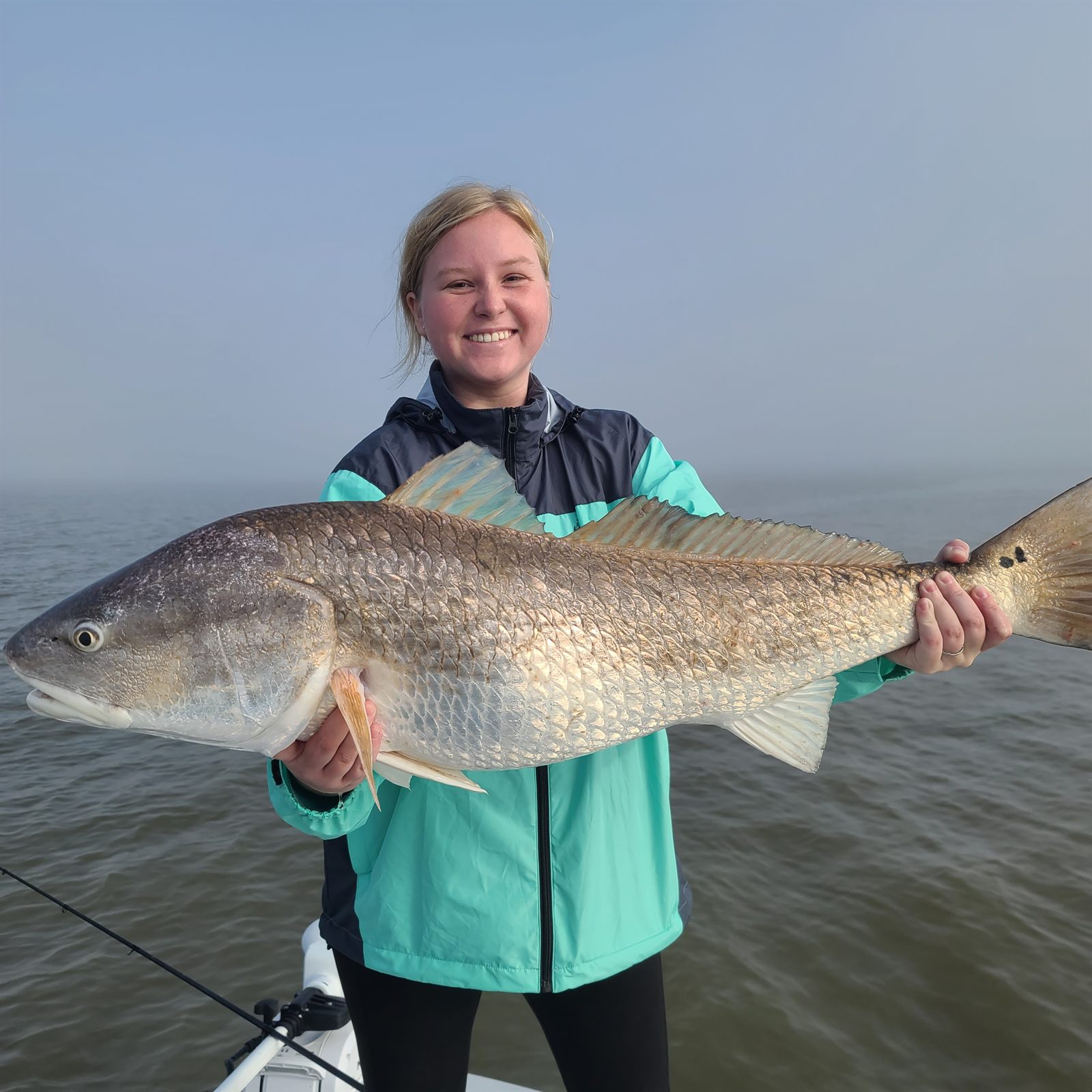
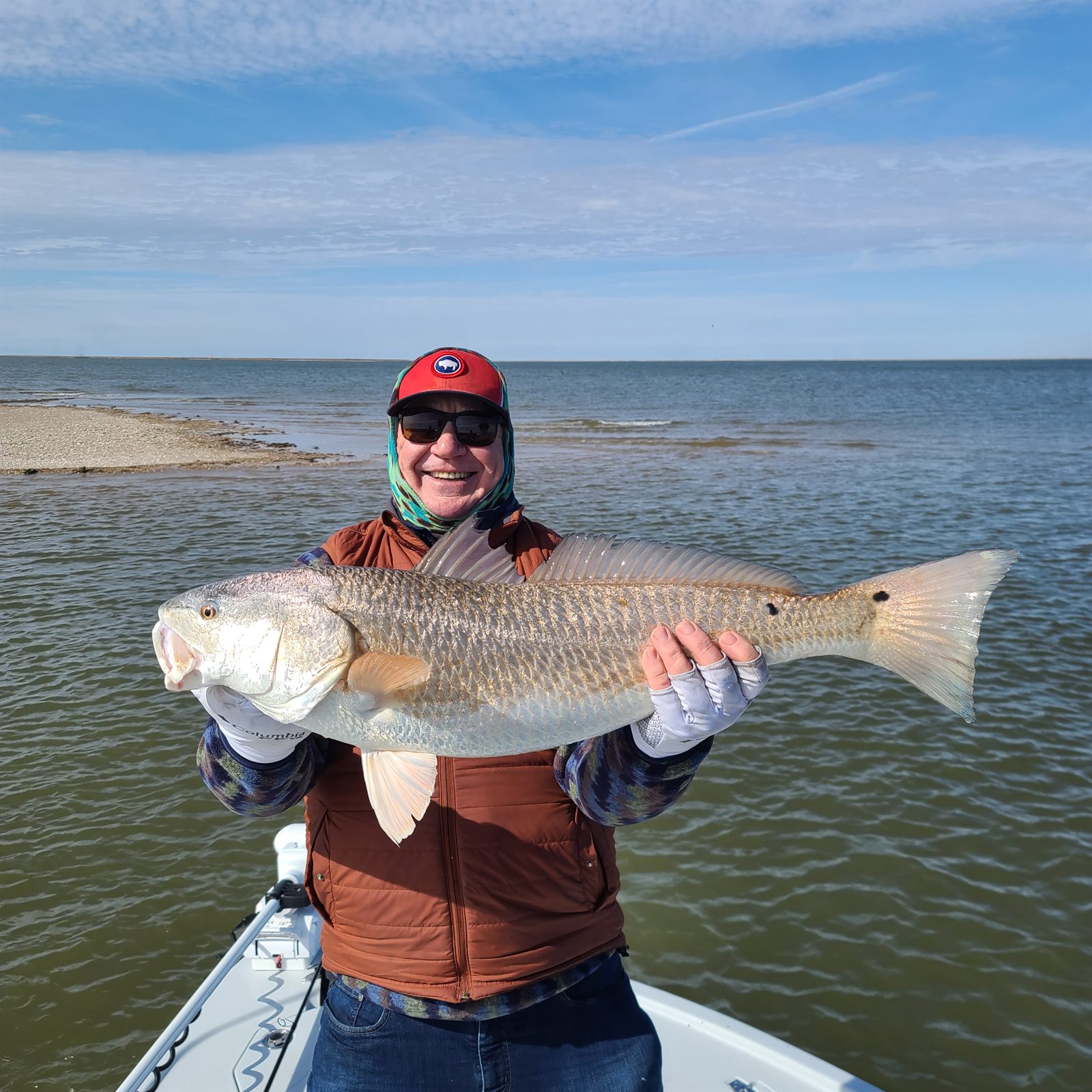
Most anglers spend a lifetime chasing a 40-inch redfish, but in the marshes of Vermilion Bay, a trophy catch isn’t a once-in-a-decade miracle; it’s a standard Tuesday morning. It’s natural to feel a bit of hesitation when you’re staring at shifting tidal charts or worrying about getting stuck on a mudflat near Cypremort Point. Between choosing the right heavy-duty gear and navigating the endless banks of the bayous, the pressure to perform can sometimes overshadow the excitement of the hunt.
You’re about to master how to catch bull reds in Louisiana using the same 25 years of local expertise that 3rd generation guide Captain Troy Nash brings to every trip. You’ll learn to read the water around South Marsh Island and set the hook like a seasoned professional. This guide covers the essential 2026 tactics for landing giants, avoiding the high costs of Venice offshore trips, and enjoying the authentic Cajun culture that makes this region the premier fishing destination in the United States. Your epic adventure starts right here with the local secrets needed to limit out on the legendary reefs and weirs of South Louisiana.
Key Takeaways
- Understand the seasonal migration patterns of trophy redfish and why South Louisiana’s inshore bays offer a more accessible, action-packed experience than traditional offshore trips.
- Dial in your tackle with expert recommendations on the specific rod lengths and high-quality spinning reels required to survive the first powerful run of a 40-pound giant.
- Learn exactly how to catch bull reds in louisiana by navigating the legendary “Wall” at Marsh Island and the productive oyster beds of East Cote Blanche.
- Master the art of the circle-hook pull and technical drag management to safely land your trophy in the challenging, rugged structure of the Louisiana marsh.
- Discover how to turn your fishing trip into an epic adventure by pairing a guided excursion from Cypremort Point with the world-class Cajun food and culture of nearby Lafayette.
What is a Bull Red and Why Fish South Louisiana?
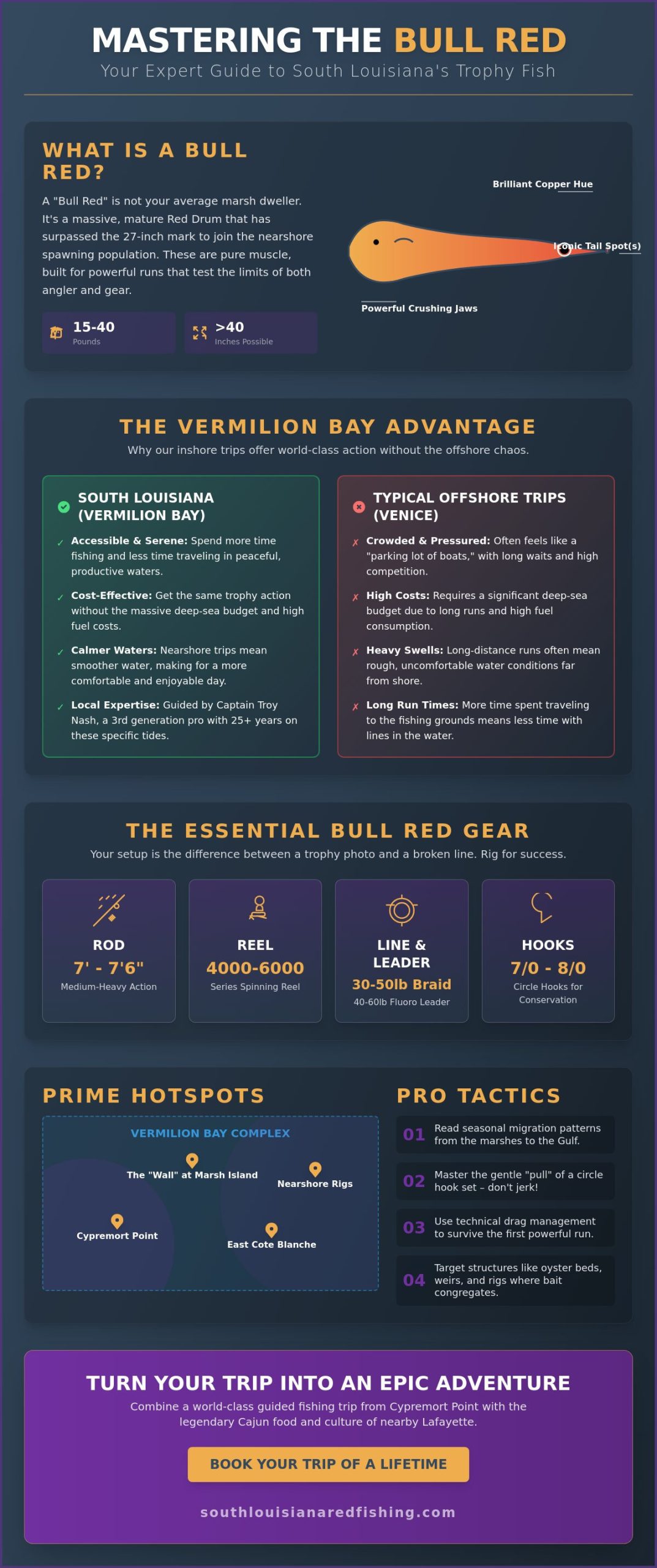
Experience the thrill of a lifetime on the Louisiana coast. If you’re looking for an epic adventure, learning how to catch bull reds in louisiana is the ultimate goal for any serious angler. These giants aren’t your average marsh dwellers. We’re talking about massive Red Drum that have surpassed the 27 to 30 inch mark, often weighing between 15 and 40 pounds. While Venice is often crowded with boat traffic and long waits, the waters around Cypremort Point offer a serene, world-class experience without the chaos. You don’t need a massive deep sea budget to land a trophy; our nearshore trips provide the same heart-pounding action with shorter run times and much smoother water.
The biological cycle of these fish is fascinating. As Redfish mature, they migrate from the shallow interior marshes out toward the Gulf of Mexico to join the spawning population. During the peak seasons, these bruisers move into inshore bays like Vermilion Bay and around Marsh Island to feed. This movement creates a golden opportunity for anglers to hook into a fish of a decade in relatively shallow water. Choosing an inshore or nearshore trip is often more cost-effective and comfortable than going far offshore, as you avoid the heavy swells and high fuel costs associated with long-distance runs.
The Anatomy of a Trophy Redfish
A trophy Redfish is a sight to behold. You’ll recognize them by their brilliant copper hue and that iconic black spot near the tail, though some rare specimens sport dozens of spots. Their powerful, downward-facing jaws are built for crushing blue crabs and mullet along the bottom. A Bull Red is a mature Red Drum that has moved to the nearshore spawning population. These fish are pure muscle, designed for long runs and stubborn fights that will test your gear and your resolve.
The Advantage of the Vermilion Bay Complex
The Vermilion Bay complex is a hidden gem for those who want to limit out on excitement. Unlike other areas that can feel like a parking lot of boats, our waters near South Marsh Island and Cypremort Point remain productive and peaceful. The Atchafalaya River pumps nutrient-rich water into the system, creating a massive buffet that attracts giant schools of fish. Because we’re so close to the Gulf, the nearshore rigs and oyster beds are just a short boat ride away. This means you spend less time traveling and more time perfecting how to catch bull reds in louisiana with a rod in your hand. Captain Troy Nash, a 3rd generation guide with over 25 years of experience, knows these tides and shorelines better than anyone, ensuring your trip is both successful and safe.
The Essential Bull Red Gear: Rods, Reels, and Tackle
Landing a massive redfish requires more than just luck. It requires gear that can withstand the brutal power of a 40-pound fish. When learning how to catch bull reds in louisiana, your setup is the difference between a trophy photo and a broken line. Captain Troy Nash uses his 25 years of experience to rig every client for success. He knows that the marsh and bayous around Cypremort Point demand specific tackle that won’t fail when the pressure is on.
A 7-foot to 7-foot-6-inch medium-heavy to heavy action rod is the “goldilocks” zone for these giants. This length provides enough leverage to cast long distances across the flats while maintaining the backbone to pull a bull away from jagged oyster reefs. You should pair this rod with a 4000 to 6000 series spinning reel. Ensure it has a high-quality drag system capable of handling long, screaming runs. Fill that spool with 30-50lb braided main line for zero stretch and maximum sensitivity. Always use a 40-60lb fluorocarbon leader to handle the abrasive teeth and gill plates of a big red.
Terminal tackle choice is vital for conservation. While J-hooks are common, 7/0 or 8/0 circle hooks are superior for bull reds. They consistently hook the fish in the corner of the mouth. This ensures a higher hook-up ratio and a much safer release for the fish. Following Louisiana fishing regulations is easy when your gear is designed for sustainable success. Unlike other areas like Venice where heavy current might dictate different needs, the waters of Vermilion Bay are perfect for this balanced setup.
Topwater vs. Subsurface Lures
Experience the thrill of a topwater blowup in the early morning fog. Large walk-the-dog style lures attract aggressive bulls looking for an easy meal. If the fish stay deep in the bayous, switch to 5-inch paddletails or shrimp imitations on 1/2-ounce jig heads. Gold spoons remain a 3rd generation guide’s secret weapon. Their flash and vibration are irresistible in the stained waters of East Cote Blanche Bay. These lures allow you to cover water quickly and find where the schools are holding.
Natural Baits for Stubborn Giants
When the bite gets tough, natural bait is the answer. Cracked crab is the “steak dinner” for a 40-pound Louisiana bull red. Use a half or quarter crab to release maximum scent into the water column. Cut mullet and pogies also work well when rigged on a weight-bearing rig to stay on the bottom. In the shallow marshes of Marsh Island, a live croaker under a popping cork often triggers a strike from the biggest fish in the school. To see how a seasoned pro rigs these baits for a successful day, you can Experience The Thrill on a guided trip through the legendary Vermilion Bay.
Where to Find Bull Reds: Vermilion Bay to Marsh Island
Success starts with knowing where the giants roam. The southern shoreline of Marsh Island, known by locals as “The Wall,” serves as the front line between the marsh and the Gulf of Mexico. This rugged stretch is a legendary corridor for massive fish. If you’re figuring out how to catch bull reds in louisiana, this is your primary target. These bulls cruise the shell banks and points, waiting for the tide to deliver their next meal. It’s a high-energy environment where the rewards are massive.
Inland transition zones like Weeks Bay and East Cote Blanche offer a different but equally thrilling challenge. Focus on the deep canals and bayous that cut through the marsh. These are the highways for baitfish. While other areas like Venice require long, punishing runs to find fish, our nearshore oil rigs provide world-class action just minutes from the dock. These structures are magnets in late summer. Use your side-scan sonar to hunt for “hard bottom” oyster reefs. If you find the shells, you’ll find the bulls. Capt. Troy Nash has spent over 25 years mapping these hidden honey holes to ensure your epic adventure is a success.
Tidal Movements and Water Clarity
A falling tide acts as a dinner bell for every predator in the bay. Outgoing water flushes baitfish from the marsh lakes directly into the mouths of waiting reds. Look for “nervous water” or bird activity near weirs and cuts. This is where the magic happens. Navigating the mix of river silt and salty Gulf water is a skill a veteran guide brings to the table. You want to find that “sweet” water that isn’t too muddy but still holds the nutrients baitfish crave. When the water clarity is right, the bite is undeniable.
Seasonal Patterns in South Louisiana
- Spring: The marsh awakens as bait returns and bulls move into the shallows of Vermilion Bay and Cypremort Point.
- Summer and Fall: This is the peak “Run” when schools of thousands congregate. It’s a high-octane experience for any angler.
- Winter: When the mercury drops, target deep holes in the canals and bayous where the water temperature stays stable.
Before you head out, make sure you’re up to speed on the Louisiana Red Drum regulations to keep your trip within legal limits. Understanding these shifts is a key part of how to catch bull reds in louisiana throughout the year. For a complete guide on timing your trip, see our breakdown of the Best Time of Year for Bull Reds in Louisiana. Whether it’s a scorching August day or a crisp October morning, the fish are out there waiting for you. He’s got you covered with the local knowledge needed to find them in any season.
The Battle: How to Hook and Land a Louisiana Giant
Hooking a 30-pound monster in the murky waters of Vermilion Bay is a rush like no other. It’s the moment your preparation pays off and your epic adventure truly begins. Knowing how to catch bull reds in louisiana requires more than just finding the fish; you have to win the physical tug-of-war that follows the strike. These fish don’t give up easily, and they’ll use every oyster shell and piling in the bay to their advantage.
When you feel that heavy thump, your reaction must match your tackle. If you’re using circle hooks, which are the gold standard for conservation, don’t jerk the rod. You simply need a steady, firm pull to let the hook slide into the corner of the mouth. If you’re casting lures with traditional J-hooks, a quick, sharp snap is necessary to pierce the redfish’s bony jaw. Once the hook is set, the reel will scream as the fish makes its first powerful run toward deeper water or nearby structure.
Managing your drag is critical during those first few seconds. If it’s too tight, a 30lb fish will snap your leader instantly; if it’s too loose, they’ll wrap you around a barnacle-encrusted piling. Keep the rod tip high to absorb the head shakes. To tire the fish without exhausting yourself, use the pump and wind technique. Lift the rod slowly to pull the fish toward the boat, then reel quickly as you lower the rod back down. This keeps constant pressure on the giant and prevents the hook from working loose.
Fighting Tactics in Heavy Cover
Bull reds near the nearshore rigs or the Marsh Island weirs know every trick in the book. If a giant dives toward a rig leg, don’t be afraid to use the boat’s motor to change the angle and pull the fish into open water. To gain line on a diving redfish, use a short pump by lifting the rod only 12 inches before quickly reeling back down to keep the fish’s head moving upward. This prevents them from pinning themselves against the bottom where they can rub the line raw.
Catch and Release Best Practices
Protecting the future of the fishery is a top priority for every veteran guide. When the fish is boat-side, use a large rubberized net to protect its scales and slime coat. Always handle the fish with wet hands and never grip them by the gills. For the perfect photo, support the bull red horizontally with one hand under the belly to avoid damaging internal organs. Before letting go, revive the fish by holding it upright in the water until it kicks strongly enough to swim away on its own. While other areas like Venice see heavy pressure, our local waters stay productive because we treat these giants with respect.
The Epic Adventure: Booking Your Cypremort Point Charter
Your journey to landing a trophy fish begins at the end of Highway 83. While other areas like Venice often involve grueling boat rides and rougher sea states, Cypremort Point provides immediate access to the legendary bull red grounds of Vermilion Bay. This is the heart of Acadiana fishing. You aren’t just booking a boat; you’re securing a legacy of local knowledge that ensures you spend more time fighting fish and less time searching for them. Capt. Troy Nash knows exactly how to catch bull reds in louisiana because he has spent his entire life studying these specific tides and oyster reefs.
Preparation is simple because the captain handles the heavy lifting. He’s got you covered! You only need to bring your Louisiana fishing license, some polarized sunglasses, and your favorite snacks or drinks. The boat is fully equipped with high-quality rods, reels, and the most effective baits for the season. This all-inclusive approach makes it easy for families or solo anglers to step aboard and start the hunt. Whether you are targeting the deep holes near the oil rigs or the shallow flats around Marsh Island, the gear is matched to the challenge.
Choosing this region means you get a world-class fishing experience without the “deep sea” price tag or the long-distance travel. The nearshore reefs and bayous offer incredible abundance with much shorter runs from the dock. It is a more efficient, exciting, and productive way to experience the best of the Gulf Coast.
Capt. Troy Nash: 25 Years of Vermilion Bay Expertise
Experience matters when you want to master how to catch bull reds in louisiana. Capt. Troy Nash is a 3rd generation, full-time veteran guide with over 25 years of experience on these waters. This deep-rooted lineage means he understands the subtle shifts in East and West Cote Blanche Bay that others might miss. He offers customized trips for all skill levels, providing expert instruction for fly, spin, or baitcast enthusiasts. You can dive deeper into the specifics of these excursions by reading the Louisiana Redfish: The Ultimate Guide to an Epic Fishing Adventure.
Planning Your Visit to South Louisiana
A trip to Cypremort Point is about more than just the limit of fish. It is about the culture. Stay at the Cypremort Point State Park cabins or find a luxury rental in nearby Lafayette, which is only a 45-minute drive from the dock. After a successful day on the water, you can explore the “Cajun Coast” and enjoy the best boudin and cracklins in the state. Don’t forget to visit Avery Island to see where Tabasco is made. For more local tips, see this 21 Unforgettable Things to Do in Lafayette, Louisiana (2026 Guide).
Start Your 2026 Louisiana Fishing Legend
Mastering the art of how to catch bull reds in louisiana requires more than just heavy tackle and fresh bait; it demands local precision. You’ve learned that the key to success lies in targeting the deep oyster beds near Marsh Island and the churning passes of Vermilion Bay. While other areas like Venice require long, grueling hauls to reach the fish, our nearshore reefs and canals around Cypremort Point offer world-class action just minutes from the dock. It’s about being in the right place at the right time with the right guide.
Captain Troy Nash is a 3rd generation veteran guide with over 25 years of local experience navigating these specific waters. He provides the specialized gear and expert knowledge needed to land these giants safely. After your trip, you can enjoy the incredible Cajun food and culture that makes this region a premier 2026 destination. He’s got you covered for the trip of a lifetime. Your epic adventure begins as soon as you step on the boat.
Book Your Epic Bull Red Adventure with Capt. Troy Nash Today!
The marsh is calling and those giants are waiting for you!
Frequently Asked Questions
Is a special license required for bull red fishing in Louisiana?
You must possess a valid Louisiana saltwater fishing license to target bull reds in our coastal waters. As of 2024, the Louisiana Department of Wildlife and Fisheries requires all anglers age 18 or older to have this specific authorization. If you’re booking a trip with Capt. Troy Nash, make sure your digital or paper license is ready before you climb aboard at Cypremort Point. This ensures your epic adventure stays legal while you hunt for giants.
Can I keep the bull reds I catch in the Vermilion Bay area?
You can keep redfish only if they fall within the state’s strict 2024 size and bag limits. Current regulations allow a daily limit of 4 fish per angler with a tight 18 to 27 inch slot limit. No fish over 27 inches may be kept under these new conservation rules. This helps protect the spawning population in the marsh and ensures the reefs near Marsh Island remain productive for future generations of anglers.
How much does a guided bull redfish charter cost in South Louisiana?
Charter costs in South Louisiana fluctuate based on fuel prices and the specific duration of your trip. While we don’t list exact rates here, most full day trips for 3 or 4 anglers follow regional industry standards for veteran guides with 25 years of experience. Booking a trip near Lafayette or Cypremort Point often proves more cost effective than the higher overhead found in Venice. Your investment covers professional grade gear and expert local knowledge.
What happens if the weather is bad on the day of my fishing trip?
Safety is the top priority, so Capt. Troy Nash will reschedule your trip or provide a refund if conditions become unsafe. Because we fish the protected canals and bays of West Cote Blanche Bay, we can often find calm water even when the Gulf is rough. If a 20 knot wind makes the open bay dangerous, we’ll make the call early to ensure your safety. He’s got you covered with expert weather monitoring.
Is bull redfishing suitable for children or beginner anglers?
Bull redfishing is an ideal activity for children and beginners because of the high action and heavy duty gear we use. Learning how to catch bull reds in louisiana is a thrill for any age, and Capt. Troy’s 25 years of experience makes him a patient teacher. We use stable boats that handle the flats and nearshore rigs perfectly. This creates a welcoming environment for your family’s first big catch in the Cajun coast marshes.
What is the best month to catch a 40-pound redfish in Louisiana?
October and November are the premier months to land a 40 pound giant near Marsh Island or the nearshore reefs. During this fall run, these massive fish move into the shallower passes and oyster beds to spawn. You’ll find the highest concentration of trophy sized reds during these 60 days. It’s the best time to experience the thrill of a screaming reel while the Louisiana marsh temperatures are comfortable and the fish are hungry.
Do I need to bring my own fishing gear on a charter with Capt. Troy Nash?
You don’t need to bring any gear because Capt. Troy Nash provides all the high quality rods, reels, and bait needed for success. Whether you prefer fly, spin, or baitcast styles, he’s got you covered with professional equipment maintained 365 days a year. Just bring your snacks, drinks, and a sun hat for your adventure. This makes your trip to Cypremort Point stress free and ready for immediate action on the water.
Can we catch other species like Speckled Trout or Flounder on the same trip?
You can definitely target Speckled Trout, Flounder, and Black Drum during the same trip to the Vermilion Bay area. Our local waters like Weeks Bay and the shell banks near South Marsh Island are teeming with variety. Learning how to catch bull reds in louisiana often leads you to the same structures where trout congregate. We frequently limit out on multiple species, giving you a full cooler of Cajun favorites to take home for dinner.