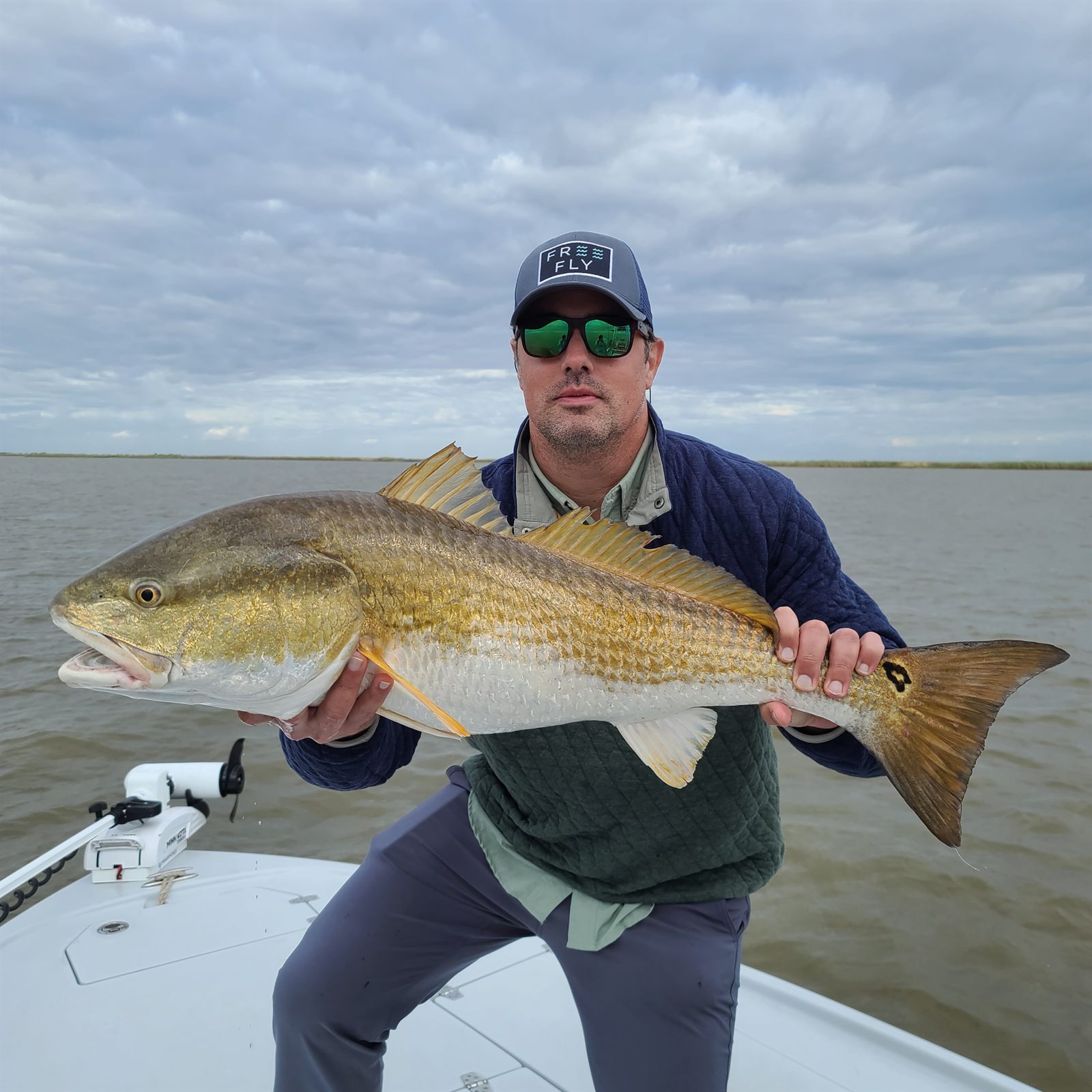
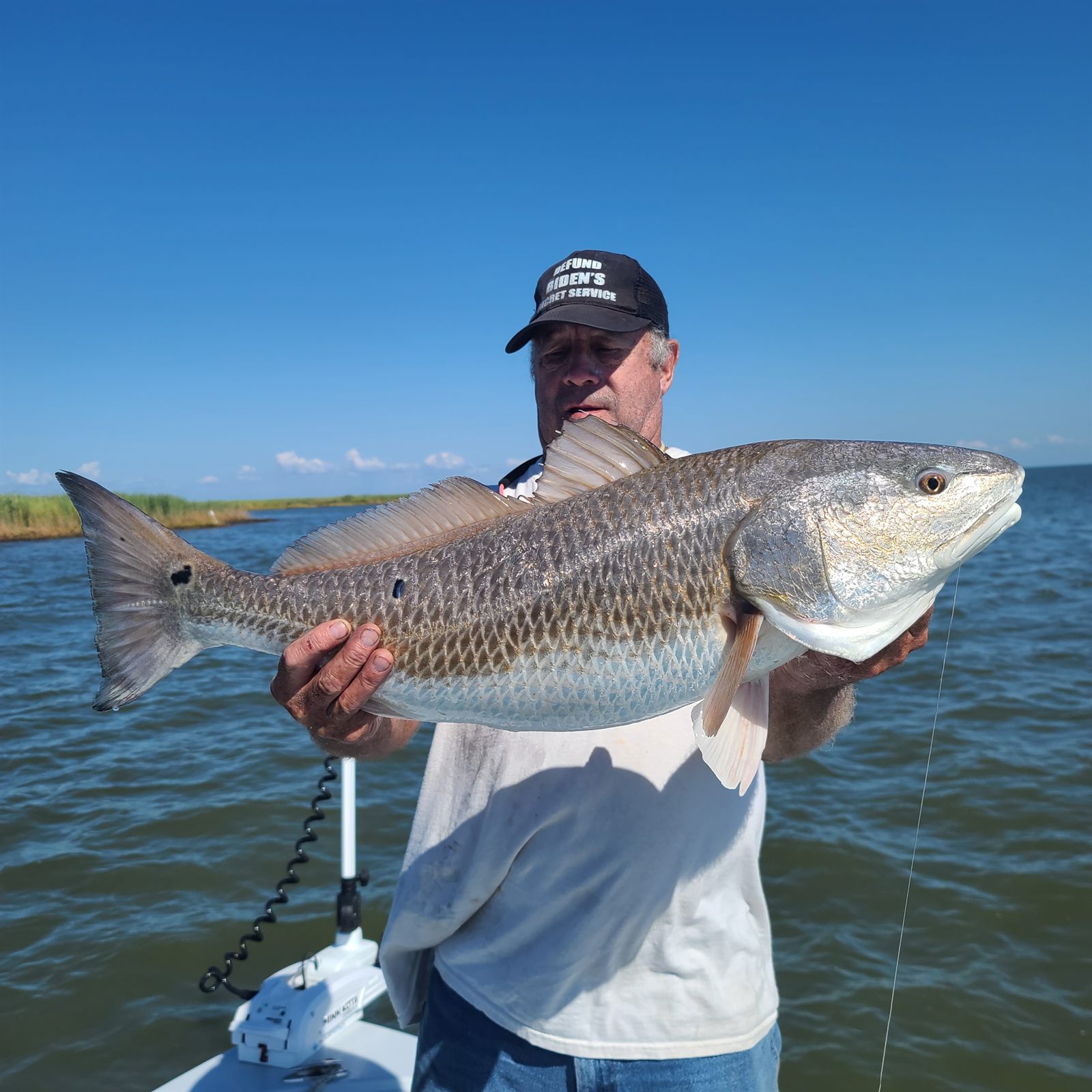
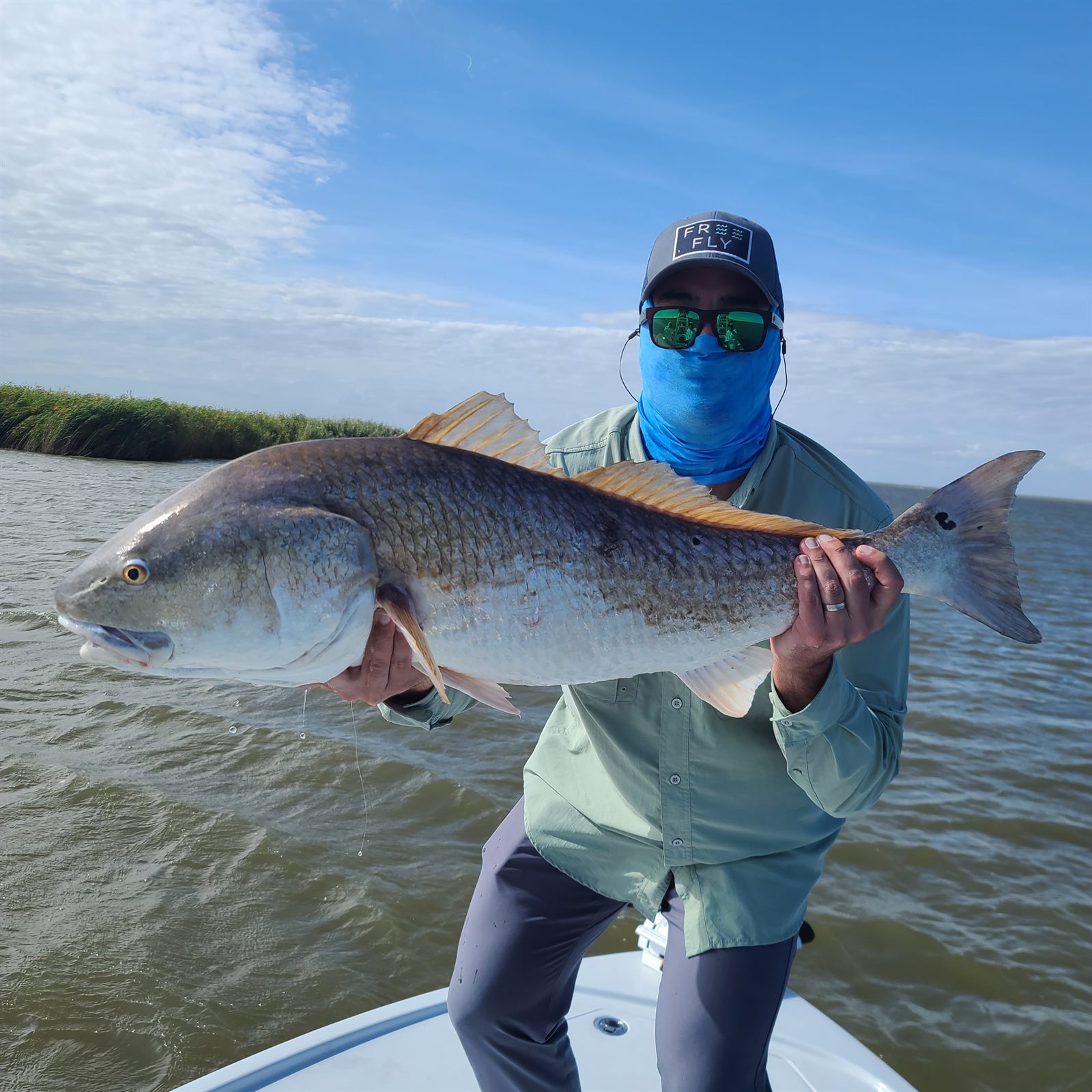
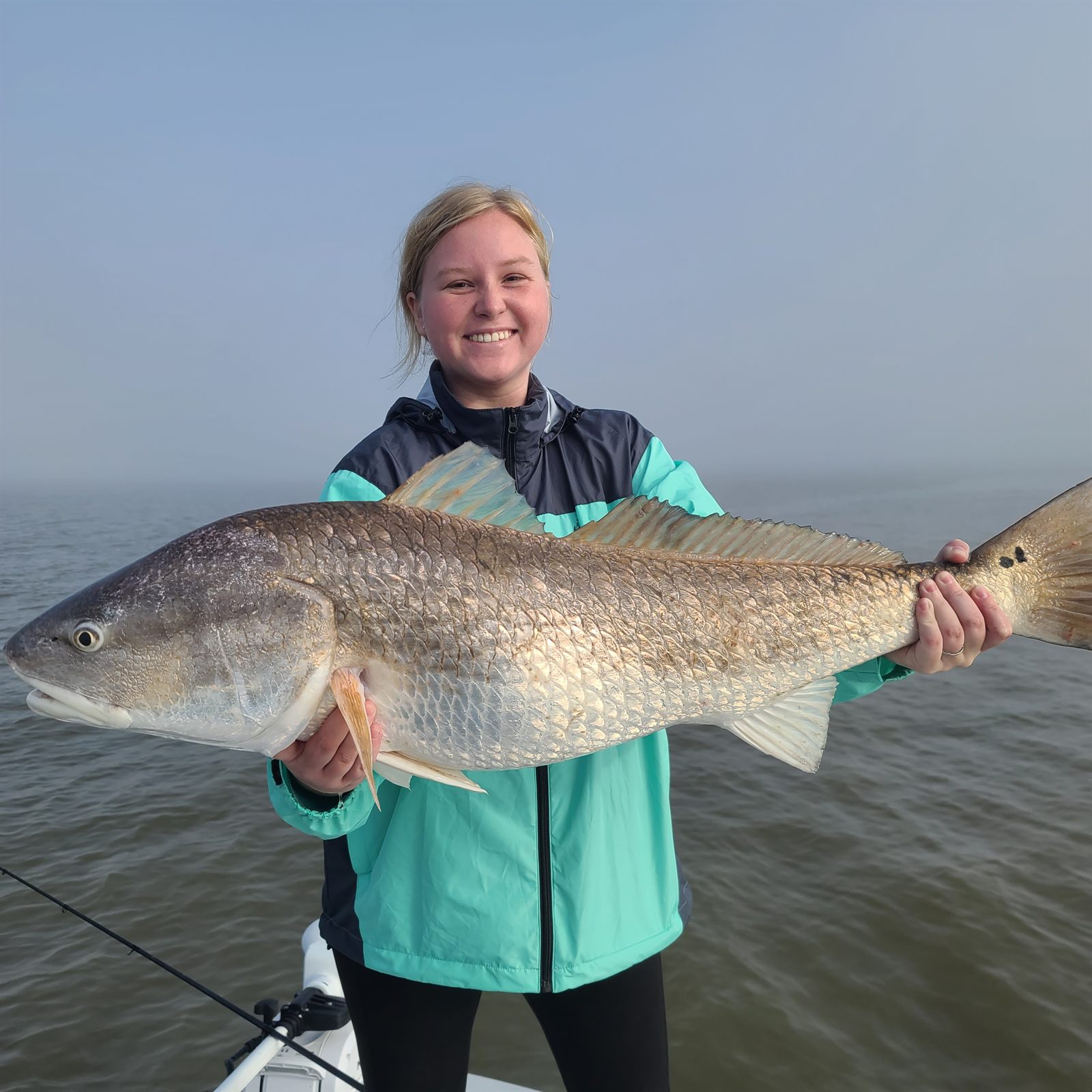
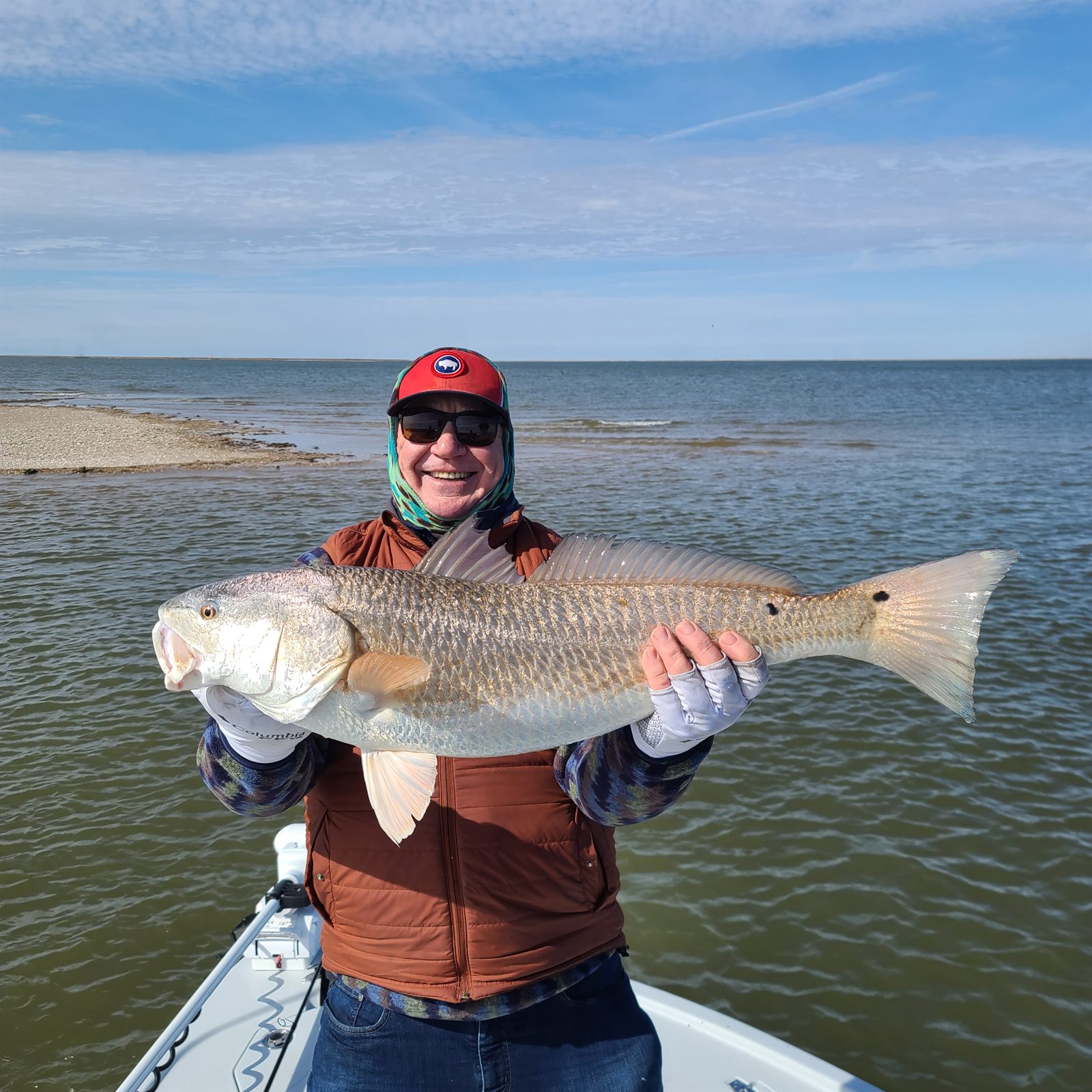
The wind isn’t your enemy; it’s the invisible tide that dictates exactly where the fish are hiding in the marsh. While most anglers cancel their trips when the flags start snapping, the pros know that the best wind for fishing inshore isn’t always a dead calm. In the shallow expanses of Vermilion Bay and West Cote Blanche Bay, the direction of the breeze is often more important than the tide chart on your phone.
It’s incredibly frustrating to haul your gear to Cypremort Point only to find the water looks like chocolate milk because the bay is “blown out.” We agree that nothing ruins a trip faster than fighting murky water and unpredictable levels. This guide will help you master how wind direction and speed dictate water movement and fish behavior across the Vermilion Bay marsh to maximize your catch. You’ll learn which winds push water in, how to find “clean” pockets on breezy days, and why a north wind is your best friend for clearing the flats. Get ready to fish with the confidence of a seasoned guide, even when conditions are less than perfect.
Key Takeaways
- Master the art of identifying the best wind for fishing inshore by balancing water clarity and oxygenation to keep the bite active.
- Learn how sustained south winds create “wind tides” that stack water into West Cote Blanche Bay, drastically changing fish positioning.
- Identify why a Southeast breeze is the premier condition for Speckled Trout while North winds help drain the marsh for Redfish.
- Discover how to use the “Lee Side” strategy at locations like Burns Point to find clean, fishable water even when the gusts pick up.
- Understand the value of a 3rd generation guide’s expertise in navigating the complex wind patterns unique to the Vermilion Bay ecosystem.
Table of Contents
- Understanding Wind Dynamics in South Louisiana Inshore Waters
- Wind Tides vs. Lunar Tides: How Direction Shapes Vermilion Bay
- West vs. East Winds: Deciphering the Best Conditions for Redfish and Trout
- Tactical Adjustments: How to Fish When the Breeze Picks Up
- Why Booking a Pro Like Capt. Troy Nash Beats Guessing the Gusts
Understanding Wind Dynamics in South Louisiana Inshore Waters
Most folks wake up hoping for a glass-calm day, but seasoned marsh veterans know better. The best wind for fishing inshore is actually a steady breeze that moves water without turning the bay into chocolate milk. In the shallow flats of Vermilion Bay, a little wind is the angler’s best camouflage. It creates a vital balance between water clarity and oxygenation that keeps the predators active and the bait moving. When you understand how the breeze interacts with our local topography, you stop fighting the weather and start using it to your advantage.
The Science of Surface Chop and Oxygen
When a breeze hits the surface of Weeks Bay or the ponds around Marsh Island, it breaks the surface tension. This process pumps vital oxygen into the shallow water column. Redfish and Speckled Trout have higher metabolisms when oxygen levels are peaked. They become more aggressive and willing to strike a lure with conviction. During the peak summer months, when water temperatures climb, that wind-driven oxygen becomes the difference between a lethargic fish and a fighter ready to scream your drag. The slight ripple also obscures the fish’s view of the world above, making them feel secure enough to hunt in the shallows.
Why “Dead Calm” Isn’t Always Best
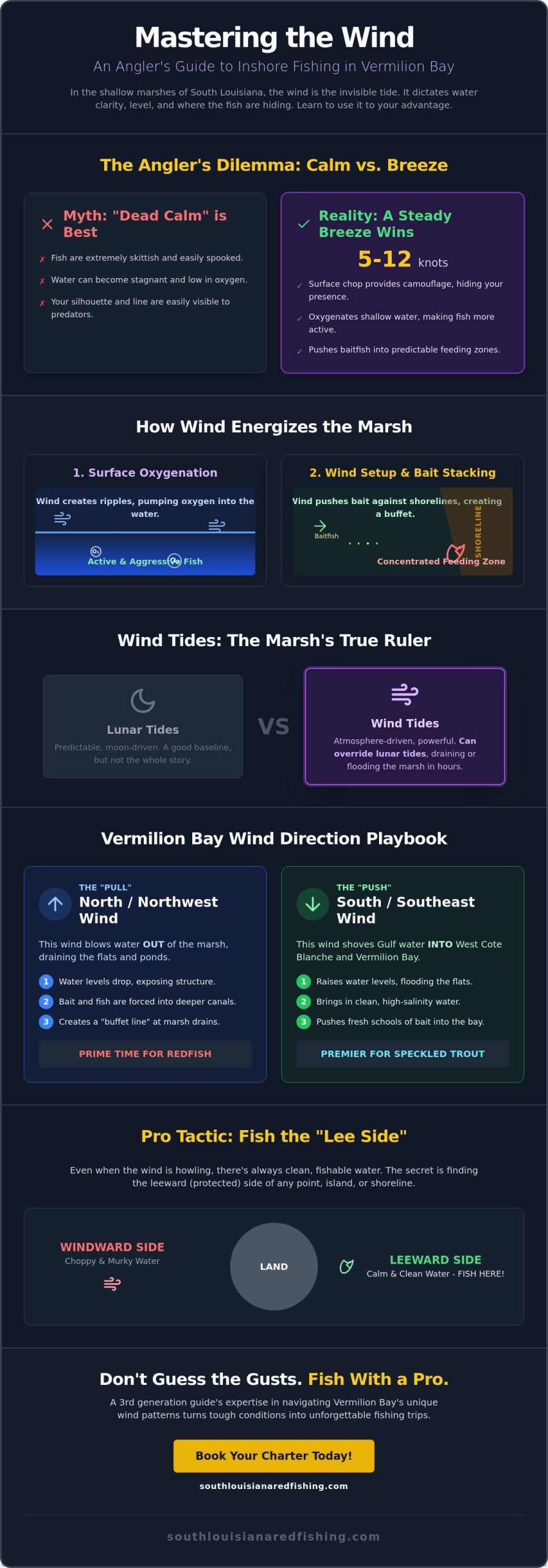
A “dead calm” day creates a mirror effect on the water. In the clear, shallow marshes near Cypremort Point, this makes fish incredibly skittish. Every boat vibration or lure splash sounds like a warning for a predator to flee. Without a ripple to distort their view, fish can see your silhouette or the shadow of your line from a distance. Stagnant water also tends to lose its “clean” quality, occasionally becoming low-oxygen zones during the midday heat. A 5 to 12 knot breeze is often superior because it provides enough surface noise to mask your approach while keeping the water energized.
Wind also acts as a physical force that moves the entire food chain. A sustained breeze pushes shrimp and menhaden against shorelines, weirs, and oyster reefs. This phenomenon is a result of Wind setup, where the breeze literally piles water up against the coast. When bait gets stacked against a windward shoreline in West Cote Blanche Bay, it creates a concentrated feeding zone. Finding “clean” water means locating areas where the wind is moving the tide but hasn’t yet stirred up the bottom sediment. Mastering this balance is exactly how we produce consistent results even when the flags are flying.
Wind Tides vs. Lunar Tides: How Direction Shapes Vermilion Bay
Tide charts provide a baseline, but in the shallow marshes of South Louisiana, the wind is the ultimate architect of the water level. While lunar tides follow the moon’s predictable pull, wind tides are driven by the raw power of the atmosphere. Understanding this distinction is the secret to finding the best wind for fishing inshore. In Vermilion Bay, a forecast might call for a high tide at noon, but a stiff North wind can easily override the moon and leave the flats bone dry. Conversely, a steady South wind can keep the water high for days, regardless of what the charts say.
The “Push” and “Pull” of the Gulf
A sustained South or Southeast wind acts as a massive shovel, pushing Gulf water directly into East and West Cote Blanche Bay. This influx brings in higher salinity and a fresh supply of baitfish. However, a sustained wind of 6 hours or more from the North or Northwest has the opposite effect. It literally blows the marsh out. While this might look like a disaster for navigation, it’s a goldmine for anglers. As the water drains from the marsh ponds around Marsh Island, it concentrates Redfish and Speckled Trout into the deeper bayous and canals. This drainage effect is particularly potent when the Atchafalaya River discharge is low, allowing the wind to dictate clarity without competing with muddy river water.
Reading the Water Level in Real-Time
Mastering the “wind tide” requires a keen eye. Look at the grass lines along the shore or the exposed crowns of oyster reefs. If the water is falling off the grass despite the lunar chart saying it should be rising, the wind has taken control. This transition is the “golden hour.” When the wind tide begins to fall, water rushes through weirs and marsh cuts, creating a buffet for waiting predators. Identifying the best wind for fishing inshore often means finding the moment when the wind tide begins to pull bait out of the protection of the grass. Redfish stack up at these choke points, waiting for shrimp to be swept out of the ponds. It’s an explosive feeding frenzy that savvy anglers live for.
This is why Capt. Troy D Nash monitors wind direction for days leading up to a trip. He isn’t just looking for comfort; he’s tracking how much water is being held in the marsh or pushed out of it. If you want to skip the guesswork and head straight to the action, booking a guided fishing trip with an expert who knows these patterns is your best bet for a successful haul. Every trip is an adventure when you know how to read the water’s secret language.
West vs. East Winds: Deciphering the Best Conditions for Redfish and Trout
Old timers love to recite the rhyme “East wind, fish bite least,” but in the unique ecosystem of South Louisiana, that’s a myth we’ve debunked countless times. In the Vermilion Bay area, an East wind isn’t a curse; it’s a call to adjust your strategy. Finding the best wind for fishing inshore requires looking past general rules and focusing on how specific directions move the water across our reefs and shorelines. Whether the breeze is coming off the Gulf or pushing across the Intracoastal, each quadrant offers a different opportunity to fill the cooler.
The Southeast Sweet Spot
When the breeze kicks up from the Southeast, it acts like a conveyor belt, pushing higher-salinity Gulf water into Weeks Bay and East Cote Blanche Bay. For Speckled Trout enthusiasts, this is the gold standard. As of May 14, 2026, water temperatures have stabilized at 74 degrees, and these Southeast winds are driving pelagic species deeper into our marsh. This direction brings in clear, salty water that Trout crave during the spring and summer months. Understanding how species react to these shifts is what separates a successful trip from a long boat ride. When fishing a Southeast blow, we position the boat to cast with the wind. This allows for maximum distance with topwaters or corks, covering more territory on the shell reefs where Trout are currently patrolling.
Managing the Dreaded West Wind
A direct West wind is arguably the most challenging condition for the Cypremort Point shoreline. It has a tendency to “muddy up” the shallow flats and reefs, reducing clarity to just a few inches. However, a seasoned guide doesn’t pack it in when the wind turns West. We head for the “lee side” of Marsh Island. By using the island as a massive windbreak, you can find pockets of calm, clean water even when the open bay is churning.
The best wind for fishing inshore during these conditions often involves tucked-away spots where Redfish are stacked in 18 to 36 inches of water. While the open bay might be too rough for Trout, the protected marshes of West Cote Blanche Bay remain productive for Redfish. We switch tactics, focusing on windward shorelines where the chop is pushing bait directly into the grass. Even on a West wind, the fish still have to eat; you just have to know which shoreline provides the right protection. Mastering these directional shifts ensures that your trip to the Vermilion Bay marsh is never a wasted effort.
Tactical Adjustments: How to Fish When the Breeze Picks Up
When the flags at the Cypremort Point boat launch are snapping, most casual anglers turn around and head for the house. That’s a massive mistake. While a 15-knot breeze makes the open bay a bumpy ride, the marsh is full of hidden windbreaks and ambush points. Mastering the best wind for fishing inshore means learning how to pivot when the gusts pick up. Instead of fighting the elements, we use the unique geography of the Vermilion Bay ecosystem to find pockets where the water remains fishable and the bite stays hot. You don’t need a perfectly calm day to fill a limit; you just need the right tactical plan.
Finding the “Lee” in the Marsh
The tall marsh grass of South Marsh Island and the high banks of the Intracoastal Waterway act as massive natural walls. If the wind is howling from the South, we tuck into the northern shorelines of these canals. You’ll find a “lee” where the water is calm and clear just feet away from the whitecaps in the open bay. Don’t ignore the “dirty water line” where the wind-whipped bay meets the protected marsh water. Predators often cruise this edge, using the murk as cover to ambush bait being pushed out of the ponds. Identifying these calm pockets near Cypremort Point State Park is the key to staying productive when the open bay gets too rough for comfort.
Lure and Gear Tweaks
Finesse goes out the window when the water gets churned. To target a Louisiana redfish in these conditions, you need lures that create a ruckus. Switch from light plastics to a 1/2-ounce gold spoon or a heavier paddle tail. The vibration and flash help the fish find your bait in the turbulence. We also recommend using braided line to cut through the wind. A belly in your line from a crosswind means missed strikes, so use the braid’s thin diameter to maintain a tight connection. Adjust your retrieve speed to be slightly faster to keep that line taut and ensure you feel every thump.
Boat positioning is your final hurdle. Drop your Power Poles or a heavy anchor immediately once you find the fish. In a stiff breeze, your boat will drift off a hot spot in seconds, and you’ll waste half your day repositioning. Safety is always the priority; if the chop in the open bay exceeds what your vessel can handle, stay in the protected interior near Burns Point. There’s plenty of world-class action in the canals without risking a swampy ride. Ready to see how a pro handles the breeze? Book your guided fishing trip today and let’s go hunt some reds regardless of the gusts.
Why Booking a Pro Like Capt. Troy Nash Beats Guessing the Gusts
Expertise You Can’t Get from an App
Planning Louisiana fishing trips with a 3rd generation guide like Capt. Troy Nash saves you the frustration of searching for clean water. With over 25 years of professional tenure in the Vermilion Bay area, Capt. Nash understands the secret language of the marsh. He knows exactly which hidden “honey holes” remain protected when the wind shifts just 10 degrees. While a novice might stay glued to a spot that has turned murky, a seasoned pro recognizes the signs of a shifting wind tide and pivots from Speckled Trout to Redfish in minutes. This level of adaptability is what ensures your trip is a success regardless of what the flags are doing at the launch.
Beyond the Boat: The Vermilion Bay Advantage
Choosing Cypremort Point as your home base offers more than just world-class fishing. Our region provides a seamless blend of adventure and authentic Cajun culture. After a day of battling reds in the marsh, you are perfectly positioned to enjoy the best of South Louisiana. We recommend heading into nearby Lafayette to celebrate your catch with world-class boudin, fresh crawfish, and the vibrant atmosphere of Acadiana. For those traveling with families, Cypremort Point State Park offers excellent facilities and beach access, making it a premier destination for a complete vacation experience.
Don’t let a 12-knot breeze ruin your plans. A professional charter boat handles the chop of the open bay with a level of safety and comfort that a rental simply cannot match. We provide all the high-end gear and local insight needed to turn the wind into your greatest tactical advantage. Let us handle the navigation and the “wind setup” strategy while you focus on the thrill of the strike. The fish are out there waiting in the lee of the grass. It’s time to stop guessing and start catching. Book your adventure today and experience the very best of the Vermilion Bay marsh.
Master the Marsh and Claim Your Catch
You now have the tactical blueprint to turn the “invisible tide” into your greatest advantage on the water. Understanding the best wind for fishing inshore means you no longer have to fear a snapping flag at the Cypremort Point launch. By tracking wind direction to find clean water and adjusting your gear to match the surface chop, you can find world-class action while other anglers are still checking their apps. The Vermilion Bay ecosystem is dynamic, but with the right knowledge, every breeze becomes an opportunity to fill the cooler.
There is no substitute for the deep-rooted expertise of a 3rd generation local guide who has spent decades reading these specific flats. Capt. Troy Nash offers the professional tenure and expert knowledge of Marsh Island and the surrounding bays to ensure your trip is legendary, regardless of the weather. Don’t leave your next adventure to chance or a lucky guess. Book Your Vermilion Bay Adventure with Capt. Troy Nash Today! We’ll see you on the water for a day of rod-bending excitement you’ll never forget.
Frequently Asked Questions
What is the absolute best wind direction for Vermilion Bay fishing?
A North or Northwest wind is the gold standard for clearing the flats, while a Southeast breeze is the best wind for fishing inshore when hunting Speckled Trout. North winds drain the marsh and concentrate predators in the deeper bayous. Conversely, Southeast winds push high-salinity Gulf water into Weeks Bay, creating the ideal conditions for Trout to move in from the nearshore reefs during the spring and summer months.
How much wind is too much for an inshore fishing charter?
Sustained winds over 20 knots are generally the cutoff for safety and comfort, though 15 knots is where we pivot to protected marsh tactics. In the open expanses of West Cote Blanche Bay, high winds create steep, tightly packed chop that makes navigation difficult. We monitor real-time conditions to ensure every trip remains safe, often finding world-class action in the interior canals when the open bay is too rough.
Does a North wind really “kill” the fishing in South Louisiana?
A North wind actually improves fishing by draining the shallow ponds and forcing fish into predictable, deeper choke points. While the water levels drop, Redfish and Trout stack up in the canals and bayous around Marsh Island. It is a total myth that North winds stop the bite; they simply change the location of the fish. You just have to follow the falling water to find the concentrated action.
Can you still catch Redfish in muddy water caused by high winds?
You can absolutely catch Redfish in murky water by switching to lures that emphasize vibration and flash. Redfish rely heavily on their lateral lines and sense of smell when visibility drops below 12 inches. A gold spoon or a rattling paddle tail is incredibly effective in these conditions. We focus on windward shorelines where the bait is being physically pushed into the grass by the surface chop.
What is a “wind tide” and why does it matter more than the moon?
A wind tide occurs when sustained wind direction physically pushes water into or out of the bay, often overriding the lunar cycle. In shallow systems like Vermilion Bay, a strong South wind can keep the tide high even during a scheduled low. Understanding this phenomenon is crucial because it dictates where fish can travel and where they get trapped as the water eventually recedes from the marsh.
Where can I find protected water when the wind is blowing over 15 knots?
The best protected waters are found along the northern banks of the Intracoastal Waterway or the leeward side of South Marsh Island. These geographic features act as massive windbreaks, providing calm, clean pockets even during a stiff blow. We also look for tall marsh grass shorelines near Cypremort Point that block the wind and prevent the water from becoming too turbid for a successful strike.
Is it better to fish with the wind at your back or in your face?
It is almost always better to fish with the wind at your back to maximize your casting distance and maintain boat stealth. Casting into a stiff breeze creates a belly in your line that makes it difficult to feel subtle strikes. Positioning the boat so the wind carries your lure toward the target allows you to cover more water and keep your line taut for a fast hook set.
How does wind affect the water temperature in the shallow marsh?
Wind affects water temperature by mixing the surface layer and triggering evaporative cooling in the shallow flats. A steady breeze prevents the stagnant, high-heat conditions that can deplete oxygen during the summer. This mixing keeps the water energized and maintains a consistent temperature across the flats, which is why the best wind for fishing inshore often results in a much more aggressive and active bite.