
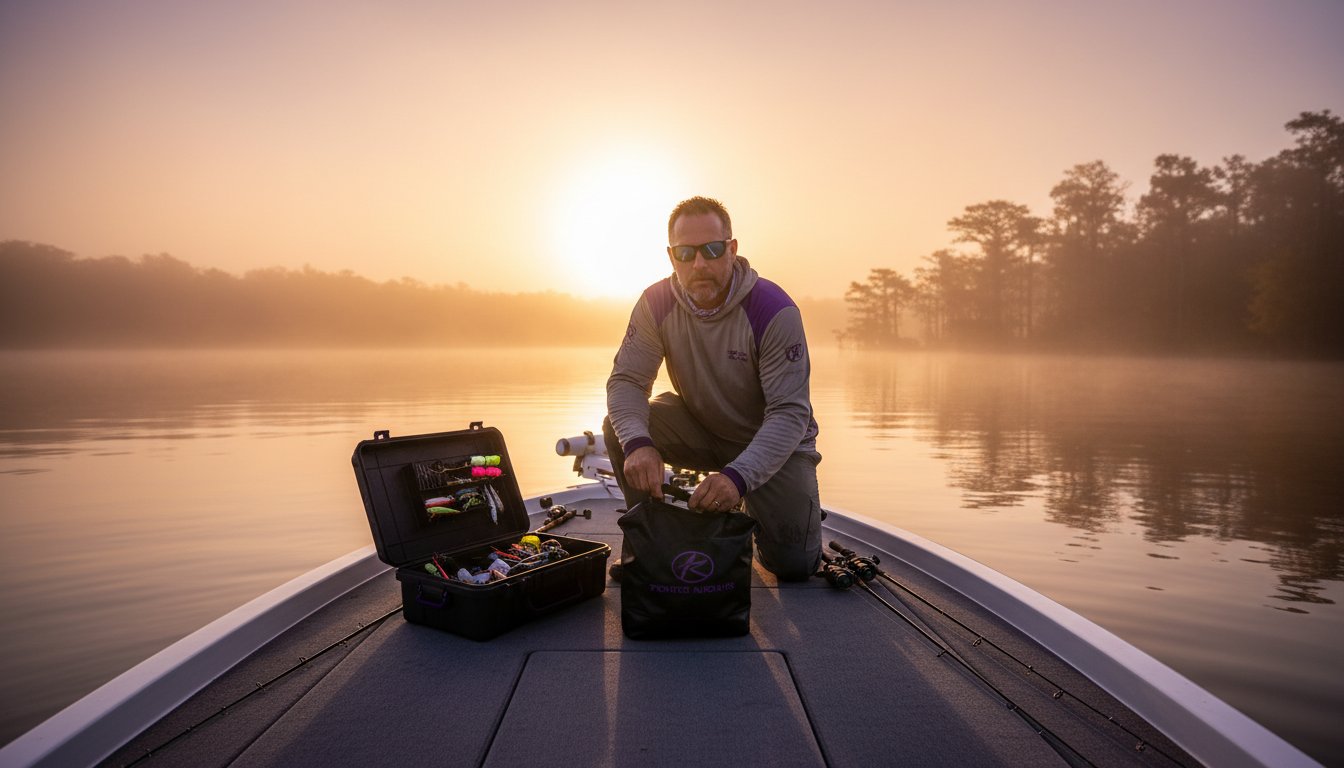
A single forgotten item can transform an epic day on Vermilion Bay into a grueling battle against the elements. You’ve likely spent 14 days or more dreaming of those giant bull reds, yet the anxiety of being under-prepared for the intense Louisiana sun or a sudden shift in the marsh weather can dampen the excitement. Unlike a high-cost offshore run out of Venice, our inshore trips to the reefs of Cypremort Point require a specific, tactical approach to packing that prioritizes mobility and protection.
As a 3rd-generation veteran guide with over 25 years of experience on these waters, I’ve seen exactly how the right gear makes or breaks a trip. This guide will show you exactly what to bring on a louisiana fishing trip to ensure your adventure is comfortable and stress-free. We’ll break down the essential moisture-wicking apparel for the heat, the specific licensing you need for the weirs of Marsh Island, and the must-have items for a successful day chasing speckled trout in the canals of West Cote Blanche Bay. Get ready to climb aboard with confidence knowing you’re prepared for the thrill of the catch.
Key Takeaways
- Learn how to secure the correct legal documentation and understand why a digital backup is essential for any LDWF check in the marsh.
- Discover the “Marsh Camo” dressing philosophy to stay cool and protected against 90% humidity while avoiding the common pitfalls of cotton clothing.
- Master your gear list by learning which high-end tackle is provided and exactly what to bring on a louisiana fishing trip if you want to use your own specialized rods.
- Get expert advice on fueling your epic adventure, including the best hydration strategies for the South Louisiana heat and how to manage your cooler space.
- Prepare for a seamless experience at Cypremort Point with professional tips on arrival logistics and what to expect during the final fish cleaning and bagging process.
The Non-Negotiables: Legal and Essential Documentation
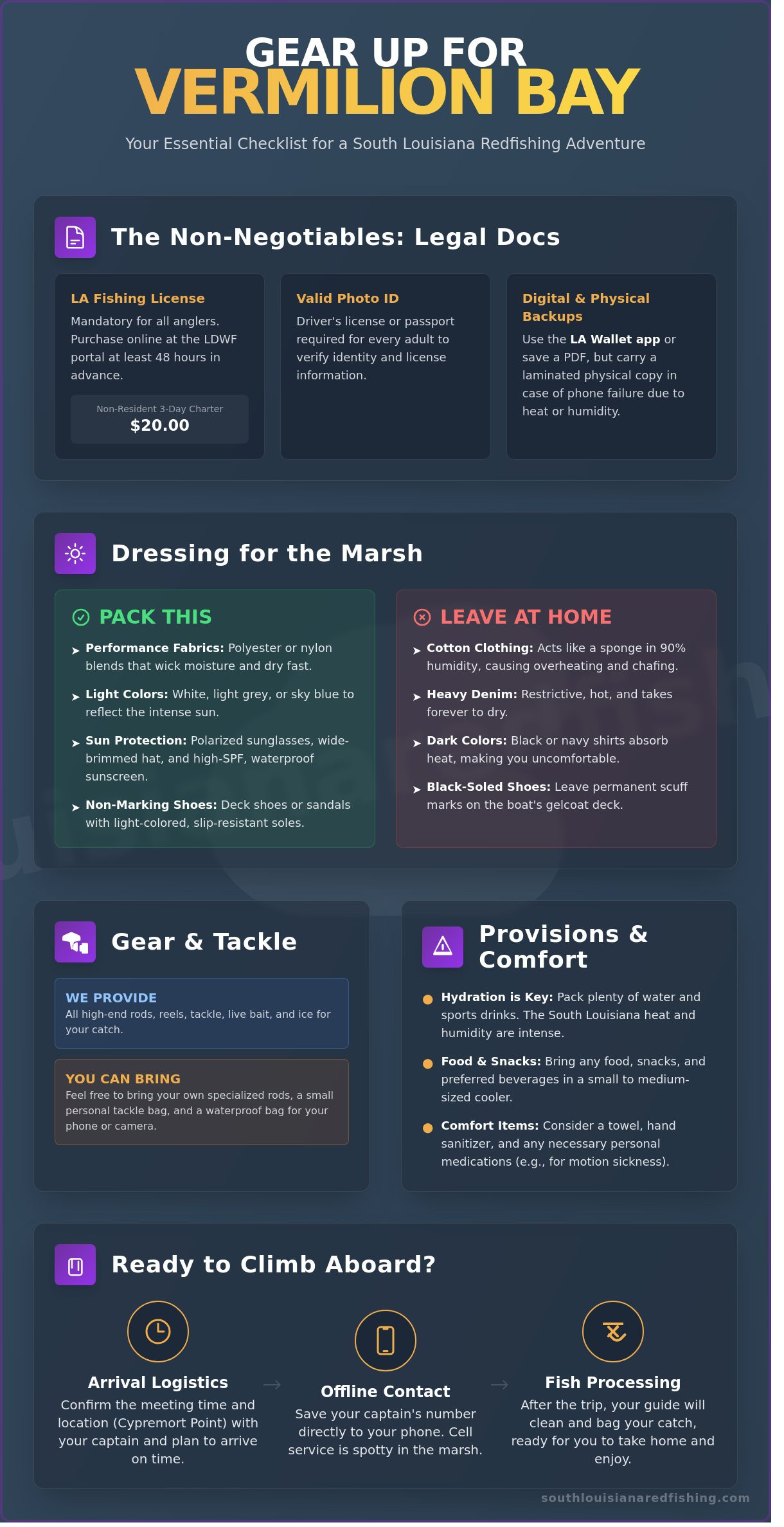
Your epic adventure begins long before you cast a line into the fertile waters of Vermilion Bay. While you’re likely dreaming of battling giant bull reds or limiting out on speckled trout, the absolute first item on your list for what to bring on a louisiana fishing trip is your legal documentation. Louisiana Department of Wildlife and Fisheries (LDWF) agents frequently patrol the shorelines near Cypremort Point and the weirs of Marsh Island. They’re looking for compliance to ensure our fishery stays world-class for the next generation of anglers. He’s got you covered on the boat and gear, but the license is your responsibility.
Having your license ready is the difference between a legendary day and a costly citation that kills the mood. LDWF agents currently accept digital copies on your smartphone via the LA Wallet app or a clear PDF saved to your files. However, high humidity and 90-degree direct sun can drain phone batteries or cause devices to overheat while you’re navigating the canals near Weeks Bay. Carrying a laminated physical backup is a veteran move that ensures you’re always covered, even if your tech fails. It’s a small step that protects your investment in this experience.
A valid photo ID is mandatory for every person on the boat. Whether you’re targeting black drum in the marsh or hitting the oyster beds near East Cote Blanche Bay, you must prove your identity. This matches your license data and is required for the basics of angling legality in state waters. Unlike the massive fuel costs and long travel times associated with offshore trips in other areas like Venice, our inshore trips are fast and accessible, but the law remains just as strict. Don’t leave the dock without a driver’s license or passport for every adult in your group.
Securing Your Louisiana Fishing License
Visit the LDWF online portal to grab your credentials at least 48 hours before you arrive at the dock. For 2026, the updated system requires a verified email and a secondary form of identification to create your profile. You can choose a seasonal permit if you plan to return to our legendary marshes, but most visitors opt for the convenient 3-day charter passenger license. As of January 1, 2026, the specific cost for a non-resident 3-day charter passenger license is $20.00.
Identification and Waivers
Minors under age 18 don’t always need a license, but they should carry a birth certificate copy or state ID to verify their age if an agent requests it. For corporate groups or large family trips hitting the reefs near Burns Point, the trip organizer should keep a digital folder of all participant waivers and booking confirmations. Save your captain’s contact info as an offline contact before you leave the hotel. Cell service can become spotty once you’re deep in the West Cote Blanche Bay marsh, and you’ll want that number handy for last-minute coordination. Group leaders should verify that every guest has their digital documents downloaded for offline access to avoid delays at the boat ramp.
Climb aboard with confidence knowing your paperwork is squared away. When you’ve got your legal bases covered, you can focus entirely on the thrill of the hunt. The bull reds are waiting in the surf near Marsh Island, and your 3rd generation guide is ready to put you on the fish. This isn’t just a day on the water; it’s a professional operation where every detail matters for your success. Get your documents in order today so you can experience the thrill tomorrow.
Dressing for the Marsh: Protection Against Sun, Wind, and Water
The “Marsh Camo” philosophy isn’t about blending into the tall grass; it’s about surviving the brutal elements of the Gulf Coast. When you’re deciding what to bring on a louisiana fishing trip, leave the heavy denim and dark cotton shirts at home. In the 90% humidity of the Louisiana coast, cotton acts like a heavy sponge. It traps moisture against your skin, which leads to rapid overheating and painful chafing during a long day on the water. Instead, choose high-performance polyester or nylon blends. These technical fabrics pull sweat away from your body and dry in minutes. Stick to light colors like sky blue, seafoam, or light grey. These shades reflect the intense sun rather than absorbing it, keeping your core temperature stable while you hunt for Bull Reds.
Your feet need specialized gear to handle the environment of a professional bay boat. Non-marking soles are mandatory when stepping aboard a vessel designed for the shallow flats of Cypremort Point or the oyster beds of Weeks Bay. Black-soled sneakers or work boots leave permanent scuffs on a clean white gelcoat deck. Bring dedicated deck shoes or technical sandals with light-colored, slip-resistant bottoms. This keeps the boat in top shape and ensures you don’t lose your footing when a giant Redfish makes a powerful run under the hull.
Packing requirements change significantly with the calendar. A January morning on Vermilion Bay can start at a shivering 40 degrees, requiring windproof outer shells, while a July afternoon easily hits 95 degrees with a heat index well over 100. Before you head out to the weirs of Marsh Island, ensure you’ve checked the Louisiana fishing license requirements to stay legal. While other areas like Venice might offer different terrain, our local marshes demand a versatile wardrobe that can handle rapid shifts in wind and moisture.
Sun Protection Beyond Sunscreen
Sunscreen is only your first line of defense. Experienced anglers now rely on the “Buff” or neck gaiter for full-face protection. This simple tube of fabric provides 50+ UPF protection for your neck, ears, and face without the greasy mess of lotion that can ruin your grip on a rod. Pair this with high-quality polarized sunglasses. These aren’t just an accessory; they’re a critical tool for cutting through the surface glare to spot Redfish in the shallows. For headwear, a technical cap with a dark under-brim is better than a wide-brimmed straw hat. At boat speeds of 30 miles per hour, a floppy hat becomes a kite, but a structured cap stays put while you’re burning across East Cote Blanche Bay. When planning what to bring on a louisiana fishing trip, prioritizing eye and skin protection is the difference between an epic day and a week of recovery.
Layering for the Morning Run
Even in the peak of summer, that first 30-minute run to the honey hole feels surprisingly chilly. The wind chill at high speeds can drop your perceived temperature by 15 degrees instantly. A lightweight, breathable windbreaker is a non-negotiable item for the early hours. If the clouds roll in, a cheap plastic poncho won’t survive the marsh. It will shred in the wind or turn your clothes into a sauna. Invest in technical rain gear with sealed seams and breathable membranes. Moisture-wicking base layers are the foundation of all-day comfort in the marsh. They keep you dry, cool, and focused on the next big strike. If you’re ready to test your gear against some of the best Redfish in the country, book your epic adventure today.
Gear and Tackle: What We Provide vs. What You Can Bring
When you climb aboard with Captain Troy Nash, the “He’s Got You Covered” promise isn’t just a slogan. It’s a professional guarantee backed by over 25 years of guiding experience. We provide high-end rods and reels specifically selected to handle the explosive power of a giant bull redfish in the shallow marshes. You don’t have to worry about the technical details of what to bring on a louisiana fishing trip because our gear is tournament-ready and meticulously maintained for every guest.
Our Professional Grade Equipment
Captain Troy keeps a versatile arsenal of spin and baitcast setups on the boat at all times. We utilize high-quality braided lines, typically in the 30 to 50-pound test range, which is essential for pulling stubborn fish out of the thick grass near South Marsh Island. These lines offer zero stretch. This gives you the sensitivity needed to feel a subtle strike in the murky waters of East Cote Blanche Bay. Our tackle selection is the result of three generations of local knowledge. We use custom-picked lures, including specific soft plastics and topwater plugs, that are proven to trigger strikes from Vermilion Bay Redfish. These lures are weighted precisely for the shallow depths of the interior marshes, where a fraction of an ounce can be the difference between a trophy catch and a snagged oyster bed.
Personal Gear Guidelines
If you have a lucky baitcaster or a preferred 8-weight fly rod, you’re welcome to bring it along. However, space on a specialized bay boat is at a premium. We ask that guests limit personal tackle to one small soft-sided bag or a single 3600-series tackle box. For those traveling from New Orleans or Lafayette, packing light is the best strategy. Our inshore approach differs significantly from “other areas” like Venice, where heavy offshore gear is the norm. We focus on light, fast-action tackle that makes every catch an epic adventure. Before you head to the marina, make sure you have purchased your Louisiana fishing license through the Department of Wildlife and Fisheries. This is a non-negotiable requirement for every angler on board.
We focus our efforts on the canals, lakes, and weirs surrounding Cypremort Point and Weeks Bay. Because we fish the flats and nearshore reefs, you won’t need the bulky, expensive equipment required for deep-sea excursions. Our gear is optimized for the specific salinity and depth of the Acadiana coastline. This specialized focus ensures you spend more time casting and less time fighting with tangled lines or inappropriate gear.
One final, absolute rule for your trip: leave the bananas at home. This isn’t just a joke. It’s a deep-seated maritime tradition that spans centuries. Bringing a banana on the boat is considered a surefire way to kill the bite or cause mechanical failure. If you want to experience the thrill of a successful day on the water, keep the yellow fruit in your truck. We want nothing standing between you and a limit of Redfish, Flounder, or Black Drum.
Provisions and Comfort: Fueling Your Epic Adventure
Experience the thrill of a day on Vermilion Bay without the headache of a mid-day energy crash. To keep your edge while sight-casting for Bull Reds, you need a solid plan for provisions. Knowing exactly what to bring on a louisiana fishing trip transforms a good day into an epic adventure. Captain Troy Nash has seen it all over 25 years on the water, and he knows that a hungry or dehydrated angler loses focus exactly when the big hit happens.
He’s got you covered with a professional-grade marine cooler on the boat. This keeps the deck clear and provides a safe space for your drinks and sandwiches. Do not bring your own bulky coolers onto the boat. They take up valuable casting space and can become trip hazards when you’re moving quickly to net a giant Speckled Trout. Instead, keep a 65-quart rotomolded cooler in your truck at Cypremort Point. This ensures your fillets stay at a safe 34 degrees for the ride home while the boat stays organized and ready for action.
Hydration is your primary defense against the Louisiana sun. By 10:30 AM in July, temperatures on the marsh often hit 92 degrees with high humidity. While a cold soda feels good, it won’t sustain you. Drink 16 ounces of water for every hour you spend on the bay. If you feel thirsty, you’re already behind on your intake. We recommend a mix of plain water and electrolyte-heavy drinks to replace what you lose while working the banks of Weeks Bay.
Your “Boat Bag” should be a compact, soft-sided bag. It needs to hold your essentials without cluttering the floor. Pack items that won’t melt in 95-degree heat. Chocolate is a disaster in the marsh; stick to beef jerky, protein bars, or apples. These provide steady energy without the sticky mess. Keep your keys and wallet in a dedicated internal pocket so they don’t end up at the bottom of the bay during a hectic hookup.
Food and Drink Essentials
The best marsh-ready lunches are simple and durable. Pre-made sub sandwiches or wraps work better than delicate white bread that gets squashed. Avoid glass containers at all costs. Broken glass on a boat is a major safety risk. If you choose to bring alcohol, keep it moderate and respectful. Safety is the priority when we are navigating the narrow canals of East Cote Blanche Bay. Remember, the “land cooler” in your truck is for your limits of Redfish and Black Drum, keeping the boat cooler dedicated solely to fresh food.
The Dry Bag Checklist
A waterproof phone case is mandatory for those Bull Red photos. Even in the calm waters of Burns Point, a splash or a dropped phone can end a trip early. Pack personal medications and motion sickness preventatives like Bonine or ginger tablets. Even though inshore fishing is much smoother than the rough swells you’d find in offshore areas like Venice, the heat can sometimes trigger nausea. Finally, bring bug spray with at least 20% DEET. The no-see-ums at Marsh Island are legendary for their persistence, and you don’t want them ruining your concentration during a trophy hunt.
Ready to Climb Aboard? Final Logistics for Your Trip
Your epic adventure begins the moment you step onto the dock at Cypremort Point. This legendary gateway to Vermilion Bay is where most of our trips kick off. You should plan to arrive at the public boat launch at least 20 minutes before our scheduled departure, which is typically 6:00 AM. This early start ensures we beat the heat and catch the most active morning bite. Parking at the state park or public launch is straightforward and secure, though you should bring a few dollars for the nominal daily launch fee. Captain Troy will have the boat fueled, iced down, and ready to go so we can head straight for the marsh.
Safety is the absolute priority for every outing. Captain Troy monitors local radar and wind speeds constantly to ensure conditions are safe for our inshore and nearshore routes. He makes the final “go or stay” call by 6:00 PM the evening before your trip. While our fishing grounds in the marshes and bayous are much more protected than the rough, open waters found in other areas like Venice, high winds can still churn up the water and shut down the bite. If the weather looks dangerous or unproductive, we’ll notify you immediately to reschedule your trip for the next available window.
When it comes to the etiquette of the trip, tipping your guide is a standard part of the fishing culture. A tip of 15% to 20% of the total trip cost is the industry standard for a full-time, veteran guide. This gesture shows your appreciation for the 25 years of experience Captain Troy brings to the table, along with the hours of boat maintenance and scouting required to find the bull reds. It’s a direct way to reward a successful day of limit-out fishing and expert service on the water.
Arrival and Departure
While Cypremort Point is our primary hub, we sometimes launch from Weeks Bay or Burns Point to stay closer to the hottest bite. We’ll provide exact GPS coordinates for these secondary locations 24 hours before your trip. When deciding what to bring on a louisiana fishing trip, remember to include a large 50-quart cooler to leave in your vehicle. You’ll need this to transport your fresh fillets home. We recommend lining your trunk with a heavy-duty plastic tarp or old towels to catch any condensation or stray moisture from the ice chest during the drive. For a deeper dive into our daily routine, check our What to Expect on Your Inshore Fishing Charter guide.
The Conclusion of Your Adventure
The thrill doesn’t end when the boat hits the dock. We handle the entire fish cleaning process for you. Captain Troy expertly fillets, skins, and bags your catch in high-quality freezer bags, ensuring your Redfish or Speckled Trout is ready for the grill. This is also the best time to plan your next visit. While the spring brings incredible trout action to the oyster beds, the fall months offer some of the most consistent bull red fishing in the country. We’ll help you identify the best moon phases and seasons to maximize your success on your next return. Ready for the thrill? Book Your Epic Adventure with Captain Troy Today!
Claim Your Spot on the Vermilion Bay Marsh
Your gear list is ready and your bags are nearly packed. You now know exactly what to bring on a louisiana fishing trip to stay dry and comfortable while targeting giant bull reds in the shallows. Ensure you’ve secured your 2026 saltwater license before arriving at the Cypremort Point boat launch. While other areas like Venice often require grueling runs to reach deep water, our inshore adventure focuses on the productive oyster beds and marsh shorelines of West Cote Blanche Bay. You’ll need your polarized glasses and seasonal layers, but don’t stress the heavy lifting. Captain Troy Nash is a 3rd generation veteran guide with over 25 years of local experience. He’s got you covered by supplying every rod, reel, and lure required for a successful day. We manage the logistics so you can focus entirely on the thrill of the strike. The trophy fish are waiting in the grass flats and weirs. Let’s get out there.
Book Your Epic South Louisiana Adventure Today!
Frequently Asked Questions
Do I really need a fishing license if I am on a guided charter?
Yes, every angler aged 18 or older must possess a valid Louisiana fishing license. You can easily purchase a 3-day charter passenger license for $20 through the LDWF website before we depart. While other areas like Venice might have different local crowds, our trips in Vermilion Bay require this specific permit to keep your adventure legal. It’s a quick process that ensures your epic day starts without any delays.
Can I bring my own fishing rod and favorite lures?
You’re welcome to bring your personal gear, although Captain Troy provides top-tier rods and reels for every guest. If you have a favorite baitcast setup for giant bull reds near Marsh Island, feel free to bring it along. Most clients find our professional equipment is perfectly tuned for the local oyster beds and weirs. Deciding what to bring on a louisiana fishing trip often comes down to personal comfort versus the convenience of our expert-selected tackle.
What kind of shoes should I wear on the boat?
Wear non-marking, rubber-soled shoes like deck shoes or sneakers to maintain grip and keep the boat clean. Avoid black soles that leave marks or flip-flops that offer no stability when you’re battling a 30-pound drum. A pair of waterproof boots is a smart choice for morning trips in the marsh. Proper footwear is a vital part of what to bring on a louisiana fishing trip to ensure you stay safe while the action heats up.
Are snacks and drinks provided on the trip?
We provide a large cooler with ice and bottled water, but you should bring your own snacks and lunch. Pack items that are easy to eat quickly so you don’t miss a strike while we’re navigating the canals of West Cote Blanche Bay. We recommend bringing 2 liters of water per person for a full 8-hour day to stay hydrated. Having your favorite fuel on hand helps you maintain energy for the entire adventure.
What happens if it rains on the day of my scheduled charter?
We fish in light rain, but the Captain will reschedule the trip if lightning or high winds make the bay unsafe. Safety is our 100% priority, and we monitor local radar every 15 minutes during stormy weather. If we must cancel due to a tropical system or severe front, we’ll work with you to find the next available date. Our goal is to ensure your experience is both thrilling and secure.
Is there a bathroom on the boat for inshore trips?
Most inshore bay boats don’t have a private restroom, but we are rarely more than 15 minutes from a facility or a secluded shoreline. We can quickly zip over to a dock at Cypremort Point or a quiet bank if nature calls. If a full cabin with a head is a requirement, you might look at expensive offshore charters, but you’ll miss the fast-paced action of our shallow-water flats and marshes.
How much should I tip my fishing guide in Louisiana?
A standard tip for a professional fishing guide is 15% to 20% of the total trip cost. For a $700 charter, a tip of $105 to $140 shows your appreciation for the Captain’s 25 years of expertise and 3rd generation knowledge. Your guide spends 2 hours cleaning the boat and prepping gear for every hour you spend fishing. This gesture is a great way to reward the hard work that goes into your successful trip.
Can I bring a cooler on the boat for my fish?
Leave your fish cooler in your vehicle and use our onboard ice chests to save space while we’re on the water. We have 2 dedicated 65-quart coolers to keep your Speckled Trout and Redfish ice-cold until we return to the dock. Once we’re back at Cypremort Point, you can transfer your cleaned catch into your personal cooler for the drive home. This keeps the deck clear for more fishing action.