
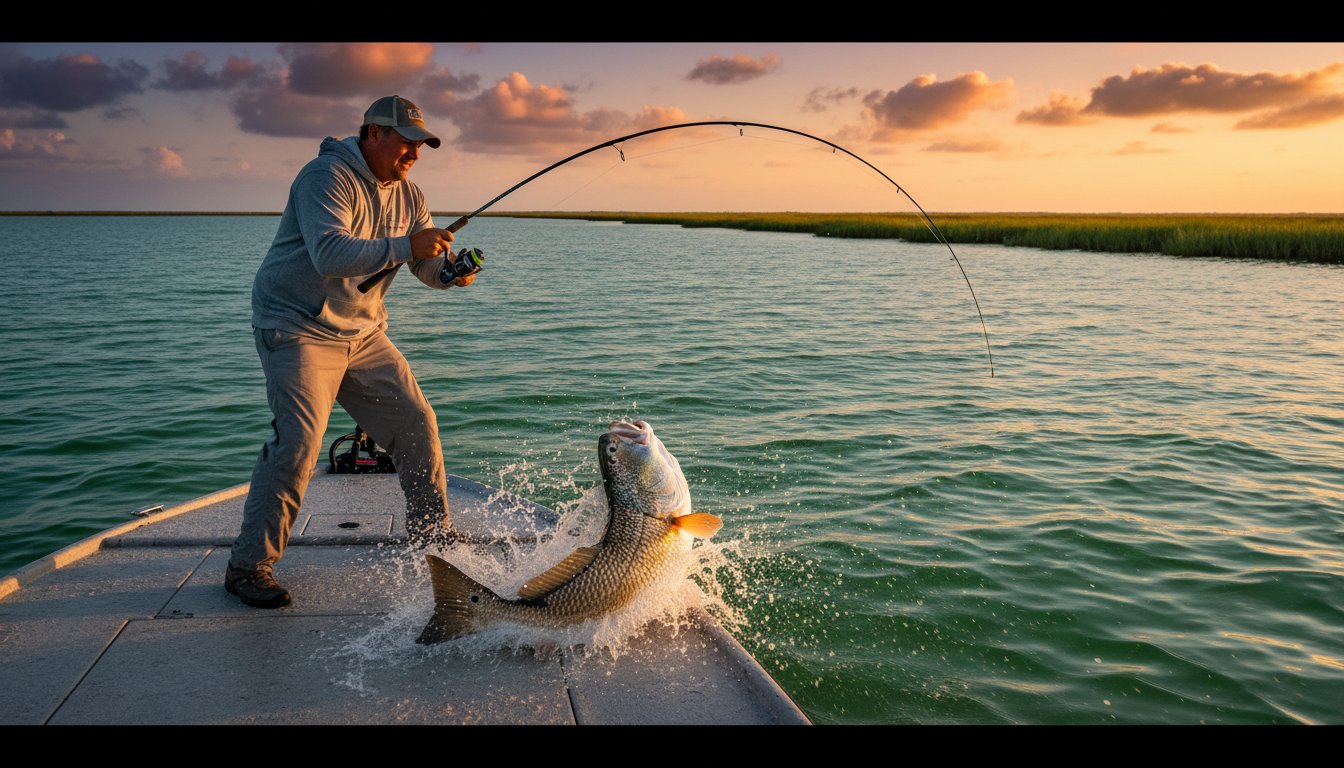
Last Friday, local angler Mike discovered that three inches of moving water at a Marsh Island weir is worth more than a full day of casting into a stagnant bayou. It’s a frustrating reality many face when they hit the water without a clear plan. You know the exhausting feeling of watching your bait sit motionless while the sun beats down on “dead” water. It’s the ultimate buzzkill for any trip. Mastering vermilion bay tide chart fishing is the absolute key to ensuring you don’t end up stuck on a mudflat while the Bull Reds are feeding elsewhere.
I’ve spent over 25 years as a 3rd generation guide learning these local rhythms, and I’m here to help you turn that data into an epic adventure. You’ll learn exactly how to predict the peak bite windows across Cypremort Point and the reefs of West Cote Blanche Bay. We’re diving into the specific tidal movements that trigger aggressive strikes so you can maximize every single minute on the water. From reading the weirs to timing the flats, he’s got you covered for your next legendary catch. Get ready to experience the thrill of a perfectly timed trip.
Key Takeaways
- Master the unique diurnal cycle of Southwest Pass to understand how one high and one low tide per day dictates your success with vermilion bay tide chart fishing.
- Learn to time the “Dinner Bell” effect by targeting marsh drains and bayou mouths as falling tides dislodge baitfish for hungry Reds and Trout.
- Discover how South Louisiana winds can “stack” or “drain” the shallow bay, creating “wind tides” that are often more critical than the moon phase.
- Pinpoint the best tidal windows to fish the “waterfall” effect at Marsh Island weirs and the deep-water superhighway of Southwest Pass.
- Find out why a 3rd generation guide’s mental logs of water color and pressure offer a massive advantage over standard tide apps for your next epic adventure.
Decoding the Vermilion Bay Tide Chart for Fishing Success
Experience the thrill of a screaming reel in the heart of the Louisiana marsh. To limit out on speckled trout or giant bull reds, you have to master the vermilion bay tide chart fishing data before you ever launch the boat. Most beginners look at a chart and only see high or low numbers. Expert guides with 25 years of experience know better. A tide chart represents the vertical rise and fall of water levels. However, the horizontal flow, or current, is what actually triggers a feeding frenzy. Understanding what causes tides through lunar gravitational pulls is the first step in predicting where those fish will stack up against the grass lines. Your epic adventure begins when you learn to hunt the current, not just the clock.
Vermilion Bay and the Southwest Pass operate on a unique diurnal tide cycle. This means the area typically sees one high and one low tide every 24 hours. This differs from the semi-diurnal cycles found in other areas like the Atlantic coast or even parts of the Florida Panhandle. Because you only get one major move per day, timing is everything. If you miss the window of moving water, you’re looking at “Dead Water.” Slack tide is the enemy of the inshore angler. When the current stops, baitfish stop moving, and predators like flounder and redfish hunker down. You want to be on your favorite oyster reef or weir when the water is pushing shrimp and mullet right into the strike zone.
To maximize your time on the water, use the rule of thirds. This rule states that in a typical tidal move, the current velocity isn’t consistent throughout the cycle. During the first hour of a move, about 12.5% of the water volume shifts. In the second hour, that jumps to 25%. By the middle two hours, 50% of the total volume of water is rushing through the passes. This is the peak velocity window where the bite usually turns on. Unlike the deep sea environments where current can be overwhelming, the 1.5 to 2.0 knots of flow in our bayous creates the perfect ambush scenario for trophy catches.
Reading Tide Heights: Mean Lower Low Water (MLLW)
The “zero” on your vermilion bay tide chart fishing app represents the Mean Lower Low Water. This is an average of the lowest daily tide recorded over a 19 year period. When you see a negative tide, such as -0.4 feet, you must use caution. In the shallow marsh ponds near Cypremort Point, a few inches of water is the difference between a successful day and a damaged prop. A 1.0 foot tide in our shallow bay is a massive volume of water, whereas in deep offshore canyons, it’s barely a ripple. Know your hull’s draft and watch the flats carefully.
Tidal Coefficients and Solunar Influence
The debate between Spring and Neap tides is constant among locals. During full and new moons, the gravitational pull is strongest, creating “Spring Tides” with 20% more range and faster currents. While more movement is usually better, too much can stir up silt in East Cote Blanche Bay, killing the water clarity. We use solunar major and minor periods to narrow the bite window even further. A major period lasting 120 minutes that aligns with a falling tide at a Marsh Island weir is a recipe for success. He’s got you covered with the local knowledge to pick the right moon phase for your trip.
How Tidal Movement Dictates Redfish and Trout Behavior
Successful angling in South Louisiana isn’t about luck; it’s about timing. When you’re working the marshes around Cypremort Point, mastering the vermilion bay tide chart fishing schedule is your ticket to success. Think of the tide as a dinner bell. As the water begins to move, it acts as a conveyor belt for the entire ecosystem. Moving water dislodges shrimp, cocahoes, and juvenile crabs from the safety of the thick marsh grass. This creates a feeding frenzy. Predators like Redfish and Speckled Trout know exactly where to wait for this easy meal. Understanding the science behind these shifts, such as the educational resources found at NOAA Tides & Currents, gives you the edge needed to predict exactly when the bite will turn on. While other areas like Venice offer different structures, our local bays rely heavily on these horizontal water movements to concentrate fish.
The Falling Tide: The Inshore Angler’s Best Friend
The first 120 minutes of a falling tide are often the most explosive for Bull Reds and heavy limits of keepers. As the water level drops, the marsh drains. This forces every living thing out of the shallow grass and into the deeper bayous. You want to position your boat at “ambush points” where canal intersections or marsh drains meet the main bayou flow.
- The Strategy: Set your anchor or Power-Pole up-current from a drain. Cast your lure directly into the mouth of the run-out and let the current sweep it back naturally.
- The Gear: 3.5-inch paddletails on a 1/4 oz jig head or a classic 1/2 oz gold spoon are legendary here. The vibration of a paddletail mimics a fleeing baitfish perfectly in the murky, moving water.
- The Target: Focus on the swirling eddies created by the current hitting a point or a cluster of oysters.
The Rising Tide: Scouting the Flats
When the tide pushes back in, it brings life back to the shallows. This is the time to hunt the flats and oyster beds near South Marsh Island. Rising water allows Redfish to reach “virgin” grass beds that were high and dry just two hours prior. This provides an epic sight-fishing opportunity. Look for “crawling” reds with their backs or tails breaking the surface as they root for crabs in the newly flooded grass.
In the East and West Cote Blanche Bays, a rising tide often pushes in cleaner, high-salinity water from the Gulf. This clarity is vital for Speckled Trout, which prefer to hunt by sight. While Redfish stay tight to the grass, Speckled Trout usually hold in the slightly deeper water of the passes or over submerged reefs. They wait for the clean water to bring in schools of menhaden. Relying on a vermilion bay tide chart fishing plan ensures you’re in the right spot before the water gets too deep to spot the fish. If you want to see these patterns in action with a pro, you can always book an epic adventure to see how a veteran guide reads the water in real-time. Captains with 25 years of experience don’t just look at the clock; they look at the grass lines and the way the bait reacts to every inch of water movement.
The ‘Wind Tide’ Factor: Why the Chart Might Lie to You
Experience the thrill of a perfect morning on the water, but don’t let a standard vermilion bay tide chart fishing report be your only guide. Vermilion Bay is a unique beast. It functions like a massive, shallow bowl with an average depth of only 6 to 10 feet. Because the water is so thin, the wind often exerts more control over the water level than the moon’s gravitational pull. A seasoned guide knows that a “high tide” on paper can quickly become a “low tide” in reality if the wind isn’t cooperating.
South winds act like a giant plunger, shoving Gulf water through Southwest Pass and stacking it deep into East Cote Blanche Bay and Cypremort Point. This can create an artificial high tide that lasts for days. On the flip side, a strong North wind drains the bay like a pulled bathtub plug. During a winter “Norther,” you might see the muddy bottom of a canal that usually holds 4 feet of water. It’s a dramatic shift that catches many off-guard. A sustained 15mph North wind can negate a 1-foot lunar high tide.
Safety is the primary concern when these forces collide. When a stiff South wind pushes against a falling tide, it creates the “square wave” chop that Vermilion is famous for. This isn’t the rolling swell you find in other areas like Venice; it’s a tight, violent mess that can swamp a smaller bay boat. Your epic adventure depends on reading these conditions before you leave the dock at Cypremort Point State Park.
Calculating the ‘Real’ Water Level
Mastering the math of the marsh is essential for a successful day. You must combine the forecasted tide height with the wind’s speed and direction to find the “real” water level. If the chart predicts a 1.2-foot rise but a 20-knot North wind is howling, expect the water to actually drop. This creates dangerous trap scenarios. You might cruise into a back bayou near Burns Point on a rising lunar tide, only to find yourself high and dry two hours later because the wind shifted. The water can retreat 18 inches in a single afternoon, leaving you stuck until the wind dies down.
Strategic Adjustments for Wind-Driven Tides
When the wind picks up, your strategy must pivot immediately. Don’t fight the elements; use them. Look for leeward shorelines in Weeks Bay where the land provides a buffer against the gusts. These protected pockets often hold clearer water and calmer conditions. You can also use the wind to your advantage by fishing the windward banks of Marsh Island. A steady South wind pushes shrimp and menhaden directly against the grass lines, creating a buffet for predators. Understanding Redfish behavior helps you realize that these fish follow the bait regardless of what the lunar chart suggests. He’s got you covered if you know where the bait is stacking.
The biggest challenge with wind-driven tides is the “dirty” water factor. Strong winds churn up the soft, silty bottom of the bay, turning the water into something resembling chocolate milk. If your visibility drops below 6 inches, the bite will likely stall. Game fish like Speckled Trout and Redfish are sight hunters. You must hunt for “green” water, which is often found behind marsh weirs or inside protected coves where the grass filters out the sediment. Finding that pocket of clean water is often the difference between a slow day and limiting out on giants.
Top Locations to Fish the Tide in South Louisiana
Southwest Pass serves as the primary superhighway for massive schools of Redfish and Speckled Trout moving between the Gulf and the Bay. With depths reaching over 100 feet in the center of the pass, the current here moves with incredible force. You’ll want to consult your vermilion bay tide chart fishing data to time the first two hours of a falling tide. This is when bait gets sucked out of the bay toward the Gulf, creating a concentrated feeding frenzy that is hard to beat. He’s got you covered if you want to see how the big fish handle that heavy moving water.
The Marsh Island Weirs offer a unique tactical advantage for those seeking heavy Black Drum and Reds. As the tide drops, water pours over these structures like a literal waterfall. This process oxygenates the water and traps baitfish against the structure. On a 1.5-foot tide drop, these weirs become high-activity zones. You can often see 30-inch bull reds stacked up in the turbulence; it’s an incredible sight for any angler. It’s a localized phenomenon that requires perfect timing to witness the peak action.
Reefs in the Cote Blanche area require a more nuanced approach. Submerged oyster bars act as speed bumps for the tide. The sweet spot is usually the down-current side where the depth changes from 4 feet to 8 feet rapidly. Positioning your boat to cast across these transitions ensures your lure mimics a disoriented shrimp or minnow. This is where 25 years of local experience really pays off for our clients. We know exactly which oyster mounds hold fish when the water starts to move.
Weeks Bay and the Avery Island canals provide a different challenge due to lower salinity levels. These areas are influenced by freshwater runoff, making them prime territory for Redfish that prefer brackish environments. When using your vermilion bay tide chart fishing tools, look for the incoming tide to push saltier water into these canals. This movement often triggers a bite from fish that have been lethargic during the slack period. It’s a tactical game of following the salt.
Fishing the Marsh Island Shoreline
Focus your efforts on the prominent points where the current wraps around the island’s edge. The southern shoreline features numerous gaps and cuts that act as natural drainage pipes for the interior marsh. During a falling tide, these spots produce epic Redfish encounters. It’s common to find schools of hungry fish waiting at the mouth of a single 4-foot wide cut. This is where the thrill of sight-fishing truly comes alive for our guests.
The Oil Rigs and Reefs of the Nearshore Gulf
Transitioning to the nearshore rigs offers a different rhythm. Unlike the long travel times and high fuel costs associated with Venice or other distant deep-sea destinations, these rigs are just a short run from Cypremort Point. During slack water, visibility around the pilings improves significantly. This is the best time to target Tripletail and Sheepshead. Inshore tides are far more critical for success here than the deep-water drifts found in offshore territories. Captain Troy knows exactly which rig is holding fish based on the day’s flow.
Why an Expert Guide Beats a Tide Chart Every Time
A digital app can tell you when the water is supposed to move, but it’s blind to the actual conditions on the ground. If you rely solely on a vermilion bay tide chart fishing app, you’ll miss the fact that a 15-knot south wind just pushed a wall of chocolate-colored water into your favorite marsh drain. Apps don’t see water clarity, and they certainly don’t feel the barometric pressure drops that trigger a feeding frenzy. Captain Troy Nash brings a 3rd generation advantage to every trip. With over 25 years of full-time guiding experience, he’s built a mental log that no software can replicate. He understands how the Redfish and Speckled Trout react when the sky turns gray or the wind shifts unexpectedly.
Climbing aboard our boat means you can leave the charts at home. We handle the complex math of tide offsets and moon phases so you don’t have to. Success in the marsh requires more than just knowing when the tide is high. It requires knowing which specific oyster beds or weirs will hold bait when that water starts to recede. While “other areas” like Venice might require grueling boat rides to find clear water, we use our local knowledge to find the bite right here in our backyard. We’ve spent decades learning the nuances of Weeks Bay and East Cote Blanche Bay, ensuring you’re always in the right spot at the right time.
The thrill of the hunt often requires a mid-trip pivot. If the tide stalls or the wind picks up, we don’t just sit there waiting for the numbers on a screen to change. We move. We might shift from the interior grass flats of Marsh Island to the deeper nearshore oil rigs or rock piles. This flexibility is what separates a frustrating day on the water from an epic adventure. We’re constantly reading the birds, the bait movement, and the water texture to stay one step ahead of the fish. You won’t find that kind of real-time analysis on any free download.
The Value of Local Experience at Cypremort Point
Navigating the waters around Cypremort Point requires more than a standard GPS. Shifting sandbars and submerged hazards can ruin a lower unit in seconds for the uninitiated. A veteran guide knows the “hidden” paths through the shallows that don’t appear on any digital map. Even on “dead” tide days with minimal water movement, 25 years of experience helps us find the “bite” in narrow canals where the current is compressed. You can experience the thrill of a worry-free day where your only job is to focus on the rod and the next big strike.
Ready for Your Epic Adventure?
Every South Louisiana Redfishing charter is a fully equipped experience. We provide the high-quality rods, reels, and tackle needed to land giant bull reds and hard-fighting Black Drum. We even supply the bait and ice. When you book, we don’t just pick a random start time. We analyze the specific vermilion bay tide chart fishing data for your date to recommend the optimal launch window for success. Whether you prefer fly, spin, or baitcast, he’s got you covered for a world-class day on the water.
Claim Your Prize on the Vermilion Bay Flats
Mastering vermilion bay tide chart fishing requires more than just reading a graph. You’ve got to account for the South Louisiana wind that can push water into the marsh or drain it faster than any printed table predicts. Success hinges on knowing exactly how the 2 daily tidal cycles interact with the 5 major weirs at Marsh Island and the shallow oyster beds near Cypremort Point. While a chart provides a baseline, it can’t account for the real-time shifts that trigger a massive Redfish feeding frenzy.
Don’t leave your 2026 trip to chance. Captain Troy Nash is a 3rd generation veteran guide with over 25 years of local experience navigating these specific bayous and shorelines. He’s got you covered with all the tackle and licensing guidance needed for an epic day on the water. You’ll spend your time catching fish rather than making the 60 mile boat runs common in other areas like Venice. It’s time to trade the guesswork for a guaranteed adventure in the heart of South Louisiana.
Experience the Thrill-Book Your 2026 Vermilion Bay Charter!
The bull reds are waiting for the tide to turn. We’ll see you on the boat!
Frequently Asked Questions
What is the best tide for redfish in Vermilion Bay?
A falling tide is the absolute best for catching bull reds in the Vermilion Bay marshes. As the water drops, it pulls shrimp and baitfish out of the grass into the deeper bayous where reds wait to strike. Look for a 0.5 to 1.0 foot drop over a six hour window for the most aggressive feeding. This movement creates a conveyor belt of food that helps you limit out quickly on an epic adventure.
Does the tide matter for fishing near the oil rigs?
Yes, the tide is critical when fishing the closest oil rigs in West Cote Blanche Bay because it dictates how fish position around the structure. You want a steady current of at least 0.3 knots to push bait against the legs of the rig. When the water moves, speckled trout and sheepshead stack up on the upcurrent side. Without that flow, the fish scatter, making it harder to find a concentrated school.
How do I know if the water is too low to get my boat into Marsh Island?
You’ll know the water is too low if the tide gauge at Cypremort Point reads below 0.2 feet during a north wind. Navigating the weirs and shallow canals of Marsh Island requires at least 18 inches of clearance for most bay boats. If you see mud flats exposed near the shoreline, it’s a signal to stick to the deeper passes. Always check your vermilion bay tide chart fishing data before heading into the interior ponds.
Is a rising tide better than a falling tide for speckled trout?
A rising tide is generally superior for speckled trout because it brings cooler, saltier water from the Gulf into the bay. This influx of clean water often triggers a feeding frenzy near oyster beds and reefs. Aim for a 0.8 foot rise to see the best results. While a falling tide works, the incoming push is when you’ll find those giant specks roaming the flats for a real thrill.
What happens to the fishing if the tide doesn’t move at all?
Fishing usually grinds to a halt when there’s a slack tide with zero movement for more than 45 minutes. Without a current, predatory fish like flounder and redfish stop patrolling the shorelines. You might catch a few, but it’s nothing like the action during a 1.2 foot tidal swing. If the water is stagnant, try moving to deeper channels where even a slight subsurface flow might still exist to find the bite.
How much does the wind affect the tide chart in Cypremort Point?
A strong north wind over 15 mph can push water out of the bay, making the actual level 1 foot lower than predicted on your vermilion bay tide chart fishing app. Conversely, a steady south wind piles water into the marsh, creating higher levels than expected. This wind factor is why local expertise is vital. Unlike deeper areas like Venice, our shallow bays are highly sensitive to these 24 hour weather shifts.
Can you catch fish during a negative tide in South Louisiana?
You can catch massive fish during a negative tide by targeting the deep holes in major bayous like those near Weeks Bay. When the tide hits -0.5 feet, fish are forced out of the shallow grass and into concentrated pockets of water. This is a prime time to find bull reds and black drum stacked in 6 to 10 feet of water. It’s a high stakes way to fish that often leads to success.
Where is the best place to launch a boat to access Vermilion Bay tides?
The Cypremort Point State Park boat launch is the premier spot to access the best tides in the region. It features 4 paved ramps and puts you within a 15 minute run of the best reefs and Marsh Island weirs. Launching here saves you time and fuel compared to other launches. It’s the perfect starting point for your epic adventure in South Louisiana’s most productive inshore waters today.