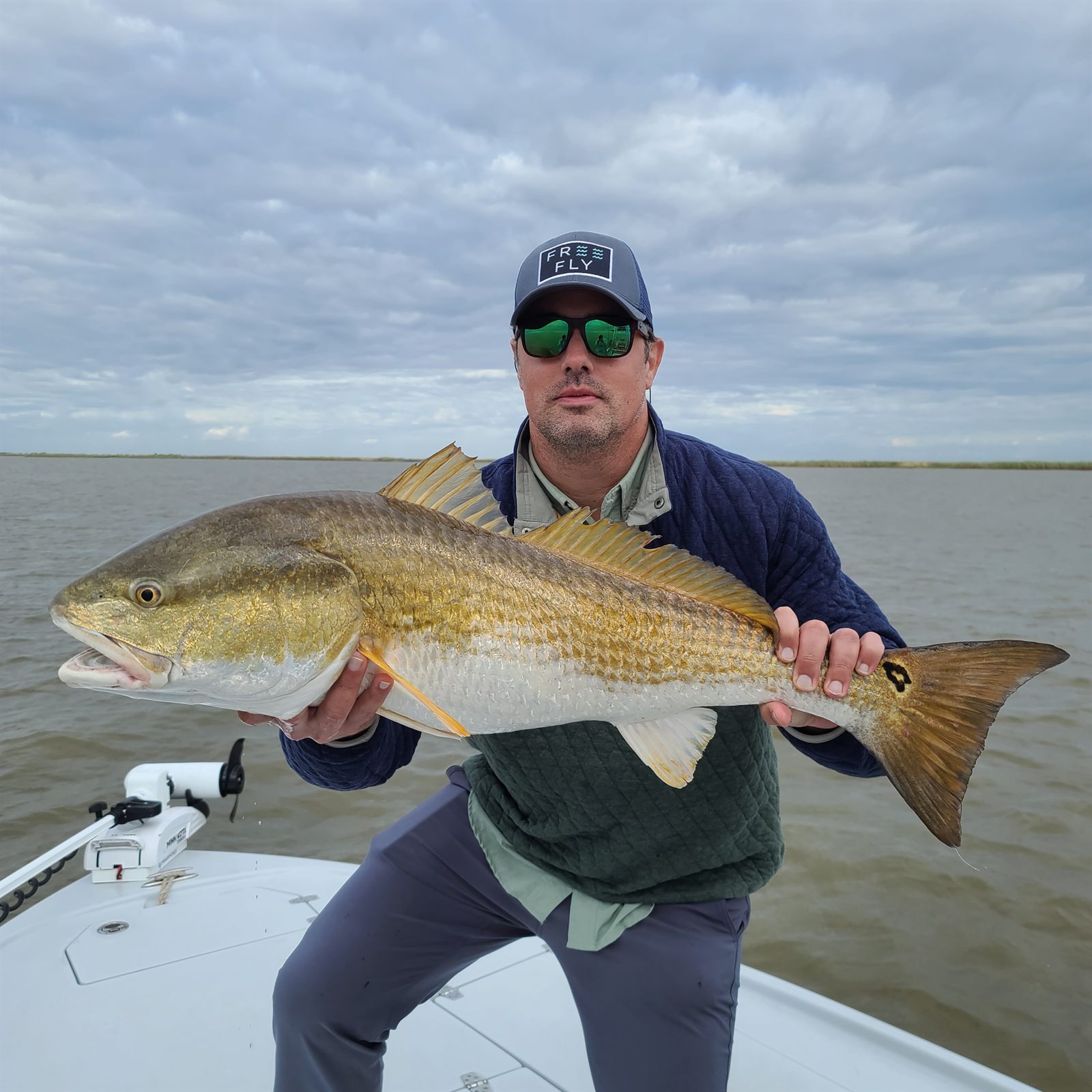
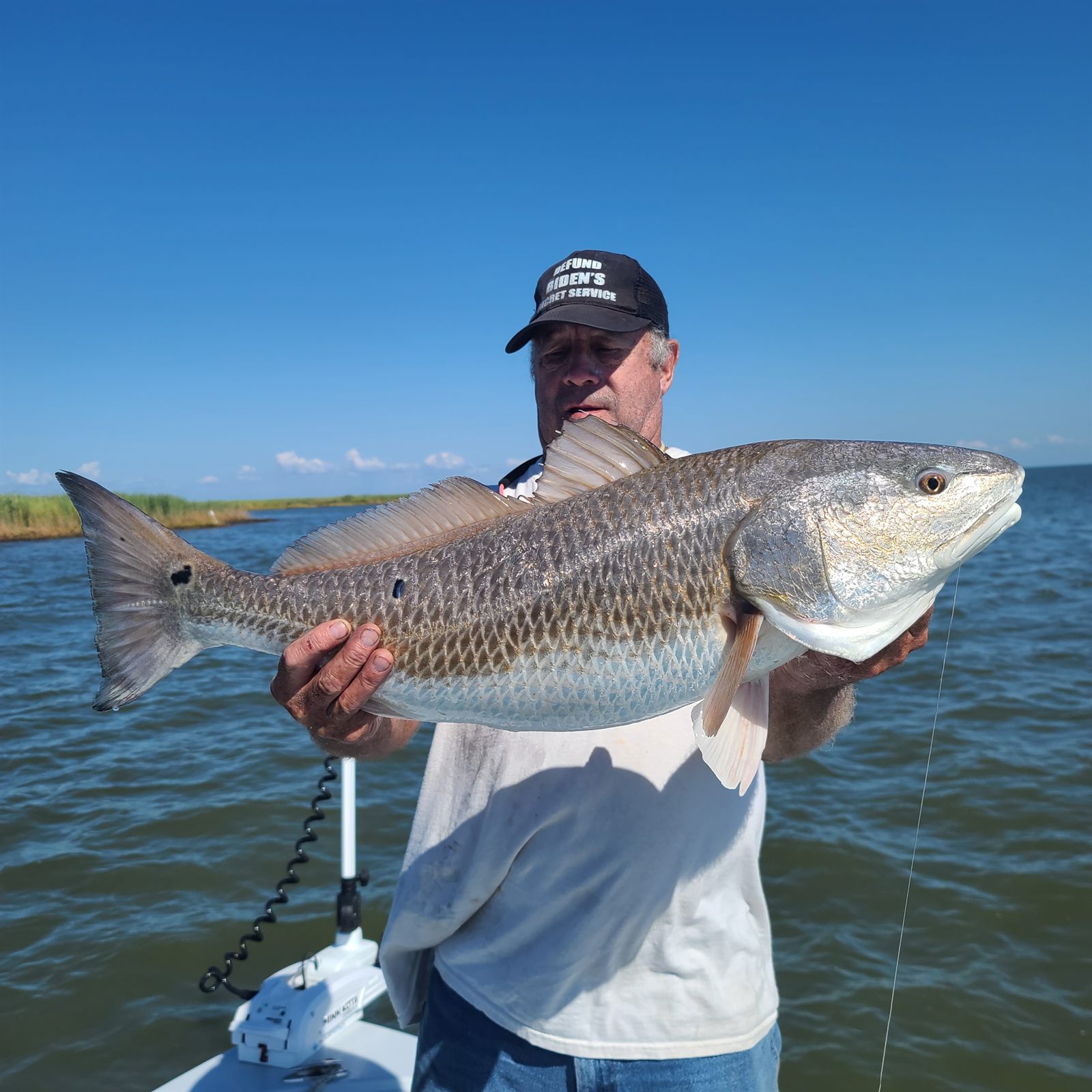
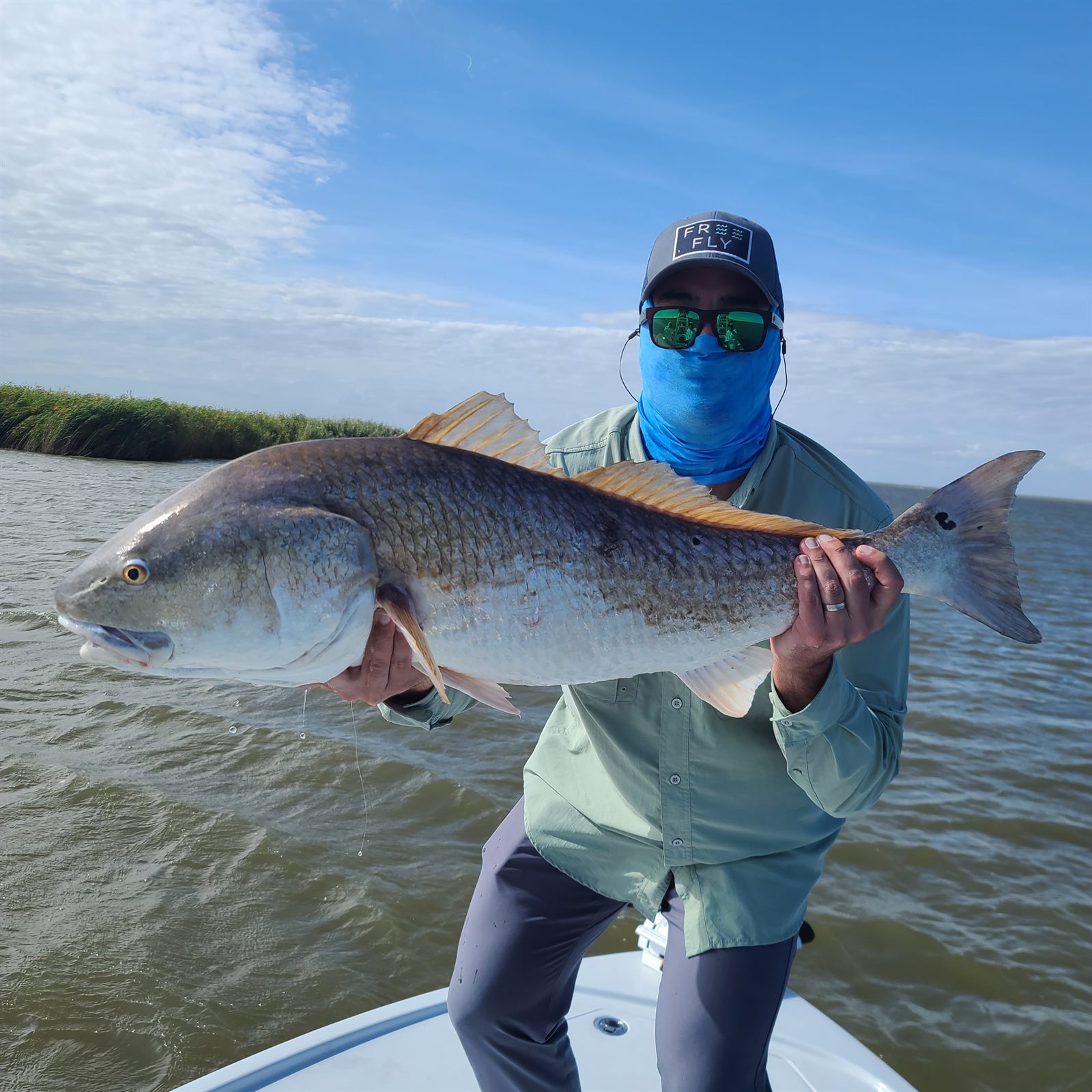
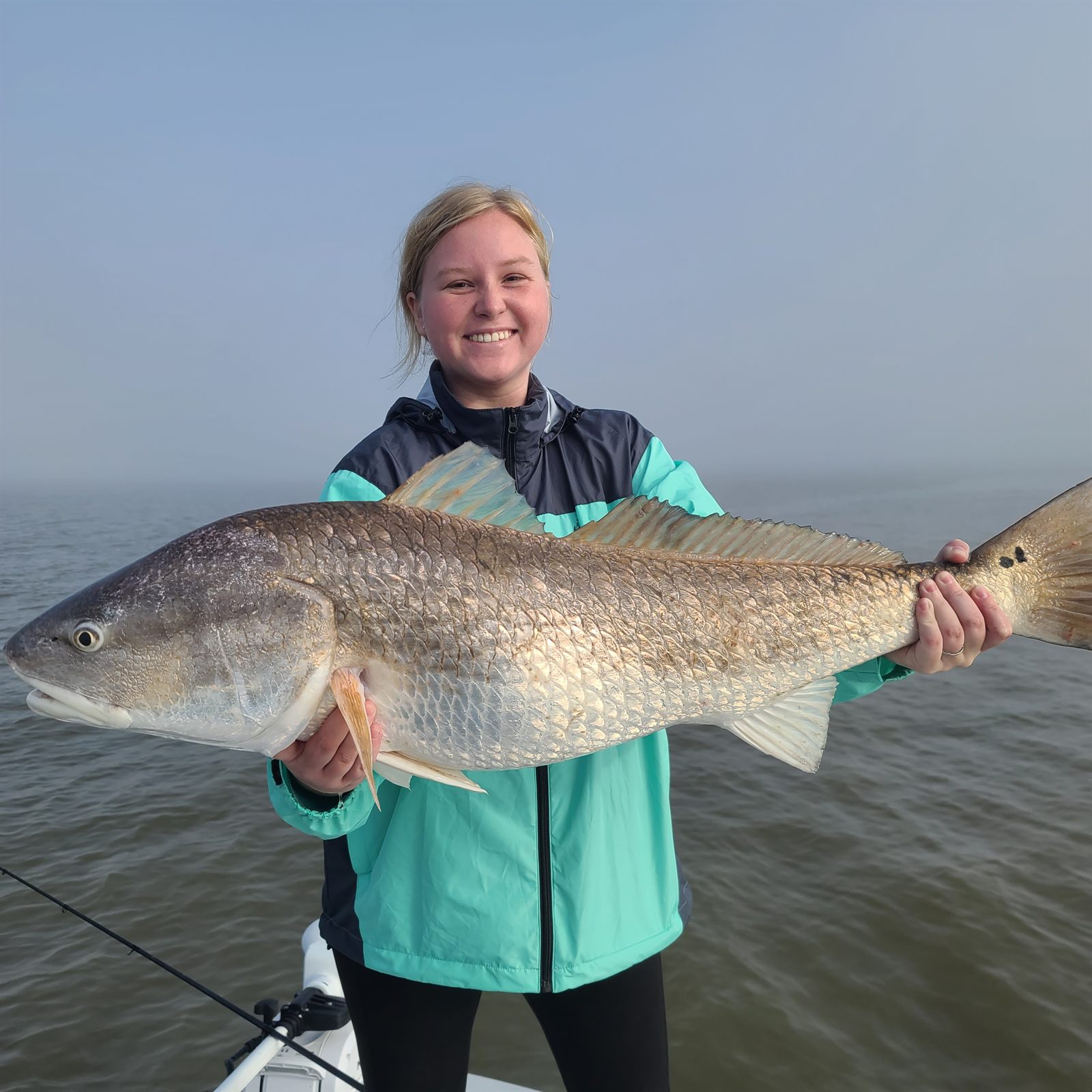
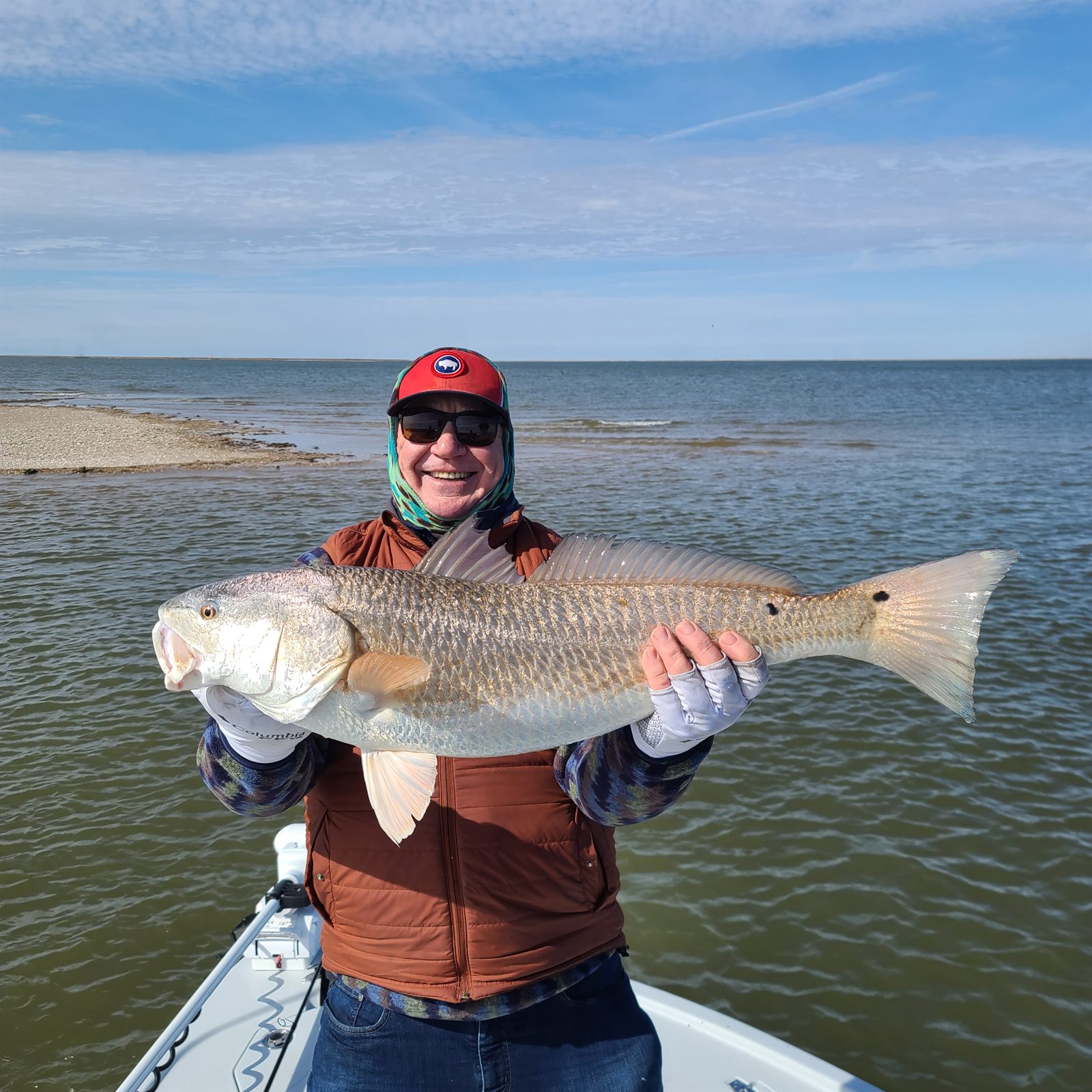
What if that massive, rod-bending strike at the edge of a Marsh Island weir isn’t the bronze redfish you were hunting, but a stubborn, vertical-pulling black drum instead? It’s a common surprise in our productive coastal marshes, and even seasoned locals sometimes pause when a “puppy drum” hits the deck looking remarkably like its copper-colored cousin. You want to hit the water with total confidence, knowing exactly what’s on the other end of your line and whether it belongs in your ice chest. Mastering the nuances of redfish vs black drum louisiana is the secret to a successful day, especially with the updated 2026 regulations now in effect.
We know the frustration of second-guessing a catch or wondering if your bait choice is actually what the fish want. This guide gives you the professional edge to identify both species instantly, find the best honey holes around Cypremort Point, and pick the right tackle for the job. You will learn the distinct fighting styles of these inshore titans and get a clear breakdown of the 2026 creel limits, ensuring your next adventure in Vermilion Bay is both thrilling and legal. From the aggressive run of a red to the heavy grit of a drum, we are diving into everything that makes our corner of the coast a premier destination for world-class action.
Key Takeaways
- Learn to identify your catch instantly by looking for the Redfish’s signature tail spot or the Black Drum’s unique chin barbels.
- Get the facts on the 2026 bag limits for redfish vs black drum louisiana so you can fish with confidence and stay within state regulations.
- Discover the best local hotspots around Marsh Island and Weeks Bay; we’ll show you where to find shallow-water Reds and deep-canal Drum.
- Unlock the culinary secrets of the marsh, including the best way to grill Redfish on the half-shell and why smaller Black Drum are a local favorite.
- Experience world-class action out of Cypremort Point, where you’ll find easier access and calmer waters than expensive deep-sea alternatives.
Table of Contents
- Redfish vs. Black Drum: South Louisiana’s Inshore Heavyweights
- How to Tell the Difference: Visual Cues and Characteristics
- Fighting Style and Tactics: Landing Giants in Vermilion Bay
- Table Fare Face-Off: Redfish vs. Black Drum in Cajun Cooking
- Why Cypremort Point is the Premier Destination for Both Species
Redfish vs. Black Drum: South Louisiana’s Inshore Heavyweights
Step onto the deck at Cypremort Point and you’re standing at the gateway to a world-class fishery. The sprawling marshes of Vermilion Bay and the protected shorelines of Marsh Island create a perfect nursery for the two most sought-after targets in our waters. Both the Red Drum (Sciaenops ocellatus) and the Black Drum are members of the Sciaenidae family. While they share a family tree, they bring entirely different personalities to the end of your line. Understanding the dynamic of redfish vs black drum louisiana is the first step to filling your cooler and having a blast on the water.
South Louisiana is the global epicenter for these species because our estuaries provide the ideal mix of salinity and structure. In the Vermilion Bay region, we don’t have to travel miles into the Gulf to find giants. We find them in the shallow flats, along the oyster reefs of Cote Blanche Bay, and inside the deep canals that lace our coast. While Redfish often get the glamour for their explosive runs, the Black Drum is the underrated heavyweight. It offers a test of pure brute strength that will make any angler respect the fight. Best of all, you can find both of these heavyweights year-round in the Cypremort Point area. Whether it’s a crisp winter morning or a humid summer afternoon, the action is always waiting.
The Redfish: Louisiana’s Iconic Bronze Fighter
The Redfish is the undisputed king of the marsh. Known for their copper-bronze scales and aggressive nature, these fish don’t just bite; they attack. When a Redfish hits your lure in the shallow flats around Marsh Island, you can expect a screaming run that tests your drag and your nerves. They are fast, sleek, and highly visual hunters. The Redfish is the premier target for sight-casting in the bayou, offering an adrenaline rush that few other inshore species can match.
The Black Drum: The Stubborn Brute of the Bay
If the Redfish is a sprinter, the Black Drum is a powerlifter. These fish thrive in deeper holes and around the jagged oyster beds of West Cote Blanche Bay. They are famous for the “drumming” sound they produce by vibrating their swim bladder; it’s a noise you can sometimes hear right through the hull of the boat. While they might lack the initial speed of a Redfish, they make up for it with incredible endurance. Once hooked, a big Drum will hunker down and use its massive weight to stay deep, forcing you to earn every inch of line you take back.
How to Tell the Difference: Visual Cues and Characteristics
When you’re hauling a fish over the gunwale in the tea-colored waters of Marsh Island, split-second identification is vital. While these cousins share some DNA, their physical builds are worlds apart. A Redfish is built like a torpedo. It’s sleek, streamlined, and designed for high-speed bursts in shallow flats. In contrast, the Black Drum is the tank of the marsh. It sports a high-backed, humped profile that makes it look much more vertical and compressed than the elongated Redfish. Understanding the visual nuances of redfish vs black drum louisiana ensures you stay compliant with the law and know exactly what’s heading to the frying pan.
Coloration can be tricky, especially in the stained water around Cypremort Point. A fresh Redfish usually glows with a brilliant copper or bronze hue. However, young Black Drum, often called “Puppy Drum,” feature distinct vertical black bars that can fade as they age. In muddy conditions, a pale Redfish and a barred Puppy Drum can look remarkably similar at first glance. To be certain, you must look beyond the color and check the specific anatomical markers that never lie. If you want to see these beauties in person, booking a guided fishing trip is the fastest way to learn these cues from a pro.
The ‘Spot’ Test and Tail Tales
The most famous indicator is the ocellated spot at the base of the Redfish’s tail. Most Redfish sport one large black dot rimmed with a lighter color, though it’s not uncommon to find “leopard” Reds with dozens of spots. Occasionally, you might even land a rare Redfish with no spot at all. Black Drum, however, never possess this ocellated spot. Their tails are also more squared-off or slightly concave, whereas a Redfish has a more traditional, slightly rounded paddle shape. This difference in tail structure reflects their lifestyle; the Redfish’s tail is built for speed, while the Drum’s tail provides the steady, rhythmic power needed to cruise the bottom.
Chin Barbels and Mouth Structure
If the tail doesn’t give it away, look at the chin. Black Drum have a series of small, fleshy whiskers known as barbels along the underside of their lower jaw. These barbels are sensory organs that help them “smell” and feel for crabs and shrimp in the murky floor of Vermilion Bay. Redfish lack these barbels entirely, possessing a smooth chin and a mouth positioned more toward the front for aggressive strikes. When you handle these fish, notice the texture of their skin; Redfish scales feel relatively smooth and tightly packed, while Black Drum scales feel like coarse, heavy armor plating. Always double-check your catch against the latest Louisiana fishing regulations, as the slot limits for these two species are different.
Fighting Style and Tactics: Landing Giants in Vermilion Bay
When the drag starts screaming in the middle of Weeks Bay, you’ll know immediately which opponent you’ve engaged. The debate of redfish vs black drum louisiana often comes down to how you prefer to spend your energy. Redfish are the sprinters of the marsh. They often strike near the surface and immediately peel off line in long, horizontal bursts. Black Drum are the grinders. They prefer to stay deep, using their massive weight and vertical leverage to pin themselves to the bottom. If you want a visual, high-adrenaline fight, you hunt the Reds. If you want a test of pure endurance, you target the Big Drum.
Choosing an inshore adventure in Vermilion Bay offers massive advantages over deep-sea fishing. You won’t deal with the high fuel costs, punishing sea conditions, or the long four-hour runs associated with “offshore” trips. Instead, we focus on the nearshore oil rigs and sprawling oyster beds that sit just minutes from the dock. During the 2026 season, these structures are absolute magnets for both species. You get more time with your line in the water and less time bouncing across open waves. It’s high-action fishing that is accessible for everyone from kids to veteran anglers.
Targeting Redfish in the Marsh Grass
Hunting Reds is all about stealth and precision. In the shallow flats of Marsh Island, we often look for “tailing” fish. This happens when a Redfish tips its head down to root for crabs, sending its spotted tail waving above the water like a flag. Approaching these fish requires a quiet boat and a soft touch. We favor soft plastics and topwater lures that mimic a struggling baitfish. Navigating these tight, grass-choked spaces is an art form, and Capt. Troy D Nash has spent decades mastering the hidden cuts where the biggest schools hide.
Dredging for Black Drum in the Deep Holes
Landing a 40-pound Black Drum is a different game entirely. We head for the weirs and deep cuts in East Cote Blanche Bay where the current brings food directly to them. Forget the fancy lures here; the most effective weapon is a piece of cracked crab or a fresh shrimp weighted down near underwater structure. When a big Drum takes the bait, it’s a heavy, rhythmic tug-of-war. They don’t quit. You’ll feel every beat of that powerful tail as they try to wrap your line around an oyster-encrusted piling. It’s a gritty, satisfying fight that defines the spirit of Louisiana’s inshore waters.
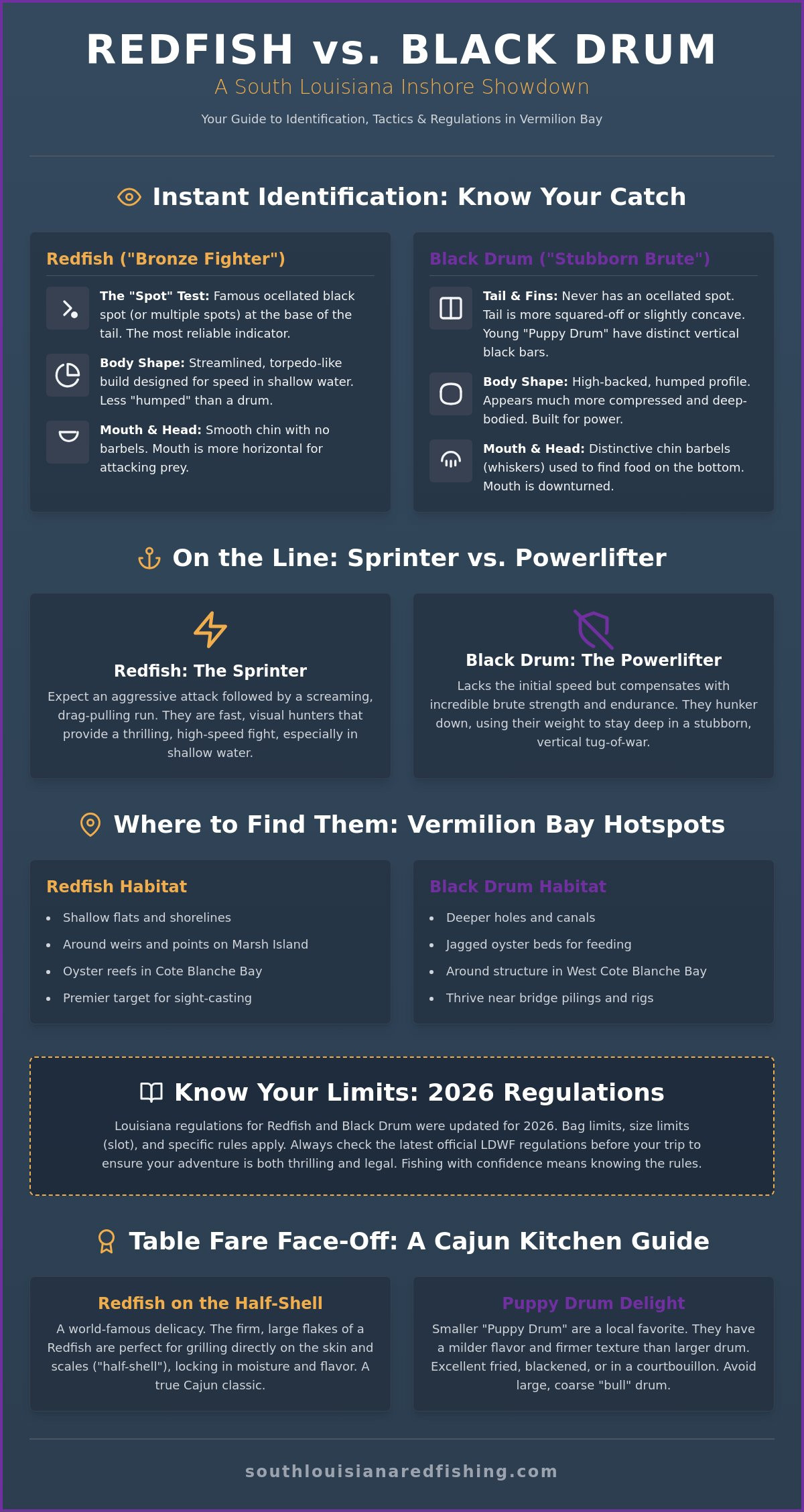
Table Fare Face-Off: Redfish vs. Black Drum in Cajun Cooking
After the ice chest is full at the end of a Cypremort Point afternoon, the real magic begins in the kitchen. The culinary debate of redfish vs black drum louisiana is a favorite topic at local campfires, and for good reason. Both species offer incredible meat, but they serve different roles on the plate. Redfish is celebrated for its mild, sweet flavor and a medium-firm flake that holds up beautifully to high heat. Black Drum, often misunderstood by those outside of Cajun country, provides a firmer, meatier texture that many locals compare to snapper or even Gulf grouper. If you’re looking to extend your adventure beyond the boat, the world-class Cajun food scene in Lafayette is just a short drive away, offering the perfect inspiration for your fresh catch.
One of the biggest myths in our marshes is that Black Drum are “trash fish.” This couldn’t be further from the truth. While the massive 40-pounders are better left for a photo and a release due to their coarse texture, the smaller specimens are a delicacy. In Vermilion Bay, we prioritize “Redfish on the half-shell” as the quintessential meal. We leave the scales and skin on one side of the fillet, creating a natural “bowl” that protects the meat while it grills over an open flame with butter, lemon, and garlic. It’s a flavor profile you won’t find at an expensive deep-sea resort, and it tastes better when you’ve caught it yourself in the shadow of Marsh Island.
The Legend of Blackened Redfish
In the 1980s, a culinary craze centered on blackened fish nearly made this species a legend of the past. Today, thanks to smart management, Louisiana redfish populations are thriving and ready for your dinner table. To maintain its natural sweetness, avoid over-seasoning with heavy salts. A light dusting of cayenne, paprika, and onion powder, typical of the Vermilion Bay region, is all you need. Searing it in a cast-iron skillet creates that iconic crust while keeping the inside moist and tender. It’s a simple preparation that honors the heritage of our coastal waters.
Why You Shouldn’t Overlook ‘Puppy Drum’
Anglers in the know hunt for “Puppy Drum,” which are Black Drum weighing between 5 and 10 pounds. At this size, the meat is incredibly tender and lacks the “ribby” or tough characteristics found in the giants. When you’re cleaning your catch, you’ll notice the fillets are thick and white. The best size range for keeping Black Drum for the grill is the 16 to 24-inch window, where the flavor is most refined. They are excellent when fried in cornmeal or baked with a crabmeat stuffing, making them a versatile star of any Cajun feast.
Ready to stock your freezer with the best fillets in the Gulf? Book your guided fishing trip today and let’s get some meat on the deck!
Why Cypremort Point is the Premier Destination for Both Species
Cypremort Point stands as the undisputed gateway to the most fertile inshore grounds in the state. While other areas might require hours of travel through open water, our location puts you on the fish almost immediately. By launching here, you gain instant access to the protected shorelines of Marsh Island and the nutrient-rich waters of West Cote Blanche Bay. It is the most efficient way to maximize your time with a rod in your hand. At South Louisiana Redfishing, we bring a multi-generational heritage to every trip. Capt. Troy D Nash uses decades of local knowledge to navigate the complex weirs and hidden canals that hold the biggest schools.
Choosing the right location is about more than just the catch; it is about the quality of the experience. Settling the score of redfish vs black drum louisiana is much more enjoyable when you aren’t battling six-foot swells or the high costs of a deep-sea venture. The peaceful, brackish waters of Vermilion Bay provide a stable platform for anglers of all skill levels. You get the thrill of a world-class “Cajun Slam” without the adverse conditions often found in offshore environments. It is a focused, high-intensity adventure that keeps the excitement level high from the first cast to the last.
The Advantage of Inshore Charters
Inshore fishing is the perfect choice for families and beginners who want to enjoy the water without the risk of sea sickness. Our guided trips stay within the sight of land, utilizing the natural buffers of the marsh to keep the water calm. Shorter travel times mean we spend more time fishing and less time burning fuel compared to distant ports like Venice or Grand Isle. Between bites, you’ll witness the raw beauty of the Louisiana coast, from sunbathing alligators to majestic coastal birds nesting in the marsh grass. It is a full-sensory immersion into the wild heart of the bayou.
Book Your 2026 Vermilion Bay Adventure
The 2026 season is shaping up to be legendary, with massive Bull Reds and heavy Black Drum already moving through the passes. Because we’re located just a short drive from Lafayette, you can easily combine a morning on the water with an evening of world-famous Cajun music and dining. Check our seasonal availability now to secure your spot during the peak runs. Don’t settle for a generic boat ride when you can have a tailored, expert-led journey through the best habitats in the Gulf. Book your trip with Capt. Troy D Nash today!
Master the Marsh and Claim Your Cajun Slam
You now have the expert knowledge to distinguish between these two inshore titans by their visual cues and stubborn fighting styles. Whether you’re chasing the aggressive surface runs of a Redfish or the deep, rhythmic power of a Black Drum, our local waters offer a world-class experience that puts you right in the heart of the action. The debate of redfish vs black drum louisiana is best settled on the deck of a boat with a bent rod and a full ice chest. We’ve covered the tactics, the hotspots, and the culinary rewards; now it’s time to put that knowledge to work.
Don’t waste your time and money on long offshore runs or the rough seas of the open Gulf. We specialize in high-action inshore trips throughout Marsh Island and Cote Blanche Bay. The water is calm. The fish are plenty. As a 3rd generation local guide, Capt. Troy D Nash provides the deep-rooted expertise and top-tier equipment needed to ensure your day is a success. It’s time to trade the research for reality and see what these heavyweights are made of in our legendary Cajun marshes. We’ll see you at the dock.
Book Your South Louisiana Redfishing Charter Now!
Frequently Asked Questions
What is the main difference between redfish and black drum?
The most obvious visual difference is the signature black spot at the base of the Redfish’s tail and the total lack of one on a Black Drum. Redfish have a streamlined, torpedo-like body built for speed, while Black Drum sport a high-backed profile and small whiskers, or barbels, under their chin. When comparing redfish vs black drum louisiana in terms of the fight, Redfish provide explosive surface runs, whereas Drum offer a heavy, vertical tug-of-war.
Are black drum good to eat in Louisiana?
Yes, Black Drum are excellent to eat, particularly those in the smaller size range. Locals often prefer the flaky, white meat of a “Puppy Drum” because it’s tender and mild, similar to Red Snapper. While giant Black Drum can become coarse and “ribby,” the fish you keep within the legal slot limit provide some of the best table fare in the Vermilion Bay region, especially when fried or blackened.
What are the 2026 Louisiana redfish size and bag limits?
As of July 2026, the daily bag limit for Redfish is 4 fish per person with a slot size limit of 18 to 27 inches. You aren’t allowed to keep any Redfish over 27 inches in state waters. These regulations help maintain a healthy population in our marshes, ensuring that every trip out of Cypremort Point remains productive and high-action for future generations of anglers.
Can you catch redfish and black drum on the same fishing trip?
Absolutely, and it happens frequently in our coastal estuaries. Both species thrive in the brackish waters of Vermilion Bay and often congregate around the same oyster reefs or marsh weirs. Targeting the transition zones between shallow grass flats and deeper canal cuts is the best way to land a “Cajun Slam” featuring both species during a single guided outing.
What is the best bait for black drum in Vermilion Bay?
Fresh shrimp and cracked crab are the gold standards for enticing a Black Drum. These fish rely heavily on their sense of smell and their barbels to find food along the bottom of deep canals and around oyster beds. While Redfish are often fooled by artificial soft plastics, a weighted bottom rig with natural bait is much more effective for the stubborn Drum patrolling the bay floor.
Which fish is harder to catch: redfish or black drum?
Redfish are generally considered more challenging to hook because they’re easily spooked in shallow water and often require a precise, stealthy cast. Black Drum are more forgiving of a splashy presentation but provide a much harder physical fight once they’re on the line. Mastering redfish vs black drum louisiana tactics means learning to be quiet for the Reds and patient for the heavy-pulling, vertical fight of the Drum.
What is a ‘Puppy Drum’?
A “Puppy Drum” is a colloquial term for a young Black Drum, typically weighing between 5 and 10 pounds. These fish are easily identified by the dark vertical bars on their sides, which often fade as they grow into 40-pound giants. They’re highly sought after by local anglers because they’re the perfect size for the frying pan and provide incredible action on light tackle in the marsh.
Do black drum really make a drumming sound?
Yes, they produce a distinct, low-frequency thumping noise by vibrating special muscles against their swim bladder. This “drumming” is most common during the spawning season and can be surprisingly loud in the water. If you’re fishing in a quiet canal or near a deep weir in Cote Blanche Bay, you can sometimes hear this unique sound right through the boat hull before you even make a cast.