
Most dedicated anglers spend over 15 years and thousands of dollars in wasted fuel trying to decode the complex tides of the Louisiana coast, yet they still end up “burning” their best spots on a single slow Saturday. You already know that the difference between a casual weekend warrior and a legendary professional is more than just a lucky lure; it’s a deep, technical understanding of the water. If you’re ready to turn your passion into a career, attending a fishing guide school louisiana is the fastest way to bridge that gap. We promise to show you exactly how to navigate the USCG licensing maze while mastering the legendary banks of Vermilion Bay like a seasoned pro.
While other areas like Venice offer different challenges, nothing compares to the technical skill required to hunt bull reds and speckled trout across the oyster beds of Cypremort Point. You’ll gain a clear roadmap to earning your stripes, from understanding the business side of charters to learning the secret patterns of the South Marsh Island weirs. We’re breaking down the exact steps to help you launch an epic adventure business that thrives on the unique charm and world-class fishing of Cajun country.
Key Takeaways
- Understand the two distinct paths of a fishing guide school louisiana, whether you’re chasing a professional USCG license or simply want to master the complex marsh like a local veteran.
- Get a clear, step-by-step checklist for securing your LDWF Charter Guide License and Coast Guard credentials to start your career on the water.
- Master the art of reading tides and navigating the legendary weirs of Vermilion Bay and Marsh Island, the most challenging and rewarding classroom in the world.
- Learn how to cut years off your learning curve by booking a “Pro-Insight” session with Capt. Troy, a 3rd-generation expert who shares 25 years of local secrets in a single day.
- Discover why the nearshore reefs and oil rigs of Cypremort Point offer more action and accessibility than the long, expensive hauls found in other areas.
What is a Louisiana Fishing Guide School?
A fishing guide school louisiana is not a traditional classroom with four walls and a chalkboard. It is a rigorous, dual-track education that blends strict federal regulations with the raw, on-the-water mastery required to survive the “school of hard knocks” in the marsh. You cannot simply buy a bay boat and start charging for trips. True guide schools provide a roadmap for navigating the complex legalities of the U.S. Coast Guard while teaching you the secrets of the Vermilion Bay ecosystem. This isn’t just about catching fish. It’s about understanding how a 15-knot south wind pushes water into the weirs of Marsh Island or how a falling tide in October triggers a feeding frenzy on the oyster beds of Cypremort Point.
The difference between a casual weekend workshop and a professional mentorship is massive. A workshop might teach you a knot or a specific lure choice. A professional mentorship under a veteran like Capt. Troy Nash, a 3rd generation guide with over 25 years of experience, teaches you how to read the water. You learn to anticipate fish movement across East and West Cote Blanche Bay before you even launch the boat. This level of expertise is what separates the experts from the amateurs. It turns a frustrating day of searching into an epic adventure where you limit out on Redfish and Speckled Trout.
The Professional Path: Becoming a Charter Captain
If you want to charge customers for the thrill of the hunt, you must go pro. This starts with the Merchant Marine Credential, specifically the OUPV or “Six-Pack” license. This federal requirement allows you to carry up to six paying passengers. Most prospective guides attend a USCG-approved captain’s course to master navigation, maritime law, and emergency deck procedures. It’s a demanding process that ensures safety on the water. Beyond the federal level, you must also secure the proper permits from the Louisiana Department of Wildlife and Fisheries. This state agency manages the resources that make our region a world-class destination.
Choosing to guide in the Vermilion Bay area offers distinct advantages over other areas like Venice. Our inshore and nearshore trips focus on the vast network of canals, lakes, and reefs. You don’t have to run 50 miles into the Gulf to find giants. By staying inshore, you avoid the heavy sea states of the open ocean and the high fuel costs of deep-sea fishing. This makes the business side of being a guide much more sustainable. It also keeps your clients happy and comfortable in the calm waters of Weeks Bay or the shorelines of South Marsh Island.
The Master Angler Path: Leveling Up Your Skills
Not everyone attending a fishing guide school louisiana wants to run a business. Many serious anglers seek this training to “fish like a guide” for their own enjoyment. This path skips the maritime law and focuses entirely on advanced marsh reading and seasonal patterns. You learn to analyze tide charts with precision. You’ll discover why the bull reds stack up near specific oil rigs in the nearshore areas during the summer months. Learning from a veteran guide is the fastest way to skip a decade of trial and error.
This path is about efficiency and results. Instead of guessing, you’ll know exactly which canal to hit when the water clarity changes. You will master the transition from spin to baitcast or even fly fishing depending on the conditions. Once the day is done, you’re only a short drive from the incredible Cajun food and culture of Lafayette. It’s about turning every trip into a successful, high-action experience that matches the legendary reputation of the Louisiana coast.
The Essential Checklist for Your Louisiana Charter License
Turning your passion for giant bull reds into a career requires more than just a lucky bait. You’re stepping into a professional world where safety meets the thrill of the marsh. Before you can lead a group through the endless banks of Vermilion Bay, you must check every box on the legal list. This isn’t just paperwork; it’s your badge of authority. It proves to every client that they’re in the hands of a seasoned expert who knows these waters like the back of his hand.
Your journey to becoming a pro begins with a specific set of credentials. You’ll need to master the following requirements:
- US Coast Guard OUPV (6-Pack) or Master License: The federal foundation for any paid captain.
- LDWF Charter Guide License: The state permit that legalizes your business in Louisiana waters.
- TWIC Card: A federal security clearance for maritime workers.
- Liability Insurance: Minimum coverage of $250,000 is mandatory.
- Drug Testing Consortium: Enrollment in a random testing program.
USCG Requirements: The ‘Six-Pack’ License
The OUPV license allows you to carry up to six passengers on uninspected vessels. To qualify, you must document 360 days of sea service. At least 90 of those days must have occurred within the last three years. You’ll also need to pass a physical exam, a drug test, and hold current CPR/First Aid certifications. Enrolling in a fishing guide school louisiana captains trust is the most efficient way to study for the rigorous four-part exam. This test covers the Rules of the Road, Navigation, Deck General, and Safety protocols. Mastering these subjects ensures you can handle any situation near the reefs of South Marsh Island or the canals of Weeks Bay.
LDWF State Requirements
Once your federal credentials are set, you must meet the Louisiana charter license requirements. For locals, the Resident Professional Fishing Guide permit is the goal. This permit must be renewed annually by December 31. You’re also required to participate in the LA Creel program. This involves reporting your catch data to help manage the state’s legendary fisheries. While other areas like Venice often require grueling offshore runs, our local waters near Cypremort Point offer world-class fishing just minutes from the dock. This makes the state reporting process much simpler for inshore guides focusing on speckled trout and flounder.
Safety is the top priority for any 3rd generation guide. You must outfit your boat with all USCG-required safety equipment, including Type I wearable life jackets for every passenger, fire extinguishers, and visual distress signals. You’ll also need to pass the TWIC (Transportation Worker Identification Credential) background check. This process costs approximately $125.25 and involves a trip to an enrollment center for fingerprints and a photo. It’s a small price to pay for the ability to operate professionally across the Gulf Coast.
Operating out of Cypremort Point State Park or Lafayette provides a unique advantage. You can offer your clients an epic adventure that combines the best redfish fishing in the United States with world-famous Cajun food and hospitality. The calm, shallow flats of West Cote Blanche Bay are far more inviting for families than the rougher seas found in deep sea environments. If you want to see how a pro handles these waters, you can learn from a veteran guide who has spent 25 years perfecting the craft. He’s got you covered, from the first cast to the final weigh-in.
Mastering the Marsh: The Real ‘School’ of Guiding
The South Louisiana marsh isn’t just a fishing destination; it’s a 7,000 square mile labyrinth that serves as the most demanding fishing guide school louisiana has to offer. While classroom sessions cover the basics, the true education happens in the winding canals and expansive lakes of Vermilion Bay. Here, the environment changes by the hour. A veteran guide with over 25 years of experience, like Captain Troy Nash, knows that a 15-knot south wind can push two extra feet of water into Cote Blanche Bay, completely altering where the fish hold. Mastering this terrain requires a 3rd generation understanding of how the Mississippi River and Atchafalaya River influence our local water chemistry.
Developing the “Guide Mindset” means staying one step ahead of the crowd. When the popular reefs near Cypremort Point get congested on a Saturday morning, a pro doesn’t panic. They lean on their deep-rooted expertise to find isolated schools in the “inner marsh” near Weeks Bay or Burns Point. This ability to find fish in high-pressure situations is what separates a hobbyist from a professional. Before you can lead clients to an epic adventure, you must master the Louisiana charter license requirements and prove you can handle the responsibility of a commercial vessel. Safety is the ultimate priority when navigating shallow mudflats where the water depth can drop to six inches without warning. Striking a hidden oyster reef at 30 miles per hour can end a trip instantly, so learning to read the surface ripples is a survival skill every guide needs.
Reading Tides and Water Clarity
In the Vermilion Bay complex, water clarity is the “holy grail” for success. The Atchafalaya River’s discharge levels at the Butte La Rose gauge, often exceeding 10 feet in the spring, dictate where the clean salt water resides. You must learn to identify “green” water versus “chocolate” water. Finding the interface where these two meet is often where the most aggressive Redfish and Speckled Trout feed. Unlike the deep water runs found in other areas like Venice, our inshore trips focus on navigating the weirs and cuts around Marsh Island. A shift in wind direction can turn a honey hole into a muddy mess in less than 60 minutes, so a guide must always have a backup plan in a different bay.
Seasonal Patterns for Redfish and Trout
Success in this fishing guide school louisiana environment depends on following the bait. During the winter, fish retreat into 15-foot deep holes in the dead-end canals to find stable temperatures. As the marsh warms in April, the action shifts to the shallow flats. The fall “Bull Red” run is the highlight of the year, where 30-pound giants move toward the nearshore rigs and oyster beds. Positioning your boat 50 yards up-current of a submerged reef allows your bait to drift naturally into the strike zone. This seasonal transition between the marsh and the Gulf of Mexico provides a year-round opportunity to limit out on Redfish, Flounder, and Black Drum. After a successful day on the water, nothing beats returning to Cypremort Point for some authentic Cajun food and the world-class hospitality of the Lafayette area.
Why Vermilion Bay is the Ultimate Training Ground
Experience the thrill of the Cajun Coast. While Venice often grabs the headlines, Cypremort Point is where real captains are forged. Choosing a fishing guide school louisiana in this region gives you a tactical advantage. You aren’t just learning to follow a GPS track. You’re learning to read a complex, living ecosystem. Cypremort Point offers a diversity of habitat that you won’t find in other high-traffic hubs. It’s a place where you can master multiple disciplines in a single afternoon.
The geography here is legendary. You have the 200,000 acre expanse of Vermilion Bay protected by the massive 70,000 acre Marsh Island. This setup creates a diverse classroom. You can fish the shallow marsh in the morning and hit the nearshore rigs by noon. Because these waters see roughly 45% less boat pressure than eastern hubs on average weekdays, the fish are less spooky. You’ll find it much easier to produce consistent limits of bull reds and speckled trout for your future clients. This lower pressure leads to higher rewards and better learning opportunities for a student guide.
Location is everything for a growing charter business. Being just 45 minutes from Lafayette means your clients have access to the best Cajun food and music in the state. It’s an easy sell for a weekend getaway. You’re providing an epic adventure that goes beyond the water. When you train here, you’re learning to market a total Louisiana experience. Capt. Troy Nash has built a legacy on this, and he’s got you covered with over 25 years of local expertise.
Key Locations for On-the-Water Learning
Weeks Bay and West Cote Blanche act as a massive nursery for redfish. In these 2 to 4 foot depths, you’ll learn to work the shorelines and grass lines where the giants hide. The oyster beds and reefs of Vermilion Bay provide a masterclass in structure fishing. You’ll learn how to position the boat to account for the tide and wind perfectly. Marsh Island is the crown jewel. Navigating its endless canals and weirs teaches you the precision boat handling that every veteran guide needs to master.
Nearshore Opportunities: The Oil Rig ‘Classroom’
Don’t get distracted by expensive deep-sea dreams that eat up your margins. The real money for a new guide is inshore and nearshore. The closest oil rigs, sitting just 5 to 12 miles from the coast, are teeming with Tripletail and Sheepshead. These trips offer shorter runs that save you up to 60% on daily fuel costs compared to long-distance runs. You’ll enjoy better sea states and significantly fewer weather cancellations. It’s a smarter, more results-driven business model that keeps your boat in the water and your bank account healthy. Training in these waters ensures you understand how to maximize profit while delivering a world-class experience.
Learn from a Pro: Book a ‘Pro-Insight’ Charter with Capt. Troy
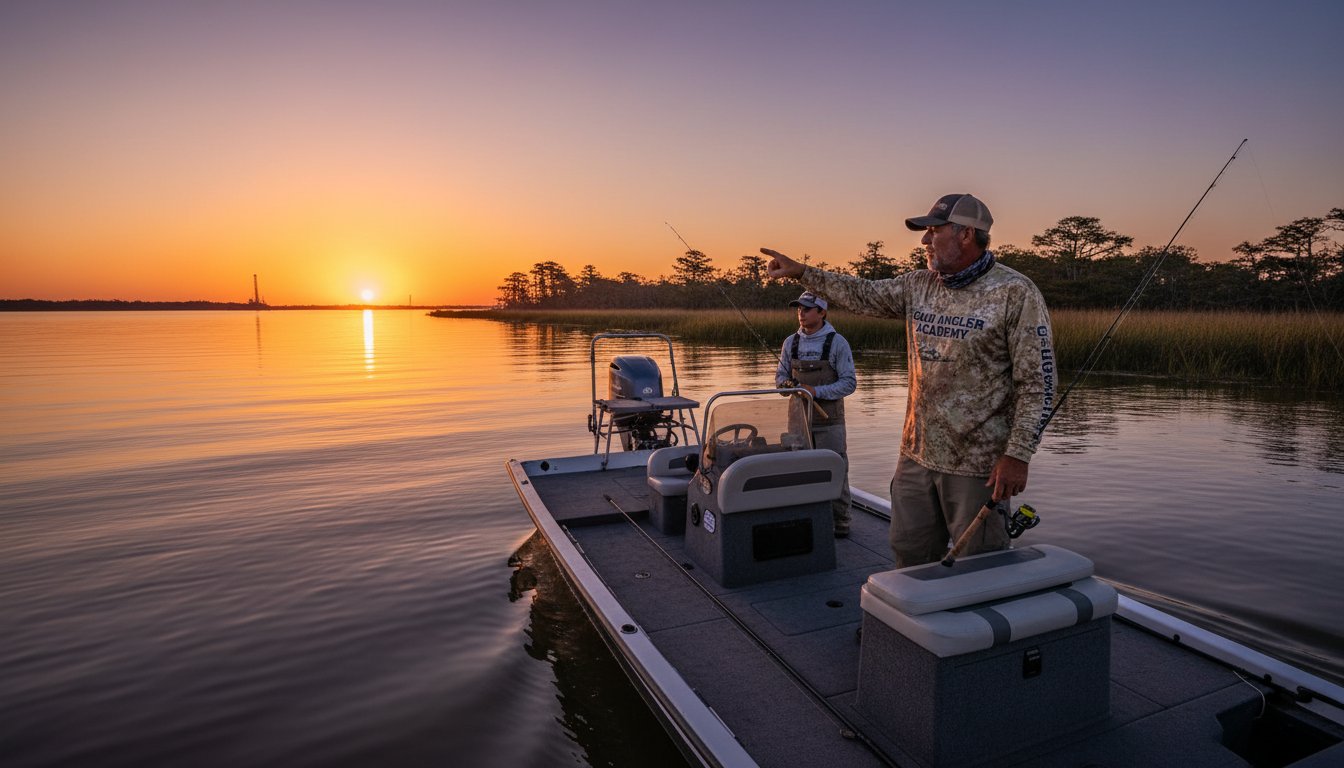
Stop reading about regulations and start casting into the marsh. You’ve learned the legal requirements for your license, but the real education happens on the deck of a boat. Capt. Troy Nash offers a 3rd generation advantage that no classroom can replicate. He’s spent over 25 years uncovering the secrets of Vermilion Bay and the surrounding reefs. This isn’t just a fishing trip; it’s a fast-track masterclass in coastal success. You’ll absorb two decades of local knowledge in a single eight-hour session, saving you years of trial and error on the water.
Capt. Troy is a full-time, veteran guide who understands the nuances of the Louisiana coast. While a formal fishing guide school louisiana provides the theory, this pro-insight charter provides the reality of the job. You’ll see how a professional manages a vessel, handles clients, and adapts to changing weather patterns in real-time. It’s the most logical next step before you invest in your own commercial gear. You need to experience the thrill and the workload of a successful charter before you start your own journey.
Telling your Captain you want to ‘go to school’ changes the dynamic of the day. Capt. Troy will explain the ‘why’ behind every move he makes. He’s got you covered with professional tackle, a high-performance bay boat, and the local expertise required to find fish when others come home empty-handed. Everything is provided, so you can focus entirely on the mechanics of the trade. You’ll leave the dock with more than just a bag of fillets; you’ll leave with a professional perspective on the industry.
What You’ll Learn on a Guided Pro Trip
Stealth is your greatest weapon in the shallow flats of South Marsh Island. You’ll learn boat positioning techniques that keep you within casting range without spooking a school of Redfish. Capt. Troy demonstrates how to use wind and tide to drift silently over oyster beds. You’ll also master the exact lures and retrieval speeds needed for ‘limiting out’ on Speckled Trout and Redfish. This isn’t about luck; it’s about the precise application of 25 years of data.
Marsh navigation is a critical skill for any aspiring guide. You’ll see how a veteran uses electronics to navigate the complex weirs and canals of East and West Cote Blanche Bay. Learning to read side-scan sonar in three feet of water is a game-changer. Capt. Troy shows you how to identify underwater structures that hold Black Drum and Sheepshead, ensuring you can provide a diverse catch for your future clients. Mastering these tools is essential for safety and success in the Louisiana backcountry.
Planning Your Epic South Louisiana Adventure
Your journey begins at Cypremort Point, the premier gateway to some of the best Redfish fishing in the United States. Logistics are simple; bring your sun protection and a desire to learn. The point is located just 45 minutes from Lafayette, making it easy to incorporate world-class Cajun food and tourism into your trip. After a day on the water, you can explore the local culture that makes this region a top destination for anglers worldwide.
Unlike the high-pressure environment of Venice, the waters around Cypremort Point State Park offer a diverse range of inshore and nearshore opportunities. You’ll spend more time fishing and less time running to the Gulf. This efficiency is what makes a career in this specific region so rewarding. Ready to take the leap from student to professional? Experience the Thrill-Book Your Pro-Insight Charter Today!
Take the Helm and Master the Vermilion Bay Marsh
You’ve discovered that becoming a professional isn’t just about passing a test; it’s about understanding the rhythm of the tides and the 1000s of hidden oyster beds around Cypremort Point. While some anglers flock to other areas like Venice, they miss out on the incredible inshore diversity and world-class Cajun food found right here in the Lafayette area. True mastery comes from time spent on the water, navigating the specific weirs and shorelines that hold giant bull reds, speckled trout, and flounder. This 1-on-1 training is the most effective way to learn the local secrets of the marsh.
Choosing a fishing guide school louisiana experience with a seasoned mentor is the fastest way to sharpen your skills. Captain Troy Nash is a 3rd generation veteran guide with over 25 years of local experience. He’s got you covered, whether you’re learning to read the flats near Marsh Island or targeting fish around the 5 closest nearshore oil rigs. Stop guessing and start catching. Experience the thrill of the hunt with a pro who knows these waters better than anyone else.
Book Your Epic Adventure with Captain Troy Nash!
Your seat on the boat is waiting.
Frequently Asked Questions
How long does it take to become a licensed fishing guide in Louisiana?
It takes roughly 3 to 6 months to complete the full licensing process. You’ll spend 80 hours in a classroom for your USCG OUPV license and wait about 15 days for the Louisiana Department of Wildlife and Fisheries to process your professional guide permit. This timeline accounts for gathering 360 days of sea service and passing your mandatory physical and drug tests. It’s a rewarding journey that turns your passion for the marsh into a professional career.
Do I need my own boat to attend a fishing guide school?
You don’t need to own a boat to enroll in a fishing guide school louisiana program. These schools provide the necessary vessels for your practical training and testing in the classroom or on the water. While owning a 22 foot center console is vital for starting your business in Vermilion Bay, the school focuses on teaching you navigation and safety rules first. You can focus on learning the ropes before making a major financial investment.
What is the difference between a 6-pack license and a Master license?
The OUPV or 6-pack license limits you to carrying 6 passengers on uninspected vessels, while a Master license allows you to operate inspected boats carrying more than 6 people. Most guides in Cypremort Point opt for the 6-pack because it’s perfect for small groups chasing bull reds in the bayous. If you plan to run larger tours out of Cypremort Point State Park, the Master upgrade requires extra sea time and a more rigorous 50 question exam. He’s got you covered regardless of which path you choose!
Can I make a full-time living as a fishing guide in South Louisiana?
Yes, a dedicated guide in the Vermilion Bay area can earn between $50,000 and $95,000 annually by running 150 to 200 trips per year. Success depends on your local knowledge of the marsh and your ability to find fish when conditions get tough. By offering trips near Cypremort Point, you’ll save on the high fuel costs found in other areas like Venice while providing clients with a high volume of Speckled Trout and Redfish. Your epic adventure as a business owner starts with consistent results.
What is the best time of year to take a ‘learning’ charter in Vermilion Bay?
The months of October and November offer the best learning opportunities because the fish are highly active in the marshes and bayous. During this 60 day window, the cooling water temperatures push giant bull reds into the shallow flats near Marsh Island. You’ll see how a veteran like Capt. Troy Nash tracks bait movement and reads the tides. It’s the perfect season to witness the abundance of the Louisiana coast firsthand and master the local patterns.
Do I need a special license to fish with a guide in Louisiana?
You only need a 3 day Charter Passenger License which costs $20 for both residents and non-residents. This specific permit covers you while you’re on a boat with a licensed captain in areas like West Cote Blanche Bay. It’s a much cheaper alternative to a full season non-resident license. Your guide usually helps you secure this online in under 5 minutes before you hit the water for your epic adventure. This ensures you’re legal while you experience the thrill of the catch.
How much does it cost to get all the necessary guide licenses?
Expect to invest approximately $2,200 to $2,500 to cover all your initial professional certifications and state permits. A reputable fishing guide school louisiana course costs about $800, while the Louisiana resident professional guide license is $1,000 annually. You’ll also need to budget $200 for your TWIC card and $150 for your USCG application fees. It’s a small price to pay to join the ranks of elite Cajun coast experts and start your own legacy.
What are the most important fish species to master for a Louisiana guide?
You must master the “Big Three” which are Redfish, Speckled Trout, and Flounder to satisfy 90 percent of your clients. In the waters around Cypremort Point, knowing where the Black Drum and Sheepshead hide during a cold front is also a vital skill. Learning the patterns of these species in the local weirs and oyster beds ensures your boat limits out consistently. Providing this kind of action is what builds a 25 year reputation in the legendary Vermilion Bay area.