
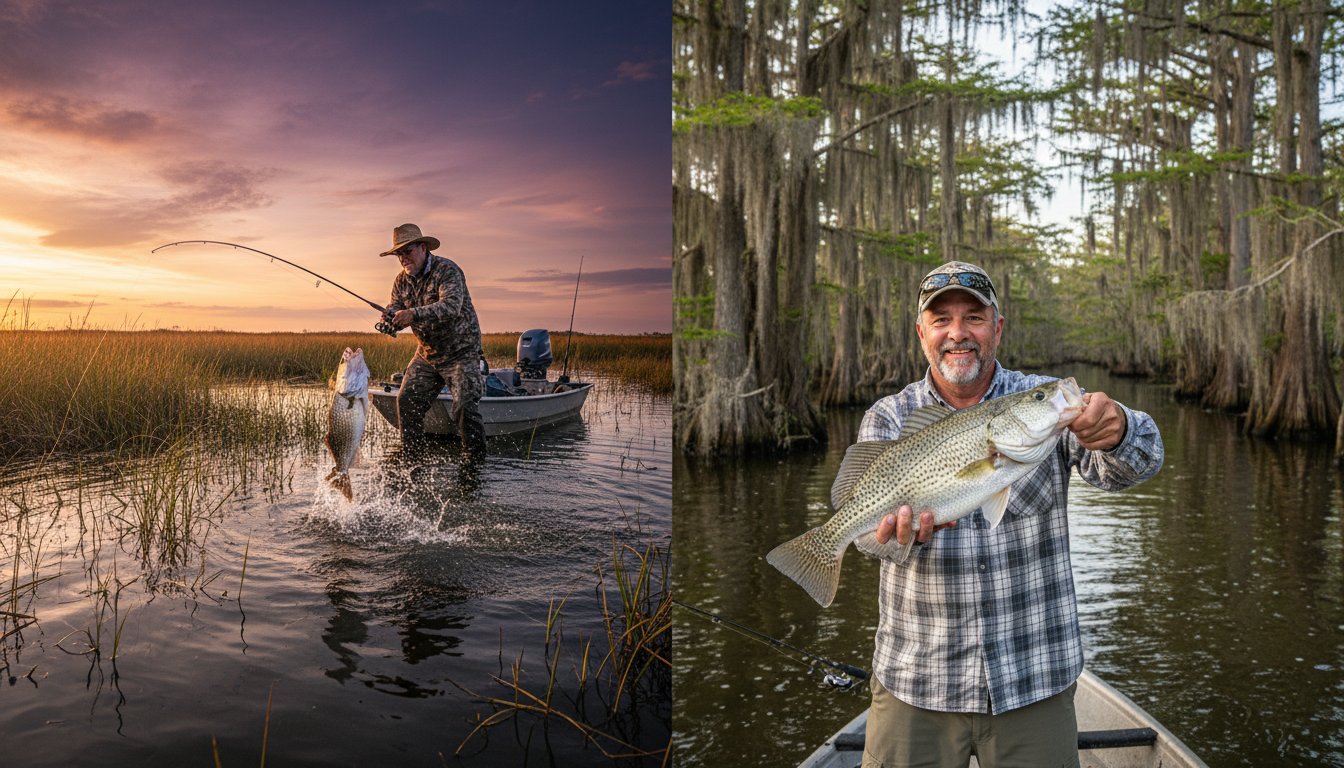
Ask any angler in the Sportsman’s Paradise what the official state fish is, and you might get two different answers. And here’s the secret: they’re both right. Louisiana is a state so rich in fishing heritage that it couldn’t settle for just one champion. It proudly honors two incredible species as the official louisiana state fish—one for its legendary freshwater bayous and another for its bountiful saltwater marshes. This dual designation often leaves anglers searching for the full story, but don’t worry. We’ve got you covered.
Get ready for an epic deep dive. This isn’t just a trivia answer; it’s your complete angler’s guide to the White Crappie and the hard-fighting Speckled Trout. We’re revealing the history behind their selection, the best spots to find them, and the pro techniques you need to experience the thrill of the catch. By the time you’re done, you’ll not only know the story behind these iconic fish but have the confidence to target them on your next adventure.
Key Takeaways
- Louisiana is unique in honoring both a freshwater (White Crappie) and saltwater (Speckled Trout) champion, giving anglers twice the opportunity for an epic adventure.
- Learn the key physical differences to confidently distinguish the White Crappie, or ‘Sac-à-lait,’ from its look-alike cousin, the Black Crappie.
- Discover the pro tactics for targeting legendary Speckled Trout and experience the thrill of landing a true “gator” trout in the coastal marshes.
- Get a complete angler’s playbook with proven strategies and current regulations for catching both official Louisiana state fish.
Louisiana’s Unique Honor: Two State Fish for an Angler’s Paradise
When it comes to legendary fishing, Louisiana doesn’t just meet expectations—it shatters them. Most states honor a single fish, but the Pelican State doubles down, celebrating two distinct species that define its epic angling culture. This unique distinction isn’t just for show; it’s a powerful symbol of Louisiana’s incredible ecological diversity, from the cypress-choked bayous of the heartland to the endless saltwater marshes of the Gulf Coast. For any serious angler, this means one thing: double the adventure.
These two champions represent the very soul of fishing in this sportsman’s paradise. One is a freshwater phantom prized for its delicate flavor, while the other is a coastal brawler famous for its explosive fight. Let’s meet the official symbols of Louisiana’s world-class fisheries.
The Freshwater Champion: White Crappie (Pomoxis annularis)
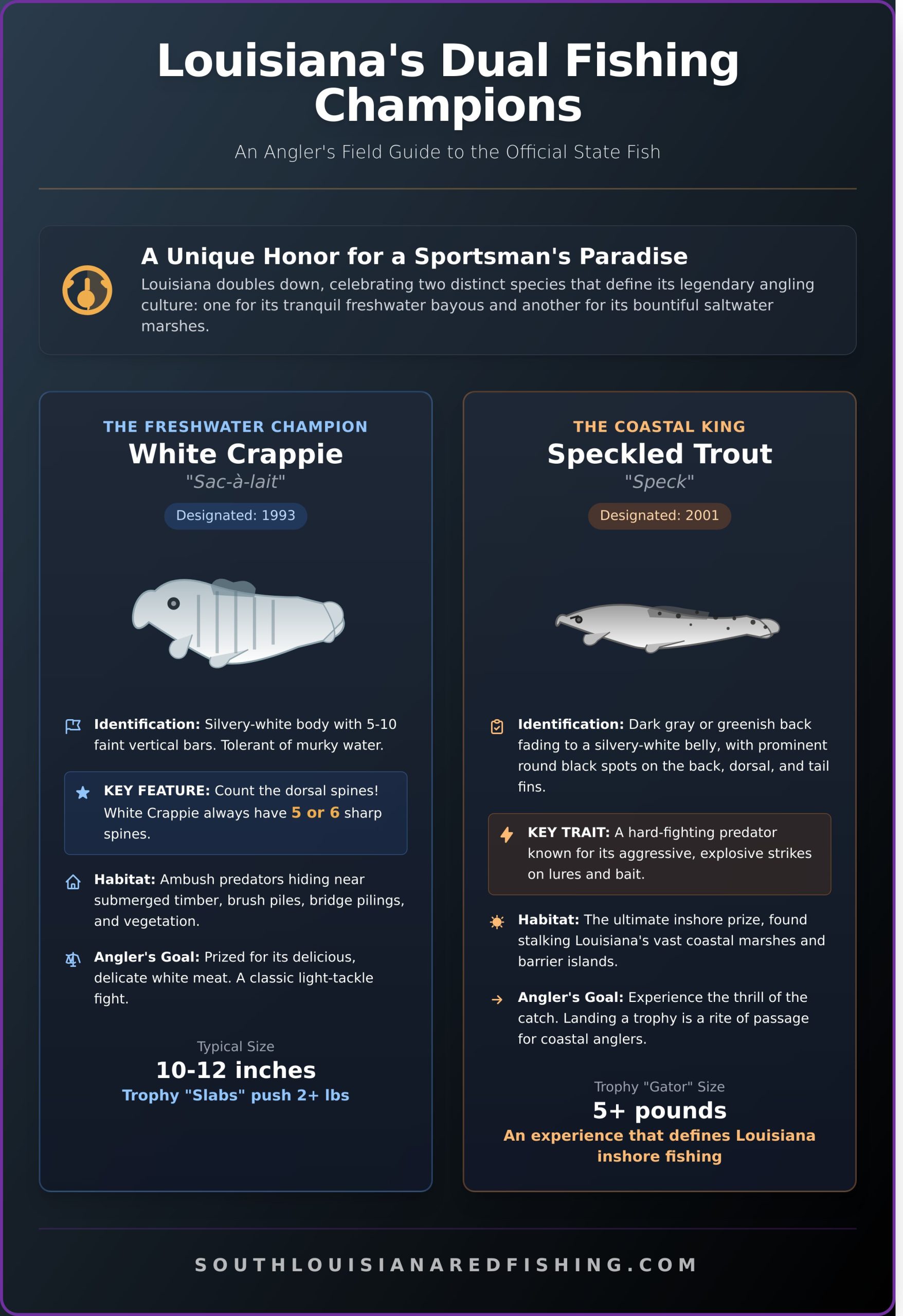
Deep in Louisiana’s tranquil inland waters lives the first of its celebrated fish. Designated in 1993, as confirmed on the official List of U.S. state fish, the White Crappie is a true freshwater icon. Known affectionately by locals as “White Perch” or the Cajun French “Sac-à-lait” (sack of milk), this fish is a beloved target for its delicious white meat. It perfectly embodies the spirit of the state’s countless lakes, rivers, and slow-moving bayous, offering a classic and rewarding fishing experience.
The Coastal King: Speckled Trout (Cynoscion nebulosus)
Representing the state’s saltwater supremacy, the Speckled Trout was officially named the state saltwater fish in 2001. This is no passive catch. Known for its aggressive strikes and hard-fighting nature, the “Speck” is the ultimate inshore prize for anglers stalking the coastal marshes and barrier islands. Landing a trophy Speckled Trout is a rite of passage, a thrilling battle that represents the wild, untamed energy of Louisiana’s world-renowned Gulf fishery.
Together, these two species tell the complete story of angling in the Bayou State. Understanding the official Louisiana state fish is your first step toward planning an unforgettable trip. Whether you’re chasing Sac-à-lait in a hidden bayou or battling trophy Specks in the marsh, your epic adventure starts here.
Meet the Freshwater Icon: The White Crappie (Sac-à-lait)
Get ready to chase a true Louisiana legend. Known locally as the Sac-à-lait, the White Crappie is more than just a popular panfish—it’s an icon of our inland waters and one half of the official louisiana state fish designation. Prized for its delicate white meat and its willingness to put up an epic fight on light tackle, this fish offers a thrilling experience for anglers of all skill levels. Mastering the art of catching Sac-à-lait means understanding exactly what you’re looking for and where to find it.
Identification and Appearance
Don’t get the White Crappie confused with its cousin, the Black Crappie. While they look similar, the key differences are your ticket to a positive ID. The White Crappie boasts a beautiful, silvery-white body marked with 5-10 faint, dark vertical bars. The most definitive tell? Count the sharp spines on the dorsal fin. A White Crappie will always have 5 or 6 spines, whereas a Black Crappie has 7 or 8. Most anglers in Louisiana can expect to reel in fish ranging from 10 to 12 inches, but don’t be surprised to find trophy-sized “slabs” pushing well over two pounds.
Habitat and Behavior
White Crappie are masters of ambush, preferring to hide near submerged structures where they can surprise their prey. Your prime targets should be areas with:
- Submerged timber and fallen trees
- Man-made brush piles
- Bridge pilings and dock structures
- Edges of dense vegetation
One of their greatest advantages in Louisiana is their tolerance for murky or turbid water. This resilience is a major reason why the White Crappie thrives in our diverse waterways and was designated as Louisiana’s freshwater state fish, a title it proudly represents. Their behavior is driven by the seasons; in the spring, they famously move into shallow waters to spawn, making them highly accessible. As ambush predators, they feed primarily on small minnows and insects, so matching your bait to their diet is a surefire path to success.
Get to Know the Saltwater Legend: The Speckled Trout
While the Largemouth Bass holds the freshwater title, the Speckled Trout, or ‘Speck,’ reigns supreme in our coastal waters. Officially designated as the saltwater louisiana state fish, this aggressive, hard-fighting predator is the prize many anglers dream of. There’s nothing quite like the explosive strike of a big trout, and the thrill of landing a monster ‘gator’—a fish topping five pounds—is an experience that defines Louisiana inshore fishing. But the Speck is more than just a trophy; it’s a vital indicator of the health of our entire coastal ecosystem.
Identification and Appearance
You’ll know a Speck when you see one. They have a sleek, elongated, silvery body, often with a golden or purple sheen along their back. Their most defining feature is the scattering of prominent black spots across their back, dorsal fin, and tail. Look inside their mouth, and you’ll find a pair of distinctive, sharp canine-like teeth in the upper jaw, built for ambushing prey. While a keeper-sized trout is a great catch, the true legends are the ‘gator’ trout that push the scales past five pounds and beyond.
Habitat and Behavior in Louisiana’s Marshes
Speckled Trout are masters of the inshore environment. You’ll find them ambushing prey along shallow bays, oyster reefs, and submerged grassy flats where they can find cover and food. As top-tier predators in the marsh, their diet consists mainly of shrimp, mullet, and other small baitfish, a fact explored in this detailed Spotted Seatrout profile from the Florida Museum. Their behavior is tied to the seasons; they move into deeper channels during the cold of winter and patrol the shallow flats in the warmth of spring and summer. This deep connection between the health of our marshes and the abundance of this incredible louisiana state fish cannot be overstated—thriving estuaries create trophy trout.
Why Vermilion Bay is a Speckled Trout Hotspot
Here on our home turf, Vermilion Bay offers the perfect recipe for a world-class Speckled Trout fishery. The bay’s unique ecosystem provides an ideal mix of salinity from the Gulf of Mexico and freshwater from the Atchafalaya Basin. This, combined with endless oyster reefs, sand flats, and marshy shorelines, creates a five-star hotel for baitfish—and the giant trout that hunt them. It’s the perfect storm for growing true gators. Ready for an epic adventure? Let’s go find some gator trout!
Angler’s Playbook: How to Target Louisiana’s State Fish
Knowing the facts is one thing, but the real thrill comes from the chase. It’s time to move from the books to the bayous and bays. This is your playbook for turning knowledge into action, breaking down the pro-level strategies you need to successfully target each official louisiana state fish. Whether you’re stalking freshwater structure or hunting giants in the salt marsh, your epic adventure starts now.
Techniques for Catching White Crappie
Locals call them “sac-a-lait,” and catching a limit is a Louisiana tradition. Success isn’t about luck; it’s about location and presentation. Modern electronics are a game-changer for finding the submerged brush piles and laydowns where these fish school up. Once you’ve marked the spot, the fun begins.
- Best Baits: You can’t go wrong with the classics. A live shiner hooked under a slip cork is deadly, but don’t overlook small jigs (1/32 to 1/16 oz) in white, chartreuse, or pink.
- Gear Setup: Light to ultra-light spinning tackle with 4-6 lb test line gives you the sensitivity to feel the slightest bite and makes for an incredible fight.
A Captain’s Guide to Catching Speckled Trout
Out on the coast, the Speckled Trout is the prize. These aggressive predators are a blast to catch, and finding them means reading the water like an expert. Look for signs of life: nervous baitfish on the surface, diving birds, or shimmering slicks that indicate feeding activity below. The best action is almost always during the low-light hours of early morning and late evening when the biggest trout are on the prowl.
- Top Lures: For heart-stopping action, throw a topwater plug like a MirrOlure She Dog. Otherwise, versatile soft plastics on a jig head or a suspending bait like a Corky Fat Boy are proven winners.
- Live Bait Tactics: Nothing gets a big trout’s attention faster than a live shrimp fished under a popping cork. The sound mimics other feeding fish, creating a dinner bell that draws trout in from a distance.
Mastering these techniques will put you on the path to limiting out on these saltwater trophies. If you’re ready to experience the thrill of a full-scale coastal assault, booking an epic adventure with a seasoned guide is your ticket to the action. Captain Troy has you covered!
Records, Regulations, and Fishing with Respect
Chasing a record is the ultimate thrill, but every epic adventure on Louisiana’s waters comes with a responsibility to the resource. Landing a giant is about more than just luck; it’s about preparation, skill, and a deep respect for the fishery. Here’s what you need to know to fish legally, responsibly, and maybe even land a fish for the ages.
Louisiana State Fishing Records
The stories of record-breaking catches are legendary in Louisiana. These are the giants that inspire us to make one more cast. The benchmark for the Speckled Trout is a monster that has stood the test of time: a 12.38-pound behemoth caught by Leon Mattes way back in 1950. For freshwater anglers, the top-tier White Crappie, or “sac-a-lait,” is a more recent 3.80-pound slab pulled from Poverty Point Reservoir in 2017 by Lettie Robertson. Think you have what it takes to put your name in the books?
Know Before You Go: Limits and Licensing
A successful trip starts before you even leave the dock. Knowing the current regulations is crucial for protecting our world-class fisheries for future generations. While these are the general statewide limits, remember that rules can change seasonally and vary by location.
- Speckled Trout: The current statewide daily limit is 15 fish per person, with a minimum size of 12 inches total length.
- White Crappie (Sac-a-lait): The statewide daily limit is a generous 50 fish per person, with no statewide minimum length on most bodies of water.
Always confirm the latest rules before you launch. Get your license and the most up-to-date regulations directly from the Louisiana Department of Wildlife and Fisheries. They’ve got you covered!
Fishing with respect ensures that the thrill of targeting either louisiana state fish remains for decades to come. By practicing catch and release with trophy fish and keeping only what you need, you become a steward of these incredible waters. Ready to create your own legendary story with an expert guide who respects the resource? Book your epic adventure today and experience the best of Louisiana fishing.
Your Louisiana State Fish Adventure Starts Now
Louisiana stands alone as an angler’s paradise, uniquely honoring both a freshwater and saltwater champion. From the elusive White Crappie in the cypress-studded bayous to the hard-fighting Speckled Trout patrolling the coastal marshes, each official louisiana state fish offers a distinct and thrilling challenge. Mastering the techniques for each and respecting the regulations ensures that these incredible fishing traditions continue for generations to come, providing unforgettable action for all who cast a line in these bountiful waters.
While the Sac-à-lait offers freshwater fun, the thrill of battling a trophy Speckled Trout is an epic adventure you’ll never forget. Stop dreaming and start fishing! Climb aboard with a 3rd generation, full-time veteran captain who targets trophy Speckled Trout in the legendary Vermilion Bay. Everything you need for a successful trip is provided—all you have to do is show up ready for a fight.
Experience the thrill of catching Louisiana’s state saltwater fish! Book your epic adventure today!
The water is calling, and a legendary catch has your name on it.
Frequently Asked Questions About Louisiana’s State Fish
Are Speckled Trout actually a type of trout?
Don’t let the name fool you! Speckled Trout are not related to freshwater trout at all. They are actually saltwater members of the drum family, which also includes other Louisiana legends like Redfish and Black Drum. This is why you’ll find them crushing baits in the same coastal marshes and bayous. Their name comes from their trout-like body shape and distinct black spots, but their fight is pure saltwater muscle.
What is the best time of year to fish for Speckled Trout in Louisiana?
For an epic adventure, plan your trip for the spring or fall. The action is incredible from April through June as big “gator” trout move into the shallow marshes to spawn. The bite fires up again from September through November when they feed aggressively before winter. While you can find them year-round, these peak seasons give you the best shot at limiting out on some true trophy fish.
What does ‘Sac-à-lait’ mean and why is it called that?
This name is pure Louisiana heritage! “Sac-à-lait” is French for “sack of milk,” a name given to the White Crappie by the state’s early French settlers. It’s a perfect description of the fish’s pearly white, sweet, and incredibly delicious flesh. It’s a testament to how prized this fish has been on the dinner table for generations. One bite of a fried filet, and you’ll know exactly why.
Can you catch Speckled Trout and Redfish on the same trip?
Absolutely! This is the thrill of Louisiana inshore fishing. Targeting both species on the same day is not only possible but a common goal for a successful trip. They often patrol the same marshy shorelines, oyster reefs, and grass beds, ambushing baitfish. Landing a limit of both powerful Redfish and trophy Speckled Trout is the ultimate “inshore slam” and an experience you will never forget.
Are both Louisiana state fish good to eat?
Without a doubt, both of the Louisiana state fish are prized for their exceptional flavor. The freshwater Sac-à-lait (White Crappie) offers a sweet, delicate white meat that is a local favorite for a classic fish fry. The saltwater Speckled Trout has a clean, mild flavor with a slightly firmer texture, making it perfect for grilling, blackening, or baking. You can’t go wrong with a cooler full of either one.
Do I need a different license for freshwater and saltwater fishing?
Yes, this is a critical detail for any angler. Louisiana requires separate licenses to fish in freshwater and saltwater. A basic fishing license will cover you for freshwater species like the Sac-à-lait. To legally target Speckled Trout, Redfish, and other coastal species, you must also purchase a saltwater fishing license. Always check the official Louisiana Department of Wildlife and Fisheries (LDWF) website for current regulations.