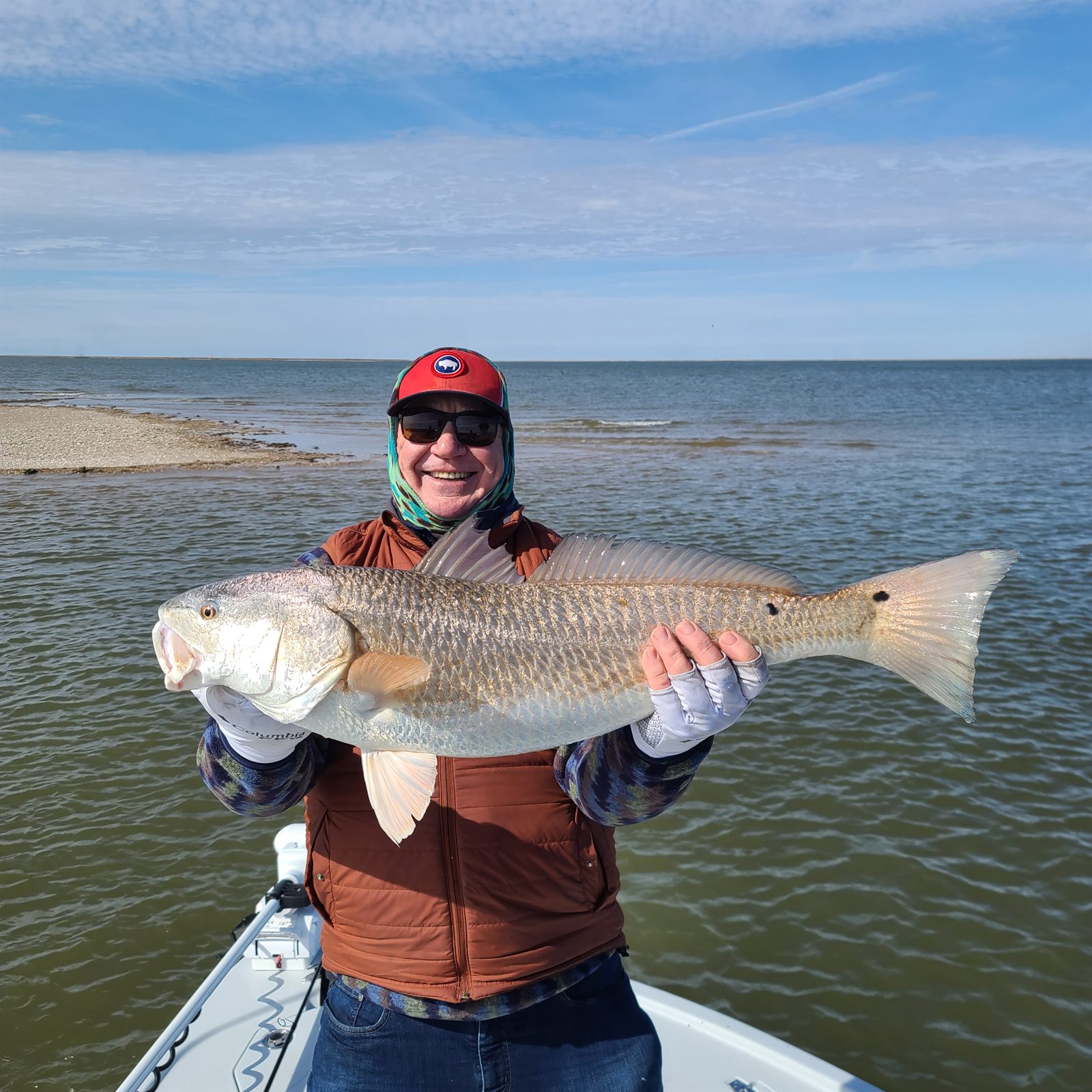
You’ve been there. The sun is shining, the tide is moving, and the grass lines look perfect, but for some reason, the redfish in Vermilion Bay just won’t touch your lure. It’s incredibly frustrating to burn fuel and time at Cypremort Point only to find a dead marsh when everything looks right on paper. The truth is that you’re likely fighting an invisible force. Learning how barometric pressure affects fishing is the secret weapon that separates the seasoned pros from the folks just hoping for a strike.
I’ve spent decades guiding in these waters, and I’ve seen how a shifting barometer acts like a volume knob for fish activity. Whether you’re targeting slot reds near Weeks Bay or hunting for trout along the reefs of West Cote Blanche Bay, the air pressure dictates if the fish are feeding or hiding. This guide will help you master the science of the barometer so you can time your trips perfectly. We’ll cover which lures to throw when the pressure drops and how to find success in the marsh even when conditions get tough. Get ready to turn those frustrating “no-bite” days into legendary hauls in the heart of Cajun country.
Key Takeaways
- Learn the biological secrets of the swim bladder to understand exactly how barometric pressure affects fishing and why it dictates when redfish feed.
- Identify the “Golden Window” of falling pressure before a front hits to maximize your catch rate in the shallow marshes of Vermilion Bay.
- Discover how to adjust your lure selection and presentation when high-pressure “bluebird days” make the bite more challenging.
- Master specific positioning tactics for the shorelines and weirs of Weeks Bay and West Cote Blanche Bay during significant pressure shifts.
- Save time and fuel by leveraging expert local knowledge to interpret complex weather jargon into a successful day on the water.
Table of Contents
What is Barometric Pressure and Why Does it Rule the Marsh?
Imagine a massive, invisible blanket pressing down on everything you see. That is the essence of barometric pressure. In the wide, wild expanse of the Louisiana marsh, this pressure isn’t just a boring weather statistic; it is the primary driver of fish behavior. Understanding how barometric pressure affects fishing is what separates a lucky day from a consistent limit of redfish. Capt. Troy D Nash has spent decades tracking these numbers across the Vermilion Bay region to ensure his clients are always in the right spot at the right time. When the pressure shifts, the entire ecosystem reacts, and you need to be ready to move with it.
The Basics of Atmospheric Weight
At its simplest level, What is Barometric Pressure refers to the weight of the air column above us, with a standard sea-level baseline of 29.92 inches of mercury (inHg). When a high-pressure system moves in, the air is denser and heavier, pushing down on the surface of the water. Conversely, as a storm or cold front approaches, the air thins out and the pressure drops significantly. This change in “weight” translates directly into the water column. Fish are biological precision instruments, and they are incredibly sensitive to these minute changes in their environment. They can feel a front coming long before the first clouds appear over Cypremort Point.
Why Inshore Anglers Should Care
In deep-sea fishing environments, fish can often compensate for pressure changes by simply moving up or down in the water column. In the shallow flats and marshes of Vermilion Bay or the grass lines of West Cote Blanche Bay, the fish don’t have that luxury. A redfish cruising in two feet of water near Marsh Island feels every single ounce of atmospheric change because there is nowhere to hide. This makes the barometer a much more powerful tool for inshore anglers than those heading far offshore.
Because our water is so shallow, these pressure shifts also dictate our local conditions in other ways. High-pressure systems often bring north winds that push water out of the marsh, while falling pressure can coincide with water levels holding steady or rising. This creates a complex puzzle of wind, tide, and pressure. Capt. Troy uses these readings to determine if the fish will be stacked in the deep canals or prowling the shallow weirs. Stable pressure phases mean predictable patterns and confident casts. Unstable phases, however, are when the real adventure begins, as the fish prepare for the coming change.
The Science of the Bite: How Pressure Impacts Fish Biology
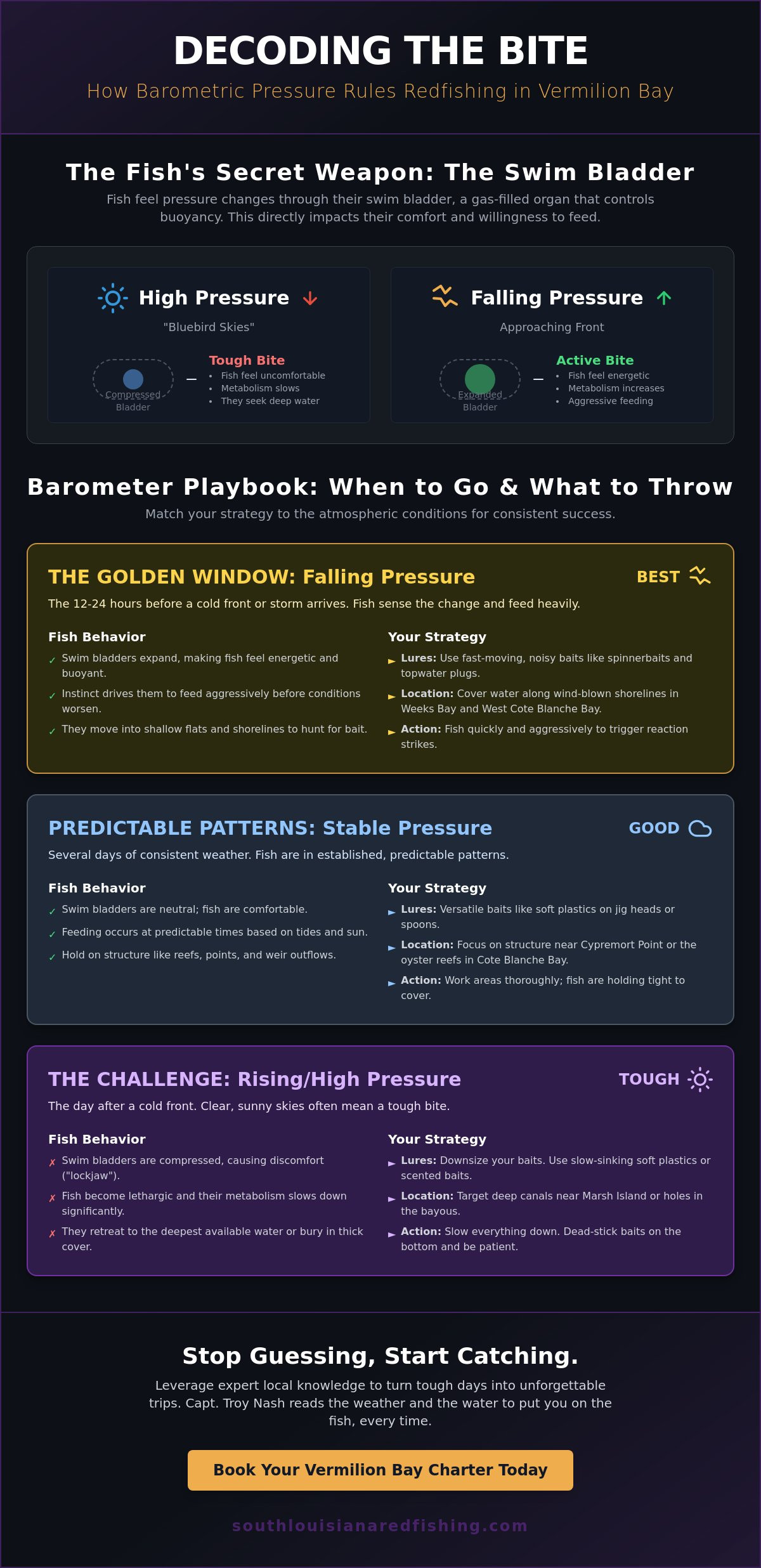
Fish don’t have weather apps on their phones, but they have something much more accurate built right into their guts. To truly master how barometric pressure affects fishing, you have to understand the swim bladder. This gas-filled organ is what allows a redfish to maintain its position in the water without constant swimming. When the barometer spikes, that extra atmospheric weight actually compresses the bladder. It makes the fish feel uncomfortable, almost like a human with a bad sinus headache. They’ll often sink to the bottom or hunker down in the deep holes of Weeks Bay just to find some relief. This is why you’ll see “lockjaw” during rapid pressure increases; the fish are simply too focused on their own discomfort to chase a lure.
The Swim Bladder Connection
The dynamics of Falling vs. Rising Pressure play a huge role in how these fish move throughout the marsh. When the pressure drops before a storm, that bladder expands. This makes the fish feel lighter and more energetic. It’s like they’ve suddenly lost weight and gained a burst of adrenaline. This biological trigger is what causes those legendary feeding frenzies we see in the Louisiana marsh. They aren’t just hungry. They’re physically primed to hunt. This sensitivity is amplified by their lateral line, a sensory organ that detects vibrations and pressure changes. In the shallow flats near Cypremort Point, a redfish can feel the atmospheric weight shifting long before we notice a change in the wind. If you want to see this science in action, booking guided fishing trips with an expert who reads the barometer like a roadmap is the best way to ensure you’re on the bite.
Feeding Frenzies and Metabolic Shifts
High pressure doesn’t just make fish uncomfortable; it actually slows down their metabolic processes. When the barometer is high and stable, digestion takes longer, meaning fish don’t need to eat as often. They become lethargic. You might see them on your electronics, but they’ll ignore everything you throw. Speckled trout are particularly sensitive to this. They might retreat to the deeper canals near Marsh Island and stay completely still. Redfish are a bit more resilient, but they still lose that aggressive edge.
The “Golden Window” occurs when the pressure begins its downward slide. As the atmosphere thins, the fish feel a sense of relief and urgency. They know a front is coming, which might mean days of tough conditions, so they gorge themselves while they feel good. This is when you want to be casting along the shorelines of West Cote Blanche Bay. Understanding this biological clock gives you a massive advantage over anglers who just head out and hope for the best. While offshore trips often face total cancellations during these pressure shifts due to dangerous seas, our inshore marshes remain accessible, allowing us to capitalize on these aggressive feeding windows safely.
Falling vs. Rising Pressure: Decoding the Best Time to Cast
Timing is everything in the Louisiana marsh. If you want to stop guessing and start catching, you have to look at the trend, not just the current number. Understanding how barometric pressure affects fishing means recognizing that a falling barometer is your green light to hit the water. This is the “Golden Window.” It is that magical period where redfish lose their caution and start hunting with an intensity you won’t see at any other time. While some anglers get confused by weather jargon, the rule is simple: when the pressure is on the way down, the bite is on the way up.
The Pre-Front Feeding Frenzy
The 12 hours leading up to a cold front are pure magic for an inshore angler. As the pressure drops, redfish in the canals and weirs around Marsh Island sense the impending weather change. They feed aggressively to prepare for the coming front, which might keep them hunkered down for a few days. This is the time to go big and loud with your lure selection. Throw topwater plugs or large rattling spoons that create plenty of vibration in the water. The fish are looking for a meal, and they aren’t being picky. You want a bait that calls them in from a distance while they are in this high-energy state.
Post-Front Challenges and “Bluebird” Skies
Once the front passes, you’re often left with bright “bluebird” skies and high pressure. This usually brings north winds that can leave the marsh “high and dry,” literally pushing water out of the shallow flats. During these periods, redfish retreat to the mud and deep holes near Cypremort Point to find more stable conditions and some relief from the atmospheric weight. You have to slow down your presentation significantly. Use a light jig head and a soft plastic with a scent, working it slowly along the bottom. The bite is subtle, and you need to be focused to feel that slight “thump” on the line.
While everyone chases the pre-front frenzy, stable pressure is a hidden gem for consistent action. When the barometer stays steady for several days, the fish settle into a predictable pattern. This is when the reefs of West Cote Blanche Bay become incredibly productive. You can count on the fish being in the same spots day after day. You don’t need a fancy brass instrument on your wall to track this; most modern smartphone apps provide live barometric data. Look for the trend line. If it’s pointing down, get your gear ready. Capt. Troy D Nash uses these trends to choose between the protected canals of Weeks Bay or the open shorelines of East Cote Blanche Bay. While other areas in Louisiana might be completely blown out by post-front winds, our local marsh provides countless tucked-away spots that remain fishable and productive.
Marsh Tactics: Adjusting Your Strategy in Vermilion Bay
General advice on the internet often tells you to “use topwater in the morning,” but mastering the Louisiana marsh requires a much deeper level of expertise. In our shallow estuaries, understanding how barometric pressure affects fishing is the difference between a productive day and a long boat ride. When the barometer shifts, the fish in the Vermilion Bay complex don’t just stop eating; they change their location and their attitude. You have to be ready to pivot your tactics the moment you see the needle move on your barometer. Whether you are launching from Cypremort Point State Park or making the short drive down from Lafayette, having a plan for every pressure phase is essential for success.
Navigating the Vermilion Bay Complex
When pressure-induced winds kick up across the bay, don’t head back to the dock. Use the massive geography of Marsh Island as a natural windbreak. The northern shorelines and interior canals provide protected water where you can still find a clean bite even when the main bay is whitecapping. During high-pressure spikes, redfish often retreat into the deeper refuges of the oil field canals or hunker down near the bottom of the weirs. These areas offer more stable water temperatures and a slight break from the atmospheric weight. This proximity to deep-water escapes is what makes Weeks Bay and Cote Blanche Bay such premier destinations compared to the more volatile open-water areas in other parts of the state.
Lure and Presentation Pivots
Your tackle box needs to reflect the current pressure trend. For high-pressure lethargy, I recommend using a 3-inch paddletail or a shrimp imitation in a dark, high-contrast color like “black and gold” to stand out in the stained marsh water. This is the time to switch from aggressive “burning” of your lures to a technique called “dead-sticking.” Cast your lure near a grass line and let it sit perfectly still on the bottom for several seconds. Often, a pressurized redfish needs that extra time to decide to strike. Adding a bit of scent to your plastic can also provide the sensory trigger needed when visibility is low and the fish are moving slowly.
On those toughest high-pressure days, live bait is the ultimate equalizer. A live shrimp or a hardy cocahoe minnow under a popping cork creates a natural vibration and scent trail that even the most stubborn fish find hard to resist. While offshore trips are often restricted by seasonal closures and massive travel distances, our inshore marshes remain a year-round playground for those who know how to read the conditions. To skip the learning curve and get straight to the action, book your guided fishing trips with an expert who knows every hidden hole in the marsh. We take the guesswork out of the weather so you can focus on the fight.
Mastering the Conditions with South Louisiana Redfishing
Even when you understand the science of how barometric pressure affects fishing, putting that knowledge into practice in the middle of a shifting tide is an art form. You can spend hours staring at a smartphone app, but nothing replaces the raw intuition of a seasoned professional. Capt. Troy D Nash brings a third-generation heritage and decades of professional tenure to every trip. He doesn’t just read the barometer; he anticipates how the redfish near Cypremort Point will react before the first cloud even forms. We take the guesswork out of your adventure, ensuring that even on “tough” high-pressure days, you are casting in the most productive pockets of the marsh.
Inshore Stability vs. Offshore Volatility
Many anglers struggle to choose between a “deep sea” excursion and an inshore trip. The reality is that offshore fishing is often a gamble with both your time and your wallet. Deep-sea trips are frequently canceled due to adverse sea conditions or seasonal closures that don’t affect our local bays. When a high-pressure system makes the Gulf too rough to navigate, the protected marshes of Burns Point and the interior canals of Marsh Island remain calm and fishable. Inshore trips are significantly more cost-effective and offer much shorter travel distances from Cypremort Point State Park. You spend your day catching fish rather than fighting waves, making it a much more rewarding experience for families and serious anglers alike.
Book Your Cajun Adventure Today
We pride ourselves on providing a results-driven experience that goes beyond just the catch. Our Guided Fishing Trips are designed to be a significant life event, filled with the excitement of the strike and the beauty of the Louisiana coastline. We know exactly where the redfish are hiding when the pressure spikes, and we have the technical mastery to pull them out. Under the current 2026 regulations, we’ll help you secure your daily creel limit of 4 redfish within the 18 to 27-inch slot, ensuring a sustainable future for our world-class fishery. Remember, per state law, we’ll release any “bull reds” over 27 inches to keep the spawning population strong.
After a successful day on the water, you are perfectly positioned to enjoy the best of South Louisiana. Cypremort Point is just a short drive from Lafayette, the heart of Cajun country. You can follow up your trip with world-class Cajun food and local tourism that makes this region a premier destination. Don’t waste another weekend waiting for the “perfect” weather report. We have the expertise to make the most of any condition. Contact us today to secure your dates and prepare for a thrilling, memorable journey through the finest marshes in the world. The redfish are waiting, and the window is open.
Ready to Conquer the Vermilion Bay Marsh?
Mastering the science of how barometric pressure affects fishing is your ticket to consistent success in the Louisiana marsh. You now know that a falling barometer is your green light for aggressive redfish action, while high-pressure days require a slower, more deliberate approach in the deep holes of Marsh Island. These insights transform your time on the water from a guessing game into a strategic hunt. Why waste fuel and effort on the unpredictable volatility of deep-sea trips when world-class inshore action is waiting right here?
Put this knowledge to work by leaning on 3rd Generation local guide expertise. Capt. Troy D Nash is an expert in inshore redfish and speckled trout, specializing in the unique patterns of Vermilion Bay and Cote Blanche Bay. We handle the technical equipment and weather monitoring so you can focus on the thrill of the strike. After a successful day, you can head back to Lafayette for some legendary Cajun food to celebrate your haul. Book Your Vermilion Bay Charter with Capt. Troy D Nash today. Let’s get out there and make some memories in the finest marshes Louisiana has to offer.
Frequently Asked Questions
Is fishing better when the barometric pressure is high or low?
Fishing is significantly better when the barometric pressure is low or falling just before a weather front hits the coast. This downward trend triggers an aggressive feeding response in redfish and trout throughout the marshes of Weeks Bay. High pressure typically leads to lethargic fish that hunker down in deeper canals to find relief from the atmospheric weight.
What is the best barometric pressure for redfish?
The best barometric pressure for redfish is a falling trend between 29.90 and 30.10 inHg. While the specific number is a good baseline, the movement of the barometer is the real secret to success. Capt. Troy D Nash monitors these shifts to time trips near Marsh Island when the redfish are most likely to gorge themselves before a front.
Do fish bite when the pressure is rising?
Fish will still bite when the pressure is rising, but you have to work much harder for every strike. Rising pressure usually follows a cold front, bringing bright “bluebird” skies and north winds that push water out of the bay. You must adjust your presentation by slowing down and targeting the deeper mud holes near Cypremort Point to find active fish.
How long does it take for fishing to get good after a cold front?
It typically takes 48 to 72 hours for fishing to return to peak levels after a cold front passes through South Louisiana. This window allows the barometer to stabilize and the water levels in West Cote Blanche Bay to return to a normal state. Once the pressure levels out for a few days, the fish regain their appetite and move back onto the shallow flats.
Can fish feel pressure changes in shallow water?
Fish feel pressure changes intensely in shallow water, often more so than they do in deep sea environments. In the two foot flats of Vermilion Bay, a redfish has no depth to hide from the shifting atmospheric weight. This extreme sensitivity is why understanding how barometric pressure affects fishing is the most important skill for an inshore angler to master.
What apps are best for tracking barometric pressure for fishing?
Apps like Windy, FishAngler, and Tides4Fishing are excellent tools for tracking live barometric trends in the marsh. Look for an app that provides a clear graph of the pressure over the last 24 hours. Seeing the slope of the line helps you predict if the fish near Burns Point are about to go on a feeding tear or retreat into a post front funk.
Does barometric pressure affect saltwater fish differently than freshwater?
Barometric pressure affects saltwater fish similarly to freshwater species because both rely on gas filled swim bladders for buoyancy. However, saltwater environments like East Cote Blanche Bay are also influenced by tidal movements and salinity shifts. These coastal factors can either amplify or dampen the effects of the barometer depending on how the wind is pushing water into the marsh.
What should I do if I have to fish on a high pressure day?
If you have to fish on a high pressure day, you should prioritize deep water refuges and use live bait or heavily scented plastics. Target the deeper canals and weirs where fish seek stability and relief from the pressure. Slow your retrieve to a crawl and be prepared for subtle strikes that are much harder to feel than the aggressive pre front hits.