
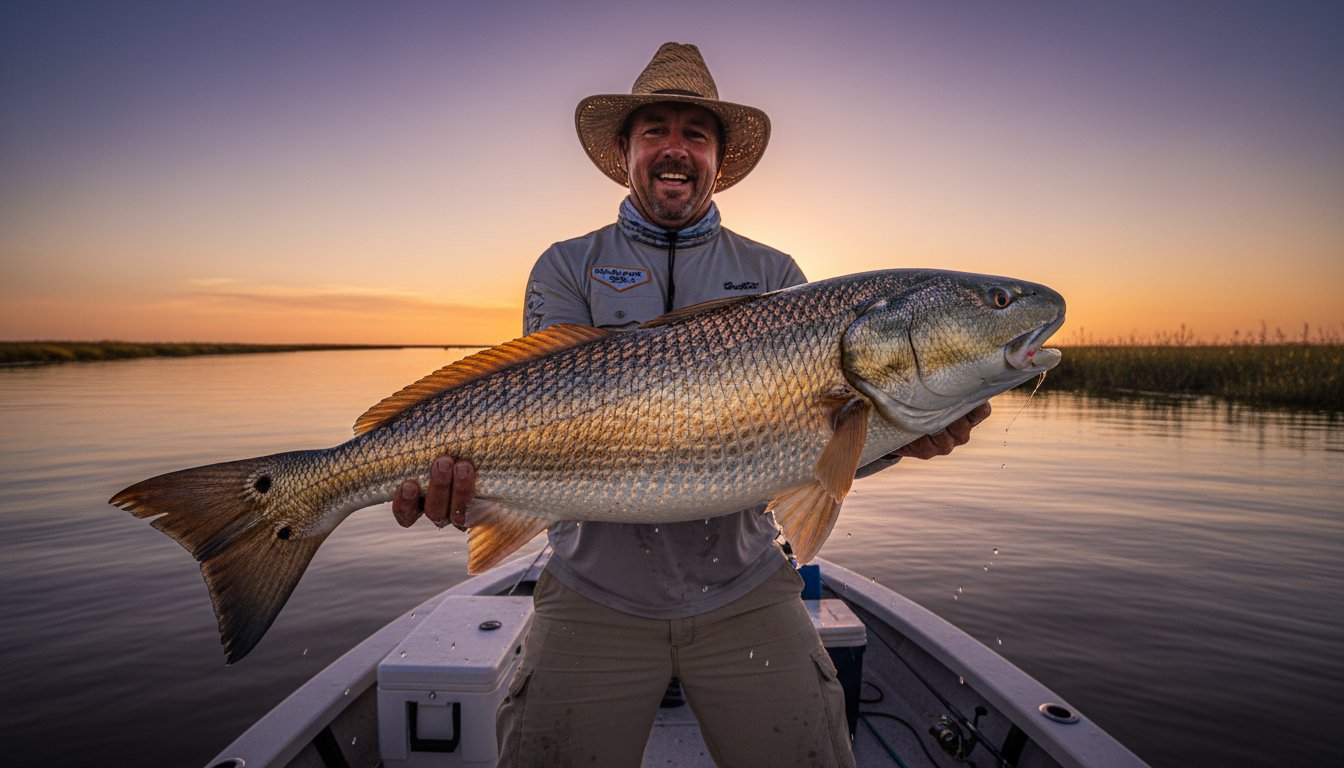
Tired of scrolling through endless, lifeless stock photos? You’re searching for authentic pictures of redfish fish-the kind that capture the raw thrill of the fight, the flash of bronze scales in the Louisiana sun, and the sheer power of a giant bull red. You want to see the real deal, pulled straight from the endless banks and bayous where fishing legends are born. Forget the fakes. This is your front-row seat to an epic adventure on the water.
Get ready to experience the thrill. As a 3rd generation, veteran Louisiana fishing guide, I’m sharing my personal gallery of hard-won catches. But this is more than just a collection of photos. I’ll show you exactly what to look for-from the signature spot on the tail to the different colorations that tell a story. You’ll learn how to identify them, understand their behavior, and get the insider knowledge you need to land your own trophy. Consider this your inspiration. Your epic adventure begins now!
Key Takeaways
- Learn to identify a true Louisiana redfish by its distinct features, from its iconic tail spot to its powerful build.
- Master the angler’s language and visually learn the difference between a “puppy drum” and a giant “bull red.”
- Follow a veteran captain’s simple tips to capture incredible pictures of redfish fish that do your trophy catch justice.
- See what a true Louisiana trophy looks like in our gallery of giant redfish caught right in Vermilion Bay.
The Ultimate Redfish Gallery: Real Catches from Vermilion Bay
Nothing tells the story of an epic fishing adventure better than a great photo. Here in Vermilion Bay, we don’t just put you on the fish; we capture the memory. Forget stock photos-this gallery is packed with 100% real catches from our charters. These are the giant bull reds and perfect slot-sized fish our clients battle every day. Get ready to see some of the best pictures of redfish fish you’ll find anywhere, straight from the heart of Louisiana.
[Stunning, high-resolution photo gallery of redfish catches would be displayed here.]
Captain Troy Nash, a 3rd generation guide, believes the photo is part of the trophy. His passion for fishing is matched only by his dedication to capturing that perfect shot, ensuring you have a stunning memory to share long after your trip is over.
The Classic Trophy Pose
There’s nothing like that classic grip-and-grin with a monster red! Notice the deep, vibrant bronze and copper colors that make these fish so beautiful. The stunning scales of the Red drum (Sciaenops ocellatus) truly shine in the Louisiana sun. For a great photo that also respects the fish, support its weight by placing one hand under the belly near the tail and the other firmly gripping its mouth. This ensures the fish can be safely released to fight another day.
Redfish in Their Natural Habitat
Before the fight, there’s the hunt. These images showcase redfish in their element: gliding through the shallow, golden-hued waters of the marsh. If you’re lucky, you’ll witness the magic of a ‘tailing’ red-its iconic spotted tail waving above the surface as it feeds on the bottom. It’s a sight fisherman’s dream, set against the breathtaking backdrop of the Louisiana coastline, and makes for incredible pictures of redfish fish in the wild.
Action Shots: The Thrill of the Fight
A redfish doesn’t come to the boat quietly. These powerful fish are famous for their bulldog-like fights, stripping drag and putting a deep bend in the rod. Our action shots capture the peak of this thrilling battle-the splash, the strain, and the pure excitement. The intensity of the fight provides an epic photo opportunity, freezing a moment of pure adrenaline in time. It’s the thrill you came for, captured forever.
Anatomy of a Redfish: What You’re Seeing in the Pictures
Once you’ve seen a few pictures of redfish fish, you start to notice they’re more than just a pretty catch-they’re perfectly engineered inshore predators. Every feature, from their color to their shape, tells a story about where they live and how they hunt. This guide will break down what you’re seeing, turning a simple photo into a deeper appreciation for this incredible game fish. For a more scientific look, the Florida Museum offers a fantastic deep dive into the Anatomy of the red drum, but we’ll cover the key features every angler should know to truly appreciate their next catch.
The Telltale Spot: A Redfish’s Signature
That single black spot near the tail is the redfish’s calling card. The most common theory is that this “eyespot” acts as a brilliant decoy, tricking predators like dolphins into striking the less-vital tail instead of the head, giving the redfish a critical chance to escape. While one spot is standard, finding a redfish with multiple spots is a special treat-some have been caught with dozens, making for an unforgettable photo and a true trophy catch!
Bronze Armor: Understanding Their Coloration
A redfish’s stunning color isn’t just for show; it’s master-class camouflage. Their backs range from a deep, coppery bronze to a pale, sandy gold, and this variation depends entirely on their environment. A redfish living in the dark, tannin-stained waters of the backwater marshes will have a much deeper, darker hue to blend in. In contrast, a redfish cruising the clear, sandy flats near the Gulf will be lighter and more silvery to match the bright bottom.
Powerful Build: Designed for the Inshore Battle
There’s a reason redfish fight so hard-they’re built for it. You’ll notice in any good photo their broad shoulders and thick, muscular body that tapers to a wide, powerful tail. This torpedo-like shape gives them explosive speed and incredible strength for chasing down prey and putting up an epic fight on the line. Look closely at their head, and you’ll see a downward-facing mouth, perfectly designed for rooting around the bottom to crush their favorite meals: crabs, shrimp, and baitfish.

A Visual Guide to Size: From Puppy Drum to Giant Bulls
Redfish aren’t a one-size-fits-all species. From feisty juveniles to monster-sized breeders, each stage of their life offers a completely different kind of thrill on the water. Anglers have nicknames for each size, and understanding them is key to appreciating the epic adventure of redfishing in South Louisiana. These pictures of redfish fish will show you exactly what to look for at every stage, from the first bite to the trophy catch of a lifetime.
Puppy Drum: The Future Fighters
These are the young guns of the redfish world! Typically measuring under 16 inches, “Puppy Drum” are juvenile redfish that are full of fight. You’ll often find them hunting in aggressive schools in the shallow backwaters and marshes, making for fast-paced, action-packed fishing. Catching these future fighters on light tackle is an absolute blast and a perfect way to introduce anyone to the sport. Understanding the different Redfish growth stages is part of becoming a seasoned angler, and it all starts here with these energetic fish.
[Image of a small, vibrant redfish being held by an angler using light spinning tackle.]
Slot Reds: The Perfect Keeper
When you hear anglers talking about a “keeper,” they’re talking about a “Slot Red.” In Louisiana, the protective slot limit is between 16 and 27 inches. This regulation is a cornerstone of conservation, ensuring that juvenile fish can grow and the giant breeders are released to spawn. These are the fish we target most on our inshore charters-they’re strong, plentiful, and the perfect size for a fantastic meal. Hooking into a hard-pulling slot red in the marsh is the classic Louisiana fishing experience.
[Photo of a smiling angler holding a healthy, 24-inch slot redfish with a marshy shoreline in the background.]
Bull Reds: Chasing a Louisiana Legend
This is what legends are made of. A “Bull Red” is a giant, mature redfish measuring over 27 inches, with some reaching an incredible 40-50 inches. These are the breeding stock of the Gulf, found patrolling coastal waters and deep channels. The fight is an entirely different game-a brutal, drag-screaming battle of will. I remember one client battling a 45-inch monster for nearly 20 minutes, the rod bent double and pure adrenaline on his face. That’s the moment that gets you hooked for life. These impressive pictures of redfish fish only hint at the raw power you’ll feel on the line.
[Impressive photo of a massive, bronze-colored Bull Red being carefully held by a proud angler before release.]
Landing one of these giants is the ultimate prize for any inshore angler. They are a true test of skill and tackle, and releasing one back into the water is an unforgettable moment.
Ready to chase your own Bull Red? Let’s go!
How to Take Great Pictures of Your Redfish Catch
After an epic battle with a Louisiana bull red, you’ll want a photo to prove it. As a 3rd generation guide, Captain Troy has helped countless anglers capture the perfect shot to memorialize their trip. Follow these pro tips to get a picture that does your catch justice and freezes that thrilling moment forever. A trip with us isn’t just about the catch; it’s about creating memories that last a lifetime.
Tip 1: Safety and Handling First
Before you even think about the camera, think about the fish. A healthy release ensures these incredible fighters are here for generations to come. Always handle your redfish with wet hands to protect its natural slime coat, which acts as its immune system. Support the fish’s full body horizontally-one hand under its belly and the other firmly gripping the base of its tail. This minimizes stress and prevents injury to its jaw and organs.
[Image: Angler demonstrating the proper two-hand hold to support a redfish’s weight horizontally.]
Tip 2: Mind the Sun and Background
The Louisiana marsh is one of the most beautiful backdrops in the world-use it! For the best lighting, position the photographer with the sun at their back. This fully illuminates you and the vibrant, bronze colors of the redfish, making every scale and that famous spot pop. Avoid shooting into the sun, which creates dark, shadowy pictures of redfish fish where all the amazing details are lost.
[Good Example Image: A well-lit photo with the sun behind the photographer, showcasing the fish’s colors and the marsh background.]
[Bad Example Image: A backlit, shadowed photo where the angler and fish are hard to see.]
Tip 3: Get Low and Capture the Action
Want to make that redfish look like the giant it truly is? Get low! Have your photographer crouch down and shoot from a slightly upward angle. This classic “hero shot” perspective makes the fish look more impressive and highlights you as the victorious angler. Some of the best photos capture the raw emotion right after the land-the smile, the water dripping, and the pure thrill of the moment.
[Image: A dynamic, low-angle shot of an angler holding a large redfish, making it look powerful against the sky.]
Of course, the first step to getting an incredible photo is having a trophy fish on the line. On a trip with South Louisiana Redfishing, we’ll put you on the fish that create those epic moments. You focus on the fight; we’ll help you get the shot. Your adventure awaits!
Your Turn: Get in the Picture with a Louisiana Redfish
You’ve seen the bronze scales, the iconic tail spot, and the powerful build. You’ve studied the features that make these fish legendary. But looking at pictures of redfish fish is one thing-battling one on the end of your line is an entirely different thrill. Now, it’s time to stop scrolling and start casting. It’s your turn to get in the picture and create a memory that will last a lifetime.
The smiles in these photos tell the real story. It’s the story of a drag-screaming fight, a triumphant moment, and an epic adventure in the heart of Cajun country. That feeling is waiting for you right here in Vermilion Bay.
An Epic Adventure for Everyone
This isn’t an experience reserved for the pros. We welcome anglers of all ages and skill levels to climb aboard. From family trips where kids can catch their first-ever fish to groups of friends chasing giant bull reds, we create the perfect day on the water. Don’t have gear? Don’t worry. Captain Troy provides everything you need-top-of-the-line rods, reels, tackle, and over 25 years of expertise to put you on the fish. He’s got you covered!
A family beams with excitement, holding up a massive redfish together. This is more than a fishing trip; it’s a core memory in the making.
More Than Just Redfish
While the mighty redfish is the star of the show, the fertile waters of Vermilion Bay are teeming with other prized species. On your trip, you’ll have the chance to battle hard-fighting speckled trout, ambush tasty flounder, and tangle with powerful black drum. This world-class fishery offers incredible variety, ensuring a dynamic and exciting day on the water. Every cast holds the promise of a new challenge and another great photo for your collection.
An angler proudly displays a beautiful speckled trout, showcasing the incredible diversity of the Louisiana marsh.
Book the Trip, Create the Memory
You’ve seen the proof. You’ve felt the spark of adventure. The endless bayous and saltwater marshes of South Louisiana are calling your name. Stop looking at pictures of other people’s triumphs and start planning your own. The thrill of the catch and the pride of that perfect photo are just one click away.
Your epic fishing photo is waiting. Book Your Charter Today!
From Our Gallery to Your Adventure: Catch Your Own Redfish
We’ve taken you on a visual journey through the legendary waters of Vermilion Bay, showcasing the raw power and stunning beauty of Louisiana redfish. You’ve seen the anatomy of these bronze bruisers, learned how to distinguish a puppy drum from a giant bull, and picked up pro tips for capturing that perfect trophy shot. But staring at incredible pictures of redfish fish can only satisfy the craving for so long.
Every photo in this gallery is a real moment from a real trip with Captain Troy Nash. As a 3rd generation, veteran guide with over 25 years of experience, he doesn’t just know these waters; they’re part of his legacy. He’s got you covered. It’s time to stop scrolling through someone else’s memories and start making your own.
The thrill of the fight is waiting. The endless bayous are calling. Stop dreaming and start fishing! Book your epic redfish adventure today!
Frequently Asked Questions About Redfish
What is the spot on a redfish’s tail for?
That iconic spot is a brilliant piece of natural defense. It acts as a “false eye” to confuse predators like dolphins or sharks. A predator aiming for the spot on the tail will miss the fish’s actual head, giving the redfish a critical split-second to escape the attack. It’s a clever survival trick that helps these powerful fish dominate the inshore waters and live to fight another day on the end of your line!
Do all redfish have spots?
While the tail spot is their most famous feature, the number can vary wildly. The vast majority of redfish have at least one spot, but it’s not a 100% guarantee. We’ve seen fish with dozens of spots and, on very rare occasions, some with none at all! This variety is part of what makes them so cool, creating some truly unique pictures of redfish fish where no two look exactly alike.
How can you tell the difference between a redfish and a black drum?
It’s an easy mistake for new anglers! The quickest way to tell is to check the chin-black drum have whisker-like barbels on their lower jaw for bottom feeding, while redfish have a clean, smooth chin. Redfish also have that signature spot (or spots) at the base of their tail, which black drum lack. A black drum’s stripes are vertical and fade with age, but that tail spot is a dead giveaway for a red.
What is the biggest redfish ever caught on a charter with you?
We’ve had some epic battles on our boat, but the one that stands out is a monster 48-inch bull red we landed near South Marsh Island. That giant tipped the scales at over 45 pounds! It was an absolute thrill and the fight of a lifetime for the client. That’s the kind of world-class fishing Louisiana is famous for, and we get to chase giants like that every season. He’s still out there waiting!
What’s the best time of year to get pictures of giant bull reds?
If you want epic pictures of redfish fish showing off a true giant, the fall and winter months are your ticket. From October through January, the massive bull reds push into the shallow marshes to feed, giving us our best shot at hooking a true monster. The cooler weather fires up the bite, and the fish are at their heaviest. It’s the absolute best time for that photo-worthy catch you’ll be talking about for years to come.
Do redfish change color?
Absolutely! A redfish’s color is a direct reflection of its environment. Fish living in clear, grassy waters will have a stunning, deep coppery-bronze color to blend in with the vegetation. In contrast, redfish from murkier, muddy-bottomed bays and bayous will often be much paler, sometimes almost silver. This camouflage helps them ambush prey and avoid becoming a meal themselves. It’s amazing how they adapt to their surroundings.