
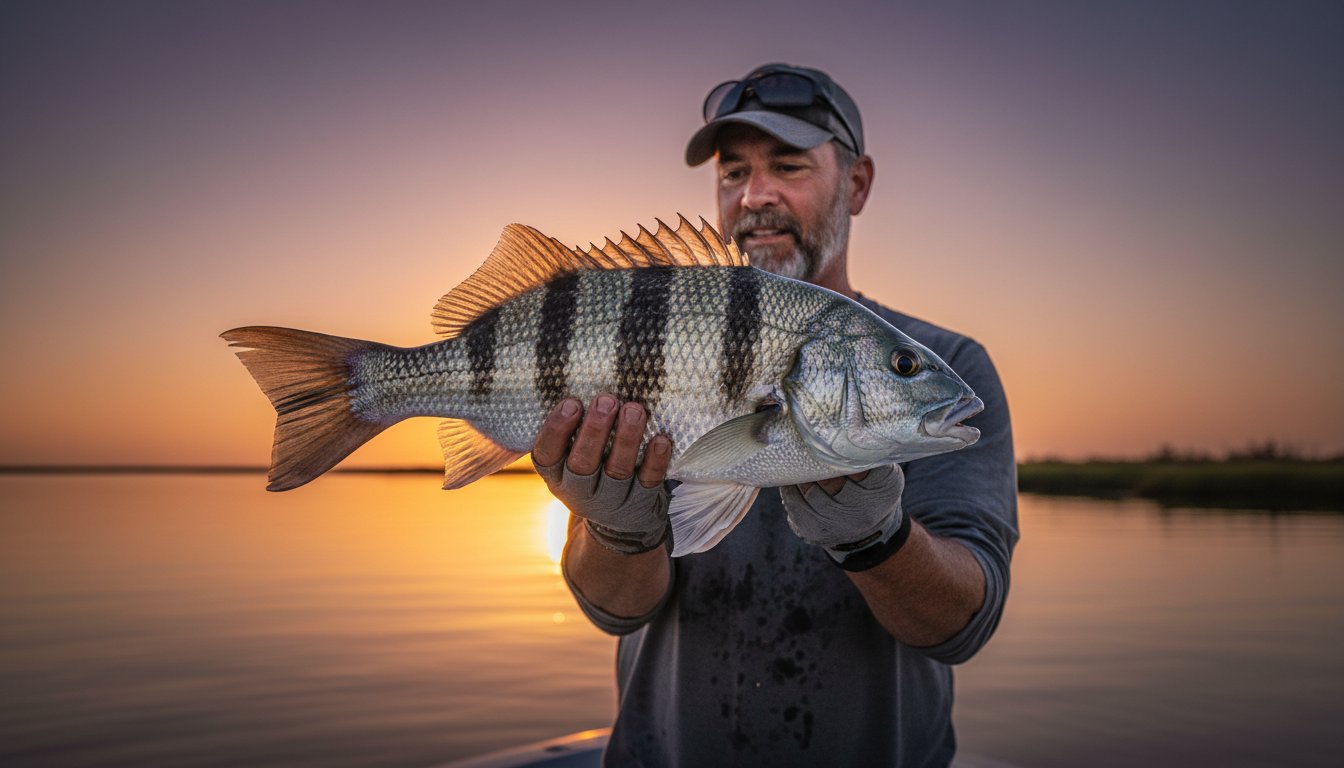
You feel the tug, the line screams, and after an epic battle, you haul a beautiful fish over the side. It’s got bold stripes, but what is it? A keeper-sized Sheepshead or a juvenile Black Drum? That moment of uncertainty can be frustrating, but it doesn’t have to be. Knowing your striped saltwater fish is the mark of a true angler, turning a good day on the water into a great one and ensuring you know the regulations for your catch.
Get ready to experience the thrill of confidence. This guide, straight from a veteran captain’s playbook, is your key to instant identification. We’re cutting through the confusion to help you recognize the most common striped battlers, from cunning inshore brawlers to lightning-fast offshore speedsters. You’ll learn the key differences, where to find them, and how to target them like a pro. Your next epic adventure begins with knowledge. We’ve got you covered!
The Art of Spotting Stripes: A 5-Second ID Method for Anglers
You’ve reeled in a fighter, a flash of silver and black from the Louisiana depths. But what is it? When it comes to identifying a striped saltwater fish, the thrill of the catch is followed by the challenge of the ID. Not all stripes are created equal, but with a simple method, you can become an expert in seconds. Forget flipping through guidebooks on a rocking boat. We’ve got you covered with a 3-step process that’s fast, effective, and gets you back to fishing.
Your epic 5-second ID comes down to three key observations:
- Shape: What is the fish’s overall body profile?
- Stripes: How are the stripes oriented, and what do they look like?
- Surroundings: Where did you catch it?
Master these three, and you’ll nail the ID almost every time. Secondary clues like fin shape and tail structure will seal the deal, turning a good guess into a confident identification.
Stripe Patterns: Vertical vs. Horizontal
The most immediate clue is the direction of the stripes. Vertical bars run from the fish’s back down to its belly, like the bold, unmistakable “convict” pattern on a Sheepshead. In contrast, horizontal stripes run from head to tail. The classic example is the prized Striped Bass, known for its clean, powerful lines. Some species have faint, diagonal, or irregular patterns, and remember: juvenile fish often have much sharper and more prominent stripes than adults.
Body Shape & Habitat Clues
A fish’s body shape is a dead giveaway to its lifestyle. Tall, compressed bodies, like that of a Sheepshead or Spadefish, are built for maneuvering around structures like reefs, jetties, and rig legs. Long, torpedo-shaped bodies signal a fast-moving predator of the open water, like a Spanish Mackerel. Look at the mouth, too-is it downturned for munching on crustaceans, or upturned for striking baitfish on the surface? Your location-the “Surroundings”-is the final piece. A catch from a mangrove shoreline is rarely the same species you’ll pull from a deepwater reef.
Inshore Striped Fighters: Marsh & Flats All-Stars
When you climb aboard for an inshore charter, you’re entering the heart of Louisiana’s legendary marsh-a sprawling maze of bays, estuaries, and backwaters teeming with life. This is the ultimate battleground for light-tackle and fly anglers, where the thrill comes from sight-casting to powerful fish in skinny water. These inshore all-stars are some of the most sought-after catches, and many of them sport distinctive patterns that make identification part of the fun. Let’s break down the key striped saltwater fish you’ll encounter on your epic adventure.
Sheepshead (The ‘Convict Fish’)
Instantly recognizable by its prison-garb stripes, the Sheepshead is a master bait-stealer and a formidable opponent on light gear. Look for a broad, silver-gray body with 5 to 6 bold, black vertical bars running down its sides. You’ll find these crafty fighters lurking around any hard structure they can find-jetties, bridge pilings, docks, and especially oyster beds. Captain’s Pro Tip: Their powerful jaws are equipped with a set of shockingly human-like teeth, perfectly designed for crushing the barnacles, crabs, and shrimp they love to eat.
Black Drum
While the giant ‘bull’ drum are famous offshore, their younger relatives are a staple of the inshore flats. Juvenile Black Drum feature prominent black and silver vertical stripes, making them easy to spot in clear water, though these stripes fade to a uniform gray or bronze as they mature. These fish patrol channels, oyster reefs, and deeper holes within the bays. For a definitive guide to identifying species at different life stages, the NOAA Species Directory offers an excellent and authoritative reference. Captain’s Pro Tip: If you’re fishing during the spawning season, listen closely-male drums create a unique, low-frequency ‘drumming’ sound to attract mates.
Redfish (Juvenile ‘Puppy Drum’)
The undisputed king of the Louisiana marsh! While not a classic example of a striped saltwater fish, juvenile Redfish, often called ‘Puppy Drum,’ frequently display faint, mottled vertical bars on their sides that disappear as they grow. They are the ultimate shallow-water predator, relentlessly prowling grass flats, oyster bars, and mangrove shorelines for an easy meal. Spotting a tailing red in inches of water is a sight that gets any angler’s heart pounding. Captain’s Pro Tip: Forget the faint bars-the single, iconic spot (or spots) at the base of the tail is the Redfish’s true calling card and the number one identifier.
Nearshore & Reef Dwellers: Striped Species on Structure
As you venture from the shallow flats and push into the deeper waters of the Gulf, your epic adventure enters a new arena. This is where the inshore and offshore worlds collide, centered around underwater structures like reefs, wrecks, and rock piles. The game changes here, and so do the fish. This zone is teeming with a huge variety of Louisiana saltwater fish species, and many of them use their patterns to thrive. For a striped saltwater fish in this environment, their markings are not just for show-they are critical camouflage for ambushing prey and hiding from predators among the complex shadows of the structure. Many of these species school up in massive numbers, turning a single hookup into an all-out blitz!
Spanish Mackerel
These are the silver bullets of the nearshore world. Built for pure speed, Spanish Mackerel are a thrill to catch and a common sight when bait pods are thick. While not traditionally striped, their markings can absolutely fool you at first glance.
- Key ID Features: A sleek, silvery, and highly streamlined body marked with numerous golden-yellow to bronze oval spots or dashes along its sides.
- Habitat & Location: They roam open coastal waters in large schools, often seen crashing bait on the surface near passes, jetties, and nearshore oil rigs.
- Captain’s Pro Tip: When they are moving fast or you see them from a distance, their rows of golden spots can blur together, creating the illusion of broken horizontal stripes.
Tripletail
Finding a Tripletail is always a highlight of a trip. These unique and powerful fish are masters of disguise, often looking like a piece of floating debris until it’s too late. Their fight is stubborn and their meat is a top-tier prize.
- Key ID Features: A deep, compressed body with a mottled, patchy pattern of dark brown, gray, and yellow. This pattern often forms broad, irregular vertical stripes that help it blend in.
- Habitat & Location: Famously ambush-oriented, they hang almost motionless on their sides near any floating structure-buoys, crab trap floats, weed lines, and channel markers.
- Captain’s Pro Tip: Forget the stripes for a second. Their rounded dorsal and anal fins extend so far back they look like a ‘third’ tail. It’s a dead giveaway and the source of their name.
Mangrove Snapper (Gray Snapper)
Don’t let their common size fool you; Mangrove Snapper are cunning, aggressive, and incredibly strong. They are the quintessential structure fish, using every piece of cover to their advantage to steal bait and break lines.
- Key ID Features: Their color can range from gray to a coppery red, but they often display faint, dusky vertical bars, especially when they are young, agitated, or in hunting mode.
- Habitat & Location: True to their name, they start life in mangrove roots but quickly move to any hard structure they can find, from bridge pilings and docks to nearshore reefs and rigs.
- Captain’s Pro Tip: The most reliable identifier, even when the bars aren’t visible, is the dark line that often runs from their snout through the eye toward the gill plate.
Offshore Powerhouses: Striped Speedsters of the Deep Blue
When you push offshore into the deep blue waters of the Gulf, you enter a world of pure power and speed. This is the domain of the ocean’s apex predators, and some of the most sought-after are legendary striped saltwater fish. Their stripes aren’t just for show; they’re a brilliant form of camouflage, breaking up their silhouette in the dappled sunlight to ambush unsuspecting prey. Landing one of these speedsters is an epic adventure and a true bucket-list achievement for any bluewater angler. While our focus is on the inshore bounty, knowing these offshore titans is key to becoming a complete Louisiana fisherman.
Wahoo
Often called the fastest fish in the sea, the Wahoo is a torpedo of pure muscle. Hooking one is an experience you’ll never forget, with screaming drags and blistering runs. They patrol the open ocean, ready to strike with incredible velocity.
- Key ID Features: A long, streamlined body with vivid, electric blue vertical bars that run from its back to its belly.
- Habitat & Location: True bluewater hunters found far offshore, often patrolling weed lines, temperature breaks, and around floating structure.
- Captain’s Pro Tip: Those stunning stripes ‘light up’ and become incredibly bright when a Wahoo is excited or on the hunt. It’s a breathtaking sight right before the chaos begins!
King Mackerel (Kingfish)
Known to anglers as “smokers” for their ability to smoke line off a reel, King Mackerel are a prized offshore gamefish. They roam the Gulf in massive schools, attacking bait with ferocious speed. From nearshore rigs to the deep blue, they are a constant presence for offshore anglers.
- Key ID Features: A sleek, silvery body with faint, broken vertical bars or spots, which are more prominent on younger, smaller fish.
- Habitat & Location: Found across a wide range, from nearshore reefs and platforms to the far offshore oil rigs that dot the Louisiana coast.
- Captain’s Pro Tip: Forget the faint stripes. The surefire way to distinguish a King from a Spanish Mackerel is the dramatic, sharp dip in its lateral line about midway down its body.
Striped Bass (‘Striper’ or ‘Rockfish’)
The Striped Bass is an iconic American gamefish, famous for its powerful fights and distinct, clean lines. While it’s the undisputed king of the Atlantic coast, its presence in the deep Louisiana Gulf is a topic of much debate and a rare catch for those who find them.
- Key ID Features: A silver-bodied fish with 7 to 8 bold, unbroken, and perfectly straight horizontal black stripes running from gills to tail.
- Habitat & Location: An anadromous species, meaning it lives in saltwater but spawns in freshwater. Primarily found along Atlantic coast beaches, bays, and estuaries.
- Captain’s Pro Tip: While not a target in our Gulf waters, knowing this classic striped saltwater fish is a mark of a well-rounded angler. Its horizontal stripes are a dead giveaway compared to the vertical bars of a Wahoo.
Ready to Find Some Stripes? Your Louisiana Adventure Awaits
You’ve learned to spot the tell-tale bars of a Sheepshead and the bold stripes of a juvenile Black Drum. Now, it’s time to trade identification for exhilaration. Reading about these fish is one thing, but feeling the raw power of one on the end of your line is an entirely different thrill. South Louisiana isn’t just a place to see these species; it’s a world-class battleground where you can test your skills against some of the toughest inshore fighters.
The Black Drum and Sheepshead are more than just pretty stripes-they are accessible, hard-fighting targets that promise an unforgettable day on the water. Forget just looking for them; it’s time to go catch them.
Why Vermilion Bay is a Hotspot
The Vermilion Bay marsh system is a thriving, dynamic ecosystem that trophy fish call home. Its endless banks, winding bayous, and shallow flats create a massive feeding ground teeming with crabs, shrimp, and baitfish. These calm, protected waters not only make for a comfortable trip but also provide the perfect habitat for sight-fishing giant Drum and Sheepshead lurking in the shallows. It’s an angler’s paradise, built for action.
Targeting Louisiana’s ‘Convicts’ and ‘Drum’
While Black Drum can be caught year-round, the cooler months fire up the Sheepshead (the “Convict Fish”) bite, making winter and spring prime time for targeting these powerful striped saltwater fish. There’s nothing like the adrenaline rush of sight-fishing-spotting that striped silhouette in the clear, shallow water and making the perfect cast. A veteran local guide doesn’t just take you fishing; they take you to the secret spots where these giants feed.
Book an Epic Trip with a Pro
Whether you’re a seasoned angler or a first-timer, an epic adventure is waiting for you. A guided trip with a 3rd generation pro removes all the guesswork. You don’t need to worry about the gear, the boat, or finding the fish-it’s all covered. Your only job is to cast, fight, and make memories. Maximize your time on the water and get on the fish fast.
Put your new ID skills to the test on an epic adventure!
From Identification to Action: Catch Your Stripes
Armed with the knowledge to identify any striped saltwater fish in seconds, you’re now ready to target these incredible species. From the hard-fighting Sheepshead in the marshy flats to the powerful Wahoo in the deep blue, understanding their patterns and habitats is the first step toward a successful day on the water. You’ve learned the secrets of spotting stripes; now it’s time to put that knowledge into thrilling practice.
There’s no better place to do that than in the legendary waters of Vermilion Bay. Experience the thrill of the chase firsthand by climbing aboard with Captain Troy Nash, a 3rd generation, veteran fishing captain who knows these bayous like the back of his hand. He’s got you covered-everything you need for a successful trip is provided. All you have to bring is your adventurous spirit and a desire to reel in a giant.
Your epic adventure is just a click away. Ready for an epic adventure? Book your Louisiana inshore fishing trip today! The fish are biting, and the stripes are out there waiting for you.
Frequently Asked Questions About Striped Saltwater Fish
What is the most common striped saltwater fish in the Gulf of Mexico?
Hands-down, the most common striped saltwater fish you’ll battle in Louisiana’s inshore waters is the Sheepshead. These tough fighters, famous for their black and silver vertical bars and human-like teeth, are everywhere-from oil rigs to jetties. You’ll also frequently tangle with juvenile Black Drum, which sport similar vertical stripes when they’re young. Both offer an epic fight and are a common sight on our guided trips in Vermilion Bay and beyond.
Are striped fish good to eat?
Absolutely! Sheepshead are considered a delicacy, often called the “poor man’s crab” for their sweet, flaky white meat that tastes similar to shellfish. They are fantastic on the grill or fried. Young Black Drum are also excellent table fare, with firm, mild flesh. Just be sure to target the smaller, “puppy” drum within the legal slot limit for the best flavor. After a thrilling day on the water, there’s nothing better than a fresh-caught meal.
What’s the difference between a Black Drum and a Sheepshead?
The easiest way to tell these two apart is to check the mouth and fins. Sheepshead have a full set of broad, human-like incisors designed for crushing shells and a dorsal fin with sharp, heavy spines. A Black Drum, on the other hand, has whisker-like barbels on its chin and lacks the prominent teeth. Its dorsal fin is also softer and less intimidating. Get a good look, and you’ll be identifying them like a pro in no time!
Do fish stripes fade after they are caught?
Yes, it’s very common for a fish’s colors and patterns to fade shortly after being pulled from the water. The vibrant, distinct stripes you see during the fight can become dull once the fish is in the cooler. This is a natural process as the fish reacts to stress. That’s why it’s best to snap that trophy picture quickly to capture the fish in its full, brilliant glory right after your epic catch!
What is the best bait or lure for catching striped fish like Sheepshead?
When you’re targeting Sheepshead, live bait is king. Nothing gets them fired up like a live shrimp, fiddler crab, or piece of fresh oyster on a small, sturdy hook. These fish are expert bait-stealers, so you need to be quick on the hookset! While some anglers have luck with small jigs tipped with shrimp, we find that the real deal is what it takes to consistently limit out and bring home these delicious fighters for dinner.
Can you catch striped fish from the shore?
You bet! Shore-based anglers have a fantastic shot at landing striped fighters. Target structures like rock jetties, bridge pilings, piers, and oyster reefs where they love to feed. In places like Cypremort Point, dropping a fiddler crab or shrimp straight down next to the structure is a proven tactic. You don’t always need a boat to experience the thrill of the fight-the adventure can start right from the bank!